
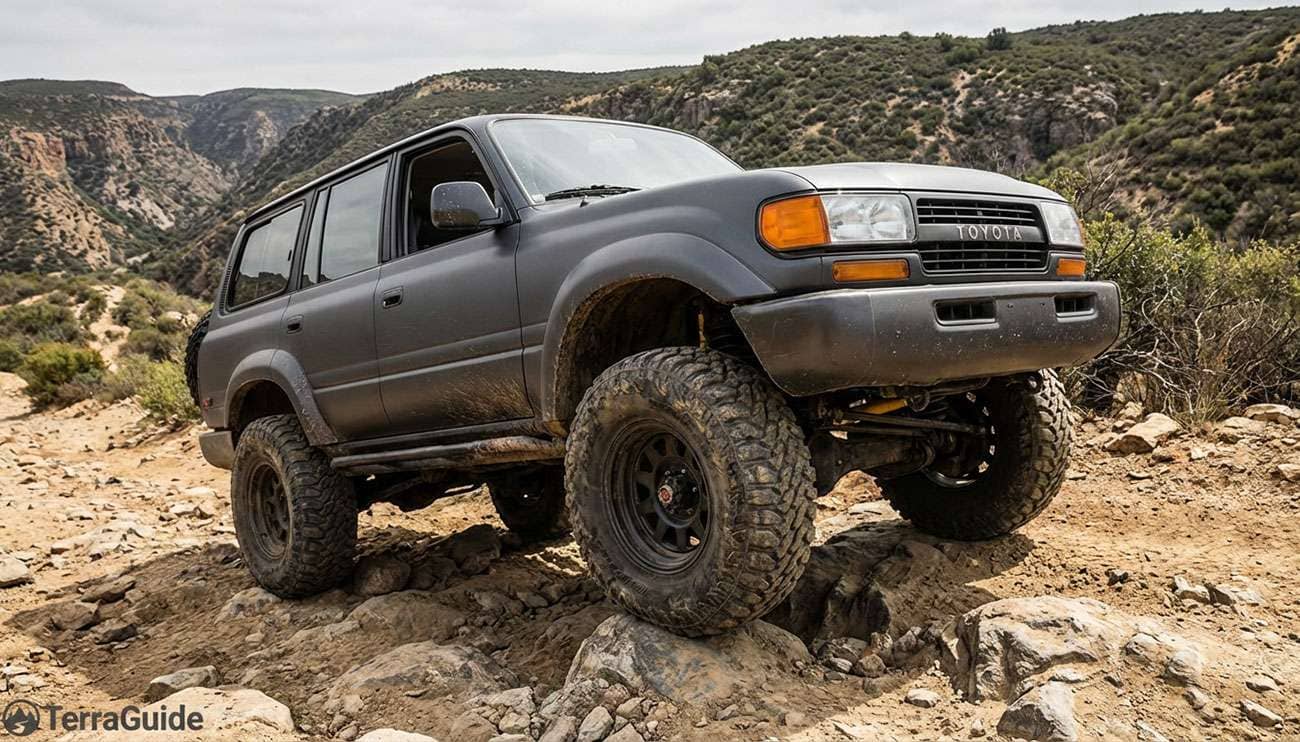
Airing down tires delivers dramatic performance improvements that transform your off-road capabilities. This technique can increase tire length by up to 80% and width by up to 20%, creating a massive expansion in your contact patch for superior off-road traction. We've put this method to the test across more than 100 different trails, and the results speak for themselves - it's one of the most effective and affordable upgrades you can make to boost traction and smooth out your ride.
Lowering your tire pressure changes the fundamental physics of how your vehicle grips terrain. As pressure drops, the tire's footprint grows substantially, allowing the rubber to wrap around obstacles and spread weight more evenly across the surface. This creates better traction in tough conditions like sand and mud while delivering a noticeably more comfortable ride by letting your tires cushion impacts instead of sending every bump straight to your suspension.
We'll walk you through exactly why airing down makes such a huge difference for off-road performance and share the specific pressure settings we've discovered through extensive trail testing. From deep sand runs at 15-20 PSI to technical rock crawling at half your street pressure, to mixed terrain adventures at 20-25 PSI, we'll show you how to dial in your tire pressure for maximum grip and safety on any surface you tackle.
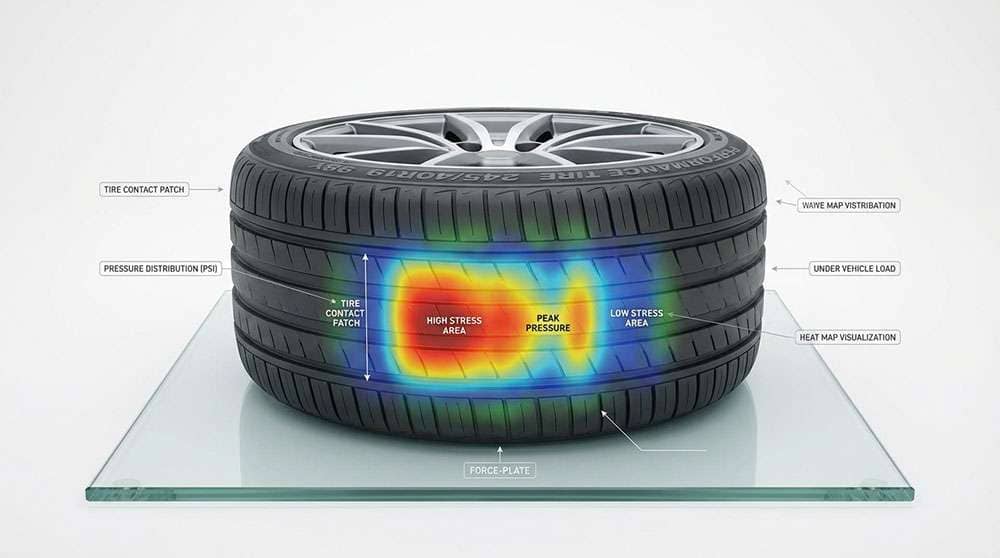
The science behind airing down tires reveals why this straightforward technique produces such remarkable off-road improvements. Once you understand these principles, you'll see exactly how pressure adjustments work on different terrain types.
Tire pressure controls the size of your contact patch—where your rubber actually touches the ground. The relationship is simple physics: lower pressure means larger contact area. You can calculate this using a basic formula: Contact Patch Area = Weight Supported per Wheel / Tire Pressure.
Drop your tire pressure from street levels and you create a dramatically bigger footprint. This expanded contact surface spreads your vehicle's weight across more terrain, reducing pressure per square inch and boosting stability on loose surfaces.
Street pressure keeps tires rigid with a small, round contact patch—perfect for pavement but terrible off-road. Lower pressures create that longer, wider footprint that grips better for acceleration, braking, and climbing.
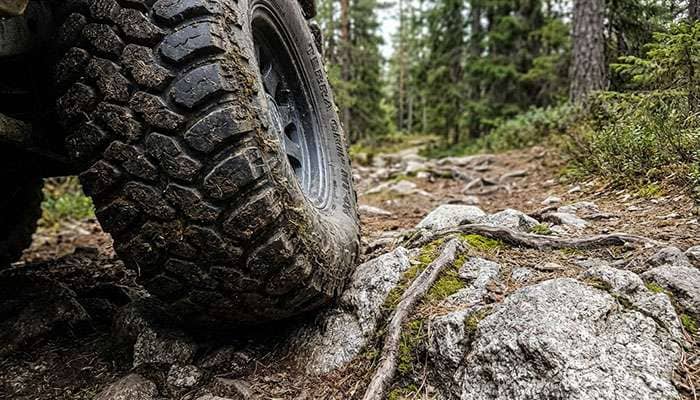
Reducing tire pressure increases sidewall deflection—the way your sidewalls bulge and flex under your vehicle's weight. This flexibility lets tires wrap around obstacles instead of bouncing off them. Properly aired-down tires mold around rocks, roots, and uneven surfaces rather than fighting against them like rigid, fully-inflated tires.
The grip improvement on technical terrain is impressive. At around 10-12 PSI, tires can flex enough to actually "grab" rocks instead of sliding across them. Your softer tire essentially creates a custom shape for whatever surface you're tackling.
Your vehicle runs two suspension systems working together. Your tires provide the first level of cushioning, responding instantly to every bump and impact. Your mechanical suspension handles the bigger stuff.
Aired-down tires filter out high-frequency vibrations before they reach your springs and shocks. This reduces the harsh impacts that get transmitted to your suspension, steering, and drivetrain components. You'll feel the difference immediately—smoother ride and less stress on expensive suspension parts.
Overinflated tires do the opposite, becoming rigid and transferring every impact straight to your suspension system. Finding the right pressure balance gives you the traction benefits while protecting your gear from unnecessary wear.
Understanding your wheel type determines just how aggressive you can get with tire pressure reduction. The main limiting factor is tire de-beading—when the tire bead separates from the wheel rim during off-road use. Your wheel choice makes all the difference in how low you can safely go.
Standard wheels depend entirely on air pressure to hold tire beads against the rim. Drop the pressure too low, and the bead can slip off during sharp turns or side loading, causing instant deflation and potentially dangerous situations. Beadlock wheels solve this problem by using a mechanical clamping ring with bolts that physically secure the tire's outer bead to the rim, allowing extremely low pressures without separation risk.
Some manufacturers offer middle-ground solutions like bead grip wheels, which feature aggressive grooves and enhanced safety humps that bite into the tire bead for better retention without full beadlock complexity. These designs bridge the gap between standard and beadlock wheels while maintaining street-legal status.
Non-beadlock wheels should stay above 12 PSI to prevent de-beading across most terrain types. Our testing has established these terrain-specific ranges:
Terrain |
Non-Beadlock PSI |
Beadlock PSI |
|---|---|---|
Sand |
12-15 PSI |
6-10 PSI |
Mud |
15-20 PSI |
8-12 PSI |
Rocks |
10-15 PSI |
6-8 PSI |
Snow |
15-20 PSI |
4-10 PSI |
Trails |
18-25 PSI |
12-18 PSI |
These recommendations come directly from our 100+ trail testing program. Vehicle weight, tire construction, and specific wheel design can shift these numbers. Heavier rigs typically need higher minimum pressures to avoid rim damage.
Beadlocks become essential when you need single-digit pressures for optimal tire performance. Rock crawling, deep sand navigation, and maximum traction scenarios often demand these extremely low pressures. Heavy-duty truck tires with D, E, or F load ratings have particularly stiff sidewalls that require very low pressures (6-8 PSI) to flex properly and conform to obstacles.
Beadlocks do require regular bolt torque checks and may face street-legal restrictions in some areas. Weekend off-roaders can often achieve excellent results with quality non-beadlock wheels and proper pressure management, avoiding the extra maintenance and complexity that beadlocks require.
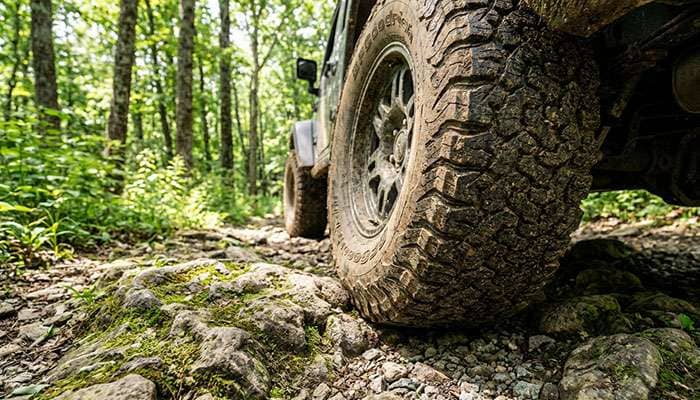
We've tested specific pressure ranges across 100+ trails to find what actually works on different terrains. These recommendations come from real-world testing that balances maximum traction with tire protection for safe off-road performance.
Sand is all about flotation - you need to spread your vehicle's weight across as much surface area as possible to prevent sinking. Non-beadlock wheels work best at 12–15 PSI, while beadlock-equipped vehicles can safely drop to 6–10 PSI for maximum flotation. Avoid sharp turns at extremely low pressures to prevent de-beading your tires.
Mud requires finding the right balance between grip and controlled wheelspin. Non-beadlock setups perform effectively at 15–20 PSI, while beadlock wheels allow you to drop to 8–12 PSI for enhanced traction. When dealing with sticky clay-like mud, running slightly higher pressures may help you avoid suction effects that can trap your tires.
Rock crawling showcases airing down at its best. Standard wheels should stay between 10–15 PSI, while beadlock-equipped vehicles can run 6–8 PSI for extreme grip. If your tires bounce rather than conform to rocks, drop pressure until they properly envelop obstacles.
Snow conditions vary tremendously, so you need adaptable pressure strategies. Deep powder behaves like sand - non-beadlocks running 15–20 PSI and beadlocks as low as 4–10 PSI. Consider dropping to around 12 PSI in deeper conditions for improved flotation. On packed snow or ice, maintain higher pressures for better tread bite.
Mixed surfaces combining dirt, gravel, and occasional obstacles work best at 18–25 PSI. This range delivers improved traction without compromising sidewall protection or risking de-beading. When you're unsure where to start, 20 PSI serves as a reliable baseline for most trail conditions.
Having the right equipment makes all the difference when airing down for trail use. Our extensive testing has shown that quality tools save valuable time and deliver consistent results across all four tires.
Using screwdrivers or keys to depress valve stems works when you're stuck, but it's incredibly slow and frustrating. Dedicated deflators offer far better performance. Manual deflators like the ARB E-Z Deflator remove the valve core for fast air release. Automatic systems such as JT Brooks or MORRFlate AutoMagic can be preset to your target PSI and stop automatically.
The ARB E-Z Deflator's design allows valve core removal for rapid deflation while giving you accurate pressure readings. For deflating all four tires simultaneously, MORRFlate Multi Tire Kit connects to each tire, ensuring even pressure reduction across your entire vehicle.
Portable compressors like VIAIR 400P can inflate a 35-inch tire from 10 to 35 PSI in about 3 minutes. Onboard air systems cost more upfront (USD 290-540) but save precious cargo space, connect directly to your battery, and can power air tools or lockers.
Prevent de-beading by following these guidelines:
Avoid sharp turns at extremely low pressures
Deflate gradually and check pressure frequently
Stay within safe PSI ranges for your wheel type
Always reinflate before hitting pavement. Underinflated tires on highways heat up quickly, creating dangerous blowout risks. Connect directly to your battery terminals instead of 12V outlets for maximum inflation power.
Our extensive testing across more than 100 trails proves that airing down tires stands out as one of the most effective techniques you can master for off-road success. This simple pressure adjustment creates dramatic improvements in your vehicle's capability by expanding the contact patch and allowing your tires to conform to terrain like they're supposed to. The benefits are clear - superior traction, less stress on your vehicle, and a much smoother ride on challenging trails.
Each terrain type has its sweet spot for pressure settings. Sand needs 6-15 PSI for proper flotation, mud works best at 8-20 PSI for the right balance of grip and spin, rocks require 6-15 PSI for maximum conformity, and snow can demand anywhere from 4-20 PSI depending on conditions. General trail riding typically performs well at 18-25 PSI. Your wheel type makes a big difference here - beadlock wheels safely handle much lower pressures than standard wheels.
Quality equipment makes this technique practical and efficient. Good deflators and dependable air compressors save you time on the trail and keep all four tires at consistent pressures. Safety stays the top priority - always air back up before you hit pavement and stick to safe PSI ranges for your specific setup.
After thousands of trail miles, we're confident this ranks among the best performance upgrades you can make without spending a fortune. The science works regardless of what vehicle you drive or what tires you run. Every serious off-roader needs this skill in their toolkit. Your suspension will last longer, your passengers will enjoy the smoother ride, and those obstacles that used to seem impossible will become just another part of the adventure. Next time you head out, remember that dropping your pressure often means boosting your capability.
After testing across 100+ trails, these essential insights will transform your off-road performance through proper tire pressure management:
• Airing down increases tire contact patch by up to 80% in length and 20% in width, dramatically improving traction and terrain conformity while reducing stress on suspension components.
• Terrain-specific PSI ranges optimize performance: Sand (6-15 PSI), mud (8-20 PSI), rocks (6-15 PSI), snow (4-20 PSI), and general trails (18-25 PSI) based on extensive field testing.
• Non-beadlock wheels safely operate above 12 PSI, while beadlock wheels allow single-digit pressures for extreme conditions without risk of tire de-beading.
• Quality deflators and reliable air compressors are essential tools - manual deflation wastes valuable trail time, while proper equipment ensures consistent pressure across all tires.
• Always reinflate before returning to pavement - underinflated tires on highways heat rapidly and risk dangerous blowouts, making proper pressure management critical for safety.
This technique represents one of the most cost-effective performance upgrades available, transforming previously challenging obstacles into manageable terrain while protecting your vehicle's suspension system.
Airing down tires increases the contact patch, improving traction and terrain conformity. It also provides a smoother ride by absorbing impacts and vibrations from the trail, reducing stress on suspension components and making obstacles more manageable.
For non-beadlock wheels, it's generally safe to stay above 12 PSI. Beadlock wheels allow for single-digit pressures. However, specific pressure ranges depend on the terrain: 6-15 PSI for sand, 8-20 PSI for mud, 6-15 PSI for rocks, and 4-20 PSI for snow.
While not absolutely necessary, specialized tools like dedicated deflators (e.g., ARB E-Z Deflator) and portable air compressors make the process much quicker and more convenient. These tools ensure consistent pressure across all tires and save valuable trail time.
Airing down affects different terrains uniquely. In sand, it improves flotation. For mud, it balances grip and controlled wheelspin. On rocks, it allows tires to conform to obstacles. In snow, it helps with both flotation and tread bite depending on conditions.
No, it's crucial to reinflate your tires before returning to paved roads. Underinflated tires on highways can heat up rapidly, risking dangerous blowouts. Always return to manufacturer-recommended pressures for on-road driving.



