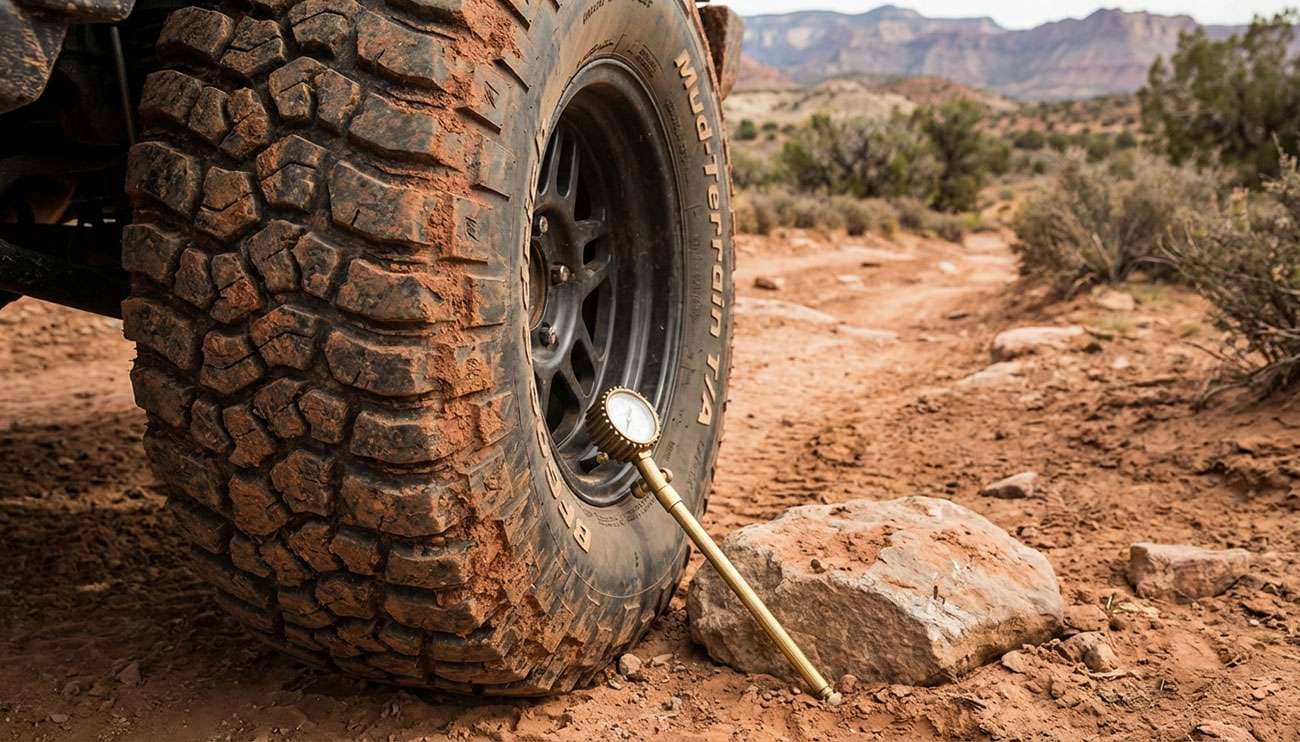
Off-road tire maintenance requires a completely different approach than regular highway tire care. Off-road tires face punishing conditions that standard tires never encounter, from sharp rocks and thick mud to extreme temperature changes. These harsh environments demand regular attention to keep your tires performing at their best.
Tire pressure adjustment stands as the most important factor in off-road performance. For rock crawling and uneven terrain, running 12-18 PSI creates the larger contact patch you need for better grip. This lower pressure allows your tires to conform around obstacles and rocky surfaces, giving you the traction necessary to tackle challenging trails. But pressure adjustment represents just the starting point of proper off-road tire care.
Regular tire rotation every 5,000 to 7,500 miles keeps wear patterns even across all four tires. You'll also need to monitor tread depth carefully - once it drops below 5/32 inches, your tires lose the ability to grip loose surfaces effectively. When you follow the right maintenance schedule, your off-road tires will last longer and deliver peak performance when you need it most.
This guide covers everything you need to know about keeping your off-road tires in top condition. Whether you're planning to tackle muddy trails, rocky mountain paths, or sandy desert routes, these proven maintenance techniques will help you get the most from your tire investment.
Choosing the right off-road tires makes the difference between a successful adventure and getting stuck on the trail. Your tire selection directly affects traction, durability, and how well your vehicle handles challenging terrain. The wrong tires can leave you struggling in conditions where the right ones would power through with ease.
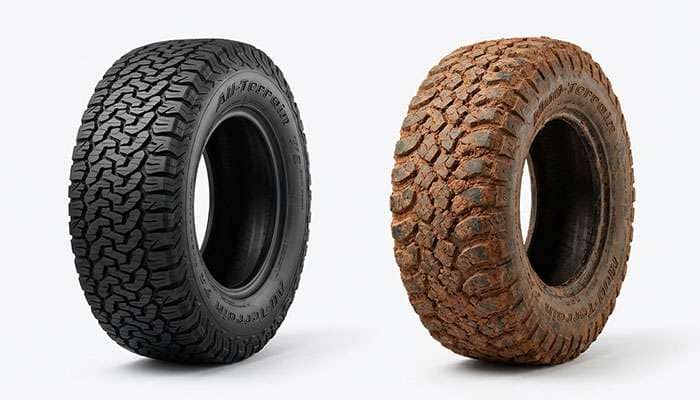
All-terrain (A/T) tires work best for drivers who spend most of their time on pavement but want the capability for weekend off-road trips. These tires handle gravel roads and wet conditions well while keeping road noise reasonable for daily driving. Their tread design can't match mud-terrains in thick, sticky conditions because the smaller tread gaps collect mud instead of clearing it out.
Mud-terrain (M/T) tires excel when you need maximum off-road capability. These tires feature large, aggressive tread blocks with deep voids that throw off mud, sand, and debris effectively. The wide tread blocks grip rock faces and lock into crevices during rock crawling. You'll pay for this performance with increased road noise and lower fuel economy on pavement.
Hybrid tires bridge the gap between all-terrain and mud-terrain designs. Also called Rugged Terrain or R/T tires, they offer better off-road traction than A/T options while maintaining better on-road manners than M/T tires. These tires suit drivers who split their time equally between pavement and trails.
Load index tells you the maximum weight each tire can safely carry. This becomes critical for off-road vehicles that often carry extra gear, recovery equipment, and camping supplies. A tire rated at load index 92 handles up to 1,389 pounds at maximum inflation pressure.
Check your vehicle's Gross Axle Weight Rating (GAWR) on the door jamb sticker to determine your needs. Find the higher GAWR number between front and rear axles, then divide by two. This gives you the minimum load rating required for each tire.
Different manufacturers focus on specific off-road strengths. Mickey Thompson offers one of the most extensive selections of specialized off-road tires for various terrain types. Cooper's Discoverer STT Pro has built a strong reputation among serious off-road enthusiasts for its tough construction and reliable performance. BFGoodrich brings race-tested technology like CoreGard to their consumer tires, creating sidewalls that are 20% stronger than previous designs.
Understanding these manufacturer specialties helps you match your specific terrain needs with brands known for excelling in those areas. This knowledge forms the foundation for making smart tire choices that will serve you well on the trails.
Tire pressure adjustment makes the biggest difference between getting stuck and conquering challenging terrain. Off-road conditions require completely different PSI settings than highway driving, and understanding these adjustments can save you from damaged tires and failed adventures.
Each terrain type demands specific tire pressure settings for optimal performance:
Terrain |
Recommended PSI |
Notes |
|---|---|---|
Sand |
8-15 PSI |
Lower for better flotation |
Mud |
12-20 PSI |
Adjust based on stickiness |
Rocks |
10-18 PSI |
Higher to prevent punctures |
Snow |
12-20 PSI |
Similar to sand settings |
General Trails |
18-25 PSI |
Good all-around setting |
Sand driving requires the lowest pressures - typically 10-15 PSI - to help your tires float on top rather than dig in. Rocky terrain needs slightly higher pressure around 15-20 PSI to protect against sharp edges while still allowing the tire to conform to obstacles. Sticky mud works best with 15-20 PSI to prevent the tire from getting pulled off the rim by suction.
Lower tire pressure creates immediate performance benefits through simple physics. Your tire's contact patch - the area actually touching the ground - increases by up to 80% in length and 20% in width. This larger footprint spreads your vehicle's weight over more surface area, dramatically improving grip on loose terrain.
The increased flexibility also helps your tires wrap around obstacles instead of bouncing off them. This flexibility actually extends tire life by reducing sidewall damage from rocks and debris. Your suspension system benefits too, as the tires absorb more impact and reduce stress on shock absorbers and springs.
You must reinflate your tires before returning to paved roads. Highway driving with underinflated tires creates serious safety risks:
Poor vehicle stability and handling
Rapid uneven tire wear
Dangerous heat buildup leading to blowouts
A quality portable air compressor becomes essential equipment for any serious off-road vehicle. Heavy-duty compressors save time when reinflating multiple large tires. Always return to your vehicle manufacturer's recommended pressure - usually 30-35 PSI - before hitting the highway.
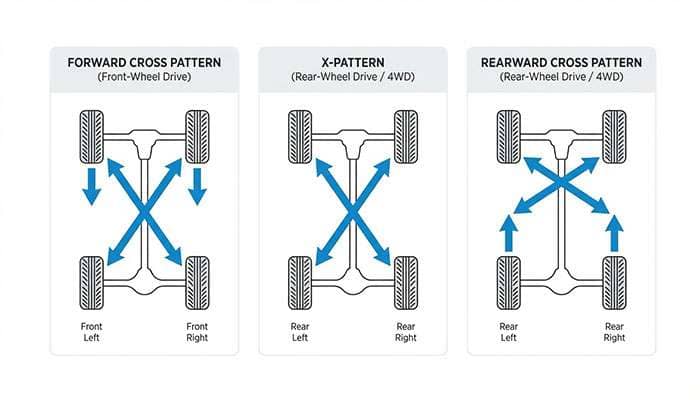
Tire rotation keeps your off-road tires wearing evenly and lasting longer. More than just moving tires around, proper rotation patterns and regular inspections help you catch problems early and avoid costly replacements on the trail.
For 4WD vehicles, the Rearward Cross pattern delivers the best results. Move your rear tires straight to the front on the same sides, then cross your front tires to opposite sides at the rear. When you have a full-size spare, use the five-tire clockwise rotation - this ensures every tire gets time as the spare and wears evenly.
We recommend rotating off-road tires every 5,000 to 8,000 miles. If you hit the trails frequently, you may need to rotate more often.
Tire cupping shows up as scooped-out worn spots around the tire. Here's what to watch for:
Unusual road noise that gets louder
Steering wheel or seat vibrations
Your vehicle pulling to one side
Uneven wear patches you can see
Cupping usually means your shock absorbers are wearing out. When shocks fail, your springs bounce constantly, creating those uneven wear patterns that cost you money.
Most all-terrain tires give you 40,000 to 60,000 miles when maintained properly. Premium options can reach 80,000 miles under the right conditions. BFGoodrich All-Terrain tires typically deliver 50,000-60,000 miles with regular care.
Your driving habits make a huge difference - aggressive acceleration and hard braking cut tire life significantly across all brands. Regular rotation every 5,000-8,000 miles promotes even wear, and keeping proper inflation can add approximately 4,700 miles to your tire investment.
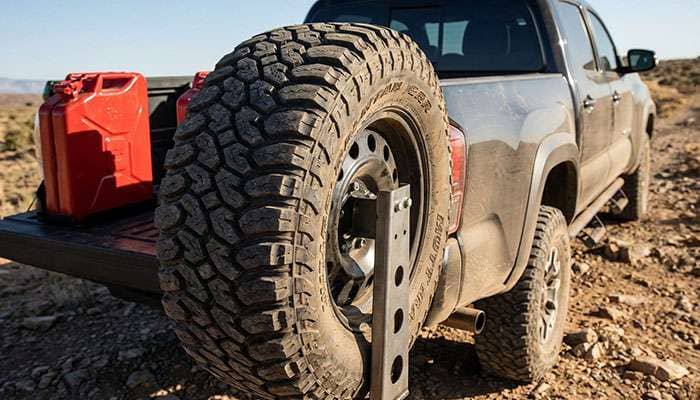
Proper cleaning and storage keep your off-road tires performing at their best between adventures. These simple maintenance steps prevent costly damage and ensure your tires are ready when you need them most.
Clean your tires immediately after every off-road trip to prevent long-term damage. Start with a pressure washer and warm water to blast away mud buildup, then use a tire brush to scrub the grooves clean. Stay away from petroleum-based cleaners - they break down rubber compounds over time. Mild dish soap with water works best for most cleaning jobs. For stubborn mud stains that won't come off, specialized cleaners like Spray Nine dissolve the brown residue that regular soap leaves behind.
Dry rot attacks tires that sit unused for three months or longer, causing rubber to become brittle and crack. Store your tires in a cool, dry place between 55-59°F for best results. Temperatures above 68°F or below 45°F speed up rubber deterioration. For long-term storage, stack mounted tires horizontally or stand unmounted tires upright - never hang unmounted tires because this distorts their shape. Rotate stored tires once a month to prevent flat spots from developing.
UV rays cause premature sidewall cracking and weathering. Tire covers provide excellent protection from sun, dirt, and weather damage. If you park outdoors regularly, invest in quality tire covers similar to what RV owners use. Apply tire protectant regularly to create an extra barrier against the elements. Keep tires away from generators, battery chargers, and other equipment that produces ozone. Proper inflation becomes even more important in hot climates since under-inflated tires generate excessive heat.
Off-road tire maintenance comes down to following the right practices consistently. The techniques covered in this guide will help you get maximum performance and longest life from your tire investment. Selecting the right tire type for your typical terrain sets the foundation, whether you choose all-terrain, mud-terrain, or hybrid options based on your driving needs.
Pressure adjustments give you the biggest performance boost for off-road conditions. Lowering your PSI creates better traction on challenging surfaces while helping your tires last longer by conforming to obstacles instead of fighting them. A portable compressor becomes essential equipment for getting back to highway pressures safely.
Regular rotation and inspection schedules prevent expensive problems before they start. When you rotate every 5,000-8,000 miles and watch for wear patterns, quality all-terrain tires deliver 40,000-60,000 miles of reliable service. Proper cleaning after muddy or sandy trips removes damaging debris, while correct storage protects against dry rot and UV damage during downtime.
These maintenance practices make the difference between tires that perform when you need them and tires that leave you stranded. Well-maintained off-road tires provide the grip and durability you need for tackling extreme terrain with confidence. Whether you're planning rock crawling adventures, muddy trail rides, or desert expeditions, the right maintenance approach keeps your tires ready for whatever challenges await.
Your off-road adventures demand tires that can handle anything the trail throws at them. The maintenance strategies in this guide help ensure your tires deliver peak performance and maximum value from your investment.
Master these essential off-road tire maintenance strategies to maximize performance and extend tire life in extreme conditions:
• Adjust tire pressure for terrain: Use 8-15 PSI for sand, 12-20 PSI for mud, and 10-18 PSI for rocks to improve traction and prevent damage
• Rotate tires every 5,000-8,000 miles: Use the Rearward Cross pattern for 4WD vehicles to ensure even wear and extend tire life to 40,000-60,000 miles
• Clean immediately after off-road trips: Remove mud and debris with warm water and mild soap to prevent long-term rubber degradation and performance issues
• Store properly to prevent dry rot: Keep tires in cool, dry environments (55-59°F) and use UV-protective covers when parked outdoors for extended periods
• Always reinflate before highway driving: Return to manufacturer's recommended PSI (30-35 PSI) to prevent dangerous heat buildup and premature wear
With proper maintenance routines, quality all-terrain tires can deliver reliable performance for up to 60,000 miles while providing the safety and capability needed for extreme off-road adventures.
For sand, use 8-15 PSI; for mud, 12-20 PSI; and for rocks, 10-18 PSI. Always adjust based on specific conditions and vehicle weight. Remember to reinflate to normal pressure (typically 30-35 PSI) before returning to paved roads.
Rotate your off-road tires every 5,000 to 8,000 miles. For 4WD vehicles, use the Rearward Cross pattern. If you have a full-size spare, consider implementing a five-tire rotation to ensure even wear across all tires.
With regular maintenance, most all-terrain tires last between 40,000 to 60,000 miles. Premium models can reach up to 80,000 miles under ideal conditions. Proper rotation, inflation, and driving habits significantly impact tire longevity.
Clean your tires immediately after off-road excursions using warm water and a pressure washer, followed by a tire brush for stubborn dirt. Use mild dish soap instead of petroleum-based cleaners, which can degrade rubber. For persistent mud stains, consider specialized cleaners.
Store tires in a cool, dry environment between 55-59°F. For long-term storage, place mounted tires horizontally stacked or stand unmounted tires upright. Use tire covers to protect against UV damage, especially if stored outdoors. Rotate stored tires monthly to prevent flat spots.