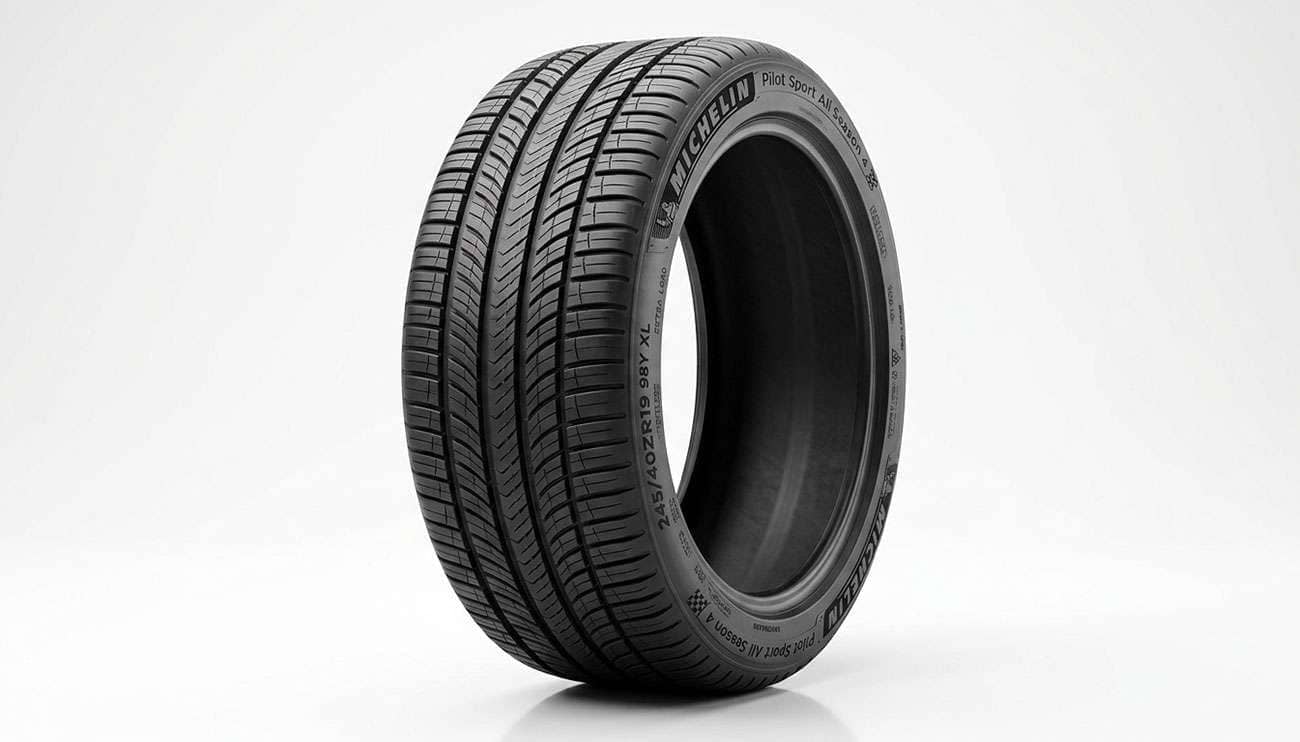
Yes. The Michelin Pilot Sport All Season 4 is a very good tire, and if you own something with real power and you do not want to keep two sets of wheels in the garage, it is probably the best single answer on the market.
I have been fitting tires to fast cars since before most of the folks writing tire reviews online were born, and I will tell you what makes this one special: it does not feel like a compromise. Most all-season performance tires feel like somebody took a summer tire and sanded the edges off. This one steers like it means it, holds a line, and still gets you home when the temperature drops. That is a hard trick.
But there is one thing about this tire that gets misreported constantly, and it is the exact thing most people are actually asking about when they search for it. So let us put the whole decision on the table before we go one step further.
Your Winter Reality |
Is the Pilot Sport All Season 4 Right? |
What to Do |
|---|---|---|
Rarely freezes, no snow |
Yes, ideal |
Buy it. Consider the summer-only 4S only if the car never sees rain or cold. |
Cold winters, little or no accumulating snow |
Yes, strong pick |
Buy it. This is exactly the gap it was built to fill. |
Accumulating snow most years |
Only as a three-season tire |
Buy it for spring through fall and add a dedicated winter set. |
Region with winter traction laws |
Check your local rule first |
This tire is M+S branded but not three-peak certified. Some rules require the mountain symbol. |
That last row is the one nobody tells you about, and it is where we are going to start.
Here is the thing that trips people up. The words "All Season" are right there in the name of the tire. So folks reasonably assume it is certified for winter. It is not, and the specification sheet says so plainly.
The Pilot Sport All Season 4 is branded M+S, which stands for mud and snow. M+S is a geometry standard. It says the tread pattern has a certain amount of void space and a certain block arrangement. A manufacturer can stamp M+S on a tire without any snow traction testing at all. It is essentially a shape rating.
The three-peak mountain snowflake symbol is a different animal entirely. That one requires the tire to pass an actual measured acceleration test on packed snow against a standard reference tire. It is a performance certification, not a shape description. The Pilot Sport All Season 4 does not carry it.
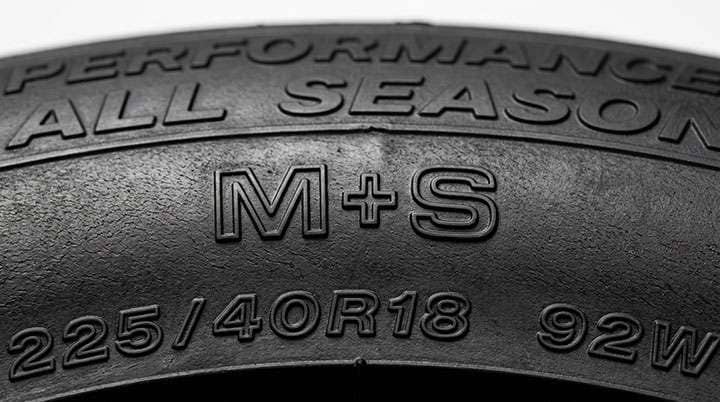
Now, I want to be fair to Michelin here, because this is not a case of a manufacturer hiding something. They never claimed the three-peak symbol on this tire. It is other people's writing that has made a hash of it. I went looking at what is out there right now, and one retailer's review answers the direct question "can it handle severe winter conditions" with a flat yes. That is not right, and somebody is going to read it and get a nasty surprise on a hill in January.
If the difference between those two markings is new to you, our full guide to what the snowflake tire symbol actually means lays out the testing behind each one and which one your state cares about.
So what does this tire actually do in the cold? Quite a lot, and this is where it earns its keep. Michelin's Helio+ compound stays pliable when the temperature drops, which is the single biggest thing separating an all-season from a summer tire. A summer performance tire goes hard and glassy below roughly 45 degrees, and it does not matter whether there is a flake of snow in sight. Cold alone is enough to cost you grip.
Cold and snow are two different questions. This tire answers the first one well and the second one only partway. Keep those separate in your head and the rest of this gets easy.
If you are in Southern California, Arizona, Texas, Florida, or anywhere else where a hard freeze is a news story, this tire is a straightforward yes and you can stop reading the winter portion of this article.
What you are buying here is not weather insurance. You are buying a tire that will handle a wet on-ramp in February without drama and still hold on when you get on it in July. The asymmetric tread puts more rubber on the outboard shoulder for lateral grip, and the wet numbers on this tire are genuinely strong for a performance all-season.
The honest question in your climate is whether you should skip the all-season and go straight to a summer tire like the Pilot Sport 4S, which will give you a noticeably higher grip ceiling. My answer, after watching a lot of customers make this choice: unless the car is a weekend toy that stays parked when it rains, take the all-season. The 4S is a better tire on a good day and a worse tire on a bad one, and you get more bad days than you think.
The UTQG treadwear grade on the All Season 4 is 540, with AA traction and an A temperature grade. That AA is the top traction grade the government issues, and on a performance tire that is worth noticing.
This is the sweet spot. If your winters are genuinely cold but you are not shoveling the driveway more than a couple times a season, the Pilot Sport All Season 4 is doing exactly the job it was engineered for.
Think coastal Oregon and Washington, the Carolinas, Tennessee, the milder parts of the mid-Atlantic. Plenty of mornings in the thirties, rain that never quite becomes snow, and the occasional dusting that is gone by lunch. A summer tire is a genuine liability in that climate for four or five months. A dedicated winter tire is overkill and wears out fast on warm pavement.
The full-depth interlocking sipes on this tire matter here. Full depth means the sipes are cut all the way down rather than only into the top of the tread block, so they keep working as the tire wears instead of disappearing at half life. That is a real engineering choice with a real cost, and it is part of why this tire is priced where it is.
If you want the underlying physics on where compounds start to give up, our breakdown of what temperature is too cold for all-season tires covers the thresholds and what actually happens to the rubber.
Now we get to the part where I have to be the guy who tells you something you do not want to hear.
If you are in Minnesota, upstate New York, Colorado, Michigan, New England, or anywhere else that gets real accumulating snow on a regular basis, the Pilot Sport All Season 4 should be a three-season tire for you. Run it from spring through fall and put a proper winter set on for the cold months.
It will move in light snow. Michelin built biting edges into the tread grooves specifically to grab loose snow, and it does. But there is a wide gulf between "will move" and "will stop," and stopping is the part that ends up on an insurance form. A UHP all-season without the three-peak certification is not in the same conversation as a real winter tire once there is packed snow under you.
I have had this argument with customers for thirty years and it always ends the same way. Somebody tells me their all-seasons have been fine for five winters. Then one January they need to stop short on a hill with a school bus in front of them, and they are in my shop the following week buying winter tires with a story to tell. The tire was fine right up until the one moment it was not.
There is also the legal angle. A growing number of jurisdictions with mountain passes and seasonal traction laws specify the three-peak mountain snowflake by name, not M+S. If you drive somewhere with a posted traction requirement, check the exact wording before you assume an M+S brand covers you. Our comparison of M+S versus true winter tires gets into the stopping distance data if you want to see the gap in numbers rather than take my word for it.
The math on two sets is better than people expect, by the way. You are not buying twice as many tires over the life of the car. You are splitting the miles between two sets, so each one lasts roughly twice as long in calendar years. What you are really paying for is the second set of wheels and the seasonal swap.
Here is the detail I have not seen anybody else write about, and it is worth actual money.
Michelin does not give every Pilot Sport All Season 4 the same treadwear warranty. The coverage depends on the speed rating marking, and the difference between the two markings is a set of parentheses.
Sidewall Marking |
What It Means |
Treadwear Warranty |
|---|---|---|
W |
Rated to 168 mph |
45,000 miles |
Y |
Rated to 186 mph |
45,000 miles |
(Y) |
Capable beyond 186 mph |
30,000 miles |
ZP versions |
Zero Pressure run-flat |
30,000 miles |
Read that middle pair again. A tire marked 95Y carries 45,000 miles of coverage. A tire marked 95(Y) carries 30,000. Two parentheses, fifteen thousand miles, and on a listing page those two strings look close enough that almost nobody catches it.
The run-flat rule comes straight out of Michelin's own warranty language: a ZP tire gets the same mileage warranty as the standard line it belongs to, but capped so it cannot exceed 30,000 miles. So the run-flat version of a 45,000-mile tire is a 30,000-mile tire. That is a third of the coverage gone, and run-flats already cost more up front.
None of this makes the ZP a bad buy. If your car came from the factory on run-flats and has no spare and no jack, replacing them with conventional tires is a decision you need to make on purpose, not by accident. Our rundown of run-flat tires, pros and cons walks through what you actually give up going either direction.
Just know what you are signing up for. Look at the full marking on the tire you are about to order, parentheses included, and check the coverage that goes with it.
Michelin has put the words "Pilot Sport" on an awful lot of tires, and the naming does not make the differences obvious. We stock seven variants of it, so let me lay them out the way I would at the counter.
Model |
Type |
Works in Cold? |
Works in Snow? |
|---|---|---|---|
Pilot Sport All Season 4 |
UHP all-season |
Yes |
Light snow only, not certified |
Pilot Sport 4S |
Max performance summer |
No |
No |
Pilot Sport 4 |
Ultra high performance summer |
No |
No |
Pilot Sport 4 SUV |
Summer, SUV construction |
No |
No |
Pilot Sport Cup 2 |
Track and competition |
No |
No |
Pilot Sport EV |
Summer, EV specific |
No |
No |
Pilot Sport A/S 3+ |
Previous generation all-season |
Yes |
Light snow only, not certified |
The one people mix up most is the 4S. A Pilot Sport 4S is a summer tire, full stop. It is a magnificent summer tire, and if you want to read about what it does over real mileage we have a whole piece on whether the Pilot Sport 4S is worth it. But it has no business on a car that sees a cold morning, and the difference between it and the All Season 4 is not a small trim-level thing. They are different tools.
Two other notes worth having. The Pilot Sport A/S 3+ is the previous generation, and it is still floating around at lower prices. It was a fine tire and it is not a mistake to buy one on a deal, but the All Season 4 improved on it. And the A/S 3+ carries the same caveats about snow certification, so it does not solve that problem either.
Second, if you are cross-shopping and want to know what else plays in this class, the Continental ExtremeContact DWS06 Plus is the closest direct rival and a legitimate alternative. We have written up how the DWS06 Plus stacks up if you want the comparison.
Michelin warranties the standard W and Y sizes for 45,000 miles over six years. That is the number. If you have seen 60,000 published somewhere, that figure has been floating around the internet on a couple of review sites and it is wrong.
What you actually get depends almost entirely on your right foot. This is an ultra high performance tire with a 540 treadwear grade and a soft, grippy compound. Drive it like a grocery-getter and you will meet or beat the warranty. Drive it the way the car was clearly designed to be driven and you will not, and that is not a defect, that is the deal you made when you bought a performance tire.
Starting tread depth is 10/32 of an inch, which is on the shallow side. That is normal for the category. Less rubber means less heat buildup and better response, and it also means fewer miles. You cannot have the steering feel and the tread life both, and anybody who tells you otherwise is selling something.
The practical advice is boring and it works. Rotate every 5,000 to 7,500 miles, check pressures monthly when they are cold, and get the alignment looked at when you fit the new set. On a car with staggered fitments where you cannot rotate front to back, expect to be replacing rears well ahead of fronts and budget accordingly.
Is it noisy? A bit, yes, and I would rather tell you that straight than have you find out in the parking lot.
The Pilot Sport All Season 4 is louder than a touring tire. It is not loud in the droning, exhausting way a cheap aggressive tread is loud, but you hear it, particularly on coarse concrete. Compared to other ultra high performance all-seasons it sits right about in the middle of the pack, which is a fair result for how much grip it delivers.
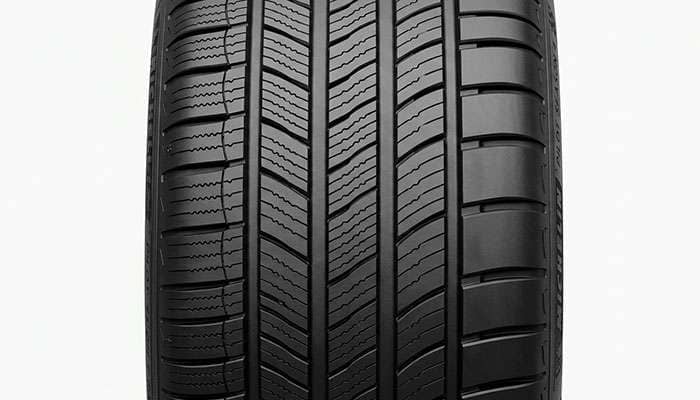
The ride is firm. Again, that is the category rather than the tire. Short sidewalls and stiff construction are what give you the steering response, and they also transmit expansion joints straight into the seat. If you are stepping onto these from a set of touring tires you will notice the difference on day one and stop noticing it inside a week.
What you are trading for is a tire that turns in immediately, holds a steady line through a long sweeper, and does not go greasy on you when the pavement is cold and wet. For the right car and the right driver that is a trade worth making every time. For somebody who mostly wants a quiet commute, it is not, and there is no shame in buying a touring tire instead.
One nice touch worth mentioning: some sizes come with Michelin's Premium Touch sidewall, a velvet-effect finish that makes the lettering pop. Purely cosmetic and it does not affect a thing about how the tire drives, but on a nice car it looks sharp.
Let me put dollars on the mistakes, because that tends to focus the mind better than my opinions do.
Buying the wrong marking. A set of four in a common performance size runs well over a thousand dollars. Order the (Y) marking instead of the Y and you have bought 30,000 miles of coverage instead of 45,000 for roughly the same money. On a prorated claim at 25,000 miles, that difference is real cash out of your pocket.
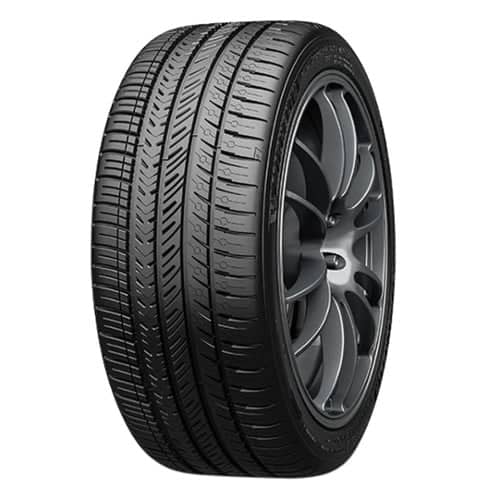
Assuming All Season means winter rated. This is the expensive one, and it does not cost you in tires. It costs you in bodywork, deductibles, and a premium that goes up for three years. One winter incident wipes out any savings from skipping a second set several times over.
Running them past the wear bars because they still feel good. This tire keeps feeling planted longer than most, right up until it does not. Full-depth sipes mean the wet performance holds up well through the tire's life, which is a genuine strength, but it also means you get less warning from the seat of your pants than you would on a lesser tire. Measure the tread. Do not go by feel.
Skipping rotations on a staggered car. If the fronts and rears are different sizes you cannot rotate front to back, and the rears will go first. Some owners then replace only the rears and end up with mismatched grip levels at the two axles on a powerful car. That is how you find out what oversteer feels like on a wet on-ramp.
Paying for grip you will never use. The flip side. If your car is a comfortable sedan you drive gently, this is more tire than you need and you will be paying for a compound and a construction that never gets asked a hard question. There is a reason people ask why Michelins cost what they do, and we tackled that head on in why Michelin tires cost more. Sometimes the answer is that they are worth it, and sometimes the answer is that you bought the wrong tire for your life.
Here is the order I would do it in.
1. Answer the snow question honestly. Not "does it ever snow here" but "do I need to drive on accumulated snow most years." If yes, plan on a winter set and buy these as your three-season tire.
2. Check your local traction law if you drive mountain routes. Look for whether the wording says M+S or specifically requires the three-peak mountain snowflake. This matters more every year.
3. Read the placard in your door jamb. Get the original equipment size, load index, and speed rating. On a staggered car, get both. Do not go off what is currently mounted, because somebody may have changed it.
4. Match or exceed the speed rating, and check the parentheses. A Y and a (Y) are not the same warranty. Confirm which one you are ordering.
5. Note whether your car needs run-flats. If it left the factory with ZP tires and no spare, going to conventional tires means carrying a plug kit and a compressor at minimum. And if you stay with ZP, know the coverage drops to 30,000 miles.
6. Search both names. This one catches people. The tire appears in our catalog under both "Pilot Sport All Season 4" and "Pilot Sport A/S 4," which are the same tire with two labels. If you only search one, you will only see part of the size range. Search both or call us and we will find it.
7. Buy all four at once where you can. Mixed tread depths on a powerful car change how it behaves at the limit, and not for the better.
8. Ask about current rebates. Michelin runs mail-in rebate programs through the year and they are often worth real money on a set of four. Terms and dates change, so ask what is live when you order rather than assuming.
You can see the full range and current pricing over on our Michelin tires page, or pick up the phone and we will sort out the sizing with you.
The Michelin Pilot Sport All Season 4 is one of the genuinely good ones. It gives you summer-tire steering feel without the summer-tire cliff when the temperature drops, and for a lot of drivers with quick cars it is the single best tire they can bolt on and forget about.
It has exactly one blind spot, and it is not a flaw so much as a boundary. The name says All Season and people hear winter rated. It is M+S branded and it is not three-peak certified, and if you live somewhere with real snow that distinction is the whole ballgame. Cold it handles. Snow it handles partway. Know which one you are dealing with.
And before you click buy, look at the speed rating marking on the size you are ordering, parentheses and all. Fifteen thousand miles of warranty coverage hangs on a punctuation mark, and it takes about four seconds to check.
Yes. It is one of the best ultra high performance all-season tires available, delivering summer-tire steering response without the sharp drop in grip that summer compounds suffer in cold weather. It grades 540 AA A on UTQG, with AA being the highest traction grade issued. The one limitation to understand is that it is M+S branded rather than three-peak snowflake certified, so it is a strong three-season tire in regions with real winter snow rather than a year-round solution.
Michelin warranties W and Y speed rated sizes for 45,000 miles over six years, and (Y) marked sizes plus Zero Pressure run-flat versions for 30,000 miles. Claims of a 60,000-mile warranty that circulate online are incorrect. Real-world mileage depends heavily on driving style, since this is a soft performance compound with 10/32 inch of starting tread depth. Gentle drivers commonly reach the warranted figure; enthusiastic drivers on staggered fitments often replace rear tires considerably sooner.
They are good in cold weather and only adequate in snow. The Helio+ compound stays pliable at low temperatures, which is the main advantage over a summer tire, and biting edges in the tread grooves give usable traction in light snow. However, the tire is M+S branded and not three-peak mountain snowflake certified, so it is not equivalent to a winter tire on packed snow or ice. In regions with regular accumulating snow, run these three seasons and fit a dedicated winter set for the cold months. Check local traction laws, as some specify the snowflake symbol rather than M+S.
They are different categories of tire, not trim levels of the same one. The Pilot Sport 4S is a max performance summer tire with a higher outright grip ceiling in warm conditions and no cold-weather capability. The Pilot Sport All Season 4 is an ultra high performance all-season built to work year round in climates without heavy snow. If your car sees temperatures below roughly 45 degrees, the 4S is the wrong tire regardless of how much better it feels on a warm track day.
It is louder than a touring tire and about average for an ultra high performance all-season. You will notice it most on coarse concrete surfaces. The sound is broadband rather than a single drone, so it is easier to live with than the noise from an aggressive budget tread. If a set becomes noticeably louder over time, the cause is usually uneven wear from missed rotations or an alignment problem rather than the tire design itself.
Price is the main one. Michelin typically sits at or near the top of its categories on cost, and for a driver whose needs are modest that premium buys capability they will never use. Some Michelin performance lines also trade tread life for grip, so mileage figures can look modest against touring tires. On specific models the warranty structure carries fine print worth reading, as with the speed-rating split on this tire. None of that makes them bad tires, but it does mean matching the model to your actual driving matters more than buying on the badge.
The Pilot Sport 4 is an ultra high performance summer tire, so its closest rivals are the Continental ExtremeContact Sport, the Bridgestone Potenza S007A, and the Pirelli P Zero. For the All Season 4, the nearest equivalent is the Continental ExtremeContact DWS06 Plus, with the Goodyear Eagle Exhilarate and Pirelli P Zero All Season also in the conversation. Note that the Pilot Sport 4 and the Pilot Sport All Season 4 are not equivalents of each other, since one is a summer tire and the other is an all-season.
For most street cars, yes. The 4S is built for sustained high-speed and track use, and the grip ceiling it offers is well beyond what public-road driving asks for. It also cannot be used in cold weather, which makes it a poor single-set choice outside warm climates. If the car is a weekend or track vehicle in a warm region, it is the right tool. If it is your daily driver, the All Season 4 gives up very little that you will ever notice and works twelve months a year.