
M+S vs Winter Tires represents one of the most misunderstood safety decisions drivers face during winter months. New winter tire laws and travel restrictions are popping up in regions of the country prone to heavy snowfall and extreme winter weather. According to the 2025-2026 North America Winter Forecast by OpenSnow, this upcoming snow season is expected to bring heavy snowfall and challenging driving conditions in several regions.
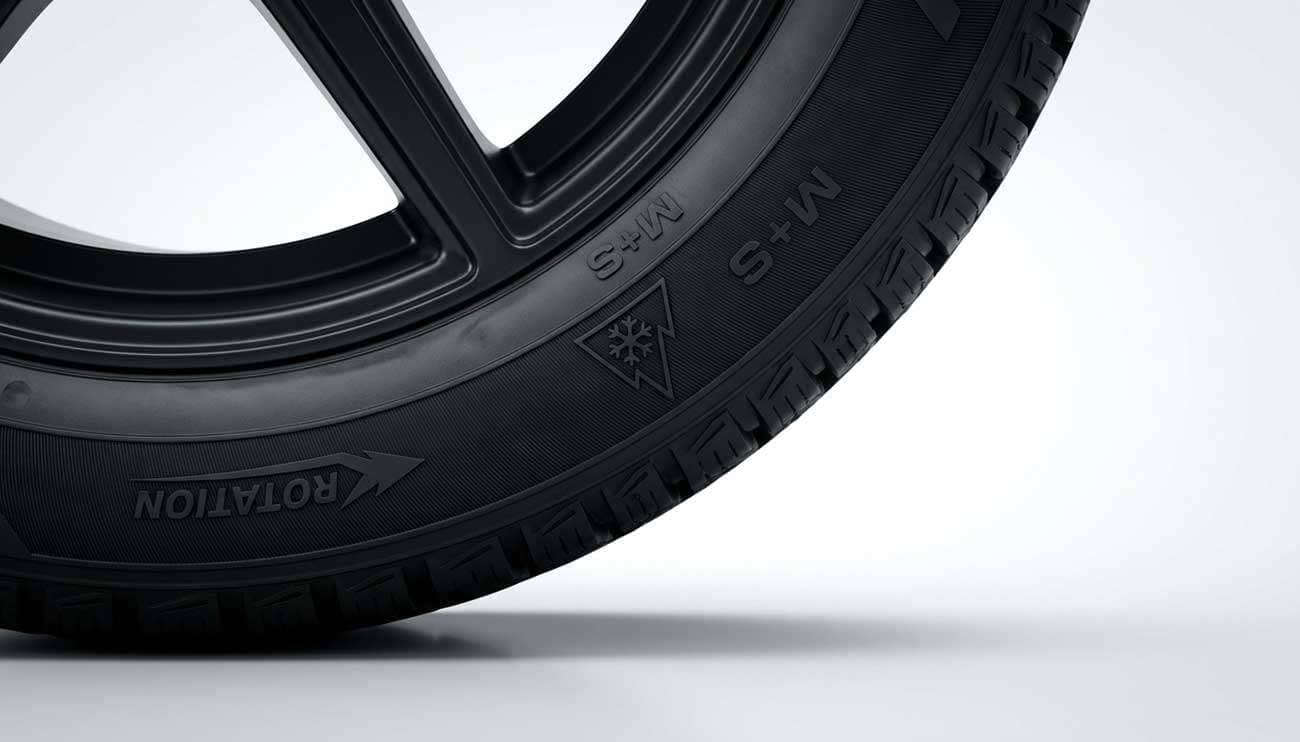
Most drivers assume mud and snow tires vs winter tires offer similar protection, but these tire types represent completely different safety standards. The M+S tire rating first appeared in the 1970s, yet many people still wonder what does M+S mean on a tire exactly? The M+S (Mud and Snow) designation appears to suggest winter capability, but these tires fall short of dedicated snow tire performance in regions that experience true winter conditions. The reality is startling - technically speaking, most tires meet the minimum requirements to receive the MS tire rating.
The stakes are high whether you're driving Quebec's roads, where winter tires are mandatory from December 1 to March 15, or British Columbia's mountainous highways requiring winter tires from October 1 to April 30. Understanding these tire differences becomes crucial for both safety and legal compliance. The Three Peak Mountain Snowflake on the side of a tire remains the best indicator that it has the good winter traction you would expect from a tire classified as a true 'winter tire'. Drivers who regularly face sub-zero temperatures and deeper snow will find that winter tires are specifically designed to provide the traction you need.
Understanding tire markings becomes essential when winter driving conditions demand proper traction and safety. These symbols tell you exactly what performance to expect from your tires.
The M+S symbol (also written as M&S, M/S, or MS) stands for "Mud and Snow." This designation requires no specific performance testing whatsoever. The rating depends entirely on the tire's tread design geometry. A tire earns the M+S rating when at least 25% of its tread surface consists of open spaces or grooves.
M+S tires deliver better starting, stopping, and driving performance than regular tires in moderate snow conditions. However, the performance of M+S marked tires is neither defined nor measured by any standardized testing. This means you're getting a design-based rating, not a proven performance standard.
The Three-Peak Mountain Snowflake (3PMSF) symbol sets a much higher standard than M+S alone. Tire manufacturer associations established this certification in 1999 to identify tires that achieve a traction index equal to or greater than 110 compared to a reference tire rated at 100 during standardized snow traction tests.
The 3PMSF symbol guarantees the tire has passed rigorous testing for winter performance, unlike the M+S designation. Since January 2018, this symbol has become mandatory for winter or all-weather tires in many regions.
All winter tires carry the 3PMSF symbol, but not all tires with this symbol are dedicated winter tires. The test measures only acceleration traction on medium-packed snow – not braking, turning ability, or ice performance. This means even with 3PMSF certification, you need to consider your specific driving needs.
Tire sidewalls contain detailed information beyond winter capability indicators. The markings follow a standard sequence that includes:
Tire width in millimeters
Aspect ratio (tire height as percentage of width)
Construction type (usually "R" for Radial)
Rim diameter in inches
Load index and speed rating
The manufacture date appears as a four-digit code at the end of the DOT field, with the first two numbers indicating the week and last two showing the year of production. This information helps you determine tire age, which affects performance and safety.
The science behind tire performance reveals profound differences between basic M+S and specialized winter tires in cold conditions.
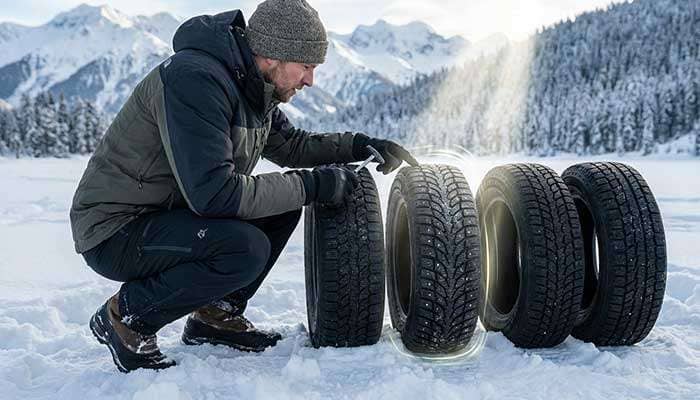
Winter tires feature chunky, aggressive tread patterns with deeper grooves specifically engineered to channel snow and slush away from contact points. These designs create maximum surface contact with the road while providing escape routes for snow and water. M+S tires merely need 25% of their tread pattern to be open space, with no actual snow performance testing required. The difference becomes clear when you consider that winter tire treads are purpose-built for traction, while M+S patterns only need to meet basic geometric requirements.
The most significant distinction lies in the rubber formulation. Winter tires utilize specialized compounds that remain flexible in freezing temperatures, whereas M+S tires typically harden and lose grip below 7°C (45°F). This temperature threshold—not snowfall—determines when winter tires become necessary for optimal safety. When rubber hardens, it can't conform to road irregularities, reducing the contact patch that provides grip.
Winter tires contain numerous fine, deep cuts called "sipes" that act like claws on slippery surfaces. These sipes create additional biting edges that dramatically improve grip on ice and snow. The aggressive siping pattern allows the tire to flex and conform to road irregularities even in subzero conditions. Each sipe opens and closes as the tire rolls, providing thousands of additional gripping edges.
Real-world testing reveals dramatic safety differences. At just 12 mph on ice, vehicles with winter tires stopped in 34 feet, versus 57 feet with all-seasons—a 23-foot difference. Other tests show winter tires can shorten braking distances by up to 34% on icy roads. This performance gap widens as temperatures drop and conditions worsen.
Looking for quality winter tires? Performance Plus Tire offers premium winter tire options that provide superior traction in challenging conditions.
Winter tire regulations across North America create a complex landscape where compliance matters for both safety and your wallet.
M+S tires satisfy legal requirements in most regions without strict winter tire legislation. British Columbia accepts M+S tires for basic winter tire compliance, provided they maintain adequate tread depth, even with more demanding regulations in mountainous areas. Most North American jurisdictions still recognize M+S markings as meeting minimum legal standards, though requirements continue to evolve.
Quebec sets the gold standard with North America's most rigorous winter tire law. The province requires proper winter tires from December 1 to March 15, with violations costing drivers $200 to $300. British Columbia mandates either winter tires or chains on most routes between October 1 and April 30, though some lower-elevation highways lift this requirement on March 31. Quebec provides exemptions for trailers, farm machinery, and vehicles registered outside the province.
Chain requirements vary significantly across different regions. Colorado requires chains for commercial vehicles on I-70 between September and May, with penalties ranging from $50 to $1,000 for violations. Studded tire rules show similar variation—Saskatchewan and Yukon allow year-round use, while other areas impose strict seasonal restrictions. Ontario permits studded tires only between October 1 and April 30, exclusively for Northern Ontario residents.
Insurance companies rarely deny coverage based solely on tire choice, but your tire selection can influence fault determination in accidents. The Lepage v. Quimper case demonstrates this principle—the defendant avoided liability partly due to using studded winter tires. Some insurers recognize proper winter tire installation with discounts up to 5%.
Understanding these regulations helps you make informed decisions about winter tire purchases and avoid costly penalties while protecting your safety on winter roads.
Selecting the right tires for your climate comes down to understanding how different tire types perform in the conditions you actually face. Your driving environment and typical weather patterns should guide your decision.
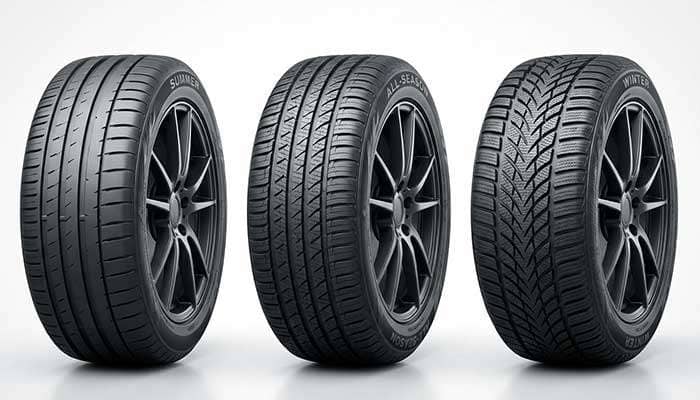
The term "all season" misleads many drivers—these tires work well in moderate conditions but fall short during extreme winters. All season tires lose much of their grip once temperatures fall below 7°C (45°F). They're essentially three-season tires if you regularly encounter snow.
All weather tires provide a true year-round solution with the Three-Peak Mountain Snowflake (3PMSF) symbol, making them acceptable for winter use. The tread pattern of all weather tires is more aggressive than all season tires and includes additional features for improved winter traction. The key advantage is their ability to maintain flexibility in cold temperatures where all season tires become rigid.
M+S tires are essentially all-season tires with approval for muddy and snowy conditions. They offer better traction than summer tires but still underperform when temperatures drop below 7°C. Drivers who regularly face sub-zero temperatures and deeper snow will find winter tires provide the safest option.
Looking for quality winter tires that provide superior traction? Check out Performance Plus Tire's winter tire collection for options designed to keep you safe in challenging conditions.
Switch to winter tires once temperatures consistently stay below 7°C (45°F). For most North Americans, this timing falls around Thanksgiving through April. Pay attention to morning temperatures—typically the coldest part of your daily commute.
Make the transition back to all-season or performance tires once overnight temperatures consistently rise above 7°C. Winter tires wear rapidly in warm weather as the soft compound breaks down quickly on hot pavement.
Here's a side-by-side breakdown of the key differences that matter for your winter driving safety:
Feature |
M+S Tires |
Winter Tires |
|---|---|---|
Certification Requirements |
25% of tread surface must be open spaces/grooves |
Must pass rigorous winter performance testing and earn Three Peak Mountain Snowflake (3PMSF) symbol |
Temperature Performance |
Harden and lose grip below 7°C (45°F) |
Remain flexible in freezing temperatures |
Testing Standards |
No specific performance testing required |
Must achieve traction index ≥110 in standardized snow tests |
Tread Design |
Basic open space design |
Chunky, aggressive patterns with deeper grooves |
Siping Features |
Not specifically mentioned |
Numerous fine, deep cuts for improved ice grip |
Stopping Distance on Ice (at 12 mph) |
57 feet |
34 feet |
Legal Status in Quebec Winter Laws |
Not compliant |
Mandatory Dec 1 - Mar 15 |
BC Winter Requirements |
Acceptable with adequate tread depth |
Fully compliant |
Best Usage Scenario |
Moderate snow conditions |
Sub-zero temperatures and deeper snow |
The numbers tell the story clearly. That 23-foot difference in stopping distance on ice could be the difference between a safe stop and a collision. When you're making your tire selection, these specifications matter more than price alone.
Understanding the differences between M+S and winter tires becomes essential when winter safety is at stake. True winter tires with the Three Peak Mountain Snowflake symbol deliver superior performance compared to basic M+S tires when temperatures drop below 7°C (45°F). The stopping distance difference—23 feet shorter on ice at just 12 mph—represents the kind of margin that can prevent accidents during winter driving.
The rubber compounds make all the difference in your safety. Winter tires stay flexible in freezing conditions, while M+S tires harden and lose the grip you need most. M+S tires may satisfy legal requirements in some regions, but they can't match winter tire performance in places with strict winter tire laws like Quebec.
Your location and driving conditions should guide your tire selection. When you're facing serious winter weather, Performance Plus Tire offers premium winter tire options specifically designed to keep you safe during the harshest winter conditions.
The science behind tire performance speaks for itself. The tire choice you make before snowfall arrives could determine whether your journey ends safely or dangerously. Winter driving isn't just about meeting legal requirements—it's about protecting yourself and your passengers when road conditions become treacherous.
At Performance Plus Tire, we understand that your safety depends on having the right tires for the conditions you face. We're here to help you make the best choice for your vehicle and driving needs.
Understanding the critical differences between M+S and winter tires can be the difference between safe winter driving and dangerous road conditions.
• M+S tires lack performance testing - They only need 25% open tread space with no actual snow performance requirements, making them inadequate for true winter conditions.
• Winter tires stop 23 feet shorter on ice - At just 12 mph, winter tires stopped in 34 feet versus 57 feet for M+S tires, a potentially life-saving difference.
• Temperature, not snowfall, determines tire needs - Switch to winter tires when temperatures consistently drop below 7°C (45°F), as M+S tires harden and lose grip.
• Look for the Three Peak Mountain Snowflake symbol - This certification guarantees rigorous winter performance testing, unlike the basic M+S marking.
• Legal requirements vary significantly - Quebec mandates winter tires December-March, while BC accepts M+S tires with adequate tread depth in most areas.
The science is clear: winter tires' specialized rubber compounds and aggressive tread patterns provide superior safety in cold conditions. Don't let basic M+S markings give you false confidence when facing serious winter weather.
While M+S (Mud and Snow) tires provide better traction than regular tires in moderate snow conditions, they are not as effective as dedicated winter tires in severe winter weather. M+S tires tend to harden and lose grip below 7°C (45°F), making them less suitable for true winter conditions.
Winter tires significantly outperform M+S tires in icy conditions. At 12 mph on ice, vehicles with winter tires stopped in 34 feet, compared to 57 feet with M+S tires - a 23-foot difference that could be crucial for safety.
It's recommended to switch to winter tires when temperatures consistently drop below 7°C (45°F). This is typically around Thanksgiving for most North Americans, and the tires should remain on until April when temperatures rise above this threshold.
The M+S symbol only indicates that 25% of the tire's tread surface consists of grooves, with no performance testing required. The Three Peak Mountain Snowflake symbol, however, certifies that the tire has passed rigorous winter performance testing, making it a more reliable indicator of winter capability.
Legal requirements for winter tires vary by region. For example, Quebec mandates winter tires from December 1 to March 15, while British Columbia requires either winter tires or chains on most routes between October 1 and April 30. It's important to check local regulations for specific requirements in your area.



