
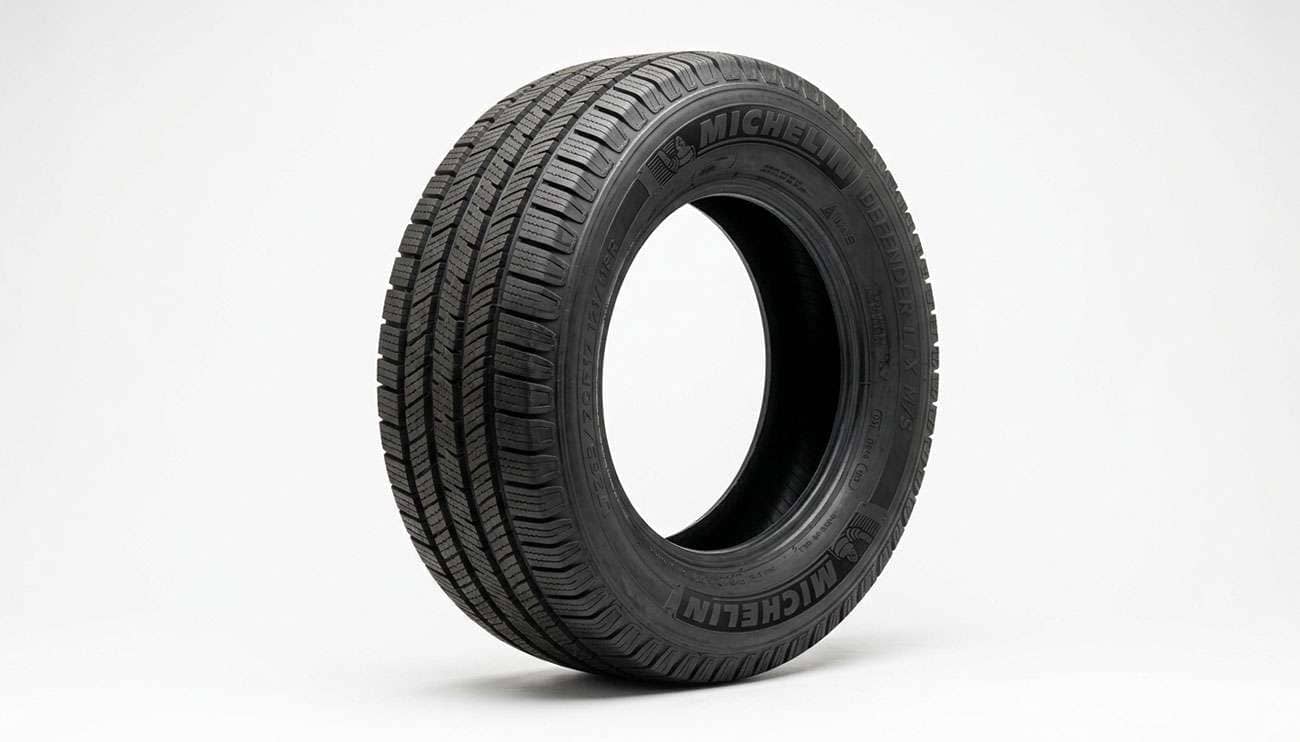
Partly, and the answer depends on your size code rather than the model name. Michelin has not killed the Defender LTX M/S in one announcement. It is retiring the tire one size at a time as the Defender LTX M/S2 takes over that size. Popular truck fitments like 265/70R17 are still in production right now. Others, including 245/60R18 and 285/45R22, are already gone. Read the numbers off your sidewall before you read another review, because two owners of the same tire can get opposite answers.
That is the part every other article skips. Search this question and you get "it is being phased out" with no indication of what the phase-out actually keys on. It keys on size availability in the successor line. Michelin launched the Defender LTX M/S2 with 53 sizes and said outright that those sizes would arrive in stages. Every time a stage lands, the equivalent Defender LTX M/S size stops being produced. So the honest answer to "is it discontinued" is a lookup, not a yes or no.
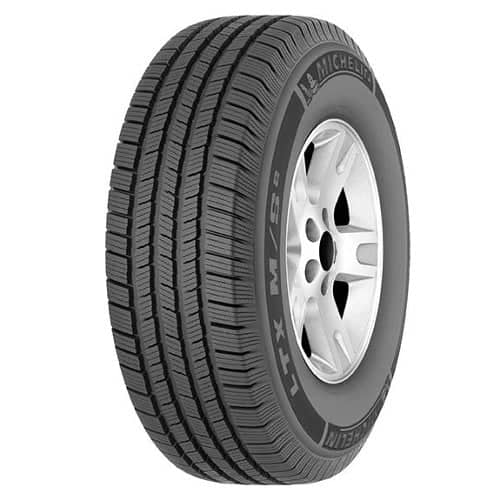
Here is the whole family, untangled, because half of these questions exist only because Michelin has put the letters LTX on seven different tires.
Model Name |
What It Actually Is |
Status Today |
|---|---|---|
LTX M/S |
The original light truck highway line |
Long discontinued |
LTX M/S2 |
Second generation, factory tire on a lot of 2000s trucks |
Discontinued |
Defender LTX M/S |
The M/S2 tread pattern carried over with the EverTread compound |
Being retired size by size |
Defender LTX M/S2 |
The 2023 replacement, EverTread 2.0 compound, new casing |
Current, still adding sizes |
Defender LTX Platinum |
Heavy duty flagship using heavy truck tread technology |
Current, 20 inch fitments |
Premier LTX |
Crossover and SUV touring tire with EverGrip grooves |
Separate line, still available |
Defender 2 |
Passenger car and small crossover tire, not a truck tire |
Current, unrelated to LTX |
Yes, and in its category the gap is wider than most people expect. This tire earned its reputation on two numbers that Michelin has published against named competitors rather than against a vague industry average.
In wet braking from 50 mph in size 265/70R17, the Defender LTX M/S stopped in 136.5 feet. The Bridgestone Dueler H/L Alenza Plus took 163.0 feet in the comparable size. The Firestone Destination LE2 took 144.5 feet, and the Goodyear Wrangler SR-A took 170.7 feet. That 26.5 foot spread over the Bridgestone is roughly a car and a half of stopping distance, which is the difference between a hard stop and a body shop estimate.
On the snow traction index from the same test set, the Defender LTX M/S was scored at 100 percent against 49 percent for the Bridgestone Dueler H/L, 72 percent for the Firestone, and 79 percent for the Goodyear. For a highway all-season tire wearing a plain M/S marking, that is an unusually strong showing.
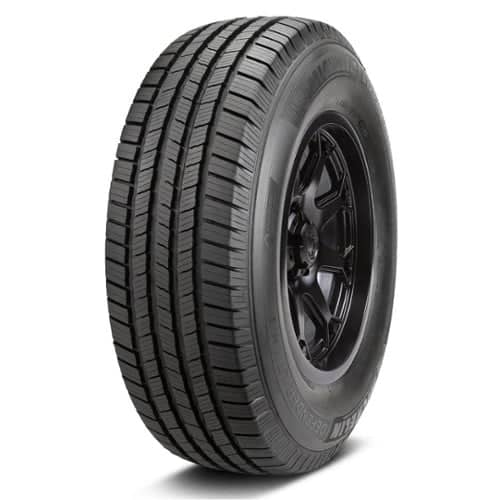
The headline technology is the EverTread compound. Compound engineering is a tradeoff between grip and wear resistance, and the lever is crosslink density in the rubber matrix. A softer, less densely crosslinked compound conforms to road texture and grips well, but it abrades faster and tears more easily when a loaded shoulder block gets dragged sideways. EverTread sits further toward the durable end of that curve and adds tear resistance specifically so the tire survives gravel, curbs, and heavy axle loads without chunking. Michelin rates it at roughly 10 percent more life in severe conditions than the LTX M/S2 it replaced.
The second piece is MaxTouch Construction, which is a casing and footprint design aimed at spreading braking, accelerating, and cornering forces evenly across the contact patch. Uneven pressure distribution is the root cause of most premature wear patterns. When the center rib carries more load than the shoulders, you get center wear. When the shoulders carry more, you get the classic underinflation pattern. A flatter pressure profile is why so many owners report unusually even wear across the full tread face.
The tread itself uses independent blocks with symmetric shoulder kerfs and four wide circumferential grooves. Those grooves are the water evacuation path, and their volume is what keeps the contact patch dry at speed.
Being fair about limits is how you avoid buying the wrong tire, so here is the short list. The Defender LTX M/S does not carry the three peak mountain snowflake symbol, which means it has not passed the severe snow service traction test. It is genuinely capable in light snow for an all-season, but a dedicated winter tire is a different category of grip and there is no way around that.
It is also not an off-road tire. It handles gravel, dirt, grass, and light mud without complaint, and the tear resistant compound helps on washboard forest roads, but the tread void is far too tight for mud or loose rock. If your truck spends real time off pavement, the all-terrain side of the family is the correct answer.
Finally, it carries a premium price. Sets run roughly 123 to 460 dollars per tire depending on size, and the value case rests entirely on the tire going the distance. If you sell vehicles every three years or drive 6,000 miles annually, you will never collect on the tread life you paid for. For a longer term owner report on how the brand premium actually pays back over a set, we walked through it in what 50,000 miles on a Michelin Defender taught me.
The line is being retired, but not on a single date. Understanding the mechanism tells you exactly what to do about your vehicle.
On October 2, 2023, Michelin announced the Defender LTX M/S2 and the Defender LTX Platinum together. The M/S2 launched with 53 sizes covering pickups and traditional SUVs from model year 2013 forward. The Platinum launched with six 20 inch fitments aimed at heavy duty and luxury trucks. Michelin stated plainly that sizes for both tires would launch in stages over the following months.
That staged rollout is the whole story. Michelin does not run two overlapping products in the same size any longer than it has to, because that splits mold capacity and dealer inventory. So as an M/S2 size comes online, production of the equivalent Defender LTX M/S size winds down. Dealers sell through remaining stock, and eventually the size shows as unavailable.
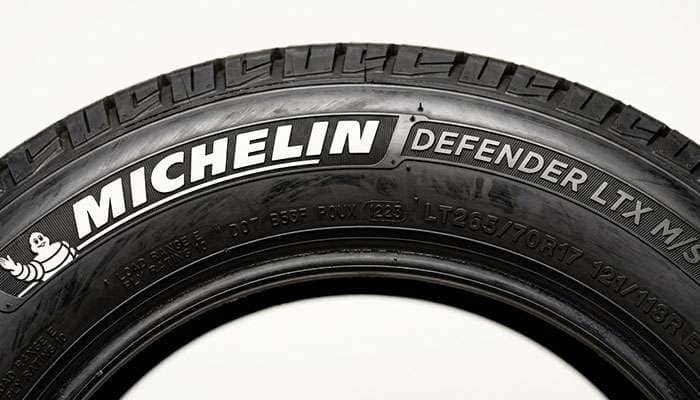
Read the size code off the sidewall, not off a forum post. It is the string that looks like 265/70R17 or LT275/65R20. Then work through this ladder.
What You Find |
What It Means |
What to Do |
|---|---|---|
Your size is listed in both M/S and M/S2 |
You are in the overlap window, which will not last |
Buy whichever is priced better, but check date codes on the M/S |
Your size shows only in M/S2 |
The transition is finished for your fitment |
Buy the M/S2, it is a direct same size replacement |
Your size shows only in the original M/S |
The M/S2 has not reached your fitment yet |
Buy now, availability will narrow over time |
Your size shows in neither |
Michelin has dropped the fitment from the LTX line entirely |
Move to the Platinum, the Premier LTX, or a competitor |
Some fitments have already fallen off the end. 245/60R18 and 285/45R22 owners have been running into this for a while, and Michelin has pointed some of them toward the passenger car Defender 2 instead. Be careful with that substitution. The Defender 2 is built for cars and crossovers, it carries a lower temperature rating, and its casing is not designed for the loads a body-on-frame SUV puts through it. If you are genuinely moving to a lighter vehicle it is a fine tire, and we covered it in detail in our review of the Defender 2, but it is not a peer replacement for a truck tire.
When a size winds down, remaining inventory sits somewhere. That inventory is still perfectly sellable, and often discounted, but it is not automatically fresh. Check the DOT code on the sidewall. The last four digits are the week and year of manufacture, so 2224 means the twenty second week of 2024.
Age matters because rubber does not sit still. Tire compounds contain antiozonants that migrate slowly to the surface to protect against ozone attack. That migration depends on the tire being flexed. A tire sitting on a warehouse rack is not flexing, the protective layer does not renew the same way, and oxidation slowly continues crosslinking the polymer chains. The compound gets harder and more brittle, and micro-cracking starts at the base of the tread grooves and in the sidewall flex zone. A five year old tire with full tread depth has less wet grip and less fatigue resistance than its tread depth suggests.
Practical rule for a clearance set: inside two years is fine and worth buying. Two to four years, expect a real discount. Beyond four years on a tire you plan to keep for 70,000 miles, the math stops working, because the tire will age out before the tread wears out.
These are not two quality tiers of the same tire. They are aimed at different vehicles and they solve different problems, which is why the comparison confuses people.
The Defender LTX M/S is a light truck and SUV highway all-season. Its priorities, in order, are tread life, casing toughness, and all-weather traction. The Premier LTX is a crossover and SUV touring tire. Its priorities are wet grip, ride refinement, and steering response.
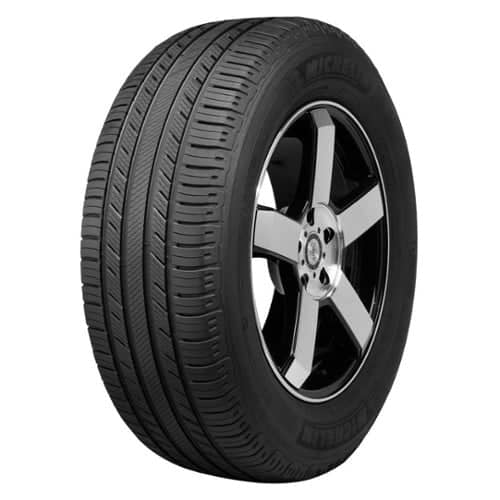
Specification |
Defender LTX M/S |
Premier LTX |
|---|---|---|
Intended vehicle |
Pickups, body-on-frame SUVs, vans |
Crossovers and unibody SUVs |
Signature technology |
EverTread compound, MaxTouch Construction |
EverGrip expanding and emerging grooves |
Compound character |
Tear resistant, wear focused |
High silica with sunflower oil, grip focused |
Treadwear warranty |
70,000 miles on T and H rated sizes |
60,000 miles |
Strongest in |
Load carrying, deeper snow, gravel, mileage |
Wet grip, especially as the tread wears down |
Price per tire |
Roughly 123 to 460 dollars |
Roughly 159 to 300 dollars |
Every tire loses wet performance as it wears, and the reason is geometric rather than chemical. Water evacuation depends on groove void volume. A new highway tire might have 10/32 or 11/32 of tread depth. At 4/32, the groove cross section has lost more than half its capacity, and the volume of water the tire can move per revolution falls off sharply. That is why hydroplaning speed drops so much on a half worn tire.
EverGrip attacks that directly. The circumferential rain grooves on the Premier LTX are cut with a profile that widens as the tread surface wears down, which partly offsets the loss of depth. Additional grooves in the shoulder are molded below the surface and emerge as the tire wears, adding biting edges that a conventional tread would have lost. It is a clever piece of engineering and it is the reason the Premier LTX is the wet weather pick between the two.
The Defender takes the opposite approach. It keeps a tougher casing, a compound built to resist tearing under load, and an extra 10,000 miles of warranty coverage. Where the Premier wins on wet grip late in life, the Defender wins on how much life there is and on what the tire can survive along the way. It also holds an advantage once snow gets deeper than a dusting.
The decision comes down to what you do with the vehicle. A Highlander or a Pilot that commutes in rain and never sees a trailer hitch is a Premier LTX vehicle. Anything that tows, hauls, runs gravel roads, or carries a family plus gear over a mountain pass is a Defender vehicle.
The warranty number and the real number are both defensible, and they are not the same number. Start with the warranty, because this is where nearly all the disappointment comes from.
The Defender LTX M/S carries a 70,000 mile treadwear warranty on Euro-metric and P-metric sizes with T and H speed ratings. LT-metric sizes carry 50,000 miles. That is a 20,000 mile difference between two tires with the same name on the sidewall, and most buyers never see the distinction until they are arguing at the counter.
The reasoning is sound even if the marketing is confusing. LT-metric tires run substantially higher inflation pressures, carry heavier loads, and end up on vehicles that work. Higher load and higher pressure mean higher energy going through the tread per mile. Michelin is not going to warranty 70,000 miles on a tire fitted to a three quarter ton truck that tows every weekend. Worth knowing as well: government UTQG treadwear ratings do not apply to light truck sized tires at all, so you cannot compare LT tires the way you compare passenger tires.
Reported results run from about 30,000 miles to well past 100,000, and the spread is not random. Owners on Tacomas, F-150s, and Highlanders running P-metric sizes on mostly highway miles regularly report 80,000 to over 100,000 miles per set. Owners towing heavy on LT-metric sizes report 30,000 to 40,000. Both groups own the same model.
Four variables explain nearly all of that spread.
Alignment, specifically toe. Toe error is the single most destructive setting for tread life because it makes the tire scrub sideways every foot of every mile. A toe angle out of spec by a fraction of a degree can scrub a set of tires in 20,000 miles while leaving camber and caster looking fine. It also produces feathered edges on the tread blocks that you can feel by running a hand across the tread.
Rotation interval. Drive axles wear faster than free-rolling axles, and steer axles wear the shoulders. Rotating every 5,000 to 7,500 miles keeps the four tires wearing as a set. Skipping rotations does not just cost you the difference between two tires, it costs you the whole set, because you replace all four when the worst two are done.
Inflation. Running 5 psi below placard increases sidewall flex, which raises operating temperature, which accelerates compound wear at the shoulders. The tire also carries less of the load on the center rib, so the wear concentrates where it does the most damage to the wear pattern.
Suspension condition. This is the one nobody checks. Worn shocks or struts let the tire bounce at its natural frequency, which loads and unloads the tread blocks periodically as the tire rolls. The result is scalloped or cupped wear, and once it starts it accelerates, because the high spots now carry more load. We laid out the full diagnostic sequence in what causes tire cupping.
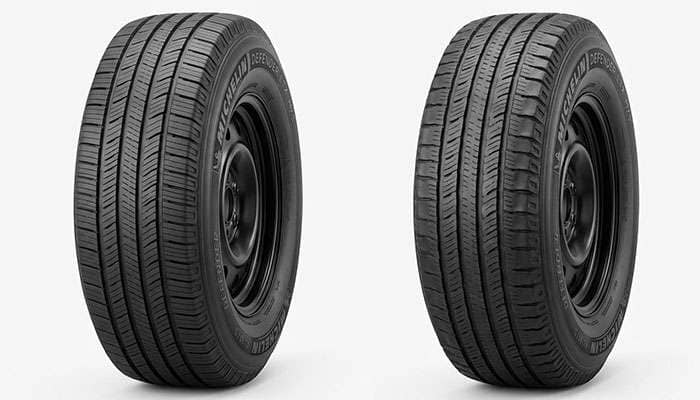
The damage ladder on this tire is gradual, which is exactly why it gets expensive. Running 5 psi low costs roughly 15 to 20 percent of tread life and a measurable amount of fuel economy. Skipping rotations past 10,000 miles typically costs another 10,000 to 15,000 miles off the set. A toe angle left out of spec can take 40 percent or more. Worn shocks that cup the tread do not just shorten life, they turn a quiet tire into a howling one, and cupping is not reversible.
Stack those and a 70,000 mile tire becomes a 35,000 mile tire. At premium pricing, that is roughly 600 to 900 dollars of tread you paid for and threw away, plus the alignment or shock work you still have to do. And when you file the treadwear claim, the warranty pays on a prorated basis against remaining tread depth, not with a free set. We ran the numbers on how that proration actually works in tire mileage warranty proration, and the payout is usually smaller than people expect.
By design, no. It is one of the quieter highway tires in its class, and plenty of owners describe it as the quietest tire they have ever run on a truck. But the complaints are real, and they are not evenly distributed. Three separate populations get lumped together under one question.
On 16 to 18 inch wheels with a normal sidewall, the Defender LTX M/S is consistently rated as quiet, smooth, and unobtrusive, and it tends to stay that way as it wears. This is the majority of the fleet and the source of the tire's reputation.
Owners running 20 inch and larger wheels report a firmer ride and more impact harshness. That is a sidewall aspect ratio effect, not a tread pattern effect. A shorter sidewall has less rubber to absorb an expansion joint, so more of the impact energy transmits into the suspension and the cabin as a sharp noise rather than a muted thump. The same tire on a taller sidewall behaves differently. Nothing is wrong with the tire.
This is the big one. Michelin sells the Defender LTX Platinum, which is a genuinely different tire with a more aggressive tread and roughly 52 pounds of mass in a 275/65R20, compared to about 43 pounds for the Defender LTX M/S2 in a similar size. The Platinum is a heavy duty tire and it makes more noise. Owners describe it as noisy, other owners read "Defender LTX is noisy" and assume it applies to the highway tire. It does not.
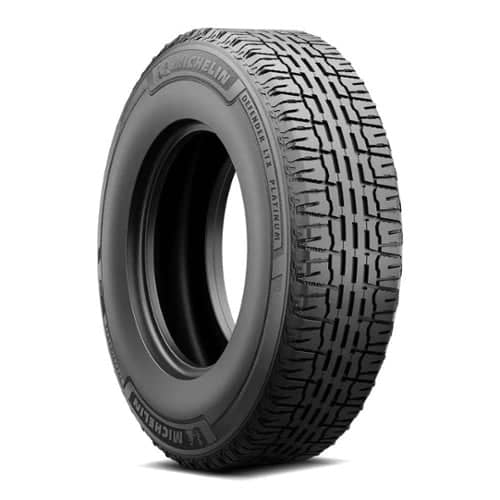
Tread noise comes primarily from block passing frequency. Every tread block that enters and leaves the contact patch produces a small pressure pulse. If all the blocks are the same length, those pulses arrive at a single frequency and your ear hears a pure tone, which is exactly what it is best at detecting. Manufacturers defeat this by varying the block lengths around the circumference in a designed sequence, called pitch sequencing, which smears the acoustic energy across a band of frequencies. Spread energy reads as broadband whoosh instead of a whine. The Defender LTX M/S also uses symmetric shoulder kerfs that break up the shoulder block edges, which is where a lot of the airborne noise gets generated.
The key insight is this: a tire that was quiet when new and got loud later did not change its pitch sequence. Something changed the tread surface. Use this to diagnose.
Symptom |
Most Likely Cause |
Fix |
|---|---|---|
Loud from day one, uniform hum |
Balance or road force issue from installation |
Road force balance, not just static balance |
Howl that rises and falls with speed |
Cupping or scalloped wear from worn dampers |
Replace shocks, then check if tread is salvageable |
Growl that changes when you turn |
Wheel bearing, not the tire at all |
Inspect bearings before replacing tires |
Noise that appeared after 30,000 miles |
Heel and toe shoulder wear from missed rotations |
Rotate on schedule, cross rotate to even it out |
Harsh impacts over seams, not a hum |
Low aspect ratio sidewall on a large wheel |
Nothing wrong, this is the wheel package |
One installation note worth insisting on. Ask for a road force balance rather than a standard spin balance. A standard balance corrects mass distribution only. Road force measurement presses a loaded roller against the tire and measures variation in the force it pushes back, which catches stiffness variation in the casing and lets the technician match the tire's high spot to the wheel's low spot. On a heavy truck tire, that difference is very audible. If you want a broader breakdown of noise sources, we covered them in tire noise causes explained.
LTX is a Michelin family name for its light truck line, and that is the whole of it. It is a marketing designation, not a technical specification. It tells you the intended vehicle class and nothing about construction, compound, tread depth, or season rating.
This matters because people read LTX as though it were a rating and then get surprised when two LTX tires behave completely differently. Michelin currently sells or has recently sold the LTX A/T2, the LTX Trail, the Defender LTX M/S, the Defender LTX M/S2, the Defender LTX Platinum, and the Premier LTX. Those span highway all-season, all-terrain, heavy duty, and crossover touring. Same three letters, entirely different tires.
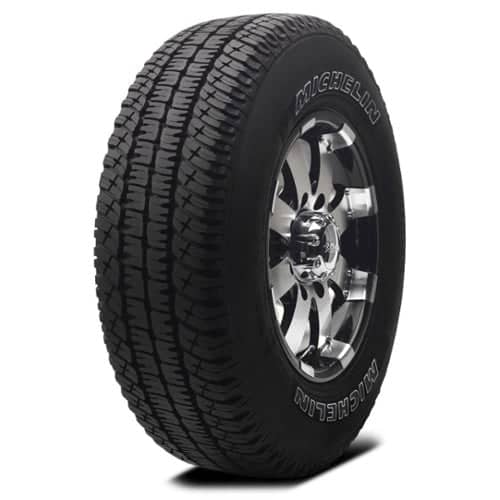
Since we are on the sidewall, here is what does carry technical meaning, because these are the markings worth reading.
LT prefix. A size starting with LT rather than P or nothing is a light truck metric tire. LT tires are engineered to a different load and inflation standard, they run higher pressures, and their load index is expressed as a pair of numbers for single and dual wheel applications. An LT tire is not a P tire with a tougher label. If you want the full breakdown, we covered it in how to read tire load range and ply ratings.
M/S or M+S. This is the marking most often misread. M/S stands for mud and snow, but it is a self-certified geometric marking based on the tread pattern's void ratio and groove geometry. No traction test is required to earn it. It is a statement about tread shape, not about measured grip.
Three peak mountain snowflake. This one is earned. It requires passing a standardized snow traction test against a reference tire. The Defender LTX M/S does not carry it. That does not make the tire bad in snow, and the comparative data above shows it is actually strong for its class, but the two markings are not equivalent and should not be treated as such.
DOT code. Required under FMVSS 139. It identifies the manufacturing plant, the size, an optional manufacturer code, and the week and year of production in the final four digits.
If you are cross-shopping the all-terrain side of the LTX family, we put the LTX A/T2 head to head against the segment benchmark in Michelin LTX A/T2 versus BFGoodrich KO2.
Here is the whole family sorted by what you actually do with the truck, which is a more useful axis than price.
Your Situation |
Right Tire |
Why |
|---|---|---|
Half ton truck or SUV, mostly highway, your size is still made |
Defender LTX M/S |
Proven wear, quiet, and usually the better price right now |
2013 or newer truck, buying today, planning to keep it |
Defender LTX M/S2 |
Current line, EverTread 2.0, better wear under load |
Three quarter ton or one ton on 20 inch wheels, tows regularly |
Defender LTX Platinum |
Heavy truck tread technology, dramatically longer life under load |
Crossover or unibody SUV, wet climate, no towing |
Premier LTX |
EverGrip holds wet traction as the tread wears down |
Truck that sees dirt, gravel, and trailheads |
LTX A/T2 |
All-terrain void without giving up highway manners |
Passenger car or small crossover |
Defender 2 |
Correct casing for the vehicle, not a downgraded truck tire |
If your size has already gone out of production and none of the above covers it, that is worth a phone call rather than a guess, because substituting across load ranges or aspect ratios changes load capacity, speedometer calibration, and sometimes brake clearance.
You can browse current pricing and size availability across the full range on our Michelin tires page, and if your fitment is one of the ones Michelin has already retired, our fitment desk can tell you what is actually in stock in the correct load range before you commit to a substitution.
The Defender LTX M/S is not discontinued in the sense people mean when they ask. It is in a managed retirement that moves one size at a time, and your fitment is either past that line or it is not. That single fact resolves most of the confusion around this tire, and it is the reason two people can argue about availability while both being right.
Everything else follows from the same theme, which is that Michelin has attached the letters LTX to too many products. The noise complaints mostly belong to the Platinum. The tread life disappointment mostly belongs to buyers who read the P-metric warranty number and bought an LT-metric tire. The Premier LTX comparison keeps coming up because the names look adjacent even though the tires are aimed at different vehicles.
Sort out which tire you are actually talking about and the Defender LTX M/S turns back into what it has always been: a light truck highway tire with class-leading wet braking, genuinely strong snow numbers for an all-season, and a compound that will outlast the alignment on most trucks it gets bolted to. If your size is still in production and priced right, it remains an easy recommendation. If it is not, the M/S2 is a direct step forward rather than a compromise.
Michelin permits it when you are only replacing two tires, and specifies that the new tires go on the rear axle. Replacing all four is still the recommendation, because the two models have different compounds and slightly different wear rates, which can produce uneven handling balance over time. If you are only two tires into a set, mixing is an acceptable bridge rather than a permanent plan.
No. It carries the M/S mud and snow marking, which is a self-certified marking based on tread geometry rather than a traction test. It performs well in light snow for an all-season tire, and Michelin's comparative snow traction data is strong against its direct competitors, but it has not passed the severe snow service test that the three peak mountain snowflake requires. If you regularly drive in deep snow or on ice, a dedicated winter tire is the correct choice.
If your truck carries weight, yes. The M/S2 uses the updated EverTread 2.0 compound and a casing designed around heavier modern trucks, and independent testing shows a meaningfully improved wear pattern under load. If your vehicle is a lighter SUV doing highway commuting and your size is still available in the original M/S at a lower price, the older tire remains an excellent buy and the performance gap is small.
Read the DOT code on the sidewall. The final four digits give the week and year of manufacture, so 3823 means the thirty eighth week of 2023. Anything inside two years is fine. Two to four years should come with a real discount. Beyond four years, the rubber has been oxidizing and stiffening on the rack, and the tire may age out before you wear the tread off, which defeats the purpose of buying a long-mileage tire.
No. LT-metric sizes carry a 50,000 mile treadwear warranty. The 70,000 mile figure applies to Euro-metric and P-metric sizes with T and H speed ratings. LT tires run higher inflation pressures and carry heavier loads, which puts more energy through the tread per mile. This distinction is the single most common source of tread life disappointment with this tire.
Work through the family first. If you run a 20 inch heavy duty fitment, the Defender LTX Platinum may cover it. If you drive a crossover, the Premier LTX is a strong option. Michelin sometimes points truck owners toward the Defender 2, but that is a passenger car and small crossover tire with a lighter casing and a lower temperature rating, so it is not a peer replacement for a body-on-frame vehicle. When nothing in the family fits, a competitor in the correct load range is a better decision than forcing a substitution.



