
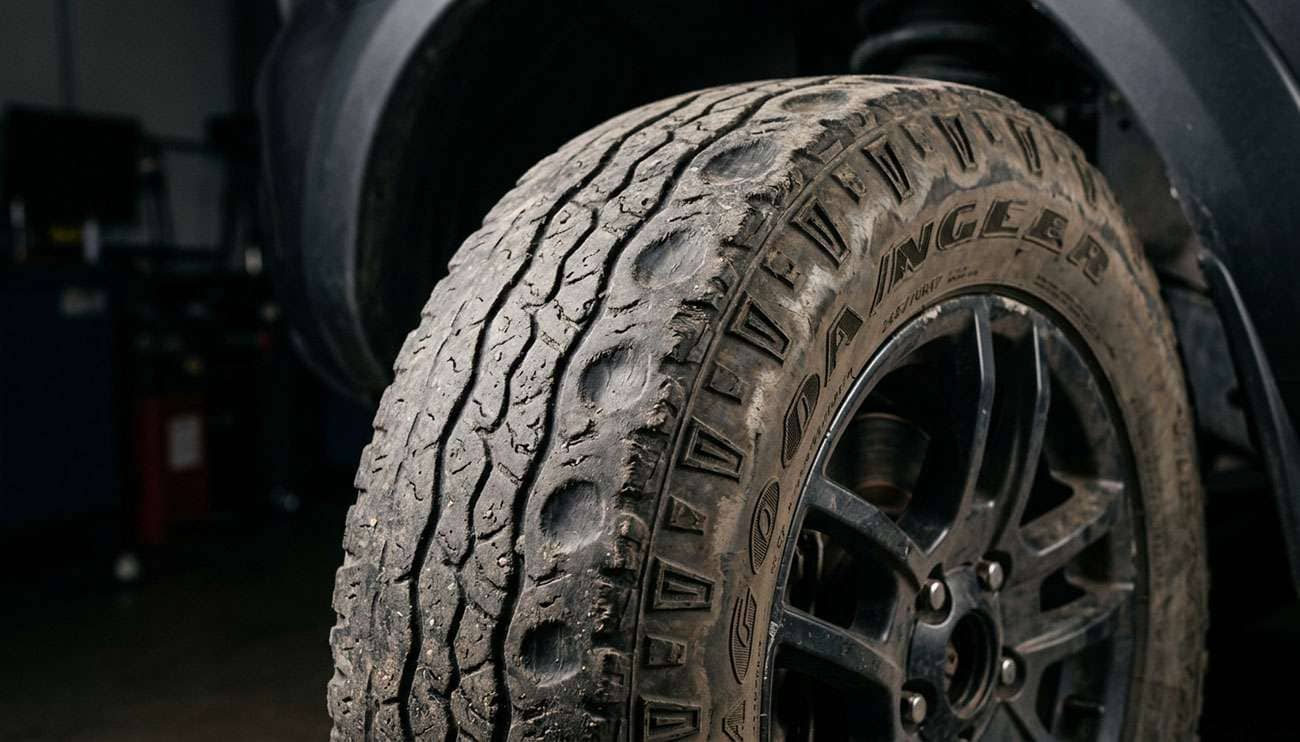
That rhythmic thumping through your steering wheel or floorboard — the kind that gets worse the faster you go — is your tires telling you something is seriously wrong. Tire cupping, also called tire scalloping or tire chopping, ranks among the most common yet most misunderstood forms of uneven tire wear on the road today. It doesn't just eat through your tread faster; it hammers your suspension components, degrades your ride quality, and turns into a genuine safety hazard if you let it go.
This guide breaks down exactly what causes tire cupping, how to catch the symptoms before they spiral, and — most critically — how to prevent it from happening in the first place. It doesn't matter whether you drive a daily commuter, a performance car, or a pickup truck. This information applies directly to you. By the time you finish reading, you'll know how to shop smarter for tires built to resist cupping, and you'll have specific, vetted recommendations ready to go.
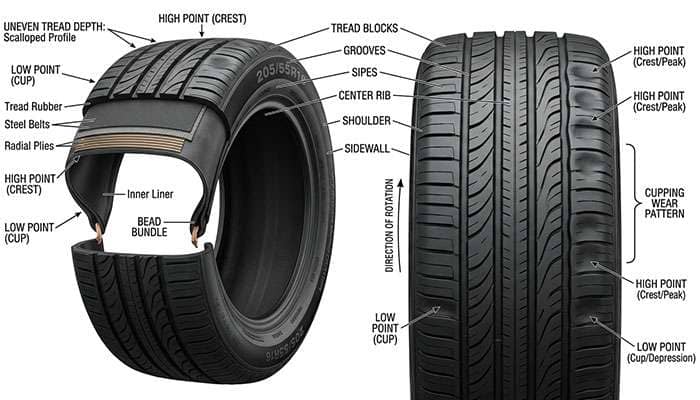
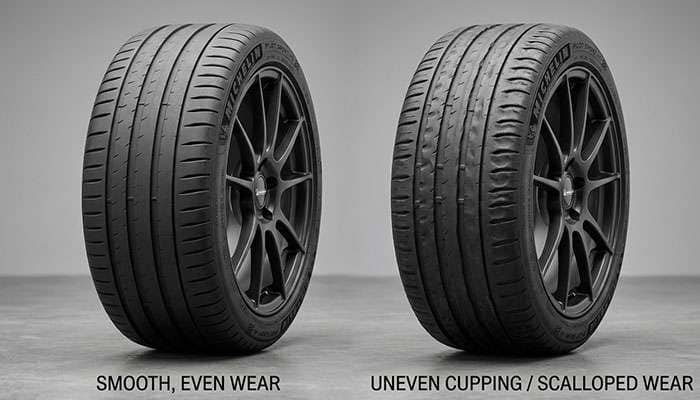
Tire cupping develops when sections of your tread wear down in a wavy, scalloped pattern instead of eroding evenly across the contact patch. Certain spots take a more violent beating against the road than others, creating a repeating series of high and low spots around the tire's circumference. Those high and low spots generate the thumping noise and vibration you feel through the chassis. The depth difference between peaks and valleys can range from a few millimeters to something you can feel with your bare hand — and once that pattern establishes itself, it accelerates fast.
The root causes fall into a few clear categories: worn or failed shock absorbers and struts, incorrect tire inflation, wheel imbalance, degraded suspension components, or a tire with construction that's too soft for your vehicle's suspension dynamics. It's rarely one factor acting alone. Most cupping cases involve two or three contributing issues working in combination. Identifying exactly which factors are at play in your situation determines the right fix — and whether you'll actually solve the problem or just burn through another set of tires.
Two spec-level factors predict cupping risk better than anything else: tread compound hardness and construction stiffness. Softer tread compounds — the kind you find on summer performance tires — deform more aggressively under the bouncing motion that causes cupping, especially when suspension is out of spec. Stiffer sidewall construction resists the flex that allows uneven road contact in the first place.
Treadwear ratings give you a direct window into compound hardness. A rating of 300 or below means a relatively soft compound — typical of max-performance summer tires. A rating of 500 or higher signals a harder compound that resists the abrasive, localized wear that leads to scalloping. The goal isn't to always buy the hardest compound available. The goal is to match compound hardness to your vehicle's actual suspension condition and real-world driving demands. Get that match right, and you've solved most of the problem before you even mount the tires.
The most expensive mistake drivers make is blaming tire cupping entirely on tire quality. Yes, a poorly manufactured tire with inconsistent rubber density can cup on its own — but in the vast majority of cases, cupping is a symptom flagging something wrong elsewhere on your vehicle. Replacing tires without fixing worn shocks or correcting inflation pressure is like treating a fever while leaving the infection untouched. You'll be standing in the same spot with the same problem on a brand-new set of tires within 10,000 to 15,000 miles.
Running significantly under-inflated tires is the second major mistake. Under-inflation lets the tire flex excessively with every revolution — and when you combine that flex with any suspension bounce, you've created ideal conditions for cupping to take hold. Most passenger car tires need a monthly pressure check and should stay within 2 to 3 PSI of your vehicle manufacturer's recommended pressure. That's the number on the door jamb sticker — not the maximum pressure molded into the tire sidewall, which is an entirely different figure. The third critical mistake is skipping rotation intervals. Rotating every 5,000 to 7,500 miles redistributes wear forces before any single spot can develop a cupped pattern. That interval isn't a suggestion — it's the difference between tires that last and tires that don't.
Here's a quick reference for interpreting the specs most relevant to cupping resistance when you're comparing tires side by side:
Specification |
Lower Value Means |
Higher Value Means |
Cupping Risk |
|---|---|---|---|
Treadwear Rating |
Softer compound, faster wear |
Harder compound, longer life |
Lower ratings = higher risk on worn suspension |
Load Index |
Less load capacity, thinner sidewall |
More load capacity, stiffer sidewall |
Under-rated tires flex more and cup faster |
Speed Rating |
Softer, more compliant construction |
Stiffer, more precise construction |
Higher-rated tires typically resist cupping better |
UTQG Traction Grade |
Stickier, softer compound |
Less sticky, firmer compound |
Grade AA/A most vulnerable on bouncy suspensions |
Choosing a cupping-resistant tire isn't about grabbing the most expensive option on the shelf — it's about matching a tire's construction to your vehicle's suspension condition and your actual driving habits. A soft performance tire on a vehicle with 80,000-mile shocks will cup regardless of the brand name on the sidewall. A stiffer touring tire on a well-maintained suspension will last longer and wear far more evenly. Your job before placing any order is to get those variables aligned.
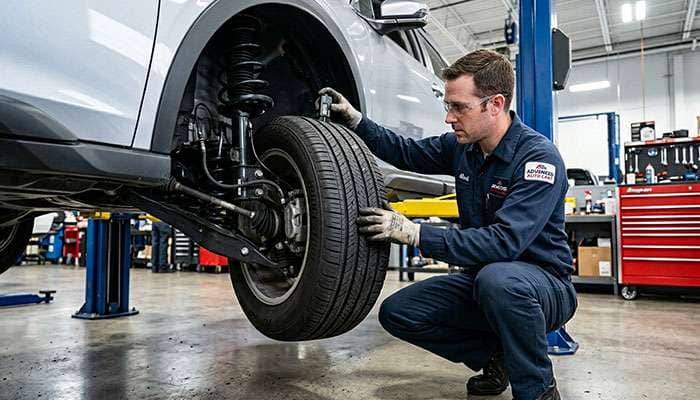
Start with the OEM size and load rating from your owner's manual or door jamb sticker — this is non-negotiable. Tires under-rated for your vehicle's weight flex more than intended, and that excess flex dramatically raises cupping risk. If you drive a truck or SUV, never step down in load index, especially if you tow or carry loads regularly. Before you buy anything, verify your suspension is in good working order. A simple bounce test tells you a lot: push down firmly on each corner of the bumper and count the oscillations. More than 1.5 bounces after you release means your shocks are likely worn and need attention before new tires go on.
For trucks and SUVs, you can browse the full selection of truck tires at Performance Plus Tire to find options with the right load ratings and construction stiffness for your specific application.
Hard cornering, late braking, and high-stress maneuvers demand a tire with a stiff carcass that won't deform dramatically under lateral loads. The same goes for drivers who regularly encounter rough pavement or broken road surfaces — your tire's ability to hold consistent contact without bouncing is everything. If your daily routine is mostly highway miles on smooth pavement with minimal aggressive inputs, you have more flexibility to choose a softer, more comfortable compound without meaningfully elevating your cupping risk.
Performance drivers get the most out of tires engineered with reinforced internal construction and stiffer sidewalls. These tires maintain a more consistent contact patch even when your suspension is working hard, cutting off the opportunity for scalloped wear to develop in the first place.
There's a real trade-off here worth being direct about. Budget-tier tires from lesser-known brands regularly use less consistent rubber compounds and less precise internal construction — and that inconsistency shows up as uneven wear, including cupping, even on vehicles with healthy suspensions. That said, a mid-tier tire from a reputable manufacturer on a well-maintained vehicle will almost always outlast a premium tire on one with worn shocks and wrong inflation pressure.
The priority order is clear: invest in suspension maintenance first, tire quality second. If your budget is limited, put the money toward a wheel alignment and shock inspection before you spend it on the most expensive tire you can find. A $120 tire on a properly maintained vehicle will outlast and outperform a $200 tire on one with blown-out struts. That's not an opinion — it's physics.
With a clear understanding of what drives cupping and how construction affects wear, here are the top tire picks organized by driver category. Every tire on this list was selected specifically because its construction — compound hardness, sidewall stiffness, and internal architecture — makes it genuinely resistant to cupping under normal operating conditions. Pair any of these with a healthy suspension and correct inflation pressure, and you should see even, predictable tread life across the full mileage span.
Daily commuters need a tire that delivers even wear over long intervals, handles mixed weather with real confidence, and doesn't demand constant attention. The Michelin Pilot Sport All Season 4 stands out here. Its stiff internal construction combined with an all-season compound resists the localized deformation that leads to cupping — making it an ideal fit for drivers putting 15,000 to 20,000 miles per year on mixed road conditions. The BFGoodrich g-Force COMP-2 A/S Plus is another excellent daily-driver choice, with a firmer all-season compound that holds up exceptionally well even on vehicles where suspension isn't perfectly dialed in.
Performance tires present a tougher challenge for cupping prevention — softer compounds deliver the grip you want, but they're inherently more vulnerable to uneven wear if your suspension isn't in top shape. The Michelin Pilot Sport 4S is the top pick in this segment because its internal construction ranks among the stiffest in the max-performance summer category, helping it resist bounce-induced wear even under hard use. The Continental ExtremeContact Sport 02 and the Goodyear Eagle F1 Asymmetric 6 round out this category — both feature reinforced sidewall construction that significantly cuts the lateral and vertical flex responsible for scalloped wear patterns.
In the budget segment, focus on tires with higher treadwear ratings and stiffer construction rather than chasing wet-weather or performance grip numbers. The Falken Azenis FK510 punches well above its price point, delivering construction quality that genuinely resists cupping. For an even more economical path, explore the touring tire category — touring tires are designed around longevity and even wear as primary objectives, which makes them naturally more cupping-resistant than performance-focused budget tires. Whatever you choose at this price point, confirm the load index is correct for your vehicle and commit to a strict 5,000-mile rotation schedule. That discipline will do more to protect your tires than any specific brand choice ever will.
Tire cupping looks mysterious until you understand the mechanics — and once you do, it's highly preventable. The core principle is straightforward: cupping happens when tires bounce against the road instead of rolling smoothly through it. That bouncing comes from some combination of worn shocks, incorrect tire pressure, wheel imbalance, or tires that aren't properly matched to your vehicle. Address the underlying cause, choose a tire with the right construction characteristics, and stay disciplined about rotation intervals, and cupping stops being your problem.
Every tire recommendation above — from daily-driver all-seasons to max-performance summer tires — shares one common trait: construction quality that resists the flex and deformation responsible for scalloped wear. But even the best tire on the market will cup if your suspension is worn out. Before you spend a dollar on new rubber, get your shocks and struts inspected. That single step is the most valuable investment you can make in tire longevity, and it costs far less than replacing a prematurely destroyed set of tires.
Ready to find the right tires for your vehicle? Browse the full inventory at Performance Plus Tire and use the vehicle selector to match the correct size and load rating to your specific make and model. If you have questions about what you're seeing on your current tires or want a recommendation based on your driving conditions, don't hesitate to reach out — we're here to help you get it right the first time.
Here are the five most important things to take away from this guide on tire cupping.
• Cupping is a symptom, not just a tire problem: In most cases, tire cupping points to worn shocks or struts, incorrect tire pressure, or wheel imbalance — not just a bad tire. Fix the root cause before replacing tires.
• Tire construction matters as much as brand: Tires with stiffer sidewalls, higher treadwear ratings, and proper load indexes are significantly more resistant to cupping than soft-compound, under-rated alternatives.
• Inflation pressure is critical: Running even 5–6 PSI under the recommended pressure dramatically increases flex and bounce per revolution, creating ideal conditions for scalloped wear to develop.
• Rotation every 5,000–7,500 miles is non-negotiable: Regular rotation redistributes wear forces before any pattern can establish itself — this is the single easiest preventive measure available to any driver.
• Match the tire to your actual use case: A max-performance summer tire on a daily driver with aging suspension is a bad combination. Choose a tire whose compound hardness and construction stiffness are appropriate for your vehicle's condition and your driving habits.
Tire cupping is caused by a bouncing motion between the tire and the road, most commonly triggered by worn shock absorbers or struts, incorrect tire inflation, wheel imbalance, or degraded suspension components. Once a tire is significantly cupped, the uneven tread pattern can't be reversed — you'll need to replace it. What you can do is fix the underlying cause before mounting new tires. Address the suspension issue and correct your inflation pressure first, and the cupping won't come back.
The clearest signal is a rhythmic thumping or rumbling noise that gets louder as your speed increases. You'll also feel vibration through the steering wheel or floorboard, and you'll see a visually scalloped or wavy wear pattern on the tread surface. At highway speeds, the vehicle may feel less planted and stable than normal. With the vehicle safely raised, you can run your hand carefully around the circumference of the tread — the alternating high and low spots of a cupped tire are easy to feel once you know what you're looking for.
Mildly cupped tires aren't an immediate emergency, but they do compromise vehicle stability and braking performance by reducing consistent road contact. Severely cupped tires need to come off as soon as possible. The high and low spots in the tread mean your braking distances increase and wet-weather traction drops. On top of that, the constant vibration from cupped tires accelerates wear on wheel bearings and other suspension components — turning what started as a tire issue into a much larger and more expensive repair bill.
Most tire manufacturers and automotive technicians recommend rotating every 5,000 to 7,500 miles. If your vehicle has known suspension wear or you drive aggressively, go with the shorter 5,000-mile interval. Rotation moves each tire to a different axle and side position, redistributing the wear forces that — if left concentrated in one spot — develop into the scalloped cupping pattern. Combine regular rotation with monthly pressure checks and you've covered the two most effective preventive steps any driver can take.
Yes — though it's less common than suspension-related cupping. Budget-tier tires from manufacturers with looser quality control can have inconsistent rubber density throughout the tire, meaning some sections of tread are slightly softer or harder than others. That inconsistency creates uneven wear even when your suspension is in good shape. Your best protection in the budget segment is to choose tires from established mid-tier brands with documented quality processes, maintain correct inflation pressure every single month, and stick to a strict rotation schedule without exception.



