
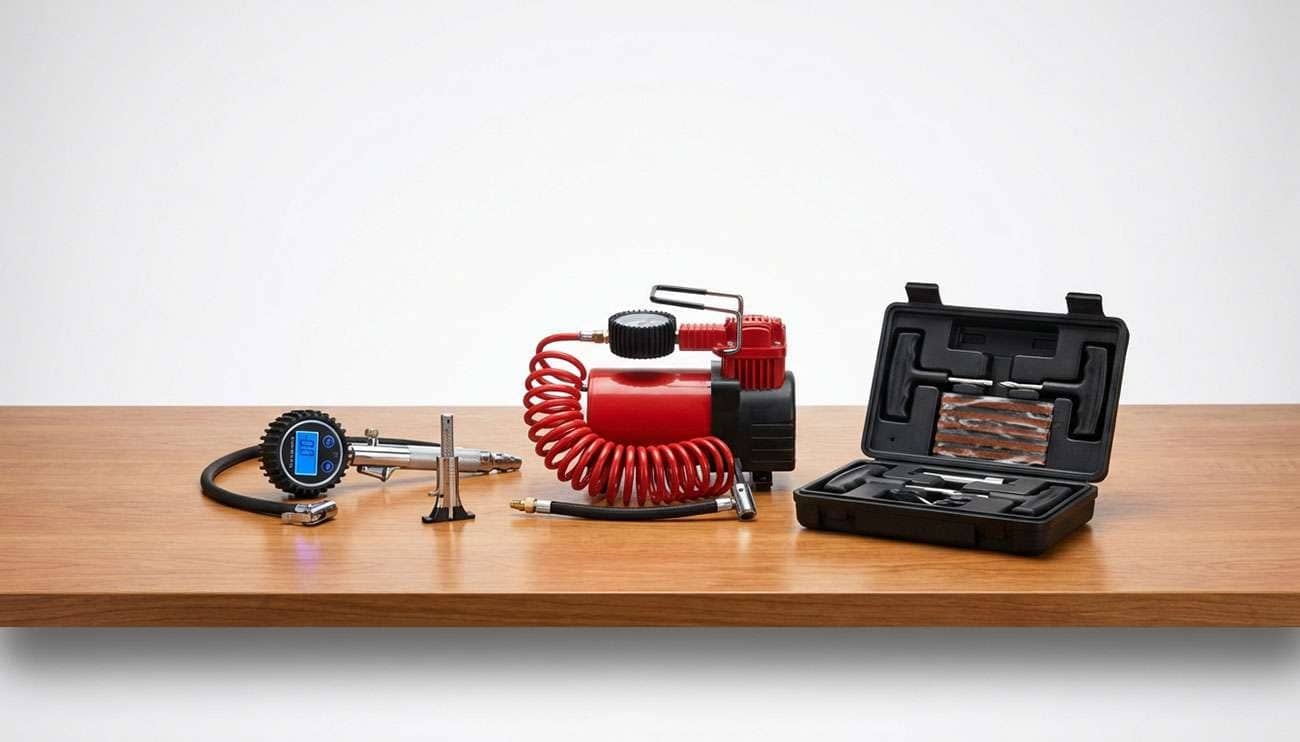
A small puncture can strand you on the roadside with a flat tire. Tire tools aren't just convenient accessories—they're smart investments that save hundreds in emergency roadside service calls and repair bills.
We believe proper tire maintenance represents one of the most effective ways to protect your wallet and safety on the road. Experts recommend tire replacement when tread depth reaches 2/32 of an inch, but the right tire repair tools extend tire life and handle minor issues before they become expensive problems. Properly inflated tires deliver a smoother, more efficient ride while boosting your vehicle's fuel efficiency.
Tire plug kits serve as your first defense against punctures, while quality tire inflators maintain optimal pressure to prevent additional damage. Whether you're a seasoned DIY enthusiast or someone who wants to avoid unnecessary repair costs, these seven essential tire tools will pay for themselves many times over.
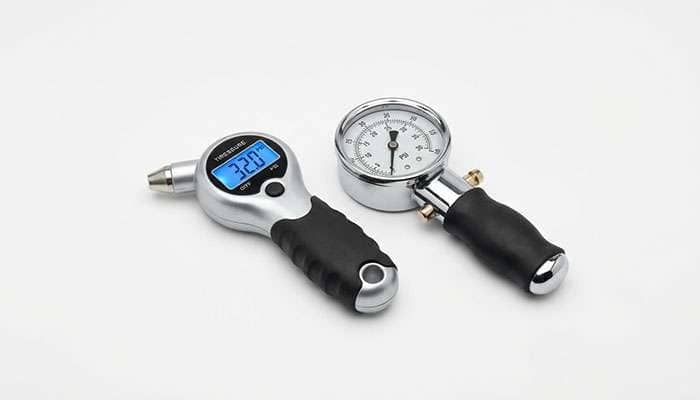
Tire pressure gages rank among the most essential yet overlooked tools in vehicle maintenance. Studies show nearly 30% of vehicles have at least one under-inflated tire, making accurate pressure monitoring critical for both safety and performance. We recommend keeping a quality gage in your glove box for monthly checks and before long trips.
Tire pressure gages come in three main types, each offering distinct advantages:
Digital Gages: These feature backlit LCD displays for clear readings in low light conditions. Most digital models provide instant readings with precision accuracy, typically measuring in 0.5 PSI increments. Advanced features include programmable target pressure settings, automatic shut-off for battery conservation, and the ability to switch between pressure units (PSI, kPa, or BAR). Premium models include integrated tread depth measurement and built-in flashlights.
Analog Gages: These traditional dial-faced tools require no batteries. Quality analog gages feature oil-filled chambers for optimal accuracy, pressure spike prevention, and cushioned movement that extends internal component lifespan. Professional models include protective rubber bumpers, braided hoses, and solid brass hardware for maximum durability.
Pencil-Style Gages: These compact, pencil-shaped tools offer the most basic functionality. They're affordable and reliable but typically provide readings in 2.0 PSI increments, making them less precise than digital or analog alternatives.
Premium gages meet ANSI B40.1 calibration standards, with Grade B representing the highest consumer standard, rated for 3% accuracy (±1.2 PSI) from 15 to 45 PSI. Many professional models include swivel connections at both chuck and body for easier valve stem access, particularly with tight wheel spokes or deep wheels.
The primary advantage of owning a personal tire pressure gage is measurement accuracy. Service station gages often suffer from weather damage and calibration issues. Your own gage ensures consistent, reliable readings every time.
Properly inflated tires deliver significant advantages:
Improved fuel efficiency and superior vehicle handling
Extended tire life through prevention of uneven wear patterns
Enhanced safety by reducing blowout risk
Accurate pressure maintenance requires the right tools. Modern tire pressure monitoring systems typically warn only of significant pressure loss rather than indicating optimal inflation levels. Technology failures make backup gages essential.
Digital gages with large displays offer particular value for those requiring reading glasses, as analog gages can be difficult to read in poor lighting. Premium models include bleeder valves that allow precise pressure adjustments without removing the gage.
Quality tire pressure gages offer exceptional value considering their importance:
Pencil-style analog gages: Under $5
Quality digital gages with backlit displays: $7 to $45
Premium analog gages with hoses and liquid-filled displays: Around $30
Price differences reflect construction quality, accuracy levels, and additional features. Digital gages cost more due to electronics and battery requirements, yet provide superior convenience through easier readings.
When selecting a gage, match it to your vehicle requirements and personal preferences. Most passenger cars operate in the 30-40 PSI range, making a gage with 60 PSI maximum capacity ideal for everyday vehicles. Trucks, trailers, or specialty vehicles with higher pressure requirements need gages with extended range capabilities.
The proper tire pressure appears on your vehicle's driver's door jamb placard, not on the tire sidewall. Check pressure when tires are "cold"—meaning the vehicle hasn't been driven for at least three hours.
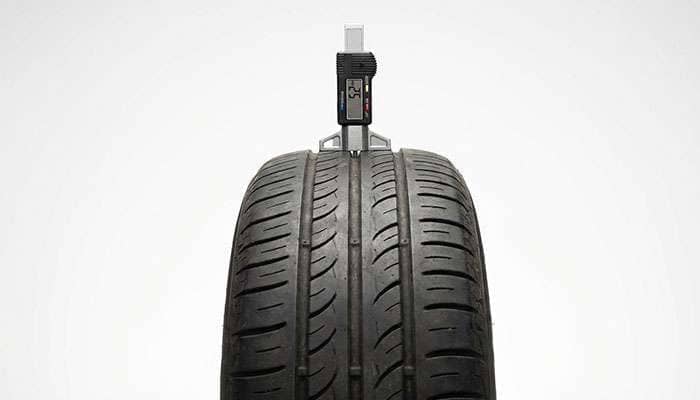
Tire tread depth monitoring stays vital for vehicle safety and performance. A tread depth gage becomes an indispensable tool in your tire maintenance arsenal, delivering precise measurements that visual inspections simply cannot match.
Tread depth gages come in various designs, each with distinct capabilities:
Analog Gages: These traditional tools use a small probe that extends into the tire's tread groove. Once inserted, the "shoulders" of the gage rest flat against the tread block, providing a reading on the attached scale. Most analog gages measure in both 32nds of an inch and millimeters, making them versatile for different measurement preferences. Their simplicity makes them reliable without battery concerns.
Digital Gages: These advanced tools offer precise electronic measurements with clear digital displays. Many models include backlit screens for visibility in poor lighting conditions. Digital gages typically provide accuracy within ±0.0381 mm, delivering highly precise readings that help track gradual tread wear over time.
Combination Tools: Some manufacturers offer multi-function devices that combine tread depth measurement with tire pressure monitoring. These convenient tools reduce the number of items needed in your maintenance kit while providing comprehensive tire health information.
Professional-grade digital tread depth gages feature data storage capabilities that record measurements for tracking wear patterns across multiple tires or vehicles. This documentation proves invaluable for fleet maintenance or monitoring long-term tire performance.
Regular tread depth monitoring delivers multiple advantages:
Early Detection: Identifying uneven wear patterns early helps diagnose alignment problems, suspension issues, or improper inflation before they cause expensive damage or premature tire replacement.
Safety Maintenance: Proper tread depth ensures adequate traction in wet conditions. At 2/32 inch—the legal minimum in most states—stopping distances increase dramatically. Monitoring helps you replace tires before reaching dangerous wear levels.
Cost Optimization: Tracking wear rates helps predict replacement timing, allowing budget planning and tire shopping when deals are available rather than emergency purchases at premium prices.
The penny test offers a rough estimate, but dedicated tread depth gages provide precise measurements essential for accurate tire assessment. Lincoln's head disappearing indicates approximately 2/32 inch remaining—already at the replacement threshold.
Tread depth gages span a wide price range based on features and precision:
Basic analog gages: $3.33 to $10
Quality digital gages: $15 to $50
Professional-grade digital models with data storage: $100 to $349.95
For most vehicle owners, a quality digital gage in the $20-$30 range provides excellent accuracy and durability for regular home use. Professional mechanics and fleet managers benefit from higher-end models with documentation capabilities.
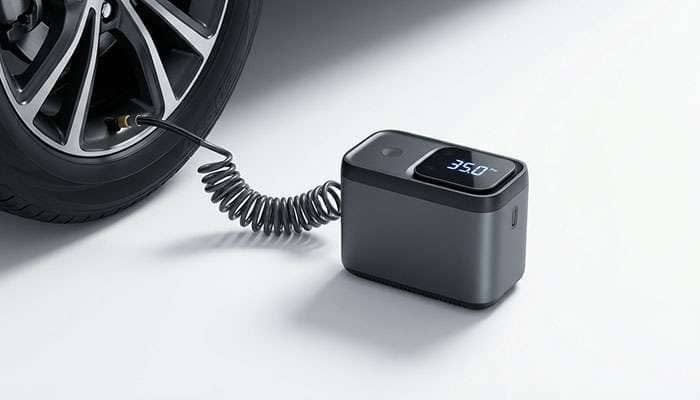
A portable air compressor transforms tire maintenance from a service station dependency into convenient home or roadside capability. These versatile tools do far more than inflate tires—they provide peace of mind knowing you can address pressure issues anywhere, anytime.
Modern portable air compressors pack impressive capabilities into compact designs:
Power Options: Most portable models plug into your vehicle's 12-volt accessory outlet, drawing power directly from the car battery. Higher-end compressors offer rechargeable lithium-ion batteries for cordless operation, eliminating cable management hassles during use.
Digital Displays: Quality compressors feature digital pressure readouts showing real-time inflation progress. Advanced models include programmable target pressure settings with automatic shutoff when the desired PSI is reached—preventing over-inflation while allowing hands-free operation.
Flow Rate: Compressor efficiency is measured in liters per minute (LPM) or cubic feet per minute (CFM). Higher flow rates mean faster inflation times. A quality portable compressor should inflate a standard car tire from flat to proper pressure in 5-10 minutes.
Additional Features: Many models include LED work lights for nighttime emergencies, multiple valve adapters for bicycles and sports equipment, and carrying cases for organized storage. Some premium compressors feature dual-cylinder designs for faster inflation and continuous-duty operation.
Owning a portable air compressor delivers significant advantages:
Convenience: No more hunting for gas stations with working air pumps or carrying loose change for coin-operated machines. Maintain proper tire pressure from your own garage or any parking location.
Emergency Preparedness: A slow leak discovered miles from the nearest service station becomes manageable rather than stranding. Temporary inflation gets you to a repair shop safely.
Cost Savings: Many service stations now charge $1-$2 per use for air. Regular pressure maintenance with your own compressor quickly recovers the purchase price while ensuring accurate inflation every time.
Versatility: Beyond vehicle tires, portable compressors inflate bicycle tires, sports balls, pool toys, air mattresses, and other inflatables. This multi-purpose functionality adds value beyond automotive use.
Portable air compressors range significantly based on power, features, and build quality:
Basic 12-volt compressors: $39 to $80
Mid-range digital compressors with auto-shutoff: $80 to $150
Premium battery-powered compressors: $150 to $500
For most vehicle owners, a quality mid-range compressor with digital display and automatic pressure shutoff provides the best combination of features and value. Budget models work adequately but often lack precision controls and may have shorter lifespans.
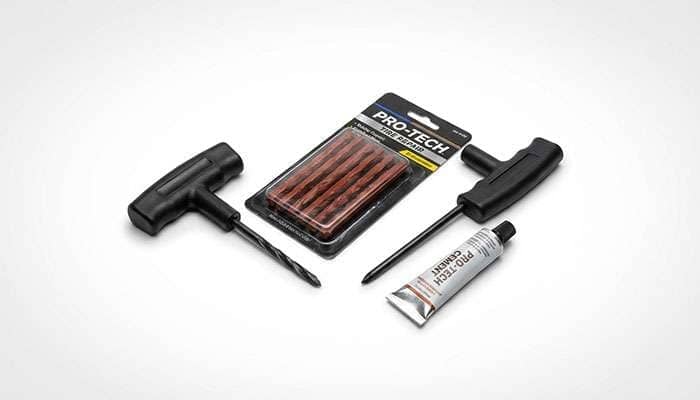
A tire plug kit provides immediate puncture repair capability that can save your day—and your wallet. These compact kits turn potential roadside disasters into minor inconveniences, offering temporary repairs that get you safely to a professional tire shop.
Quality tire plug kits contain essential components for effective puncture repair:
T-Handle Reamer Tool: This tool cleans and roughens the puncture hole, removing debris while creating a surface texture that helps the plug bond securely. Quality reamers feature hardened steel construction with comfortable grip handles.
T-Handle Plug Insertion Tool: The insertion tool holds the plug material and pushes it into the prepared puncture. A split-eye design releases the plug cleanly when withdrawn, leaving the repair in place.
Repair Plugs: These sticky, tar-like strips expand to fill puncture holes and bond with the tire interior. Most kits include multiple plugs for several repairs. Premium plugs feature vulcanizing compounds that create stronger, longer-lasting seals.
Rubber Cement: This adhesive lubricates plug insertion while providing additional sealing. Some modern plug designs eliminate the need for separate cement by incorporating vulcanizing compounds directly into the plug material.
Accessories: Complete kits often include spare valve cores, a valve core removal tool, and sometimes a small knife for trimming excess plug material flush with the tread surface.
Carrying a tire plug kit offers substantial advantages:
Immediate Solutions: Rather than waiting for roadside assistance or attempting to drive on a flat, you can complete a repair in 10-15 minutes and continue your journey.
Cost Savings: A single roadside service call typically costs $75-$150 or more. A quality plug kit priced under $30 pays for itself with one use and handles multiple repairs.
Simplicity: Unlike patch repairs that require tire removal, plug repairs work from the outside. No special equipment, tire dismounting, or professional skills needed—just basic mechanical ability and the kit instructions.
Compact Storage: Most kits fit easily in a glove compartment or trunk storage compartment, taking minimal space while providing significant emergency capability.
Understanding plug repair limitations ensures proper use:
Tread Area Only: Plug repairs work only for punctures in the tread area. Sidewall damage requires professional repair or tire replacement—plugs cannot safely seal sidewall punctures.
Size Restrictions: Most plugs handle punctures up to 1/4 inch diameter. Larger holes or slash damage exceeds plug capability.
Temporary Classification: Many tire manufacturers and safety organizations classify plug repairs as temporary solutions. A professional patch-plug combination repair from inside the tire provides a more permanent fix. However, quality plug repairs often last the remaining tire life when properly installed.
Tire plug kits offer excellent value across price ranges:
Basic kits with essential tools: $7 to $15
Standard kits with quality tools and multiple plugs: $15 to $30
Deluxe kits with premium tools and comprehensive accessories: $30 to $50
A standard kit in the $15-$25 range provides reliable tools and sufficient plugs for most vehicle owners. Professional mechanics may prefer deluxe kits with more robust tools and larger plug supplies.
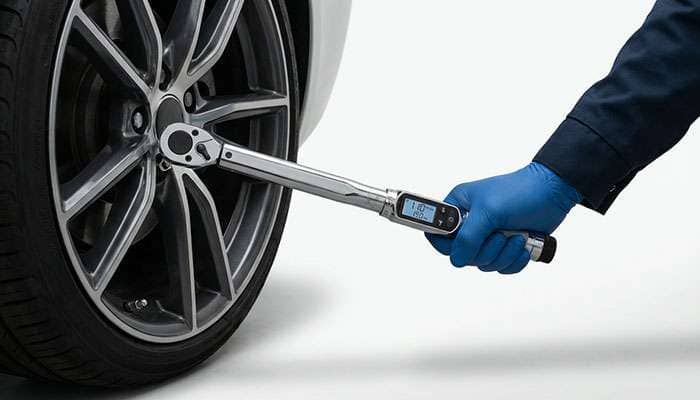
A torque wrench ensures your wheel lug nuts are tightened to exact manufacturer specifications—not too loose (risking wheel separation) and not too tight (risking damage to wheels, studs, and brake components). This precision tool transforms wheel changes from guesswork into measured accuracy.
Torque wrenches come in several designs suited to different needs:
Click-Type Wrenches: These popular wrenches produce an audible and tactile "click" when the preset torque value is reached. Users adjust the handle to the desired setting, then tighten until the click signals proper torque. This design allows working without constantly watching a gauge or display.
Digital Wrenches: Electronic torque wrenches display real-time torque values on digital screens, often with audible alerts at target torque. Many models store torque specifications and provide peak hold readings. Higher accuracy and easier reading make these ideal for precise work.
Beam/Dial Wrenches: These traditional designs use a beam that deflects against a fixed scale or a dial indicator showing applied torque. While requiring visual attention during use, beam wrenches maintain calibration longer than click-type models and cost less than digital alternatives.
Key specifications include torque range (typically 20-150 ft-lbs for automotive use), drive size (1/2 inch standard for lug nuts), and accuracy rating (±4% being common for quality tools). Professional wrenches feature ISO 6789 certification confirming calibration accuracy.
Proper torque application prevents multiple problems:
Wheel Security: Under-torqued lug nuts can loosen during driving, potentially causing wheel separation—a catastrophic failure. Torque wrenches ensure nuts are properly secured.
Component Protection: Over-tightening damages wheel studs, cracks alloy wheels, warps brake rotors, and strips threads. These repairs cost far more than the wrench itself. Proper torque prevents this expensive damage.
Consistent Results: Human judgment of "tight enough" varies significantly. A torque wrench delivers the same precise tightening every time, regardless of user strength or perception.
Manufacturer Compliance: Following factory torque specifications maintains warranty coverage and ensures the vehicle performs as engineered.
Torque wrenches represent varying quality and precision levels:
Basic click-type wrenches: $40 to $60
Quality click-type wrenches with cases: $60 to $100
Professional digital wrenches: $100 to $140+
For occasional home use, a quality click-type wrench in the $60-$80 range provides reliable accuracy and durability. Frequent users or those requiring higher precision benefit from digital models despite the higher cost.
Many automotive stores rent torque wrenches for one-time needs, but ownership makes sense for anyone who rotates their own tires or changes wheels seasonally.
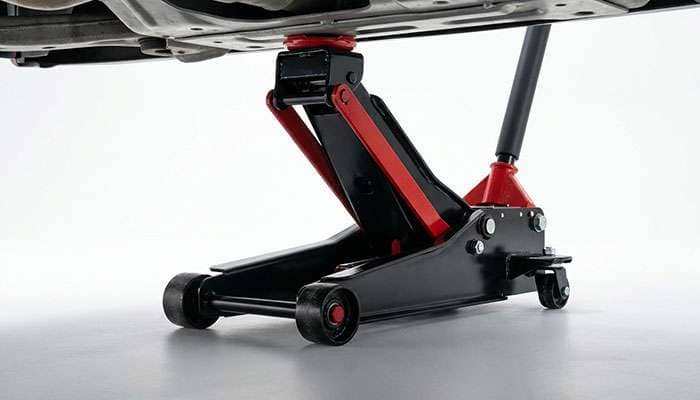
A quality car jack provides the lifting capability essential for tire changes and undercarriage access. While every vehicle includes a factory jack, aftermarket options offer significant improvements in safety, convenience, and versatility.
Several jack designs serve different needs:
Floor Jacks (Hydraulic): These professional-style jacks feature low profiles that slide under most vehicles, long handles for easy pumping, and smooth hydraulic lifting action. Quality floor jacks lift vehicles quickly with minimal effort and provide stable support. Their larger footprint and heavier weight make them ideal for garage use rather than roadside emergencies.
Scissor Jacks: The most common factory-supplied design, scissor jacks use a screw mechanism to raise and lower. Compact and lightweight, they store easily in trunk compartments. However, their small base and slower operation make them less convenient than hydraulic alternatives. Quality aftermarket scissor jacks improve on factory versions with better construction and easier operation.
Bottle Jacks: These compact hydraulic jacks offer high lifting capacity in small packages. Their vertical design requires more ground clearance than floor jacks but provides powerful lifting for trucks, SUVs, and trailers. Bottle jacks store compactly and work well for roadside use.
Important jack specifications include:
Weight Capacity: Always choose a jack rated well above your vehicle's weight. A 2-ton (4,000 lb) capacity suits most passenger cars, while trucks and SUVs may require 3-ton or higher ratings.
Lift Range: Minimum height must clear your vehicle's lift points, while maximum height must raise wheels clear of the ground. Low-profile vehicles require jacks with lower minimum heights.
Safety Features: Quality jacks include bypass valves preventing over-extension, stable base designs, and durable construction. Look for reinforced lift saddles and solid steel construction.
Upgrading from a factory jack provides multiple advantages:
Speed and Ease: Hydraulic floor jacks lift vehicles in seconds with a few handle pumps, compared to dozens of turns required by scissor jacks.
Stability: Wider bases and lower centers of gravity make aftermarket jacks more stable than tippy factory scissor jacks.
Versatility: A quality jack works across multiple vehicles and serves various maintenance tasks beyond tire changes.
Durability: Factory jacks often use lightweight materials that bend or fail under stress. Quality aftermarket jacks last for decades of reliable service.
Car jacks span a wide price range based on type and quality:
Quality scissor jacks: $15 to $40
Bottle jacks: $20 to $60
Floor jacks: $50 to $200
For home garage use, a quality 2-ton floor jack in the $80-$120 range provides excellent value with years of reliable service. Those needing portable capability may prefer a bottle jack or upgraded scissor jack for trunk storage.
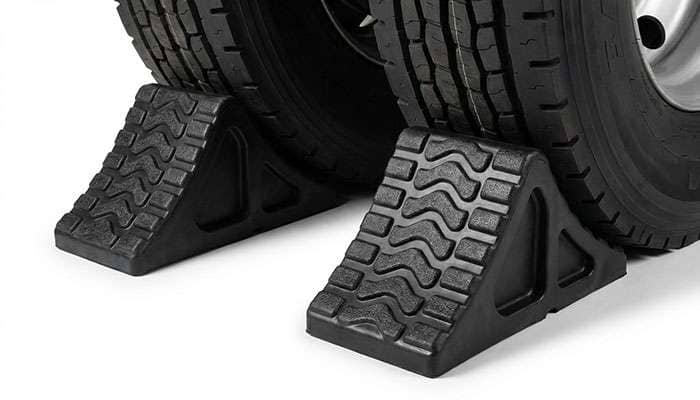
Wheel chocks provide essential safety when using jacks, preventing vehicle movement that could cause the jack to slip or the vehicle to roll. These simple wedge-shaped devices represent one of the most overlooked yet critical safety tools for tire work.
Wheel chocks come in various materials and designs:
Rubber Chocks: Heavy-duty rubber provides excellent grip on pavement while resisting weather and temperature extremes. Rubber chocks typically feature contoured surfaces matching tire profiles and textured bases preventing sliding. Their weight keeps them in position without securing.
Polyurethane Chocks: These lightweight alternatives offer durability similar to rubber with reduced weight. Bright colors improve visibility, and many models include reflective elements for roadside use.
Metal Chocks: Aluminum or steel chocks provide maximum durability for heavy-duty applications. Features like serrated edges bite into both tire rubber and pavement surfaces. These industrial-grade options suit trucks, trailers, and commercial applications.
Design features include:
Surface Patterns: Diamond plate, serrated edges, or textured surfaces increase grip on both tire and ground surfaces.
Size Options: Compact chocks suit passenger cars, while larger versions accommodate trucks and SUVs. Match chock size to your vehicle's tire dimensions.
Handles or Ropes: Easy-grip handles or attached ropes simplify positioning and removal, especially valuable when working in tight spaces or unpleasant weather.
Using wheel chocks delivers critical safety protection:
Roll Prevention: Even on apparently flat surfaces, vehicles can move when jacked. Chocks prevent forward or backward movement that could collapse the jack, drop the vehicle, or cause serious injury.
Incline Security: On any slope—even slight inclines—chocks become absolutely essential. The parking brake alone may not prevent movement when vehicle weight shifts during jacking.
Peace of Mind: Knowing your vehicle cannot roll allows you to work confidently, focusing on the task rather than worrying about sudden movement.
Proper chock placement means positioning them against the wheels diagonal from the one being changed. When changing a front tire, chock the rear wheels and vice versa. Place chocks on both sides of stationary wheels when possible.
Wheel chocks offer excellent value for essential safety:
Basic rubber or plastic chocks (pair): $5 to $15
Quality rubber chocks with handles (pair): $15 to $30
Heavy-duty metal chocks: $30 to $50+
For most vehicle owners, a pair of quality rubber chocks in the $15-$25 range provides reliable protection. Their low cost makes skipping this safety essential completely unjustifiable.
Tool |
Price Range |
Types/Variants |
Key Features |
Primary Benefits |
Usage/Application |
|---|---|---|---|---|---|
Tire Pressure Gage |
$5-$45 |
Digital, Analog, Pencil-style |
- Digital: Backlit displays, 0.5 PSI precision |
- Better fuel efficiency |
Monthly checks and pre-trip inspections |
Tread Depth Gage |
$3.33-$349.95 |
Analog, Digital, Combination |
- Measures in 32nds of inch and millimeters |
- Early wear pattern detection |
Regular tread monitoring |
Portable Air Compressor |
$39-$500 |
12-volt, Battery-powered |
- Digital pressure displays |
- No more service station hunting |
Emergency inflation and routine maintenance |
Tire Plug Kit |
$7-$50 |
Basic, Standard, Deluxe |
- T-handle reamer and installation tools |
- Immediate roadside fixes |
Emergency puncture solutions |
Torque Wrench |
$40-$140+ |
Click-type, Digital, Beam/Dial |
- Audible click warning system |
- Prevents wheel damage |
Wheel installation and maintenance |
Car Jack |
$15-$200 |
Floor/Hydraulic, Scissor, Bottle |
- Hydraulic lifting systems |
- Roadside independence |
Tire changes and undercarriage work |
Wheel Chocks |
$5-$50+ |
Rubber, Polyurethane, Metal |
- Diamond plate surfaces |
- Prevents dangerous movement |
Safety companion for jack use |
These seven tire tools represent one of the smartest investments any vehicle owner can make. The combined cost of all these items—typically under $500 for quality versions—costs less than a single roadside service call or tow truck. Each tool serves a specific purpose, yet together they create a complete tire maintenance system that delivers exceptional value.
Properly maintained tires significantly reduce your risk of blowouts and accidents. The ability to handle minor emergencies yourself means less time stranded in potentially dangerous roadside situations.
The knowledge gained from using these tools regularly builds confidence and independence. Most tire-related tasks require basic skills rather than specialized training. After using these tools once or twice, you'll wonder why you ever paid someone else for simple tire maintenance.
Many vehicle owners ignore tire care until problems arise. This reactive approach costs more money and creates unnecessary safety risks. Regular pressure checks, tread depth monitoring, and proper torque application extend tire life dramatically while optimizing vehicle performance.
We recommend starting with the basics—a quality tire pressure gage and portable compressor provide immediate benefits for minimal investment. You can add specialized tools like torque wrenches and tire plug kits as your comfort level grows.
These tools work best as a system. Wheel chocks enhance jack safety, while proper torque application depends on both a quality wrench and secure vehicle elevation. This systematic approach delivers far better results than addressing tire issues randomly.
DIY tire maintenance saves money and builds practical skills applicable to many vehicle ownership aspects. Your investment pays dividends through extended tire life, improved fuel efficiency, enhanced safety, and significant cost savings throughout your driving lifetime.
These seven essential tire tools can save you hundreds in repair costs while keeping you safe on the road through proactive maintenance and emergency preparedness.
A tire pressure gage ($5-$45) is your most important tool - 30% of vehicles have underinflated tires, affecting fuel efficiency and safety
Portable air compressors ($39-$500) provide roadside independence - eliminate costly service calls and maintain optimal tire pressure anywhere
Tire plug kits ($7-$50) offer immediate puncture repairs - a single roadside assistance call costs more than most complete plug kits
Torque wrenches ($40-$140) prevent expensive wheel damage - overtightening can warp rotors and crack alloy wheels worth thousands
Combined investment under $500 pays for itself quickly - one emergency tow or professional repair often exceeds the cost of all tools
Regular tire maintenance using these tools extends tire life, improves fuel efficiency, and prevents dangerous blowouts. Start with basic pressure monitoring tools, then add specialized equipment as your confidence grows. The proactive approach saves significantly more money than reactive emergency repairs.
The most important tire tools include a tire pressure gage, tread depth gage, portable air compressor, tire plug kit, and torque wrench. These tools allow you to monitor tire health, perform basic maintenance, and handle common tire issues.
By investing in basic tire tools, you can potentially save hundreds of dollars on emergency roadside assistance and repair costs. For example, a quality tire plug kit costs under $30 but can save you $100 or more on a single roadside service call.
For small punctures (under 1/4 inch) in the tire tread area, using a tire plug kit can provide a safe temporary repair to get you back on the road. However, sidewall damage or larger punctures require professional repair. Always follow the kit instructions carefully.
It's recommended to check your tire pressure at least once a month and before long trips. Proper inflation is crucial for safety, fuel efficiency, and extending tire life. Use a quality tire pressure gage and refer to your vehicle's recommended PSI.
A torque wrench ensures lug nuts are tightened to the manufacturer's exact specifications. This prevents over-tightening, which can damage wheels, brake rotors, and studs, or under-tightening, which can lead to wheels coming loose. It's a critical safety tool for proper tire installation.



