
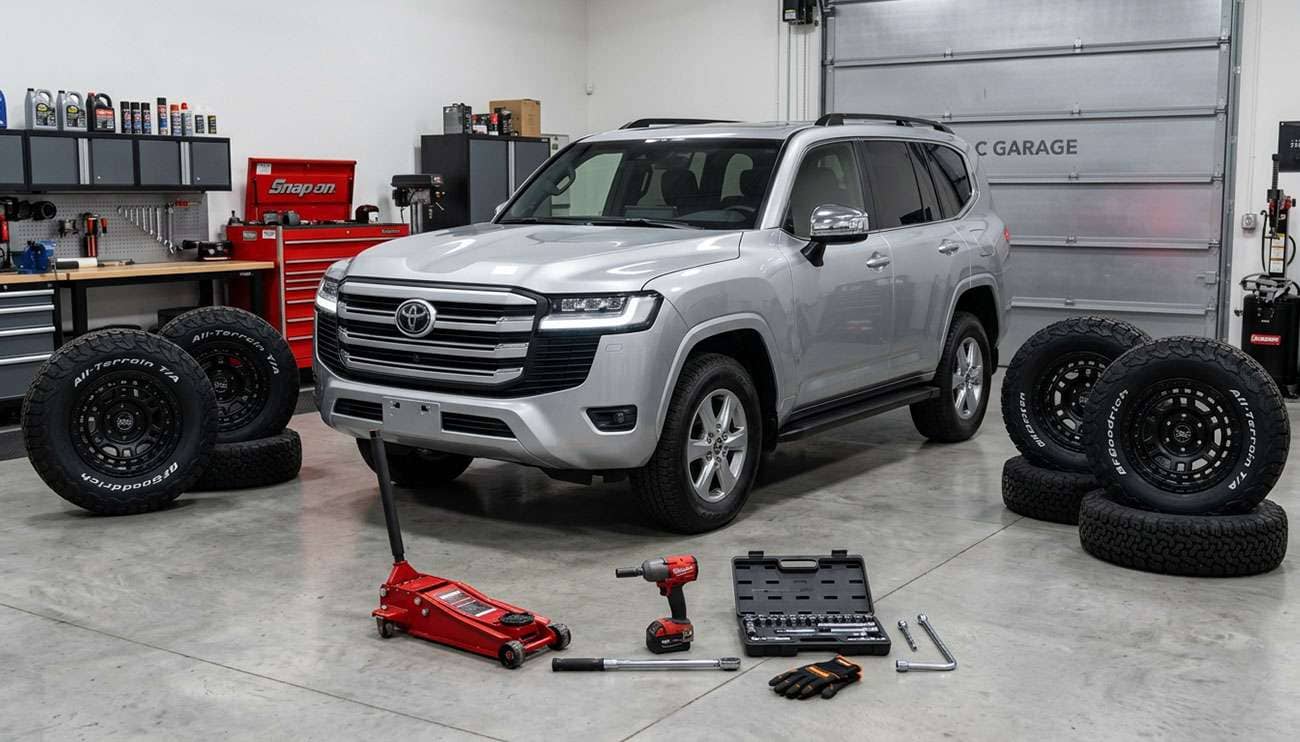
Toyota Land Cruiser aftermarket wheels can dramatically improve both performance and appearance, but wrong fitment choices will cost you time and money. Your specific series and year determines whether you need 6x139.7 or 5x150 land cruiser bolt pattern. Wheel offset affects stability and load distribution significantly, while selecting the right land cruiser tire size proves essential for optimal results - with 285/70/17 being a popular choice among enthusiasts.
We'll guide you through toyota land cruiser bolt pattern compatibility, toyota land cruiser tire size options, and critical specifications to ensure your land cruiser aftermarket wheels fit perfectly. This comprehensive guide eliminates guesswork and prevents costly fitment mistakes that plague many Land Cruiser owners.
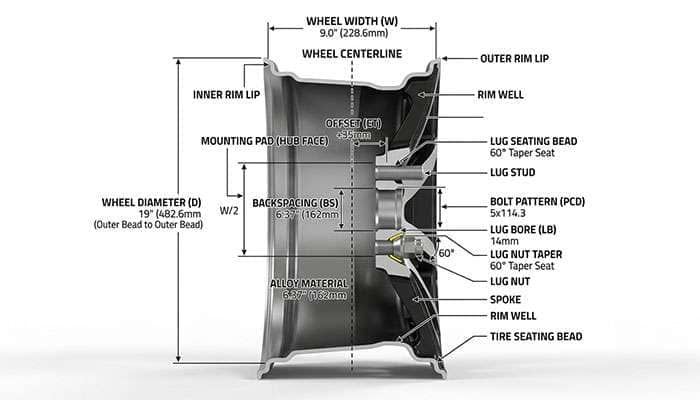
Bolt pattern determines the number and arrangement of bolts securing your wheel to the vehicle hub. This critical specification consists of two numbers expressed together - like 6x139.7 or 5x150. The first number tells you how many lug holes your wheel has, while the second represents the diameter in millimeters of an imaginary circle connecting the centers of these holes. This measurement is also called Pitch Circle Diameter (PCD).
A 5x150 bolt pattern means five lug holes are evenly spaced around a 150mm diameter circle. Your wheel and axle hub must match exactly - even slight differences cause wheels to sit off-center, creating excessive vibration while driving.
The measurement technique depends on your lug count. For even-numbered holes (4, 6, or 8 lugs), measure from the center of one lug hole straight across to the center of the opposite hole. This works perfectly because even-numbered patterns create a complete circle.
Five-lug patterns need a different approach. Measure from the center of one lug to the outside edge of an opposite lug. Since 5-lug configurations have no directly opposite lugs, this method provides the accurate diameter measurement. A bolt pattern template or gauge delivers more precision, especially with 5-lug wheels where several patterns have very similar diameters.
Before mounting tires on your new land cruiser aftermarket wheels, verify the bolt pattern. Once tires are mounted, wheels become non-returnable.
Land Cruiser models use either 6x139.7 or 5x150 bolt patterns. Your specific pattern depends on both series and year. Here's the complete breakdown of toyota land cruiser bolt pattern specifications by generation:
Series |
Years |
Bolt Pattern |
|---|---|---|
60 Series |
1980-1990 |
6x139.7 |
70 Series |
1984-2007 |
6x139.7 |
70 Series |
2007-2025 |
5x150 |
80 Series |
1989-1997 |
6x139.7 |
90 Series |
1996-2002 |
6x139.7 |
100 Series |
1998-2007 |
5x150 |
105 Series |
1998-2007 |
5x150 |
120 Series |
2003-2009 |
6x139.7 |
150 Series |
2009-2022 |
6x139.7 |
200 Series |
2007-2022 |
5x150 |
250 Series |
2023+ |
6x139.7 |
300 Series |
2021+ |
6x139.7 |
The 6x139.7 pattern dominates Land Cruiser generations. Six-lug patterns typically equip trucks and SUVs, matching the Land Cruiser's substantial size and weight capacity requirements. The newer 70 Series switched from 6x139.7 to 5x150 in 2007, while the 250 and 300 Series returned to the proven 6x139.7 pattern.
Bolt pattern serves as the foundation of wheel fitment. Wheels with incorrect patterns simply won't mount to your Land Cruiser's hubs, regardless of attractive styling or matching other specifications. This represents a non-negotiable requirement.
Wrong bolt patterns create vibrations during high-speed driving and cornering due to improper fitment. These issues go beyond comfort - they create serious safety concerns. Matching wheel specifications to your hub exactly minimizes modification needs. Some manufacturers offer dual bolt pattern wheels that fit multiple vehicle applications, but you must still verify compatibility with your specific model before purchasing.
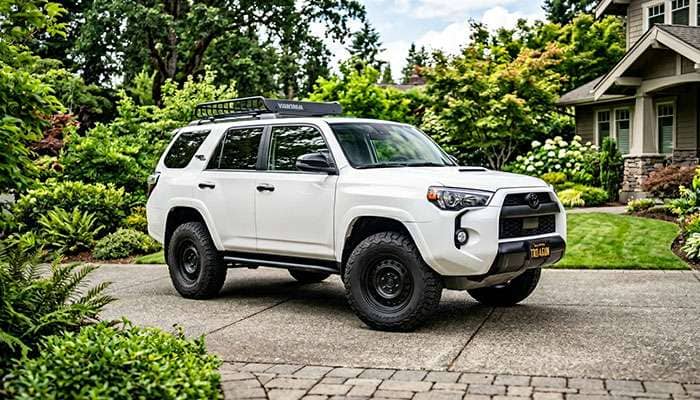
Wheel offset determines where your wheels sit in relation to your fenders. This measurement represents the distance between the wheel's centerline and its mounting surface. The mounting surface bolts directly to your hub, while the centerline marks the exact middle of the wheel's width. Expressed in millimeters, offset controls whether wheels tuck inside fenders or push outward for an aggressive stance.
Three offset types exist based on mounting surface location. Positive offset moves the mounting surface toward the street-facing side, pulling wheels inward toward suspension components. Most factory Land Cruiser wheels use positive offset to maintain engineered handling characteristics. Zero offset places the mounting surface exactly at the centerline, creating perfect balance. Negative offset positions the mounting surface toward the brake side, pushing wheels outward and creating that sought-after deep-dish look.
Factory Land Cruiser 100 Series wheels feature +60 offset, keeping tires well tucked within fenders. This conservative approach ensures clearance and maintains designed vehicle geometry. Switching to aftermarket wheels with +0 offset moves wheels 60mm outward from factory position. That translates to roughly one inch of additional poke beyond fenders on each side.
The 100 Series demonstrates offset impact clearly. Stock +60 wheels sit deep in wheel wells, while +0 offset wheels pushed tires approximately one inch past fenders. Moving to +25 offset brought wheels back slightly, eliminating tire rubbing during full steering lock while maintaining a moderately aggressive stance. The +25 setup also reduced mud and debris kicked onto body panels, providing practical benefits beyond clearance.
We recommend 0mm offset (ET0) for Toyota Land Cruiser vehicles. This specification accommodates most models while providing wider stance, improved off-road stability, and aggressive appearance without clearance issues for larger brake assemblies. The 300 Series requires special consideration. Currently, 17x8 wheels in 6x139.7 with ET25 represent the only specification clearing brake calipers on 300 Series models.
Independent Front Suspension (IFS) models need 35-47mm positive offset wheels. This narrower offset range addresses specific hub and suspension geometry requirements on IFS-equipped Land Cruisers. For the 250 Series 1958 trim, add 10-15mm to any offset target due to narrower fenders compared to higher trims.
Offset changes directly impact track width, which measures the distance between wheel centerlines on the same axle. Lower offset widens track width, improving cornering grip and reducing lateral load transfer. Wider track provides increased stability, particularly during high-speed lane changes and off-road articulation.
Scrub radius changes as offset varies. Moving wheels outward with lower offset increases scrub radius, making steering feel heavier and more prone to following road grooves. Lower offset also adds stress to suspension components, including wheel bearings, ball joints, and tie rods. These components experience additional leverage forces when wheels sit further from the hub mounting point. The altered geometry can reduce suspension component lifespan and increase maintenance requirements over time.
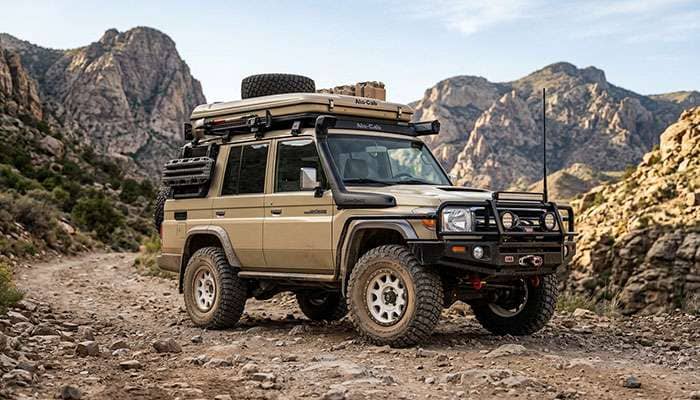
Land cruiser tire size specifications change significantly across generations. The 60 and 80 Series from 1986-1992 came with 235/75R15 tires, though some 1990-1992 models offered 31x10.50R15 as an option. 1993 brought the shift to 16-inch wheels, with 275/70R16 becoming standard through 2002.
The 100 Series introduced larger wheel diameters with 275/65R17 and 275/60R18 options starting in 2003. Most Land Cruisers standardized on 285/60R18 from 2008 through 2020. The 250 Series offers more variety: the 1958 Edition uses 245/70R18 (31.5" diameter), while Land Cruiser and First Edition trims run 265/70R18 (32.6" diameter).
285/70/17 stands out as the most popular choice among Land Cruiser owners. This size fits most models comfortably while balancing on-road comfort with off-road capability. The Falken Wildpeak A/T3W and BFGoodrich All-Terrain T/A KO2 in 285/70/17 have earned community favorites status.
Those seeking aggressive off-road performance often choose 33x12.50 sizing. The 250 Series can handle 35-inch tires with modifications. Owners report that 35s fit with minor work - removing mud flaps, crush brackets, and canards. Browse our selection of Land Cruiser tire options to find the perfect match for your build.
Tread width affects clearance more than tire height alone. The 285/75/16 provides a capable setup on stock suspension when paired with proper offset. Many owners run 275/70/18 on factory wheels without issues.
Larger tires impact gearing, braking, and acceleration. The right balance between wheel size and tire dimensions maintains daily drivability while enhancing trail capability.
Stock suspension has specific size limits. The 100 Series accommodates 285/65/18 or 285/75/16 without lifting. Running 35x12.5x16 tires on 80 Series models with minimal lift (15mm spacers over OME springs) requires lowering bump stops to limit articulation.
A 2-inch OME lift handles 295/75/16 tires, while 2.5-inch lifts allow 285/75/16 or 285/65/18 options. The 250 Series fits 35s at stock height with proper wheel offset and minor trimming. Each additional inch of lift reduces caster angle by approximately one degree, requiring caster correction bushings beyond 2.5 inches.
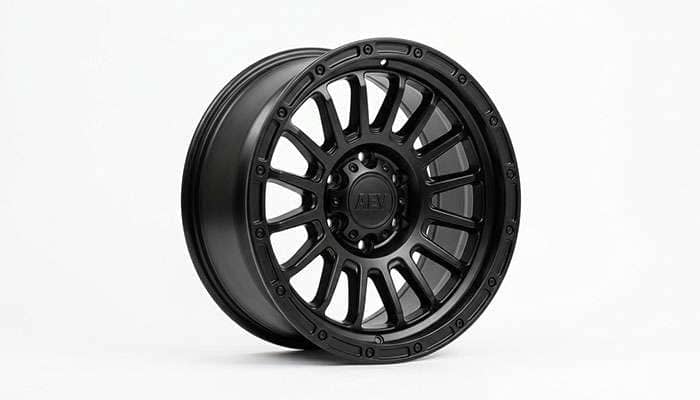
Beyond bolt pattern and offset, several specifications determine whether land cruiser aftermarket wheels will mount correctly and perform safely. Width, center bore, brake clearance, and load capacity each play specific roles in fitment success.
Wheel width must correspond with your intended tire size for proper bead seating and handling characteristics. The 250 Series factory wheels measure 18x7.5 across most trims, with the 1958 Edition running slightly different specifications. Aftermarket buyers typically choose between 17-inch and 18-inch diameters, with 17-inch wheels providing superior off-road performance through chunkier tire profiles. Width selections range from 8 to 9 inches depending on tire size and desired stance.
Center bore refers to the hole diameter at the wheel's center that fits over your hub. The 250 Series uses a 95.1mm center bore. Wheels with larger bore sizes, such as 106.1mm, require hub centric rings to properly center the wheel on the hub. Without proper centering, wheels vibrate at speed regardless of how well you balance them. Hub centric rings fill the gap between oversized wheel bores and your Land Cruiser's hub, transferring load through the hub rather than lug studs alone.
Brake clearance creates significant fitment challenges, particularly on 300 Series models. At this time, 17x8 wheels with ET25 offset represent the primary specification clearing 300 Series brake calipers. Most aftermarket brake systems require 15-inch or larger wheel diameters. Maintain a minimum 3mm clearance around calipers in all directions. Brake components expand from heat during operation, so adequate spacing prevents contact that damages both wheels and braking systems.
Load rating indicates maximum weight each wheel supports safely. Calculate minimum requirements by dividing your Land Cruiser's Gross Axle Weight Rating by two. A 3,800-pound axle rating requires wheels rated for at least 1,900 pounds each. OEM Toyota wheels typically carry 2,200 to 2,350-pound ratings depending on manufacturing location. Aftermarket wheels must meet or exceed these specifications to handle your Land Cruiser's weight plus cargo and passengers safely.
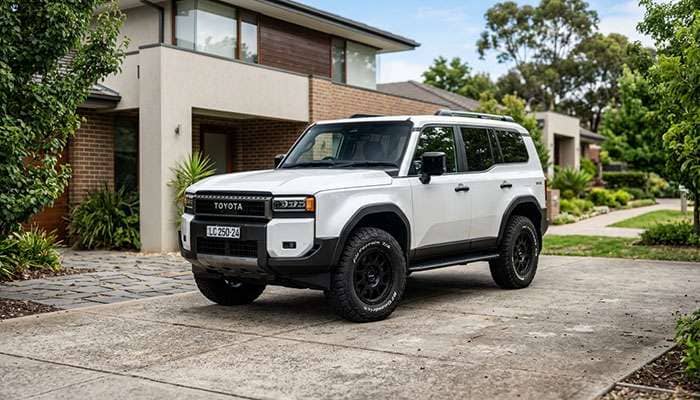
The 250 Series handles 275/70R18 on factory 18-inch wheels without any modifications. Owners running BFGoodrich A/T K02 in this size report zero rubbing issues with mudflaps still in place. Step up to 285/70R17 on 17x8 wheels with +25 offset for Land Cruiser trim models - this setup fits cleanly without clearance concerns.
The 1958 trim manages 35x12.5R17 tires on Method 17x8 +25 wheels at stock height, though you'll need to remove mudflaps and canards for proper clearance. This configuration proves that larger tires work on stock suspension with the right offset and minor modifications.
ReadyLift's 1-inch front leveling kit opens up 285/75R17 tires with 17x8 +35 wheels - no trimming required. The Westcott preload collar system provides 2.5 inches front lift and 0.75 inches rear, which accommodates 35-inch tires on 17x8.5 +35 wheels perfectly.
Tuff Country's 1.5-inch leveling kit works well with aggressive negative offset wheels like the Fuel Nitro 17x9.5 -12. This combination creates an aggressive stance while maintaining functionality.
A quality 2.5-inch lift system opens up options for much larger rubber. The OME heavy-duty 2.5-inch system with front diff drop successfully handles 285 BFG KO2s on stock wheels when you add 10mm spacers up front. This proven combination delivers excellent off-road capability without compromising daily driving comfort.
Fitting 35s requires removing the rear crash bracket and inverting fender liners. These modifications sound intimidating but prove straightforward for most owners. Pinch weld modifications involve hammering down the metal seam and using a heat gun on plastic liners for 285/75/18 fitment. Minor trimming work prevents rubbing during full articulation.
The 1958 trim requires 10-15mm more offset than other 250 Series trims due to narrower fenders. This difference affects wheel selection significantly, so verify your specific trim before ordering. Older 60-100 Series imports with locking hubs may not accommodate front center caps.
Check out compatible wheel and tire packages for your specific model to avoid these common fitment issues.
You now have the knowledge to select land cruiser aftermarket wheels that fit perfectly and perform reliably. Bolt pattern, offset, tire size, and brake clearance must all align with your specific series and trim - getting one specification right while ignoring others leads to rubbing, vibration, or wheels that won't mount at all.
We encourage you to browse our compatible wheel and tire packages designed specifically for your Land Cruiser model. Double-check your measurements, verify compatibility before purchasing, and your new setup will enhance both the look and capability of your rig without costly mistakes or returns.
At Performance Plus Tire, we're confident that we can provide you with the perfect set of wheels for your Land Cruiser at a price you can afford.
Master these essential specifications to choose Toyota Land Cruiser aftermarket wheels that fit perfectly and perform reliably without costly mistakes.
• Verify your bolt pattern first: Land Cruisers use either 6x139.7 or 5x150 patterns depending on series and year - this must match exactly or wheels won't mount.
• Choose appropriate offset for your goals: Factory +60 offset keeps wheels tucked in, while 0mm offset creates aggressive stance with 60mm more poke beyond fenders.
• Popular 285/70/17 tire size balances performance: This size fits most models comfortably while providing excellent on-road comfort and off-road capability without modifications.
• Check brake caliper clearance requirements: 300 Series models specifically need 17x8 wheels with ET25 offset to clear brake calipers - verify clearance before purchasing.
• Stock suspension accommodates specific limits: 250 Series fits 35-inch tires at stock height with proper offset and minor trimming, while most models handle 285/70/17 without issues.
Getting bolt pattern, offset, tire size, and brake clearance specifications right simultaneously ensures your new wheels mount properly, perform safely, and avoid rubbing or vibration issues that plague mismatched setups.
To ensure proper fitment, measure the distance from your wheel's center point to the mounting surface (offset). Add this offset to half the wheel's width to calculate backspace, and subtract it to find front space. Compare these measurements to your wheel well dimensions. You'll also need to verify your bolt pattern, center bore size, and brake caliper clearance to confirm compatibility.
Wheel offset determines how far your wheels sit inward or outward from the vehicle. Factory Land Cruiser 100 Series wheels have a +60 offset, keeping tires tucked inside fenders. Switching to a +0 offset moves wheels 60mm outward (about one inch past fenders), creating an aggressive stance. Lower offset widens track width for better stability but increases stress on suspension components and makes steering feel heavier.
Yes, the 250 Series can accommodate 35-inch tires at stock height with proper wheel offset and minor modifications. You'll need to remove mudflaps, crush brackets, and canards for clearance. The 1958 trim specifically fits 35x12.5R17 tires on 17x8 wheels with +25 offset without lifting. However, most other Land Cruiser models require at least a 2-2.5 inch lift to safely run 35-inch tires.
The 300 Series has larger brake calipers that create clearance challenges with aftermarket wheels. Currently, 17x8 wheels with ET25 offset represent the primary specification that clears the brake calipers on these models. You must maintain at least 3mm clearance around calipers in all directions, as brake components expand from heat during operation.
Land Cruisers use either 6x139.7 or 5x150 bolt patterns depending on the series and year. The 60, 80, 90, 120, 150, 250, and 300 Series use 6x139.7, while the 100, 105, and 200 Series use 5x150. The 70 Series switched from 6x139.7 to 5x150 in 2007. Your bolt pattern must match exactly between wheel and hub, or the wheels won't mount properly.



