
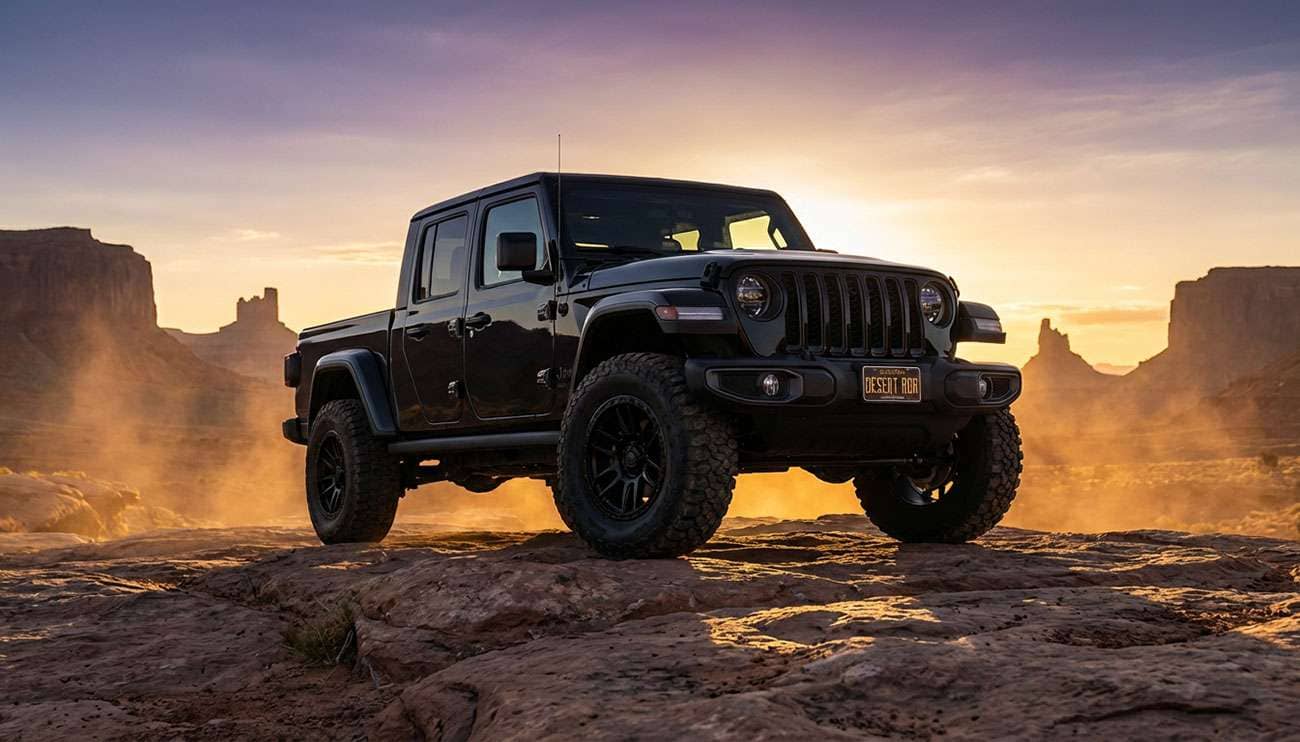
Jeep Gladiator Aftermarket Wheels represent one of the most impactful upgrades for America's most capable factory pickup truck. Since the Gladiator's 2020 debut, this unique blend of legendary Wrangler DNA with genuine hauling capability has created endless opportunities for customization among daily drivers and weekend warriors alike.
We carry the best selection of Gladiator-compatible wheels at competitive prices. Understanding proper fitment becomes essential before making any purchase decisions. The Gladiator uses a standard 5x5 bolt pattern across all trim levels, but several other critical measurements determine successful wheel installation. Stock Gladiators accommodate 35x12.5 tires with proper wheel selection, though Rubicon models handle larger sizes more effectively due to their wider fender flares and enhanced suspension geometry.
Wheel and tire upgrades create measurable performance changes. Factory-geared Gladiators with 35-inch tires consume 5 to 10% more fuel compared to stock configurations. Weight differences prove equally significant—stock 35-inch Rubicon tires weigh approximately 50 pounds each, while aftermarket 37-inch off-road tires reach 85 pounds, adding 140 pounds of unsprung weight to your vehicle.
Perfect fitment knowledge prevents costly mistakes and ensures optimal results for your specific Gladiator model. Our expert team understands these critical factors and can guide you through the selection process. This guide covers the essential considerations for choosing aftermarket wheels that enhance both appearance and function without sacrificing performance.
Ready to upgrade your Gladiator's capabilities? We'll walk you through each step to ensure you make the right choice for your driving needs and style preferences.
Successful wheel upgrades start with understanding your Gladiator's factory specifications. Without this foundational knowledge, you risk purchasing wheels that won't fit properly or perform as expected.
All Jeep Gladiator models use a consistent 5x5 bolt pattern (5x127mm). This measurement tells us five lug nuts are arranged in a circle with a 5-inch diameter. Unlike other Jeep models that vary across trim levels, the Gladiator maintains this standardization throughout the entire lineup.
The 5x5 pattern proves popular in the off-road community, making compatible aftermarket wheels readily available. Each lug nut requires proper torque specification of approximately 130 ft-lbs. Insufficient torque allows wheels to work loose during operation, while excessive torque damages threads or wheel studs.
Stock configurations vary significantly across Gladiator trim levels:
Sport/Sport S: 17x7.5 wheels with 245/75R17 tires (31.5 inches)
Overland: 18x7.5 wheels with 255/70R18 tires (32 inches)
Rubicon: 17x7.5 wheels with 285/70R17 tires (33 inches)
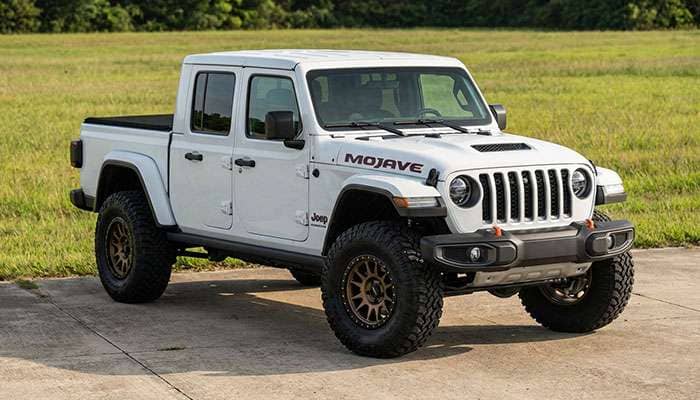
Mojave: 17x7.5 wheels with 285/70R17 tires (33 inches)
Rubicon and Mojave models come equipped with more aggressive all-terrain tires designed for off-road performance. Sport and Overland trims prioritize on-road comfort and fuel economy with their tire selections.
The center bore represents the wheel's center hole that aligns with your Gladiator's hub. All Gladiator models require a 71.5mm center bore for proper fitment. This measurement directly affects wheel centering and overall vehicle performance.
Many aftermarket wheels feature larger center bores to accommodate multiple vehicle applications. When this occurs, you'll need hub-centric rings to fill the gap between the wheel's center bore and your hub. These metal or plastic spacers ensure proper centering and prevent vibration issues.
Wheels that don't center properly develop vibration problems, accelerated bearing wear, and uneven tire wear patterns. Whether your wheels have the exact 71.5mm center bore or require hub-centric rings, proper centering remains essential for safe operation and optimal performance.
Suspension setup determines your Gladiator's wheel and tire fitment possibilities. Current suspension height directly affects tire clearance, fender gap, and overall stance, making it the foundation for any wheel upgrade decision.
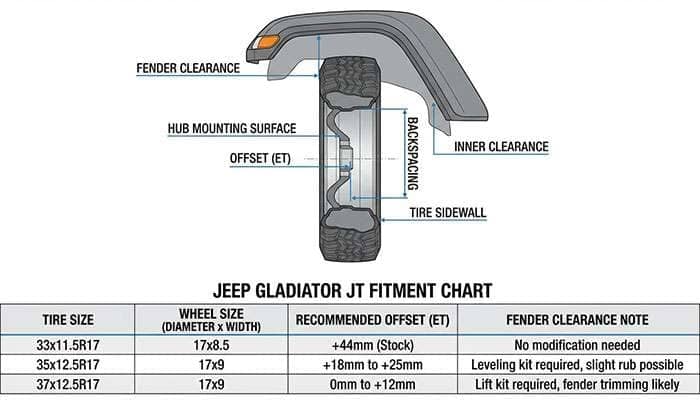
Stock Gladiators without modifications accommodate 17x8.5 or 17x9 wheels paired with 35x12.5 tires most effectively. This combination delivers adequate ground clearance for light trail use while avoiding modification requirements. While 37-inch tires technically fit stock Gladiators, suspension articulation creates clearance problems during off-road use. Completely stock vehicles that stay on pavement or easy trails perform best with 33-inch tires or smaller for guaranteed no-modification fitment.
Installing a 1.5-2 inch leveling kit expands your fitment options significantly. The proven 17x9 wheels with 35x12.5 tires combination continues working flawlessly, or you can step up to 17x9.5 wheels with 37x13.5 tires for enhanced ground clearance. A modest 1.5-inch Teraflex leveling kit paired with 34-35 inch tires creates the ideal balance between appearance and daily driving performance. Rubicon models excel with these combinations due to their factory-raised fender flares.
Proper 3.5+ inch lift kits unlock maximum fitment potential. The recommended configuration becomes 17x9 wheels with 37x13.5 tires, though aggressive setups can accommodate 20x10 wheels with 38x13.5 tires. These larger combinations may require additional clearance modifications during full suspension articulation. Regearing becomes essential with oversized tires—Rubicon and Max Tow models equipped with 4.10 gears handle 35-inch tires adequately but struggle with 37-inch options.
Fender trimming becomes necessary when running wider tires on stock or minimally lifted Gladiators. Inner fender liner trimming typically comes first, accomplished using utility knives, tin snips, or specialized cutting tools. Wheel spacers provide an alternative solution by moving tires outward to prevent suspension component contact. Quality hub-centric spacers from established brands like Spidertrax or Synergy (typically 1.5-1.75 inches) improve clearance without significantly compromising handling characteristics.
Wheel specifications determine how your Jeep Gladiator performs both on and off-road. Proper fitment requires understanding several critical measurements that control wheel positioning and clearance.
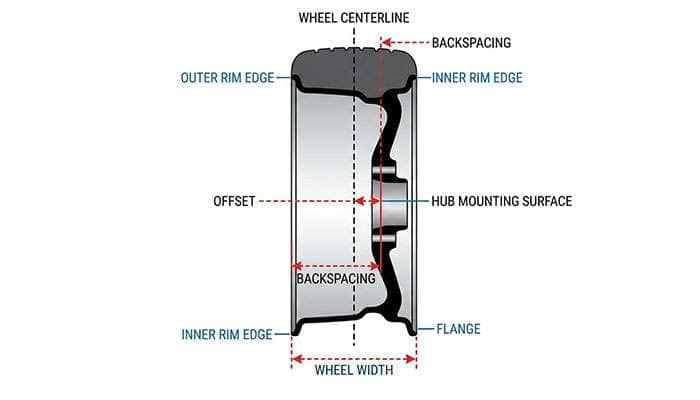
Wheel offset measures the distance between the wheel's hub mounting surface and its centerline, expressed in millimeters. Backspacing measures the distance from the wheel's back edge to the hub mounting surface. Stock Rubicon Gladiators feature a +44mm offset with 7.5" wide wheels, while Mojave models use a reduced +36mm offset for a wider stance.
These measurements work together to determine where your wheel sits relative to your vehicle. Understanding both specifications helps you make informed decisions about wheel positioning.
Positive offset moves wheels inward toward the vehicle, creating a narrower stance but potentially limiting suspension clearance. Negative offset pushes wheels outward, widening the stance while improving clearance for suspension components. Most Gladiator owners find success between +1mm to -25mm offset, achieving an aggressive appearance without major rubbing problems.
The right offset balances appearance with function. Too much positive offset can cause inner fender contact, while excessive negative offset creates handling issues and accelerated wear.
Wider wheels require offset adjustments to maintain proper positioning. When upgrading from stock 7.5" wheels to 8.5" wheels, you typically need to reduce positive offset by approximately 13mm per additional inch of width.
Consider your intended use when selecting width. Narrower wheels work better for rock crawling and deep mud, while wider wheels provide better stability for high-speed desert running.
Excessive negative offset creates "pokiness" where tires extend far beyond fenders. This looks disproportionate and accelerates ball joint wear while directing debris against your paint.
For properly engineered fitments that balance appearance with functionality, Performance Plus Tire's Gladiator-specific wheel selection offers tested combinations that work well with various suspension setups. Our wheels are designed to provide the aggressive look you want without the problems that come from poor offset choices.
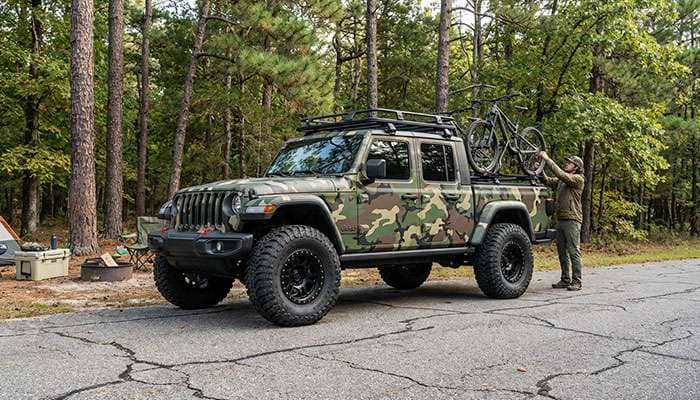
Choosing the right tire size completes your Gladiator wheel upgrade and determines how your vehicle performs both on trails and daily commutes.
Your tire choice fundamentally changes your Gladiator's personality. Stock configurations vary significantly across trim levels—Sport models use 245/75R17 tires (31.5 inches), Overland models feature 255/70R18 tires (32 inches), while Rubicon and Mojave editions come equipped with 285/70R17 tires (33 inches).
For drivers seeking light off-road capability without major modifications, 33-inch tires provide an excellent starting point. The 285/70R17 size delivers nearly 33 inches of diameter while maintaining a narrower profile than traditional 33x12.50 flotation tires.
Size changes create noticeable performance differences. Moving from stock 33-inch tires (50 pounds each) to 37-inch mud terrains (85 pounds each) adds approximately 35 pounds of unsprung weight per corner. This additional weight affects acceleration, braking, and handling characteristics.
Fuel economy takes a measurable hit with larger tires. Expect 35-inch tires to reduce MPG by 1.5-2.5 compared to stock, while 37-inch tires can decrease efficiency by 2.5-4.0 MPG. These numbers matter for daily drivers who cover significant highway miles.
Each size category serves different priorities:
33s (285/70R17): Perfect for daily drivers wanting modest off-road improvement without performance penalties
35s (315/70R17): The sweet spot for most Gladiator owners, delivering substantial trail capability with manageable on-road compromises
37s: Best suited for serious off-road enthusiasts willing to accept supporting modifications and fuel economy impacts
Larger tires require electronic adjustments for accurate readings. Without recalibration, your speedometer will read 3-4 MPH slower than actual speed at highway velocities. Tools like the Flashcal handle speedometer correction for tires between 26-40 inches and accommodate gear ratios up to 5.38.
Regearing becomes critical with significant size increases. Stock Rubicon 4.10 gears work adequately with 35-inch tires but struggle with 37s. Most experts recommend 4.88 or 5.13 gears when running 37-inch tires.
Check Performance Plus Tire's Gladiator-specific lineup for properly matched tire and wheel combinations that minimize the need for extensive drivetrain modifications.
Selecting the right aftermarket wheels for your Jeep Gladiator involves more than just choosing wheels that look great. Stock setup knowledge provides your foundation, while suspension configuration determines what combinations fit properly. Proper offset and backspacing ensure optimal clearance without compromising performance or handling.
Tire selection carries equal importance since size directly affects both capability and efficiency. Most Gladiator owners discover that 35-inch tires provide the ideal balance between off-road performance and daily usability. Larger 37-inch combinations deliver exceptional trail capability but require supporting modifications like regearing to maintain optimal drivetrain performance.
Weight factors into every decision. Heavier wheel and tire combinations add unsprung weight that noticeably impacts acceleration, braking, and handling characteristics.
At Performance Plus Tire, we understand these critical relationships. Our Gladiator-specific wheel selection features options engineered for proper fitment, eliminating the guesswork from your upgrade process. We carry wheels that balance your style preferences with practical performance requirements.
The best wheel setup enhances both appearance and capability. While aftermarket wheels certainly improve your Gladiator's looks, their real value comes from increased ground clearance, better traction, and improved off-road performance. The right combination of wheels, tires, and supporting modifications transforms your Gladiator into a capable adventure machine ready for any terrain.
Ready to upgrade your Gladiator? Our knowledgeable team stands ready to help you find the perfect wheel and tire combination that matches your driving needs and budget. Your Gladiator deserves wheels that perform as good as they look.
Selecting the right aftermarket wheels for your Jeep Gladiator involves understanding critical specifications and matching them to your suspension setup and driving needs.
• All Jeep Gladiators use a 5x5 bolt pattern with 71.5mm center bore - ensure aftermarket wheels match these specs or use hub-centric rings for proper fitment.
• Stock suspension handles 35x12.5 tires best, while lifted Gladiators (3.5+ inches) can accommodate 37x13.5 tires with 17x9 wheels for optimal performance.
• Wheel offset between +1mm to -25mm provides aggressive stance without rubbing issues - avoid excessive negative offset that causes premature wear.
• Upgrading to 35-inch tires reduces fuel economy by 1.5-2.5 MPG, while 37-inch tires decrease efficiency by 2.5-4.0 MPG compared to stock.
• Larger tires require ECU recalibration for accurate speedometer readings and may need regearing - 37-inch tires typically require 4.88 or 5.13 gears for optimal performance.
The key to successful wheel upgrades lies in balancing esthetics with functionality, ensuring your modifications enhance both off-road capability and daily driving performance without compromising reliability.
For off-road enthusiasts, 17-inch or 18-inch wheels that are wider than the stock 7.5-inch factory wheels are popular. Many opt for 9-inch or even 10-inch wide aftermarket wheels to enhance off-road performance.
Larger tires can significantly impact performance and fuel efficiency. For example, 35-inch tires typically reduce fuel economy by 1.5-2.5 MPG, while 37-inch tires can decrease efficiency by 2.5-4.0 MPG compared to stock configurations.
For most applications, an offset between +1mm to -25mm is recommended. This range provides an aggressive look without major rubbing issues and works well with both stock and lifted Gladiators.
Regearing becomes essential when installing larger tires, especially 37-inch tires. For 37-inch tires, experts recommend 4.88 or 5.13 gears to maintain optimal performance and prevent drivetrain wear.
It depends on your specific lift kit and suspension setup. Some lift kits may require wheels with different backspacing to avoid contact with suspension components. It's best to consult the lift kit manufacturer or installation manual for specific wheel requirements.



