
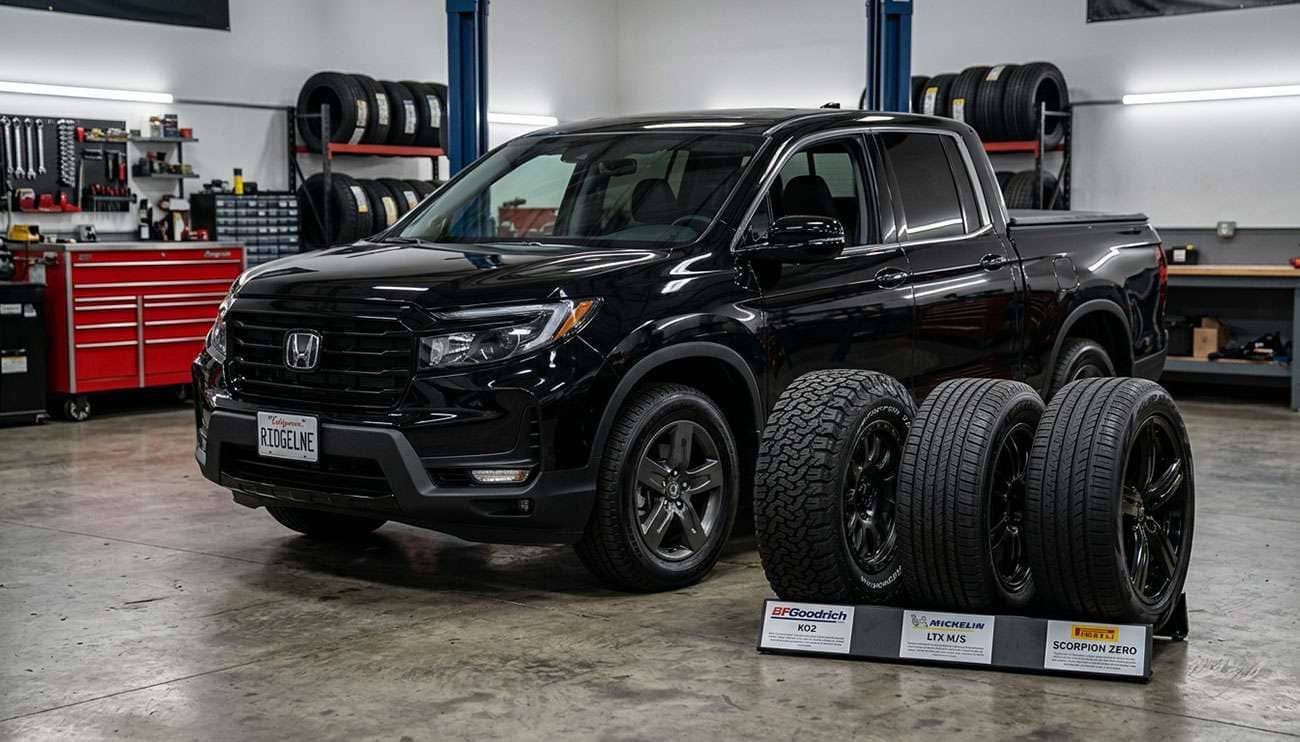
Honda Ridgeline aftermarket tires present unique challenges for truck owners. Tire lifespan ranges from 20,000 to 50,000 miles depending on your selection. Your tire choice directly affects traction performance, fuel economy, ride quality, and off-road capabilities.
We understand that finding the best tires for Honda Ridgeline depends on your specific driving needs and conditions. Honda ridgeline at tires work perfectly for weekend off-road adventures, while the right honda ridgeline tire size makes all the difference for daily commuting performance.
At Performance Plus Tire, we've seen every type of Honda Ridgeline tire requirement. This guide covers tire specifications, compares all-season versus all-terrain options, and explains winter tire benefits. You'll also learn how honda ridgeline aftermarket wheels pair with the right tires to maximize both performance and style for your truck.
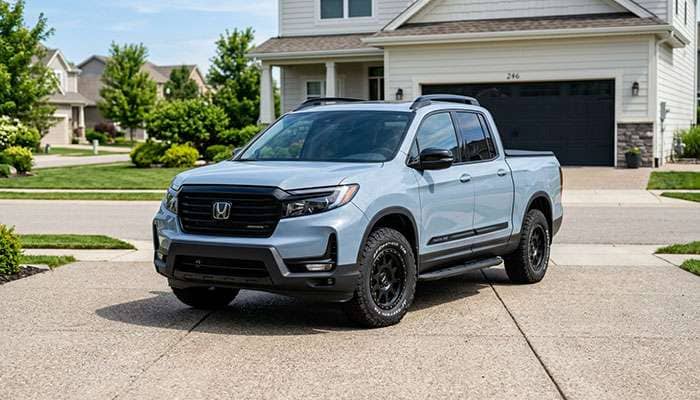
Getting the right Honda Ridgeline aftermarket tires starts with understanding your current specifications. Proper fitment ensures optimal vehicle performance and maintains safety standards.
Your Honda Ridgeline tire size appears in three key locations. The sidewall of your existing tires displays the complete size designation. Inside the driver's door frame, you'll find a sticker listing the vehicle's original equipment tire specifications. Your owner's manual contains this same information for reference.
The door jamb sticker provides your vehicle's original equipment tire size and shows whether it has staggered tires. Selecting tire specifications by VIN (Vehicle Identification Number) delivers the most accurate results.
Honda Ridgeline tire sizes change across trim levels and model years. First-generation models (2006-2014) used 245/65R17 across RT, RTS, and RTL trims. The RTL trim switched to 245/60R18 starting in 2009.
Second-generation Ridgelines (2017-present) use 245/60R18 across all trims - RT, RTL, RTL-E, Sport, and Black Edition variants. This standardization makes replacement selection easier for newer models.
Tire designation numbers provide essential fitment information. Take 245/60R18 as an example: 245 indicates tire width in millimeters. The 60 represents the aspect ratio, meaning sidewall height equals 60% of tire width. R shows radial construction, where internal plies run perpendicular to travel direction. The 18 specifies wheel diameter in inches.
Load index and speed rating follow these numbers. Load index shows maximum weight capacity per tire. Speed rating indicates maximum safe sustained speed.
Honda recommends using your Ridgeline's original tire size. Vehicles meet Federal Motor Vehicle Safety Standards when originally distributed, and modifications can affect safety, operation, or compliance with government-mandated specifications. Tires that deviate from recommended sizing may cause steering pull, rub against suspension components, reduce clearance, or create a stiffer ride.
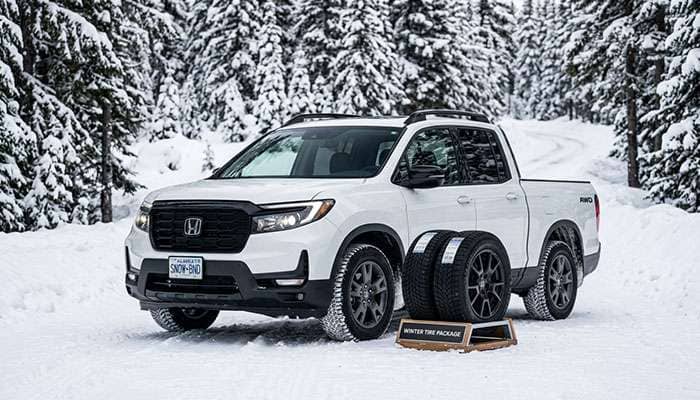
Honda Ridgeline aftermarket tires divide into distinct categories, each designed for specific driving conditions and performance needs. Understanding these tire types helps you match your truck's capabilities to your actual driving requirements.
All-season tires handle dry pavement, wet conditions, and light winter weather. These tires excel on highways with tread patterns that channel water away from the contact patch, reducing hydroplaning risk. You'll get excellent fuel economy and quiet highway operation. The Goodyear Assurance MaxLife uses enhanced rubber compounds for reliable year-round traction with wider tread grooves for water evacuation. All-season tires work best when you stick to paved roads—off-road adventures quickly expose their traction limitations. Drivers who rarely see heavy snow and prioritize highway comfort find all-season options ideal for year-round use.
All-terrain tires combine highway comfort with serious off-road capability. Their aggressive, non-uniform tread blocks tackle mud, sand, gravel, light snow, and pavement with equal confidence. Honda ridgeline at tires feature reinforced sidewall construction that handles extra weight, making them perfect for towing applications. The Bridgestone Dueler A/T Revo 3 delivers reliable performance whether you're cruising highways or exploring backwoods trails. When shopping honda ridgeline tires, remember that all-terrain options trade some fuel efficiency and generate more road noise compared to all-season alternatives.
Winter tires use specialized rubber compounds that stay flexible below 45°F. This flexibility, combined with deeper tread depths and thousands of sipes, creates superior ice and snow traction. Testing shows winter tires stop 23 feet shorter than all-season tires from just 12 mph on ice. The Michelin Latitude X-Ice Xi2 features directional tread patterns that bite into snow while channeling slush away from the contact patch.
All-season tires prioritize longevity and fuel economy for paved road driving. All-terrain tires offer the versatility for mixed on-road and off-road use but sacrifice some efficiency. Winter tires dominate in cold temperatures but wear rapidly in warm weather.
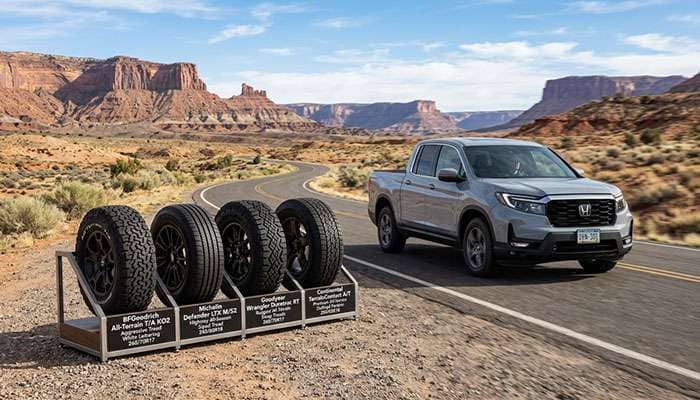
Several technical specifications determine how honda ridgeline aftermarket tires perform across different driving conditions. These features directly impact your truck's capabilities and should guide your selection of the best tires for honda ridgeline.
Tread patterns combine blocks, grooves, ribs, and sipes molded into the tire surface. These elements control traction effectiveness. Deeper and broader grooves deliver better grip on off-road terrain and in snow, while smoother patterns optimize dry road performance. Directional tread designs channel water away from the contact patch, reducing hydroplaning risk during wet conditions.
Sipes are razor-thin cuts within tread blocks that create additional gripping edges. Winter tires rely heavily on siping because these cuts act like claws, biting into snow and ice. The sipes flex open as the tire rotates, expanding the contact footprint on slippery surfaces. Factory-molded sipes maintain better tread block integrity compared to aftermarket cutting.
Load index specifies maximum weight capacity per tire at full inflation pressure. Hauling and towing applications require tires with minimum 10-ply rating or load range E designation. Light truck (LT) tires provide adequate carrying capacity for most honda ridgeline tires applications.
Rolling resistance creates up to one-third of total fuel consumption. Hysteresis, the energy lost when tires flex against road surfaces, accounts for 85-90% of rolling resistance. Reducing rolling resistance by 10% improves fuel economy approximately 3%.
Tread pattern design significantly affects noise generation. The right tire selection can create up to a 10 dB(A) difference in road noise. Larger tread blocks with wide, deep grooves trap more air, creating louder sounds when compressed and released during rotation.
Choosing the best tires for honda ridgeline involves more than comparing specifications. Your decision should reflect actual driving habits and deliver long-term value for your investment.
Start by evaluating where you spend most of your driving time. Daily highway commuters get maximum benefit from touring tires, while weekend warriors need all-terrain or mud-terrain capabilities. Consider how often you haul heavy loads and whether your current setup handles this demand effectively.
Premium tires typically cost $760 for 80,000 miles of service, equaling $0.01 per mile. Budget options run $320 for 35,000 miles, also $0.01 per mile. The difference lies in replacement frequency—budget tires require two complete purchases and installations within the same mileage period. Quality tires also improve fuel economy by 1-4%, adding further savings.
Customer reviews and independent testing reveal important performance differences. Premium all-season tires stop 10-20 feet shorter than budget alternatives from 60 mph on wet pavement. These safety margins matter more than price differences when emergency braking becomes necessary.
Premium tire warranties cover 60,000-80,000 miles, while budget options offer 25,000-40,000 miles or no coverage. Road hazard protection becomes valuable when driving conditions include construction zones, gravel roads, or debris-prone areas.
Tire professionals evaluate load ratings, speed requirements, and tread designs specific to your Ridgeline's needs. Visit Performance Plus Tire to explore expert-recommended honda ridgeline aftermarket tires that match your driving requirements perfectly.
The right honda ridgeline aftermarket tires transform your truck's performance, safety, and driving experience. Your driving conditions determine the best tire type, whether you need all-season convenience, all-terrain versatility, or winter weather capability. Quality tires deliver better value through longer lifespan, improved fuel economy, and superior wet-weather stopping performance.
Price alone doesn't tell the complete story. Premium tires often match budget options at $0.01 per mile while providing enhanced safety features and durability benefits. Explore your options at Performance Plus Tire for expert-recommended honda ridgeline aftermarket tires that match your specific requirements.
Your perfect tire setup combines the right specifications with your actual driving needs. Make the choice that delivers both performance and value for your Ridgeline.
Understanding your Honda Ridgeline's tire specifications and matching them to your driving conditions is crucial for optimal performance, safety, and value.
• Know your specs first: Check tire sidewall, door jamb sticker, or owner's manual for correct size - most 2017+ Ridgelings use 245/60R18 across all trims.
• Match tire type to driving: All-season for highway commuting, all-terrain for mixed on/off-road use, winter tires for cold weather below 45°F.
• Premium tires offer better value: Despite higher upfront costs, quality tires provide longer lifespan, better fuel economy, and superior wet-weather stopping performance.
• Consider total cost of ownership: Premium tires at $0.01 per mile often match budget tire costs while delivering better safety and performance benefits.
• Professional consultation matters: Tire experts can assess load capacity, speed ratings, and tread patterns specific to your Ridgeline's needs and your driving habits.
The right tire choice transforms your Ridgeline's capabilities, whether you're towing heavy loads, navigating winter conditions, or maximizing fuel efficiency on daily commutes.
Honda Ridgeline owners frequently choose Falken Wildpeak AT Trail for their quiet operation and excellent all-weather grip, Michelin CrossClimate2 for superior wet and snow performance, and Bridgestone Alenza AS Ultra for comfort. All-terrain options like Nitto Terra Grappler G3 are popular among adventure-focused drivers, while Michelin Defender LTX M/S remains a top choice for those prioritizing longevity and highway comfort.
All-terrain tires provide better off-road capability and puncture resistance with reinforced sidewalls suitable for towing, but they produce slightly more road noise and may reduce fuel economy by about 1 MPG. All-season tires offer quieter highway driving, better fuel efficiency, and adequate performance in light winter conditions, making them ideal for drivers who primarily stay on paved roads.
Honda recommends staying within OEM tire specifications to maintain safety and compliance with Federal Motor Vehicle Safety Standards. Deviating from the recommended tire size can cause steering pull, rubbing against suspension components, reduced clearance, or a stiffer ride. Most 2017+ Ridgelines use 245/60R18 across all trims as the standard size.
Premium tires offer better long-term value despite higher upfront costs. They typically last 60,000-80,000 miles compared to 25,000-40,000 miles for budget options, resulting in similar per-mile costs around $0.01. Premium tires also provide 1-4% better fuel economy, stop 10-20 feet shorter on wet surfaces from 60 mph, and come with more comprehensive warranties.
Performance varies by model year and tire type. The factory Firestone Destination LE2 tires handle Midwest snow adequately for many drivers, while TrailSport models come with General Grabber A/T Sport tires that perform well in winter. However, some owners report poor snow traction with stock tires and recommend upgrading to dedicated winter tires or all-terrain options for improved cold-weather performance.



