
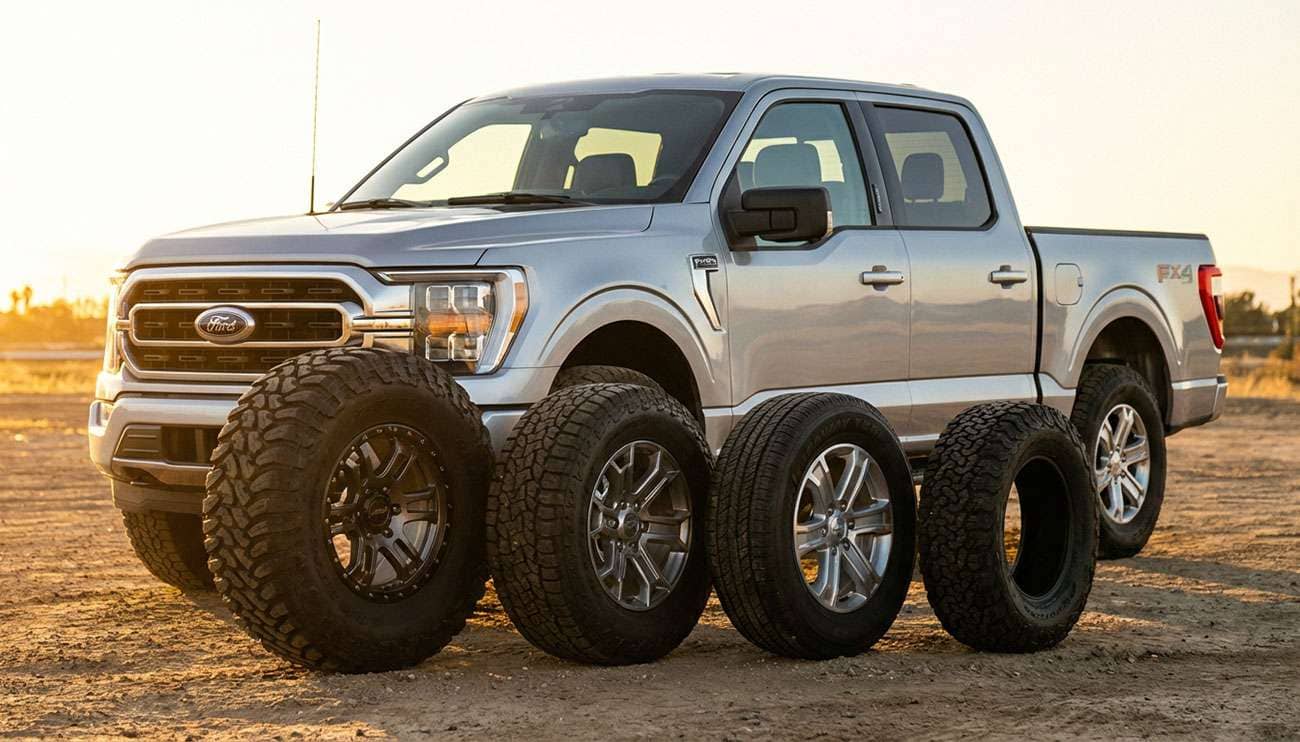
Ford F-150 aftermarket tires represent the most dramatic upgrade you can make to your truck's appearance and performance. Most F-150 owners don't realize their trucks can accommodate wheels ranging from 17 to 22 inches in diameter, opening up incredible options to create exactly the look and function you want.
At Performance Plus Tire, we understand that the Ford F-150 is America's best-selling truck — trusted by millions of drivers for work, towing, hauling, off-road adventures, and family driving. This makes selecting the right aftermarket tires one of the most important decisions you'll make for your vehicle.
Aftermarket tires offer significant advantages over stock options. Aftermarket wheels often weigh less than factory wheels, reducing unsprung weight for better acceleration and handling response. With the right tire sizing, you can achieve the exact aggressive stance you desire, something factory wheels simply can't deliver.
We've created this guide to help you select the perfect aftermarket tires for your F-150's specific needs. From performance benefits to size selection and installation, our expert team will walk you through each step of choosing ideal tires for your driving requirements.
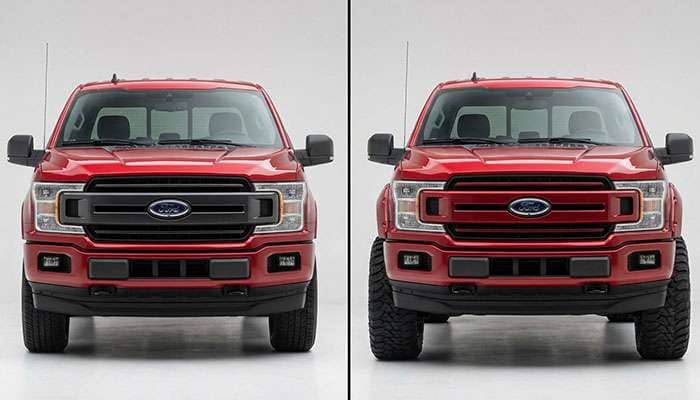
Upgrading to aftermarket tires on your Ford F-150 delivers substantial advantages that factory-installed options simply cannot match. Aftermarket choices unlock your truck's full potential, providing exactly what you need for your specific driving requirements.
Quality aftermarket wheels create immediate performance improvements through reduced unsprung weight. This weight reduction generates multiple benefits that transform how your F-150 responds on the road.
Lighter wheels improve acceleration and deliver sharper handling response. Your F-150 becomes more responsive when accelerating from a stop or passing other vehicles on the highway. Quality aftermarket wheels feature improved strength-to-weight ratios compared to stock options, particularly important for trucks experiencing heavy-duty use or off-road conditions.
Many aftermarket wheels provide better brake clearance and cooling through optimized spoke designs. This enhancement can improve stopping power and reduce brake fade during demanding driving situations.
Some F-150 owners report noticing between 1-2 mpg improvement when switching to lighter wheel and tire combinations. While fuel savings may seem minimal initially, they accumulate over thousands of miles. A properly selected aftermarket tire set can make your truck feel noticeably quicker due to reduced rotational mass.
Factory wheels limit your F-150's visual potential, while aftermarket options allow you to achieve the exact aggressive stance you desire. The right wheels dramatically change how your truck looks parked or rolling down the street.
Popular finishes such as matte black, bronze, and blackout designs create distinctive appearances that complement the F-150's body styles. These finishes allow you to customize your truck's look to match your personal style.
Larger diameter options (20-22 inches) fill wheel wells better, giving your truck a more planted and commanding presence. This visual improvement creates what enthusiasts call "stance" – that perfect combination of wheel size, tire profile, and offset creating a balanced yet aggressive appearance.
Since Ford F-150 is America's best-selling truck, aftermarket wheels help your truck stand out from countless factory-equipped vehicles on the road.
The most compelling reason to choose aftermarket tires is matching them precisely to your driving requirements. Unlike one-size-fits-all factory options, aftermarket tires allow tailoring to your specific needs.
For heavy hauling and towing, Load Range E (10-ply) tires offer excellent durability and highway stability under load. These provide strength for commercial use, towing trailers, boats, or campers, and long-distance hauling.
If you frequently venture off-road, all-terrain tires deliver tough, long-wearing performance with excellent capabilities in snow, sand, gravel, forest roads, or mountain routes. They balance strong off-road traction with good road comfort.
For primarily highway driving, touring tires prioritize comfort, long tread life, and fuel efficiency. These provide smooth, predictable, and quiet performance for daily driving with excellent balance between performance and value.
Winter driving demands specialized tires engineered to support heavier truck loads while providing outstanding snow and ice traction. These remain smooth and quiet while delivering premium ice traction in harsh winter conditions.
Choosing the right aftermarket tires ensures you extract maximum performance, comfort, and safety regardless of how you use your Ford F-150. The investment pays dividends through improved driving experience and vehicle capability tailored to your specific needs.
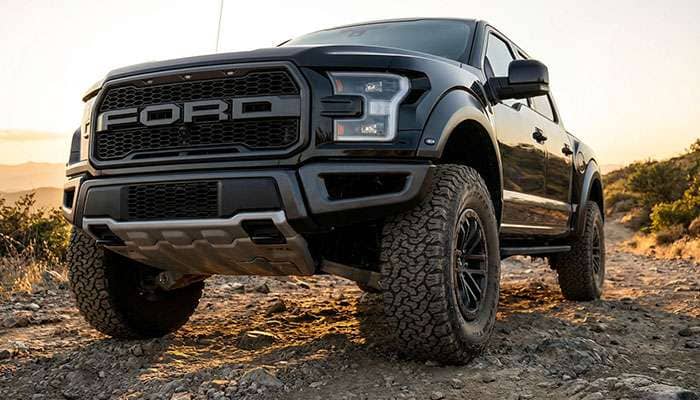
Finding the perfect size for your Ford F-150 aftermarket tires requires understanding your truck's specifications and how modifications affect tire fitment. Before purchasing, you need to identify the correct size options compatible with your specific model year and any suspension modifications you've made or plan to make.
Ford F-150s come with various factory tire sizes depending on the generation, trim level, and drive configuration. The newest 14th generation (2021-current) offers sizes ranging from 245/70R17 on base XL 2WD models to 275/60R20 on premium trims, with specialty models like the Raptor featuring massive 315/70R17 or even 37X12.50R17 tires.
The 13th generation (2015-2020) F-150s typically came with 245/70R17 tires on 2WD models and 265/70R17 on 4WD variants, with premium trims offering 275/55R20 or 275/45R22 options.
Older 12th generation (2009-2014) trucks featured similar sizing patterns, with 2WD models using 235/75R17 to 275/55R20 tires and 4WD models utilizing 265/70R17 to 275/55R20 configurations.
You can locate your truck's original tire size on the Tire Label found on the B-pillar or edge of the driver's door. This label shows the factory tire size, recommended inflation pressure, and maximum weight capacity.
Lift kits dramatically alter your F-150's tire fitment capabilities. A 2-inch leveling kit allows you to fit up to 33-inch tires on most F-150 models without rubbing issues.
More aggressive setups require different approaches. A 3-4 inch suspension lift accommodates 35-inch tires, while a 4-6 inch lift enables fitment of 35-37 inch tires on properly configured wheels. These measurements reflect total tire diameter rather than just the numeric tire size code.
Different lift types serve specific purposes:
Leveling kits (1.5-2.5 inches): Raise just the front to create a level stance and allow slightly larger tires
Body lifts: Increase ground clearance for bigger tires without altering the suspension
Suspension lifts: Provide the most ground clearance and allow the largest possible tires
Excessive lifting can affect handling characteristics. Some states restrict lift heights to no more than 4 inches total (2 inches on suspension and 2 inches from larger tires) because of rollover concerns.
Tire width significantly impacts both performance and appearance. Wider tires generally provide better traction but may cause rubbing against fenders or suspension components if sized incorrectly.
When selecting wheel and tire combinations, pay close attention to:
Wheel offset: Negative offset wheels (-12 to -51) position tires further outward for a wider stance but require more clearance
Backspacing: Critical for preventing rubbing during wheel articulation, especially with lifted trucks
Sidewall height: Taller sidewalls provide better off-road absorption but can affect on-road handling
Before finalizing your selection, ensure your choice won't interfere with fender wells and suspension components. The proper combination of wheel size, offset, and tire dimensions creates the aggressive look most truck owners desire while maintaining proper functionality for your specific driving needs.
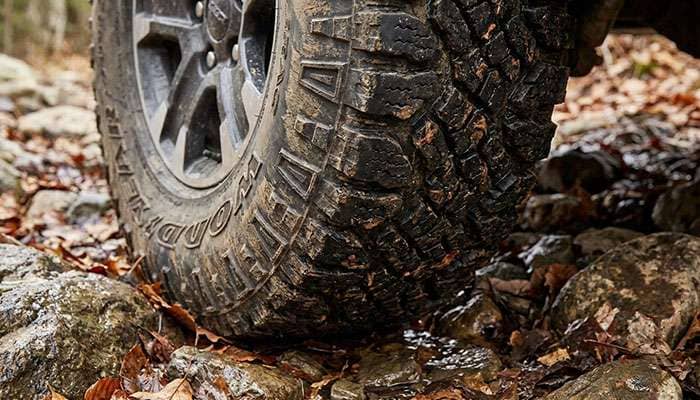
Selecting the perfect tire type for your Ford F-150 depends entirely on how and where you drive your truck. The right choice balances performance, comfort, and durability based on your specific driving conditions.
All-terrain (A/T) tires serve as versatile options for F-150 owners who split time between paved roads and occasional off-road adventures. These tires feature moderately aggressive treads and reinforced sidewalls, providing solid traction both on highways and rougher terrain. Popular options include the legendary BFGoodrich All-Terrain T/A KO2, renowned for durability and excellent snow performance, and the Falken WildPeak A/T3W, which excels in winter conditions.
Highway tires (H/T) prioritize on-road comfort, fuel efficiency, and longevity. For F-150s primarily used for commuting and highway driving, options like the Michelin Defender LTX M/S offer superior treadwear and comfort, whereas the Continental TerrainContact H/T provides a notably quiet, smooth ride. Highway tires typically deliver better fuel economy and longer tread life than their all-terrain counterparts.
Serious off-road enthusiasts need mud-terrain (M/T) tires with aggressive tread patterns specifically designed for challenging conditions. These tires include deep, widely-spaced tread lugs that effectively clear mud from the tire surface. M/T tires come with trade-offs: they generate more road noise, wear faster on pavement, and typically reduce fuel efficiency.
Hybrid tires represent an emerging category that balances elements from both all-terrain and mud-terrain designs. These provide superior off-road traction compared to all-terrains while maintaining better on-road manners than full mud-terrains.
Winter conditions demand specialized tires, particularly for heavy vehicles like the F-150. Quality winter tires incorporate special rubber compounds that remain flexible in freezing temperatures. Top options include the Bridgestone Blizzak DM-V2, offering outstanding snow and ice traction, and the Nokian Hakkapeliitta LT3, which delivers premium performance in harsh winter environments.
Many modern all-terrain tires now carry the Three-Peak Mountain Snowflake (3PMSF) rating, indicating they've passed specific tests for severe snow performance. However, for regions with extended winters or icy conditions, dedicated winter tires remain the safest choice.
Ready to find the perfect set of tires for your F-150? Browse Performance Plus Tire's extensive F-150-specific selection to find options matched perfectly to your driving style and needs.
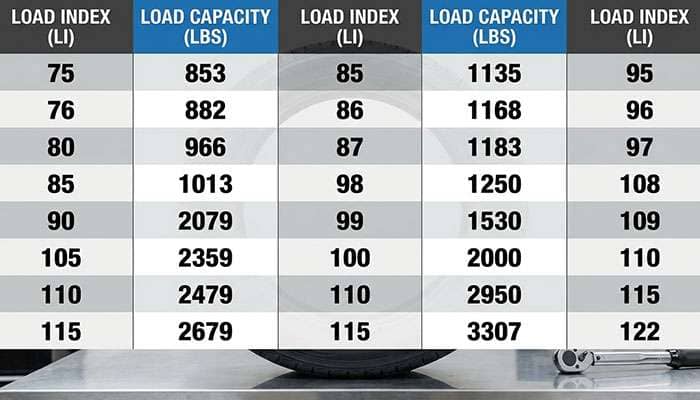
Technical specifications determine whether your Ford F-150 aftermarket tires will properly support your truck's capabilities. Understanding these critical numbers and ratings ensures both safety and performance match your specific needs.
The load index directly impacts how much weight your tires can safely carry. For F-150s, common load indices include 108 (supporting 1000 kg per tire), 116 (1250 kg per tire), and 121 (1450 kg per tire). When selecting aftermarket tires, never choose a load index lower than what came stock on your truck.
Speed ratings typically range from R (170 km/h) to T (190 km/h) for most F-150 applications. While your truck rarely approaches these speeds, this rating indicates how well the tire handles heat buildup at sustained velocities.
Modern load range letters indicate equivalent strength, with each representing different carrying capacities:
Load Range C (6-ply equivalent)
Load Range D (8-ply equivalent)
Load Range E (10-ply equivalent, popular for towing)
Heavier-duty tires offer enhanced puncture resistance and durability. As one F-150 owner noted, "I've never had an E-rated tire damaged to the point it couldn't be repaired, while I've lost several P-rated tires to damage".
Beginning with 2024 models, Ford F-150s use 433MHz TPMS sensors instead of the previous 315MHz version. When purchasing new wheels or sensors, ensure compatibility with your truck's specific year.
The Ford Performance Complete TPMS Kit provides valve-mounted, snap-in sensors with matching rubber valve stems. This kit includes a tire pressure monitor activation tool for easily syncing sensors with your truck's system, preventing persistent warning lights after installing new wheels.
Always verify your wheel choice accepts valve stem mounted TPMS sensors. Incompatibility between wheels and sensors creates frustrating warning lights that compromise your truck's safety monitoring systems.
After researching tire options for your Ford F-150, the final step involves making your selection and planning for proper installation. This critical stage ensures you'll get maximum performance and longevity from your investment.
When comparing brands, use filtering tools to narrow your options based on what matters most to you. Shop by entering your F-150's year, model, trim level, and tire size before applying filters for brand, road condition, and tread type.
With approximately 100 tire brands available, focus on those with established reputations for truck applications. Examine warranty terms carefully, as premium brands often offer better mileage warranties and road hazard protection.
For the best selection options suited specifically for your truck, visit Performance Plus Tire's F-150 collection.
Complete wheel and tire packages eliminate guesswork. These precision-matched combinations come fully assembled and balanced, ready for immediate installation.
When selecting packages, consider load rating capabilities and offset specifications that work with your truck's suspension setup. Evaluate wheel finish durability and tire tread pattern compatibility with your driving environment to ensure long-lasting appearance and traction performance.
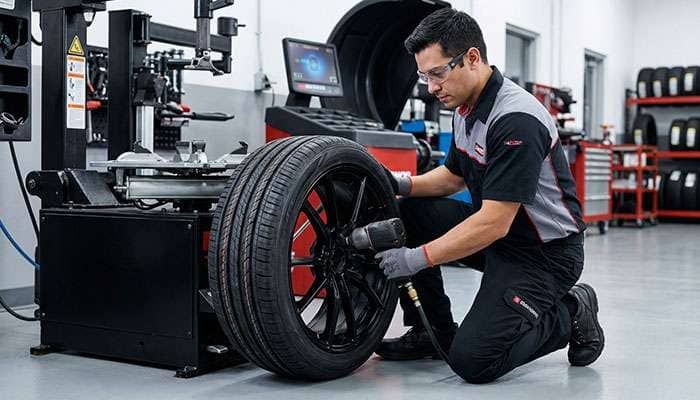
Professional mounting prevents wheel damage and ensures optimal performance. Document your wheels' condition before service and communicate your expectations clearly regarding potential scratches.
Request road force balancing—a superior technique that identifies both weight imbalances and radial force variations. Shops typically charge $15-20 per tire for this service.
Quality mounting includes proper alignment of the yellow dot (tire's light point) with the valve stem, minimizing required balancing weights. If a red dot appears, it indicates the tire's high point for radial runout and takes precedence in alignment considerations.
Selecting the right aftermarket tires for your Ford F-150 transforms both appearance and performance. We've covered the essential steps to match tires perfectly to your driving style and truck specifications.
Your F-150 deserves tires that deliver exactly what you need. Whether you're hauling heavy loads, tackling off-road trails, or cruising highways daily, the right aftermarket tires make all the difference in how your truck performs.
At Performance Plus Tire, we carry the best selection of F-150 aftermarket tires at the lowest prices. Our huge inventory includes all the top brands and latest designs specifically matched to your truck's year, model, and trim level. From all-terrain versatility to specialized mud-terrain performance, we have options for every driving need.
Professional installation ensures you get maximum performance from your investment. Our experienced technicians provide precision mounting and balancing, guaranteeing proper fitment and optimal performance for years to come.
Don't let your F-150 settle for factory limitations. We offer flexible financing options that make upgrading more affordable, allowing you to get the tires you want without breaking the bank. Drive now and pay later with our instant approval financing programs.
Visit Performance Plus Tire today and experience the perfect combination of selection, expertise, and value. Our knowledgeable staff will guide you through the selection process, ensuring you find the ideal tires for your specific F-150 and driving requirements.
The perfect set of aftermarket tires for your F-150 is waiting. Make the upgrade that transforms your truck's capabilities and appearance.
Selecting the right aftermarket tires for your Ford F-150 requires understanding your specific driving needs and truck specifications to maximize both performance and safety.
• Match tire type to driving style: All-terrain tires offer versatility for mixed driving, mud-terrain excels off-road, and highway tires prioritize comfort and fuel economy for daily commuting.
• Verify load ratings and technical specs: Never choose tires with lower load indices than factory specs, and ensure TPMS compatibility (433MHz for 2024+ models) to maintain safety systems.
• Consider lift kit impact on fitment: A 2-inch leveling kit accommodates 33-inch tires, while 4-6 inch lifts enable 35-37 inch tires with proper wheel offset and clearance.
• Invest in professional installation: Road force balancing and proper mounting prevent damage and ensure optimal performance, making the upgrade investment worthwhile.
• Focus on complete wheel-tire packages: Pre-matched combinations eliminate guesswork and provide precision fitment for your specific F-150 model year and trim level.
Aftermarket tires can reduce unsprung weight by choosing lighter wheel options, potentially improving acceleration, handling response, and even fuel economy by 1-2 mpg. The key is selecting tires that complement your F-150's intended use while maintaining the technical specifications needed for safe operation.
Upgrading to aftermarket tires can improve your F-150's performance, handling, and appearance. They often weigh less than factory wheels, enhancing acceleration and fuel efficiency. Aftermarket tires also allow for customization to match your specific driving needs, whether it's off-roading, towing, or daily commuting.
To determine the right tire size, check your truck's Tire Label on the B-pillar or driver's door edge. Consider your model year, trim level, and any lift kits you've installed. Generally, a 2-inch lift allows for 33-inch tires, while a 4-6 inch lift can accommodate 35-37 inch tires with proper wheel configuration.
All-terrain tires offer a balance between on-road comfort and off-road capability, making them suitable for mixed driving conditions. Mud-terrain tires have more aggressive tread patterns for superior off-road performance but may be noisier and less fuel-efficient on highways. Choose based on your primary driving environment.
Load rating is crucial for safety and performance, especially if you use your F-150 for towing or hauling. Never choose tires with a lower load index than what came stock on your truck. Common load indices for F-150s include 108, 116, and 121, supporting different weight capacities per tire.
Professional installation is highly recommended for aftermarket tires. Experts can ensure proper mounting, balancing, and alignment, which are critical for optimal performance and longevity. They can also perform road force balancing, a superior technique that identifies both weight imbalances and radial force variations, ensuring a smoother ride.



