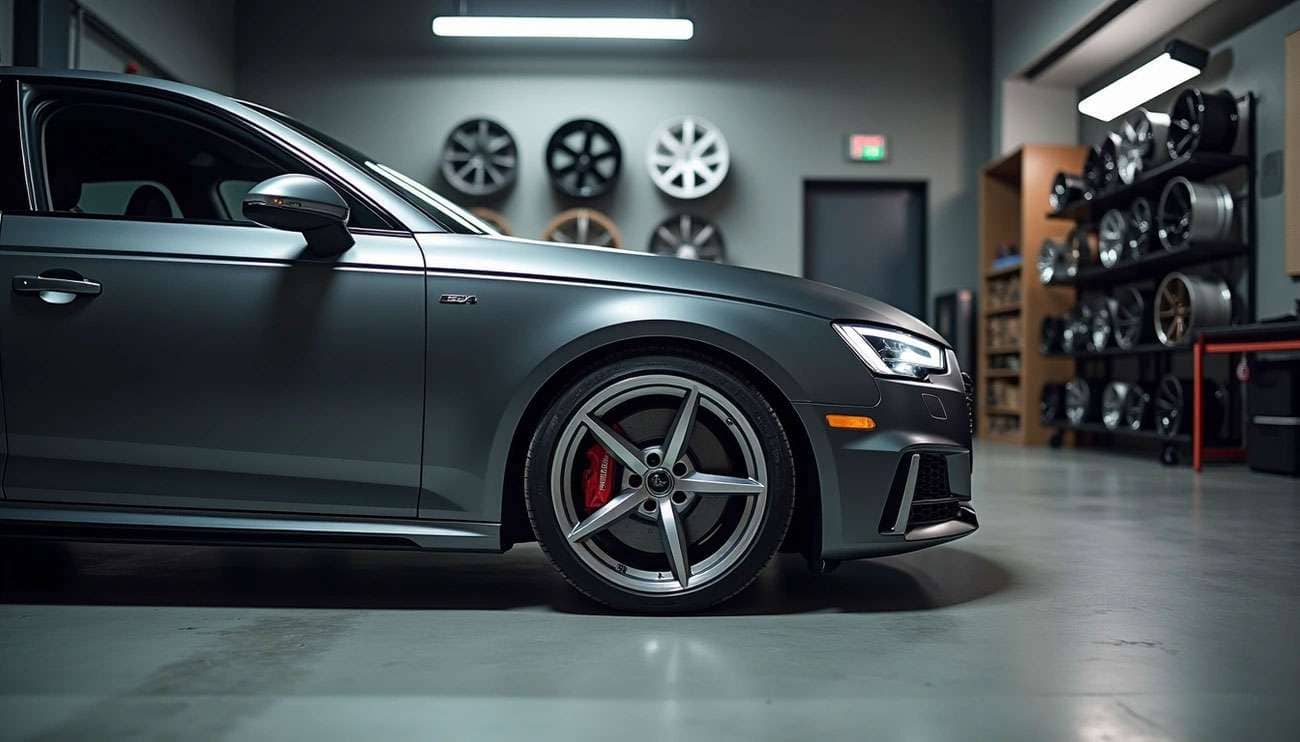
Audi S4 aftermarket wheels represent one of the most impactful upgrades you can make to your high-performance sedan. The right wheel selection does more than enhance appearance – it directly affects handling, comfort, and overall driving dynamics.
Your S4 comes equipped with wheels ranging from 18 to 20 inches in diameter, engineered specifically for this performance-oriented platform. When selecting aftermarket options, proper fitment becomes essential. The standard 5x112mm bolt pattern and offset range between ET35 and ET47 form the foundation of any successful wheel upgrade.
The S4 demands different considerations than its A4 counterpart. Where the A4 prioritizes everyday comfort, your S4's dynamic handling capabilities and higher power output require wheels that can match its performance potential. The wrong choice can compromise the driving experience you purchased this vehicle to enjoy.
We'll guide you through every aspect of selecting the perfect aftermarket wheels for your S4. From understanding critical fitment specifications to matching wheel characteristics with your driving style, this guide provides the knowledge you need to make an informed decision that enhances both performance and appearance.
Proper wheel fitment determines whether your aftermarket wheels will enhance or hinder your S4's performance. Getting these specifications right prevents costly mistakes and ensures optimal handling characteristics.
Your S4 arrives with factory wheels measuring 18 to 20 inches in diameter. These dimensions reflect the engineering requirements for this performance platform. All modern S4 models use a 5x112mm bolt pattern – five lug holes positioned 112 millimeters apart when measured center to center. This bolt pattern appears across multiple Audi and Volkswagen models, simplifying wheel selection.
The lug bolt specifications are equally important. S4 models require M14x1.5 thread size, tightened to 89 ft/lbs. Factory tire widths range from 245-255mm, engineered to provide the right balance of grip and performance for the S4's power output.
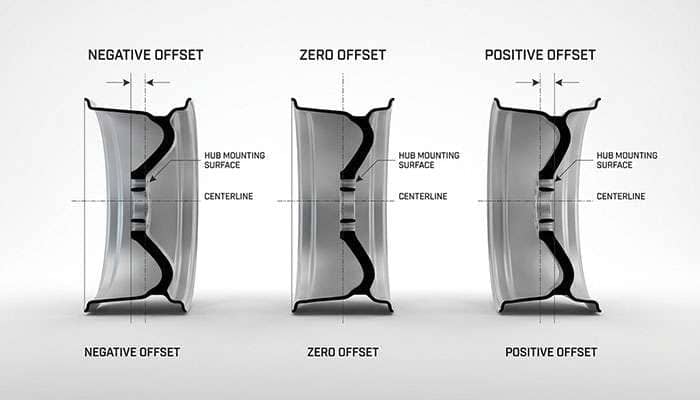
Wheel offset (ET) controls both appearance and handling characteristics. This measurement represents the distance in millimeters between the wheel's mounting surface and its centerline. S4 applications typically work best with offsets between ET30 and ET47.
Center bore accuracy is critical for proper installation. Your S4's hubs measure 66.5mm in diameter[72]. This bore must align perfectly to prevent vibration and ensure proper weight distribution. Wheels with larger center bores can work using hub-centric rings to fill the gap.
Follow this sequence to verify compatibility before purchasing:
Confirm the 5x112mm bolt pattern matches your S4
Check that center bore is 66.5mm or accommodates hub-centric rings
Verify offset falls within the ET30-47 range
Ensure wheel width supports your target tire size (245-255mm for most S4s)
Aggressive fitments require additional planning. For example, 19x9.5 ET35 wheels paired with 255/35/19 tires achieve flush appearance without rubbing issues. Some owners successfully run 19x9.5 ET40 with 265/35 tires with similar results.
Before finalizing your purchase, verify the wheels accept conical-style hardware. Most S4 models need either factory ball seat lug bolts or proper aftermarket alternatives for safe installation.
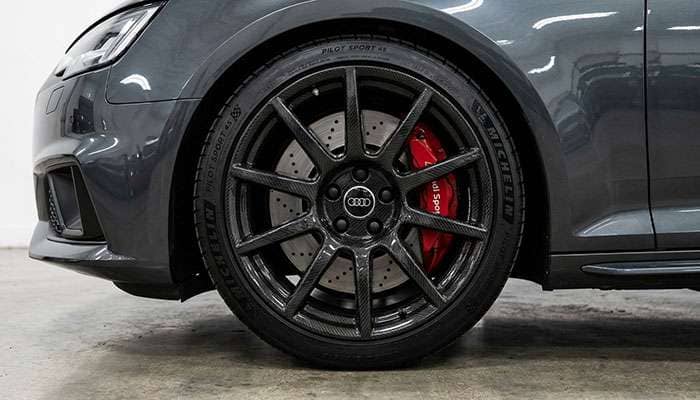
Audi S4 aftermarket wheels come in several manufacturing types, each offering distinct advantages for different driving priorities and budgets. The construction method directly impacts weight, strength, durability, and cost.
Cast wheels use molten aluminum poured into molds, creating affordable options that work well for daily driving. The casting process creates microscopic air pockets during cooling, requiring manufacturers to add extra material for strength. This results in heavier wheels that still provide reliable performance.
Forged wheels start with solid aluminum billets compressed under thousands of tons of pressure before precision machining. This forging process creates denser metal with superior grain structure, producing wheels that are 25-30% lighter than comparable cast options. The weight reduction improves acceleration, braking, and handling response by reducing unsprung mass.
For S4 owners focused on performance, forged wheels deliver measurable benefits. The lighter rotating weight allows your suspension to work more effectively, while the increased strength permits more aggressive designs that maintain structural integrity under high-stress driving conditions.
Flow formed wheels (also called rotary forged) provide an excellent middle ground between cast and forged options. The process begins like casting but adds a crucial step where the barrel gets heated and stretched under pressure, borrowing techniques from forging.
This hybrid manufacturing reduces weight by 15-25% compared to standard cast wheels while significantly improving strength. Many premium manufacturers like APR create flow formed wheels specifically for Volkswagen Group performance vehicles, making them increasingly popular with S4 enthusiasts who want performance benefits without forged wheel prices.
Weight differences between wheel types create substantial performance impacts. Forged options from manufacturers like APEX offer exceptional strength-to-weight ratios with load ratings reaching 1600 lbs—exceeding typical forged wheels rated at 1521 lbs.
Some manufacturers strategically remove material from non-critical areas while reinforcing stress points, creating wheels that maintain strength while minimizing weight. Specialized S4 options like Neuspeed RS10 forged wheels weigh under 20 pounds in 19-inch diameter.
Quality manufacturers exceed standard testing requirements with extended duration tests, higher impact drop heights, and increased load evaluations. This ensures reliable performance even under demanding driving conditions that S4 owners frequently encounter.

Your driving priorities determine which Audi S4 aftermarket wheels deliver the best experience. The right choice enhances what you value most about your S4.
Daily commuters benefit most from comfort-focused setups. Wheels with smaller diameters and thicker sidewalls absorb road imperfections effectively, creating a smoother ride. Most S4 owners find 18-inch wheels provide the sweet spot between performance capability and everyday comfort.
Track enthusiasts and performance drivers often prefer larger diameter wheels with low-profile tires. These setups deliver immediate steering response and enhanced cornering grip through stiffer sidewalls. Lighter wheels also improve acceleration by reducing rotational mass, making them ideal for performance-focused applications.
Winter conditions require dedicated wheel setups. Audi's winter wheel packages pair 18-inch alloys with specialized winter tires like Bridgestone Blizzak LM 32 (225/45 R18). These combinations provide superior traction below 45°F and exceptional grip on ice and snow.
Summer wheels typically feature more aggressive styling and larger diameters. Summer tires offer outstanding dry weather performance but become dangerous in cold conditions, making seasonal wheel changes essential for year-round driving.
Wheel diameter creates a direct trade-off between handling precision and ride comfort. Larger wheels (19" and up) with low-profile tires provide sharper steering response and better cornering performance. You'll feel more connected to the road, but every pavement imperfection transmits directly through the cabin.
Smaller wheels allow for taller tire sidewalls that flex over road irregularities. The ride quality improves dramatically with this setup. One S4 owner who downsized from 19" to 18" wheels reported: "It made a massive difference in ride quality for me".
Choose based on your priorities – handling precision or daily comfort. Both approaches work well with the S4's performance capabilities.

Technical considerations determine whether your Audi S4 aftermarket wheels deliver the performance upgrade you expect. Smart purchasing decisions and proper installation prevent costly issues that can compromise both safety and driving experience.
Adequate clearance between brake calipers and wheels is non-negotiable. Maintain at least 2-3mm of space around all caliper surfaces. This becomes critical during aggressive driving when brake components expand from heat buildup.
Here's how to verify proper clearance:
Mount the wheel without tires installed
Use a feeler gauge to measure gaps at multiple points
Check clearance with the wheel at full steering lock
Some aftermarket wheels require modifications to clear S4 brakes. Factory 18-inch setups with 10mm spacers often need hub modifications for proper fitment.
S4 models use lug bolts instead of lug nuts, following European automotive standards. Most aftermarket wheels require conical seat lug bolts, which differ from the factory ball seat hardware. Using incorrect hardware creates serious safety risks and fitment problems.
Proper installation requires following a cross-pattern tightening sequence with a torque wrench set to manufacturer specifications (typically 89 ft-lbs). Always recheck torque after 60 miles of driving.
Thread size mismatches cause frequent problems. S4 models use M14×1.5 bolts, but many aftermarket wheels come drilled for M12 hardware. Solutions include conversion kits or having wheels professionally re-drilled.
Incorrect wheel offset can cause rubbing against fenders or suspension components. This issue becomes apparent during cornering or suspension compression.
Reputable suppliers include Fitment Industries, ECS Tuning, and APEX Wheels. These companies provide detailed fitment guides specific to your S4 generation.
At Performance Plus Tire, we carry wheels specifically vetted for Audi S4 applications. Our selection includes options that have been tested for proper brake clearance and fitment compatibility. Visit https://www.performanceplustire.com/search-by-vehicle/Audi/S4 to explore wheels that meet your S4's exacting requirements.
Selecting aftermarket wheels for your Audi S4 involves more than choosing attractive designs. The right wheels enhance both performance and appearance when you understand the essential requirements. Proper fitment specifications—including the 5x112mm bolt pattern, correct center bore, and appropriate offset ranges—determine whether your upgrade succeeds or creates problems.
Weight becomes a crucial factor for performance-oriented drivers. Forged wheels deliver the best strength-to-weight ratios, while flow formed options offer solid middle-ground value between cost and performance benefits. Your driving priorities should guide this choice—track enthusiasts benefit from lightweight options, daily drivers appreciate comfort-focused setups, and winter conditions demand specialized packages.
Never compromise safety when upgrading wheels. Verify brake clearance, use proper lug hardware, and purchase from reputable sources that understand Audi-specific requirements. Correct torque specifications and regular maintenance checks prevent issues that can otherwise be avoided with attention to detail.
The best wheel selection matches your specific driving needs and vehicle requirements. Browse our complete collection of Audi S4 wheels at Performance Plus Tire to find options that have been properly vetted for your vehicle. The perfect wheels balance appearance, performance, and correct fitment—when these elements align properly, your S4 delivers the driving experience it was designed to provide.
Master these essential considerations to select aftermarket wheels that enhance both performance and safety for your Audi S4:
• Verify critical fitment specs: Ensure 5x112mm bolt pattern, 66.5mm center bore, and ET30-47 offset range for proper installation • Choose wheel type based on priorities: Forged wheels offer 25-30% weight reduction for performance; flow-formed provides middle-ground value • Match wheel size to driving style: 18" wheels balance comfort and performance for daily use; 19"+ improves handling but reduces ride quality • Check brake clearance and hardware: Maintain 2-3mm caliper clearance and use conical seat lug bolts (M14x1.5) for safety • Consider seasonal needs: Dedicated winter wheel packages with 18" diameter optimize traction below 45°F conditions
The right aftermarket wheels transform your S4's performance while maintaining safety standards. Proper fitment, appropriate construction type, and matching your driving needs ensures maximum satisfaction from your investment.
The key specifications include a 5x112mm bolt pattern, 66.5mm center bore, and an offset range between ET30 and ET47. It's also important to ensure proper brake caliper clearance and use the correct M14x1.5 lug bolts.
Forged wheels offer the best strength-to-weight ratio, reducing unsprung weight by up to 25-30% compared to cast wheels. This improves handling, acceleration, and overall performance. Flow-formed wheels provide a middle ground, offering some weight reduction at a lower cost.
For daily driving, 18-inch wheels often provide the best balance between performance and comfort. They allow for tires with taller sidewalls, which better absorb road imperfections, resulting in a smoother ride compared to larger wheel sizes.
Yes, winter driving requires specialized setups. Dedicated winter wheel packages, typically 18-inch alloys paired with winter tires like Bridgestone Blizzak LM 32, provide enhanced traction in cold temperatures and better grip on ice and snow.
Reputable vendors for Audi S4 aftermarket wheels include Fitment Industries, ECS Tuning, and APEX Wheels. These companies offer detailed fitment guides specific to different Audi S4 generations. Performance Plus Tire also provides a selection of wheels vetted for proper fitment on Audi S4 models.