
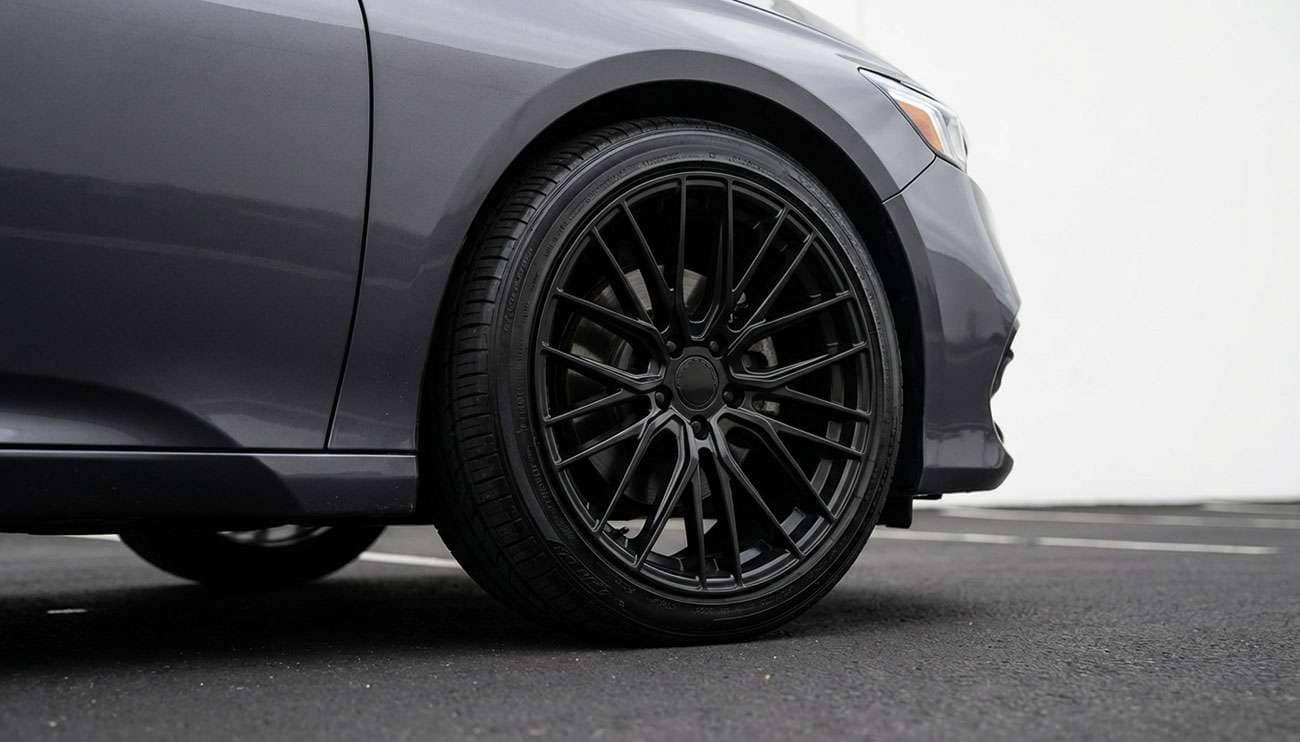
The 2023 Honda Accord topped IIHS testing for midsize car rear-seat safety. When you're looking for the best tires for Honda Accord models, you're not just upgrading performance—you're maintaining that exceptional safety standard while enhancing your ride.
At Performance Plus Tire, we understand that proper Honda Accord wheel specs are essential for perfect fitment. The 10th generation Accord comes with stock wheel sizes of 19x8 +55mm featuring a 5x114.3mm bolt pattern. However, aftermarket options provide much greater flexibility for customization. You can fit front wheels ranging from 17" to 21" with widths between 7.5" and 10", while rear wheels can range from 17" to 20" with similar width options. For the current generation Accord, we recommend 19x8.5 wheels paired with 235/40 tires for optimal performance.
We carry the best selection of Honda Accord aftermarket tires at the lowest prices. Whether you drive a 2018 model or the latest generation, this guide covers everything from stock specifications to performance-enhancing upgrades. Our expert team will help you find the perfect tire match for your driving style and specific needs, ensuring both safety and performance improvements for your Accord.
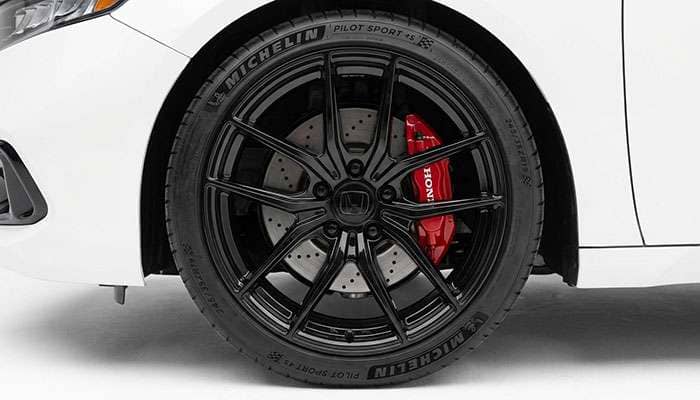
Upgrading your Honda Accord tires starts with understanding both factory specifications and aftermarket possibilities. Proper fitment ensures peak performance while preventing issues that could compromise your driving experience and safety.
Honda Accord wheel specifications remain consistent across recent generations. The 10th generation Accord comes equipped with stock wheel sizes of 19x8 +55mm featuring a 5x114.3mm bolt pattern and a hub bore of 64.1mm. Different trim levels offer varying wheel sizes—the LX trim typically features 17-inch alloy wheels with 225/50 R17 all-season tires, while the Sport and Touring trims showcase 19-inch alloy wheels paired with 235/40 R19 all-season tires.
Understanding tire code is essential for proper replacement. The code includes tire type, tread width, aspect ratio, construction type (typically radial), diameter, load rating, and speed rating. The UTQG (Uniform Tire Quality Grading) code reveals treadwear, traction, and temperature resistance ratings.
OEM (Original Equipment Manufacturer) tires come installed on new vehicles directly from the factory. These tires result from collaboration between car and tire manufacturers to meet specific performance standards set for your Accord. They're designed to deliver balanced performance across multiple categories.
Aftermarket tires offer customization opportunities based on your driving preferences. Rather than being tailored for a single vehicle model, they're designed for broader application. Aftermarket options often focus on specialized performance aspects such as superior traction, increased fuel efficiency, or reduced road noise.
OEM tires occasionally feature unique specifications compared to similar aftermarket models, including special tread patterns, rubber compounds, and internal construction elements. Aftermarket tires may provide superior treadwear ratings—OEM Honda tires sometimes feature only 9.5/32" tread depth versus 11/32" on comparable aftermarket options.
Proper wheel fit ensures your Accord maintains its balance, handling characteristics, and appearance. Incorrect fitment can lead to tire rubbing against fenders, compromised handling, and potentially dangerous driving conditions, particularly on sharp corners or uneven ground.
The lower your car sits, the more crucial proper fitment becomes. If you're planning a wider setup, you might encounter clearance issues requiring rolled fenders or plastic trimming. Proper tire inflation is critical—under-inflated tires can lead to flats and blowouts.
Selecting the appropriate wheel size and tire specification ensures your Honda Accord retains its intended performance characteristics while delivering any desired aesthetic or functional improvements.
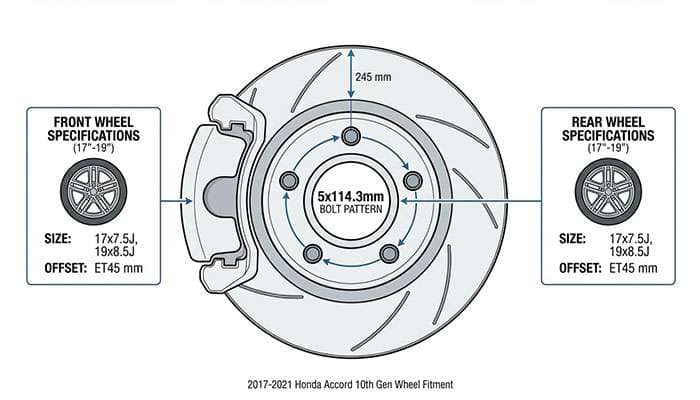
Understanding tire dimensions is crucial before making any upgrade decisions. Each number and letter on your tire sidewall tells a specific story about performance capabilities and fitment requirements.
Tire codes reveal everything you need to know about compatibility and performance. Take a tire marked P225/50R17 94V as an example:
P: Passenger vehicle designation
225: Width in millimeters across the tire
50: Aspect ratio (sidewall height is 50% of width)
R: Radial construction
17: Compatible rim diameter in inches
94: Load index (weight capacity)
V: Speed rating (maximum safe speed)
The tire identification number (TIN) on the sidewall provides manufacturing details, along with cold pressure ratings and maximum load specifications.
Honda simplified sizing options between generations. The 10th generation Accord (2018-2022) offers three factory sizes:
225/50R17: Standard on LX trims
235/45R18: Mid-tier option
235/40R19: Featured on Sport and Touring trims
The 11th generation (2023+) streamlined these options to just 225/50R17 and 235/40R19, depending on trim level.
Many 10th gen owners choose 18x9.5 with +30mm to +38mm offset wrapped in 255/40 tires for a flush fitment with rolled fenders.
Wheel diameter directly affects how your Accord handles road imperfections. Smaller wheels with taller sidewalls dramatically improve ride comfort. One owner who switched from 19" wheels to 17" (215/55R17) reported that the ride became "so much softer/smoother" that they "look forward to the change" every winter.
Larger wheels offer improved cornering stability but transfer more road imperfections into the cabin due to reduced tire sidewall height.
The Honda Accord wheel size chart provides manufacturer-recommended fitment specifications. For the 10th gen, recommended front wheels range from 17" to 21" with widths between 7.5" and 10". For optimal daily driving without modifications, consider 19x8.5 wheels with 235/40 tires on the 11th gen.
Suspension modifications, especially lowering, require more careful wheel and tire selection to prevent clearance issues.
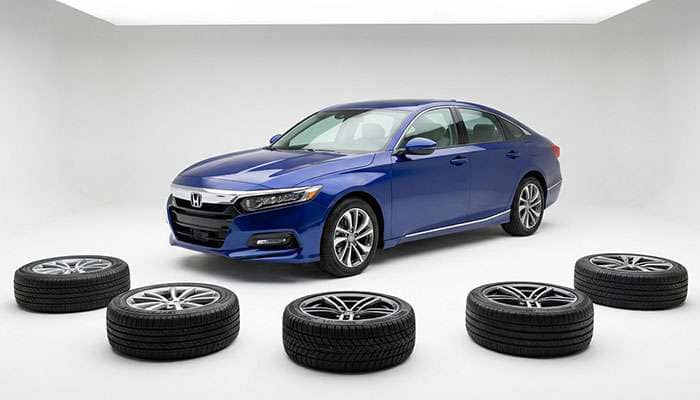
Your Honda Accord deserves tires that match your driving habits. Different driving conditions require specific tire characteristics to maximize both performance and value.
The Kumho Ecsta PS31 stands out among budget-friendly options, delivering excellent treadwear ratings with balanced performance. For moderate budgets, the BFGoodrich Advantage T/A Sport consistently ranks among the highest-rated tires available. Premium shoppers should consider the Vredestein Hypertrac All Season, a newcomer earning positive reviews for its well-rounded capabilities.
Performance enthusiasts will appreciate the Michelin Pilot Sport Cup 2, which offers outstanding dry weather traction for aggressive driving. Keep in mind this all-out performance tire requires more frequent replacement than standard options due to its specialized compound.
Daily drivers seeking maximum value should explore Kumho's tire lineup, which balances performance with affordability. The Michelin Primacy MXM4 remains an excellent replacement choice for 2018 models, as it's the same factory-installed option found on many trims.
The Bridgestone Blizzak WS90 excels on ice-covered and snowy roads when temperatures drop. Another compelling option is the Vredestein Quatrac 5, which carries severe snow service ratings for harsh winter conditions.
Maximum comfort comes from the Michelin Primacy Tour A/S or CrossClimate2. Both deliver quiet rides, with many owners reporting the CrossClimate2 performs exceptionally well across dry, wet, and snowy conditions throughout the year.
Find the perfect tires for your Honda Accord at Performance Plus Tire to match your specific driving needs and budget.
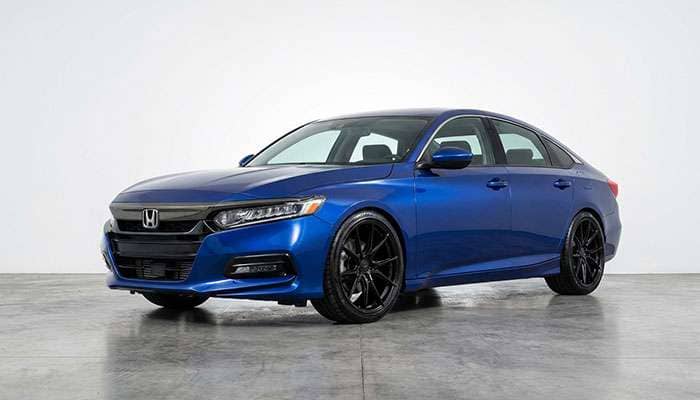
Proper suspension setup plays a crucial role in how your aftermarket tires perform on your Honda Accord. Understanding this relationship helps prevent costly mistakes and ensures optimal performance.
Your suspension height directly impacts tire clearance. When you lower your Accord, you create less space between tires and fenders, making wheel selection more critical. Worn suspension components—including old shocks, tired bushings, or sagging springs—can throw geometry out of spec, further reducing effective ride height. If you're planning aftermarket coilovers, stay close to recommended sizing to avoid clearance issues.
Here are successful real-world setups for the 11th generation Accord:
2023 Accord EX: 19x8.5 +35mm Vors TR4 with 255/35 General G-MAX AS-07
2023 Accord Sport: 19x8.5 +35mm Rotiform DTM with 235/40 Goodyear Eagle Touring
2023 Accord EX: 18x9.5 +35mm JNC JNC043 with 255/40 Sumitomo HTR A/S P02
For daily driving, 19x8.5 wheels with 235/40 tires provide excellent balance without requiring extensive modifications.
Proper offset selection prevents rubbing issues—offsets between +35mm and +45mm work best for most Accord setups. Should rubbing occur, consider fender rolling (USD 30-50 per fender) or trimming plastic bumper covers. Always check for tire contact with suspension components during full steering lock to save headaches later.
Staggered setups (different wheel and tire sizes front and rear) on Accords are primarily for looks since they're front-wheel drive vehicles. Common staggered configurations include 19x8.5 +35mm front with 19x9.5 +22mm rear. Keep in mind that staggered setups eliminate the ability to rotate tires, potentially leading to uneven wear. Consider this option only if you prioritize appearance over maintenance concerns.
Choosing the right aftermarket tires for your Honda Accord impacts both performance and safety. We've covered everything from stock specifications to tire selection based on your specific driving style. Proper fitment ensures your Accord maintains its exceptional handling characteristics while preventing potentially dangerous rubbing issues.
Your driving habits determine the best tire choice. Daily commuters benefit from the balanced performance of all-season options like the BFGoodrich Advantage T/A Sport, while enthusiasts get superior grip from Michelin Pilot Sport Cup 2 tires. Those in colder regions should consider dedicated winter tires such as the Bridgestone Blizzak WS90 for optimal safety during snowy conditions.
Wheel size directly affects ride quality—smaller wheels with taller sidewalls provide smoother rides, though they sacrifice some cornering stability. Suspension modifications require careful consideration of tire dimensions to avoid clearance issues, particularly with lowered Accords.
For 11th generation Accord owners, 19x8.5 wheels paired with 235/40 tires offer excellent balance without extensive modifications. 10th generation owners might consider 18x9.5 wheels with offsets between +30mm and +38mm for flush fitment, though fender rolling may be necessary.
At Performance Plus Tire, we carry the best selection of Honda Accord aftermarket tires at the lowest prices. Our wheels are available in a range of prices to fit any budget, with options tailored to your specific model year and performance needs.
The right tire choice enhances your driving experience while maintaining the safety standards that make the Accord such a respected vehicle. Whether you prioritize comfort, performance, or all-weather capability, proper tire fitment allows you to make informed decisions that improve your Honda Accord for years to come.
Ready to upgrade your Honda Accord? Shop for the best tires for your Honda Accord at Performance Plus Tire today and experience the perfect blend of style, performance, and value.
Understanding Honda Accord tire fitment is essential for maintaining safety and performance while upgrading your vehicle's capabilities.
• Know your specs: 10th gen Accords use 19x8 +55mm wheels with 5x114.3mm bolt pattern; aftermarket options range from 17" to 21" diameter • Match tires to driving style: All-season tires like BFGoodrich Advantage T/A Sport for daily use, Michelin Pilot Sport Cup 2 for performance driving • Smaller wheels improve comfort: Switching from 19" to 17" wheels dramatically increases ride smoothness by providing taller tire sidewalls • Proper offset prevents rubbing: Use +35mm to +45mm offset range to avoid tire contact with fenders and suspension components • Consider suspension modifications: Lowered Accords require careful wheel selection and may need fender rolling for wider setups
The key to successful aftermarket tire selection lies in balancing your performance needs with proper fitment specifications. Whether prioritizing comfort, performance, or all-weather capability, understanding these fundamentals ensures your Honda Accord maintains its renowned safety standards while delivering the driving experience you desire.
The Honda Accord can accommodate various tire sizes depending on the generation and trim level. For the 10th generation, factory sizes range from 225/50R17 to 235/40R19. Aftermarket options can go from 17" to 21" in diameter, with widths between 7.5" and 10".
Changing wheel size can significantly impact ride quality. Smaller wheels with taller sidewalls (e.g., 17-inch) generally provide a softer, smoother ride compared to larger wheels (e.g., 19-inch). However, larger wheels may offer improved cornering stability at the expense of comfort.
Some highly recommended all-season tires for the Honda Accord include the BFGoodrich Advantage T/A Sport for moderate budgets and the Vredestein Hypertrac All Season for those willing to invest more. These options offer a good balance of performance, comfort, and longevity.
To prevent tire rubbing, choose wheels with appropriate offset (typically between +35mm and +45mm for Accords). Consider your suspension setup, especially if the car is lowered. In some cases, fender rolling or trimming may be necessary for wider setups.
Staggered setups (different sizes front and rear) are primarily for esthetics on the front-wheel-drive Accord. While they can enhance the car's appearance, they eliminate the ability to rotate tires, potentially leading to uneven wear. Consider this option only if you prioritize looks over maintenance concerns.



