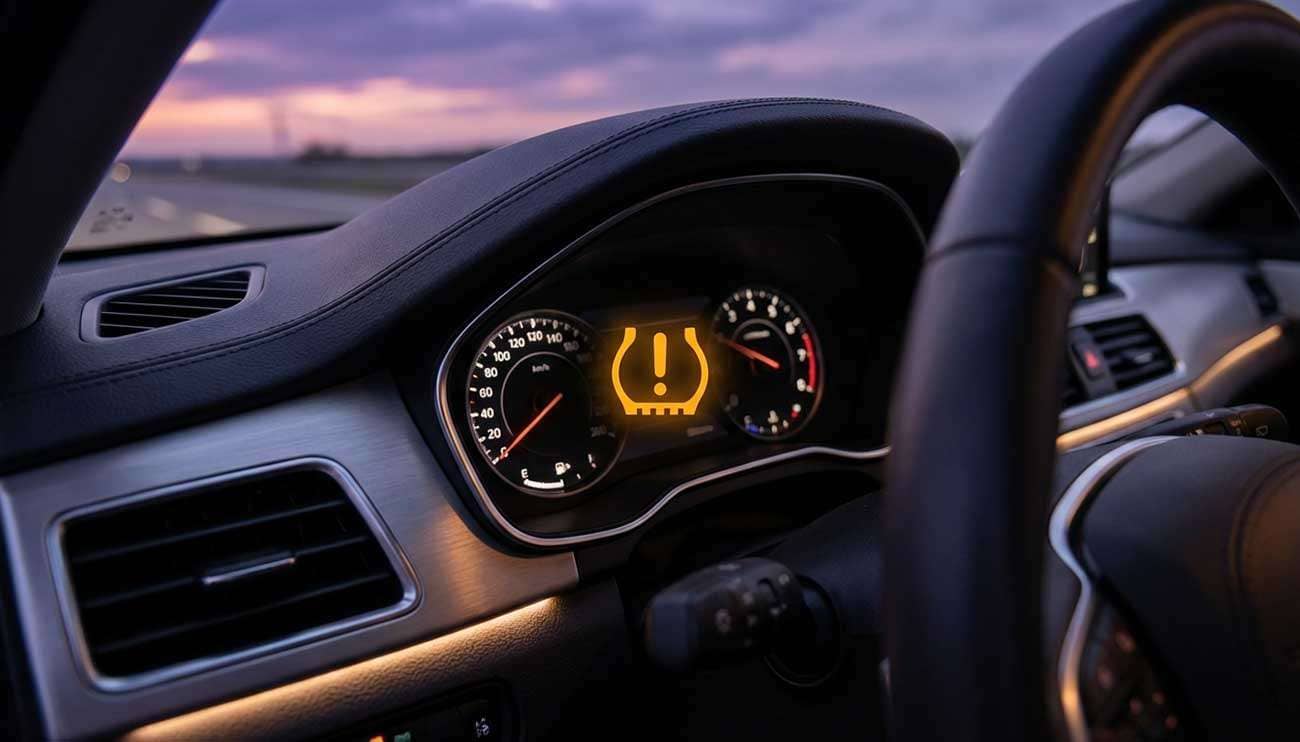
That TPMS light glowing on your dashboard signals a critical safety issue you shouldn't ignore. This federally mandated warning system activates when at least one tire drops 25% below the recommended pressure. While it might seem like just another dashboard annoyance, this light protects you from serious safety risks.
The question most drivers ask is simple: can you keep driving when this warning appears? The answer depends on several factors, but ignoring it creates real dangers. Underinflated tires compromise your vehicle's handling, accelerate tire wear, and in extreme cases, can lead to dangerous blowouts.
Weather plays a major role in tire pressure fluctuations. Cold temperatures cause air to contract, and for every 10-degree temperature drop, your tires lose approximately 1-2 PSI. That's why many drivers first notice their TPMS light on chilly winter mornings.
We'll walk you through exactly what this warning means, the specific reasons it might appear, and most importantly, when it's safe to continue driving versus when you should pull over immediately. You'll also learn practical steps to address the problem correctly and make informed decisions about your vehicle's safety.
That small tire-shaped icon with an exclamation point acts as your vehicle's early warning system. When this symbol lights up, your car is alerting you to a tire pressure issue that needs attention.
Your Tire Pressure Monitoring System represents a crucial safety feature that continuously watches for dangerous pressure drops. The system uses specialized sensors to monitor air pressure in each tire. Most vehicles display this warning as a yellow or amber horseshoe-shaped symbol with an exclamation point in the center.
TPMS serves as your first line of defense against tire-related problems. The system detects pressure drops that could compromise handling, reduce fuel economy, and shorten tire life. When you start your vehicle, you'll notice the TPMS light briefly illuminates during the system check—this indicates normal operation. A light that stays on signals an issue requiring attention.
The relationship between your warning light and actual tire pressure can be confusing. Federal regulations require TPMS systems to activate when pressure falls approximately 25% below the manufacturer's recommended level. Some Honda vehicles trigger the warning at around 20% below specification to account for sensor variations.
However, discrepancies between the warning light and your gauge readings do occur. Several factors can cause this:
Temperature fluctuations: Cold air contracts, temporarily reducing pressure readings
Sensor malfunctions: Aging or faulty sensors may misinterpret normal pressure levels
Calibration issues: Indirect TPMS systems depend on baseline measurements that may be incorrectly set
Remember that TPMS doesn't replace regular manual pressure checks. The system has limitations—it might miss gradual pressure loss across all tires or fail to detect issues when sensors aren't transmitting properly.
Several common triggers can cause your TPMS warning to illuminate:
Low tire pressure remains the most frequent culprit. One or more tires have dropped below the safe pressure threshold.
Temperature changes often catch drivers off guard. Cold mornings frequently trigger temporary pressure drops. Each 10-degree temperature decrease reduces tire pressure by approximately 1 PSI.
Sensor problems develop over time. TPMS sensors contain batteries that typically last 5-7 years before requiring replacement. The sensors themselves can also malfunction.
Recent tire service sometimes requires system reset. New tire installation or rotation may need recalibration to function properly.
Pay attention to the warning pattern for additional clues:
Solid light: Significant underinflation in one or more tires
Intermittent light: Borderline pressure that fluctuates with temperature
Flashing then solid: System malfunction rather than pressure issue—damaged, missing, or dead sensor batteries
Understanding these signals helps you respond correctly, whether that means adding air, checking sensors, or monitoring the situation until you can address it properly.
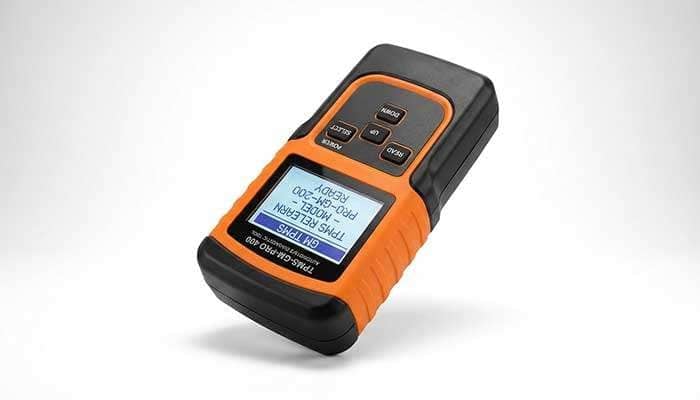
When your TPMS light activates, identifying the root cause helps you determine whether you're dealing with a quick fix or a trip to the tire shop. Most triggers fall into four main categories, each requiring different solutions.
Low pressure remains the most common culprit behind TPMS warnings. Your system was designed specifically to catch underinflated tires, making this the logical first thing to check. Even minor underinflation creates cascading problems: uneven wear patterns, reduced fuel efficiency, compromised handling, and in severe cases, dangerous blowouts. Tire pressure just 3 PSI below specifications can cut tire lifespan by 10%.
Small punctures from nails, road debris, or pothole damage often create gradual air loss that triggers your TPMS before you notice visual changes. Normal air permeation through rubber also slowly reduces pressure over time, eventually dropping below the warning threshold.
Cold mornings frequently surprise drivers with unexpected TPMS warnings that disappear by afternoon. The science is straightforward: cold temperatures cause air molecules to contract, reducing tire pressure. Every 10°F temperature drop decreases pressure by approximately 1-2 PSI. Winter's arrival can cause 5 PSI losses in regions with 50°F seasonal temperature swings.
Daily temperature fluctuations also affect pressure readings. The typical 20°F difference between overnight lows and afternoon highs can create nearly 2 PSI pressure variations. Your TPMS sensors are sensitive enough to detect these natural fluctuations, especially during seasonal transitions.
TPMS sensors depend on small internal batteries lasting 5-10 years. Weakening or dead batteries prevent accurate data transmission, triggering warnings even with proper pressure. Older vehicles become particularly susceptible as original sensors approach end-of-life.
Additional sensor failures include:
Road hazard damage from potholes or debris impacts
Corrosion from salt exposure and moisture
Programming glitches or software malfunctions
Routine maintenance can unexpectedly trigger TPMS warnings. Several factors contribute to this frustrating situation.
Inexperienced technicians sometimes damage delicate sensors during hasty installations. Over-tightening or striking sensors during mounting can cause immediate or delayed failures.
Most vehicles require specific reset procedures after tire installation or rotation. Skipping these calibration steps commonly results in false warnings that persist until proper reset.
Aftermarket wheels or different sizes can create compatibility issues between sensors and your vehicle's system. These situations often require professional reprogramming to restore normal operation.
When that warning light appears, most drivers face the same dilemma: should you pull over immediately or can you continue driving? The decision depends on your specific situation, but understanding the risks helps you make the right choice.
You're generally not facing immediate danger when the TPMS light first activates. There's usually no need to panic - it's typically safe to continue driving for a short distance. However, this doesn't mean you should ignore the warning.
The immediate risks include:
Slightly compromised handling and braking performance
Reduced fuel efficiency
Increased stress on tire components
These problems escalate quickly over time. According to the National Highway Traffic Safety Administration (NHTSA), tires can lose up to half their air pressure before appearing visibly underinflated to casual observers. Extended driving with the TPMS light on leads to:
Accelerated and uneven tread wear, shortening tire life
Significantly increased risk of blowouts (75% of roadside flats are preceded by slow leaks or underinflation)
Structural damage to the tire from excessive heat buildup
Underinflated tires change how your vehicle performs on the road. Tire pressure determines how rubber meets the road, affecting traction, handling, steering, stability, and braking.
The fuel economy impact is substantial. Underinflation creates larger road contact patches which increase rolling resistance, requiring more energy to keep tires in motion. For every 5 PSI your tires are underinflated, you lose approximately 2% in gas mileage.
Properly inflated tires could save the average passenger car 9.32 gallons of fuel over eight years. During 2011 alone, proper tire inflation saved an estimated $511 million across the U.S. vehicle fleet.
You can drive briefly with the TPMS light on to reach a service station or to check your tire pressure. Minor underinflation often doesn't constitute an emergency.
Stop driving immediately if:
The tire appears visibly flat or damaged
You notice vibrations, pulling, or handling issues
You're planning highway travel or long distances
The vehicle is heavily loaded
TPMS warnings typically trigger when pressure drops 25% below the manufacturer's recommended level. At this point, you're already experiencing reduced vehicle performance and safety margins.
The safest approach is checking your tire pressure as soon as possible after the light appears. Continuing high-speed driving with severely underinflated tires risks catastrophic tire failure, which could result in loss of vehicle control.
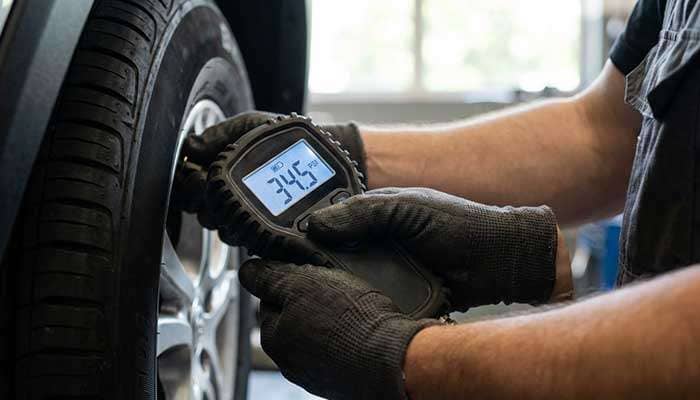
Checking your tire pressure correctly is the most important skill you can learn for tire safety. When your TPMS light appears, knowing how to verify and adjust pressure yourself saves time and keeps you in control of your vehicle's safety.
Two essential tools make tire pressure maintenance simple: a quality pressure gage and a reliable air source. Your choice of gage affects accuracy and convenience:
Digital gages: Easy-to-read displays with backlit screens for dark conditions
Analog gages: Battery-free operation with oil-filled chambers for consistent accuracy
Pencil-type gages: Compact and affordable options that fit in your glove box
Skip the gages at gas stations - they're often damaged from heavy use and weather exposure. For inflation, a portable 12-volt compressor gives you independence from gas station air pumps. These small units plug into your vehicle's power outlet and work anywhere you park.
Follow this process for accurate pressure readings:
Check tires when cold - wait at least three hours after driving or check first thing in the morning
Locate your vehicle's recommended PSI on the driver's door jamb sticker or owner's manual
Remove the valve stem cap and keep it in a safe place
Press your gage straight onto the valve stem until the hissing stops
Read the measurement immediately
Compare the reading to your vehicle's specification
Check all four tires plus your spare
Adjusting pressure requires patience and precision:
For adding air:
Park close enough to the compressor for the hose to reach all tires
Attach the air nozzle firmly to prevent air loss
Add air in short bursts, checking pressure frequently
Stop when you reach the manufacturer's recommended PSI
For releasing excess air:
Use the small metal pin on your gage's back
Press briefly against the valve stem to release small amounts
Recheck pressure after each release until you hit the target
Temperature affects pressure readings - expect roughly 1-2 PSI change for every 10-degree temperature swing. This means what's perfect on a cold morning might be slightly high by afternoon.
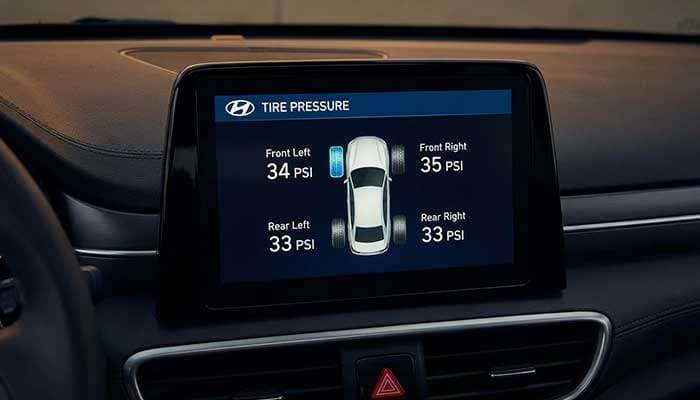
When basic troubleshooting doesn't resolve your TPMS warning, you may need to reset the system or replace faulty sensors. These solutions require more attention to detail but often solve persistent problems.
Your vehicle offers several reset options depending on the make and model:
Drive at 50 mph for 10-15 minutes to trigger automatic recalibration
Look for the TPMS reset button (usually located near the steering wheel) and press it with the ignition on
Access dashboard menu settings to find TPMS calibration options
For stubborn issues, disconnect the battery briefly to reset the entire system
Most TPMS problems respond well to pressure adjustments or system resets. However, error codes that require specialized scan tools or warnings that persist after multiple reset attempts typically signal sensor failure. At this point, replacement becomes necessary.
Sensor replacement is possible with the right tools: tire jack, lug wrench, valve core removal tool, tire spoons, torque wrench, and possibly a TPMS programming tool. Mark the valve stem position on the sidewall before starting to preserve wheel balance. Most vehicles require recalibration after sensor replacement to ensure proper communication.
While you can replace just one failed sensor, consider that all sensors use batteries lasting only 5-10 years. Replacing all sensors at once makes financial sense when one fails. If one battery dies, the others installed at the same time will likely follow within months.
Replacement costs vary from $50 to $250 per sensor depending on your vehicle and sensor type. Aftermarket sensors typically cost less than OEM versions, with complete sets available for around $55-100 for DIY installations.
Modern techniques allow TPMS replacement without full tire removal. The process involves:
Deflating the tire completely
Breaking only the outside bead
Reaching inside to swap the sensor
Reinflating to proper pressure
Run-flat tires present more challenges due to stiffer sidewalls and often require breaking both beads.
Your TPMS light serves as an important safety guardian that deserves attention, not panic. Temperature changes, low tire pressure, sensor problems, or recent tire service can trigger this warning, but each situation has a clear solution.
Proper tire pressure directly impacts your vehicle's handling, fuel efficiency, and safety. Regular pressure checks with a quality gauge become essential when your TPMS light appears. You can safely drive short distances with the light on, but highway trips or visibly damaged tires require immediate action.
Maintaining correct tire pressure saves real money through better fuel economy and extended tire life. You also avoid dangerous blowouts that could leave you stranded or worse. Many TPMS sensor issues can be handled yourself with the right tools and knowledge.
Your TPMS system works around the clock to protect you and your passengers. Treating its warnings seriously makes you a responsible driver who values both vehicle maintenance and safety. Keep a reliable pressure gauge in your vehicle, understand your specific TPMS requirements, and address warnings promptly. Your tires will last longer, your fuel costs will stay lower, and you'll drive with confidence knowing your safety systems are working properly.
Understanding your TPMS light and responding appropriately can prevent dangerous situations while saving money on fuel and tire replacement costs.
• Check tire pressure immediately when TPMS light appears - the system triggers when pressure drops 25% below recommended levels, affecting safety and fuel economy.
• Short-distance driving is generally safe, but address the issue promptly - avoid highway travel or heavy loads until pressure is corrected.
• Temperature changes cause false alarms - tire pressure drops 1-2 PSI for every 10°F temperature decrease, especially noticeable on cold mornings.
• Invest in a quality tire pressure gage - gas station gages are often inaccurate; check pressure when tires are cold for best results.
• TPMS sensor batteries last 5-10 years - if multiple sensors fail simultaneously, consider replacing all four to avoid repeated service visits.
Proper tire maintenance through regular pressure monitoring extends tire life by up to 10% and can save hundreds of dollars annually in fuel costs. When your TPMS light illuminates, treat it as an important safety reminder rather than an inconvenience.
It's generally safe to drive short distances with the TPMS light on, but you should check your tire pressure as soon as possible. For longer trips or highway driving, it's best to address the issue immediately to ensure safety and prevent potential tire damage.
While there's no fixed timeframe, it's best to check and adjust tire pressure within 24 hours of the light coming on. Driving for extended periods with underinflated tires can lead to decreased fuel efficiency, uneven wear, and increased risk of tire failure.
First, visually inspect your tires for any obvious damage or deflation. Then, use a reliable tire pressure gage to check all tires, including the spare. Inflate any underinflated tires to the manufacturer's recommended pressure, which can usually be found on the driver's side door jamb.
Yes, sudden temperature drops can cause tire pressure to decrease, potentially triggering the TPMS light. For every 10°F drop in temperature, tire pressure can decrease by about 1-2 PSI. This is why the light often appears on cold mornings.
It's recommended to check your tire pressure at least once a month and before long trips. This helps ensure optimal tire performance, fuel efficiency, and safety, regardless of whether the TPMS light is on or off.