
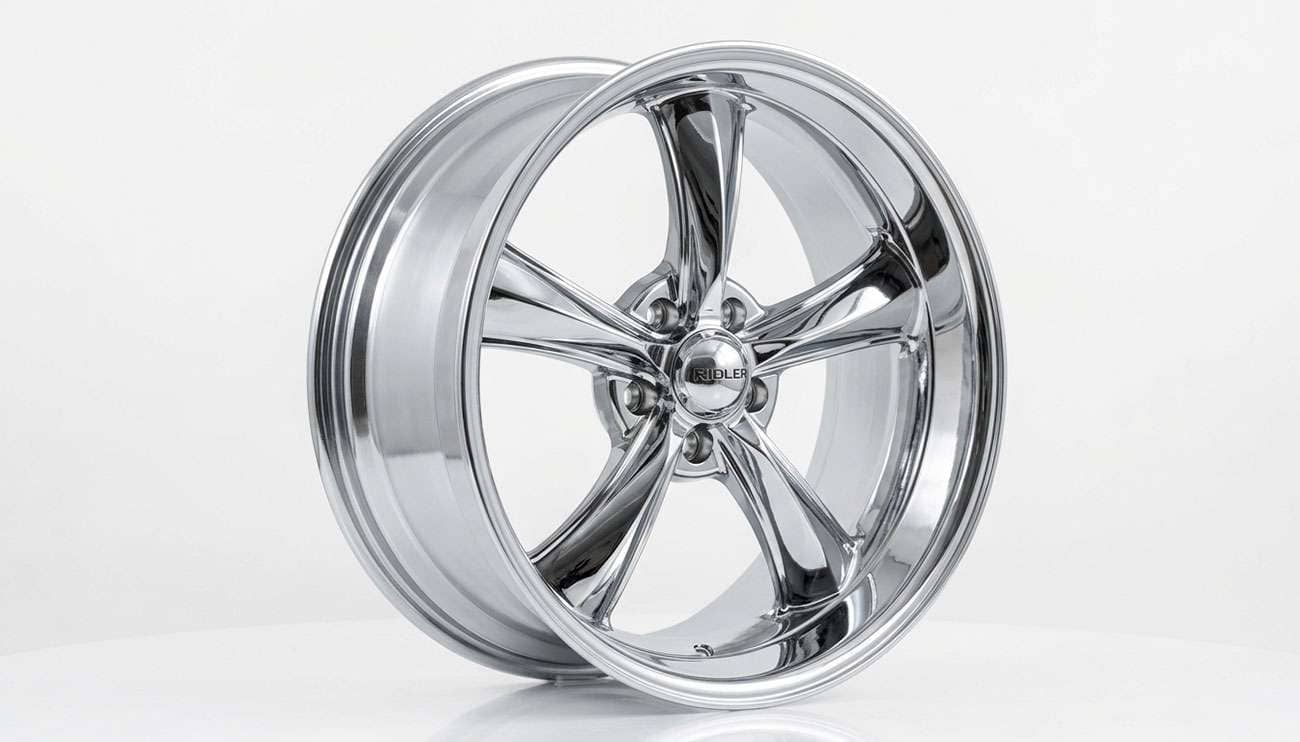
I've been bolting wheels onto hot rods and muscle cars since before some of you were born, and there's a name that keeps rolling across my bench season after season: Ridler. Folks see that classic five-spoke gleaming under the shop lights, they check the price tag, and then they ask me the same question every time — "Hank, are these things actually any good, or am I buying trouble?" Fair question. Let me give you the straight answer the way I'd give it to a buddy leaning on my fender.
Yes — Ridler wheels are good wheels, and for what they cost they're some of the best value in the vintage-styled wheel game. You get that timeless show-car look, a wide spread of sizes and finishes, and a lifetime structural warranty backing the casting. They're not a thousand-dollar-a-corner billet masterpiece, and they don't pretend to be. What they are is a smart, honest-looking wheel that lets a working man put his classic on the road looking sharp without taking out a second mortgage. Go in with your eyes open on a couple of things — and I'll walk you through those — and you'll be a happy camper.
Ridler is built by The Wheel Group, a California outfit that's been in the aftermarket wheel business since the late 1960s. That's better than fifty years of making rims, and they didn't get there by accident. The same company turns out a whole stable of brands, so Ridler isn't some fly-by-night label that'll vanish when you need a replacement — there's a real manufacturer and distribution network standing behind it.
The name itself is a tip of the cap to car culture. Anybody who's walked the floor at a big indoor show knows the kind of jaw-dropping, period-perfect builds the Ridler tradition celebrates. That's the spirit these wheels are chasing: hot rods, resto-mods, Tri-Fives, A-bodies, F-bodies, and Mopar classics that are meant to turn heads. Ridler designs are drawn up with sixties muscle in mind, and it shows the second you set one next to an old steelie.
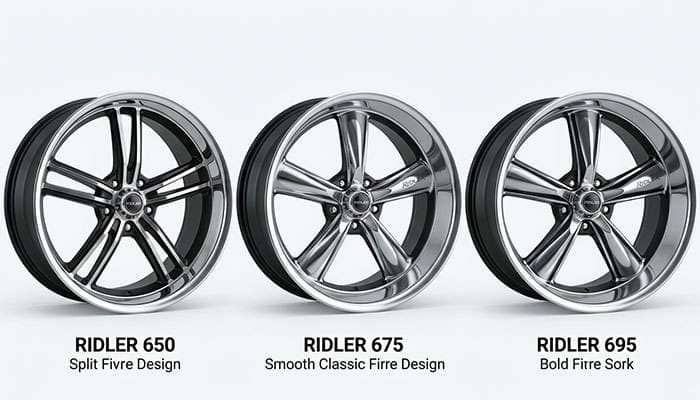
If you've spent any time around these, a handful of model numbers will sound familiar. The Ridler 695 is the one I get asked about most — a bold five-spoke with a real classic-muscle attitude that looks right on damn near anything from a Camaro to a Corvette. The 675 is the smooth five-spoke that scratches the Torq-Thrust itch for guys who love that look but want a fresh casting at a friendlier price. The 650 split-spoke and the 645 round out the line for folks who want something a touch more intricate, and there are mesh and concave patterns like the 606 and 607 for the modern-stance crowd.
Point is, Ridler covers a lot of ground. Whether you're after a period-correct cruiser or a slammed resto-mod with some dish out back, there's a Ridler that'll get you there. If you're still sorting out which look fits your build, it's worth brushing up on classic muscle car wheel styles so you know what you're chasing before you buy.
Ridler wheels are one-piece cast aluminum. Now, I know some of the purists clutch their pearls when they hear "cast" instead of "forged," but let me set the record straight from forty years of mounting and balancing: for a street car, a weekend cruiser, or a show piece, a good cast wheel is plenty of wheel. Ridler's castings meet the recognized industry strength and load standards — the JWL, VIA, and TÜV stamps you want to see on an alloy wheel — so these aren't garage-special knockoffs.
What I notice on the balancer is that they're reasonably light and they spin up true without me hanging a fistful of weights on them. That tells me the castings are coming out of the mold consistent, and consistency is exactly what you want in a budget wheel. They won't shed grams like a race-only forged piece, but for a car that lives on the street, you'll never feel the difference. If you want the full rundown on how castings stack up against the pricier stuff, I've laid it out plenty of times.
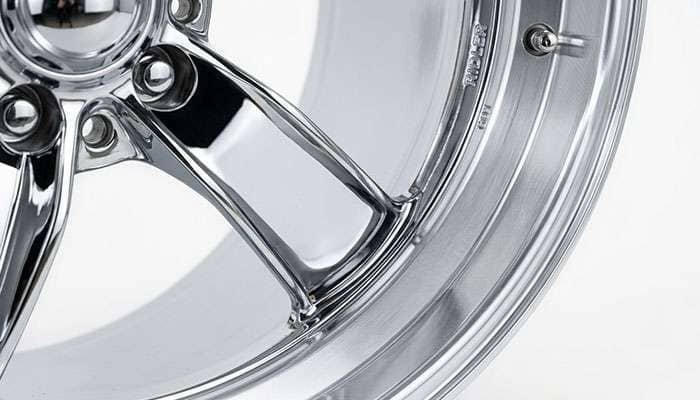
Here's where the rubber meets the road — literally. I've talked to plenty of owners running Ridlers hard, and the story's a good one. Guys with five-year-old 695s tell me the wheels still look brand new. Folks daily-driving classics through rain and shine report no structural gripes and no cracking. One fella I know put a set of gunmetal-and-machined Ridlers on his Camaro and was so happy he went and ordered a second set for another car. That's the kind of repeat business that tells you a wheel earns its keep.
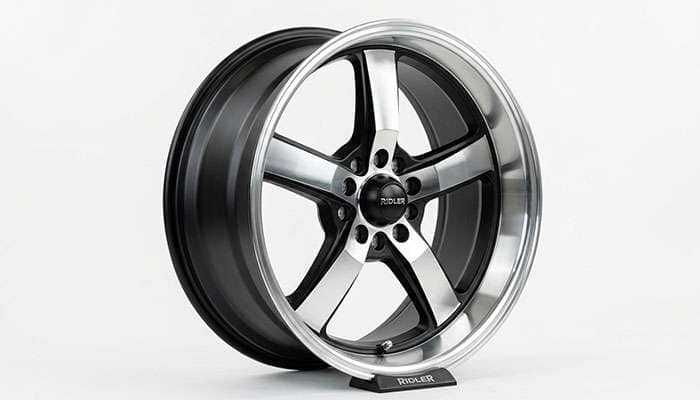
The finishes carry that vintage shine well. Chrome, polished, matte black, gunmetal, gray with a machined lip — they come ready to make a clean engine bay and a fresh coat of paint look even better. Pair them with a modern radial and an old cruiser suddenly feels planted and controlled in a way those skinny factory steelies never managed.
Now let me put on my shop-owner hat and give you the insider stuff — not deal-breakers, just the things a smart buyer keeps in mind so the wheels stay looking great for the long haul.
Baby the bright finishes. Chrome and polished aluminum are gorgeous, but they're high-maintenance by nature on any brand. Keep them clean, hit them with a quality metal polish now and then, and rinse the road salt off before winter sits on them. Do that and they'll stay show-ready; neglect them and any chrome wheel on earth will dull. If you're torn on finish, my write-up on chrome versus polished wheels is worth two minutes of your time.
Those center caps. The plastic center caps use little retention tabs that can get cranky if you pry them out rough. Pop them gently, store your spares somewhere safe, and you'll never think about it again. It's a five-dollar part, not the wheel.
Check your backspacing. This is the big one with any classic-fitment wheel. On certain platforms — some Corvettes and a few of the staggered rear setups especially — guys have had to massage brake-line brackets or run a thin spacer to get perfect clearance. None of that is a Ridler flaw; it's the reality of stuffing modern-width wheels under fifty-year-old fenders. Measure twice, talk to a fitment guy, and order the right offset the first time. A little homework up front saves you a do-over.
Ridler builds from 15 inches all the way up to 22, including staggered fitments, so whether you're keeping it period-correct with a tall 15 or going big-and-little on a pro-touring build, the sizes are there. The bolt patterns and offsets are drawn around classic American platforms — GM A-body and F-body, the Tri-Five Chevys, Mopar classics, and Ford muscle — which means you're not fighting oddball specs to make them fit.
My advice is the same as it's always been: nail down your bolt pattern, your backspacing, and your brake clearance before you click buy. If you want a refresher on doing it right, the guide on picking the right wheels and tires for your classic car or hot rod covers the whole process, period-correct or modernized.
Where Ridler really shines is value. When a customer is cross-shopping the classic-wheel aisle, here's roughly how I lay it out for them. The premium names cost real money and deliver a forged or fully custom product; Ridler delivers the look and dependable cast construction for a fraction of it.
Feature |
Ridler |
US Mags |
Foose / Billet Specialties |
|---|---|---|---|
Construction |
One-piece cast aluminum |
Cast and forged options |
Billet / forged premium |
Price position |
Budget-friendly value |
Mid-range |
Premium to high-end |
Best for |
Show looks on a working budget |
Classic mag styling, daily classics |
High-dollar custom builds |
Warranty |
Lifetime structural |
Manufacturer-backed |
Manufacturer-backed |
If you want to size up the neighbors yourself, I've given the same honest treatment to US Mags, the custom-build favorites over at Foose, the billet heavy-hitters at Billet Specialties, and the steel-and-restoration crowd's pick, Wheel Vintiques. Read a couple and you'll see exactly where Ridler slots in.
So — are Ridler wheels any good? In my book, absolutely, as long as you know what you're buying. They give you genuine vintage-muscle style, solid cast construction that meets the standards that matter, a deep catalog of sizes and finishes, and a lifetime structural warranty, all at a price that lets a regular guy finish his build instead of stalling it. Keep the bright finishes clean, treat the center caps gently, and do your fitment homework, and a set of Ridlers will have your classic looking like a million bucks for a whole lot less. That's a deal I've recommended across my counter for years, and I'd recommend it again today.
Yes. Ridler wheels are one-piece cast aluminum that meets recognized JWL, VIA, and TÜV strength standards, and they carry a lifetime structural warranty. For street cars, cruisers, and show builds they offer dependable quality at a budget-friendly price.
Ridler is made by The Wheel Group, a California-based wheel manufacturer and distributor that has been in the aftermarket business since the late 1960s, giving the brand more than fifty years of backing.
The Ridler 695 five-spoke is the most asked-about model, followed by the smooth 675, the 650 split-spoke, and the 645. Concave and mesh patterns like the 606 and 607 suit more modern stances.
Yes. Owners report driving Ridler-equipped classics rain or shine with no structural issues, and the wheels balance well on modern radials. Just keep bright finishes clean and confirm proper fitment for your platform.
Ridler builds wheels from 15 inches up to 22 inches, including staggered fitments, with bolt patterns and offsets designed around classic American platforms like GM A-body and F-body, Tri-Five Chevys, Mopar, and Ford muscle cars.
Ready to give your classic the look it deserves? Browse the full lineup of Ridler wheels at Performance Plus Tire and find the size and finish that fits your build.



