
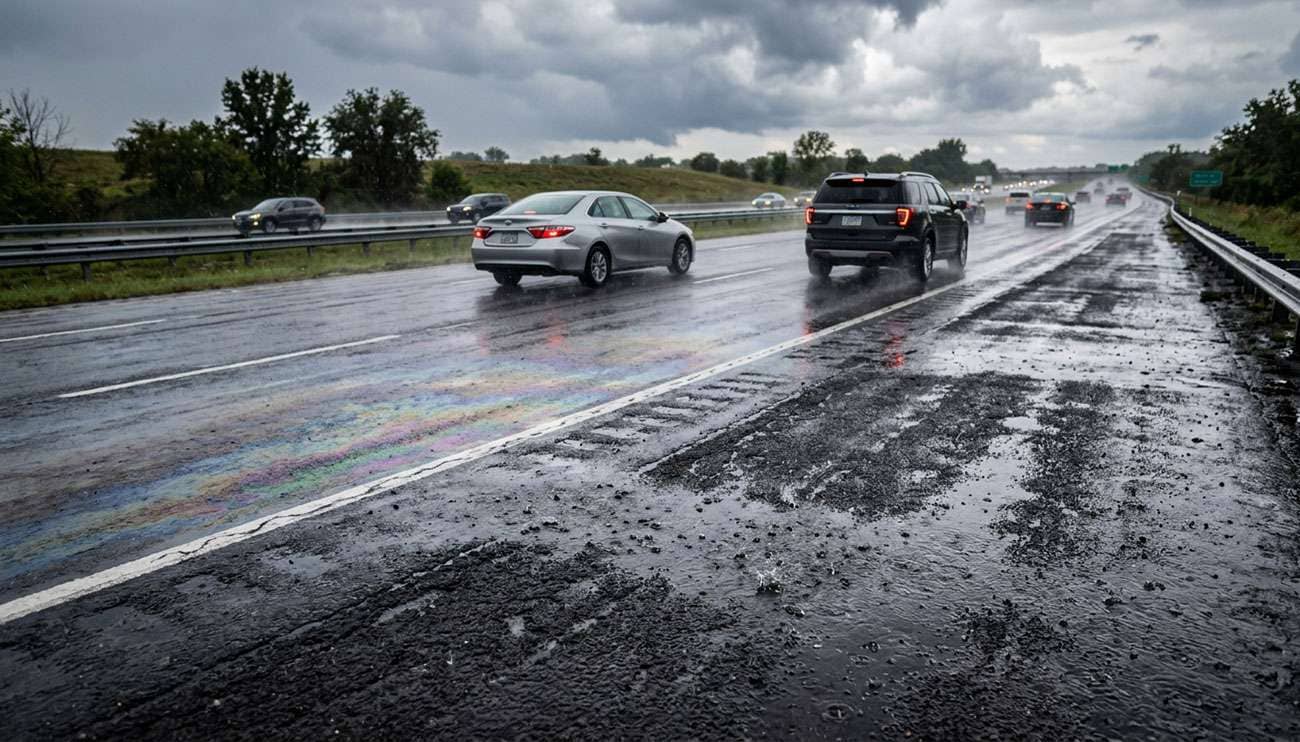
You're cruising down the highway when the first raindrops hit your windshield. Seconds later, your car feels sluggish. The vehicle ahead brakes unexpectedly. The road surface looks darker and slicker than it did moments ago. This isn't your imagination—the first 10 minutes of rain creates the most dangerous driving conditions you'll face all day.
The numbers tell the story. The Federal Highway Administration reports that 70% of all weather-related crashes happen on wet pavement, and 46% occur during active rainfall. Most drivers miss the critical detail: danger spikes dramatically during those initial minutes when rain first contacts the road. Understanding this window can save your life.
This guide breaks down the science behind why early rainfall creates such hazardous conditions. You'll get actionable safety strategies you can use today. You'll learn how your tire choice directly impacts your wet-weather safety. Whether you commute daily through city traffic or cover long distances in changing weather, you need this information.
The extreme danger of early rainfall isn't perception—it's chemistry and physics working against you. When rain hits roads that have been dry for days or weeks, it creates a uniquely treacherous surface that slashes traction and extends your stopping distance. Here's what happens beneath your tires during this critical window.
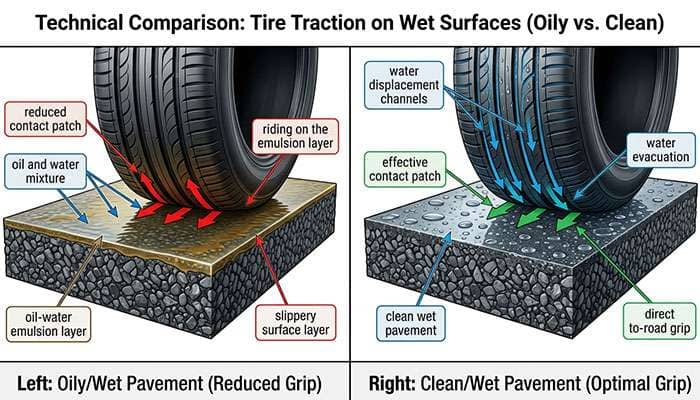
Motor oil, transmission fluid, coolant, and grease accumulate on road surfaces over time. These petroleum-based substances don't evaporate—they build up in high-traffic areas like intersections, highway exit ramps, and parking lot entrances. When the first rain falls, it doesn't wash these oils away. Instead, it lifts them from the pavement and creates an emulsion—a slippery mixture sitting on top of the road like lubricant.
This oil-water mixture cuts the coefficient of friction between your tires and road by 30-40% compared to clean wet pavement. Your tires can't effectively grip this slick layer, even though they're designed to channel water through tread grooves. You get significantly reduced braking, compromised cornering, and increased hydroplaning risk even at relatively low speeds.
After roughly 10-15 minutes of steady rain, continuous water flow washes this oil layer toward road edges and into storm drains. The road becomes cleaner. While still wet and requiring caution, it provides substantially better traction than during those initial minutes.
Temperature differential intensifies the danger during the first 10 minutes. On hot summer days, pavement temperatures exceed 140°F. When cooler rain suddenly contacts this superheated surface, it doesn't immediately penetrate or run off. It creates a thin layer of steam and water vapor between your tire and road—essentially an air cushion that further reduces traction.
This temperature shock causes rapid road surface contraction, making existing cracks and surface imperfections more pronounced. These irregularities disrupt water channeling and create pockets where water pools, significantly increasing hydroplaning risk.
Human factors make the first 10 minutes particularly deadly. Most drivers don't immediately adjust their speed or following distance when rain begins. National Highway Traffic Safety Administration studies show the average driver takes 3-5 minutes after rainfall starts to reduce speed—and even then, many don't slow down enough.
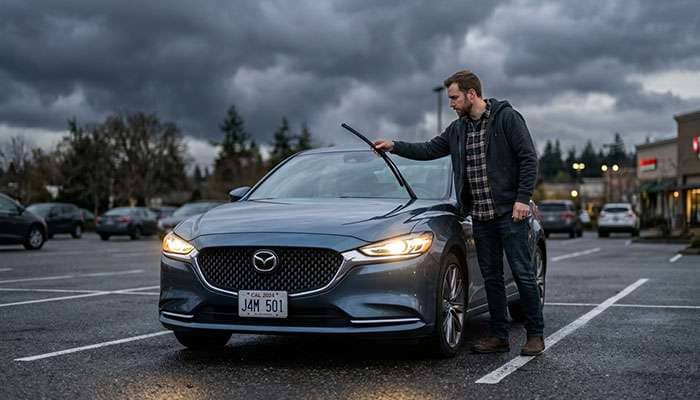
Visibility drops suddenly during the first minutes. Windshield wipers that have been sitting unused streak and smear rather than clear effectively, cutting visibility by 50% or more until the blades are thoroughly wetted. This delayed visibility adjustment combined with slick pavement creates the perfect storm of hazard.
Knowing the danger means nothing unless you know how to respond. These driving strategies come from decades of crash data analysis and expert recommendations from automotive safety organizations. Use these techniques to significantly cut your collision risk during those critical first precipitation minutes.
The single most important action: reduce your speed immediately when rain begins. Not gradually over the next few minutes—immediately. As soon as you see the first raindrops, drop your speed by at least 5-10 mph below your current pace. This provides crucial extra stopping distance before you've fully assessed road conditions.
Simultaneously, increase your following distance to at least 5-6 seconds from the vehicle ahead. Standard dry-road recommendation is 3-4 seconds. During the first minutes of rain, when that oil-water mixture peaks, you need nearly double the stopping distance. Pick a fixed object like a road sign. Count when the vehicle ahead passes it. Ensure at least 5 seconds elapse before you reach the same point.
Avoid sudden braking or acceleration during this period. Smooth, gradual inputs to your steering, throttle, and brakes are essential. Sharp movements break traction on slick surfaces and cause loss of control even at moderate speeds.
Not all road surfaces become equally dangerous during early rain. Certain locations accumulate more oil and debris, making them particularly treacherous. Intersections where vehicles frequently stop and start are prime locations for oil buildup. Approach these with heightened awareness and reduced speed.
Highway on-ramps and off-ramps see heavy acceleration and deceleration, depositing significant oil and rubber particles. Bridge surfaces and overpasses become slicker faster than regular roadways because they lack underground drainage that helps roads shed water. These elevated structures also cool more quickly, intensifying the temperature differential effect.
Lane markings, crosswalks, and painted road surfaces become exceptionally slippery when first wet. These painted areas don't absorb water like asphalt or concrete—the paint creates a nearly frictionless surface when covered with that initial oil-water layer. If you must cross lane markings during early rain, do so as straight as possible. Avoid any turning or braking while your tires contact paint.
Before rain starts, optimize your vehicle systems for wet weather. Replace windshield wiper blades every 6-12 months, though most drivers wait far longer. Worn wipers can't clear water effectively. During those critical first minutes when visibility is already compromised, poor wipers make the situation dramatically worse.
Turn on your headlights immediately when rain begins—not just for your visibility, but so other drivers can see you better. Many modern vehicles have automatic headlights that sometimes don't activate quickly enough during sudden rain. Manual activation ensures you're visible to other drivers struggling with reduced visibility.
If your vehicle has electronic stability control or traction control systems, ensure they're activated. Modern safety systems detect wheel slip and loss of traction far faster than human reaction times, making microsecond adjustments to braking and power delivery that help maintain control on slippery surfaces.
Hydroplaning occurs when water builds up between your tires and road surface, causing you to lose pavement contact entirely. During the first minutes of rain, hydroplaning can happen at speeds as low as 35-40 mph on roads with poor drainage or accumulated oil.
You recognize hydroplaning by sudden lightness in the steering—the wheel feels disconnected or unusually easy to turn. You might hear a change in road noise as your tires lose pavement contact. Engine RPM may increase suddenly if your drive wheels spin freely without traction.
If you begin to hydroplane, resist the instinct to brake hard or make sharp steering corrections. Ease off the accelerator gently and hold the steering wheel straight. As your vehicle slows, your tires naturally regain road contact. If you need to slow more, apply gentle brake pressure in a pumping motion without anti-lock brakes, or steady moderate pressure with ABS.
Driving technique matters, but your tires are your first and only defense between your vehicle and slick pavement. Modern all-season tires have evolved significantly for wet conditions, but not all tires perform equally during that dangerous first 10 minutes of rain. Understanding tire technology and choosing the right tires for your conditions can mean the difference between maintaining control and experiencing a collision.
Your tire tread's fundamental job in wet conditions is channeling water away from the contact patch—that small area where rubber meets road. Advanced tread designs feature circumferential grooves running around the tire and lateral grooves running across the tread, working together to create evacuation channels.
High-quality winter tires and all-weather tires typically feature wider and deeper grooves specifically engineered for water and slush evacuation. These tires channel several gallons of water per second away from the contact patch at highway speeds. During those critical first minutes of rain, this superior water evacuation becomes essential for maintaining traction on oil-contaminated surfaces.
Sipes—tiny slits cut into tread blocks—play a crucial role too. These thin channels create additional biting edges that help the tire grip wet surfaces. As the tire flexes during driving, sipes open and close, continuously wiping the contact patch and improving grip on slick surfaces.
The rubber compound itself equals the tread pattern in importance. Modern tire manufacturers use silica-enhanced compounds that stay flexible in cold and wet conditions. This flexibility allows the tire to conform to microscopic road surface irregularities, maintaining grip even when water and oil are present.
Tires designed specifically for wet performance use compounds with special resins and polymers that improve water dispersion at the molecular level. These materials prevent water from creating a barrier between rubber and road, maintaining better contact even during those first dangerous rainfall minutes.
Tire Feature |
Dry Road Performance |
First 10 Minutes Rain |
Established Rain |
|---|---|---|---|
Deep Circumferential Grooves |
Good |
Excellent |
Excellent |
High Sipe Density |
Fair |
Very Good |
Excellent |
Silica-Enhanced Compound |
Good |
Excellent |
Very Good |
Wide Lateral Grooves |
Fair |
Very Good |
Excellent |
Optimized Contact Patch |
Excellent |
Good |
Very Good |
If you regularly drive in rain or your commute includes sudden weather changes, investing in tires with superior wet weather performance is one of the smartest safety decisions you can make. The Michelin CrossClimate 2 sets the gold standard in all-weather performance, featuring V-shaped tread patterns that aggressively channel water from the contact patch and maintain excellent grip during those dangerous first rain minutes.
For exceptional wet traction with all-season versatility, the Goodyear Assurance WeatherReady delivers outstanding hydroplaning resistance through its Weather Reactive Technology. This tire's tread compound actually adapts to temperature changes, maintaining flexibility and grip whether you face hot pavement suddenly cooled by rain or cold wet roads.
Budget-conscious drivers shouldn't compromise on wet weather safety. The Continental PureContact LS offers impressive wet braking performance at a more accessible price point, featuring QuickView indicators that help you monitor tread depth—critical because worn tires dramatically increase hydroplaning risk and reduce effectiveness during the first minutes of rain.
Even the best tire technology can't protect you if your tires aren't properly maintained. Tread depth is absolutely critical for wet weather performance. The legal minimum tread depth in most states is 2/32 of an inch, but you should replace tires at 4/32 of an inch if you frequently drive in wet conditions.
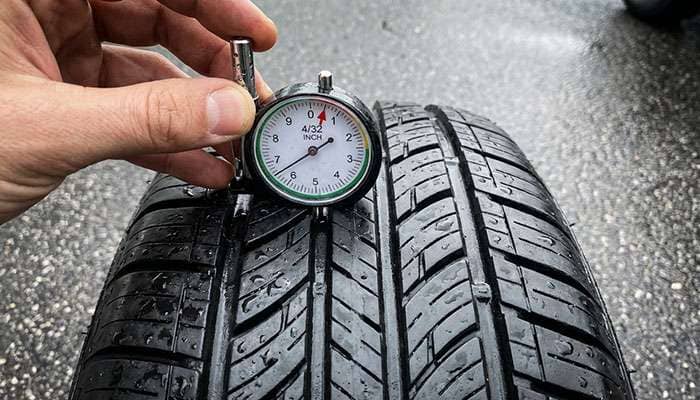
At 4/32 of an inch, water evacuation capability drops significantly—your tires move about 50% less water than new tires, dramatically increasing hydroplaning risk during the first minutes of rain. Check tread depth using the penny test: insert a penny into the tread groove with Lincoln's head upside down. If you can see the top of Lincoln's head, your tread depth is below 2/32 of an inch and you need immediate tire replacement.
Tire pressure affects wet weather performance too. Underinflated tires have a larger contact patch that can't channel water as effectively. Overinflated tires have a smaller contact patch that reduces overall traction. Check your tire pressure monthly and maintain the pressure recommended by your vehicle manufacturer, found on the driver's door jamb sticker or in your owner's manual.
Rotate your tires every 5,000-7,000 miles to ensure even tread wear, maintaining consistent water evacuation across all four tires. Uneven wear creates channels where water pools rather than evacuates, increasing hydroplaning risk during those critical first rainfall minutes.
The first 10 minutes of rain creates the most dangerous driving conditions you'll face—this isn't just conventional wisdom. It's scientifically verified through the interaction of road oils, water, temperature changes, and driver behavior. Understanding why this danger exists is your first step toward protecting yourself and your passengers when weather suddenly changes.
Immediately reduce your speed when rain begins. Increase following distance. Avoid sudden maneuvers. Exercise extra caution in high-risk areas like intersections and on-ramps. These actions significantly reduce your collision risk during this dangerous period. Equally important: equip your vehicle with tires designed for superior wet weather performance and maintain those tires through regular inspections, proper inflation, and timely replacement.
Your safety depends on a combination of awareness, appropriate driving technique, and quality equipment. At Performance Plus Tire, we help you select tires that provide the best possible protection in all weather conditions. Whether you need all-season performance, specialized wet weather capability, or expert guidance on tire maintenance, we're here to ensure you have the right tools for whatever conditions you encounter.
Here are the essential points about the first 10 minutes of rain being the most dangerous:
• Oil and water create a slick mixture: The first rain lifts accumulated road oils, creating an extremely slippery surface that cuts traction by 30-40% compared to clean wet pavement. This condition lasts roughly 10-15 minutes until continuous rainfall washes the oils away.
• Immediate speed reduction is critical: Drop your speed by 5-10 mph as soon as rain begins, before you've assessed the full extent of slick conditions. Increase following distance to at least 5-6 seconds from the vehicle ahead to account for extended stopping distances.
• High-risk areas require extra caution: Intersections, on-ramps, off-ramps, bridge surfaces, and painted road markings accumulate more oil and become exceptionally slippery during the first minutes of rain. Approach these areas with heightened awareness and reduced speed.
• Tire technology makes a measurable difference: Modern tires with deep circumferential grooves, high sipe density, and silica-enhanced compounds provide significantly better traction during early rainfall. Investing in quality tires designed for wet performance is one of the most effective safety improvements you can make.
• Maintenance equals tire selection in importance: Replace tires at 4/32-inch tread depth for wet weather driving. Maintain proper inflation pressure. Rotate tires regularly. Even premium tires can't protect you if they're worn, underinflated, or unevenly worn.
The first 10 minutes of rain are most dangerous because rainwater lifts accumulated road oils, grease, and fluids from the pavement, creating a slippery oil-water mixture. This emulsion slashes tire traction by 30-40% compared to clean wet roads. After 10-15 minutes of continuous rainfall, water flow washes away this oil layer, considerably improving road surface conditions.
Drop your speed by at least 5-10 mph immediately when rain begins, before you've fully assessed road conditions. Also increase your following distance to 5-6 seconds from the vehicle ahead—nearly double the normal 3-4 second recommendation for dry roads. This gives you crucial additional stopping distance when road surfaces are at their slickest during initial rainfall.
The most critical tire features for early rainfall safety are deep circumferential grooves that channel water away from the contact patch, high sipe density that creates additional biting edges for grip, and silica-enhanced rubber compounds that maintain flexibility on wet surfaces. Tires specifically designed for wet performance—like all-weather or premium all-season tires—typically incorporate all these features for maximum protection during dangerous early rainfall conditions.
During the first minutes of rain when road oils create exceptionally slick conditions, hydroplaning can occur at speeds as low as 35-40 mph on roads with poor drainage or heavy oil accumulation. This is significantly lower than the typical hydroplaning threshold of 50-55 mph on clean wet roads. Tire tread depth, tire pressure, road surface texture, and water depth all influence hydroplaning speed, making early rainfall particularly dangerous even at moderate speeds.
Check your tire tread depth regularly using the penny test: insert a penny into the tread groove with Lincoln's head upside down. If you can see the top of Lincoln's head, tread depth is below 2/32 of an inch and you need immediate tire replacement. For optimal wet weather safety—especially if you frequently encounter rain—replace tires when they reach 4/32 of an inch tread depth. At this depth, water evacuation capability drops by roughly 50%, dramatically increasing hydroplaning risk during the first minutes of rain.



