
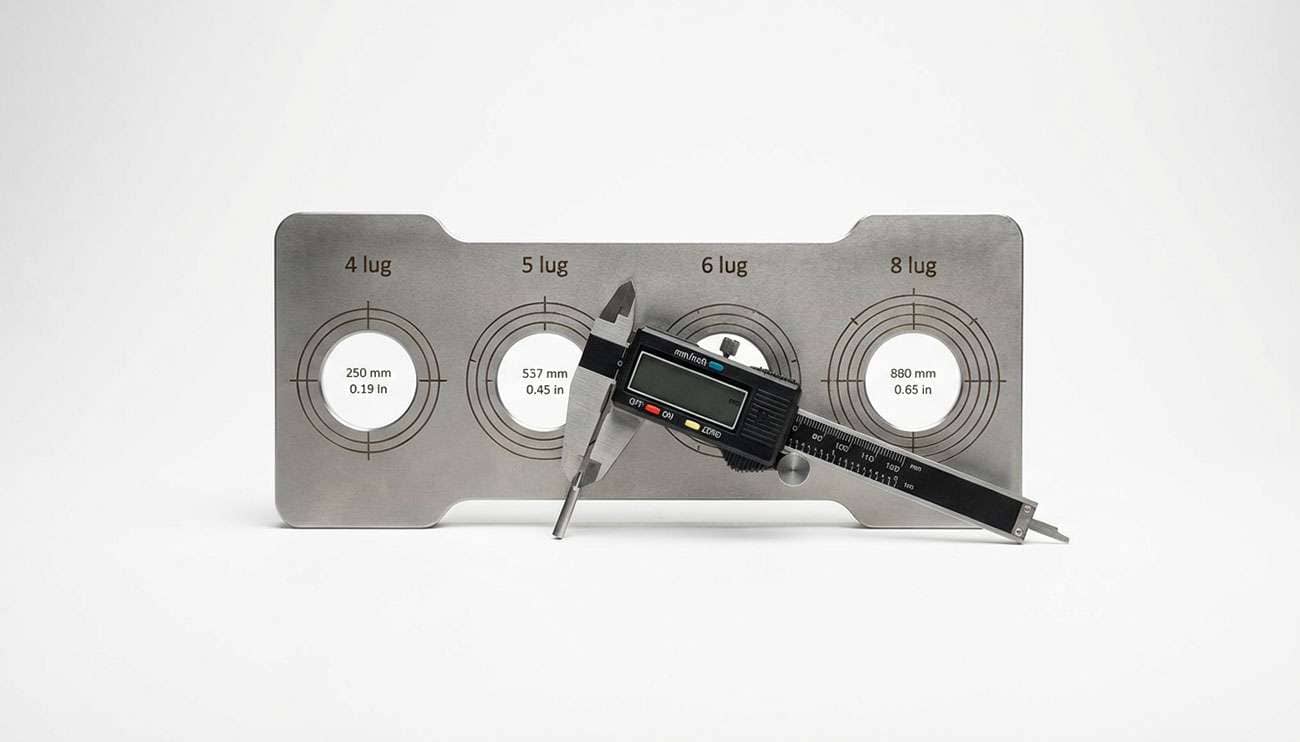
The 5x4.5 bolt pattern is one of the most popular wheel configurations you'll find in the automotive world. When shopping for aftermarket wheels, this specification appears frequently across countless vehicle makes and models. This wheel setup features five bolt holes arranged in a circle with a diameter of 4.5 inches (or 114.3 mm).
Custom wheels with this bolt pattern can improve the appearance of your vehicle and make it stand out from the crowd. The 5x4.5 bolt pattern appears on everything from compact cars to midsize vehicles and light trucks from manufacturers like Ford, Chevrolet, and Mazda. This widespread use makes finding replacement or upgrade wheels easier and more affordable.
The 5x4.5 bolt pattern is the same as 5x114.3 – the only difference is the unit of measurement (inches vs. millimeters). This pattern consists of the stud count (5) and the bolt circle measurement (4.5), which refers to the circle determined by the center position of the studs.
We'll guide you through everything about 5x4.5 wheels, from compatible vehicles to measurement techniques and important fitment factors to consider before making your purchase. Understanding this popular bolt pattern helps you make informed decisions when upgrading or replacing your wheels.
Bolt patterns represent a critical specification when it comes to wheel fitment for any vehicle. Understanding what these numbers mean can save you time, money, and frustration when upgrading or replacing your wheels.
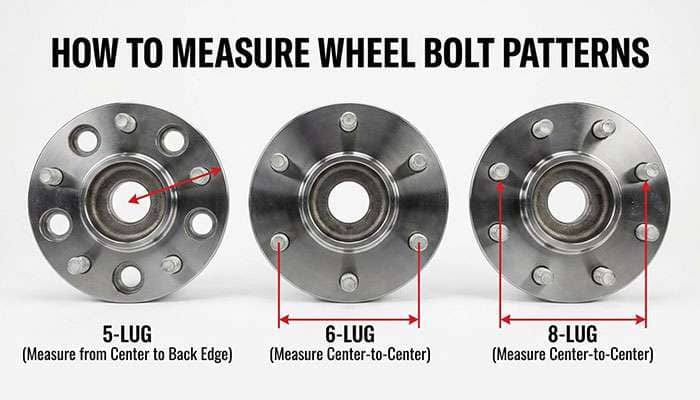
When you see a bolt pattern expressed as "5x4.5," this notation tells you two essential pieces of information. The first number (5) indicates how many lug holes are on the wheel. The second number (4.5) represents the diameter, in inches, of the circle formed by the centers of these lug holes - also known as the Pitch Circle Diameter (PCD).
Bolt patterns can have different numbers of lugs, ranging from 4 to 8, although most passenger vehicles typically use 4, 5, or 6 lugs. The 5-lug configuration became particularly widespread in the automotive industry since Ford first adopted it in the late 1920s, with other manufacturers following suit.
To accurately measure a 5-lug bolt pattern, you need to determine the diameter of the circle formed by the lug holes. For a 5-lug wheel, this is generally done by measuring from the center of one lug hole to the outer edge of a lug hole that isn't directly adjacent. Alternatively, you can measure from center to center of adjacent lug holes - if this measurement is approximately 2-5/8 inches, you have a 5x4.5 bolt pattern.
Reading bolt pattern specifications correctly is fundamental when shopping for new wheels. Here's how to interpret bolt pattern numbers:
First number = Number of lug holes
Second number = Diameter of the bolt circle (in inches or millimeters)
Sometimes written with "x" between numbers (5x4.5) or with a hyphen (5-4.5)
This standardized format helps ensure compatibility across different wheel manufacturers and vehicle models.
The automotive industry uses both imperial (inches) and metric (millimeters) measurements when specifying bolt patterns. This dual system exists primarily because wheels are sold internationally, with many countries exclusively using the metric system.
Converting between these measurement systems is straightforward - 1 inch equals exactly 25.4 millimeters. Therefore:
4.5 inches × 25.4 = 114.3 millimeters
This means that the 5x4.5 bolt pattern expressed in metric terms becomes 5x114.3mm. Both values represent identical physical dimensions - just expressed in different measurement units.
The dual naming convention can sometimes create confusion when shopping for wheels. You might find identical wheels listed under both specifications depending on the manufacturer or retailer. When browsing for compatible wheels, searching under both "5x4.5" and "5x114.3" will yield more options.
This particular bolt pattern measurement is sometimes referred to as the "Small Ford Pattern" since Ford Motor Company began using this 5x4.5 inch configuration extensively in the 1950s on models like the Ford Fairlane and Ford Mustang. Meanwhile, General Motors predominantly used a slightly larger 5x4.75 inch pattern (5x120.65mm) on many of their vehicles from 1949 onward.
When shopping for wheels with this bolt pattern, you'll find an extensive selection available at specialty retailers. For an excellent range of 5x114.3 bolt pattern wheels that perfectly fit vehicles with this specification, you can explore options at Performance Plus Tire's dedicated collection.
Yes, the 5x4.5 bolt pattern and the 5x114.3 bolt pattern are exactly the same. The only difference lies in the unit of measurement - 5x4.5 uses inches (imperial), whereas 5x114.3 uses millimeters (metric). When shopping for wheels or accessories like wheel spacers, you'll encounter both measurements used interchangeably throughout the automotive industry.
This interchangeability is important to understand because:
Vehicle manufacturers may specify their bolt patterns in either inches or millimeters depending on where they're based
Aftermarket wheel companies might list their products using either measurement system
Older vehicles and documentation typically use imperial measurements
Newer vehicles and international specifications generally favor metric measurements
Understanding that these patterns are identical helps avoid a common misconception among vehicle owners who might believe their vehicle has one pattern but not the other. If your vehicle has a 5x4.5 bolt pattern, it also has a 5x114.3mm bolt pattern - the physical dimensions remain unchanged regardless of which measurement system is used to describe them.
Some wheel specifications might list this pattern as "5x4-1/2", which is simply another way of writing 4.5 inches. This measurement consistency is crucial when selecting wheels because even minor differences in bolt patterns can make wheels incompatible with your vehicle.
The 5x4.5 (5x114.3mm) bolt pattern strikes an ideal balance between strength and compatibility, which explains its enduring popularity across vehicle manufacturers. It provides sufficient structural integrity for most passenger vehicles while maintaining widespread availability of aftermarket wheel options.
Many modern vehicles use this bolt pattern because it offers excellent load distribution for the lug nuts while maintaining visual appeal. The spacing between five lugs at this diameter provides adequate support for most passenger vehicles without requiring the larger and heavier six-lug patterns typically found on trucks and heavy-duty vehicles.
Understanding these measurement equivalencies allows you to confidently shop for wheels knowing that "5x4.5" and "5x114.3" refer to precisely the same physical specification, opening up a wider range of options for your vehicle.
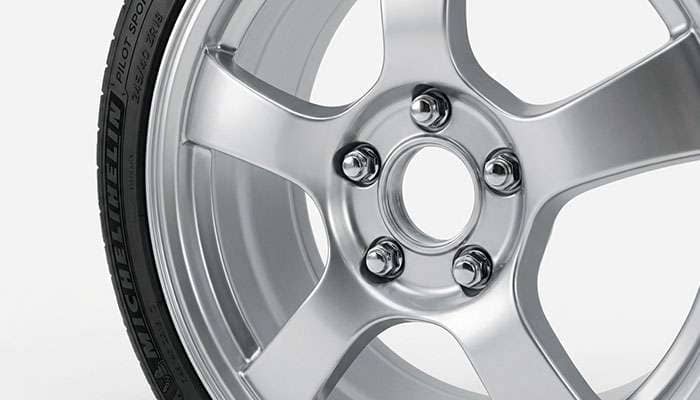
The 5x4.5 bolt pattern has become a cornerstone in wheel design across the automotive industry. From economy cars to luxury vehicles, this configuration has stood the test of time for specific reasons that benefit both manufacturers and vehicle owners.
The 5x4.5 bolt pattern offers an ideal balance between structural integrity and versatility that few other configurations can match. This arrangement provides sufficient strength for most passenger vehicles without the added weight of six or eight-lug configurations found on heavy-duty trucks.
Five lugs deliver the structural support needed for daily driving, performance applications, and light off-road use. This balance allows manufacturers to create wheels that are both durable and relatively lightweight—an important consideration for fuel efficiency and performance.
Ford began using this configuration extensively in the 1950s, creating a legacy that prompted Japanese and Korean automakers to adopt the same pattern. This cross-manufacturer adoption significantly expanded the pattern's availability, creating benefits that continue today.
The standardization across multiple manufacturers means repair shops and dealers can stock fewer wheel variations while serving a wide range of customers. This efficiency results in better availability and more competitive pricing for consumers seeking replacement or upgrade options.
The versatility of the 5x4.5 bolt pattern spans virtually every vehicle category. This configuration appears on passenger cars, sports cars, small pickups, crossovers, SUVs, ATVs, and even trailers. We carry wheels for this bolt pattern across all these vehicle types at competitive prices.
Consider the impressive range of vehicles that use this bolt pattern:
Ford models (Explorer, Escape, Mustang)
Toyota (Camry, MR2, Celica)
Nissan/Infiniti (240SX, Altima, Maxima)
Honda (Civic, Accord)
Mazda (B-series trucks)
This same bolt pattern appears on vehicles as diverse as Ford SUVs and the Bentley Continental GT—demonstrating its exceptional range across the automotive spectrum. The pattern's suitability for both on-road and off-road driving needs further expands its utility.
This widespread adoption creates a significant advantage: massive aftermarket support. Nearly every major wheel manufacturer produces wheels in this pattern, including notable brands like Fifteen52, Fuel Wheels, MB Wheels, Enkei, and Method Wheels.
Our extensive selection of 5x4.5 wheels offers vehicle owners unprecedented customization options. Whether you're looking for lightweight racing wheels, heavy-duty off-road wheels, or stylish street designs, this bolt pattern provides access to one of the largest selections available.
The 5x4.5 bolt pattern is exactly the same as the 5x114.3 bolt pattern—just measured in different units. American manufacturers traditionally use inches (5x4.5), while European and Asian manufacturers typically prefer millimeters (5x114.3). The physical dimensions remain identical.
When shopping for wheels or accessories like wheel spacers, you may see both measurements used interchangeably. This provides an additional benefit—it effectively doubles your options when searching for wheels, as you can look for products listed under either specification.
The pattern is sometimes called the "Small Ford Pattern" in automotive circles, acknowledging Ford's role in popularizing this configuration. General Motors historically favored a slightly different 5x4.75 inch pattern, creating a clear distinction between Ford and GM vehicles in the aftermarket wheel space.
Understanding that 5x4.5 and 5x114.3 are identical removes confusion and opens up more options when upgrading or replacing wheels. This popularity has created benefits throughout the industry—as more manufacturers adopt it, more aftermarket companies produce compatible wheels, making this pattern even more attractive for new vehicle designs.
The 5x4.5 bolt pattern appears on vehicles across nearly every automotive category, from sports cars to family sedans and rugged off-roaders. This widespread compatibility makes it one of the most versatile wheel configurations in the industry. We carry the best selection of wheels for all these vehicles at the lowest prices.
Ford has been one of the most prominent users of the 5x4.5 bolt pattern for decades. The iconic Ford Mustang features this bolt pattern across multiple generations from 1964-1973, 1984-1986, and continuously from 1994 through current models. This consistency has created a massive aftermarket wheel market for Mustang enthusiasts.
Ford vehicles that use this bolt pattern include:
Ford Explorer (1990-present)
Ford Escape (2001-2012)
Ford Crown Victoria (1992-2011)
Ford Edge (2006-2014)
Ford Ranger (1982-2012)
Ford Taurus (2008-2019)
The 5x4.5 bolt pattern also appears on specialty Ford models like the GT (2005-2006 and 2017-2022) and high-performance variants such as the Mustang Shelby GT350 and GT500. This pattern works across different vehicle types—from daily drivers to track-focused performance cars.
For Ford enthusiasts seeking wheels with this bolt pattern, visit Performance Plus Tire's dedicated 5x114.3 bolt pattern wheel collection for a wide selection of options specifically designed for these vehicles.
Nissan has embraced the 5x4.5 bolt pattern across its lineup, along with its luxury division Infiniti. Popular Nissan models with this pattern include:
Nissan Altima (2002-present)
Nissan Maxima (1989-present)
Nissan 240SX (1995-1998)
Nissan 350Z (2002-2009)
Nissan 370Z (2009-2023)
Nissan Leaf (2010-present)
Nissan Murano (2003-present)
The Nissan 240SX is particularly popular among drift enthusiasts and has used the 5x4.5 bolt pattern across all models from 1989 to 1998. This compatibility makes finding suitable wheels easier for both street use and competitive drifting.
Infiniti models that feature this pattern include:
Infiniti Q45 (1989-2006)
Infiniti G-series (G25, G35, G37)
Infiniti M-series (M35, M37, M45, M56)
Infiniti FX35/45/50 (2003-2013)
The Infiniti Q45 from 1989-1995 utilized this bolt pattern across its G50 generation. The pattern's consistent use throughout Nissan's lineup demonstrates its versatility across different vehicle categories.
The 5x4.5 bolt pattern extends to numerous Japanese, Korean, and European vehicles. Toyota has incorporated this pattern on many popular models:
Toyota Camry (1990-present)
Toyota Corolla (2007-present)
Toyota RAV4 (many model years)
Toyota Avalon (1995-present)
Toyota Celica
Toyota MR2
Honda and Acura also use this bolt pattern across their lineups:
Honda Civic (various generations)
Honda Accord (many model years)
Acura TL (1995-2008)
Acura TSX (2003-2014)
Acura RDX (2006-present)
Acura MDX (2001-2006, 2014-2016)
Other manufacturers using the 5x4.5 bolt pattern include:
Mazda: Mazda3, Mazda6, MX-5 Miata (2006-present)
Hyundai: Genesis (2008-2016), Sonata
Subaru: Impreza (including WRX and STI variants)
Tesla: Model 3 (2017-present)
Even luxury European brands have adopted this pattern on select models, with Aston Martin using it on the DB9 and V8 Vantage. This remarkable diversity explains why the 5x4.5 pattern has become one of the most widespread wheel configurations available.
Jeep has used the 5x4.5 bolt pattern on several popular models, primarily in older generations. The TJ Wrangler (1997-2006) and YJ Wrangler (1987-1995) both utilized this bolt pattern. These models are among the most customized Jeeps in the aftermarket, with many owners upgrading wheels and tires for improved off-road performance.
Other Jeep models that feature the 5x4.5 bolt pattern include:
Jeep Cherokee (1983-2000)
Jeep Grand Cherokee (1984-1998)
Jeep Liberty (2002-2009)
Jeep Compass (2007-2009)
The Jeep Cherokee XJ model (1984-2001) is one of the most popular Jeeps using this bolt pattern. Its widespread use and long production run have created a robust aftermarket for 5x4.5 wheels specifically designed for these vehicles.
Newer Jeep models, particularly those introduced after 2006, often use different bolt patterns. As stated by Quadratec, "If your Jeep is modified (lift, tires, aftermarket axles), always verify the actual bolt pattern and hub bore before ordering wheels". This advice is particularly relevant for Jeep owners, as these vehicles are frequently modified with aftermarket components that may alter fitment requirements.
The 5x4.5 pattern's presence across so many vehicle makes and models creates advantages for vehicle owners seeking replacement or upgrade wheels. The extensive selection of available options often leads to more competitive pricing and greater style variety compared to less common bolt patterns.
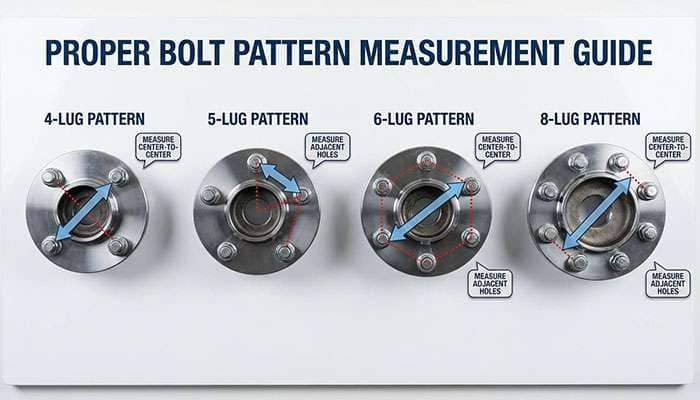
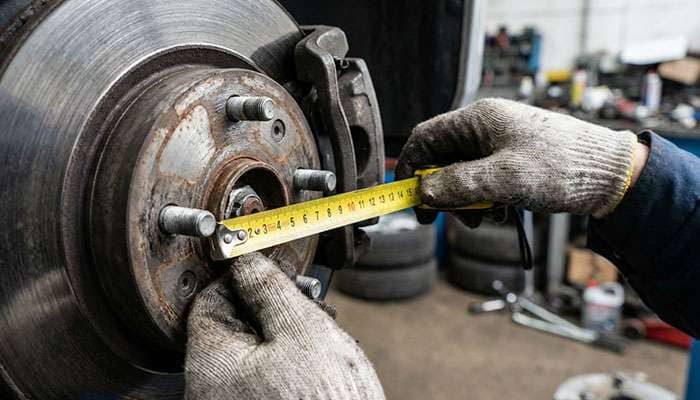
Measuring your vehicle's 5x4.5 bolt pattern correctly ensures you get wheels that fit perfectly and perform safely. Five-lug patterns present a unique challenge because no two lugs sit directly opposite each other, making measurement different from 4 or 6-lug configurations. With the right tools and technique, you can determine your bolt pattern with confidence.
Having the proper tools makes measuring your bolt pattern easier and more accurate. Here's what we recommend:
Measuring tape or ruler: A flexible measuring tape with millimeter markings gives you the precision needed for accurate measurements
Digital calipers: These provide the most precise measurements of bolt hole diameters and spacing, essential for determining exact bolt patterns
Bolt pattern gage: This specialized tool aligns with the bolt holes for quick and accurate identification
A bolt pattern gage works particularly well for 5-lug wheels because it eliminates guesswork and provides better precision than standard measuring tools. These gages show measurements in both inches and millimeters, making conversion between 5x4.5 and 5x114.3 simple.
A standard ruler can work as a basic alternative if you don't have specialized equipment, though with somewhat less precision.
Follow these specific steps to measure your 5x4.5 bolt pattern accurately:
Count the lug holes: First, confirm you have a 5-lug wheel by counting all the lug holes.
Choose your starting point: Pick any lug hole as your reference point.
Take the measurement: For 5-lug patterns, use one of these methods:
Method 1: Measure from the center of one lug hole to the outer edge of the lug hole that's two positions away (skip one in between).
Method 2: Remove two lug nuts that aren't next to each other, then measure from the center of one bolt to the outside edge of the other.
Check your result: If your measurement is approximately 114.3 millimeters (4.5 inches), you have a 5x4.5 bolt pattern. Small variations around 114mm typically still indicate a 5x114.3mm pattern.
Convert units if needed: Remember that 4.5 inches equals exactly 114.3mm (multiply inches by 25.4 to get millimeters).
You can also use the center-to-center method between adjacent lug holes. A measurement of approximately 2-5/8 inches between adjacent lug centers indicates a 5x4.5 bolt pattern.
For wheels that fit your 5x4.5 (5x114.3) bolt pattern perfectly, Performance Plus Tire's dedicated collection offers an excellent selection designed specifically for vehicles with this specification.
Getting precise measurements is crucial because even small errors can lead to wheels that don't fit properly. Here are our tips for accurate results:
Measure twice: Double-check your measurements to avoid errors that could result in incompatible wheels.
Use the center of lug holes: When measuring, always use the center of the lug hole as your reference point, not the edge, unless the method specifically calls for it.
Keep your measuring tool straight: Angled measurements produce inaccurate results, so keep your measuring tool perfectly straight.
Consult a bolt pattern chart: Once you have measurements, check a bolt pattern chart to confirm the exact pattern, as several 5-bolt patterns have similar diameters.
Watch for similar patterns: The 5x4.5 (5x114.3mm) pattern is close to other patterns like 5x115mm or 5x112mm, which can cause confusion if measurements aren't precise.
Check your ruler: If using a ruler, make sure it starts exactly at zero, as some rulers have a small gap before the zero mark.
Check manufacturer specifications: When in doubt, refer to your vehicle's manual or contact the manufacturer for exact bolt pattern specifications.
If you're still unsure after measuring, or if your measurements don't match any known bolt pattern, consider consulting a professional mechanic who can verify your bolt pattern using specialized tools. Professional consultation is valuable for complex fitment situations, particularly with 5-lug patterns where precision matters.
Proper measurement of your 5x4.5 bolt pattern is essential for both appearance and safety. An incorrect bolt pattern can lead to improper wheel installation, causing vibrations, handling problems, or even wheel detachment while driving. Taking time to measure accurately ensures your new wheels will fit perfectly and perform safely.
When it comes to selecting custom wheels, bolt pattern is just the beginning. Several other factors determine whether your new wheels will fit properly and perform well. Understanding these specifications helps you avoid problems that range from minor vibrations to serious safety issues.
The center bore is the hole in the middle of the wheel that fits over the vehicle's hub. This measurement is important for achieving a hub-centric fit, where the wheel centers itself perfectly on the hub rather than relying solely on lug nuts for centering.
Hub-centric wheels provide better weight distribution and reduce vibration at high speeds. For vehicles with a 5x4.5 bolt pattern, the center bore size varies across manufacturers—Honda vehicles typically use a 64.1mm bore, while other vehicles may have different specifications.
When your aftermarket wheels have a larger center bore than your vehicle's hub (which happens frequently), hub-centric rings solve this problem. These rings ensure the wheel stays perfectly centered on the hub, reducing vibrations. The larger the bolt pattern circle, the bigger the center bore can be—this becomes important when fitting wheels over locking hubs and full-floating axles.
Thread pitch describes the spacing of threads on the lug bolts or studs that secure your wheels. Using the correct thread pitch is essential—mismatched threads can strip fasteners or prevent proper tightening.
Torque specifications tell you exactly how tight lug nuts should be. For many vehicles with the 5x4.5 pattern, torque typically ranges from 85-100 ft-lbs.
Always tighten lug nuts in a star pattern to prevent uneven stress that could cause loosening over time. We recommend rechecking and retightening lug nuts after your first drive.
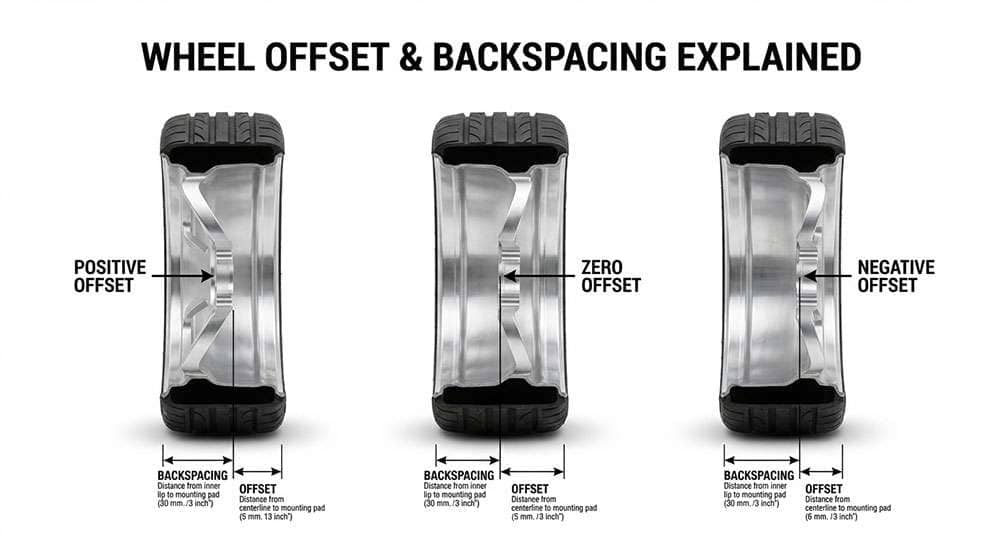
Offset and backspacing are frequently confused yet distinct measurements that affect how your wheels sit on your vehicle:
Offset is the distance from the wheel's centerline to the mounting surface. Measured in millimeters, offset can be:
Positive: Mounting surface closer to the outside edge (narrower track width)
Zero: Mounting surface at centerline (half the wheel on each side)
Negative: Mounting surface toward the inside (wider track width)
Backspacing measures the distance from the wheel's back edge to the mounting surface. Less backspacing may be needed for lifted trucks with larger suspension components, while too little can cause tires to rub against fenders when turning.
For rock crawlers with the 5x4.5 bolt pattern, negative offset wheels work well because they keep tires from hitting frame components when turned. This configuration also reduces steering effort and strain on axle components.
Both steel and alloy wheels are available for vehicles with the 5x4.5 bolt pattern. Each type offers distinct advantages:
Steel wheels provide exceptional durability against impacts, making them ideal for off-road adventures in Jeeps and Ford trucks with this bolt pattern. They're typically more affordable than alloys and less prone to cracking under heavy loads.
Alloy wheels (made from aluminum or magnesium alloys) deliver better performance through lighter weight and improved heat dissipation during braking. While generally more expensive than steel wheels, their lighter construction improves handling and fuel efficiency.
When choosing wheels for your 5x4.5 vehicle, consider your driving conditions carefully—steel for rugged durability or alloy for performance and appearance.
The 5x4.5 bolt pattern opens up exceptional possibilities when selecting wheels for your vehicle. This versatile configuration spans countless vehicle makes and models, creating one of the most practical choices in the automotive world. Whether you see it listed as 5x4.5 inches or 5x114.3mm, both measurements represent identical physical dimensions.
Ford, Nissan, Toyota, Honda, Jeep, and many other manufacturers have embraced this pattern, creating remarkable opportunities in the aftermarket wheel industry. Vehicle owners gain access to an extensive selection of designs, materials, and price points that simply isn't available with less common patterns.
Proper measurement is essential before making your purchase. Center bore dimensions, thread pitch specifications, torque requirements, offset measurements, and backspacing all play critical roles in successful wheel fitment. Steel wheels deliver exceptional durability for off-road applications, while alloy options provide enhanced performance through reduced weight and improved heat dissipation.
These wheel specifications might seem complex at first, but understanding them empowers you to make smart decisions when upgrading your vehicle. The right combination of bolt pattern, offset, and other fitment factors ensures both visual appeal and optimal performance on the road.
At Performance Plus Tire, we understand that your vehicle is an extension of your personality. Our knowledgeable staff can guide you through the selection process to find the perfect wheels for your 5x4.5 bolt pattern vehicle. The widespread use of this pattern means you have access to one of the largest selections of aftermarket wheels available, often at competitive prices.
Ready to upgrade your ride? The 5x4.5 bolt pattern gives you the flexibility to choose from thousands of wheel options that will make your vehicle stand out from the crowd.
Understanding the 5x4.5 bolt pattern opens up a world of wheel options for your vehicle, as this configuration is one of the most widely used across the automotive industry.
• 5x4.5 equals 5x114.3mm - These measurements are identical, just expressed in different units (inches vs millimeters)
• Widespread compatibility across brands - Found on Ford Mustangs, Toyota Camrys, Honda Civics, Nissan Altimas, and many Jeep models
• Measure accurately using proper technique - For 5-lug patterns, measure from center of one hole to outer edge of non-adjacent hole
• Consider all fitment factors beyond bolt pattern - Center bore, offset, backspacing, and torque specs are equally critical for safe installation
• Extensive aftermarket support available - This popular pattern offers the largest selection of wheel styles and competitive pricing options
The 5x4.5 bolt pattern's versatility across sedans, SUVs, sports cars, and light trucks makes it the most practical choice for both manufacturers and enthusiasts seeking wheel upgrades.
A 5x4.5 bolt pattern means the wheel has 5 lug holes arranged in a circle with a diameter of 4.5 inches. This is equivalent to 5x114.3mm in metric measurements.
Many popular brands use this bolt pattern, including Ford, Toyota, Honda, Nissan, and Jeep. It's found on vehicles ranging from sedans like the Ford Mustang and Toyota Camry to SUVs like the Ford Explorer and Jeep Cherokee.
To measure a 5x4.5 bolt pattern, use a measuring tape or caliper to measure from the center of one lug hole to the outer edge of the lug hole that's two positions away (not adjacent). If this measurement is approximately 4.5 inches or 114.3mm, you have a 5x4.5 bolt pattern.
Yes, other crucial factors include center bore size, offset, backspacing, and thread pitch. These specifications ensure proper fitment, safety, and performance of your wheels.
The 5x4.5 bolt pattern offers excellent versatility and compatibility across many vehicle types. Its widespread use results in a vast selection of aftermarket wheels, often at competitive prices, giving vehicle owners more options for customization and replacement.



