

That 10mm difference between 255 vs 265 tires creates more impact on your driving experience than most people realize. While both tire sizes look similar on the rack, they deliver distinctly different performance characteristics that can make or break your vehicle's handling and efficiency. A 255 tire measures exactly 255 millimeters wide, while a 265 tire spans 265 millimeters across the tread. This seemingly small gap translates into noticeable differences behind the wheel.
When it comes to selecting the right tire width, understanding what each size brings to your vehicle is essential. The narrower 255 tires excel in fuel efficiency thanks to reduced rolling resistance, making them the smart choice for daily commuting and highway driving. The wider 265 tires deliver a larger contact patch and superior grip, perfect for hauling, off-road adventures, and drivers who want that aggressive stance. Many vehicle owners also ask whether a 265 tire will fit on a 255 rim during upgrades—a crucial fitment question that affects both safety and performance.
Your driving priorities determine which option serves you best. We'll break down the real-world performance differences, compatibility requirements, and cost considerations to help you make the right decision for your specific needs.
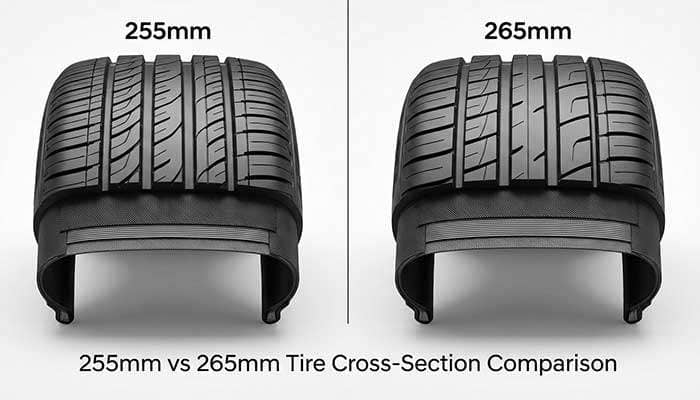
Understanding tire dimensions starts with reading the numbers on your tire's sidewall. These markings tell you exactly what you're working with. For the 255 vs 265 comparison, those numbers represent the width measurement in millimeters across the broadest part of the tire from sidewall to sidewall.
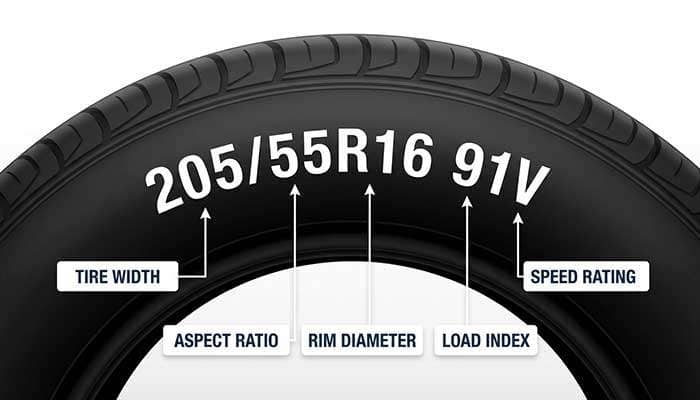
Tire sizing follows a standard format that makes sense once you know the system. Take a code like P265/60R18—the first number (265) tells you the tire's width in millimeters. So a 255 tire measures exactly 255mm wide, while a 265 tire spans 265mm. That 10mm difference equals about 0.39 inches, or roughly a 3.9% increase in width. Small as it sounds, this difference affects how your vehicle handles, stops, and consumes fuel.
The contact patch is where the rubber meets the road—literally. Width changes this critical connection point. Wider 265 tires create a larger footprint compared to 255 tires, which typically means better grip. This expanded surface area helps with cornering stability and overall traction. When you're taking turns aggressively, that wider, shorter contact patch delivers more lateral grip, letting you maintain higher cornering speeds.
But wider doesn't always win. Wet conditions tell a different story. Narrower 255 tires often outperform their wider counterparts because they slice through standing water instead of riding on top of it. Snow and ice conditions favor narrow tires too—they concentrate more weight per square inch on a smaller contact patch, improving traction.
Sidewall characteristics play a bigger role than most drivers realize. When you mount a wider tire on the same rim, the sidewall profile shifts. A wider tire stretches the sidewall, creating more stiffness and less flex. This added rigidity sharpens steering precision and response—qualities that performance drivers value.
The aspect ratio (that second number in tire sizing, like the "60" in P265/60R18) represents sidewall height as a percentage of width. Increase the width while keeping the same aspect ratio, and the actual sidewall height grows proportionally, changing the tire's overall diameter slightly.
This interplay between width and sidewall properties explains why comparing width numbers alone doesn't give you the complete performance picture.
Real-world driving reveals where that 10mm width difference truly matters. Each tire size delivers distinct advantages depending on your driving conditions and performance priorities.
The wider footprint of 265 tires provides superior cornering stability, especially during high-speed turns. Wider tires flex less during cornering, resulting in better grip and more immediate steering response. This increased surface contact creates a more stable platform when navigating curves at higher speeds. For daily commuting, however, 255 tires offer a nimbler feel that many drivers prefer for regular city and highway driving.
Dry pavement favors the wider 265 tires, which deliver stronger traction thanks to their larger contact patch. This advantage disappears in wet conditions where 255 tires often perform better by cutting through standing water more effectively rather than riding on top of it. Your regional weather patterns should influence this decision significantly.
Noise levels differ noticeably between these sizes. The narrower 255 tires typically produce less road noise, creating a quieter highway experience. They also absorb road imperfections more effectively. The wider 265 tires often transmit more vibrations and noise into the cabin, though they provide enhanced road feedback that performance-oriented drivers appreciate.
Fuel consumption represents a critical consideration. The wider 265 tires create increased rolling resistance, requiring more energy to maintain speed. This translates to approximately 4-10% reduced fuel economy compared to narrower options. Electric vehicle owners should note that this difference can impact driving range by an estimated 7%.
Proper tire fitment goes beyond choosing your preferred width. The right compatibility ensures your safety, optimal performance, and maximum tire life. Getting this wrong can create serious problems that affect both your vehicle's handling and your wallet.
Rim width determines what tire sizes work safely on your vehicle. Most tire professionals recommend staying within your rim's designed width range. The 10mm jump from 255 to 265 typically works fine if your rim can handle the wider footprint. However, stretching too wide a tire onto a narrow rim affects handling characteristics and can lead to tire failure at highway speeds.
Your wheel's specifications matter more than the tire numbers alone. Check your rim's approved tire width range before making the switch.
Wider 265 tires can create unexpected clearance problems with factory components. Many vehicles struggle to accommodate the extra width without rubbing against front struts, fenders, or suspension components depending on your wheel offset. This problem gets worse when you're towing heavy loads or carrying maximum cargo, as the suspension compresses and reduces available clearance. Running wider tires up front often requires camber adjustments that affect your entire suspension geometry.
Changing tire width affects your instrument cluster readings. Moving from 255 to 265 typically makes your speedometer read about 1.9 mph slower than your actual speed. At a displayed 60 mph, you're actually traveling closer to 63 mph. While this seems minor, the error accumulates over time and affects odometer accuracy as well.
Here's where narrower tires sometimes win. Many 255 tires carry XL (extra load) ratings with higher load indexes like 115/2640 lbs, while comparable 265 tires might only offer SL (standard load) ratings at 112/2460 lbs. This difference becomes crucial for towing applications, where proper load capacity directly impacts both safety and performance.
Always verify load ratings match your vehicle's requirements, especially if you tow trailers or haul heavy cargo regularly.
Selecting the right tire model makes all the difference in getting the performance you want from either width. We've identified the best options in each category based on real-world performance and value.
The Atturo Trail Blade X/T stands out as our top pick for 255 tire versatility. This tire combines knife-inspired sidewall styling with reinforced casing that protects against punctures during off-road excursions. At USD 199.22 per tire, it delivers solid performance with a 45,000-mile limited warranty.
Hankook's Dynapro AT2 Extreme RF12 offers exceptional value with its impressive 70,000-mile limited treadwear warranty for P-metric sizes and 60,000 miles for LT-metric applications. The multi-directional grooves and aggressive shoulders maintain reliable traction across different driving conditions, making it ideal for drivers who need both daily reliability and weekend capability.
The Goodyear Assurance WeatherReady 2 in 265/70R17 excels when conditions get challenging. Built-in wear gauge technology and comfort inserts that reduce road vibrations help this tire deliver confident performance in rain, slush, and snow. Premium performance comes at USD 278.89 per tire.
Kelly Safari AT provides excellent capability at a more accessible price point. Deep grooves, reinforced sidewalls, and noise-reducing design help it handle rough terrain while maintaining civility on paved roads. At USD 231.99 per tire, it's a smart choice for budget-conscious drivers who need wider tire capability.
Tire width directly impacts your wallet. The 255 options typically cost 15-30% less than comparable 265 models. This price difference stems partly from 265 being a less common size, which affects production volumes and availability. You might find the same tire model priced at USD 798.00 in 255 width versus USD 1,213.40 in 265 width.
Warranty coverage varies more by manufacturer than tire width. Hankook backs their 255 tires with 70,000-mile coverage, while Atturo provides 45,000 miles on their models. Most manufacturers use pro-rated warranty policies based on actual mileage achieved. Goodyear's policy illustrates this approach: if a tire with an 80,000-mile warranty wears out at 56,000 miles, they replace it for 70% of the comparable tire's current price.
Our expert team at Performance Plus Tire can help you select the ideal tire size and model for your specific vehicle and driving requirements.
When it comes to choosing between these tire sizes, having the key differences laid out clearly helps you make the right decision for your specific needs. Here's how 255 and 265 tires stack up across the most important performance factors:
Characteristic |
255 Tires |
265 Tires |
|---|---|---|
Width |
255mm |
265mm |
Wet Condition Performance |
Better performance (cuts through water more effectively) |
Less effective in wet conditions |
Fuel Efficiency |
Better fuel efficiency due to lower rolling resistance |
4-10% reduced fuel efficiency |
Road Noise |
Less road noise, quieter experience |
More road noise and vibration |
Cornering |
More nimble feel for daily driving |
Superior cornering stability, especially at high speeds |
Dry Traction |
Good for daily use |
Stronger traction due to larger contact patch |
Snow/Ice Performance |
Better traction (concentrates more weight per square inch) |
Less effective in snow/ice |
Typical Price Range |
Generally lower cost |
15-30% more expensive than 255 |
Primary Use Case |
Daily commuting, fuel efficiency |
Hauling, off-roading, performance driving |
Contact Patch |
Smaller footprint |
Larger footprint |
Speedometer Impact |
Base reference |
~1.9 mph slower reading than actual speed |
Availability |
More common size |
Less common size |
This side-by-side comparison shows why your driving habits matter more than just picking the "better" tire size. Daily commuters will benefit from 255 tires' efficiency and comfort advantages, while performance enthusiasts and heavy-duty users get more value from 265 tires' enhanced grip and stability.
Understanding tire width differences helps you make better vehicle decisions that match your actual driving needs. The 255 and 265 tire comparison shows how a simple 10mm measurement change affects everything from fuel costs to cornering performance. Each size serves specific purposes—255 tires deliver efficiency and comfort for daily driving, while 265 tires provide enhanced grip and capability for performance applications.
Your driving patterns determine which option works best for your situation. Commuters who prioritize fuel savings and quiet rides will find 255 tires meet their needs perfectly. Drivers who haul loads, tackle challenging terrain, or want maximum dry-weather grip should consider the wider 265 option. Fitment requirements matter just as much as performance preferences, so checking rim compatibility and vehicle clearance prevents costly mistakes.
Budget considerations play a significant role in this decision. The 265 tires typically cost 15-30% more than 255 options, making the narrower choice attractive for cost-conscious buyers. However, the enhanced performance and capability of wider tires may justify the extra expense for drivers who can use those benefits.
When selecting between these tire sizes, consulting with tire professionals provides valuable guidance tailored to your specific vehicle and driving requirements. At Performance Plus Tire, our experienced team can help you evaluate fitment, performance needs, and budget considerations to find the perfect tire solution for your vehicle.
The right tire choice balances your driving habits, vehicle requirements, and budget constraints. That 10mm difference becomes either a minor detail or a crucial performance factor depending on how you use your vehicle.
Understanding the 10mm difference between 255 and 265 tires helps you make an informed decision that matches your driving priorities and vehicle requirements.
• 255 tires excel in efficiency: Deliver 4-10% better fuel economy, quieter ride, and superior wet/snow traction for daily commuting needs.
• 265 tires prioritize performance: Provide enhanced cornering stability, stronger dry grip, and better load capacity for towing and off-road driving.
• Compatibility matters more than preference: Check rim width, vehicle clearance, and suspension setup before upgrading to ensure safe fitment.
• Cost difference is significant: 265 tires typically cost 15-30% more than 255 options due to specialized performance and limited availability.
• Weather conditions influence choice: Narrower 255 tires cut through water and snow more effectively, while wider 265 tires excel on dry pavement.
The right tire choice balances your specific driving habits, vehicle requirements, and budget constraints—making that seemingly small 10mm difference either negligible or crucial depending on how you use your vehicle.
While the 10mm difference may seem small, it can notably impact your vehicle's performance. The 265 tires offer a larger contact patch for improved grip, especially in dry conditions and during cornering. However, 255 tires generally provide better fuel efficiency and perform better in wet conditions.
Not necessarily. While wider tires like 265s can offer better grip and stability, especially during cornering, they may not always be the best choice. Factors such as road conditions, vehicle weight distribution, and driving style all play a role. In some cases, narrower tires like 255s might provide better handling, particularly in wet or snowy conditions.
Tire width can significantly impact fuel efficiency. Generally, narrower tires like 255s have lower rolling resistance, which can lead to better fuel economy. Wider tires such as 265s typically increase rolling resistance, potentially reducing fuel efficiency by 4-10% compared to their narrower counterparts.
In many cases, you can use 265 tires on rims designed for 255 tires, but it's crucial to check your vehicle's specifications and consult with a tire professional. The 10mm increase is usually acceptable if your rim width supports it. However, you need to consider factors like wheel well clearance and potential impacts on handling and speedometer accuracy.
Tire width can influence road noise and overall ride comfort. Typically, narrower tires like 255s produce less road noise and provide a quieter, more comfortable ride. Wider tires such as 265s may transmit more road noise and vibrations into the cabin, but they can offer enhanced road feedback, which some drivers prefer for a more engaging driving experience.



