
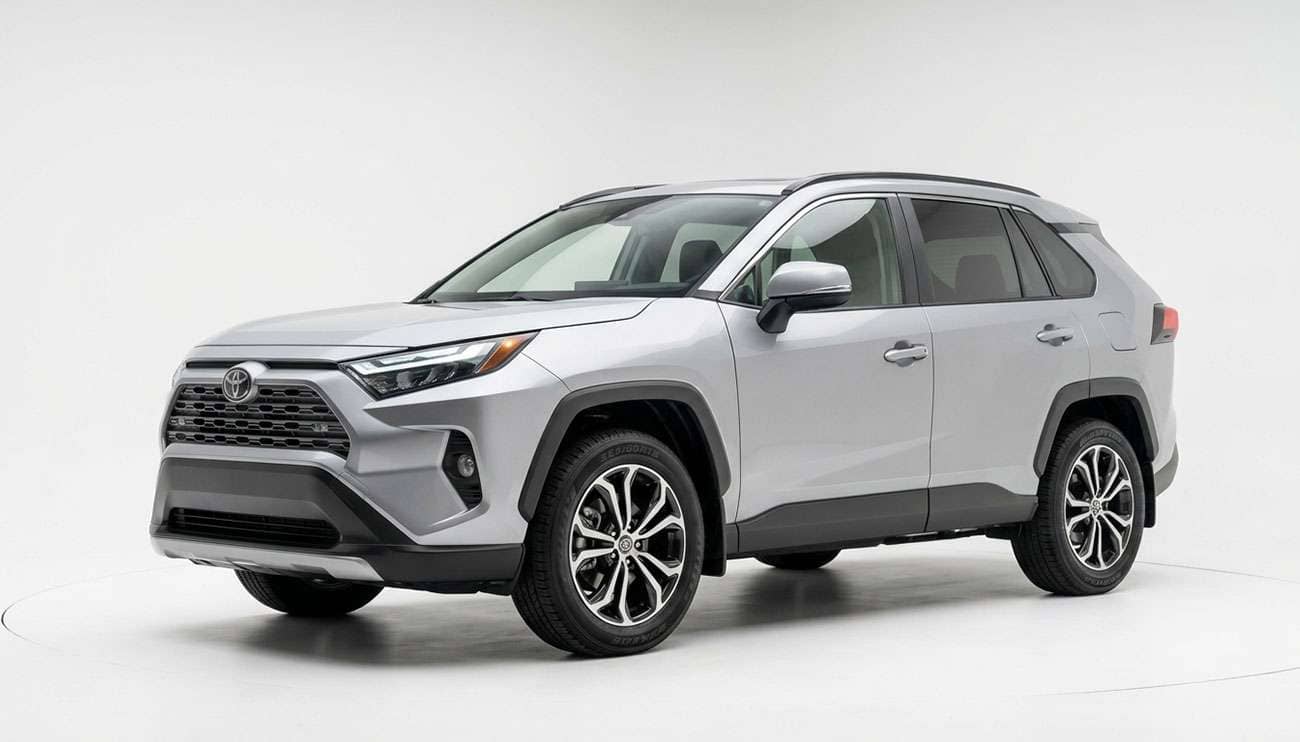
A 225/60R18 tire is 8.9 inches wide, carries a 5.3-inch sidewall, and stands 28.6 inches tall on an 18-inch wheel. That part is settled math. The part that decides whether the tire belongs on your vehicle is the code stamped immediately after it. In this size, load index runs from 99 to 104 and speed rating runs from T to W. That is a 275-pound swing in capacity per corner and a 50 mph swing in speed capability between two tires wearing the same three numbers.
Most size pages give you the diameter and stop there. Here is the part nobody puts in front of you: 225/60R18 by itself is three-quarters of a tire size. Your door placard lists the full spec, and matching only the first three numbers is how people end up with a legal-looking tire that is underrated for the car it is bolted to. Start with the table below, then read the section that matches your case.
Code on your door placard |
What it tells you |
What you can fit |
|---|---|---|
225/60R18 99H |
Standard load, 1,709 lb per tire, good to 130 mph |
99 or higher, H or higher. A 100H or 104H is fine; a 99T is not |
225/60R18 100H |
Standard load, 1,764 lb per tire, good to 130 mph |
The most common spec in this size. Match 100H or step up to 104H |
225/60R18 100V or 100W |
Same load, higher speed rating for a firmer, quicker-steering build |
Hold the V or W. Dropping to H changes how the car steers and turns in |
225/60R18 104H XL |
Extra load, 1,984 lb per tire, and a higher cold pressure on the placard |
XL only. A 100-rated tire gives up 880 lb across the vehicle |
Placard shows a different size |
Someone changed sizes before you, or you are looking at an optional fitment |
Go back to the placard size first, then evaluate alternates on diameter |
Converted to inches, 225/60R18 works out to roughly 28.6 x 8.9 R18. The section width of 225 millimeters divides by 25.4 to give 8.86 inches. The 60 is an aspect ratio, not a measurement: the sidewall stands at 60 percent of the section width, so 225 x 0.60 gives 135 millimeters, or 5.31 inches. Add two sidewalls to the 18-inch rim and the overall diameter comes to 28.63 inches.
From there, the rest of the numbers fall out. Circumference is diameter times pi, or about 89.9 inches. Divide 63,360 inches per mile by that circumference and you get roughly 705 revolutions per mile, which is the figure your speedometer and odometer are calibrated against. If you want the full walkthrough on decoding the rest of the sidewall stamp, our guide on how to read tire size covers every marking in order.
Measurement |
Metric |
Inches |
|---|---|---|
Section width |
225 mm |
8.9 in |
Sidewall height |
135 mm |
5.3 in |
Rim diameter |
457 mm |
18 in |
Overall diameter |
727 mm |
28.6 in |
Circumference |
2,283 mm |
89.9 in |
Revolutions per mile |
438 per km |
705 per mile |
One caution on the width number. The 225 figure is section width, measured sidewall bulge to sidewall bulge on a specified measuring rim, not the width of the tread touching the road. Tread width on a 225-series tire typically runs closer to 7.5 inches. That distinction matters when you are checking strut and fender clearance, because the widest point of the tire sits at the sidewall, not at the tread edge.
This is the section the size calculators skip, and it is the one that decides fitment.
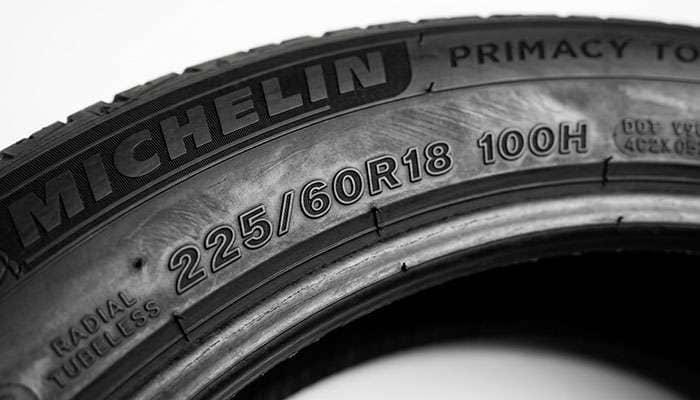
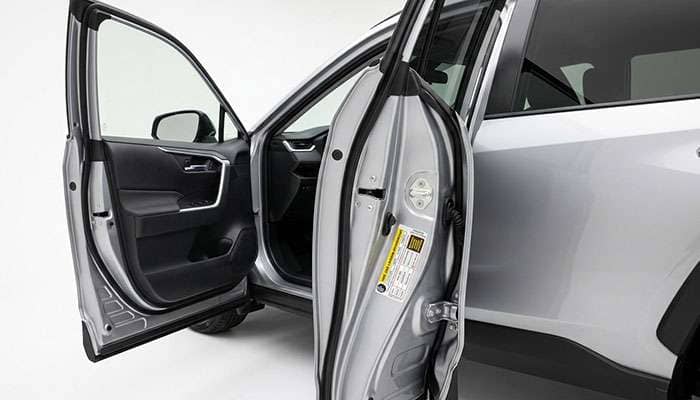
A full size designation reads something like 225/60R18 100H. The 100 is the load index, and the H is the speed rating. Both are set by the vehicle manufacturer, not by preference, and both are printed on the tire information placard inside your driver's door jamb. Federal Motor Vehicle Safety Standard 110 requires that placard on every passenger vehicle sold in the United States, and it requires that the tires listed carry a load rating adequate for each gross axle weight rating.
Load index is a coded number that maps to a weight in pounds. In this size the practical range looks like this:
Load index 100 is the dominant original-equipment spec for 225/60R18, with 104 the most common step up on heavier trims. The gap between the two is 220 pounds per corner. On a loaded crossover with a roof box and five people aboard, that gap is not academic. Our breakdown of load range vs load index explains why the two terms are not interchangeable.
An extra load tire reaches its rated capacity only at a higher inflation pressure. A standard load passenger tire hits its maximum rated load at 35 psi in P-metric spec or 36 psi in Euro-metric. An extra load tire in the same size hits its rated load at 41 or 42 psi. The reinforcement in the casing is real, but it only does its job when the tire is inflated to the pressure the vehicle placard specifies.
This is where people get into trouble. Most vehicles running 225/60R18 call for 32 to 35 psi cold. A handful of heavier crossovers and electric models on this size ask for closer to 38 or 39 psi, and those are almost always the ones with an XL tire on the placard. Fitting an XL tire and setting it to a lighter vehicle's 32 psi does not give you extra load capacity. It gives you a stiffer tire running below its design pressure.
The letter at the end is a sustained-speed rating established under controlled test conditions, but its practical meaning on the street is heat tolerance and casing stiffness. In 225/60R18 you will find T (118 mph), H (130 mph), V (149 mph), and W (168 mph). H is the dominant original-equipment rating in this size.
You can move up a speed rating without consequence beyond a slightly firmer ride and a bit more steering response. Moving down is the problem. A vehicle delivered on V-rated tires was tuned around that casing stiffness, and dropping to T changes turn-in, steady-state grip, and the tire's ability to shed heat on a long summer highway run. Our guide to tire speed rating explained covers the full letter chart and the derating rules.
225/60R18 is a compact and midsize crossover size, with a few sedans and one small pickup in the mix. It sits in the sweet spot where manufacturers want an 18-inch wheel for brake clearance and looks, but still want enough sidewall to absorb potholes. Roughly two hundred vehicle models worldwide have used it as an original fitment.
Segment |
Vehicles commonly on 225/60R18 |
What to watch for |
|---|---|---|
Compact crossovers |
Ford Escape, Ford Bronco Sport, Chevrolet Equinox, GMC Terrain, Jeep Cherokee, Mazda CX-50, Nissan Rogue |
Usually load index 100, speed rating H, standard load |
Premium crossovers |
BMW X3 and X4, Lexus NX, Lincoln Corsair, Buick Envision |
Often V or W rated, and some arrive on run-flat construction |
Hybrids and electrics |
Toyota RAV4 Prime, Ford Mustang Mach-E |
Frequently XL with a higher load index and a higher placard pressure |
Wagons and utilities |
Subaru Outback, Toyota Venza, Toyota RAV4, Suzuki Grand Vitara |
All-wheel drive makes matched circumference across all four critical |
Compact trucks and sedans |
Ford Maverick, Honda Crosstour |
Payload use pushes you toward the higher load index |
Two rules apply to every row on that table. First, fitment is trim and year specific. A base trim and a top trim of the same model in the same year routinely wear different sizes, and the mid-cycle refresh often changes the spec again. Second, the placard beats every list on the internet, including this one. If your door jamb sticker and a fitment database disagree, the sticker wins.
On all-wheel-drive vehicles, there is a third rule. Circumference has to match closely across all four corners. Mixing a worn pair with a new pair, or mixing two different tire models with different tread depths, forces the center differential or transfer case to absorb a permanent speed difference. That shows up as driveline bind, then as heat, then as a repair bill considerably larger than a set of tires.
On diameter alone, yes. A 235/60R18 stands 29.10 inches tall against 28.63 for the 225, a difference of 0.47 inches, or 1.7 percent. That falls inside the 3 percent tolerance the industry uses for replacement sizing, and it fits within the same 6.0 to 8.0 inch approved rim width band. Speedometer error is roughly 1 mph at an indicated 60.
Diameter is the easy check. The two harder checks are load and pressure.
Going from 235 to 225 narrows the section width by 10 millimeters, which usually costs you a step of load index unless you deliberately buy back the capacity. A 235/60R18 in a common 103 or 104 spec carries 1,929 to 1,984 pounds. Replace it with a 225/60R18 100 and you have given up 165 to 220 pounds per corner. If the placard calls for the higher number, that swap puts the vehicle below its required rating even though the tires physically fit and the speedometer barely notices.
The fix is straightforward: if you are dropping width, hold or raise the load index. A 225/60R18 104 XL matches or exceeds most 235/60R18 fitments, provided you also run the higher cold pressure the extra load construction requires. Our article on replacing a 235 with a 225 tire walks through the same swap from the other direction.
Alternate size |
Overall diameter |
Difference vs 225/60R18 |
Verdict |
|---|---|---|---|
225/60R18 |
28.63 in |
Baseline |
Reference size |
235/60R18 |
29.10 in |
Plus 1.7 percent |
Workable on diameter; needs a wheel at least 6.5 in wide |
215/60R18 |
28.16 in |
Minus 1.7 percent |
Workable, but load index usually drops a step |
235/55R18 |
28.18 in |
Minus 1.6 percent |
Wider footprint, shorter sidewall, firmer ride |
225/55R19 |
28.74 in |
Plus 0.4 percent |
The plus-one size; needs 19-inch wheels |
225/65R18 |
29.52 in |
Plus 3.1 percent |
Just outside tolerance; verify clearance at full lock |
One more note on the 3 percent rule. It is a guideline, not a regulation, and it exists because speedometer accuracy, anti-lock brake wheel-speed calculations, stability control thresholds, and transmission shift points are all derived from revolutions per mile. Push past 3 percent and every one of those systems is working from a number that no longer matches reality.
The 65 is taller, as long as the section width and rim diameter are the same. Aspect ratio is a percentage, so a higher number means a taller sidewall relative to width.
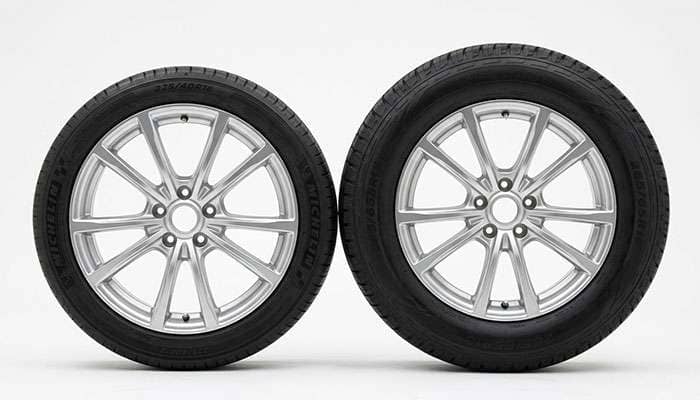
Run the arithmetic on a 225 section width and an 18-inch rim. At 60 series, the sidewall is 135 millimeters and the tire stands 28.63 inches. At 65 series, the sidewall is 146.25 millimeters and the tire stands 29.52 inches. The 65 is 0.89 inches taller overall, and just under half an inch of that shows up as ride height at each corner.
Where the comparison gets misread is when the widths differ. A 235/60R18 has a taller sidewall than a 225/65R17 in absolute millimeters, but the 225/65R17 has the higher aspect ratio. Aspect ratio is a ratio, not a height. Our explainer on tire aspect ratio decoded works through several of these comparisons side by side.
Practically, the extra sidewall in a 65 series buys you impact absorption and a little more sidewall to protect the rim from potholes. It costs you steering response, because a taller sidewall deflects more under cornering load before the tread reacts. On a crossover spec'd for 60 series, jumping to 65 also pushes you past the diameter tolerance, so it is not a free upgrade.
A 225/60R18 is approved for wheels from 6.0 to 8.0 inches wide, with 6.5 inches serving as the measuring rim the published section width is based on. Most original-equipment wheels for this size land at 7.0 or 7.5 inches.
Those approved-width bands come from the Tire and Rim Association, which publishes the dimensional standards that tire and wheel makers build to. Staying inside the band matters because rim width changes the shape of the tire, not just its mounting. Mount that tire on a 6.0-inch wheel and the sidewalls pull inward, the tread crowns slightly, and the contact patch narrows. Mount it on an 8.0-inch wheel and the sidewalls pull outward, the tread flattens, and the shoulders carry more load.
Roughly speaking, every half inch of rim width changes the tire's actual section width by about 0.2 inches. That is enough to matter for fender clearance on a lowered vehicle and enough to shift where the tread wears first. The full relationship is laid out in our guide on tire size for wheel width.
Two things the width chart will not tell you. Offset determines where the assembly sits in the wheel well, and a correct-width wheel with the wrong offset will still rub the strut or the fender liner. And hub bore has to either match the hub or be corrected with hub-centric rings, because lug nuts are meant to clamp the wheel, not to center it.
This size is well served. Nearly every major manufacturer builds an all-season option in 225/60R18, in load index 100 standard load and 104 extra load, in speed ratings from T through W, and with treadwear grades spanning roughly 240 to 860. Rather than hand you a ranked list that ignores what you actually drive, here is the spec-level filter that narrows it faster.
Start with the placard, not the review. Filter to your exact load index and speed rating first. A tire that reviews brilliantly in 100H is the wrong tire if your placard says 104 XL. Everything below assumes you have already made that cut.
Read the UTQG treadwear grade in context. The Uniform Tire Quality Grading standard under federal regulation requires treadwear, traction, and temperature grades on passenger tires. Treadwear is a comparative index assigned by the manufacturer against a control tire, so it is meaningful within a brand and looser across brands. In this size, grades in the 700 to 860 range signal a long-wear touring compound, 500 to 700 signals a balanced all-season, and anything under 400 signals a grip-first compound that will not go the distance on a commuter.
Match the mileage warranty to your ownership horizon. Warranties in 225/60R18 run from about 40,000 miles at the performance end to 90,000 at the long-wear end. A 90,000-mile warranty on a car you will sell in three years is money spent on tread you will never use.
Decide whether you need the mountain snowflake. An M+S marking is a tread-geometry designation. The three-peak mountain snowflake is earned through an actual snow traction test. If you see real winter, the snowflake is the marking that matters, and this size offers both all-weather tires that carry it year-round and dedicated winter tires that carry it with a softer compound.
How you drive |
What to filter for |
What you give up |
|---|---|---|
High-mileage commuter |
Treadwear 700 or higher, 70,000 mile or longer warranty, H rating |
Wet grip at the limit and steering sharpness |
Comfort and quiet first |
Grand touring construction, H rating, standard load if the placard allows |
Some tread life against a dedicated long-wear tire |
Heavier trim, hybrid, or EV |
Load index 104 XL, low rolling resistance construction |
Ride compliance, and you must run the higher cold pressure |
Four real seasons |
Three-peak mountain snowflake, all-weather compound |
Dry handling precision and some summer tread life |
Light trail and gravel |
All-terrain or rugged-terrain construction in 104 XL |
Road noise and a few miles per gallon |
Sport-tuned crossover |
V or W rating, treadwear 400 to 600 |
Tread life and cold-weather compliance |
The honest answer is that the price question is really a tier question. In 225/60R18, the market sorts into four bands, and what separates them is compound technology, casing construction, and warranty backing rather than the size itself.
Tier |
Typical price per tire |
What you are buying |
|---|---|---|
Value all-season |
Roughly 70 to 120 dollars |
Correct load and speed rating, shorter warranties, mixed wet performance |
Mainstream touring |
Roughly 120 to 200 dollars |
Established compounds, 60,000 to 75,000 mile warranties, the volume of the market |
Premium touring and all-weather |
Roughly 200 to 310 dollars |
Top-tier wet braking, snowflake certification, warranties to 85,000 miles |
Specialty construction |
310 dollars and up |
Run-flat casings, summer ultra-high-performance, studded winter builds |
Three things move the number inside those bands. Extra load construction adds material and adds cost. Higher speed ratings require stiffer casings and a more expensive build. And run-flat construction, which several premium crossovers on this size arrive with from the factory, carries a real premium over a conventional casing.
Where people overspend is at the top of the value tier and the bottom of the premium tier. If you are stretching from a 115-dollar tire to a 135-dollar tire, you are usually buying a longer warranty and a better wet compound, which is money well spent on a daily driver. If you are stretching from 260 to 310 dollars, verify you are buying a capability you will actually use, such as snowflake certification or run-flat construction, and not just a nameplate.
An underrated tire does not fail on the day you install it. It fails on a schedule, and the schedule runs in stages.
Stage one, the first few thousand miles. A tire carrying more load than it is rated for runs at greater deflection through the sidewall on every rotation. More deflection means more flex, and flex generates heat. You will not feel this stage. You will see slightly worse fuel economy and slightly heavier steering.
Stage two, the first summer. Sustained heat in the shoulder and belt area accelerates the aging of the rubber-to-steel bonds inside the casing. Shoulder wear starts running ahead of center wear. The tire starts looking cupped or feathered at the outside edge, and the noise level creeps up.
Stage three, the failure. Once the bond between the belt package and the casing degrades, a tread separation becomes a matter of time and temperature. This is why a long, loaded, hot highway run is the classic setting for a highway-speed failure. It is also why sidewall condition deserves a look every time you check pressures, and why any visible bulge, cut, or deformation is a stop-driving item rather than a watch-it item. Our piece on tire sidewall damage and whether it is safe to drive covers what is repairable and what is not.
The parallel cost. Diameter errors do quieter damage. A tire more than 3 percent off the original diameter feeds a wrong wheel-speed signal to the anti-lock brake and stability control modules, biases the odometer against your warranty and lease mileage, and on all-wheel-drive vehicles forces the center coupling to slip continuously. None of that trips a warning light until something is already worn.
When you are ready to shop the size, you can browse the full range of 225/60R18 tires and filter by load index, speed rating, and season.
225/60R18 measures 28.6 inches tall, 8.9 inches wide, with a 5.3-inch sidewall and about 705 revolutions per mile. Those numbers are fixed, and any calculator will give them to you. What separates a correct purchase from an expensive lesson is the code that follows: load index between 99 and 104, speed rating between T and W, and the standard or extra load designation that determines what pressure the tire needs to reach its rating.
Read the placard, match or exceed it, keep the diameter inside 3 percent, and stay within the 6.0 to 8.0 inch rim width band. Do that and this size will give you a comfortable, quiet, long-wearing setup on exactly the kind of crossover it was designed around.
A 225/60R18 tire has a section width of 225 millimeters or 8.9 inches, a sidewall height of 135 millimeters or 5.3 inches, and an overall diameter of about 28.6 inches on an 18-inch wheel. It turns roughly 705 revolutions per mile. The load index and speed rating stamped after the size, which range from 99 to 104 and T to W in this size, determine whether a given tire suits your vehicle.
This size generally sorts into four price tiers: value all-season around 70 to 120 dollars per tire, mainstream touring around 120 to 200 dollars, premium touring and all-weather around 200 to 310 dollars, and specialty construction such as run-flat or studded winter above that. Extra load construction and higher speed ratings both push the price up within each band.
Filter to your placard load index and speed rating first, then choose by use. High-mileage commuters want a treadwear grade of 700 or higher with a long warranty. Heavier hybrid and electric trims need load index 104 extra load. Drivers facing real winter should require the three-peak mountain snowflake symbol rather than settling for an M+S marking alone.
It is primarily a compact and midsize crossover size. Common applications include the Ford Escape, Bronco Sport and Maverick, Chevrolet Equinox, GMC Terrain, Jeep Cherokee, Nissan Rogue, Mazda CX-50, Subaru Outback, Toyota RAV4 and Venza, Lexus NX, Lincoln Corsair, Buick Envision, and BMW X3 and X4. Fitment varies by trim and model year, so confirm against your door jamb placard.
The 65 series is taller when the section width and rim diameter match. On a 225 width and an 18-inch rim, a 60 series stands 28.63 inches while a 65 series stands 29.52 inches, a difference of 0.89 inches. Because aspect ratio is a percentage of width rather than a fixed height, comparing across different widths requires running the numbers rather than comparing the ratios.
On diameter, yes. The 225 is 1.7 percent shorter, which sits inside the 3 percent replacement tolerance, and both sizes share the same 6.0 to 8.0 inch approved rim width range. The catch is load capacity. Narrowing from 235 to 225 often costs a step of load index, so choose a 104 extra load version if your placard calls for the higher rating.



