

The debate between 17 vs 20 inch wheels goes far beyond appearance. Your choice directly affects how your vehicle performs, rides, and handles different driving conditions. 20-inch wheels deliver superior handling through their larger diameter and increased tire contact patch, while 17-inch wheels provide enhanced ride comfort that proves especially valuable for off-road use.
Real-world testing reveals clear performance distinctions. Smaller 17-inch wheels offer measurable advantages in acceleration, braking distance, and fuel efficiency due to their lighter weight and reduced rotational mass. Performance vehicles, sports cars, and luxury models often benefit more from 20-inch wheels because of their enhanced handling characteristics and visual appeal.
Off-road capability brings sidewall protection into focus. The reduced sidewall height on 20-inch wheels provides less cushioning and protection during rock crawling and trail driving. This becomes a critical factor for drivers who regularly venture beyond paved surfaces.
Price represents another major consideration. Manufacturing costs favor 17-inch wheels, making them more affordable for most drivers. 20-inch wheels command higher prices due to increased materials and manufacturing complexity. The question of load handling capacity between these sizes adds another layer to consider as we examine how each performs across different real-world scenarios.
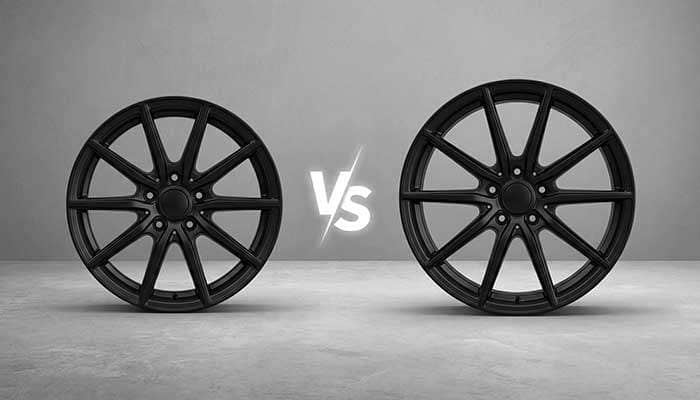
When it comes to actual driving performance, the differences between wheel sizes become immediately apparent. 20-inch wheels excel on smooth pavement where their larger diameter creates a broader tire contact patch. This enhanced road connection delivers noticeably sharper steering response and improved cornering precision compared to 17-inch wheels that can feel less precise during aggressive driving.
The weight advantage of 17-inch wheels translates into measurable everyday benefits. Lighter wheels mean your engine works less to accelerate the vehicle's unsprung weight. Research demonstrates that moving from 15-inch to 19-inch wheels can actually slow 0-60 times by 4%.
Fuel economy reveals one of the most significant practical differences. Larger wheels can hurt fuel efficiency by up to 10% in city driving. The extra weight of 20-inch wheels requires more energy to get moving and to bring to a stop, directly impacting your fuel costs.
Ride comfort presents the most noticeable daily driving difference. Taller sidewalls on 17-inch setups act like built-in shock absorbers, smoothing out road imperfections. The shorter sidewalls on 20-inch wheels transmit every road texture directly into the cabin, making even minor bumps much more noticeable.
At Performance Plus Tire, our experts can help match the right wheel and tire combination to your specific driving needs, whether you're looking to maximize comfort for daily commuting or optimize performance for weekend driving.
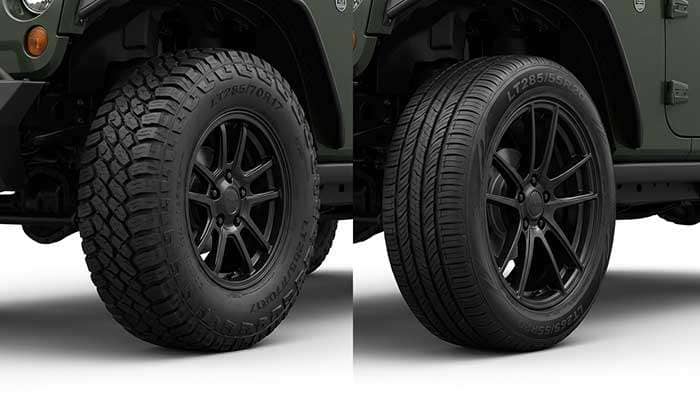
Understanding wheel size selection becomes critical when terrain challenges increase. Experienced off-road drivers consistently choose 17-inch wheels for their sidewall advantages in demanding conditions. The taller sidewall construction creates essential protection against rocks, roots, and trail obstacles while providing natural shock absorption for both wheels and vehicle components.
Tire pressure adjustments reveal another key advantage of smaller wheels. 17-inch setups allow safe air-down procedures to pressures in the low teens or single digits without tire debeading risks. This capability expands the tire's contact patch significantly, improving traction on challenging surfaces including sand, mud, and loose rock.
Trail durability represents a major consideration for serious off-roaders. The additional rubber thickness between rim and obstacles on 17-inch wheels means fewer bent or cracked rims—expensive damage that frequently affects 20-inch wheel owners on rugged terrain.
Major manufacturers recognize these advantages in their factory off-road builds. The Tacoma TRD Pro, Wrangler Rubicon, and F-150 Raptor all come equipped with 17-inch wheels from the factory. These vehicles prioritize capability over appearance where the pavement ends.
At Performance Plus Tire, our wheel specialists understand that off-road performance demands the right combination of wheel size, tire construction, and proper fitment. We can help match your specific trail requirements with wheels that deliver both durability and capability for your off-road adventures.
Practical factors often determine the final choice between wheel sizes. Vehicle compatibility plays a key role in this decision. 17-inch wheels with their taller sidewalls work best on compact SUVs, sedans, and entry-level vehicles, while 20-inch wheels suit performance vehicles, sports cars, and luxury models that benefit from their sleek profile.
The numbers strongly favor smaller wheels when it comes to your wallet. A complete set of 20-inch wheels costs $1,400-$1,900, with individual wheel replacements starting around $250. Tire costs add up quickly too—20-inch tires run $220-$260 each compared to $180-$220 for smaller sizes. This price difference compounds over time, particularly since 20-inch wheels face higher damage risk during normal use.
Style preferences vary significantly between the two options. 20-inch wheels offer a sportier appearance with diverse finish options including matte black, gold, and chrome. 17-inch wheels provide a more rugged, functional look that complements trucks and SUVs perfectly. Vehicle owners typically save $30-$60 per tire when choosing 17-inch options.
Market availability works in favor of smaller sizes. Higher production volumes and increased competition mean more choices at better prices for 17-inch wheels. While 20-inch wheels might boost resale value through enhanced appearance, our specialists at Performance Plus Tire can help you balance these practical considerations against your specific driving needs and budget requirements.
Feature |
17-Inch Wheels |
20-Inch Wheels |
|---|---|---|
Handling |
Adequate for daily driving, less precise during aggressive cornering |
Superior handling with enhanced steering response and cornering stability |
Acceleration |
Faster acceleration due to reduced unsprung weight |
Slower acceleration from increased rotational mass |
Fuel Economy |
Better fuel efficiency for daily commuting |
Up to 10% reduction in city driving conditions |
Ride Quality |
More comfortable ride with better bump absorption |
Firmer ride with more road feel transmitted to cabin |
Off-Road Capability |
Excellent protection and performance on rough terrain |
Limited sidewall protection increases damage risk |
Wheel Cost |
Budget-friendly pricing |
$250+ per wheel, complete sets $1,400-$1,900 |
Tire Cost |
$180-$220 per tire |
$220-$260 per tire |
Best Applications |
Daily drivers, trucks, SUVs, off-road vehicles |
Sports cars, performance vehicles, luxury models |
Sidewall Strength |
Taller sidewalls provide better impact protection |
Lower profile offers less cushioning and protection |
Weight |
Lighter weight improves performance and efficiency |
Heavier construction affects acceleration and fuel use |
Your choice between 17 and 20 inch wheels comes down to how you actually drive your vehicle. The performance data reveals distinct advantages for each size that match specific driving needs.
17-inch wheels deliver the best value for most drivers. Better fuel economy, improved acceleration, and superior ride comfort make these wheels ideal for daily driving. Off-road enthusiasts benefit significantly from the added sidewall protection and ability to air down safely on challenging terrain. The lower purchase price and reduced replacement costs make 17-inch wheels the economical choice throughout ownership.
20-inch wheels excel when handling precision matters most. Performance vehicles, sports cars, and luxury models benefit from the improved cornering stability and steering response. The aggressive appearance enhances vehicle aesthetics, though you'll pay a premium for both the initial purchase and ongoing tire replacements.
Consider your typical driving conditions before deciding. Daily commuters who value comfort and fuel efficiency will appreciate 17-inch wheels. Weekend off-road adventures become more capable and less risky with the added sidewall protection. Drivers focused on track days or spirited canyon driving will notice the handling improvements that 20-inch wheels provide.
The right choice matches your priorities. Practical drivers choose 17-inch wheels for their versatility and value. Performance enthusiasts select 20-inch wheels for their handling benefits and visual impact.
Understanding these differences helps you select wheels that enhance your specific driving experience rather than following trends that might not suit your needs.
Understanding the real-world performance differences between 17 and 20-inch wheels helps you make an informed decision based on your driving needs and priorities.
• 17-inch wheels deliver better everyday performance with improved acceleration, up to 10% better fuel economy, and superior ride comfort due to taller sidewalls that absorb road imperfections.
• 20-inch wheels excel in handling precision offering better cornering stability and steering response through their larger diameter and broader tire contact patch with the road.
• Off-road capability strongly favors 17-inch wheels as taller sidewalls provide better protection against damage and allow safer air-down capabilities for improved traction on challenging terrain.
• Cost considerations significantly favor smaller wheels with 17-inch options costing $30-60 less per tire and offering lower replacement costs throughout ownership.
• Vehicle type determines optimal choice - 17-inch wheels suit daily drivers and off-road vehicles, while 20-inch wheels complement performance cars and luxury models prioritizing esthetics.
The decision ultimately comes down to whether you prioritize comfort and practicality (17-inch) or handling performance and visual appeal (20-inch) based on your specific driving conditions and vehicle usage patterns.
17-inch wheels offer better acceleration, improved fuel efficiency, and a more comfortable ride due to taller sidewalls. 20-inch wheels provide better handling and cornering stability because of their larger diameter and broader tire contact patch.
17-inch wheels are generally better for off-road driving. They offer better protection against trail damage, allow for lower tire pressures without risking debeading, and provide more cushioning against impacts from rocks and uneven terrain.
17-inch wheels typically offer better fuel economy. Studies indicate that larger 20-inch wheels can reduce fuel efficiency by up to 10% in city driving conditions due to their increased weight and rolling resistance.
17-inch wheels are generally more affordable. A set of 20-inch wheels can cost between $1,400-$1,900, while 17-inch options are less expensive. Tires for 20-inch wheels also tend to be pricier, costing about $220-$260 per tire compared to $180-$220 for 17-inch tires.
17-inch wheels are typically better suited for compact SUVs, sedans, entry-level vehicles, and off-road capable vehicles. 20-inch wheels are often preferred for performance vehicles, sports cars, and luxury models where handling and esthetics are prioritized.



