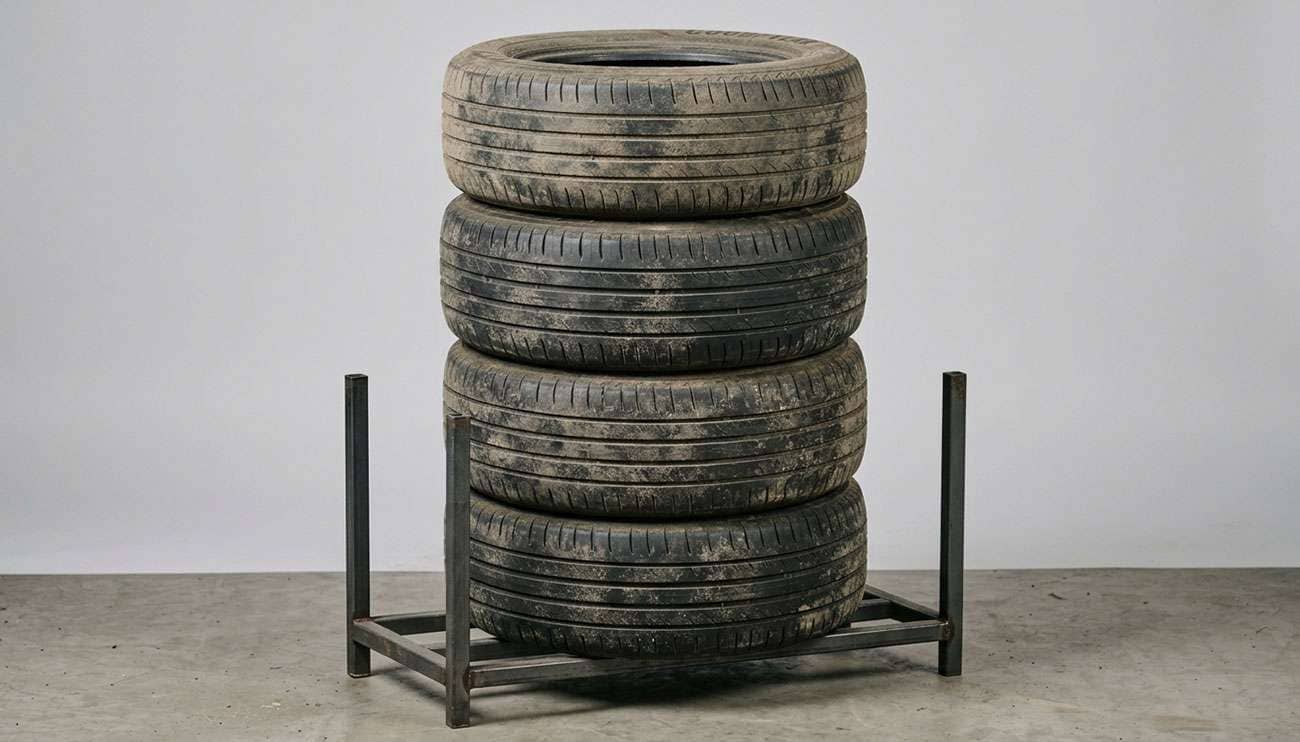
The short answer? Probably not — and I say that as a guy who's been mounting tires for over four decades. A 10-year-old tire stored in a garage might look clean, uncracked, and ready to roll. That's exactly the problem. Tire aging happens on the inside of the rubber, not just on the surface. Garage storage slows the process some, but it doesn't stop it. Every major tire manufacturer — Michelin, Bridgestone, Continental, Goodyear, Pirelli — draws a hard line at 10 years from the manufacture date. After that, the tire comes out of service, no matter how it looks or how it was stored.
There's nuance here. A tire that spent 10 years in a cool, dark, dry garage is in noticeably better shape than one that spent 10 years baking in a Phoenix driveway. But "better shape" isn't the same thing as "safe to run on the highway." Let me walk you through what I'd actually do if you brought those tires into my shop and asked me to mount them.
Here's the thing most folks don't realize: the rubber in a tire starts breaking down the moment it comes out of the factory mold. Doesn't matter if the tire is bolted to your car doing 70 mph down the freeway or sitting on a shelf in your garage. The chemical clock starts ticking either way.
What's happening inside is called oxidation. Oxygen molecules work their way into the rubber compound, reacting with the polymer chains that give rubber its flexibility. The oils and plasticizers that keep the compound pliable gradually evaporate or break down. Over time, the rubber stiffens, loses elasticity, and — most dangerous of all — starts separating from the steel belts inside the tire. That separation is where blowouts and tread delamination come from, and you can't see it from the outside until it's already too late.
A garage does slow this process. Cooler temperatures, less UV, less ozone, less humidity cycling — all of that helps. But none of it stops the underlying chemistry. Ten years is still 10 years. The best-case garage-stored tire is maybe equivalent to a 7- or 8-year-old tire that lived outside. That's not a safety margin I'd bet my family's vehicle on. Our guide on tire dry rot gets into the chemistry if you want the full breakdown.
The 10-year rule isn't some arbitrary number pulled out of thin air. It comes from decades of tire failure data collected by manufacturers, NHTSA, and independent safety researchers. Every one of the major tire makers has landed in the same place:
Some automakers go further. Ford, Nissan, Mercedes-Benz, and Volkswagen all recommend replacement at 6 years regardless of appearance. Why the difference? Tire makers know a well-maintained tire can sometimes last a decade. Automakers are protecting themselves against liability for warranty-period failures. Either way — once you hit 10, nobody in the industry is telling you to keep running those tires.
If you haven't checked when your tires were actually built, our walkthrough on how to read DOT tire date codes takes 30 seconds. The last four digits of the DOT stamp tell you the week and year of manufacture.
I don't want to dismiss garage storage entirely. It's meaningfully better than leaving tires outside. If you've got tires that have lived in a decent garage, here's what they've been spared:
Bottom line: a garage-stored 10-year-old tire probably looks better and has fewer surface issues than a 10-year-old tire that spent its life on the road. That's real. It just isn't enough to change the safety answer.
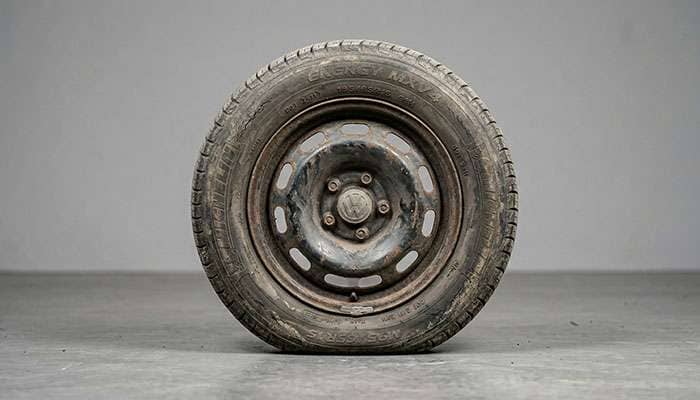
Here's where folks get fooled. They look at their stored tires, see clean rubber with no visible cracks, and think they're golden. These are the things a garage doesn't protect against — and every one of them can still take down a 10-year-old tire:
Our article on how to store wheels and tires covers best-practice storage for anyone trying to preserve tires they plan to use in the near future. If those tires have already been sitting 10 years, though, the prevention ship has sailed.
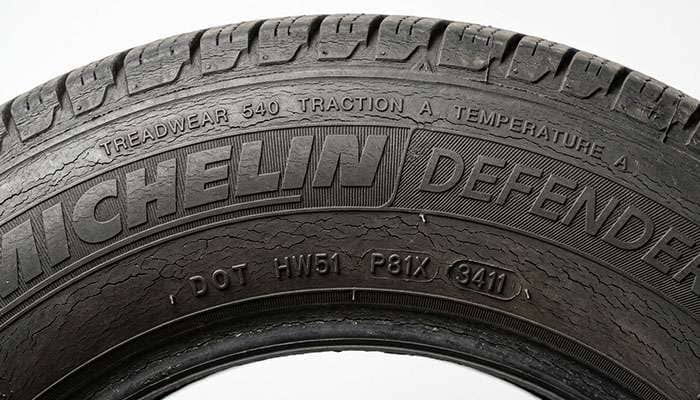
If somebody walks into my shop with a set of older stored tires and asks me what I think, here's the check I'd run. You can do the first five yourself in the driveway. The sixth one needs a shop with a tire machine.
If a tire passes every single one of these six checks, it might be worth a conversation. Might. In my experience, 10-year-old stored tires fail at least one of these checks about 80% of the time — and it only takes one failure to take the tire out of service.
I've had this conversation enough times to know there are a few situations where pushing past the 10-year line isn't crazy. Limited scenarios, understand — not green lights, just lower-risk use cases where the consequences of failure are smaller:
Notice what's missing from that list: anything involving highway speeds, family passengers, heavy loads, or long distances. None of those are acceptable uses for tires past the 10-year mark. Period.
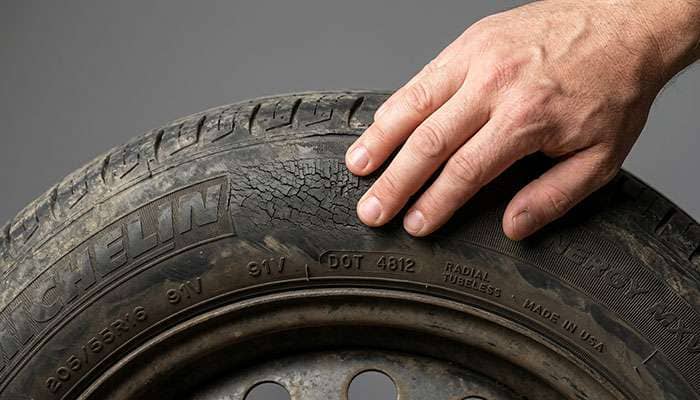
Let me be blunt. Here are the situations where I won't even entertain the conversation, no matter how clean the tires look:
The price difference between new tires and old ones doesn't come close to the cost of a single failure. I've seen old tires take out front fenders, rocker panels, and occasionally a lot more than sheet metal. Not worth it.
If you bring 10-year-old tires to most reputable shops, you're going to get told no. That's not the shop being lazy or trying to sell you new rubber. It's liability.
Shop insurance policies almost universally include age-of-tire clauses. If a shop mounts a tire past 10 years old, and that tire later fails, the shop owns the liability — even if the failure had nothing to do with the mounting work. We're talking potentially seven-figure exposure if somebody gets hurt. No honest shop owner is going to take that risk for a $25 mount-and-balance job.
Some shops will do it if you sign a liability waiver. Some won't even then. If you find a shop that'll mount 10-year-old tires with zero questions asked, that might actually be a sign to take your business somewhere else — a shop that isn't careful about tires probably isn't careful about other things either.
For a fuller picture of how long tires actually stay serviceable, our guide on the shelf life of car tires covers the industry standards. If you're making the bigger decision about when to replace, when to replace car tires has the full picture.
Start with the DOT date code on the sidewall — if the tires are past 10 years old, they're out of service regardless of condition. If under 10 years, check the sidewall for cracks you can fit a fingernail into, look for flat spots by rolling the tire, inspect the bead for cracking, press the sidewall to feel if the rubber has any give left, and have a shop dismount the tire to check the inner liner. Any single failed check means don't use the tire.
Maybe, for low-speed use only — think garden trailers that never leave the property, or short runs under 30 mph. For highway-speed trailers hauling valuable loads like cars, boats, or livestock, 10-year-old tires are not acceptable. The combination of heavy loads and highway speeds is exactly what old tires can't handle.
Even under ideal storage — cool, dark, dry, climate-controlled, bagged — rubber still oxidizes at the molecular level. The 10-year industry limit accounts for best-case storage. A perfectly stored 10-year-old tire may be in better condition than an average one, but tire manufacturers still recommend replacement. "Perfect storage" doesn't override the chemistry.
Tire manufacturers base the 10-year figure on failure data for properly maintained tires under normal conditions. Automakers like Ford, Nissan, and Mercedes-Benz recommend replacement at 6 years because they're also factoring in warranty liability, inconsistent maintenance habits among typical drivers, and a desire for a conservative safety margin. If the vehicle automaker says 6 years, follow the automaker's recommendation — they know their vehicle's performance requirements better than a generic tire guideline does.
Legally, in most states, yes — there's no federal law against selling old tires between private parties. Ethically, you should disclose the age. Commercially, most reputable tire retailers and shops won't accept or resell 10-year-old tires due to liability concerns. If you're looking to move them along, selling them as display-only or decoration (for garden projects, swing sets, or static show cars) is a more honest path than putting them on the road for someone else to deal with.
Absolutely. Spare tires age on the exact same clock — and they're often forgotten for years, which makes them the oldest tire on most vehicles. Bridgestone and Michelin both specifically call out that 10-year-old spares should be taken out of service even if they appear unused. Check your spare's DOT code the next time you're looking for your jack.