
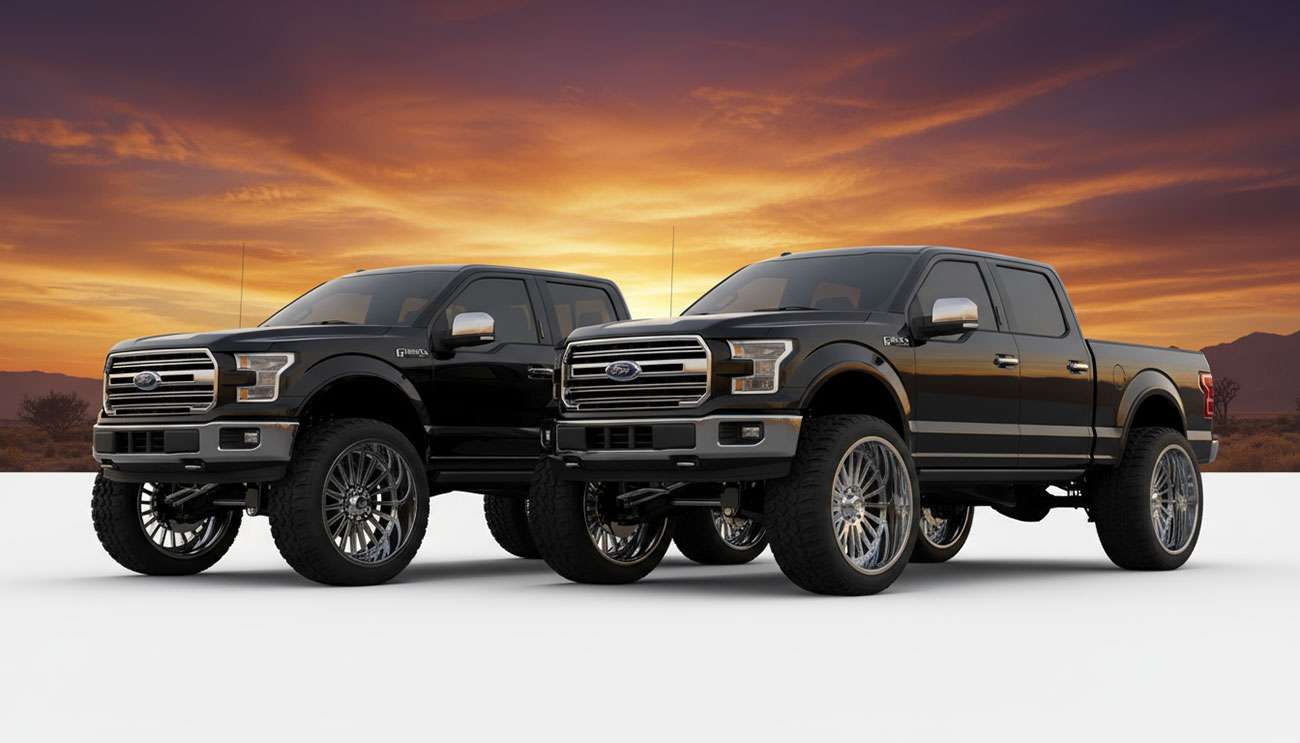
Huge rims on trucks deliver real performance benefits that go far beyond appearance. Larger wheels create expanded contact patches with the road surface, giving your truck better stability and control when you need it most. This improved road contact makes trucks feel more planted and secure, especially during highway driving or when carrying heavy loads.
The practical advantages of bigger wheels extend well into load-bearing capabilities. Larger rims support tires that can handle significantly more pressure, which directly translates to increased weight capacity for hauling cargo or pulling trailers. When you're loading up your truck for work or recreation, this enhanced load support becomes essential for safe operation.
Ground clearance represents another major advantage of oversized wheels and tires. Your truck gains the ability to clear obstacles like rocks, curbs, and rough terrain without scraping the undercarriage. This clearance boost proves valuable whether you're navigating city parking or heading off-road for weekend adventures.
Truck enthusiasts choose massive wheels because they deliver both performance improvements and that commanding presence that turns heads. The combination of enhanced capabilities and distinctive styling makes this modification popular among drivers who want their trucks to perform as impressively as they look.
We'll break down exactly why truck owners invest in larger wheels, covering both the benefits you'll gain and the trade-offs you should consider before making this upgrade.
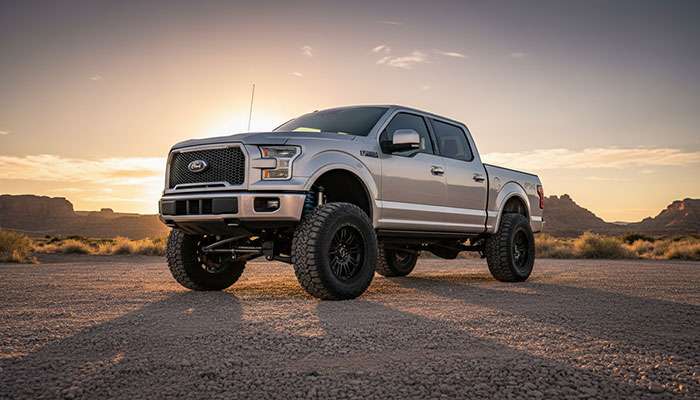
Truck owners invest in massive wheels for reasons that combine practical performance with undeniable visual impact. Understanding these motivations helps explain why this modification remains consistently popular across different truck applications.
The visual transformation achieved with larger wheels drives many purchase decisions. Bigger wheels fill out wheel wells completely, creating that commanding road presence that stock wheels simply cannot match. Whether you're building an aggressive off-road setup with suspension lifts, crafting a clean street performance look, or simply upgrading a stock truck's appearance, larger wheels provide the muscular profile that defines serious truck styling.
Custom wheel options offer extensive personalization choices:
Materials ranging from lightweight aluminum to durable steel construction
Finishes including polished chrome, matte black, and specialty coatings
Design patterns from classic spoke layouts to modern mesh styles
The right wheel selection completely changes how others perceive your truck. A well-chosen set communicates serious capability even when parked, giving your vehicle the stance that speaks to both style and performance intentions.
Off-road enthusiasts find that larger wheels paired with appropriate tires deliver measurable performance improvements. Increased wheel diameter provides the ground clearance necessary for tackling larger obstacles without undercarriage damage, while improving approach and departure angles that prove critical when climbing over rocks or navigating steep terrain.
Quality off-road wheels change vehicle dynamics once pavement ends. They enable drivers to run lower tire pressures safely without risking tire bead separation, particularly when using beadlock designs. This capability matters because reducing tire pressure by 25-30% can increase off-road traction by up to 40% according to the Rubber Manufacturers Association.
Larger wheels affect towing capabilities differently than many assume. Increased wheel diameter can actually decrease towing efficiency rather than improve it. For optimal towing performance, staying close to stock diameter with E-rated tires provides the sidewall stiffness and load rating needed for heavy-duty applications.
Properly selected larger wheels do support enhanced load-bearing capabilities. The numbers demonstrate real differences – 17-inch rims support a load rating of 4,080 lbs at 65 psi, compared to just 2,910 lbs at 35 psi for 15-inch rims. This increased capacity makes a practical difference when hauling heavy cargo or equipment.
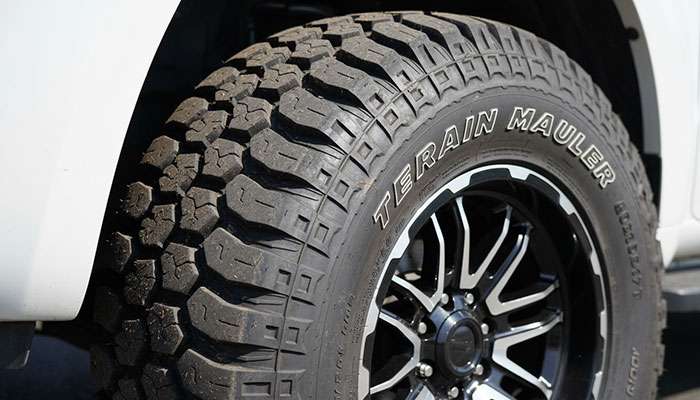
Upgrading to bigger rims and tires transforms how your truck performs across multiple driving scenarios. These modifications deliver measurable improvements that truck owners notice immediately behind the wheel.
Wider tires accommodate larger contact patches that dramatically improve grip performance. The expanded rubber-to-road surface area provides superior traction on wet, muddy, or snow-covered roads. Off-road enthusiasts particularly benefit when navigating challenging terrain like dirt, sand, or loose rocks.
The science behind this improvement is straightforward – more tire surface contacting the ground means better force distribution and grip. Truck owners hauling heavy loads experience enhanced stability because the increased contact area prevents tire slippage under load.
Larger wheel diameter creates space for upgraded brake components while improving steering precision. The wider contact patch delivers more precise steering response and enhanced stability during high-speed maneuvers. Performance brake kits fit easily within larger wheels, significantly improving stopping power while allowing better airflow around brake components.
This enhanced cooling reduces heat buildup during hard braking – essential for trucks carrying heavy loads. The combination of improved brake cooling and better control makes bigger wheels valuable for safety-conscious truck owners.
Higher ground clearance stands out as one of the most practical advantages of larger wheels. The increased clearance protects the undercarriage when driving over obstacles like rocks, logs, or rough terrain. Off-roaders gain improved approach and departure angles, making it easier to navigate steep inclines without scraping the vehicle's front or rear.
This clearance benefit extends beyond off-road use. Urban drivers appreciate the advantage when dealing with deep potholes, speed bumps, and parking barriers. The extra ground clearance also improves water fording capability, allowing safe passage through deeper puddles and flooded areas.
Larger wheels transform your truck's appearance dramatically, creating visual impact that sets your vehicle apart. This esthetic enhancement goes beyond simple looks – it reflects personal style and showcases attention to detail. The truck community recognizes well-executed wheel upgrades, making them conversation starters at shows and meetups.
Customization options multiply with larger wheels. You gain access to aggressive tire treads, specialized finishes, and unique spoke patterns unavailable in smaller sizes. These choices let you match wheels to your specific vision, whether that's hardcore off-road capability or refined street presence.
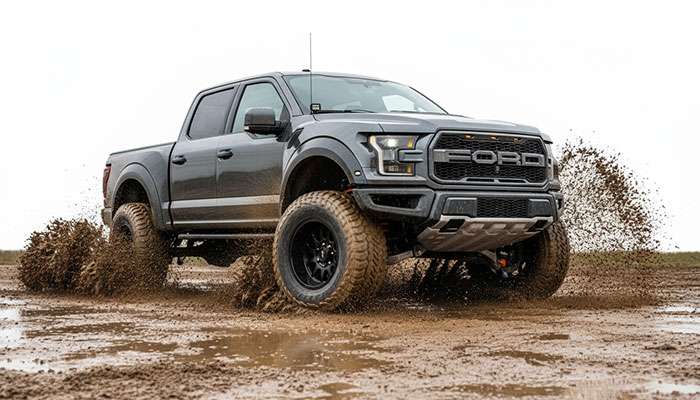
While larger wheels deliver appealing benefits, they create significant challenges that affect daily driving and long-term vehicle maintenance. Understanding these trade-offs helps you make realistic decisions about wheel upgrades.
Oversized wheels consistently decrease fuel economy through multiple mechanisms. The increased weight forces your engine to work harder during acceleration and maintain speed. Larger tire diameter creates additional wind resistance, while higher rolling resistance from wider tires demands more energy to maintain rotation.
Fuel economy drops typically range from 1-3 mpg depending on wheel size increase. These reductions compound quickly – a truck averaging 20 mpg that drops to 18 mpg will burn an extra 111 gallons per year at 10,000 miles of driving. At current fuel prices, this represents hundreds of dollars in additional fuel costs annually.
Larger wheels create rotational mass that your engine must overcome during acceleration. This added weight translates directly to slower acceleration times, particularly noticeable when merging onto highways or passing other vehicles. The relationship between wheel size and acceleration performance follows physics – larger radius means more torque required to achieve the same angular acceleration.
Performance degradation affects all driving situations, from stoplight acceleration to highway passing power. Trucks with automatic transmissions may experience delayed shifts as the transmission computer struggles to adapt to the changed wheel size. Manual transmission trucks require more engine RPM to achieve the same speeds, forcing drivers to work through gears more aggressively.
Oversized wheels place additional stress on every component from wheel bearings to differential gears. The increased unsprung weight forces suspension components to work harder controlling wheel movement, accelerating wear on shocks, springs, and control arm bushings. This premature wear shows up as reduced ride quality and increased maintenance costs.
Drivetrain components face similar challenges. Larger wheels change the effective gear ratio, forcing the transmission and differential to operate outside their optimal efficiency ranges. This added stress shortens the service life of CV joints, U-joints, and differential bearings. Many truck owners discover these costs only after components fail prematurely.
Installing larger wheels without recalibration creates measurement errors in your speedometer and odometer. The speedometer reads lower than your actual speed because it calculates based on wheel rotations – larger wheels cover more ground per rotation than stock wheels. This discrepancy can result in speeding tickets when you believe you're driving at legal speeds.
Odometer errors affect vehicle maintenance scheduling and resale value. Your odometer shows fewer miles than actually traveled, causing you to miss scheduled maintenance intervals. This problem compounds over time – a 10% size increase results in roughly 10% odometer error. Most vehicles require a recalibration or programmer to correct these readings after wheel upgrades.
Larger wheels alter your truck's handling characteristics in ways that require adjustment. The increased rotating mass creates higher inertia, making quick directional changes more difficult. Steering response may feel sluggish compared to stock wheels, particularly during emergency maneuvers or parking situations.
Wider wheels change the scrub radius – the distance between where the steering axis intersects the ground and the center of the tire contact patch. Incorrect scrub radius leads to increased steering effort, irregular tire wear, and potentially dangerous instability during hard braking. Some trucks experience "tramlining," where the steering pulls toward grooves and ruts in the road surface.
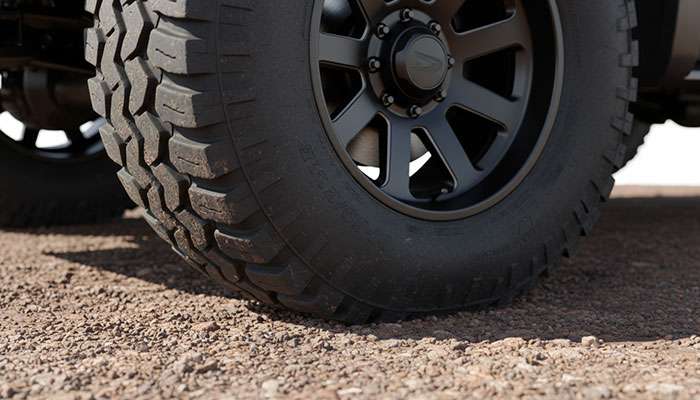
Selecting the right wheel size involves navigating technical factors that significantly impact your truck's performance and safety. These technical factors require careful evaluation before installing massive wheels on your truck. Getting these details right prevents costly mistakes and ensures your upgrade delivers both the performance and appearance you want.
Wider tires often last longer because their increased surface area distributes weight more evenly across the tread. This even distribution reduces concentrated wear points that cause premature tire replacement. However, tire longevity depends heavily on proper weight distribution—uneven loading will accelerate wear regardless of tire width. Wider tires also typically feature stronger sidewalls and deeper tread patterns, making them more durable for challenging off-road conditions.
We recommend following the 3% rule for stock trucks—new tires should be no more than 3% taller and 3% wider than factory specifications. Going beyond this limit usually requires suspension modifications. Most stock trucks accommodate 33-inch tires without rubbing issues, while 35-inch tires typically need at least a 2-inch lift kit. To determine your specific clearance limit, measure the distance between your current tire's edge and surrounding components with the steering wheel turned to full lock.
Oversized wheels place significant stress on your drivetrain components. The larger radius requires more torque to turn, forcing your transmission to work harder with each rotation. This additional strain primarily affects clutches and bands, generating excess heat that can eventually cause slipping and transmission failure. For safe operation with larger tires, consider re-gearing your differential. Calculate the ideal ratio by dividing your new tire diameter by the stock diameter, then multiplying by your current gear ratio.
Wheel offset plays a critical role in both fitment and performance. Positive offset (+) positions wheels deeper into the wheelwell, while negative offset (-) creates a wider stance with wheels extending outward. Factory trucks typically use high positive offset around +44mm, whereas aftermarket wheels often feature lower offset values. Incorrect offset creates several problems:
Interference with brake components (minimum 2-3mm clearance required)
Excessive stress on wheel bearings and suspension components
Altered steering response and handling characteristics
Potential rubbing against body panels during turning
At Performance Plus Tire, we help you find the right balance of style and performance with professional fitment guidance at Performance Plus Tire
The choice to install huge rims on trucks comes down to understanding what you want from your vehicle. Larger wheels deliver genuine performance benefits - better traction, improved stability, and enhanced ground clearance - that make them valuable for off-road driving and heavy-duty use. These advantages explain why so many truck owners make this upgrade despite the higher costs.
The trade-offs are real and measurable. You'll see reduced fuel economy, potentially slower acceleration, and increased wear on suspension components. The 3% sizing rule provides a safe starting point for upgrades, though many owners find that investing in proper lift kits opens up better wheel and tire combinations.
Your driving needs should guide this decision. Daily commuters face different requirements than weekend off-road enthusiasts or contractors who haul heavy equipment regularly. The key is matching your wheel choice to how you actually use your truck, not just how you want it to look.
At Performance Plus Tire, we understand that every truck owner has specific needs and preferences. Our selection includes options for every application, from highway cruising to serious off-road work. Whether you're looking for improved performance or that commanding presence on the road, we can help you find the right balance of style and capability.
Ready to upgrade your truck with the perfect set of rims and tires? Visit Performance Plus Tire for expert guidance and professional installation.
The decision to go with massive wheels remains personal, but making it with complete information ensures you'll be happy with the results. Truck owners who consider both benefits and drawbacks can confidently choose wheels that enhance their driving experience while meeting their practical needs.
Understanding the motivations and trade-offs behind oversized truck wheels helps you make informed decisions about this popular modification.
• Truck owners choose huge rims for enhanced visual appeal, improved off-road clearance, and better traction through wider contact patches with the road.
• Larger wheels provide measurable benefits including increased stability at highway speeds, superior braking performance, and higher ground clearance for obstacle navigation.
• Major drawbacks include reduced fuel efficiency, slower acceleration, increased wear on suspension components, and potential speedometer inaccuracies.
• Follow the 3% rule for safe upgrades: tires should be no more than 3% taller and wider than factory specs without requiring suspension modifications.
• Consider your driving habits before upgrading—highway commuters have different optimal wheel sizes than off-road enthusiasts who regularly tackle challenging terrain.
The decision ultimately comes down to balancing esthetic preferences with practical performance needs and understanding the long-term costs associated with this modification.
People often install large rims on trucks for improved style, enhanced off-road performance, and increased ground clearance. Bigger wheels can also provide better stability at high speeds and improved traction in various driving conditions.
Larger wheels typically reduce fuel efficiency due to increased weight, greater wind resistance, and higher rolling resistance. These factors combine to make the engine work harder, resulting in decreased miles per gallon.
You can generally increase wheel size by up to 3% without requiring suspension modifications. For many stock trucks, 33-inch tires fit without issues, while 35-inch tires usually need at least a 2-inch lift kit.
Wider tires often provide better traction, especially in off-road conditions. The increased surface area creates a larger contact patch with the ground, improving grip on various surfaces like dirt, mud, sand, or snow.
Installing oversized wheels can lead to reduced acceleration, increased wear on suspension components, potential speedometer inaccuracies, and handling issues. It may also necessitate upgrades to the braking system and affect the truck's overall performance.



