
I've sold custom wheels since 1968. And in that time, I've had more customers call me to replace stolen wheels than I want to count. The first question they always ask after the replacement order is: "Should I get wheel locks this time?" The second question — the one they should have asked first — is: "Do wheel locks actually work?"
Here's the straight answer from someone who's seen this play out hundreds of times.
Yes, a determined thief can get past wheel locks. No, that doesn't mean wheel locks are worthless. Those two statements aren't contradictory — they just mean you need to understand what wheel locks actually do and what they don't do.
Wheel locks are a deterrent, not a guarantee. They make your wheels harder and slower to steal. A thief who encounters wheel locks has to make a decision: spend extra time and make extra noise defeating the lock, or move on to the next car that doesn't have them. Most wheel theft is a crime of opportunity — guys cruising through parking lots and neighborhoods looking for easy targets. For that type of thief, wheel locks work. He sees the lock, he moves on.
But a professional crew that's filling orders for specific wheels? They have the tools, the skills, and the motivation to defeat any wheel lock on the market. No lock stops a pro. The good news is that professional wheel theft crews are relatively rare compared to opportunistic thieves. For most people in most situations, a quality set of wheel locks significantly reduces your risk.
Understanding how thieves operate helps you understand what actually protects your wheels. Here's what I've learned from customers, law enforcement contacts, and the insurance claims we've helped process over the decades:
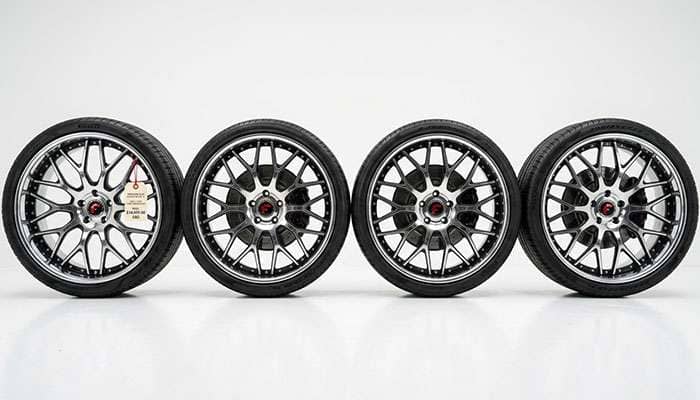
It's fast. An experienced crew can strip all four wheels off an unprotected vehicle in under 5 minutes. Two guys with a battery-powered impact wrench, a portable jack, and cinder blocks to set the car on — that's the entire toolkit. Five minutes, four wheels, $2,000-$5,000 in untraceable merchandise. That's why it's so common.
They target specific vehicles. Chargers, Challengers, Camaros, F-150s with aftermarket wheels, Jeep Wranglers, and any truck or SUV with custom wheels that have resale value. Off-road wheels on lifted trucks and premium brands like Fuel are especially hot targets. The wheels go on Craigslist, Facebook Marketplace, or directly to a buyer who placed an order. They're untraceable — there's no VIN on a wheel.
They work at night. Dark streets, apartment complex parking lots, hotel parking lots during events, and anywhere a car sits overnight without surveillance. Daytime theft happens but it's rare — too many witnesses.
They move on from difficulty. This is the most important point. Most thieves are scanning multiple targets. If your car presents a problem — wheel locks, alarm, well-lit area, cameras — they'll skip it and take the easier target next to you. You don't have to be theft-proof. You have to be harder to steal from than the car parked beside you.
I'm not writing a how-to guide for criminals here — this information is widely known and understanding it helps you buy better locks. Here are the methods thieves use on standard wheel locks:
The hammer-on socket method. A thief hammers a slightly undersized socket onto the locking lug nut. The socket bites into the pattern and grips tight enough to turn the lock with a breaker bar. This defeats cheap wheel locks with shallow patterns in about 30 seconds. It's loud, but it works on most budget locks.
The four-and-snap method. If only one lug per wheel is a lock (which is the standard configuration from most manufacturers), the thief removes the four regular lugs, jacks the car up, places a block under the wheel, and drops the car. The impact shears the single locking stud off the hub. Brutal, but effective against any one-lock-per-wheel setup.
Universal lock removal tools. These exist commercially. They're sold as tools for mechanics and roadside assistance when a customer loses their wheel lock key. Any thief who invests $30-$50 in one of these tools can remove most standard wheel locks.
None of these methods work quickly or quietly on high-quality wheel locks — which is why the type of lock you buy matters enormously.
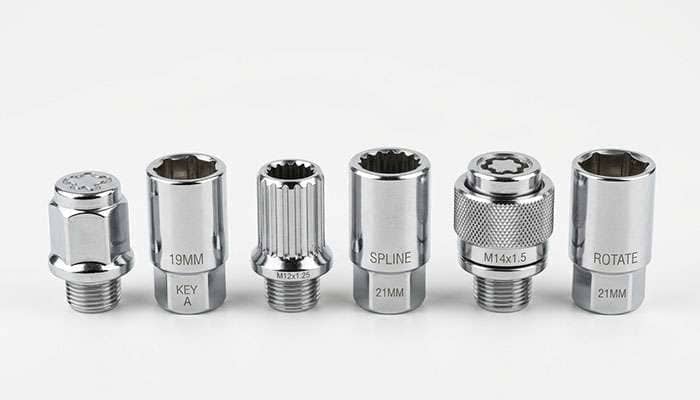
Not all wheel locks are equal. Here's how the main types rank from easiest to hardest to defeat:
These are the basic locks that come from the dealer or in a $20 aftermarket kit. They have a unique pattern machined into the head that matches a key socket. The problem: most manufacturers only produce a limited number of patterns (some as few as 16 different keys). A thief with a $50 master key set can open most of them. And the hammer-on socket method works on nearly all of them because the pattern is shallow. If you're spending $20-$30 on wheel locks, you're getting this type. It's better than nothing, but not by a wide margin.
Spline drive locks replace the external pattern with a fine-tooth spline pattern recessed into the center of the lug. They're harder to grip with a hammer-on socket because the pattern is internal, not external. McGard and Gorilla make quality spline drive locks. Better than standard keyed, but still defeatable with a purpose-built extractor tool.
These locks have a free-spinning outer collar that rotates independently of the lug nut. If a thief tries to grip the collar with pliers, a pipe wrench, or a hammer-on socket, the collar just spins without turning the nut. The actual locking mechanism is recessed below the collar. McGard's Ultra High Security locks use this design. They're the hardest single-lock solution to defeat without the specific key.
Instead of replacing one lug per wheel with a lock, full-set systems replace every lug on every wheel with a locking lug. This eliminates the four-and-snap method entirely because there are no standard lugs to remove first. Gorilla Guard and McGard both offer full-set options. Five locking lugs per wheel means five problems for the thief instead of one — dramatically increasing the time and noise required. This is the single most effective wheel lock configuration available.
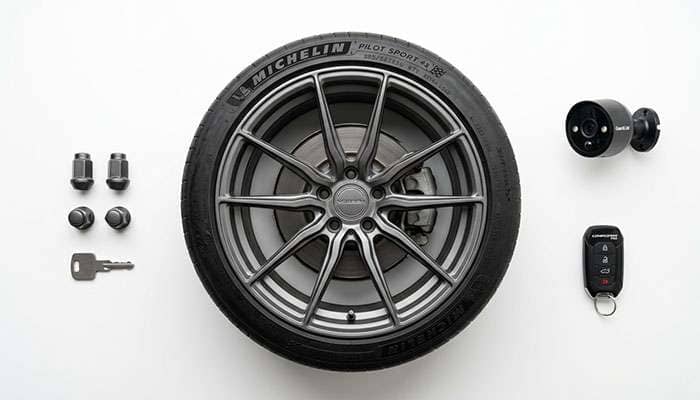
No single measure stops all thieves. The approach that actually works combines multiple layers so that each one adds time, noise, and risk for the thief:
Layer 1: Quality wheel locks on every lug. Replace all lug nuts with locking lugs — not just one per wheel. Gorilla Guard full-set locking lugs cost $60-$100 for a complete set and eliminate the four-and-snap bypass. This is the single most cost-effective layer.
Layer 2: Park smart. Well-lit areas with foot traffic and security cameras. When parallel parking, curl your wheels to 45 degrees so the inner fender blocks access to the lugs. Park close to the curb so the curb-side wheels are inaccessible. At home, park in the garage if you have one.
Layer 3: Alarm with tilt sensor. Many aftermarket alarm systems offer tilt sensors that trigger the alarm when the vehicle is jacked up. This turns a silent crime into a noisy one — exactly what thieves want to avoid.
Layer 4: Wheel cameras or GPS trackers. Visible security cameras (even decoy ones) deter opportunistic thieves. GPS trackers hidden in the wheel well can help recover stolen wheels — though by the time law enforcement acts, the wheels are often already sold. The camera's real value is deterrence.
Layer 5: Insurance. Your comprehensive auto insurance policy covers wheel theft (minus your deductible). If you're running $3,000+ worth of custom wheels, confirm your policy covers aftermarket parts at replacement value, not depreciated value. Document your wheels with photos, receipts, and serial numbers when applicable.
Stack three or more of these layers and you've made your wheels harder to steal than 95% of the vehicles around you. That's the goal — not perfection, but relative difficulty.
If it happens despite your precautions:
File a police report immediately — you need it for insurance. Document everything with photos of the vehicle on blocks or cinder blocks. Contact your insurance company and file a comprehensive claim. Do not drive the vehicle or attempt to lower it off the blocks — you'll damage the brake rotors, suspension, and body. Call a tow truck to transport the vehicle on a flatbed. Then call us at 888-926-2689 — we can build a replacement wheel and tire package and ship it fast so you're not sitting on blocks for weeks. Browse our truck wheel and tire selection or custom wheels to get your replacement rolling.
Dealer wheel locks are typically standard keyed pattern locks — the easiest type to defeat. Dealers often charge $100-$400 for a set that you can buy aftermarket for $20-$40. They're better than nothing, but they provide minimal protection against anyone with a universal removal tool or a hammer-on socket. If you want real security, skip the dealer option and invest in a full-set locking lug system from Gorilla Guard or McGard's rotating collar locks. You'll spend less money and get significantly better protection.
A basic set of keyed locking lugs (one per wheel) costs $20-$50. A set of McGard rotating collar locks costs $40-$80. A full-set Gorilla Guard system that replaces every lug on every wheel costs $60-$120 depending on your vehicle's lug count and thread size. Given that a set of stolen custom wheels can cost $2,000-$5,000+ to replace, even the most expensive lock system is a trivial investment. We recommend the full-set approach — it's the only configuration that eliminates the four-and-snap bypass method.
If it's an OEM lock from the dealer, you can usually order a replacement key using the code number printed on the storage case or bag. If you've lost the code, the dealer may be able to look it up by VIN. For aftermarket locks, contact the manufacturer with your key code for a replacement. If neither option works, a professional tire shop can remove the locks using a specialty extraction tool — expect to pay $50-$100 for the service. Keep your wheel lock key in the glovebox or with your spare tire kit, and write down the key code and store it separately (phone photo works) so you can order a replacement if needed.
Vehicles with expensive, high-demand wheels and tires are the primary targets. In our experience, the most commonly targeted vehicles include Dodge Chargers and Challengers (especially Hellcat and Scat Pack trims), Chevrolet Camaros, Ford Mustangs, Jeep Wranglers with aftermarket wheels, full-size trucks with large aftermarket wheel and tire packages, and any vehicle with premium OEM wheels that hold resale value (BMW, Mercedes, Cadillac Escalade). If your wheels are worth more than $500 per corner and your vehicle is regularly parked in unsecured areas, invest in serious wheel security.
Yes — comprehensive auto insurance covers wheel and tire theft, minus your deductible. However, standard policies may only cover factory OEM wheels at depreciated value. If you've installed aftermarket custom wheels worth more than the OEM set, you may need to add a custom parts and equipment endorsement to your policy to ensure full replacement coverage. Document your wheels with photos, purchase receipts, and brand/model information at the time of installation. This makes the claims process significantly faster and reduces the chance of a payout dispute.
Quality wheel locks installed to the correct torque specification will not damage your wheels. The locking lug seats against the wheel's lug seat area exactly like a standard lug nut. The key concern is over-torquing, which can strip the stud or distort the wheel's lug hole — but this is true of any lug nut, not specific to locks. When installing wheel locks, use a torque wrench set to your vehicle's specified lug torque (typically 80-100 ft-lbs for passenger cars, 120-140 ft-lbs for trucks). Never use an impact wrench on wheel locks — the sudden torque can damage the lock pattern and make it difficult to remove with the key.



