
Custom wheels are a popular way to upgrade both the look and performance of your vehicle. Wheels and tires are your car's only contact points with the ground. Knowing what to ask when buying wheels can make the difference between a purchase you'll love and one you'll regret.
We carry the best selection of custom wheels and understand that choosing the right wheels for your vehicle requires expert guidance. Whether you're looking to enhance your vehicle's appearance or improve performance, quality wheels represent a significant investment in your ride. Understanding proper fitment is crucial when selecting custom wheels. The wheel and tire combination must always clear the braking components, suspension parts, and the body of your vehicle.
Most vehicles come from the factory with wheels that fit precisely around the hub. When selecting aftermarket or custom wheels, you need to consider several important factors including material type, size compatibility, and performance requirements. Steel wheels offer durability and lower cost, while aluminum wheels are lighter and enhance fuel economy.
At Performance Plus Tire, we have the expertise to help you make the right wheel selection for your vehicle and driving needs. Our knowledgeable staff can guide you through the selection process, ensuring you ask the right questions and check the proper specifications. Ready to find those perfect wheels for your ride?
Understanding custom wheels is important before making a purchase. The fundamental aspects of wheel selection will save you time and prevent costly mistakes when choosing the right wheels for your vehicle.
Proper fit is crucial when choosing custom wheels for your vehicle. Three vital areas to consider include overall diameter, offset and backspace, and proper mounting. The wheel and tire combination must always clear the braking components, suspension parts, and body of your vehicle.
Width compatibility is equally important to consider. Tire manufacturers typically recommend a wheel that is 2-3 inches narrower than the tire. This helps keep the tire on the wheel at low air pressure—though too narrow a wheel might cause the tire to crown, leading to accelerated tread wear in the center.
Load rating represents another essential factor. Each wheel has a specific rating indicating the maximum weight it can safely support. Exceeding these ratings can lead to damage, bent wheels, and dangerous driving conditions.
Despite common misuse of these terms, they refer to different wheel components:
Rim: Just the outer edge of the wheel that holds the tire in place. The tire's bead lays against this part.
Wheel: The entire circular unit with spokes, lug nuts and other parts used to attach the tire to the vehicle.
Hubcap: A decorative disk that covers the center of a wheel, including the lug nuts and bolt assembly.
Center cap: Covers only the absolute center of the wheel where lug nuts are located.
Wheel cover: Covers the entire wheel surface and can look like actual wheels with imitation spokes.
Your choice between steel and alloy wheels depends on your specific driving needs and priorities:
Steel Wheels:
Made with an alloy of iron and carbon
More durable and easier to repair
Heavier but more resistant to impact cracks
Generally less expensive than alloy wheels
Better for winter driving and off-road conditions
Limited in design options
Alloy Wheels:
Built with a blend of aluminum and nickel
Lighter weight improves fuel efficiency and handling
Better heat dissipation for improved brake performance
Available in many designs and finishes
More expensive but offer better performance
Less resistant to cracking and bending
Steel wheels work best for primarily off-road or work site use. For street driving with an emphasis on performance and style, alloy wheels offer superior benefits.
When it comes to custom wheels, getting the fitment right is critical for both safety and performance. Understanding wheel fitment requires knowledge of several technical specifications that ensure your wheels will work properly with your vehicle.
The bolt pattern determines how your wheels attach to your vehicle. This measurement appears as two numbers (like 5x114.3), where the first number indicates the number of lug holes and the second shows the diameter of the circle they form in millimeters. Different vehicles use different bolt patterns, even among various trim levels of the same model.
Center bore is equally important for proper wheel fitment. The center bore is the machined opening in the middle of your wheel that centers it on the vehicle's hub. Hub-centric wheels, where the bore matches your vehicle's hub precisely, provide the best performance by reducing vibration and ensuring proper wheel alignment.
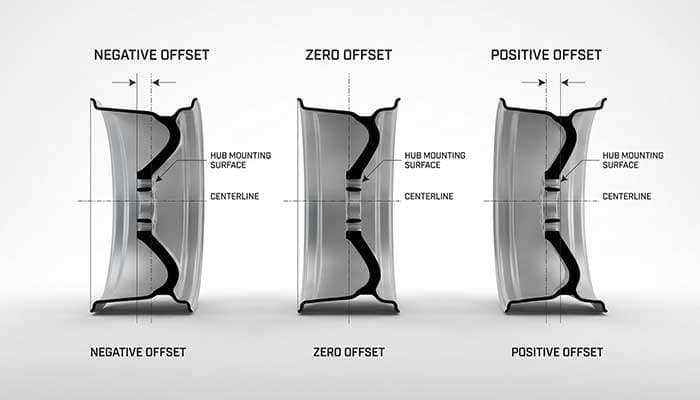
Wheel offset measures the distance between the mounting surface and the wheel's centerline in millimeters. There are three types of offset to consider:
Positive offset: Mounting surface sits closer to the front/face of the wheel
Zero offset: Mounting surface aligns with the wheel's centerline
Negative offset: Mounting surface sits toward the back of the wheel
Backspacing measures the distance from the mounting surface to the wheel's back lip in inches. Both measurements directly impact your vehicle's stance and handling characteristics. While less backspacing creates an aggressive outward stance, too little backspacing can strain suspension components and negatively affect handling.
Load rating indicates the maximum weight each wheel can safely support. To determine your vehicle's requirements, take your vehicle's heaviest gross axle weight rating and divide by two.
Exceeding a wheel's load rating creates dangerous driving conditions including bent wheels and potential tire failure. This becomes particularly important when towing or carrying heavy cargo. Most passenger vehicles have load index values ranging from 70 to 110, which translates to capacity between 739 and 2337 pounds per wheel.
Always verify that wheel specifications match your vehicle's requirements for safe, reliable performance.
When it comes to selecting custom wheels, asking the right questions before you buy can save you from costly mistakes and ensure you get exactly what your vehicle needs. These key inquiries will help you make an informed decision.
Most vehicles manufactured after November 2014 come equipped with a Tire Pressure Monitoring System (TPMS). If your vehicle uses direct TPMS with sensors mounted inside the wheels, you need to verify that your new wheels can accommodate these sensors. Not all wheels are geometrically compatible with all TPMS sensors.
Ask the dealer if the wheels have been tested with your specific vehicle's TPMS model. This simple question can prevent frustration and additional costs down the road.
Original equipment lug nuts typically won't work with aftermarket wheels. You'll need proper installation hardware that's designed for your new wheels. Look for installation kits that include lug nuts that are heat-treated and chrome-plated for both strength and appearance.
Without the correct hardware, your new wheels won't mount safely to your vehicle. Make sure to ask what's included and what additional hardware you might need.
Used wheels can offer great value, but they require careful inspection before purchase. Here's what to examine:
Structural damage including cracks, bends, or dents
Bolt pattern that matches your vehicle specifications
Center bore clearance for proper fitment
Signs of previous repairs or damage
Wheel balance by performing a simple roll test on a flat surface
Cosmetic scratches are generally acceptable and won't affect performance, but any structural issues make wheels unsafe for use.
Quality wheel dealers stand behind their products with solid warranty coverage. Most reputable sellers offer lifetime structural warranties for new wheels. Finish warranties typically last 12 months.
Return policies vary between dealers, with many offering 30-day return windows. Some may charge restocking fees. Always ask about these policies before making your purchase to protect your investment.
Our wheels come with comprehensive warranty coverage to give you confidence in your purchase. We believe in providing excellent customer service and are committed to ensuring your complete satisfaction.
Finding the perfect wheels depends on making smart choices about where you shop and how they're installed. These decisions directly impact both your satisfaction and the long-term performance of your investment.
Online wheel shopping provides significant advantages over traditional retail stores. Online retailers operate with lower overhead costs, passing savings directly to customers. We stock over 80 different tire brands and 60+ aftermarket wheel brands, vastly outpacing local shops' inventory. Most online orders arrive within 2-4 business days, making convenience comparable to in-store purchases.
Visiting physical stores allows you to see wheel options on vehicles similar to yours at Wheel Discovery Centers. This hands-on approach helps you picture the final result before making a purchase decision.
Used wheels can save substantial money, often costing a fraction of new wheels. However, careful inspection remains essential. Always examine used rims thoroughly for cracks, bends, rust, and balance issues. Purchasing from reputable dealers rather than private sellers provides additional security through warranties and guarantees.
If you're considering used wheels, look for wheels that are durable and strong enough to handle your driving conditions. You may also want to consider the age of the wheels, as older wheels can affect your vehicle's performance.
Professional installation ensures wheels are properly balanced, aligned, and securely mounted. Experts use specialized equipment including high-precision mounting tools and balancing machines unavailable to most vehicle owners. At Performance Plus Tire, we have experienced technicians who can install your custom wheels with precision and care. We use state-of-the-art equipment and techniques to ensure that your wheels are installed correctly and perform at their best.
Professional installation typically results in longer wheel life as the risk of premature wear is significantly reduced.
Visit Performance Plus Tire for a wide selection of quality wheels and professional installation services.
Choosing the right wheels for your vehicle involves understanding key specifications and asking the right questions before you buy. Understanding specifications like bolt patterns, offset, and backspacing will save you from costly mistakes and ensure optimal performance. Knowing the difference between steel and alloy wheels helps you choose based on your specific driving needs rather than just appearance.
Before making your final decision, always check compatibility with your vehicle's TPMS system and verify what hardware comes with your new wheels. Used wheels might seem budget-friendly, but they require thorough inspection for structural integrity. Professional installation proves essential for proper balancing and alignment, extending the life of both your wheels and tires.
Remember that wheel selection affects not just your vehicle's appearance but also its handling, fuel efficiency, and overall safety. Take your time when researching options and never compromise on quality or proper fitment.
At Performance Plus Tire, we are confident that we can provide you with the perfect set of wheels for your vehicle at a price you can afford. Our experienced technicians can install your custom wheels with precision and care, ensuring that your wheels are installed correctly and perform at their best. Ready to find the perfect wheels for your vehicle? Browse our extensive collection at Performance Plus Tire and get expert advice on your purchase.
This guide has equipped you with the knowledge to make an informed decision. The right wheels can improve the appearance of your vehicle and make it stand out from the crowd while ensuring safety on the road. Your perfect set of wheels awaits – just make sure they're the right fit in every way that matters.
Understanding wheel specifications and asking the right questions before purchasing can save you from costly mistakes and ensure optimal vehicle performance.
Verify fitment specifications first: Check bolt pattern, center bore, offset, and load rating to ensure wheels are compatible with your vehicle's suspension and braking components.
Ask about TPMS compatibility and hardware: Confirm wheels work with your tire pressure monitoring system and include proper lug nuts for safe installation.
Choose material based on driving needs: Steel wheels offer durability for off-road use, while alloy wheels provide better performance and fuel efficiency for street driving.
Inspect used wheels thoroughly: Check for structural damage, cracks, and proper balance before purchasing to avoid safety risks and premature wear.
Invest in professional installation: Proper mounting, balancing, and alignment by experts extends wheel life and ensures optimal vehicle performance and safety.
The right wheels enhance both appearance and performance, but proper fitment and installation are non-negotiable for safety and longevity.
Rims are the outer edge of the wheel that holds the tire. Wheels are the entire circular unit including spokes and lug nuts. Hubcaps are decorative disks that cover the wheel center, while wheel covers can cover the entire wheel surface.
Check the bolt pattern, center bore, offset, and load rating of the wheels. These specifications must match your vehicle's requirements for proper fitment. Also ensure the wheel and tire combination clears your vehicle's brakes, suspension, and body.
It depends on your needs. Alloy wheels are lighter, improve fuel efficiency, and offer better heat dissipation. Steel wheels are more durable, less expensive, and better for off-road or winter driving. Consider your driving habits and priorities when choosing.
Inspect used wheels for structural damage like cracks, bends, or dents. Check that the bolt pattern matches your vehicle, the center bore has adequate clearance, and there are no signs of previous repairs. Also, test for wheel imbalance by rolling on a flat surface.
Professional installation ensures wheels are properly balanced, aligned, and securely mounted. Experts use specialized equipment for precise mounting and balancing, which can extend the life of your wheels and tires, improve performance, and enhance safety.



