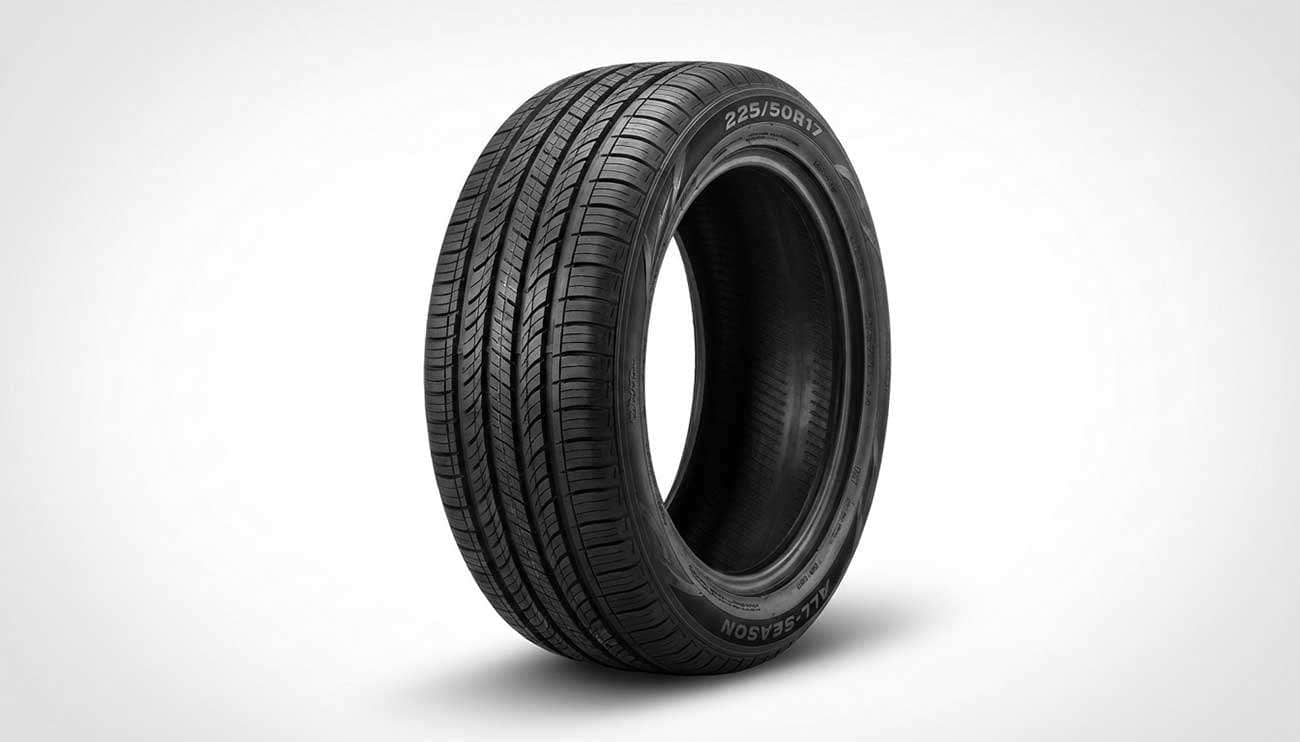
A 225/50R17 tire measures exactly 25.9 inches in diameter, 8.9 inches in tread width, and features a sidewall height of 4.4 inches. This popular tire size also delivers a circumference of 81.3 inches and completes 779 revolutions per mile.
Understanding these precise 225/50r17 diameter measurements proves essential for proper vehicle fitment and optimal performance. The 225/50r17 tire size follows a standardized code system that reveals exact dimensions in both metric and imperial measurements. Knowing what 225/50r17 means prevents costly fitment issues and maintains accurate speedometer readings.
We'll guide you through every measurement detail of this common tire size, from precise dimensions to vehicle compatibility requirements. Whether you're replacing worn tires or upgrading your current setup, our expert analysis will help you select the perfect 225/50R17 tires for your vehicle.
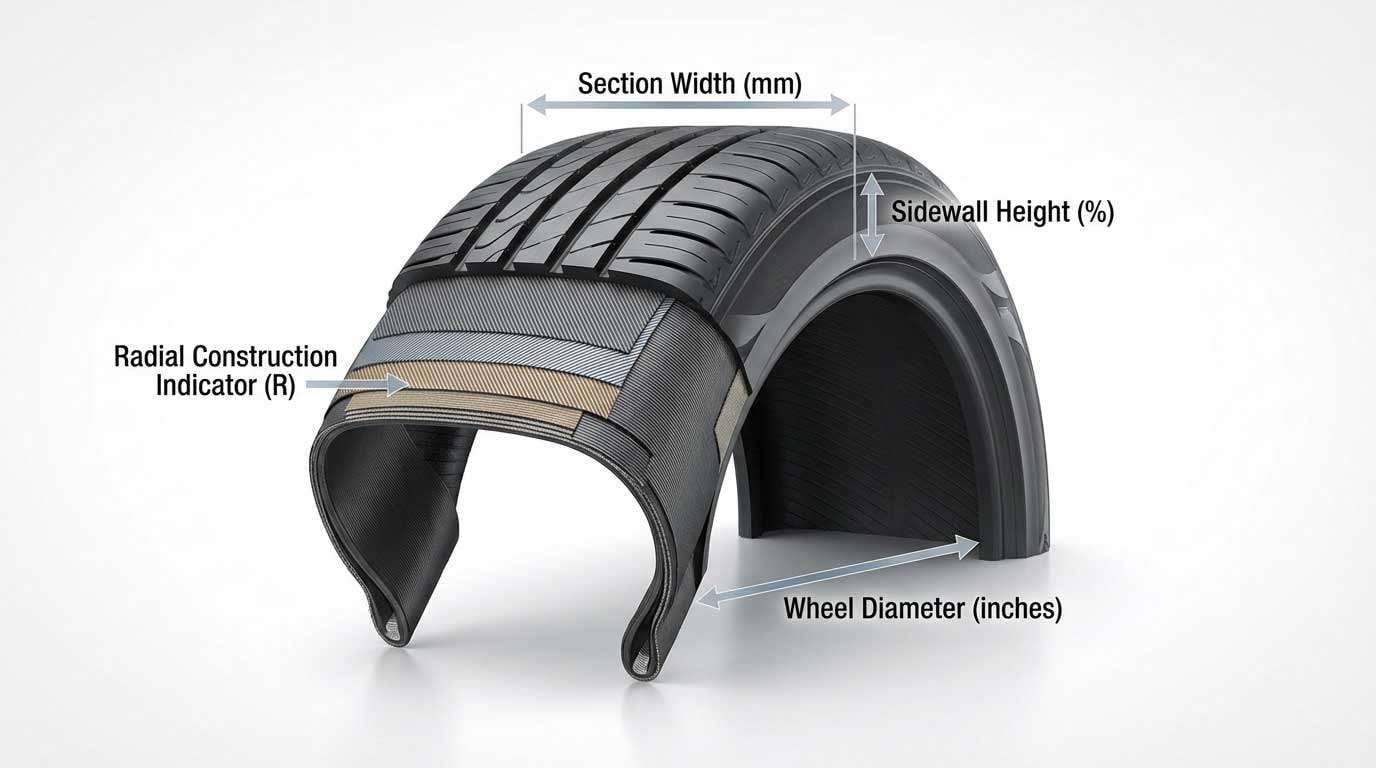
Understanding the exact measurements of a 225/50R17 tire helps you make better decisions about fitment, performance, and vehicle compatibility. Each dimension affects how your vehicle handles, rides, and performs on the road.
The overall diameter measures the complete height of your 225/50R17 tire when properly mounted. Most manufacturers specify this measurement between 25.86 and 25.9 inches. This critical dimension directly affects your vehicle's ground clearance, speedometer readings, and transmission shift points.
You calculate the overall diameter by adding the wheel diameter (17 inches) to twice the sidewall height. While this measurement stays consistent across most brands offering 225/50R17 sizes, variations of less than 0.1 inch can occur between specific tire models.
The 225 millimeter width converts to approximately 8.86-8.9 inches. This measurement represents the actual rubber contact patch that meets the road surface. The "225" in your tire code directly specifies this width in millimeters.
At 8.9 inches wide, this tire offers balanced performance characteristics. It's neither exceptionally wide nor narrow, providing a solid compromise between precise handling and comfortable ride quality. Additionally, this width accommodates rim widths from 6.0 to 8.0 inches, giving you flexibility when choosing wheels.
The sidewall height measures approximately 4.43-4.4 inches. This represents the distance from your wheel rim to the outer tread surface. The aspect ratio determines sidewall height—the "50" in 225/50R17 means the sidewall height equals exactly 50% of the tread width.
Here's the calculation: 225mm × 0.50 = 112.5mm (approximately 4.43 inches). This moderate profile delivers good road feedback while still absorbing impacts effectively.
Your 225/50R17 tire measures between 81.2 and 81.3 inches in total circumference. This measurement tells you how far your vehicle travels with each complete tire revolution. Circumference directly impacts speedometer accuracy and transmission performance.
When you replace tires with a different circumference, your speedometer readings will change. Manufacturers report slightly different measurements, with documented figures ranging from 81.24 inches to 81.3 inches depending on the specific tire model and brand.
A 225/50R17 tire completes approximately 779-804 revolutions per mile[71]. This specification indicates how many times your tire rotates to cover one mile of distance. The variation comes from slight differences in overall diameter and circumference between tire models.
This measurement affects fuel economy—tires with fewer revolutions per mile generally roll more efficiently. It's also crucial for speedometer recalibration when switching between different tire sizes.
These precise measurements work together to deliver the balanced performance characteristics that make 225/50R17 tires popular for many vehicle applications. Proper fitment ensures optimal handling, comfort, and fuel efficiency while maintaining compatibility with vehicles designed for this tire size.
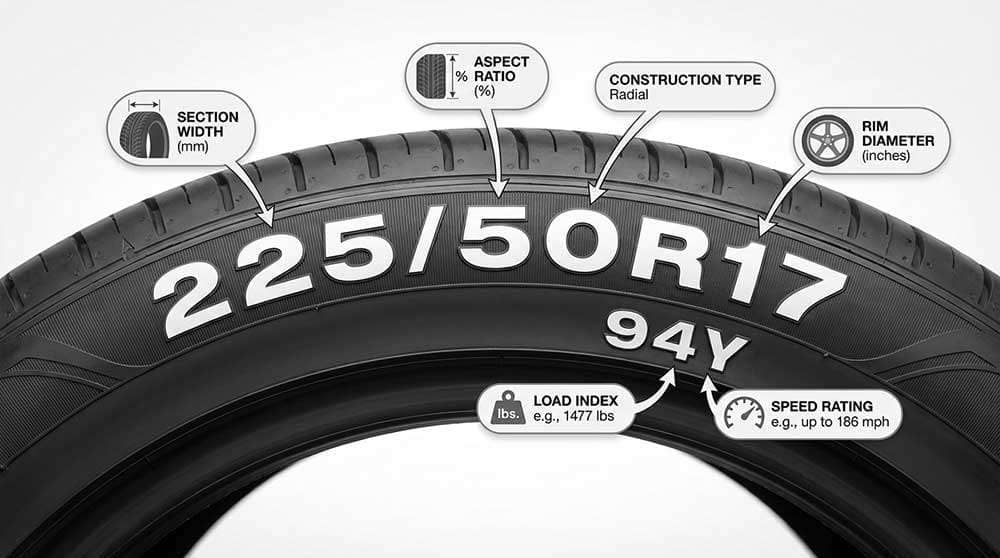
Tire size codes contain essential information about dimensions and construction specifications. The 225/50R17 designation uses a standardized system that reveals precise measurements and compatibility requirements. Breaking down each component helps ensure you select the right tire for your vehicle's specific needs.
The first number indicates the tire's section width measured in millimeters. The "225" in 225/50R17 specifies exactly 225 millimeters (approximately 8.86 inches) from sidewall to sidewall. This measurement represents the widest point when properly mounted on the recommended rim.
Width directly affects handling performance and road grip. Wider tires create a larger contact patch with the road surface, providing better traction and cornering stability. However, vehicles are engineered for specific tire widths based on suspension geometry, fender clearance, and intended performance characteristics.
The number after the slash represents the aspect ratio—the tire's profile height. The "50" means sidewall height equals exactly 50% of the tire's width. We calculate the actual sidewall height: 50% of 225mm equals 112.5mm or approximately 4.43 inches.
Aspect ratio determines tire appearance and performance characteristics. Higher ratios like 65 or 70 create taller sidewalls that provide better ride comfort and impact absorption. Lower ratios like 40 or 45 produce shorter sidewalls that deliver sharper handling response and sportier appearance.
The "R" indicates radial construction—the industry standard for modern passenger vehicles. Radial tires feature internal plies arranged perpendicular to the direction of travel, creating flexible sidewalls and a stable tread area.
This construction method delivers superior tread life, fuel efficiency, and ride comfort compared to older bias-ply designs. Nearly all passenger vehicle tires today use radial construction, making this designation standard across tire sizes.
The final number specifies the wheel diameter this tire fits—17 inches. This measurement matches the inner diameter of the tire to the outer diameter of your wheel rim. Using incorrect wheel sizes creates dangerous fitment problems and prevents proper tire mounting.
The 17-inch wheel diameter has become one of the most popular sizes for modern vehicles. It provides good balance between ride comfort, handling performance, and visual appeal while accommodating brake systems on many vehicle models.
Tire size directly impacts every aspect of your vehicle's performance. The right dimensions optimize handling, efficiency, and safety while maintaining proper vehicle dynamics.
Tire diameter changes directly affect speedometer accuracy. Your vehicle's computer calculates speed based on tire rotations, assuming the original diameter. When you install larger tires, your actual speed becomes higher than displayed. Smaller tires create the opposite effect—displaying faster speeds than reality.
For example, a 225/50R17 tire completing 779 revolutions per mile produces accurate readings when matched to factory specifications. Installing tires with different diameters requires speedometer recalibration to maintain accuracy and avoid potential speeding tickets.
Tire diameter directly affects engine RPM at highway speeds. Larger diameter tires reduce engine revolutions because each rotation covers more distance. Smaller tires force higher RPM since they travel less distance per rotation.
These RPM changes affect fuel economy, engine wear, and transmission shift points. Maintaining tire sizes close to factory specifications preserves optimal powertrain performance and manufacturer-intended fuel efficiency ratings.
Tire dimensions significantly impact fuel consumption through rolling resistance and rotational mass. Wider tires create more road friction, potentially reducing fuel economy. Taller tires change the effective gear ratio, affecting how efficiently your engine operates at cruising speeds.
The 225/50R17 size provides good fuel efficiency balance for most applications. Its moderate width creates acceptable rolling resistance while the 50-series profile maintains proper mechanical advantage for efficient highway driving.
Different tire sizes affect vehicle performance in specific ways. Understanding these variations helps you select the optimal size for your driving needs.
The 215/55R17 measures 26.31 inches diameter compared to the 225/50R17's 25.86 inches—a difference of 0.45 inches (+1.75%). Width varies from 8.46 inches to 8.86 inches respectively, creating a 0.39-inch increase (+4.7%). These changes create noticeable performance differences:
Circumference: 215/55R17 delivers 82.66 inches compared to 81.24 inches for 225/50R17
Sidewall Height: Drops from 4.66 inches to 4.43 inches (-4.9%)
Revolutions per mile: Rises from 766.53 to 779.95 (+1.8%)
When driving 65 mph with 215/55R17 tires, your actual speed reads 66.14 mph—a crucial factor for speedometer accuracy.
The key difference centers on sidewall height. The 225/45R17 features a shorter 3.99-inch sidewall against the 225/50R17's 4.43 inches (+11.1%). This variation produces:
Overall diameter change: 24.97 inches versus 25.86 inches (+3.5%)
Circumference difference: 78.45 inches compared to 81.24 inches
Shorter sidewalls deliver sharper handling but create a firmer ride. The taller 225/50R17 offers better bump absorption and enhanced comfort.
These tires share identical dimensions but differ in speed capabilities. The "Z" designation in 225/50ZR17 provides:
Higher speed rating—handles speeds exceeding 149 mph
Advanced tread compounds for better grip
Reinforced construction for high-speed stability
However, 225/50ZR17 tires also deliver:
Reduced tread life from softer compounds
Stiffer ride quality due to reinforced sidewalls
Higher costs reflecting performance enhancements
Get the best discount on 225/50R17 tires that match your specific driving needs, whether prioritizing comfort, performance, or value.
Several alternative tire sizes work perfectly with vehicles originally equipped for 225/50R17 tires. We offer a variety of compatible options that provide flexibility in pricing, performance characteristics, and availability.
Safe tire replacement requires staying within 3% of your original tire's diameter. This essential guideline maintains accurate speedometer readings and prevents clearance problems with your vehicle's suspension components. A 225/50R17 measures 25.86 inches in diameter, so acceptable alternatives range from 25.09 to 26.64 inches.
We recommend these three popular options for excellent fitment compatibility:
215/55R17: Measures 26.31 inches tall, only 1.75% larger
235/45R17: Stands 25.33 inches, just 2.06% smaller
245/45R17: Reaches 25.68 inches, merely 0.69% smaller
Additional viable choices include 205/55R17 (25.88", +0.08%) and 215/50R17 (25.46", -1.52%). Each option delivers slightly different handling characteristics while maintaining proper vehicle compatibility.
The 225/50R17 tire size accommodates rim widths from 6.0 to 8.0 inches. This wide compatibility range allows various wheel selections without purchasing new tires. Proper rim width ensures secure tire bead seating and maintains optimal performance characteristics.
Always verify your vehicle manufacturer's specifications before making your final tire selection for optimal tire performance.
Understanding 225/50R17 tire measurements ensures proper vehicle performance and smart purchasing decisions. This popular tire size delivers a balanced combination of 25.9-inch diameter, 8.9-inch width, and 4.4-inch sidewall height that works well for many modern vehicles. These precise dimensions directly impact your speedometer accuracy, fuel economy, and overall driving experience.
The standardized tire code system makes selection straightforward once you understand the components. The 225mm width provides solid road contact, the 50% aspect ratio offers good ride comfort, and the radial construction ensures durability and performance. These specifications create a versatile tire suitable for daily driving while maintaining proper vehicle dynamics.
Tire size changes affect more than appearance. Switching sizes alters speedometer readings, changes transmission shift points, and modifies fuel consumption patterns. Staying within the 3% diameter variance rule maintains optimal vehicle performance while providing flexibility in tire selection.
Compatible alternatives like 215/55R17 or 235/45R17 give you options based on availability, price, and performance needs. Each alternative offers slightly different characteristics while maintaining safe fitment parameters. This flexibility helps you find the right balance of performance, comfort, and value.
Your driving conditions, performance expectations, and budget all factor into the ideal tire choice. Whether you prioritize comfort, handling, or fuel economy, understanding these measurements helps you select tires that match your specific needs. We recommend consulting your vehicle manufacturer's specifications and considering your driving habits when making your final selection.
Understanding tire dimensions ensures proper vehicle performance, safety, and cost-effective maintenance decisions.
• A 225/50R17 tire measures 25.9 inches in diameter, 8.9 inches wide, with a 4.4-inch sidewall height • The tire code reveals width (225mm), aspect ratio (50%), construction type (R), and wheel diameter (17") • Changing tire sizes affects speedometer accuracy, engine RPM, and fuel economy significantly • Compatible alternatives must stay within 3% diameter variance for safe fitment and performance • Popular alternatives include 215/55R17, 235/45R17, and 245/45R17 with similar performance characteristics
When selecting replacement tires, prioritize maintaining your vehicle's original diameter specifications to preserve optimal handling, accurate speedometer readings, and manufacturer-intended performance characteristics.
A 225/50R17 tire has an overall diameter of 25.9 inches (658 mm), a tread width of 8.9 inches (225 mm), and a sidewall height of 4.4 inches (113 mm). Its circumference is 81.3 inches (2066 mm), and it makes 779 revolutions per mile.
Switching to a 225/50R17 tire can impact speedometer accuracy, engine RPM, and fuel economy. It may cause your speedometer to show a different speed than you're actually traveling, alter transmission shift points, and slightly change fuel consumption patterns.
In the 225/50R17 code, 225 represents the tread width in millimeters, 50 is the aspect ratio (sidewall height as a percentage of width), R indicates radial construction, and 17 is the wheel diameter in inches.
Yes, some compatible alternatives include 215/55R17, 235/45R17, and 245/45R17. These options stay within the recommended 3% diameter variance for safe fitment and maintain similar performance characteristics.
A 225/50R17 tire is compatible with rim widths ranging from 6.0 to 8.0 inches. This flexibility allows for various wheel options while ensuring proper tire bead seating and optimal performance.