
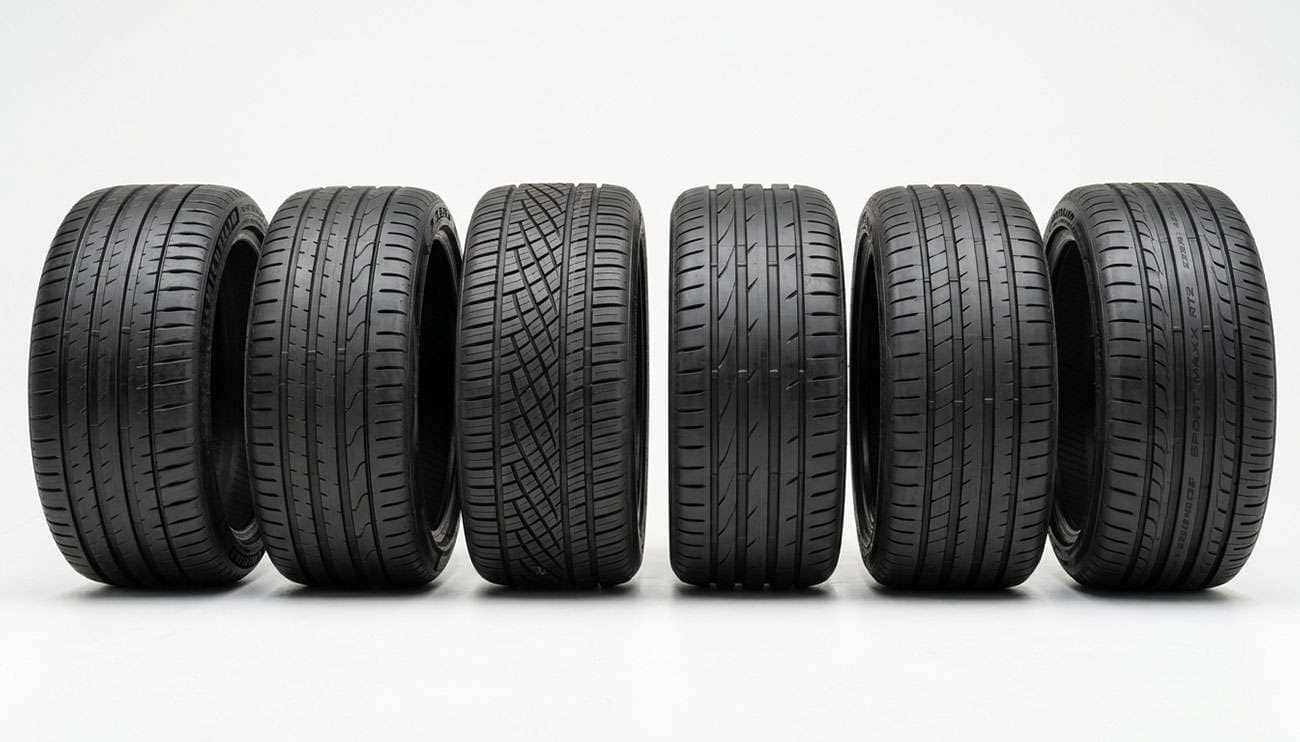
Michelin is the best brand of tire for most drivers in 2026. It sits at number one in Consumer Reports' latest brand ranking, where every tested Michelin model earned a recommendation, and it took Car Talk's top honors in a survey of more than 800 mechanics. That said, "best" depends on what you drive and how you drive it. Continental and Bridgestone match Michelin in specific categories, Goodyear and Cooper win on value, and Pirelli owns the performance conversation. Here is how the field actually breaks down.
If you want one name and zero homework: buy Michelin. The brand's consistency is what separates it from the pack. Plenty of manufacturers build one or two great tires. Michelin builds great tires across nearly every category it competes in, from the Defender 2 touring tire to the Pilot Sport line that dominates track days.
But a blanket answer only gets you so far. A tire brand is really a portfolio, and every portfolio has strong and weak spots. A premium brand's budget line can get outrun by a value brand's flagship. That is why I rank brands by tier and use case rather than handing you a single logo. For the full field, my 15 best tire brands ranked by safety and performance covers every major player. Below, I am focusing on the six brands that come up in nearly every "what should I buy" conversation at the shop.
Here is the six-brand snapshot I give customers who want the whole picture in thirty seconds:
Brand |
Best Known For |
Flagship Everyday Model |
Tread Warranty (Up To) |
Price Tier |
|---|---|---|---|---|
Michelin |
Overall balance of grip, tread life, and safety |
Defender 2 |
80,000 miles |
Premium |
Continental |
Wet braking and ride comfort |
TrueContact Tour |
80,000 miles |
Premium, often priced below Michelin |
Bridgestone |
Winter technology and run-flat engineering |
WeatherPeak |
70,000 miles |
Premium |
Goodyear |
All-weather versatility at mid-market pricing |
Assurance WeatherReady 2 |
65,000 miles |
Mid-market |
Cooper |
Budget-friendly reliability |
ProControl |
65,000 miles |
Value |
Pirelli |
High-performance and luxury fitments |
P Zero PZ4 |
70,000 miles on touring lines |
Premium performance |
Warranty figures are the maximum offered within each brand's everyday lineup. Performance and winter tires typically carry shorter warranties or none at all, regardless of brand.
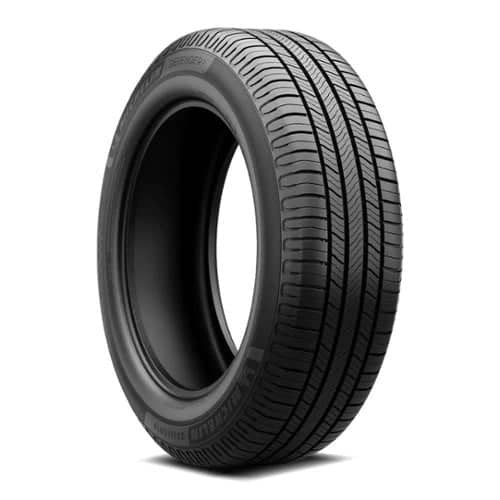
Michelin earns the top spot the boring way: it just keeps winning tests. Consumer Reports scored it first among 18 brands in its 2026 analysis, and the models that anchor that score are ones we stock deep. The Michelin Defender 2 ($199.99 in P215/55R17) pairs an 80,000-mile warranty with braking numbers most touring tires cannot touch. The Michelin CrossClimate2 ($225.99 in 205/50ZR17) is the tire that made all-weather a legitimate category, with three-peak mountain snowflake certification and none of the mushy handling that used to define the segment. If you are deciding between those two, my CrossClimate 2 versus Defender 2 comparison settles it by climate.
The knock on Michelin is sticker price, and it is a fair one. The counterpoint is cost per mile. When a tire lasts 70,000 plus miles instead of 45,000, the math tilts back in your favor. I ran that experiment myself, and the results are in my 50,000-mile Michelin value test.
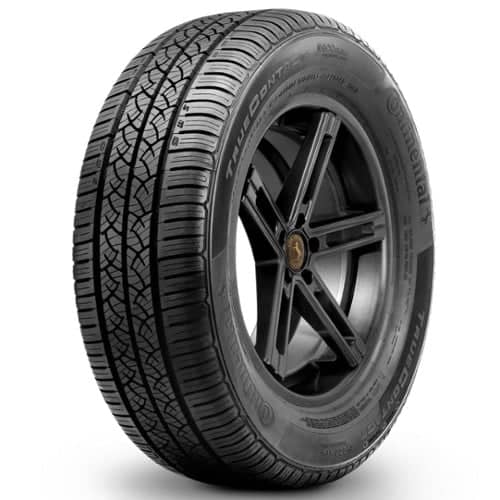
If your commute involves rain, Continental deserves a hard look. The brand consistently posts the shortest wet braking distances in its class, and it usually undercuts Michelin on price while doing it. The Continental TrueContact Tour starts at $134.74 in 175/65R15 with an 80,000-mile warranty, which is remarkable value for a premium-badge touring tire. For drivers who want grip with their comfort, the ExtremeContact DWS06 Plus ($158.99 in 195/50ZR16) remains one of the best all-season performance tires ever built.
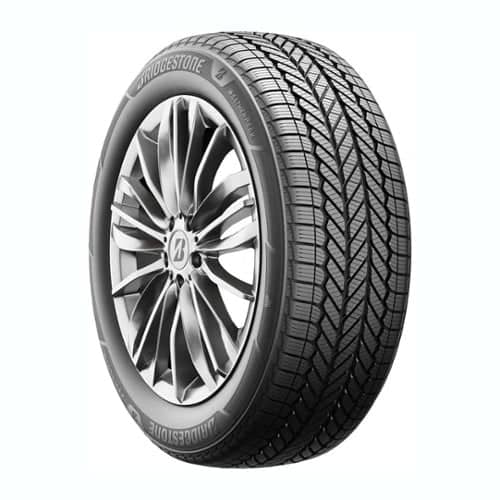
Bridgestone is the world's largest tire maker and the industry's winter benchmark. The Blizzak name is practically shorthand for snow tire, and the Blizzak WS90 ($147.62 in 175/65R15) is the model everything else gets measured against. For drivers who want winter capability without a second set of wheels, the Bridgestone WeatherPeak ($205.99 in 175/65R15) delivers snowflake-rated traction with a 70,000-mile warranty. Bridgestone also leads in run-flat technology, which matters if your car came without a spare.
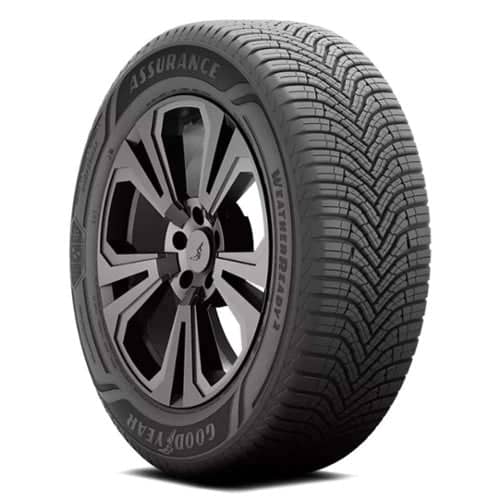
Goodyear splits the difference between premium performance and mid-market pricing better than anyone. The Assurance WeatherReady 2 ($220.99 in P205/50R17) earned its reputation as one of the best all-weather tires on the road, and the Wrangler line keeps trucks covered from highway duty to genuine trail work. Goodyear's catalog depth is its quiet superpower: whatever you drive, there is a purpose-built Goodyear for it, usually 10 to 20 percent under the equivalent Michelin.
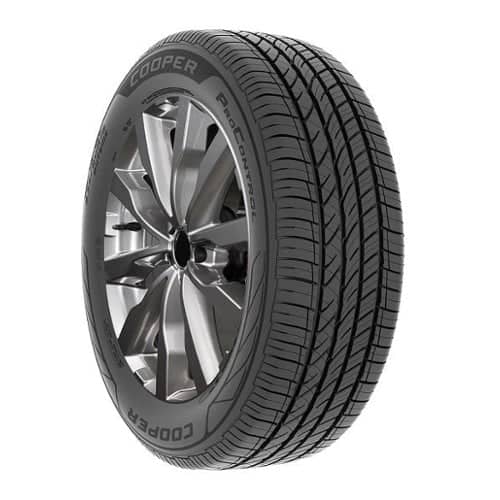
Cooper has been the value answer for decades, and since joining the Goodyear family it has gained access to even better engineering resources. The Cooper ProControl ($174.99 in 205/50ZR17) is the current standout, an all-season that tests within striking distance of tires costing $60 more per corner. If you are shopping this end of the market, my guide to affordable good-quality tire brands maps out which budget names earn their keep and which just look cheap because they are.
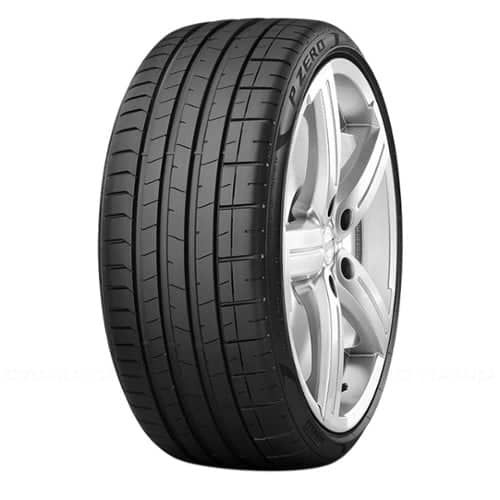
Pirelli is what happens when a Formula 1 supplier builds street tires. The P Zero PZ4 ($435.99 in 215/45ZR20) comes factory-fitted on more exotic and luxury metal than any competitor, and the steering precision is the reason why. For SUV and crossover owners, the Scorpion family translates that DNA into daily-drivable form; the Scorpion All Season Plus 3 ($241.22 in 225/55ZR19) carries a 70,000-mile warranty, which is not something you would have said about a Pirelli a decade ago. Pirelli is not the value play and does not pretend to be. It is the brand you buy when handling feel is the whole point.
The Michelin CrossClimate2 is the strongest single answer. It combines premium wet and dry grip, certified snow traction, long tread life, and top-tier ride quality in one tire, which is why it keeps topping independent test lists. If quality means track capability instead, the Michelin Pilot Sport 4S and Pirelli P Zero PZ4 trade blows at the top of the ultra-high-performance class.
Michelin, with Continental close behind. Both brands offer 80,000-mile warranties on their flagship touring tires, and independent wear testing consistently shows their compounds outlasting the ratings. Real-world lifespan depends heavily on rotation habits, alignment, and inflation, but on identical maintenance, these two brands wear slowest. I dug into the mileage data brand by brand in what tire brand lasts the longest.
Consumer Reports ranked Michelin the number one tire brand in its 2026 analysis, based on the average overall score of roughly 130 tested models across 18 brands. Every Michelin model in the test earned a CR recommendation, with the CrossClimate2, Defender 2, and Pilot Sport All Season 4 called out as standouts. Continental, Bridgestone, and Goodyear also placed models on the recommended list, particularly in the all-season and all-weather categories.
Stay cautious with no-name imports sold purely on price, especially brands with no published test data, no meaningful warranty, and no US distribution history. A cheap tire that stops six feet longer in the rain is not a bargain. The specific names change year to year as brands improve or disappear, so I keep a current list in tire brands to avoid, along with the red flags that tell you a bargain tire is actually a liability.
Michelin wins on outright performance and tread life; Goodyear wins on price for performance. If you keep vehicles past 60,000 miles, Michelin's longer wear usually pays back the premium. If you lease, trade often, or just want 90 percent of the capability for 80 percent of the money, Goodyear is the smarter check to write. I put the two head to head with real pricing in my Goodyear versus Michelin showdown.
Brand is the second decision, not the first. Work through these steps and the right brand usually picks itself:
1. Confirm your size. Check the placard inside the driver's door jamb or the sidewall of your current tires. Everything else flows from the correct fitment.
2. Match your climate. Heavy snow country calls for dedicated winters (Bridgestone Blizzak territory) or a certified all-weather like the CrossClimate2 or WeatherPeak. Mild climates open up the entire all-season field.
3. Be honest about your driving. Commuters should prioritize tread life and comfort (Michelin Defender 2, Continental TrueContact Tour). Enthusiasts should prioritize grip (Pilot Sport, P Zero). Truck and SUV owners should match the tire to actual terrain, not aspirational terrain.
4. Compare total cost, not sticker price. Divide price by warranty mileage. A $200 tire warrantied for 80,000 miles costs less per mile than a $130 tire warrantied for 40,000.
Michelin is the best tire brand overall in 2026, and it is not an especially close call when you average performance across categories. But the best brand for your car is the one whose strengths match your driving: Continental for wet climates, Bridgestone for winter, Goodyear for balanced value, Cooper for the budget-conscious, and Pirelli for the drivers who care how a steering wheel feels. Whichever direction you land, we stock all six brands deep, with thousands of fitments ready to ship. Browse the full Michelin tire lineup at Performance Plus Tire to see current pricing in your size, or call our fitment experts and we will match the right brand to the way you actually drive.
Yes, as long as the brand publishes real test results and backs its tires with a meaningful warranty. Cooper and Goodyear both prove you can spend less without giving up safety. The risk is not "cheaper," it is "unknown": tires with no data and no warranty are where the real compromises hide.
Ideally yes, and at minimum the two tires on each axle should be identical. Mixing brands across axles is workable if the tires are the same category, size, and comparable tread depth, but matching all four preserves the handling balance your car was engineered around.
Yes. Michelin owns BFGoodrich and Uniroyal, which is why those brands often deliver strong performance at lower price points. Similar family trees exist across the industry: Bridgestone owns Firestone, and Goodyear owns Cooper, Kelly, and Dunlop's North American operations.
Replace tires when tread reaches 4/32 of an inch for wet climates (2/32 is the legal minimum) or when they hit 6 to 10 years old, whichever comes first. Rubber degrades with age even on a garage queen, so check the DOT date code on the sidewall, not just the tread depth.



