
I get asked this one constantly, and people are always a little disappointed by my answer. They want a name. They want me to point at a logo and say "that one, never buy it." But after years of measuring tread depths, reading sidewall codes, and pulling test data on hundreds of fitments, I can tell you the honest truth: the brand on the sidewall is one of the least reliable predictors of whether a tire is worth your money.
The tire you should stay away from isn't defined by who made it. It's defined by what the spec sheet does and doesn't tell you. A "premium" brand can sell you an aged, wrong-rated tire that's a genuine hazard, and a so-called budget brand can deliver a tire that posts shockingly solid numbers. So instead of handing you a blacklist that would be out of date by next quarter, let me show you the red flags I actually check. Learn these and you can evaluate any tire, any brand, in about five minutes.
Here's the structural problem with asking which brand to avoid. Most tire "brands" you see online aren't really manufacturers at all. They're labels, often applied to tires produced in shared factories and sold under a dozen different names. The same casing can leave the same plant wearing four different logos at four different price points. So a brand-based blacklist is chasing the marketing, not the engineering.
What actually varies, and what you can verify, is the data molded right into the rubber and printed on the spec sheet. That's where the real differences live. The tires I steer customers away from all share measurable warning signs, regardless of the name. Let's go through them in the order I check them.
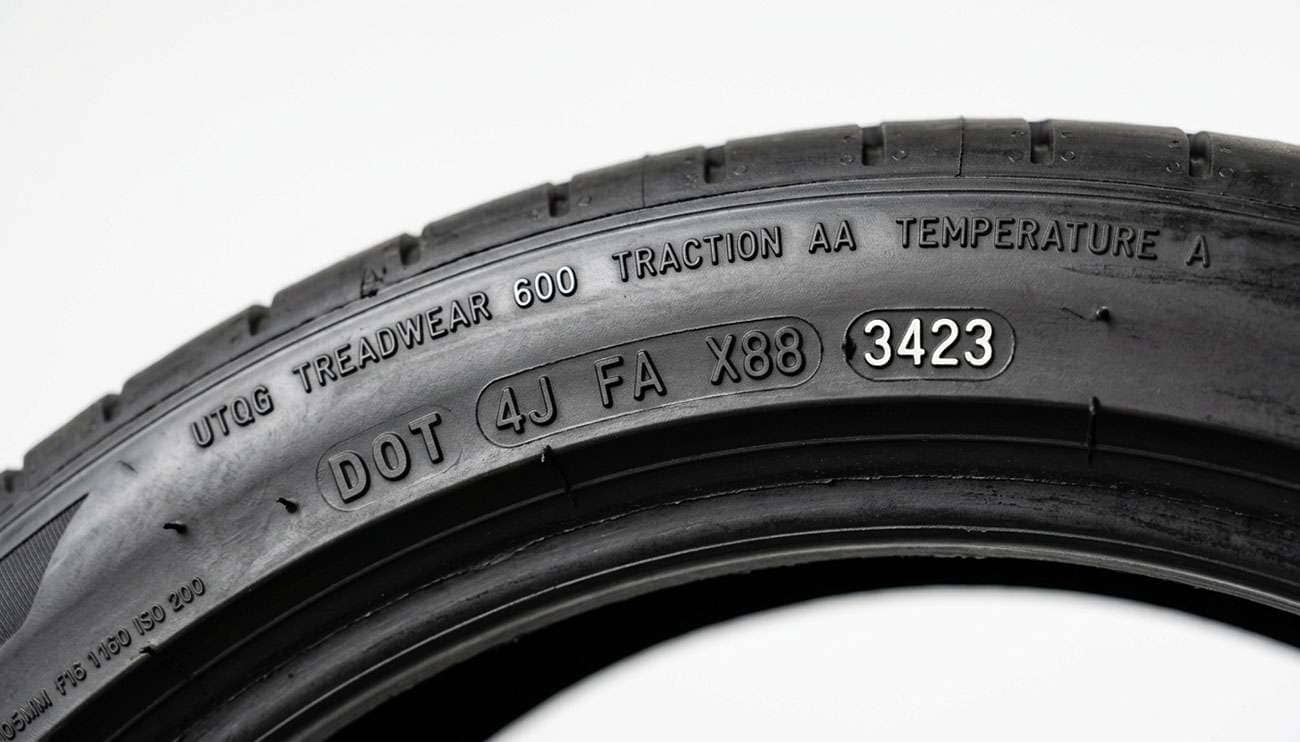
The Uniform Tire Quality Grading system is the closest thing we have to a standardized report card. Every passenger tire sold for the US market is supposed to carry three grades on the sidewall: a treadwear number, a traction grade (AA, A, B, or C), and a temperature grade (A, B, or C). These let you compare apples to apples across brands.
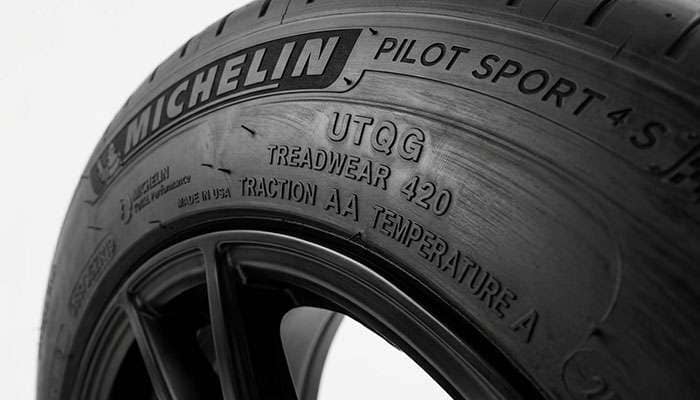
When a tire has no UTQG marking at all, or carries the lowest possible traction and temperature grades, that's a flag. A "C" temperature grade means the tire just barely meets the federal minimum for heat resistance at speed, and heat is what kills tires. I'm not saying every low-graded tire will fail you, but if a brand can't or won't post competitive grades, I want to know why before it goes on a customer's car. If you're fuzzy on what those numbers mean, here's a full breakdown of how to read tire treadwear ratings.
Every street-legal tire carries a DOT code, and the last four digits tell you the week and year it was built. This is non-negotiable data. A tire stamped "2419" was built in the 24th week of 2019, which makes it dangerously old to be selling as new, regardless of tread depth.
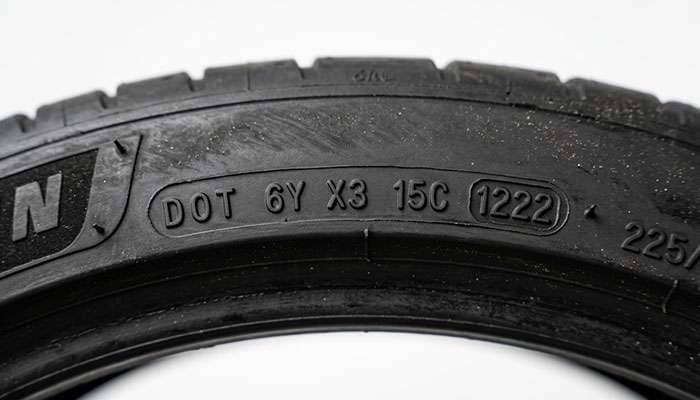
Rubber degrades on a clock, not just on the road. Most manufacturers and safety bodies treat six years as the point where a tire's compound starts to lose integrity even if it's never been mounted. The brands and sellers I avoid are the ones moving old, deep-discounted stock or imports with no traceable DOT code at all. A tire with no verifiable birthday is a tire you can't trust, full stop. This ties directly into how long tires actually last, which is governed as much by age as by mileage.
This is the one buyers overlook most. A legitimate tire brand stands behind its product with a published warranty, a recall process, and a distribution network that can actually honor those things in the United States. When something goes wrong, you need an address and a phone number that answers.
Plenty of ultra-cheap online tires come from brands with no real US presence. No mileage warranty, no road-hazard coverage, no recall mechanism, and nobody to call when a tire fails at 8,000 miles. The savings up front evaporate the first time you need support and discover there's none. A real warranty isn't just paperwork; it's the manufacturer betting on its own quality. When that bet is missing entirely, take the hint. For context on what reputable brands look like, see our rundown of the most reliable tire brands.
This is where I see real danger, and it isn't always about brand quality. It's about fitment. Every tire has a load index and a speed rating, and both must meet or exceed what your vehicle's placard requires. A tire can be from a perfectly good brand and still be the wrong tire to put on your car.
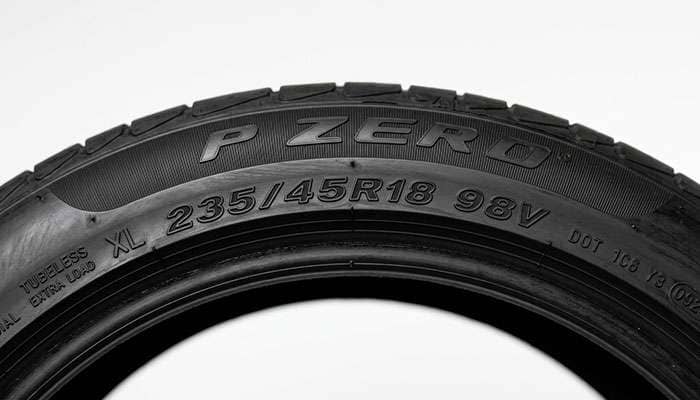
The brands and sellers to be wary of are the ones pushing tires with load indexes too low for the vehicle, or burying a low speed rating in the fine print to hit a price point. An underrated tire runs hotter, flexes more than it was designed to, and can fail under exactly the conditions you bought it to handle. Match the placard, every time. A cheaper tire that doesn't meet your vehicle's spec isn't a deal, it's a liability, and it's directly tied to the heat limits that cause tire failure.
In 2026, a tire worth buying has a footprint. Independent reviews, wet-braking and dry-handling numbers, real-world mileage reports, owner feedback after 10,000 or 20,000 miles. The data is out there for any tire that's earned trust.
The genuine red flag is the tire that has no footprint at all. No reviews, no test results, no measurable performance data anywhere you look, just a low price and a generic name. That absence is itself the warning. It usually means the tire is too new, too obscure, or too inconsistent to have built any track record. I'd rather put a customer on a known value tire with thousands of documented miles than a mystery casing with nothing behind it. The honest testing on whether budget tires are actually safe shows exactly why documented data matters more than price.
Now for the part that surprises people. Avoiding the red flags above is not the same as avoiding affordable tires. Some value brands post genuinely strong numbers and back them with real warranties. We've tested plenty of them. A tire like the General AltiMax 365AW or the Cooper Endeavor delivers solid all-season performance and a real mileage warranty at a price well under the premium names, and the Falken Sincera line punches above its cost too.
The point is that these brands clear every red flag. They carry full UTQG grades, current DOT codes, US warranty support, correct ratings, and a documented testing record. That's the difference. Budget describes the price; the red flags describe the risk, and the two don't have to travel together. Our deeper analysis of whether cheap tires are worth it over 20,000 miles backs this up with hard numbers, and even within the imports, some brands clearly outperform others.
Put it all together and you have a fast, repeatable screen you can run on any tire before you spend a dollar. Here's exactly what I check and what I want to see.
What To Check |
What Good Looks Like |
Stay Away If |
|---|---|---|
UTQG ratings |
Treadwear posted, traction A or AA, temperature A or B |
No grades shown, or traction and temperature both at C |
DOT date code |
Built within the last 1 to 2 years |
No code, or more than 6 years old |
Warranty and support |
Published mileage warranty, US distribution |
No warranty and no US contact |
Load and speed rating |
Meets or exceeds your door placard |
Below the placard requirement |
Test data and reviews |
Documented mileage and performance results |
No reviews or data anywhere |
If a tire clears all five, the logo barely matters. If it trips two or more, I don't care how recognizable the name is, I'd keep looking. And if you want a sanity check on pricing while you shop, here's a realistic look at how much a good tire should actually cost so you can tell a real value from a too-good-to-be-true trap.
So which brand of tires should you stay away from? The one that won't show you its data. A tire with no UTQG grades, no traceable DOT code, no US warranty, the wrong ratings for your car, and zero performance record is the tire to avoid, no matter whose name is on it. Flip that around and you've got your buying rule: choose any tire that clears all five checks, premium or budget, and you'll get safe, honest performance for your money. When you're ready to shop a vetted set, come see us and we'll match you to a tire that earns its place on your vehicle.
There's no single brand that's always the wrong choice, because the same factory often produces tires sold under many different labels. The smarter approach is to avoid any tire that shows the red flags: no UTQG grades, a missing or old DOT date code, no US warranty support, a load or speed rating below your vehicle's placard, or no performance data anywhere. Those signs predict a bad tire far better than the logo does.
No. Price and safety are separate questions. Several value brands post strong UTQG grades, carry current DOT codes, back their tires with real mileage warranties, and have documented testing records. A budget tire that clears all five red flags can be a smart buy, while a pricier tire with the wrong rating or aged rubber can be a liability.
Find the DOT code on the sidewall and read the last four digits. The first two are the week and the last two are the year, so "2419" means the 24th week of 2019. Even unused tires that are more than about six years old should be avoided, because rubber compounds degrade with age regardless of tread depth.
Yes, especially in hot climates and at highway speed. The temperature grade measures a tire's resistance to heat buildup, and heat is a leading cause of tire failure. A "C" grade only meets the federal minimum, while "A" and "B" grades indicate more margin. If a tire carries the lowest grade, that's worth weighing against how and where you drive.



