
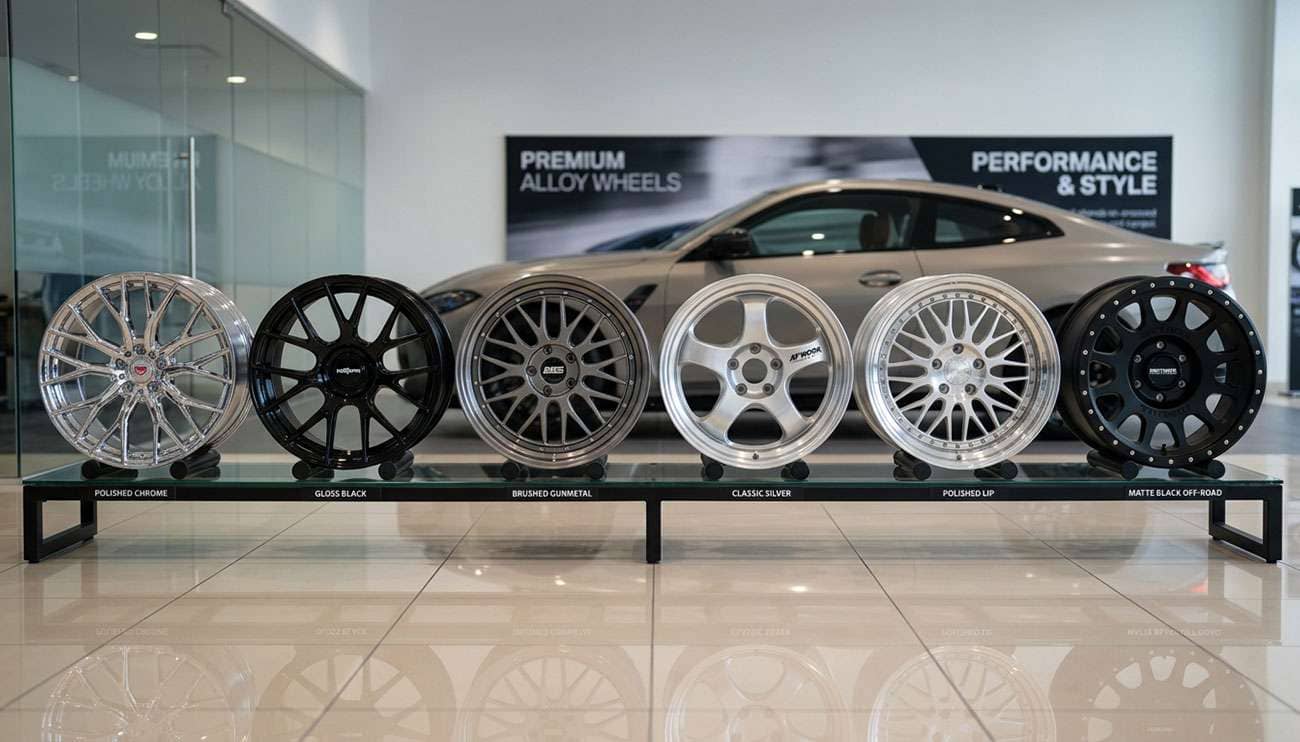
You already know what a rim is. You just might not know what else to call it — and depending on where you are, who you're talking to, and what you're looking at, there are more names for this one component than almost anything else on a vehicle. Rims. Wheels. Mags. Alloys. Hoops. Rollers. Dubs. Steelies. Chrome. Rollers. Rubber. The vocabulary around this single part of your car is enormous, fragmented, and region-dependent. Some of these names are precise. Some are technically wrong but universally understood. Some belong to specific cultures, communities, or decades. And a few are so old that the reason they were coined has been completely forgotten by the people using them.
This is the complete breakdown — every name a rim gets called, what it technically means, where it came from, and when you'd actually use it. Whether you're shopping for a new set, trying to decode what someone means, or just want to talk the talk correctly, this guide covers all of it.
Start here before anything else. The word "rim" has a specific technical definition that most people don't know — and understanding it makes every other term on this list make more sense.
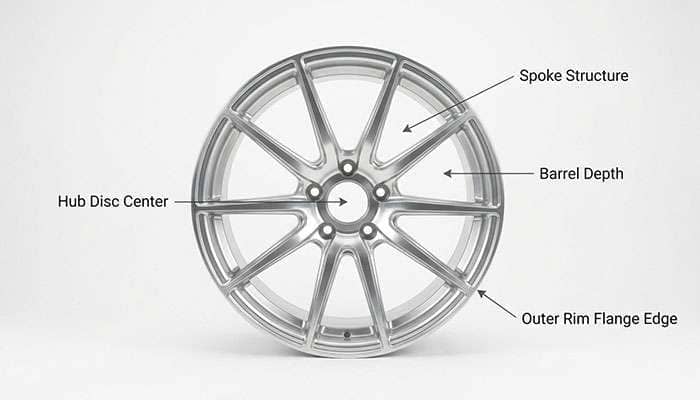
Technically, the rim is just the outer cylindrical edge of the wheel — the part the tire actually seats against and seals to. In a bicycle wheel, you can see this clearly: the spokes connect the central hub to the outer rim, which is a separate visible component. In a car wheel, the structure is integrated — the hub disc, spokes (or web), and rim barrel are all one casting or forging — but they're still structurally distinct zones of the same assembly.
So when you use the word "rim" to refer to the entire wheel — which virtually everyone does — you're technically referring to just the outer edge and calling it the whole thing. That's like calling your entire car "the hood." It works because everyone understands it, but it's not technically accurate.
Here's the breakdown of what's actually there when you look at a wheel:
The hub disc (or center bore area) is the central section that bolts to the vehicle's hub using lug nuts or lug bolts. The bolt pattern — the arrangement of lug holes — is drilled through this section. The spokes are the structural elements radiating outward from the hub disc to the outer barrel. In a cast wheel, these might be wide, flowing sections of metal rather than discrete rods, but the function is the same. The barrel is the cylindrical mid-section that gives the wheel its depth and width. The rim — in the strict technical sense — is the outermost edge of the barrel, the part with the bead seat flanges where the tire actually seats.
In everyday use, "rim" means the whole assembly. That's fine. Just know that when a tire technician talks about "bead seat damage on the rim," they mean the actual outer edge — not the spokes or center. Context matters.
The reason "rim" works as a stand-in for the complete wheel assembly is that communication doesn't fail. When you tell someone your rims got scratched, they know exactly what happened. When you say you're shopping for new rims, nobody brings you just the outer edges. The word has expanded to cover the complete unit, and that expansion is now effectively permanent in the language. This pattern repeats with most of the names on this list — precision mattered once, cultural drift happened, and now imprecise terms are more widely used than the technically correct ones.
Here's the irony: "wheels" is the most technically correct term for the complete metal assembly that your tires mount to, and it's the one most people use the least when they're talking about upgrading their car. You hear "I'm putting new rims on" far more often than "I'm putting new wheels on," even though wheels is the precise term.
The wheel is the complete metal unit — hub, spokes, barrel, rim flange, and all. When manufacturers list wheel specifications, when engineers discuss wheel design, and when automotive journalists write about fitment, they use "wheels." It's the unambiguous, universal term that works in every context from a technical manual to a conversation with a tire shop.
When you're buying at Performance Plus Tire, you're buying wheels — the complete assemblies. The distinction matters practically when you're ordering, because wheel specifications (diameter, width, offset, bolt pattern, hub bore) describe the complete assembly, not just the outer rim edge.
There's a subtle cultural pattern here worth noting. In formal and technical contexts — manufacturer specs, fitment guides, professional installation discussions — "wheels" dominates. In casual conversation, especially in American automotive culture, "rims" is more common. In hip-hop and urban car culture specifically, "rims" became the default term in the 1990s and 2000s and has stayed there. In British and European automotive contexts, "alloys" is more common than either. All three are pointing at the same thing; which one you use often reveals more about your background and context than the object you're describing.
You can browse the complete selection of wheels at Performance Plus Tire — from classic five-spoke designs to modern deep-dish aftermarket setups — organized by vehicle fitment so you find exactly what works for your car without guessing.
If you want to understand why automotive terminology is so confusing, "mags" is your case study. The word is short for magnesium — specifically, magnesium alloy wheels developed for motorsport in the late 1940s and 1950s. Real magnesium wheels were used on Indy 500 cars, Le Mans racers, and Bonneville land speed vehicles because magnesium is roughly 35% lighter than aluminum and dramatically lighter than steel. Ted Halibrand built some of the most famous ones in California, and hot rod culture picked up the term and ran with it.
Then magnesium mostly disappeared from road cars — it burns ferociously in accidents, corrodes fast in road salt conditions, and costs significantly more to produce than aluminum alloy. But the word "mags" stayed. It transferred to aluminum alloy wheels because they had taken over the same performance role, and by the time most drivers were using the term, the material distinction had been completely lost.
In current usage, "mags" operates on three levels simultaneously. At the technical level, it means genuine magnesium alloy wheels — rare, expensive, found mainly in professional motorsport. At the enthusiast level, it means any cast or forged aluminum alloy wheel, as distinct from steel. At the broadest street level, it just means any stylish, non-stock wheel that makes a car look good. All three meanings are in active use. The context almost always makes clear which one is intended.
In Australia and South Africa especially, "mags" is the dominant everyday term for any alloy wheel — more common than "alloys" or "rims" — which reflects those regions' strong ties to British automotive culture combined with American hot rod influence filtering in through car magazines and racing coverage. If someone from Sydney or Johannesburg tells you they're shopping for mags, they mean alloy wheels, full stop.
"Alloys" is the standard British English term for what Americans call rims or mags. It's more technically precise than either — it accurately identifies the material (aluminum alloy) without misattributing magnesium origins — and it's been the dominant everyday term in the UK, Ireland, and much of Europe for decades.
Every non-steel wheel sold for road use today is an alloy wheel in the literal sense — it's made from a metal alloy rather than a single pure metal. In practice, "alloy wheel" specifically means aluminum alloy, distinguishing it from steel. The term is clean, accurate, and carries no historical baggage about magnesium. When British automotive press discusses wheels, "alloys" is the go-to term. When British drivers modify their cars, they put on "a new set of alloys." The word does exactly what language is supposed to do: communicate precisely without confusion.
"Alloys" has been crossing into American usage gradually over the past two decades, driven partly by the influence of British automotive media online and partly because car manufacturers increasingly use "alloy wheels" in their spec sheets as the standard descriptor. It still sounds slightly formal to most American ears — you'd more commonly hear it from a brand-aware buyer or a professional installer than from someone at a car show — but it's becoming more common.
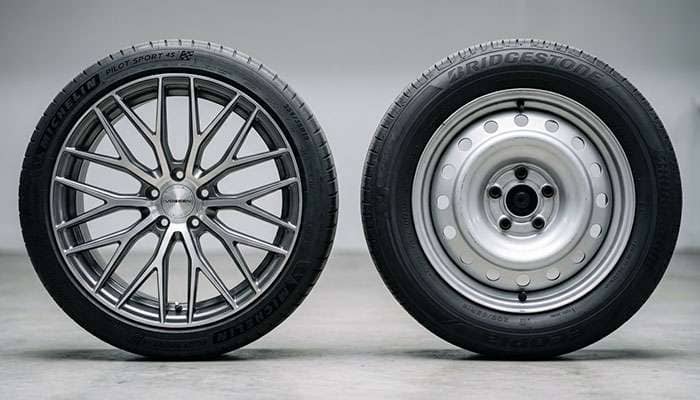
The "alloy vs. steel" distinction is where the term actually earns its precision. Steel wheels — stamped from steel, heavy, basic, covered with hubcaps on budget vehicles — are the baseline. Alloy wheels (aluminum alloy) are lighter, more thermally efficient, can be cast or forged into complex designs, and are available in an enormous range of finishes. That's the real functional divide: steel is the utilitarian baseline, alloy is everything above it. The word "alloy" captures that divide clearly without the cultural connotations that come with "rims" or the historical confusion that comes with "mags."
For most modern vehicles, custom alloy wheels are the upgrade path — available in cast or forged construction, in sizes from 15 inches up to 30 inches and beyond, in finishes from matte black to polished chrome to brushed titanium.
Outside of the technical vocabulary and the regional terms, there's a whole layer of street slang that describes wheels — some of it decades old, some of it still evolving. These terms are looser, more context-dependent, and often carry cultural weight beyond their literal meaning.
Hoops is one of the older pieces of wheel slang in American automotive culture, with roots in the hot rod and custom car scene of the 1950s and 1960s. The visual logic is obvious — a wheel is a hoop. The term never quite achieved the mainstream saturation of "rims" or "mags," but it's been in continuous use in car enthusiast communities for over sixty years. You'll hear it most often in the context of classic cars and traditional hot rods — a builder talking about putting the right hoops on a '57 Chevy sounds period-correct in a way that "rims" doesn't quite capture.
Rollers refers to the complete wheel and tire assembly — not just the wheel. This is one of the few wheel-adjacent terms that specifically includes the tire in its meaning. When someone says a car has nice rollers, they're commenting on both the wheel and the rubber wrapped around it as a combined visual and functional unit. The term is common in show car culture and in discussions of complete stance and fitment, where the wheel and tire relationship is considered holistically rather than as separate components.
Technically "rubber" means the tires, not the wheels. But in casual conversation it often gets used to describe the whole lower corner of the car — wheels and tires together. "I need to put some new rubber on that thing" usually means new tires. "The rubber and rollers look sick on that build" means both the tires and wheels look good. Context determines which interpretation is correct, and the communication rarely fails.
Less common but worth knowing — "shoes" refers to the tires in traditional British slang, occasionally expanding to cover the whole wheel and tire unit. You'll encounter it most in British automotive writing and in classic car communities with British marque connections. "Shod with" is the formal British phrase for a car equipped with particular tires — "shod with Michelin Pilot Sport" means the tires are Michelin Pilot Sport. The informal "shoes" follows the same logic.
Meats specifically refers to wide, low-profile performance tires — the kind of thick, wide rubber that fills the wheel wells aggressively on a performance car or truck. "Big meats out back" describes wide rear tires on a rear-wheel drive performance build. It's an enthusiast term, almost exclusively used in the context of performance and stance, and it's more about the tire than the wheel — though in context it often implies the complete fitment package.
Wheel terminology shifts significantly by geography. The same object gets called something different depending on whether you're in Birmingham, Alabama or Birmingham, England — and the differences reflect the distinct automotive cultures that developed on either side of the Atlantic and Pacific.
"Rims" is the dominant casual term in American English, with "mags" and "wheels" also in wide use. The regional variation within the US is more about subculture than geography — hip-hop and urban car culture uses "rims" almost exclusively, classic car culture uses "mags" and "wheels," off-road culture uses "wheels" and specific technical terms like "beadlocks," lowrider culture has its own vocabulary including "spoke wheels," "wires," and "daytons" (a reference to Dayton Wire Wheels, a beloved brand in lowrider culture).
The UK defaulted to "alloys" decades ago and has stayed there. "Rims" sounds slightly American to British ears, "mags" is used but less dominant than in Australia, and "wheels" is used technically. You'll hear "a set of alloys" constantly in British automotive context — from the dealer forecourt to the private Facebook group for your specific car model.
"Mags" is the dominant term in Australia and New Zealand, reflecting both British English influence and strong American hot rod culture influence from the 1950s onward. Australian car culture embraced American hot rod and muscle car aesthetics deeply, and "mags" came with that package. "Alloys" is also common, particularly among drivers more connected to European car culture. "Rims" is understood but sounds American rather than native.
"Mags" dominates in South Africa as well, for similar historical reasons — British automotive baseline combined with American cultural influence through media and motorsport. South African car culture is robust and enthusiastic, and "mags" is the standard term across communities and contexts.
Indian automotive English uses "alloys" predominantly — a reflection of strong British English influence in formal and written language. "Rims" is also widely understood. The Indian automotive market has exploded in sophistication in recent decades, and the vocabulary has expanded accordingly, with technical terms from both British and American traditions coexisting.
Beyond the general slang, wheels also pick up names based on what they're made of or how they're finished. These material-based names are more precise than most slang and often tell you something specific and useful about the wheel.
Steelies are steel wheels — the stamped steel baseline that comes on basic vehicles and is the standard choice for winter wheel setups. The name is affectionate in some car communities (steelies have a retro charm, especially in small diameter 15-inch fitments with a center cap) and dismissive in others ("that thing is still on steelies?" implies the car hasn't been upgraded). In the winter wheel world, steelies are the practical choice — corrosion from road salt doesn't destroy them the way it attacks alloy finishes, they're cheap to replace, and a bent one can often be straightened.
Chrome is a finish, not a material, but it generates its own vocabulary. Chrome wheels are alloy wheels (or occasionally steel wheels) with a chrome electroplating or chrome-look PVD coating applied to the surface. The chrome wheel was the dominant prestige wheel look in American car culture through the 1990s and 2000s — appearing on everything from custom trucks to luxury sedans to show cars. The term "chrome rims" carries strong cultural associations with that era's car culture, particularly in hip-hop influenced automotive aesthetics where large-diameter chrome wheels were a defining status symbol.
Chrome has become less dominant as matte and satin finishes have taken over in mainstream aftermarket and OEM aesthetics, but it remains a significant style category. 22-inch chrome wheels on a blacked-out truck is a still-vital look in American car culture, particularly in the South and Midwest.
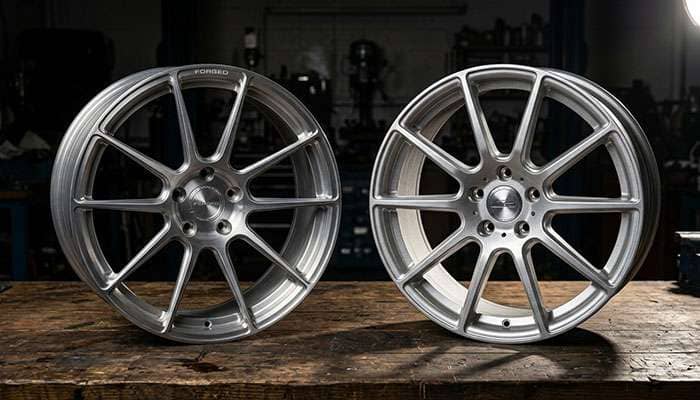
Forged refers to the manufacturing method: instead of pouring molten aluminum alloy into a mold (casting), a forged wheel starts as a solid aluminum billet that gets pressed into shape under enormous pressure. Forging produces a denser, stronger grain structure in the metal, resulting in a wheel that's both stronger and lighter than an equivalent cast wheel. "Forged" is a precision term used by serious enthusiasts and in the performance aftermarket — if someone specifies forged wheels, they're talking about a specific manufacturing process that produces a measurably superior product at a significantly higher cost.
Flow-forming (also called flow-forging or rotary forging) is a manufacturing method that combines casting and forging — a wheel is initially cast, then the barrel section is heated and pressed under rollers to align the grain structure. The result is stronger and lighter than a pure cast wheel, at a lower cost than full forging. Flow-formed wheels are common in the performance aftermarket as a middle-ground option between budget cast wheels and premium forged wheels.
These terms describe construction — specifically, how many physical components the wheel is made from. A monoblock wheel is a single casting or forging — one piece, no assembly required. A 2-piece wheel combines a center section with a separate outer barrel, joined together, allowing custom offsets and finishes. A 3-piece wheel has a center, an outer lip, and an inner barrel — three separate components bolted together, offering maximum customization of width, offset, and finish for high-end custom builds. These are specific technical terms you'll use when shopping for premium wheels, not general slang.
Wheel size generates its own vocabulary, particularly in American car culture where larger-diameter wheels became a cultural arms race from the 1990s onward. These size-based names are some of the most culture-specific wheel terms in existence.
"Dubs" means 20-inch wheels. The name comes from "double" — 20 being double 10 — and it emerged from hip-hop influenced car culture in the late 1990s when 20-inch wheels were considered large enough to be a status statement. The term was popularized significantly by Dub Magazine, a publication launched in 2000 that covered the custom car culture that was making 20-inch wheels mainstream. 20-inch wheels are now essentially the standard fitment size for mid-size trucks and SUVs from the factory, which has somewhat deflated the "dubs" status marker — though the term remains in common use.
A simpler alternative to "dubs" — twennies just means 20-inch wheels, spoken as the number. Less culturally loaded than "dubs," more casual than "20-inch." You'll hear it in conversation more than in written contexts.
In the world of "donk" cars — typically late 1970s and 1980s American full-size sedans, especially Chevrolet Caprices, Impalas, and similar vehicles, heavily customized with very large diameter wheels — 24-inch wheels and larger are the standard. The aesthetic involves extremely tall, narrow tires on large-diameter chrome or candy-painted wheels, a high vehicle stance, and custom body paint. "Donk wheels" or "donk rims" means the large-diameter wheels associated with this specific style, whether or not the car itself is a donk.
Beyond 24 inches, wheel size names just use the inch measurement directly — thirties (30-inch), thirty-twos (32-inch), and even larger. These sizes are primarily found on custom show trucks and highly modified lowrider-influenced vehicles. They require significant suspension and body modifications to fit, and the tires available in these sizes are extremely low-profile — sometimes barely 2–3 inches of sidewall. The appeal is purely visual: the wheel fills the wheel well completely, creating a dramatically changed appearance.
At the other end of the size spectrum, "littles" refers to small-diameter wheels — typically 14 to 16 inch steel or small alloy wheels associated with vintage cars, budget vehicles, or the deliberate retro aesthetic of slammed Japanese cars running small, narrow period-correct wheels. In the stance and bosozoku-influenced Japanese car culture that's had significant influence on American custom car trends, small wheels — especially 14-inch steelies or 15-inch period-correct alloys — are a deliberate stylistic choice against the prevailing bigger-is-better trend.
Practically speaking? For shopping purposes, not much — everyone in the automotive ecosystem understands what you mean regardless of which term you use. Walk into any tire and wheel shop and say you're looking at rims, mags, alloys, or wheels, and nobody's going to be confused. The communication works.
Where precision matters is in specific technical conversations. If you're discussing bolt patterns, offsets, hub bore sizes, and load ratings, you want to be working with the correct technical terminology so nothing gets lost. Use the wheel sizes guide and the bolt pattern chart when you're nailing down fitment specifics — those resources use precise technical language that eliminates ambiguity when it counts.
The more interesting answer is that the terminology does matter culturally. Calling them "alloys" vs. "mags" vs. "rims" vs. "dubs" signals something about your automotive background, your influences, and your connection to specific car communities. Language is identity in car culture, and the words you use for your wheels tell people something about you before you ever open the hood.
Term | What It Means | Where It's Common |
|---|---|---|
Rim |
Technically the outer edge; colloquially the whole wheel |
Universal American English |
Wheel |
The complete metal assembly (technically correct) |
Technical, professional, universal |
Mags |
Originally magnesium; now any alloy or stylish wheel |
Australia, South Africa, US car culture |
Alloys |
Aluminum alloy wheels (non-steel) |
UK, Europe, India, increasingly global |
Hoops |
Any wheel; old hot rod slang |
Classic car, hot rod culture |
Rollers |
Wheel and tire assembly together |
Show car, stance culture |
Steelies |
Steel wheels specifically |
Universal; affectionate or dismissive |
Chrome |
Chrome-finished wheels |
American truck, custom car culture |
Forged |
Wheels made by forging (stronger, lighter than cast) |
Performance, technical enthusiast contexts |
Dubs |
20-inch wheels specifically |
American hip-hop influenced car culture |
Daytons |
Wire spoke wheels (from Dayton Wire Wheels brand) |
Lowrider culture |
Meats |
Wide performance tires (implies wheel/tire package) |
Performance and muscle car culture |
Rims. Mags. Alloys. Hoops. Dubs. Steelies. Rollers. The list goes on, and every single name on it is pointing at the same thing — that round metal component your tire wraps around and your car rolls on. The proliferation of names reflects how central wheels are to automotive identity. No other single component has this many words attached to it, because no other single component gets looked at, talked about, upgraded, and argued over with the same intensity.
Each name carries its own history. "Mags" carries the legacy of magnesium racing wheels and 1960s hot rod culture. "Alloys" carries British precision and European automotive sensibility. "Dubs" carries the hip-hop influenced car culture of the late 1990s. "Steelies" carries the practical working-vehicle aesthetic and the ironic retro appreciation of people who could afford alloys but chose steel anyway. "Hoops" carries the memory of a California garage in 1955 where someone first said it and everyone understood immediately.
Whatever you call them, the right set of wheels transforms a car. They change the look, the stance, the character, and in many cases the actual driving dynamics. Performance Plus Tire carries thousands of options across every style, size, and application — from off-road wheels built for serious trail use to tuner wheels designed for sport compacts to classic designs for muscle car restorations. Call them what you want. Just make sure they fit right, are rated for your vehicle, and look exactly the way you want your car to look. That's what actually matters.
Here's the whole vocabulary in the essentials.
• Rim is technically just the outer edge: The rim is technically only the cylindrical outer edge of the wheel where the tire seats. In everyday use it means the complete wheel assembly — and that's fine, because the communication works regardless.
• Wheels is the most correct general term: If you want one word that's always technically accurate, always understood, and works in every context from a spec sheet to a shop floor conversation, "wheels" is it.
• Mags, alloys, hoops, and rims all mean the same thing: They're regional, cultural, and historical variations on the same concept. Which one you use signals your background and automotive community more than it distinguishes between different objects.
• Size-based names are culturally specific: Dubs (20-inch), donk wheels (24-inch+), and twennies are American car culture terms — mostly rooted in hip-hop influenced custom car aesthetics of the late 1990s and 2000s.
• Material and construction terms are precise and worth learning: Forged vs. cast, monoblock vs. 2-piece vs. 3-piece, steel vs. alloy — these terms describe real differences in manufacturing, performance, and price that affect your buying decision.
Yes, technically. The rim is specifically the outermost cylindrical edge of the wheel — the part the tire mounts and seals against. The wheel is the complete metal assembly including the hub disc, spokes, barrel, and rim. In everyday use, "rim" is used to mean the complete wheel, which is technically imprecise but universally understood. If a tire technician refers to the rim specifically in a technical context, they mean the outer edge — not the spokes or center section.
Both terms emerged from different automotive cultural traditions. "Rims" in American English reflects hot rod and urban car culture where the outer appearance of the wheel — the visible rim — was the focus. "Alloys" in British English emphasizes the material distinction from steel wheels, which was the most practically relevant difference for everyday drivers upgrading from standard fitment. Both terms are accurate enough for everyday use, and both are understood on either side of the Atlantic even if they sound slightly foreign in context.
Dubs means 20-inch wheels. The name comes from "double" — 20 being double 10 — and emerged from American hip-hop influenced car culture in the late 1990s when 20-inch wheels were considered a significant size upgrade and status statement. The term was popularized partly by Dub Magazine, launched in 2000. Today, 20-inch wheels are standard factory fitment on many trucks and SUVs, which has somewhat reduced the cultural weight of the term, though it's still in common use.
Steelies are steel wheels — stamped from steel rather than cast or forged from aluminum alloy. They're heavier, less thermally efficient, and far more limited in design than alloy wheels. Why would you want them? For winter use, steelies are genuinely practical: they're far cheaper than alloys, road salt doesn't corrode them the same way, and when one gets bent from a pothole it can often be straightened cheaply where an alloy would need to be replaced. Running a dedicated set of winter steelies lets you protect your good alloy wheels from winter road damage.
Cast wheels are made by pouring molten aluminum alloy into a mold and allowing it to cool — the most common and affordable manufacturing method. Forged wheels are made by compressing a solid aluminum billet under enormous pressure, which creates a denser, stronger grain structure in the metal. Forged wheels are significantly stronger and lighter than equivalent cast wheels, making them the preference for serious performance applications. They're also significantly more expensive. Flow-formed (or rotary-forged) wheels are a middle option: cast initially, then barrel-pressed under rollers for improved strength without full forging cost.



