
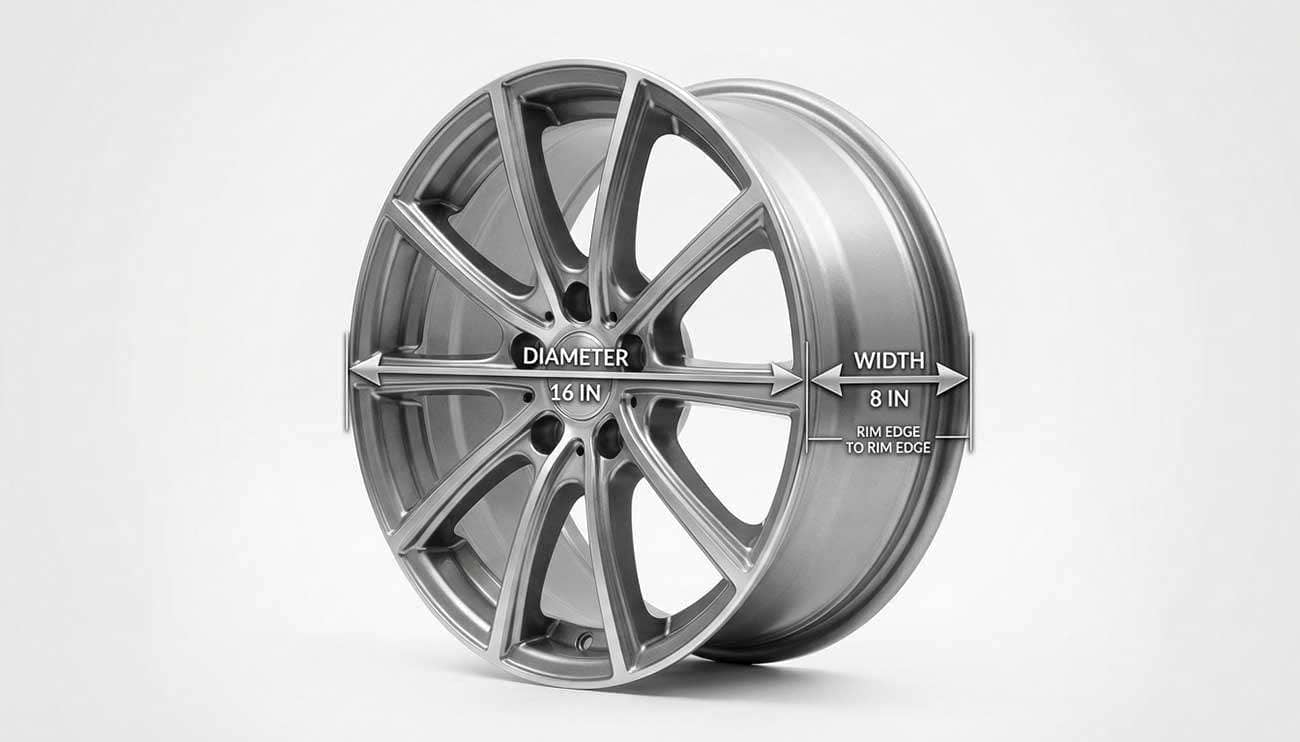
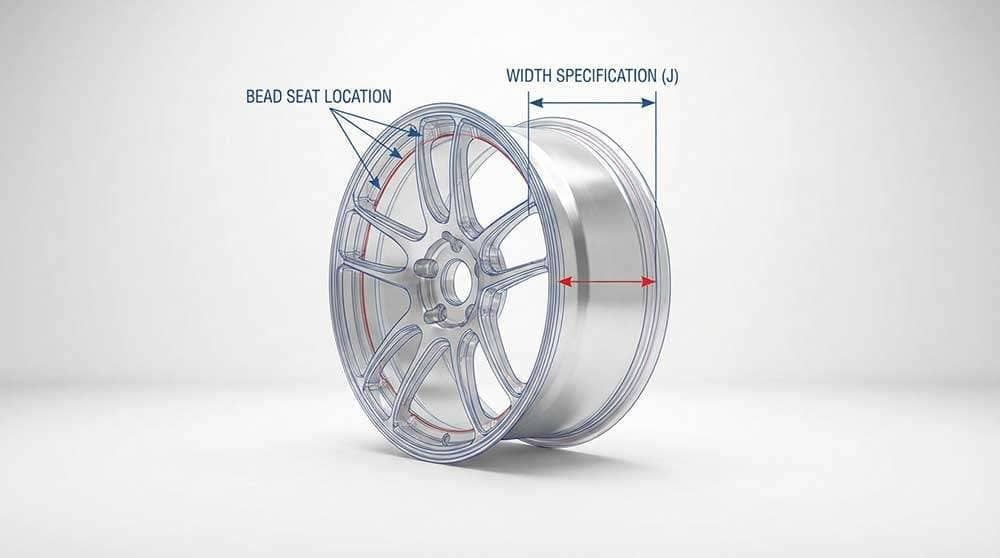
A 16x8 wheel features a 16-inch diameter and an 8-inch width. This measurement format follows the industry-standard sizing convention where diameter comes first, followed by width, both expressed in inches. The diameter (16) represents the distance across the wheel face from one edge to the opposite edge through the center. The width (8) indicates the measurement between the inner flanges where the tire bead seats against the rim.
Wheel manufacturers include much more than just basic dimensions in their markings. You might see a complete specification like "7.5Jx16H2 ET35" stamped on your wheel. Here, 7.5 indicates width in inches, "J" defines the tire bead profile, 16 shows the diameter, and "H2" represents the rim section profile symbol. The "J" designation is particularly important because it determines tire compatibility with the wheel collar profile.
The width measurement comes from the inside contact points where tire and wheel meet, not from the outer wheel edges. This precise measurement determines which tire sizes will fit properly and how the tire will perform on the rim.
Why choose a 16x8 configuration? The 16-inch diameter provides enough tire sidewall for good ride comfort while reducing stress on suspension components over time. The 8-inch width delivers improved stability and handling compared to narrower alternatives, especially when you select the right tire size to match.
Wheel sizing follows certain patterns in the industry. Common combinations like 16x8 are widely available, while unusual pairings such as 17x5 or 17x10 are rare. Standard sizes like 14x5 or 19x10 are much easier to find.
Finding wheel width information requires more effort than determining diameter. While diameter appears in your tire size (the "16" in 265/65R16 tells you the wheel diameter), width specifications are typically stamped on the back of the wheel spokes. You'll need to remove the wheel to check this marking. Without visible markings, you'll need to physically measure from inside flange to inside flange to determine width.
Getting accurate wheel measurements is crucial when selecting new tires or replacement wheels for your vehicle. We'll walk you through the proper measurement techniques to ensure perfect compatibility and avoid costly mistakes.
Wheel diameter measurement goes across the face of the wheel from one bead seat to the opposite bead seat. This measurement matters because it shows exactly where your tire makes contact with the wheel. When you see a 16-inch wheel diameter, you're looking at the precise distance between opposite bead seats—16 inches.
Width measurement works differently. We measure the horizontal distance between the inner bead seats. Here's something important to remember: the width measurement is always smaller than measuring from outer edge to outer edge. An 8-inch width wheel actually spans about 9 inches when measured from the outer flanges.
Position the wheel flat with the backside facing up for diameter measurement. Stretch your measuring tape through the center from one bead seat to the opposite bead seat. For width, keep the wheel flat and measure between the inner edges where tire beads make contact.
Most wheels make this easier by stamping size information on the back or inner spokes. You'll often see markings like "7JJx16" where 7 indicates width in inches and 16 shows diameter.
The biggest mistake we see involves measuring from outer lip to outer lip instead of between bead seats. This error adds roughly one inch to your actual measurement. Another problem occurs when you don't measure through the true center of the wheel, giving you inaccurate diameter readings.
Watch out for these other frequent errors: measuring from the tire sidewall rather than the wheel rim itself, and using measuring tools that sag during measurement. These mistakes can create serious compatibility issues and improper fitment when you're shopping for new wheels or tires.
Choosing the right tire size for your 16x8 wheels requires balancing performance, safety, and intended use. The width, height, and application determine which tires will deliver optimal results.
For 8-inch wide rims, tire width selection directly impacts handling and safety. The maximum recommended tire width ranges from 215mm to 245mm. Tire experts consistently point to 245mm tires as the practical upper limit for street applications on 8-inch wheels. Some off-road applications can accommodate wider options, with experienced drivers successfully mounting 275mm tires on 8-inch rims. However, exceeding these guidelines compromises handling characteristics and increases the risk of tire damage.
The complete tire dimensions compatible with 16x8 rims vary based on your vehicle's purpose. Off-road vehicles can accommodate 33-inch tall tires with widths between 10.5 and 12.5 inches on 16x8 wheels. Since the minimum wheel width for a 33x10.50R16 tire is 7 inches, 8-inch wheels provide suitable fitment. Performance applications typically max out at 245/45-18 for proper fitment characteristics.
Tire manufacturers' specifications establish these width ranges for 8-inch wheels:
Minimum recommended width: 215mm
Optimal tire width: 225-235mm
Maximum recommended width: 245mm
These specifications ensure proper tire bead seating, optimal contact patch, and safe handling characteristics.
Stretching tires involves mounting narrower tires on wider wheels primarily for appearance. This practice creates serious safety hazards including tire blowouts, sudden deflation, and debeading. Stretched tires develop structural problems like sidewall bubbles, cracking, and shortened service life. Performance also suffers through reduced traction, compromised handling, diminished braking ability, and increased fuel consumption.
We strongly advise against tire stretching due to these significant safety and performance compromises.
Understanding wheel measurements is crucial for proper tire fitment and vehicle safety. Here are the essential points every car owner should know:
• A 16x8 wheel means 16-inch diameter and 8-inch width, measured from bead seat to bead seat where tires contact the rim
• Measure wheel diameter across the center between opposite bead seats, not from outer edges which adds about one inch
• For 8-inch wide wheels, use tire widths between 215mm-245mm for optimal performance and safety
• Tire stretching (mounting narrow tires on wide wheels) creates serious safety risks including blowouts and handling issues
• Always check wheel markings on the back or spokes for accurate sizing before purchasing replacement tires
Proper wheel measurement and tire selection directly impact your vehicle's safety, performance, and handling characteristics. When in doubt, consult tire professionals to ensure compatibility and avoid costly mistakes.
A 16x8 wheel size indicates a wheel with a 16-inch diameter and an 8-inch width. The first number represents the diameter measured across the face of the wheel, while the second number denotes the width measured between the inner edges where the tire beads make contact.
For an 8-inch wide wheel, the recommended tire width range typically falls between 215mm and 245mm. The ideal tire width is generally considered to be between 225mm and 235mm, providing optimal performance and safety.
Yes, you can fit a 33-inch tire on a 16x8 rim, especially for off-road applications. For instance, a 33x10.50R16 tire can be mounted on an 8-inch wide wheel, as the minimum wheel width for this tire size is 7 inches.
To measure wheel size correctly, measure the diameter across the face of the wheel from one bead seat to the opposite bead seat. For width, measure the horizontal distance between the inner bead seats. Avoid common mistakes like measuring from outer lip to outer lip or using the tire sidewall for measurements.
Stretching tires (mounting narrower tires on wider wheels) is not recommended and can be dangerous. This practice can lead to increased risk of tire blowouts, sudden deflation, and compromised handling. It may also cause structural issues in the tire and reduce its service life.



