
Alloy wheels deliver real performance gains that go far beyond appearance upgrades. These lightweight alternatives can cut approximately 20% of weight compared to conventional steel wheels, creating noticeable improvements in how your vehicle handles and responds to your inputs.
Alloy wheels are manufactured using light metals—primarily aluminum combined with several other elements. The difference becomes clear when you're behind the wheel. Steel wheels feel heavy and sluggish, while alloy wheels provide more precise steering input and improved "turning in" characteristics by reducing unsprung weight. Your vehicle accelerates more responsively and brakes more effectively because there's less rotational mass to overcome. A 2023 study comparing carbon steel and aluminum alloy wheel rims found that aluminum alloy rims demonstrated superior performance in heat dissipation, braking efficiency, and fatigue life.
The performance advantages extend beyond weight savings alone. Alloy wheels are more rigid than their steel counterparts, which significantly improves cornering and handling. Heat dissipation represents another crucial benefit—these wheels move heat away from your brakes much more effectively than steel wheels, providing enhanced braking performance and reducing the risk of brake failure during demanding driving conditions.
We'll guide you through everything you need to know about alloy wheels in this article. You'll discover what they're made of, how they improve vehicle performance, the safety benefits they provide, and design advantages that make them a worthwhile investment for your vehicle.
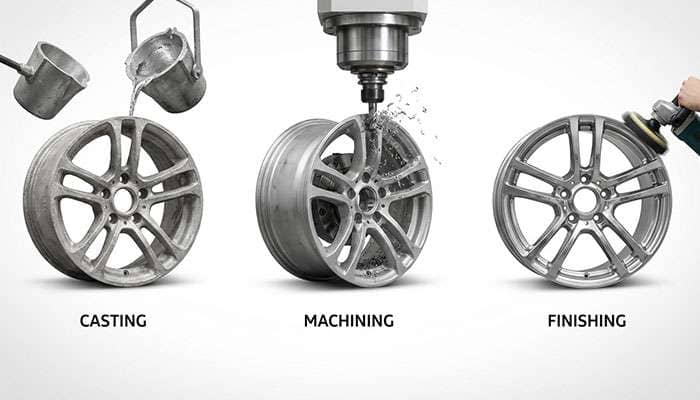
The core material in alloy wheels consists primarily of aluminum combined with other metals to create a lightweight yet robust wheel structure. Steel wheels rely on iron and carbon, but alloy wheels take advantage of non-ferrous metals with superior properties.
Alloy wheels get their name from being manufactured using mixtures of metals—most commonly aluminum combined with magnesium, nickel, or silicon. Each added element serves a specific purpose: magnesium reduces weight while maintaining strength, silicon improves castability, and copper enhances durability. Modern alloy wheels typically use 6-series aluminum alloys, which contain magnesium and silicon as primary additives, offering excellent corrosion resistance and strength.
Magnesium wheels represent the pinnacle of wheel technology. These premium wheels are approximately 30% lighter than forged aluminum by volume. A forged magnesium wheel weighs about 25% less than an equivalent cast wheel, making them highly sought after in racing applications where every gram matters.
Manufacturers produce alloy wheels through two primary methods: casting and forging. Casting involves pouring molten metal into molds, creating complex designs at reasonable costs. However, this process results in less structural integrity compared to forged wheels.
Forging uses high pressure to shape solid metal blocks. The process involves heating, rolling, hammering, and applying substantial pressure, which fundamentally alters the metal's crystal structure. This results in wheels that are simultaneously stronger and lighter but at a higher production cost.
For magnesium wheels, several casting techniques exist:
High-pressure die casting offers improved corrosion resistance and lower prices
Gravity casting provides good ductility and allows for small batch production
Flow forming combines aspects of both casting and forging for a balance of properties
Alloy wheels outperform steel wheels in weight efficiency mainly because aluminum has a density only one-third that of steel. This translates to wheels that maintain necessary strength while weighing substantially less. Magnesium is 1.5 times less dense than aluminum, allowing for even more dramatic weight reductions in premium applications.
The lighter composition delivers tangible benefits beyond appearance. Alloy wheels decrease unsprung mass—the weight not supported by the vehicle's suspension. This reduction improves handling, acceleration, and fuel efficiency.
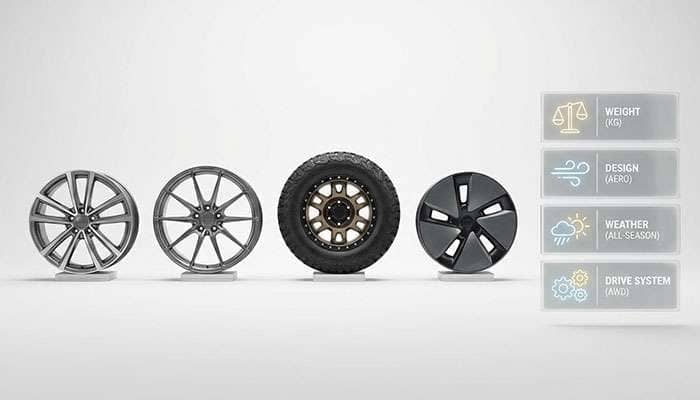
Racing engineers discovered decades ago that reducing unsprung weight delivers outsized performance gains. This fundamental principle explains why alloy wheels create such noticeable improvements in vehicle dynamics.
Alloy wheels lighten the components not supported by your car's suspension system. This unsprung weight reduction allows your suspension to react more efficiently to road imperfections. The suspension maintains better tire contact with the road surface, particularly during cornering, increasing overall grip and stability. Studies show that switching to alloy wheels can reduce a vehicle's unsprung weight by approximately 10-15%.
The weight savings makes the connection between your car and the road more responsive, allowing the suspension to absorb shocks more effectively. You'll notice the difference immediately—the steering feels more precise, and the vehicle responds more predictably to your inputs.
Alloy wheels enhance acceleration dynamics through reduced rotational inertia. With less mass to spin, your engine expends less energy getting the wheels moving, effectively increasing available power at the wheels. This translates to noticeably quicker acceleration without any engine modifications.
The stopping power advantages come from two sources. First, their lighter weight means less mass for the brakes to slow down, resulting in shorter stopping distances. Second, alloys dissipate heat much more effectively than steel wheels, preventing brake fade during intense driving. This improved thermal conductivity keeps brakes cooler, ensuring consistent braking performance even during demanding driving conditions.
Lighter alloy wheels directly contribute to better fuel economy. Independent research indicates that switching to alloy wheels can improve fuel efficiency by approximately 2-5%. This occurs because lighter wheels reduce the vehicle's rolling resistance, meaning your engine doesn't need to work as hard to keep the car moving.
The decreased rotational mass requires less energy from the drivetrain for each wheel rotation, preserving fuel during acceleration. When combined with low rolling resistance tires, aluminum wheels can reduce fuel consumption in commercial vehicles by 3% or more. Over thousands of miles, these savings add up to meaningful money in your pocket.
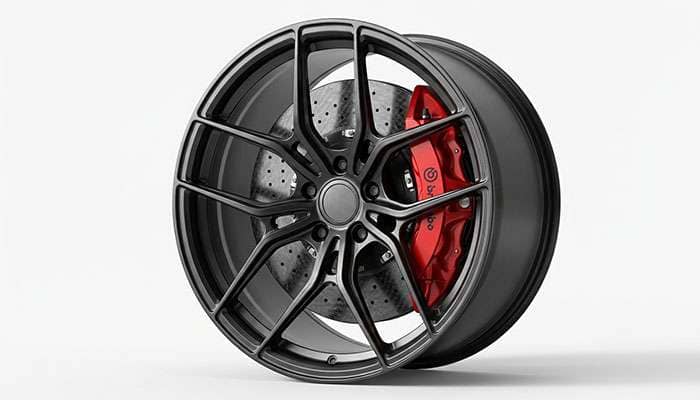
Alloy wheels provide crucial safety and durability benefits that extend well beyond the performance gains we've already discussed. These advantages become particularly important during challenging driving conditions.
Heat management represents one of the most critical safety advantages of alloy wheels. The metals in alloy wheels act as excellent heat conductors, moving heat away from your brakes and reducing fade risk under demanding conditions. This cooling capability becomes essential during aggressive driving, especially on tracks where brake temperatures can exceed 1,000 degrees F.
Tests demonstrate that aluminum alloy rims offer superior heat dissipation compared to carbon steel rims, which directly translates to maintained brake performance and reduced stopping distances. When your brakes stay cooler, they maintain consistent stopping power when you need it most.
Quality alloy wheels deliver significantly reduced wheel and tire deflection during cornering. This structural rigidity becomes particularly important with high-performance tires where lateral forces may approach 1.0g. Advanced alloy wheels demonstrate greater stability under vibrational loads.
Forged wheels represent the pinnacle of structural integrity. The 6061 material heat-treated to T6 specifications offers maximum strength-to-mass ratio, with metal that deflects less under force. This means more precise handling and better road feel during spirited driving.
Properly maintained alloy wheels typically last 3-10 years or more. Their durability stems from structural integrity that helps resist damage from everyday driving conditions. While steel wheels remain exceptionally durable, aluminum alloy wheels provide superior resistance to fatigue, showing minimal damage (only 0.2% after 10^20 cycles) under radial load testing.
This durability means you can depend on consistent performance throughout the wheel's service life, whether you're commuting daily or tackling weekend adventures.

The visual impact of alloy wheels goes far beyond basic functionality. Their extraordinary design flexibility compared to traditional steel wheels opens up possibilities that can completely transform your vehicle's appearance with a single upgrade.
Alloy wheels can be cast or forged into intricate designs with complex shapes that steel simply cannot achieve. The manufacturing process allows for remarkable design flexibility, from classic five-spoke patterns to elaborate mesh and cross-spoke variations. These wheels serve as more than just functional components—they're statement pieces that define your vehicle's character and personality. Like choosing the perfect accessory that completes an outfit, the right wheels can make or break your car's overall design. Some iconic vehicles have become legendary partly because of their distinctive wheel designs, which remain critical elements of their identity today.
You'll find alloy wheels available in an impressive array of finishes—from mirror-reflective chrome to sophisticated matte black. Chrome plating delivers the most eye-catching look, nearly as reflective as a mirror, while powder coating opens up countless color possibilities. Painted wheels come in numerous shades including gray, bronze, red, blue, silver, and multiple black variations. Diameter options typically range from 17" to 24", with various width configurations suitable for everything from daily drivers to exotic cars. Explore our wide selection of alloy wheels at Performance Plus Tire to find your perfect match.
Alloy wheels excel at accommodating performance tires due to their structural design and extensive customization options. Their wider range of sizes and fitment specifications allows for precision pairing with high-performance rubber. When you're seeking an aggressive stance, alloys can be engineered with specific width and offset combinations that extend beyond standard fenders, creating a bold look that's perfectly matched with performance tires.
Alloy wheels provide substantial benefits that extend well beyond appearance upgrades. The performance improvements we've covered—better handling, enhanced braking, and improved fuel economy—make these wheels a practical investment for any vehicle owner.
Heat management capabilities represent a critical safety advantage. Your brakes stay cooler during aggressive driving, which means more consistent stopping power when you need it most. This alone makes alloy wheels worth considering for drivers who demand reliable performance.
The structural benefits create a more connected driving experience. Less wheel deflection during cornering translates to better road feel and increased confidence behind the wheel. You'll notice the difference immediately when you take your first corner with quality alloy wheels.
Design flexibility opens up possibilities that steel wheels simply can't match. Whether you prefer classic spoke patterns or modern mesh designs, alloy wheels can transform your vehicle's entire character. The range of finishes and sizes available today means you can find the perfect match for both your performance needs and personal style.
When selecting alloy wheels, consider your driving habits, local road conditions, and budget. You'll discover that the combination of performance gains, safety improvements, and visual appeal makes alloy wheels one of the most effective upgrades you can make to your vehicle.
Ready to upgrade your ride? Browse our premium alloy wheel collection at Performance Plus Tire to find the perfect set that balances your performance requirements with your personal style preferences. Our expert team is ready to help you select wheels that will enhance both your vehicle's capabilities and its appearance.
Alloy wheels offer substantial performance and safety benefits that extend far beyond their attractive appearance, making them a smart investment for any vehicle owner.
• Alloy wheels reduce vehicle weight by 20% compared to steel wheels, improving acceleration, braking distance, and fuel efficiency by 2-5%
• Superior heat dissipation keeps brakes cooler during demanding driving, preventing brake fade and maintaining consistent stopping power
• Reduced unsprung weight enhances handling and suspension response, allowing better tire contact with road surfaces during cornering
• Design flexibility enables intricate patterns and custom finishes impossible with steel wheels, transforming your vehicle's appearance
• Structural rigidity provides less wheel deflection under stress, improving cornering stability and overall driving confidence
The combination of performance gains, safety improvements, and esthetic appeal makes alloy wheels one of the most effective single upgrades you can make to enhance your driving experience while potentially saving money on fuel costs over time.
Alloy wheels enhance performance by reducing unsprung weight, which improves handling, acceleration, and braking. They also contribute to better fuel efficiency, with potential savings of 2-5% due to decreased rolling resistance and rotational mass.
Alloy wheels offer superior heat dissipation, keeping brakes cooler and reducing the risk of brake fade during demanding driving conditions. They also provide a stronger structure with less deflection, improving overall stability and cornering performance.
Yes, alloy wheels typically have a longer lifespan under stress compared to steel wheels. With proper care, they can last 3-10 years or more. They also offer better resistance to fatigue and maintain their structural integrity well during everyday driving.
Alloy wheels provide more intricate and stylish designs than steel wheels. They come in a wide range of finishes and sizes, allowing for greater customization. Additionally, they offer better compatibility with performance tires, enabling precision pairing for optimal performance and esthetics.
While alloy wheels offer numerous benefits, they can be more expensive than steel wheels. They may also transmit slightly more road vibration and noise due to their harder material. However, for many drivers, the performance, safety, and esthetic advantages outweigh these minor drawbacks.