
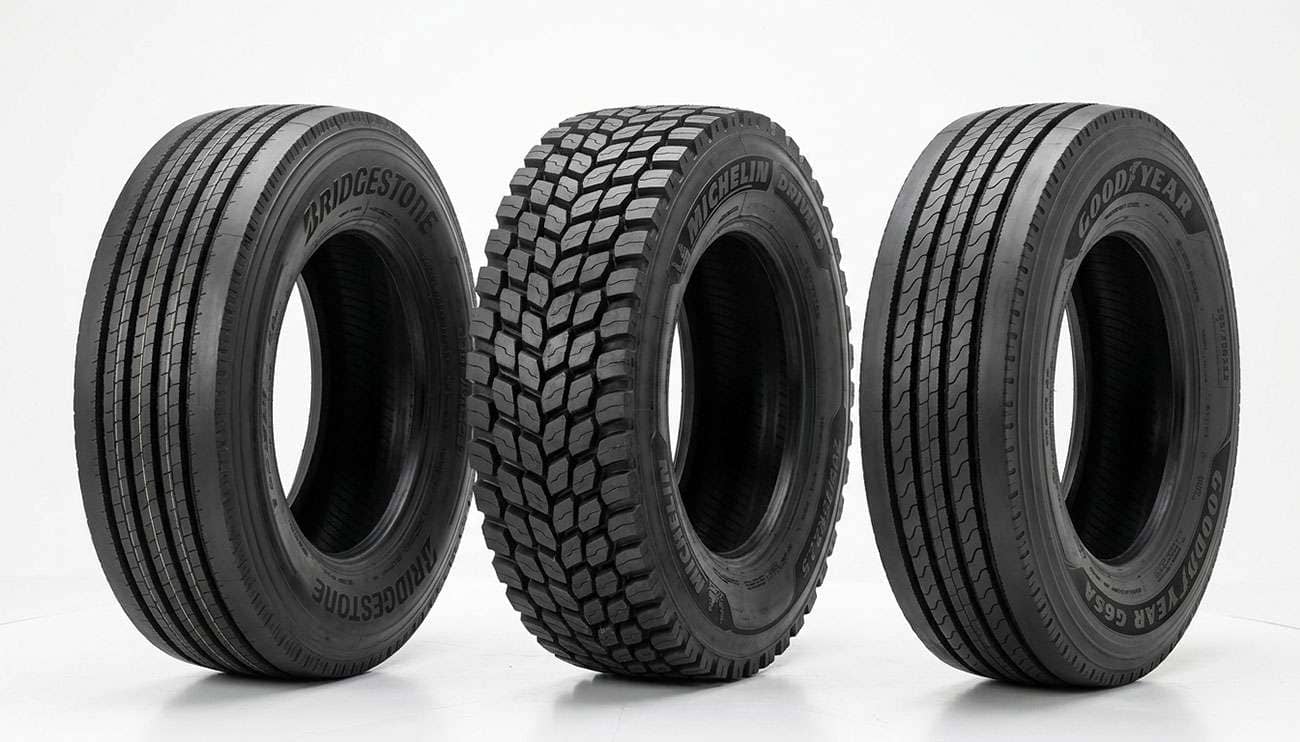
Walk around an 18-wheeler and every tire on it looks about the same — big, black, and round. But I'll let you in on something I've told a lot of fleet guys over the years: those tires are not the same, and they're not supposed to be. A semi has three jobs to do at the road surface — steer, put the power down, and carry the load — and there's a tire built for each of those jobs. Put the wrong one in the wrong spot and you'll pay for it in uneven wear, lousy fuel mileage, and in the worst case, a safety problem you really don't want.
So let's break down steer, drive, and trailer tires the way I'd explain it to somebody standing at my counter trying to spec a truck. Once you understand what each position is actually doing, picking the right rubber gets a whole lot simpler.
Here's the core idea: each axle position asks the tire to do a different job, so the tread design, the compound, and even the sidewall get tuned for that job. A steer tire is built to steer and carry heavy front-axle weight. A drive tire is built to grab the road and put the engine's power down. A trailer tire is built to carry weight and roll free without fighting back. Asking one tire to do all three at once would be a tall order, and the result would be a tire that's mediocre everywhere instead of excellent where it counts.
That's why those tires look different when you really study the tread. The pattern is the tire telling you what it's for — same principle I cover in my piece on why tires have tread. Let's take the three positions one at a time.
Steer tires ride on the front axle, and a lot of folks who know trucks will tell you they're the most important tires on the rig. Makes sense when you think about it — they're the ones pointing the whole show in the right direction. They take the driver's steering input and translate it into where 40 tons of truck and load actually goes, all while fighting against the other sixteen, twenty, or more tires that might want to wander somewhere else.
On top of that, the front axle carries serious weight — the engine and cab sit right there — so steer tires often carry more load per tire than the others, sometimes a couple thousand pounds more. To handle all that, they're built with thick, sturdy sidewalls and a distinctive straight ribbed tread that runs around the tire. Those continuous ribs give you even road contact, precise steering, and good resistance to irregular wear. They're the tire you least want to cheap out on.
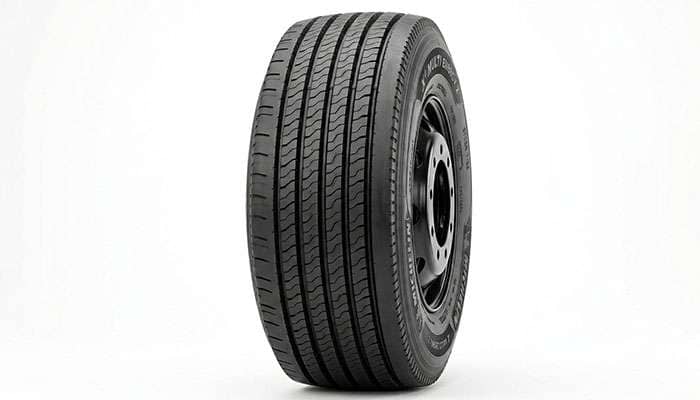
Drive tires sit on the rear drive axle (or axles), and their job is traction — getting the engine's power to the pavement and keeping the truck moving, whether that's pulling away from a stop with a full load or clawing for grip in rain, snow, or mud. Because of that, drive tires wear the hardest of the three positions. They're doing the heavy lifting every time the truck accelerates or climbs.
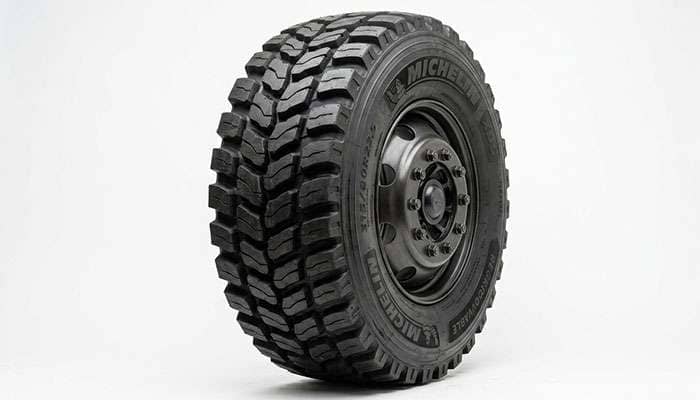
You'll spot a drive tire by its aggressive, deep, lugged tread. There are two flavors worth knowing: closed-shoulder drive tires, which are happiest on the highway for long-haul, higher-speed running, and open-shoulder drive tires, which bite harder and suit regional work with more stop-and-go and higher torque. Either way, that chunky tread is what separates a drive tire from the smoother patterns on the other axles. Because they carry heavy loads, getting their load range and load index right is just as important as the tread.
Trailer tires hang off the back on the trailer's own axles, and you might think they have the easy job — they don't steer and they don't drive, so they just go along for the ride, right? Not quite. They still carry their full share of the load, and they take a real beating: dragged over curbs, scraped across pavement in tight turns, and generally ignored by everybody until something goes wrong.
So trailer tires are built for free rolling and load carrying. They typically run a shallow ribbed tread with lots of siping across a few circumferential grooves, and they often have reinforced sidewalls to survive all that curbing and scraping. One thing that surprises people: trailer tires actually play a big role in fuel economy because there are so many of them rolling down the highway. Worth noting too — fleets often move worn steer and drive tires back to the trailer position before sending them off to be retreaded, since the trailer is a gentler home for a tire near the end of its first life. If that's new to you, my write-up on retreads as an environmentally friendly replacement alternative gets into how that works.
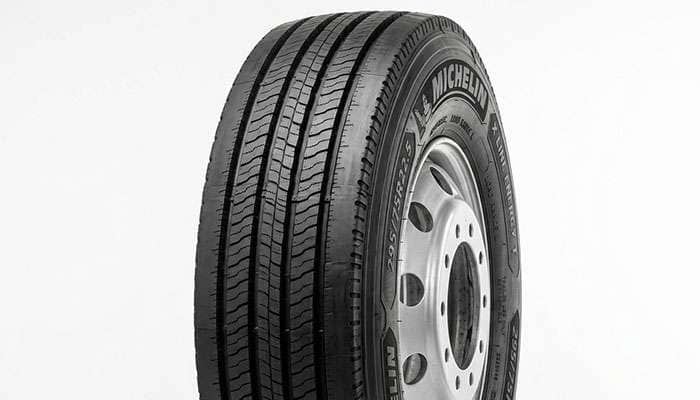
You'll also run into something called an all-position tire, and it's exactly what it sounds like — a tire designed to work in any axle position. It blends the features of the others into one versatile package. The trade-off is right there in the design: an all-position tire is a jack-of-all-trades, so it won't grip like a dedicated drive tire or steer quite like a dedicated steer tire under tough conditions, but it'll do a respectable job anywhere you put it.
Where they earn their keep is flexibility and inventory. A fleet that runs all-position tires can replace a failed tire in any spot from the same stock, which cuts down on how many different tires they have to keep on the shelf. For a lot of mixed-use operations, that convenience is worth the small performance give-up.
Now the question everybody eventually asks: can you just run whatever tire wherever? Here's my straight answer.
The steer position is the one to respect. Running a tire that isn't approved for steer use up front is both a safety risk and, for commercial operators, a compliance problem — there are federal rules about it. A steer tire is engineered for the steering and load demands of that front axle, and a drive or trailer tire dropped there can give you sloppy steering and uneven wear at best. Don't do it.
Going the other way is more forgiving. An all-position tire is rated for drive or trailer use, and tires do get shuffled rearward as they age. But the general rule holds: put each tire where it's designed to live, and always confirm the tire's load index and speed rating match what your truck needs. Keeping tires in their proper spots, paired with good rotation habits like the ones in my tire rotation guide, is how you get full life out of an expensive set.
When it's time to buy, the easiest way to get it right is to shop by position. Some manufacturers make it dead simple by building a matched family with one model per axle. A good example is the Continental Conti Hybrid line: the Conti Hybrid HS3 is the steer tire, the Conti Hybrid HD3 is the drive tire, and the Conti Hybrid HT3 is the trailer tire — same family, each tuned for its spot. For tougher on-and-off-road drive duty, the Continental Conti Terra HD3 is built to dig in, and value-minded fleets often run a workhorse like the Hercules H-309 in common sizes such as LT295/75R22.5 and LT285/75R24.5.
Match the tire to the job, get the load rating right, and don't forget to keep an eye on tread depth so you replace before it bites you. You can browse the full lineup on our commercial truck tires page, find rubber for the back of the rig under trailer tires, and round out a build with semi truck wheels. If you'd rather have us help you spec the whole truck, here's why Performance Plus Tire is the best choice for commercial tires.
Here's the quick side-by-side to keep it all straight:
Feature |
Steer |
Drive |
Trailer |
|---|---|---|---|
Axle position |
Front |
Rear (powered) |
Trailer axles |
Main job |
Steering + front load |
Traction + power |
Carry load, roll free |
Typical tread |
Straight ribs |
Deep lugs (open/closed shoulder) |
Shallow ribs, heavily siped |
Wears fastest? |
High stress, even wear |
Yes — hardest worked |
Irregular wear from scrubbing |
Sidewall |
Sturdy, thick |
Heavy-duty |
Reinforced against curbing |
So what's the difference between steer, drive, and trailer tires? Each one is built for a different job. Steer tires point the truck and carry heavy front-axle weight on a straight ribbed tread. Drive tires put the power down with aggressive lugs and wear the hardest. Trailer tires carry the load and roll free on a shallow, siped pattern with tough sidewalls. All-position tires split the difference for flexibility. Respect the steer position especially, match every tire to its spot and load rating, and you'll get longer life, better mileage, and a safer truck. When you're ready to spec it out, our commercial truck tires lineup has the right tire for every axle.
No. Steer tires are engineered for the steering and load demands of the front axle, and running a drive tire there can cause sloppy steering and uneven wear. For commercial operators, using a tire not approved for the steer position is also a federal compliance violation. Always use a steer-rated or all-position tire up front.
Drive tires transmit the engine's power to the road, so they take the brunt of every acceleration, climb, and traction demand. That constant work, combined with their deep lugged tread, means they typically wear faster than steer or trailer tires.
An all-position tire is designed to work in any axle position — steer, drive, or trailer. It blends the features of the dedicated tires into a versatile package. It won't outperform a position-specific tire in extreme conditions, but it offers good all-around performance and simplifies fleet inventory.
Trailer tires don't steer or drive — their job is to carry load and roll freely. A shallower, heavily siped rib tread suits that free-rolling duty, helps with fuel economy across all those trailer positions, and pairs with reinforced sidewalls to survive curbing and scrubbing in tight turns.
Look at the tread. Steer tires have a straight ribbed pattern running around the tire for even contact and precise steering. Drive tires have an aggressive, deep, lugged tread for traction. Many tires also indicate their intended position in the model name or sidewall markings.



