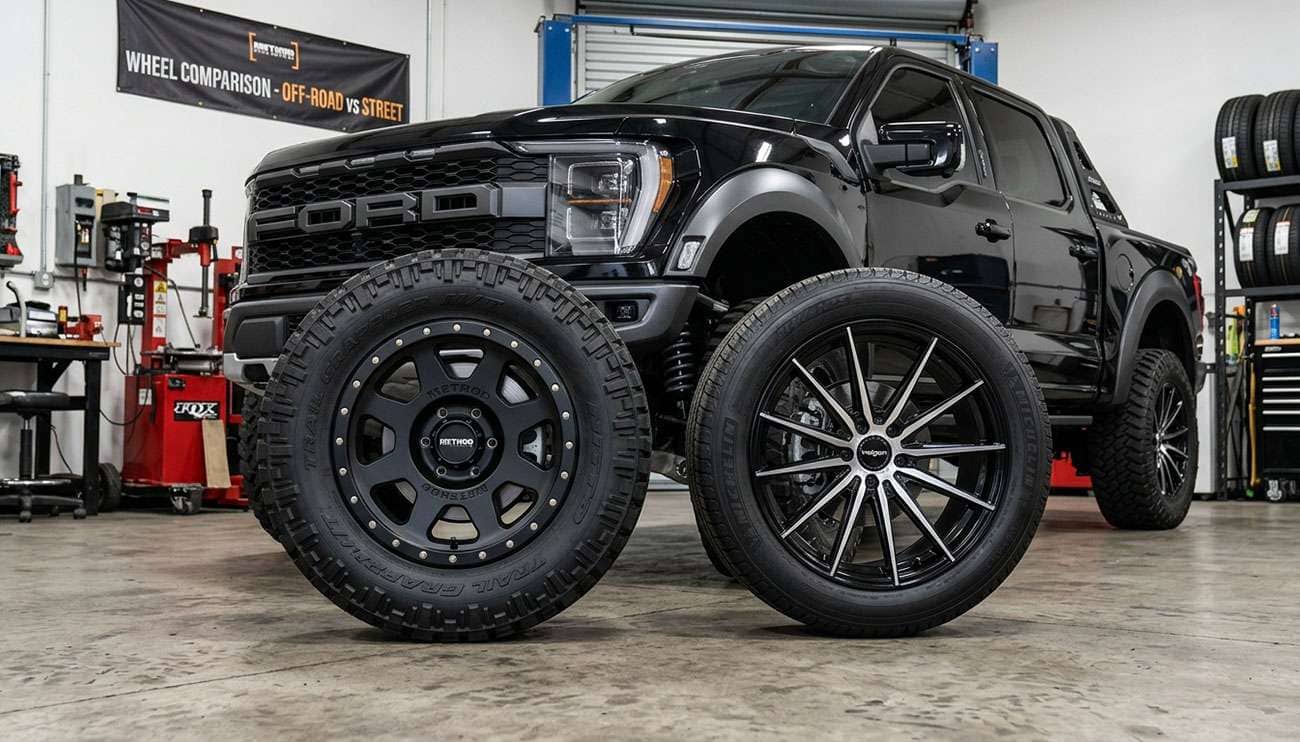
The difference between off-road wheels and regular wheels runs deeper than looks. You're choosing between two fundamentally different engineering approaches—one built for smooth pavement, the other engineered to survive impacts, articulation, and terrain that would destroy a conventional wheel. I've helped thousands of customers navigate this decision over the past three decades, and the gap between these wheel categories has never been clearer or more important to understand.
Here's the truth: most drivers don't need off-road wheels for their commute. But once you start tackling trails, rock crawling, or serious overlanding, regular wheels become a liability. They're simply not built for the punishment you're about to dish out. Off-road wheels feature reinforced construction, different offset geometry, and material choices specifically designed for extreme use. This isn't about upgrades—it's about safety when you're 50 miles from pavement.
In this guide, you'll get the complete breakdown of what separates off-road wheels from street wheels. We'll cover construction methods, load ratings, offset specs, beadlock technology, and real-world sizing strategies that work in 2026. Whether you're building a dedicated trail rig or just want wheels that handle weekend fire road adventures, you'll know exactly what to buy for your vehicle and budget.
Off-road wheels and regular wheels serve completely different masters. Regular wheels optimize for smooth pavement, predictable loads, and aerodynamic efficiency. Off-road wheels prioritize impact resistance, low-pressure capability, and handling side loads that would bend a street wheel. This difference shows up in every design element—material thickness, spoke geometry, bead seat reinforcement, and offset specifications.
Off-road wheels use thicker construction with reinforced spoke areas and bead seats engineered to hold tires at 8-12 PSI. Regular wheels assume you'll run 30-35 PSI on smooth roads where stress comes mainly from vertical loads and cornering forces. When you air down for trails, regular wheels face bead unseating and structural flex that off-road designs specifically prevent. You'll pay 3-8 pounds per wheel in extra weight, but that weight lives exactly where it matters most—in critical stress zones.
Load rating tells you the maximum weight each wheel can safely support. Regular passenger wheels typically handle 1,500-2,200 pounds per wheel for highway use. Off-road wheels designed for trucks and SUVs often exceed 3,000 pounds per wheel, accounting for dynamic loads from articulation, impacts, and uneven weight distribution when one wheel drops into a hole while others climb obstacles. These aren't theoretical numbers—they're safety margins that prevent catastrophic failures on the trail.
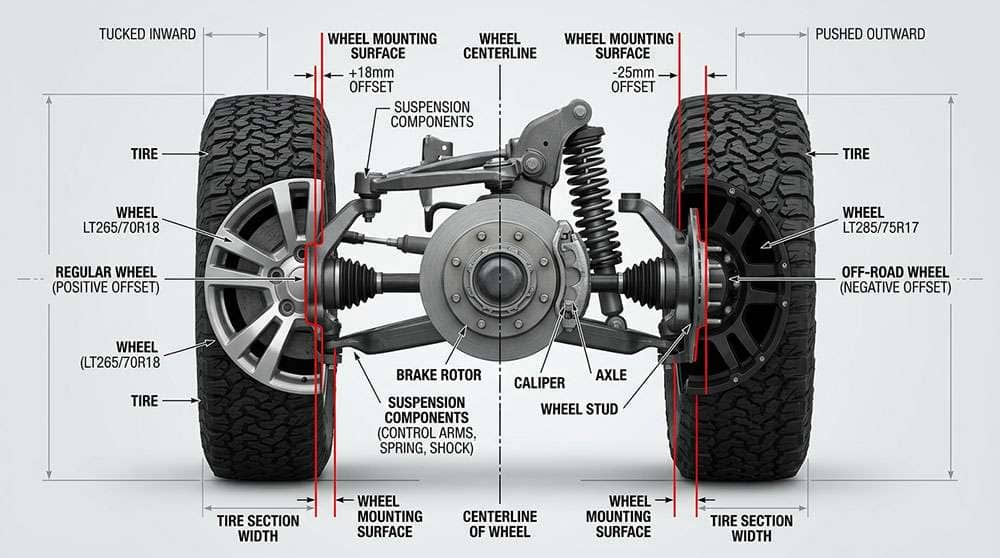
Offset and backspacing separate off-road wheels from stock applications immediately. Regular wheels use positive offset (mounting surface forward of centerline) to tuck tires inside fender wells for aerodynamics and turning clearance. Off-road wheels commonly feature zero or negative offset, pushing tires outward to widen your stance, improve stability on off-camber trails, and clear larger brakes and suspension components. This wider stance reduces body roll but increases steering effort and can accelerate bearing wear if you go too extreme.
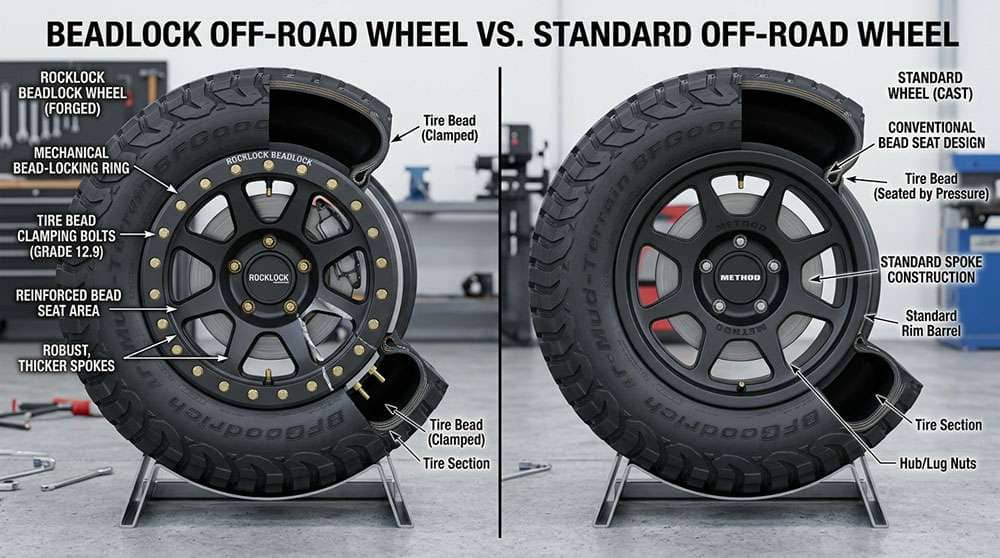
Beadlock wheels represent the most dramatic technological difference you'll encounter. Traditional wheels rely on air pressure and friction to seat the tire bead against the rim. Beadlock wheels mechanically clamp the outer bead with a bolted ring, letting you run extremely low pressures—even below 5 PSI—without the tire spinning on the wheel or unseating. This technology adds 8-12 pounds per wheel and requires periodic maintenance. For serious off-road use, beadlocks deliver capabilities regular wheels can't touch.
Specification |
Regular Wheels |
Off-Road Wheels |
|---|---|---|
Average Weight (17") |
22-26 lbs |
28-35 lbs |
Typical Load Rating |
1,500-2,200 lbs |
2,500-3,500 lbs |
Minimum Safe Air Pressure |
26-28 PSI |
12-15 PSI (20+ with beadlocks) |
Typical Offset Range |
+35mm to +45mm |
-12mm to +20mm |
Material Thickness (Spoke Area) |
3-4mm |
5-7mm |
Price Range (Per Wheel) |
$100-$300 |
$200-$600+ |
The costliest mistake I see customers make is buying wheels based purely on looks without verifying load ratings. A wheel that looks aggressive might only carry a 2,000-pound load rating—dangerous on a three-quarter-ton truck that puts 3,500 pounds on each rear wheel when loaded. Always verify your total wheel load rating exceeds your vehicle's Gross Vehicle Weight Rating divided by four, with at least a 20% safety margin for off-road dynamics. No exceptions.
Offset miscalculations create expensive problems when switching from regular to off-road wheels. Moving from a +40mm offset stock wheel to a -12mm off-road wheel pushes your tire centerline outward by 52mm—just over 2 inches. This change affects turning radius, stresses wheel bearings and suspension bushings, and can cause tire-to-fender contact during full articulation. Always test-fit wheels with your intended tire size before you buy, especially when combining lift kits with aggressive offsets.
Ignoring beadlock maintenance leads to failures you could easily prevent. Beadlock rings require retorque after the first 100 miles, then periodic checks every 3,000-5,000 miles depending on use. You must torque the bolts in a star pattern to the manufacturer's specification—typically 15-20 ft-lbs. Skip this maintenance and you risk ring movement, air leaks, or catastrophic bead unseating during aggressive trail use. If you won't perform this maintenance, choose standard off-road wheels with reinforced bead seats instead of beadlocks.
A wheel size specification like "17x9 -12mm" contains three critical dimensions that determine fitment and performance. The first number (17) represents wheel diameter in inches—this must match your tire's diameter specification exactly. The second number (9) indicates wheel width in inches, measured between the inner bead seats. Wider wheels support wider tires and can improve stability, but they also add weight and may require more aggressive offset to avoid rubbing.
The offset number (-12mm in this example) shows how far the mounting surface sits from the wheel's centerline. Negative offset pushes the tire outward from your vehicle, creating a wider stance. Zero offset places the mounting surface exactly at centerline. Positive offset tucks the tire inward. For off-road applications, you'll typically see -12mm to +20mm, compared to the +35mm to +50mm common on regular street wheels. Every millimeter of offset change moves your tire's centerline by exactly one millimeter—it's a direct relationship.
Bolt pattern specifications like "6x5.5" indicate the number of lug holes (6) and the diameter of the circle they form (5.5 inches, or 139.7mm). This measurement must match your vehicle's hub exactly—there's zero room for adjustment. Backspacing, measured in inches from the wheel's mounting surface to its outer lip, provides another way to understand wheel positioning relative to your vehicle. A wheel with 4.5 inches of backspacing on a 9-inch wide wheel has 4.5 inches behind the mounting surface and 4.5 inches in front.
Choosing between off-road wheels and regular wheels starts with honest assessment of how you actually use your vehicle. If your truck or SUV sees pavement 90% of the time with occasional gravel road trips, quality regular wheels give you everything you need while saving weight, improving fuel economy, and reducing costs. But if you're regularly airing down for trail use, tackling rock gardens, or pushing through deep mud, off-road wheels transition from nice-to-have to absolute necessity based on structural capabilities alone.
Your tire choice makes the decision clearer. Planning to run all-terrain tires in standard sizes on a mildly lifted truck for fire road access and light trail duty? Quality regular wheels with appropriate load ratings can absolutely handle the job. But when you're moving to 35-inch or larger tires, planning serious articulation, or need to air down below 15 PSI, purpose-built off-road wheels provide capabilities that justify their cost premium.
Half-ton trucks like the Ford F-150, Ram 1500, and Chevrolet Silverado 1500 offer the widest range of wheel options because their moderate weight allows lighter off-road wheel designs. These vehicles typically run 17-20 inch wheels with widths between 8.5 and 10 inches. For mild off-road use, quality cast aluminum wheels with reinforced construction work well. For serious trail use or large tire packages (35 inches and up), step up to forged aluminum or true beadlock designs that handle increased loads and lower air pressures.
Three-quarter-ton and one-ton trucks demand more careful wheel selection due to higher load requirements. A Ram 2500 with a diesel engine puts over 7,000 pounds on the front axle alone—each front wheel must safely carry 3,500 pounds plus dynamic loads from trail impacts. Regular light-duty wheels are genuinely dangerous in this application. Look for wheels with minimum 3,000-pound per-wheel load ratings, and verify the rating applies to your specific vehicle and intended use. Many manufacturers provide separate load ratings for highway versus off-road use—know which applies to you.
SUV owners face different considerations based on platform type. Body-on-frame truck-based platforms like the Toyota 4Runner or Jeep Wrangler follow the same wheel selection criteria as their pickup counterparts and can handle true off-road wheels with aggressive offsets. Unibody crossovers like the Honda Pilot or Ford Explorer have lighter suspension components and lower ground clearance that limits practical off-road wheel options. Stick with modest sizing and moderate offsets to avoid overwhelming suspension bushings and CV joints not designed for aggressive wheel loads.
Rock crawlers need maximum articulation capability and the lowest possible air pressures to maximize tire contact patches on uneven terrain. This driving style demands beadlock wheels with ultra-low offset (often -25mm or more negative) to provide stability in extreme off-camber situations. Weight becomes secondary to strength and functionality. If you're building a dedicated trail rig that rarely sees highway speeds, accept the weight penalty of heavy-duty beadlocks and focus on load ratings, bead security, and damage resistance.
Overlanders and adventure tourers prioritize reliability over extreme capability because you're often hundreds of miles from support when problems occur. For this use case, strong non-beadlock off-road wheels with moderate offsets (-6mm to +12mm) provide the best balance. You want sufficient strength for loaded vehicle weight plus gear, resistance to damage from rocks and trail debris, but enough versatility to drive comfortably at highway speeds for long distances. Forged aluminum wheels offer an excellent strength-to-weight ratio for overlanding applications where every pound matters over thousands of miles.
Weekend warriors who split time between street and trail need wheels that won't destroy your daily driving experience while providing capability when needed. Look for off-road wheels in the 17-18 inch diameter range with widths around 8.5-9 inches and modest negative offset (-6mm to 0mm). This sizing allows you to run capable 33-34 inch tires without excessive stance, maintains reasonable street manners, and provides genuine off-road strength without the weight penalty of extreme designs. You're looking for the 80/20 solution—handles 80% of what serious wheels do with 20% of the compromises.
Entry-level off-road wheels from reputable manufacturers start around $200 per wheel and provide genuine capability improvements over regular wheels. These cast aluminum designs feature reinforced construction, appropriate load ratings for light-duty trucks, and styling that matches off-road aesthetics. For occasional trail use with modest tire sizes (up to 33 inches), these wheels deliver real value. You're trading some weight savings and ultimate strength for accessibility—a smart trade if you're not pushing extreme limits regularly.
Mid-range off-road wheels ($300-$450 per wheel) introduce improved materials, better manufacturing processes, and often lighter weight despite increased strength. Flow-formed aluminum wheels use a process that work-hardens the material during manufacturing, creating strength approaching forged wheels at cast aluminum prices. This price range also unlocks entry-level beadlock designs for serious off-roaders who need that capability without stepping up to premium forged beadlocks that cost $600-$800 per wheel.
Premium off-road wheels justify their cost through genuine performance advantages in specific applications. Forged aluminum wheels can weigh 8-12 pounds less than equivalent cast wheels while providing superior strength and impact resistance. For competition rock crawling or serious expedition use where wheel failure could be dangerous or catastrophic, the investment makes complete sense. But for most recreational users, mid-range wheels provide 90% of the performance at 60% of the cost. Invest your budget wisely based on your actual use case rather than aspirational goals that may never materialize.
Use Case |
Recommended Wheel Type |
Typical Size Range |
Budget Range |
|---|---|---|---|
Daily Driver, Occasional Gravel |
Quality Regular Wheels |
17-18" diameter, 8-9" width |
$150-$250/wheel |
Weekend Trail Use, Mild Lifts |
Cast Off-Road Wheels |
17-18" diameter, 8.5-9" width |
$200-$350/wheel |
Serious Trail/Overland Use |
Flow-Formed or Forged |
17-20" diameter, 9-10" width |
$350-$500/wheel |
Rock Crawling, Competition |
Beadlock Wheels |
17" diameter, 9-10" width |
$400-$800/wheel |
Heavy-Duty Trucks (3/4-ton+) |
HD Off-Road Wheels |
17-20" diameter, 8.5-9" width |
$300-$600/wheel |
After working with thousands of customers and seeing real-world results across every type of off-road use, certain wheel characteristics consistently deliver the best outcomes. These recommendations reflect both technical specifications and practical performance feedback from customers who've put serious miles on their equipment. Specific brand and model availability changes, but the fundamental specifications and construction methods remain relevant regardless of what's currently in stock at Performance Plus Tire.
For vehicles spending most time on pavement but needing occasional off-road capability, look for cast aluminum wheels with reinforced spoke designs and load ratings at least 25% above your vehicle's requirements. A 17x8.5 wheel with +12mm to +20mm offset provides excellent versatility for half-ton trucks running 33-inch tires. This sizing maintains good street manners while providing genuine trail capability when needed. Your total investment should run $800-$1,200 for four wheels—meaningful capability improvement over stock without breaking the budget.
The key specification for daily driver off-road wheels is maintaining reasonable weight while upgrading strength. Look for wheels in the 26-30 pound range for 17-inch sizes. Heavy enough to indicate solid construction, light enough to avoid hurting acceleration and braking performance. Finish quality matters more for daily drivers since you'll see these wheels every day, so invest in powder coating or premium painted finishes that resist brake dust and road grime better than cheaper alternatives.
Serious off-road performance demands flow-formed or forged aluminum construction with aggressive negative offsets and serious load ratings. For rock crawling and technical terrain, beadlock wheels become essential equipment rather than optional accessories. A 17x9 wheel with -12mm offset and 3,200-pound load rating provides the strength and capability needed for extreme use. Plan on $1,600-$3,200 for a proper set of performance off-road wheels. This isn't the place to compromise on quality or capability.
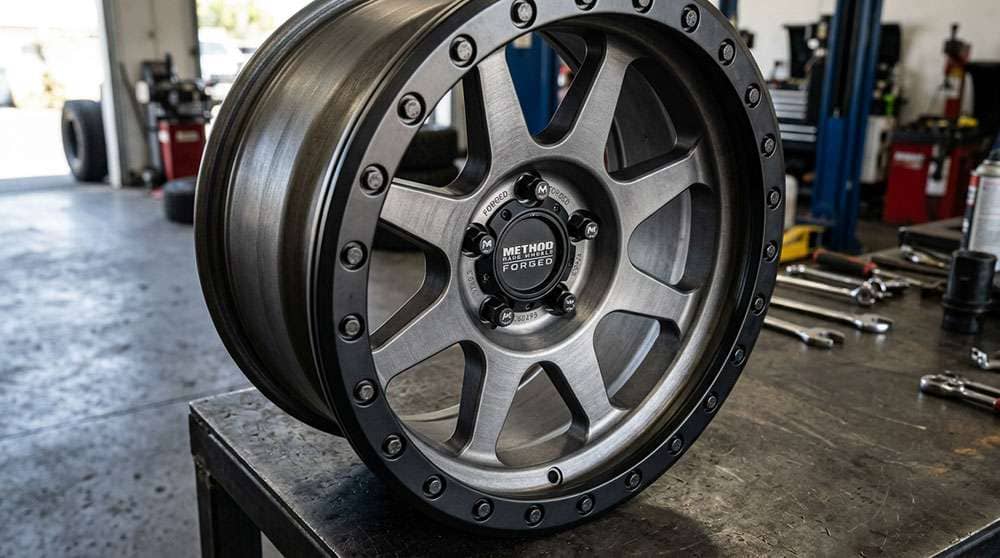
Performance-oriented wheels benefit from specific features casual users don't need. Look for wheels with accessible valve stem positions that allow easy tire pressure checks and adjustments on the trail. Beadlock rings should use stainless steel hardware rather than zinc-plated bolts that corrode in mud and water. Spoke designs should provide maximum clearance for large brake calipers and suspension components—many serious off-roaders upgrade brakes along with wheels and discover fitment conflicts too late. Always verify brake caliper clearance before purchasing performance wheels, especially for heavy-duty trucks with upgraded brake systems.
Budget-conscious buyers can find legitimate off-road capability in the $175-$250 per wheel range by focusing on proven cast aluminum designs from established manufacturers. Look for simpler spoke patterns without excessive styling details—these tend to be stronger and lighter than overly complex designs. A 17x8.5 wheel with 0mm to +12mm offset provides good versatility for most applications while keeping costs reasonable. At this price point, your total investment runs around $700-$1,000 for four wheels—excellent value if you choose wisely.
The budget category requires more careful evaluation of load ratings and construction quality. Avoid wheels that seem unusually light for their size. Ultra-lightweight budget wheels achieve weight savings by removing material from critical stress areas, which compromises durability. Instead, accept slightly higher weight (28-32 pounds for 17-inch wheels) as evidence of adequate material thickness. Also verify that warranty coverage includes off-road use—many budget wheels carry warranties that specifically exclude off-highway damage, leaving you unprotected if problems occur during trail use.
Budget wheels work best when paired with moderate tire sizes and lifting. Running 33-inch tires on a mildly lifted truck for fire road access and light trail duty? Quality budget off-road wheels provide everything you need. But planning 35-inch or larger tires, aggressive wheeling, or regular rock crawling? Invest in mid-range or premium wheels. The $300-$500 you save by going budget won't seem worth it when you're dealing with a cracked wheel 50 miles into a trail system. Match your wheel investment to your actual use intensity rather than hoping budget components can handle more than they're designed for.
The difference between off-road wheels and regular wheels extends far beyond aesthetics and price tags. It's fundamentally about engineering priorities. Regular wheels optimize for smooth surfaces, fuel economy, and street performance. Off-road wheels prioritize impact resistance, low-pressure capability, and structural strength under conditions that would destroy conventional designs. Understanding these differences allows you to make informed decisions that match your actual needs rather than buying based on appearance or hoping one wheel type can effectively serve both purposes.
Your wheel choice directly impacts safety, capability, and long-term satisfaction with your vehicle. Regular wheels on serious trails risk catastrophic failure that can leave you stranded or injured. Off-road wheels on daily drivers sacrifice fuel economy, ride quality, and potentially accelerate suspension component wear if taken to extremes with aggressive offsets and oversized tires. The sweet spot involves honest assessment of how you actually use your vehicle, then selecting wheels engineered for that specific application with appropriate safety margins built in.
Whether you're building a dedicated trail rig or simply want the confidence to explore fire roads on weekend adventures, Performance Plus Tire provides the expertise and product selection to match wheels to your specific needs. We carry everything from quality budget options for occasional trail use to premium beadlock designs for serious rock crawling, all backed by expert guidance to ensure proper fitment, appropriate load ratings, and realistic expectations for your intended use. The right wheels transform your off-road capability while maintaining the street performance you need for daily driving. Make that choice based on knowledge rather than guesswork.
Understanding the critical differences between off-road and regular wheels helps you make informed purchasing decisions that match your vehicle's actual use.
• Construction and load ratings matter most: Off-road wheels feature thicker material (5-7mm vs 3-4mm), reinforced bead seats, and load ratings typically 30-50% higher than regular wheels to handle impact forces and articulation stress that destroy conventional designs.
• Offset dramatically affects handling and clearance: Moving from typical +40mm regular wheel offset to -12mm off-road offset pushes your tire centerline outward by 52mm (2+ inches), affecting turning radius, suspension stress, and fender clearance that requires careful planning and verification.
• Beadlock technology enables extreme capability: Mechanical bead clamping allows air pressures below 10 PSI for rock crawling and technical terrain, but adds 8-12 pounds per wheel and requires regular maintenance—only worthwhile if you actually need this capability level.
• Match wheels to actual use intensity: Daily drivers with occasional trail use need different specifications than dedicated rock crawlers—honest assessment of your driving prevents overspending on capabilities you won't use or under-buying strength you genuinely need.
• Budget wisely across the performance spectrum: Quality entry-level off-road wheels ($200-$250) provide real capability for recreational use, mid-range flow-formed wheels ($300-$450) offer best value for serious enthusiasts, while premium forged or beadlock wheels ($500-$800) justify costs only in extreme applications.
Regular wheels can handle light off-road use like gravel roads and well-maintained fire trails if they have appropriate load ratings for your vehicle and you maintain proper air pressure (typically 26 PSI minimum). However, regular wheels lack reinforced bead seats and structural strength for serious trail use, rock crawling, or situations requiring low air pressure below 20 PSI. If your "occasional off-roading" involves technical terrain, deep ruts, or large rocks, upgrade to purpose-built off-road wheels to avoid costly damage or dangerous failures.
Offset selection depends on your vehicle type, tire size, and suspension setup. Half-ton trucks typically work well with -6mm to +12mm offset for 33-35 inch tires on mild lifts. More aggressive builds with larger tires may use -12mm to -25mm offset, but extreme negative offsets increase suspension stress and bearing wear. Always verify your chosen offset provides adequate clearance for full suspension articulation and steering lock without tire-to-fender contact. Start conservative and adjust based on actual fitment rather than assuming maximum negative offset is always better.
Beadlock wheels are essential for rock crawling and technical terrain where you regularly air down below 12 PSI to maximize tire contact and articulation. For general trail use, overlanding, and mild rock crawling where you maintain 15-18 PSI minimum, quality non-beadlock off-road wheels with reinforced bead seats provide adequate security at much lower cost and without maintenance requirements. Beadlocks add $200-$400 per wheel and require periodic bolt retorquing—only invest in this technology if you genuinely need single-digit air pressure capability for your specific type of off-roading.
Off-road wheels typically weigh 3-8 pounds more per wheel than equivalent-size regular wheels due to thicker construction and reinforced areas. A 17-inch regular wheel might weigh 24 pounds while a comparable off-road wheel weighs 28-32 pounds, and beadlock designs add another 8-12 pounds to reach 36-40 pounds total. This weight penalty affects acceleration and fuel economy slightly but lives in critical structural areas that prevent failures under off-road stress. Premium forged off-road wheels can match or beat regular wheel weight while providing superior strength, but cost $500-$800 per wheel versus $200-$350 for quality cast designs.
Fitment depends on wheel size, offset, and your specific vehicle's brake caliper and suspension geometry. Most off-road wheels in 17-18 inch diameters with moderate offsets (0mm to +18mm) fit stock suspensions on trucks and SUVs without issues. However, larger diameter wheels (20 inches+), extreme negative offsets (below -12mm), or wider wheel widths (10+ inches) may cause clearance problems with brake calipers, control arms, or fender wells during full steering lock and suspension articulation. Always verify brake caliper clearance specifications and test-fit wheels with your intended tire size before purchasing, especially on vehicles with upgraded brake systems or factory performance packages.