
Ram 2500 aftermarket tires can dramatically improve your truck's performance and appearance. Getting the fitment wrong creates headaches you don't need - rubbing issues, poor handling, and unexpected modification costs.
Your truck's specifications determine everything before you spend money on new rubber and rims. The wrong choice means dealing with problems that proper planning prevents.
Heavy towing, off-road adventures, or daily commuting - each demands different tire and wheel combinations. You need to understand your ram 2500 bolt pattern, current lift height, and how you actually use your truck. Whether you're seeking the best all terrain tires for ram 2500 performance or need the best tires for ram 2500 towing applications, fitment accuracy makes the difference between success and frustration.
We'll guide you through everything required to select the perfect ram 2500 wheels and tires combination for your specific truck and needs.
The ram 2500 bolt pattern forms the foundation of proper fitment. Ram has kept this specification consistent - every Ram 2500 from 1994 through 2026 uses an 8x6.5" bolt pattern, which translates to 8x165.1mm in metric measurements. Eight bolts arranged in a perfect circle measuring 6.5 inches or 165.1 millimeters in diameter.
The hub bore measures exactly 121.3mm across all modern generations. This number matters more than most people realize when selecting aftermarket wheels. Factory wheels center directly on the hub itself - that's hub-centric design. Most aftermarket wheels rely on lug nuts for centering, which is lug-centric. Skip the proper hub-centric rings to bridge the gap between your 121.3mm hub and a larger wheel bore, and vibrations become your new driving companion.
Offset measures the distance from the wheel's centerline to its mounting surface in millimeters. Positive offset tucks the mounting surface toward the outer lip, creating that factory appearance. Negative offset pushes the mounting surface inward, which moves the wheel outward from the truck body.
Backspacing works differently - it measures from the mounting surface to the wheel's rear lip in inches. Take a nine-inch wide wheel with +25mm offset (roughly 1 inch), and the backspacing calculates to 5.5 inches using this formula: wheel width divided by two, plus the offset. So 9/2 + 1 = 5.5 inches.
Factory offset on 2003-2018 models sits around +44mm. Most aftermarket setups run +18mm to +20mm for flush fitment, though some owners push to +12mm or even 0mm for more aggressive stances.
Tire sizing uses two different systems that confuse many truck owners. Standard metric sizing like LT265/70R17 breaks down systematically: LT indicates Light Truck construction, 265 shows width in millimeters, 70 represents sidewall height as a percentage of width, R means radial construction, and 17 specifies wheel diameter in inches.
Flotation sizing like 35x12.50R17 reads more intuitively: 35 equals overall tire diameter in inches, 12.50 shows section width in inches, and 17 remains the wheel diameter.
Each Ram 2500 generation brought wheel and tire updates. The 1994-2002 BR/BE generation typically featured 16x6.5 or 16x8 wheels paired with LT245/75R16 tires. The 2003-2009 DR/DH models stepped up to 17x7.5 or 17x8 wheels. The 2011-2018 DS/DJ generation offered 17x8, 18x8, or 20x8 factory wheels with tire sizes spanning from LT245/70R17 to LT285/60R20. The 2019-2025 redesign maintained similar wheel dimensions but focused on LT245/70R17, LT285/70R17, LT275/70R18, and LT285/60R20 configurations.
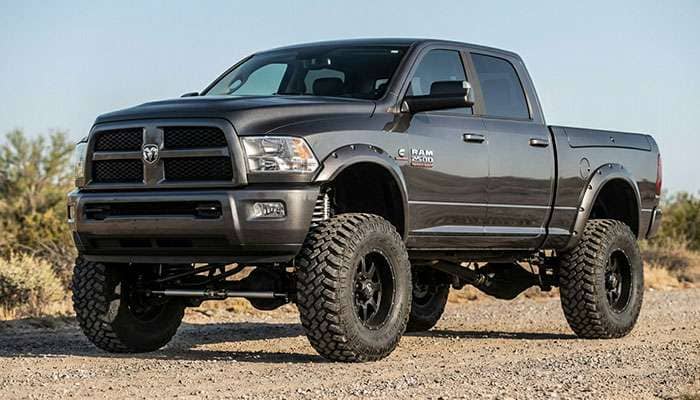
Lift height determines your maximum tire size options. Measure from the center of each wheel hub to the bottom edge of the fender at all four corners. Ground-to-frame measurements give false readings because tire size affects that distance. Compare your measurements against a stock Ram 2500 from the same year to calculate your actual lift height.
Stock trucks without air suspension typically measure 26-27 inches at the front hub-to-fender. Remember that coil spring lifts settle 0.5 to 1.0 inches after the first 500-1,000 miles of driving. This settling affects your final clearance calculations.
Most Ram 2500 owners need the extra towing and payload capacity for large trailers, boats, or job site cargo. Towing remains the primary purpose for ¾-ton trucks, so tire selection should prioritize load capacity and stability over aggressive off-road capability.
Daily drivers who occasionally hit dirt roads have different requirements than weekend trail runners. Your primary use case determines whether you need highway-focused tires with excellent towing stability or more aggressive treads for off-road traction.
Diesel Ram 2500 models require Load Range E tires at minimum for proper load support. LT-rated tires offer stiffer sidewalls compared to P-rated options, reducing sidewall squirm under heavy tongue weight.
Many owners report excellent results with Michelin Defender LTX M/S tires for highway stability and treadwear during towing applications. However, they lack traction on wet grass at campsites. Load capacity and stability matter more than aggressive tread patterns for serious towing.
All-terrain tires balance on-road comfort with off-road capability for trucks spending 80 percent of their time on pavement. Highway tires deliver quieter rides and better fuel economy but lack sidewall reinforcement for rock protection.
Mud-terrain tires excel in extreme conditions but increase stopping distances and road noise on pavement. All-terrain tires feature deeper tread than highway options while maintaining reasonable noise levels. Your driving split between pavement and dirt determines which category serves you best.
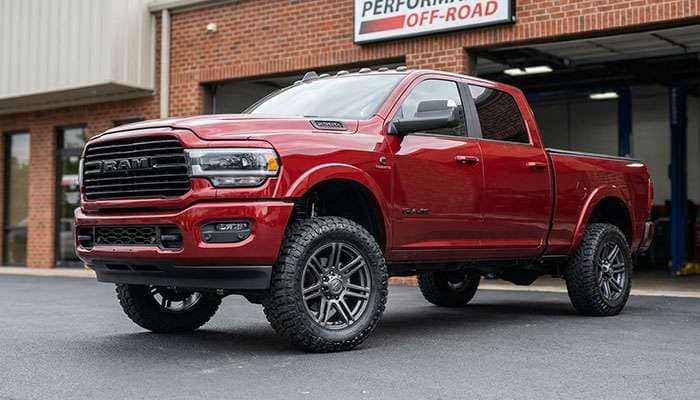
Stock height trucks handle 285-295 metric sizing tires on factory wheels with minimal trimming. The wheel specifications create the limitation, not the suspension height. Factory wheels at +45 offset sit deep in the wheel well, creating radius arm contact at full steering lock. 35x12.5 tires mount on stock wheels but produce slight rubbing. Aggressive side lugs like those on Toyo MTs demand more plastic fender liner trimming compared to rounder all-terrain profiles. Browse ram 2500 aftermarket tires for stock height compatibility options.
Leveling kits clear 35x12.5 tires when paired with 0-12mm offset wheels measuring 8-9 inches wide. Stock control arms require slight plastic liner trimming. Moving to 37x12.5 tires means aftermarket control arms plus moderate fender liner and metal trimming. Optimal clearance comes from wheels with +18 to +25mm offset, providing the right balance between control arm and fender well spacing.
Lifts beyond 3 inches require dropped bump stops to control suspension compression. 37-inch tires match 6-inch lifts properly - 35s create excessive wheel well gap. Wheels running 0mm to -12mm offset with 4.5-4.75 inch backspacing accommodate 37x13.5 tires with minimal trimming.
Fender liner plastic trimming removes approximately 4 inches from the backside for proper clearance. All 37-inch setups require pinch weld trimming regardless of wheel choice or control arm selection.
High clearance control arms eliminate rubbing issues with 35x12.5 tires on stock wheels. These same arms allow 37x12.5 tires to clear stock wheels completely.
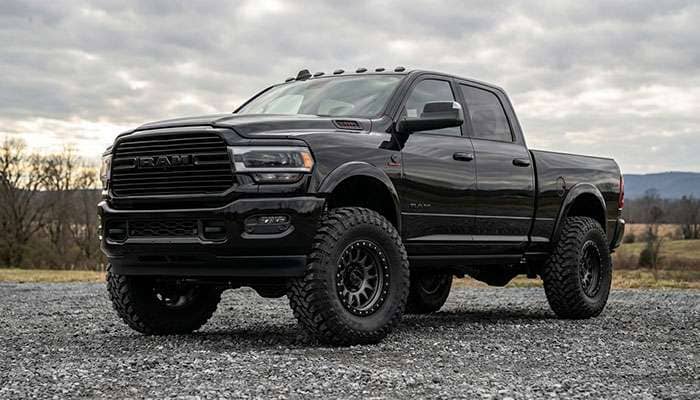
Wheel width affects tire performance more than most owners realize. Mount a 13.5-inch wide tire on an 8-inch wheel and watch it balloon outward beyond intended dimensions. The tire pushes out where it shouldn't, creating handling problems and clearance issues.
For 12.5-inch wide tires, stick with 8-9 inch wheels for proper sidewall support. This combination maintains the tire's intended footprint and prevents ballooning. Browse quality ram 2500 wheels and tires to find compatible combinations that work.
Stock 2014+ Ram 2500 wheels sit at +57mm offset. We recommend the +18mm to +25mm range for aftermarket setups, balancing control arm clearance against fender contact. This sweet spot prevents rubbing while maintaining proper geometry.
Wheels at 0mm offset push approximately 2 inches beyond your fenders. Anything more aggressive than -24mm offset demands 33-inch tires to avoid substantial rubbing.
Falken Wildpeak AT3W consistently earns recommendations for best all terrain tires for ram 2500 applications, delivering three-peak winter ratings. BFGoodrich KO2 provides proven durability with cut-resistant compounds that handle rock encounters. Toyo Open Country AT3 focuses on wet performance for year-round capability. Cooper Discoverer AT3 XLT handles heavy towing loads without compromise.
Turn your wheels to full lock in both directions before buying anything. Check for tire contact with radius arms, especially with aggressive side lugs that extend farther than standard tread patterns. Maintain minimum 3-4mm brake caliper clearance to prevent dangerous contact.
Verify load ratings match your truck's capacity requirements. Your diesel Ram 2500 demands specific load capabilities that cheaper tires can't provide. Confirm hub bore compatibility at 121.3mm, using quality hub rings if necessary.
Double-check these specifications before ordering. Getting them right the first time saves money and prevents fitment headaches later.
You now have the knowledge to select ram 2500 aftermarket tires that fit perfectly and perform exactly as you need. The key steps are straightforward: confirm your bolt pattern specifications, measure your current lift height accurately, match wheel offset to your tire selections, and choose load ratings that support your towing requirements.
Aggressive wheel offsets without adequate lift height create expensive problems. Start with accurate measurements, select tires based on how you actually use your truck, and your Ram 2500 will deliver the performance you're after.
At Performance Plus Tire, we understand that your Ram 2500 represents a significant investment in capability and style. Our extensive selection of aftermarket tires and wheels ensures you'll find the perfect combination for your specific needs and budget. Whether you're seeking maximum towing capacity or weekend off-road adventures, we have the expertise to guide you toward the right choice.
Master these essential fitment principles to avoid expensive mistakes and ensure optimal performance for your Ram 2500 tire upgrade:
• Verify your 8x6.5" bolt pattern and 121.3mm hub bore - All Ram 2500s use this configuration, requiring hub-centric rings for aftermarket wheels to prevent vibrations.
• Measure actual lift height from hub center to fender edge - This determines maximum tire size; stock height fits 285-295mm tires, while 2-3" lifts clear 35x12.5" options.
• Match wheel offset to tire width for proper clearance - Optimal aftermarket range is +18mm to +25mm offset; avoid aggressive negative offsets without adequate lift height.
• Prioritize Load Range E tires for towing applications - Diesel Ram 2500s require stiffer sidewalls to handle heavy tongue weights and maintain stability under load.
• Test full steering lock clearance before purchase - Check for tire contact with radius arms and maintain 3-4mm brake caliper clearance to prevent rubbing issues.
Proper fitment combines technical specifications with real-world usage requirements. Whether you're towing heavy trailers or tackling off-road terrain, these guidelines ensure your tire and wheel combination delivers the performance your Ram 2500 was built for.
Stock height Ram 2500 trucks can accommodate tires in the 285-295mm metric sizing range on factory wheels with minimal trimming. While 35x12.5 tires can technically fit stock wheels, they may produce slight rubbing. The main limitation comes from the factory wheel offset rather than suspension clearance, as stock wheels sit around +45 offset which tucks them deep into the wheel well.
The optimal aftermarket wheel offset range for Ram 2500 trucks is between +18mm and +25mm. This range balances proper clearance between control arms and fender wells. Stock wheels on 2014+ models measure +57mm offset, while more aggressive setups at 0mm offset will create approximately 2 inches of poke beyond the fenders.
The Falken Wildpeak AT3W consistently ranks as a top choice, offering three-peak winter ratings for year-round capability. Other excellent options include the BFGoodrich KO2 for proven durability with cut-resistant compounds, the Toyo Open Country AT3 for superior wet performance, and the Cooper Discoverer AT3 XLT which handles heavy towing loads effectively.
Diesel Ram 2500 models require Load Range E tires at minimum to properly support heavy loads. LT-rated tires provide stiffer sidewalls compared to P-rated options, which reduces sidewall squirm under heavy tongue weight and maintains better stability when towing trailers, boats, or hauling cargo.
A 2-3 inch leveling kit or lift allows Ram 2500 trucks to clear 35x12.5 tires when paired with wheels measuring 8-9 inches wide and 0-12mm offset. Some plastic fender liner trimming becomes necessary with stock control arms, though high clearance control arms can eliminate rubbing issues even on stock wheels.



