
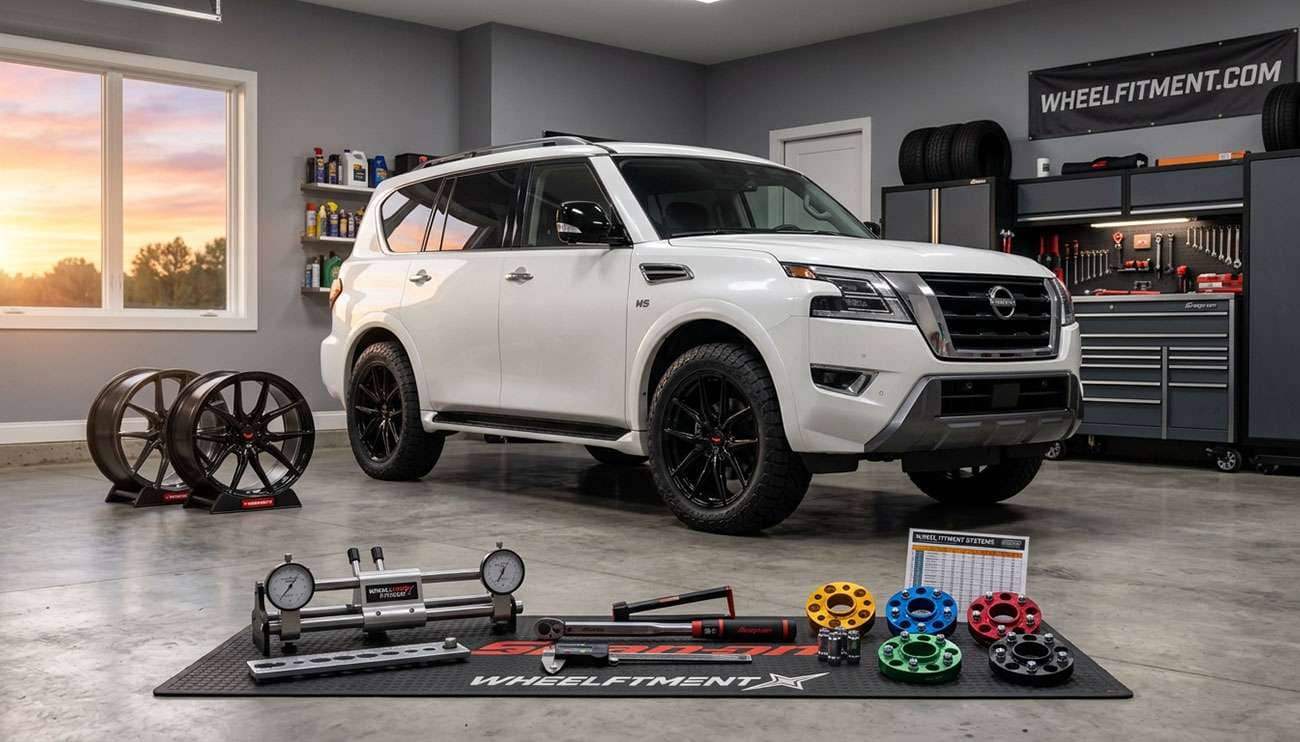
Nissan Armada aftermarket wheels can dramatically improve your vehicle's appearance and performance. Getting the wrong wheel size or specifications, however, creates serious problems including rubbing, poor handling, and safety hazards. Every generation from the 2004 Armada I to the latest 2025 model has specific requirements for wheel size, bolt pattern, and tire dimensions.
Understanding these requirements prevents costly mistakes. Each generation uses different Nissan Armada wheel bolt patterns, offset measurements, and tire fitment specifications. We'll guide you through the essential measurements and selection criteria to ensure your new wheels fit perfectly and perform exactly as intended.
This guide covers everything you need to select the right Nissan Armada wheel size, verify proper bolt pattern compatibility, and choose compatible tire dimensions for flawless fitment.
Accurate factory specifications form the foundation for successful Nissan Armada aftermarket wheels selection. Each generation uses different wheel dimensions, and mixing incompatible measurements creates immediate fitment problems.
Three distinct Armada generations have evolved since 2004, each with unique wheel specifications. The first generation (WA60) spanned 2004 to 2007, followed by a facelift version from 2008 to 2016. The second generation (Y62) launched in 2017 and received updates in 2021 through 2024. The current third generation (Y63) began in 2024.
First-generation models featured 18x8" wheels on most trims, with the SE Off-Road variant using 17" wheels. The 2008 refresh introduced 20x8" wheels for higher trim levels while keeping 18" options for base models. Second-generation models expanded options significantly, offering 18", 20", and 22" diameters based on trim level. Base SV trims received 18x8" wheels, mid-level trims got 20x8" configurations, and premium Platinum models used 22x8" wheels.
Current 2025-2026 models maintain similar sizing but adjust offset specifications. These use 18x8" wheels with ET45 offset, 20x8.5" wheels with ET45 offset, and 22x8.5" wheels with ET45 offset. Width increased slightly on larger diameter wheels compared to previous generations.
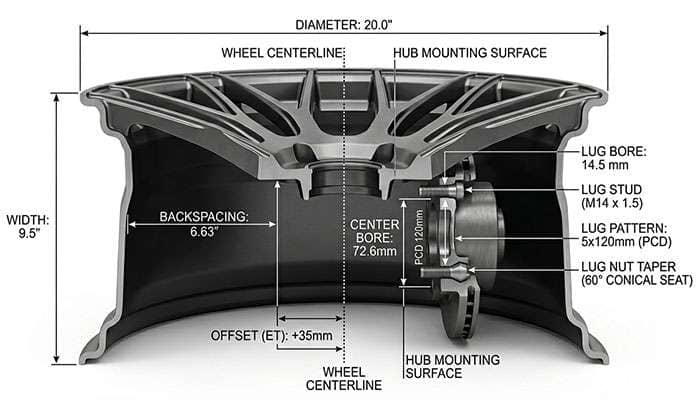
Every Nissan Armada from 2004 to current uses a 6x139.7mm bolt pattern, also expressed as 6x5.5" in imperial measurements. This six-lug configuration remains consistent across all generations, which simplifies aftermarket wheel selection when upgrading from older models.
Wheel fasteners use M14 x 1.5 thread size. Proper installation requires torquing lug nuts to 133 Nm or 98 lbf⋅ft. Incorrect torque specifications risk wheel detachment or warped brake rotors.
Factory offset measurements vary by generation. First and second-generation Armadas (2004-2024) typically used +30mm offset on 18" and 20" wheels, with some variations using +23mm offset. The third generation (2024-current) standardized on +45mm offset across all wheel sizes.
Center bore diameter stays constant at 77.8mm across all model years. This measurement determines the hub hole size in the wheel's center. Aftermarket wheels with larger center bores require hub-centric rings to ensure proper centering on the vehicle's hub.
Factory tire sizes change significantly based on trim level and model year:
265/70R18: Base SV and S trims (2004-2024)
275/60R20: Mid-level SL, Platinum, and some SV trims (2008-2025)
275/50R22: Premium Platinum and Platinum Reserve trims (2020-2026)
285/70R17: SE Off-Road variant (2004-2007)
265/60R18: Updated SV trim tire size (2025-2026)
We recommend 35 PSI front and rear tire pressure for most configurations, though some newer 275/60R20 applications specify 33 PSI. Correct pressure ensures proper load distribution on your Nissan Armada aftermarket wheels and prevents premature tire wear.
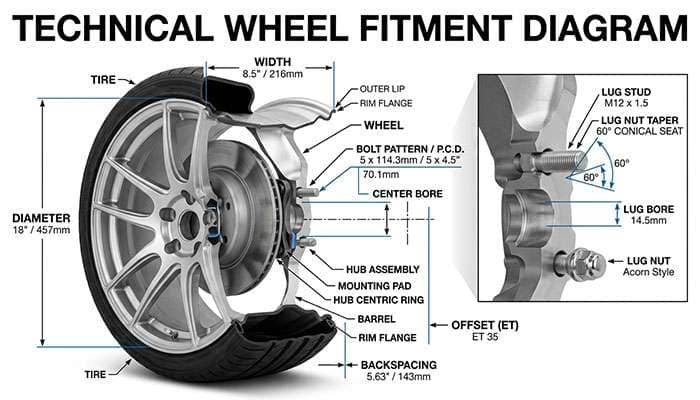
Four critical measurements determine whether Nissan Armada aftermarket wheels mount properly and clear all components. Master these specifications to select wheels that fit perfectly and enhance your vehicle's performance.
Aftermarket wheels for the Armada span from 17" to 26" in diameter, with popular sizes including 17", 18", 19", 20", 22", 24", and 26". Width options range from 8" to 10", available in half-inch increments.
Diameter and width affect performance in different ways. Larger diameter wheels provide more precise steering response and improved braking performance due to larger brake rotor fitment. Width changes deliver more immediate benefits - wider wheels expand the tire's contact patch and reduce sidewall flex during cornering. Testing shows each additional inch of wheel width can improve lap times by approximately half a second per minute.
Offset measures the distance in millimeters between the wheel's centerline and mounting surface. Positive offset (ET30) positions the mounting surface 30mm outboard from center, while negative offset (ET-30) moves it 30mm inboard.
Backspacing measures from the mounting surface to the wheel's inner lip in inches. Factory wheels typically use higher backspacing numbers, keeping tires closer to the vehicle. Aftermarket wheels often feature lower backspacing, pushing tires outward for a more aggressive stance. A wheel with 4.5 inches of backspacing extends the tire farther out than one with 6 inches.
Calculate offset by measuring backspacing first, then dividing wheel width by 2 to find the centerline. Subtract this centerline measurement from backspacing to determine offset. Moving to more negative offset increases stress on steering components, potentially accelerating wear on ball joints and tie rods.
The center bore represents the circular opening in the wheel's center that fits over your hub. Armadas use a 77.8mm center bore, requiring aftermarket wheels with matching or larger openings. When aftermarket wheels have larger center bores, hub-centric rings fill the gap between wheel and hub.
These rings ensure the wheel centers properly on the hub rather than hanging on the lug bolts. Without hub-centric rings, wheels can vibrate during driving due to slight off-center mounting. Plastic rings work best for daily drivers in climates with salt and moisture, since metal rings can corrode and complicate wheel removal. Racing applications benefit from metal rings that withstand higher heat levels.
Each tire carries a load rating indicating maximum weight capacity. Multiply this rating by four to calculate total vehicle capacity. Your Armada's curb weight plus cargo, passengers, and tongue weight when towing must stay within this total. Selecting tires with adequate load ratings ensures safe operation under all driving conditions, from daily commuting to maximum payload scenarios.
Selecting the correct Nissan Armada tire size for your new wheels prevents three major problems: speedometer errors, tire rubbing, and poor handling. Each wheel diameter works best with specific tire dimensions to maintain proper vehicle performance.
Your speedometer calculates speed based on tire circumference. Larger tires cover more ground per revolution, making the speedometer read slower than your actual speed. Install tires 3% taller than stock, and your speedometer shows 60 mph when you're actually traveling 63.3 mph. Smaller tires create the opposite problem, over-reporting your speed.
Keep your new tire's overall diameter within 3% of factory size. Staying within 1% ensures accurate speedometer calibration and proper ABS and traction control operation. Exceed this threshold, and you risk incorrect readings plus potential safety system malfunctions. Some vehicles allow computer recalibration for larger diameter changes, though most ECMs don't offer this adjustment.
Plus-sizing increases wheel diameter while keeping similar overall tire diameter. Plus zero sizing maintains the same rim diameter but widens tires and reduces aspect ratio. Plus one sizing adds 1 inch to rim diameter, increases tire width by 10mm, and drops sidewall height by 10 points. Plus two sizing jumps rim diameter by 2 inches, adds 20mm section width, and reduces aspect ratio by 20 points. Plus three sizing means a 3-inch rim increase with 30mm wider tires and 30-point lower aspect ratio.
Minus-sizing drops wheel diameter and increases sidewall height, popular for winter tire setups that need better stability on slippery roads. This approach reduces rim diameter by 1 inch while increasing aspect ratio and narrowing tire width.
Stock 275/60R20 tires measure 33 inches in diameter. Moving to 285/70R18 produces a 33.7-inch diameter, staying within acceptable variance. 33-inch tires on stock suspension create minimal clearance issues. Installing 35-inch tires requires suspension modifications.
Tire width and diameter determine clearance between tires and fenders, quarter panels, and suspension components. Too much width or diameter causes rubbing against these parts. Sidewall height affects clearance too. Offset controls where wheels sit relative to the hub. Low offset pushes tires outward toward fenders, while high offset risks contact with suspension components or inner fender liners.
Measure wheel well clearance at multiple points: top of tire to wheel well, front and back of tire to wheel well, and at full steering lock both directions. Choose tire sizes that fit within these measurements to prevent rubbing problems.
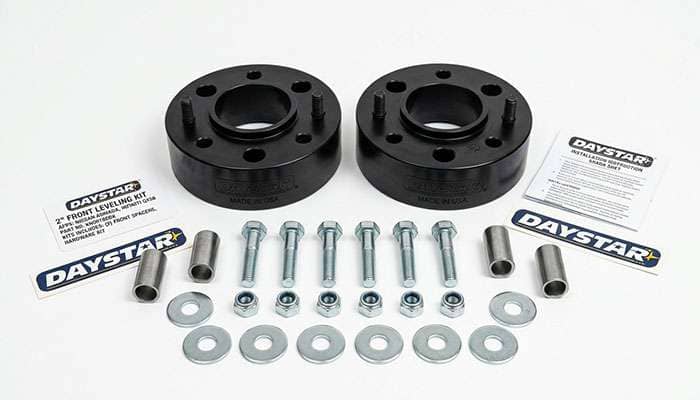
Suspension height controls your maximum Nissan Armada tire size more than any other single factor. Stock setups limit your options, while modifications open up exciting possibilities for larger wheels and tires.
Your stock Armada handles tires up to 325/60-18 and 33x12.5-18 without any modifications. Larger sizes require pinchweld trimming or a minimum 4-inch lift kit. These limitations come from tight clearance between tires and fenders during suspension compression and full steering lock.
Tire weight impacts fuel economy significantly on stock suspension. Heavy 325/60-18 Nitto TerrGrapplers weighing 60 pounds each can drop your fuel economy to around 12 mpg in daily driving. Backspacing becomes critical when choosing aftermarket wheels for stock height - wrong measurements cause interference with suspension components or fender wells.
A 2-inch leveling kit raises your front end to match the rear height and provides clearance for 33-inch maximum diameter tires. This budget-friendly modification works with multiple tire sizes across different wheel diameters: 33x12.5R17, 305/65R18, 305/55R20, 33x12.5R20, and 33x12.5R22. These specifications work best with a 9-inch wide wheel using +12 offset for rub-free fitment.
Leveling kits offer the most cost-effective path to running larger Nissan Armada aftermarket wheels while maintaining ride quality and avoiding extensive modifications.
Complete suspension lift kits range from simple 1-2 inch spacers to full 4-6 inch long-travel systems. Basic leveling kits and spacers accommodate 34-35 inch tires, while comprehensive suspension lifts handle 33-35 inch tires effectively.
A 3-inch lift kit allows 35-inch tires, though you may experience minor rubbing on mud guards at full steering lock. Trimming the affected mud guard sections eliminates this contact. Installation costs for lift kits with wheels and tires typically run around $4,000. Keep in mind that vehicle height increases significantly - you'll reduce garage clearance from 6 inches to nearly zero in standard 81-inch garages.
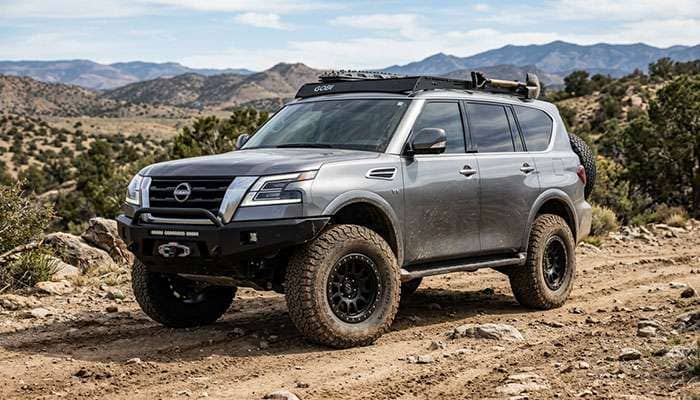
Before purchasing your Nissan Armada aftermarket wheels, verify fitment to avoid expensive returns and mounting problems.
Wheel markings appear on the inner rim surface and show critical sizing information. Your Nissan Armada bolt pattern of 6x139.7mm must match exactly - no exceptions. Offset markings use "ET" designation, so ET30 indicates 30mm positive offset. Check that maximum load ratings exceed your vehicle's gross axle weight rating.
Maintain at least 3mm clearance between brake calipers and wheel spokes in all directions. Print brake clearance templates from manufacturers at 1:1 scale, cut out the caliper profile, and test-fit inside your chosen wheel. When calipers contact spokes, hub-centric spacers push wheels outward for proper clearance.
Most aftermarket wheels accept stock TPMS sensors using adapter stems and seals. Band-mount kits work when original valve holes don't align properly. Remember to recalibrate TPMS modules after changing Nissan Armada tire size.
Purchase from established retailers that guarantee fitment. Performance Plus Tire offers vehicle-specific wheel selections designed for your Armada's exact specifications. Look for retailers that include mounting, balancing, and road force balancing services with wheel and tire packages.
You're now equipped with the knowledge to select Nissan Armada aftermarket wheels that deliver both stunning appearance and flawless performance. Armed with the right bolt pattern, offset, and center bore specifications, you can confidently choose wheels that fit perfectly and enhance your vehicle's capabilities.
Your Armada can accommodate impressive wheel and tire combinations even on stock suspension. Suspension modifications simply expand your options further, allowing for even more dramatic improvements in both style and performance.
Browse vehicle-specific wheel options to find the perfect aftermarket wheels that match your Armada's exact specifications. Use the fitment tools and techniques we've covered to verify clearances before making your purchase. Remember to include hub-centric rings when needed for proper centering.
The right wheels and tires will transform your Armada's appearance while maintaining the safety and performance you expect. Your vehicle will stand out from the crowd and deliver the enhanced driving experience you're looking for.
Master these essential fitment requirements to select the perfect aftermarket wheels for your Nissan Armada without costly mistakes or safety issues.
• All Nissan Armadas use a 6x139.7mm bolt pattern with 77.8mm center bore - these measurements must match exactly for proper wheel mounting.
• Keep new tire diameter within 3% of factory size to maintain speedometer accuracy and prevent ABS/traction control malfunctions.
• Stock suspension accommodates up to 33-inch tires, while a 2-inch leveling kit allows 33-inch maximum diameter with proper offset.
• Verify brake caliper clearance (minimum 3mm) and use hub-centric rings when aftermarket wheels have larger center bores than stock.
• Use online fitment calculators and measure wheel well clearances at multiple points to prevent rubbing against fenders or suspension components.
Proper wheel fitment combines technical precision with performance goals. Getting the bolt pattern, offset, center bore, and tire size right ensures your Armada looks great while maintaining safety and drivability.
Q1. What bolt pattern and center bore do all Nissan Armada models use? All Nissan Armada models from 2004 to current use a 6x139.7mm (6x5.5") bolt pattern with a 77.8mm center bore. These measurements have remained consistent across every generation, making it easier to find compatible aftermarket wheels regardless of your model year.
Q2. Can I install smaller diameter wheels from a lower trim level on my higher trim Armada? You can typically install smaller wheels from lower trims, but you need to verify brake caliper clearance first. Higher trims like the Platinum may have larger brakes that won't fit inside smaller 18-inch wheels. Always check that there's at least 3mm clearance between the brake calipers and the wheel spokes.
Q3. How much can I change tire size without affecting my speedometer? Keep your new tire's overall diameter within 3% of the factory size to maintain speedometer accuracy. Staying within 1% ensures proper speedometer calibration and correct operation of ABS and traction control systems. Larger changes will cause your speedometer to under-report your actual speed.
Q4. What's the largest tire size I can fit on a stock Nissan Armada without modifications? On stock suspension without any modifications, you can fit tires up to 33 inches in diameter (such as 325/60-18 or 33x12.5-18). Anything larger requires either pinchweld modifications or a minimum 2-inch leveling kit for proper clearance.
Q5. Do I need hub-centric rings for aftermarket wheels on my Armada? If your aftermarket wheels have a center bore larger than the Armada's 77.8mm hub diameter, you'll need hub-centric rings. These rings fill the gap between the wheel's center bore and the vehicle's hub, preventing vibrations caused by wheels being mounted slightly off-center.



