

The right Nissan Altima aftermarket tires deliver more than just improved appearance. Proper tire pressure alone boosts your fuel efficiency by up to 3% and saves you about 11 cents per gallon. Wrong tire choices, however, compromise your vehicle's handling, safety, and overall performance.
We carry the best selection of Nissan Altima tire options at the lowest prices. Whether you need to understand your Nissan Altima tire size specifications, decode your Nissan Altima bolt pattern, or find the best tires for your specific model, we have the expertise to guide you through every decision.
Our complete Nissan Altima tires and rims packages eliminate the guesswork. From Nissan Altima aftermarket wheels to perfectly matched tire combinations, we make selecting the right setup simple and straightforward.
This guide covers everything you need to make the perfect choice for your specific model year. Ready to upgrade your ride?
When shopping for Nissan Altima aftermarket tires, understanding tire specifications ensures you get the perfect fit and optimal performance.
Your tire sidewall displays a series of numbers and letters that tell the complete story of your tire's specifications. A typical Nissan Altima tire size reads P215/60R16 94H. The "P" indicates a P-metric tire designed for passenger vehicles. Without this letter prefix, you're looking at a Euro-metric tire, which may have different load capacity characteristics.
The first three-digit number represents your tire width in millimeters, measured from sidewall to sidewall. For a 215/60R16 tire, the width measures 215 millimeters. The two-digit number following the slash mark indicates the aspect ratio. This number expresses your tire's sidewall height as a percentage of its width.
A 60 aspect ratio means the sidewall height equals 60% of the tire's width. Lower aspect ratios like 55 or less typically indicate shorter sidewalls designed for improved steering response and better handling.
The "R" designates radial construction, meaning the tire layers run radially across the tire. This construction method has been the industry standard in passenger car tires for more than 25 years. The final number specifies wheel diameter in inches. A tire marked with 16 fits a 16-inch wheel, and you cannot stretch a 16-inch tire to fit an 18-inch rim.
The load index appears as a two or three-digit number after the tire size. This number corresponds to the maximum weight each tire can support when properly inflated. Most passenger-car tire load indexes range from 75 to 100. A load index of 94 means each tire can carry 1,477 pounds.
The speed rating follows as a letter. An "H" rating signifies the tire can safely run at speeds up to 130 mph for extended periods. Common ratings include S (112 mph), T (118 mph), and V (149 mph).
You can locate your specific nissan altima tire size on the driver's side door jamb sticker or in your owner's manual. For 2019-2024 Altimas, S and SV trims typically use 215/60R16 tires, while SL, SR, and Platinum models often have 215/55R17 or 235/40R19 sizes.
Models from 2013-2018 came with 215/60R16 for base trims and 215/55R17 or 235/45R18 for higher trims. The 2007-2012 generation used 215/60R16 for standard models and 215/55R17 for sportier versions.
Understanding these specifications helps ensure you select tires that maintain your vehicle's performance characteristics while meeting your specific driving needs.

OEM tires arrive factory-installed on new vehicles through direct collaboration between automakers and tire manufacturers. Vehicle manufacturers select these tires to balance ride noise, handling, longevity, and fuel efficiency according to their brand priorities.
Aftermarket tires represent any replacement options that differ from your original equipment, including different brands, models, or specifications. The term carries no implication about quality; aftermarket options can match or exceed OEM performance. Understanding this distinction helps you make better decisions about your Altima's performance and your budget.
Aftermarket selections provide flexibility to emphasize specific performance characteristics rather than the broad balance OEM tires target. You gain access to options emphasizing extended tread life, with some touring-focused alternatives reaching 70,000-85,000 miles. OEM tires typically deliver 30,000-50,000 miles because manufacturers often prioritize comfort over longevity.
Aftermarket wheels can weigh up to 18% less than factory options, directly improving fuel efficiency and handling. This weight reduction translates into real-world benefits for your daily driving experience.
Your Nissan Altima uses a 5x114.3 bolt pattern for all models from 2002 onward. Earlier generations (1993-2001) used a 4x114.3 pattern. This measurement represents five bolt holes arranged on a 114.3mm diameter circle. The bolt pattern 5x4.5 refers to the same specification.
Any aftermarket wheel matching 5x114.3 specifications will physically mount to your 2002 or newer Altima. This universal compatibility opens up extensive options for customization while maintaining proper fit and safety standards.
Replacement tires commonly cost USD 800.00 or more for four tires with mounting and balancing. However, aftermarket options deliver substantial savings of 10% to 50% on major brands. A complete aftermarket set typically ranges from USD 460.00 to USD 1280.00, with the median price per tire reaching USD 223.00 in 2023.
The ultimate measure in choosing tires combines overall performance, predicted treadwear, and purchase price. Smart buyers focus on value rather than just initial cost, considering how long the tires will last and what performance benefits they provide.
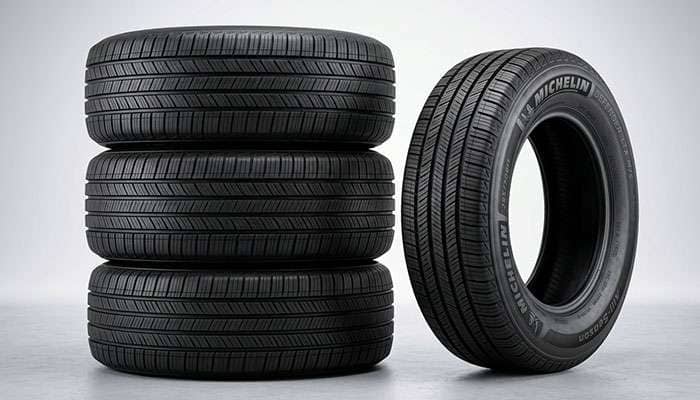
Matching your Nissan Altima aftermarket tires to specific driving patterns maximizes both performance and value. With the Altima averaging 27 to 39 MPG city-highway, selecting appropriate rubber becomes a fuel efficiency factor.
The Continental PureContact LS delivers outstanding all-around performance with a 9.6 out of 10 overall rating. This tire scores 9.4 for handling, 9.7 for longevity, and 9.7 for traction. You get a 70,000-mile warranty that provides long-term value for daily drivers.
The Pirelli Cinturato WeatherActive earns a 9.5 overall score and includes Three Peak Mountain Snowflake certification for enhanced winter capability. The Yokohama Avid Touring-S offers solid 8.8 performance with a 60,000-mile warranty at a more budget-friendly price point.
The Bridgestone Potenza RE97AS optimizes wet and dry performance, enabling precision handling for spirited driving. This tire transforms your Altima's road feel while maintaining everyday usability.
The Nokian Hakkapeliitta 10 achieves an exceptional 9.9 traction score with double stud technology for maximum grip on ice and snow. The Michelin Pilot Alpin PA4, starting at USD 328.87, features 3D StabiliGrip technology and silica-based compounds that resist cold stiffening.
The Bridgestone Turanza Serenity Plus delivers smooth rides through solid wet and dry performance. The Michelin Defender T+H offers an impressive 80,000-mile warranty with IntelliSipe technology for drivers who rack up serious highway miles.
The Radar Dimax AS-8 starts at USD 86.31 with a 50,000-mile warranty. The Hankook Kinergy ST H735 costs USD 85.49 with 70,000-mile coverage and road hazard protection. These options prove you don't need to spend a fortune for reliable performance.
Explore complete tire options matching your exact Altima specifications and driving requirements.

Complete packages solve fitment challenges while delivering better value than buying components separately. Our wheel and tire packages include mounting, balancing, and all necessary hardware to get you rolling immediately.
All Altima models from 2002 onward use the same 5x114.3mm bolt pattern with a 66.1mm center bore. This universal compatibility opens extensive aftermarket options. Wheel widths from 7 to 8.5 inches work perfectly with tire widths spanning 195mm to 245mm. Proper offset selections between 35-45mm ensure wheels sit correctly without clearance issues.
Factory wheels range from 15 to 18 inches in diameter. Aftermarket options extend this range to 20 inches, giving you choices across 15, 16, 17, 18, 19, and 20-inch diameters. Eighteen-inch Nissan Altima rims in 18x8 configurations with 40-45mm offset perfectly accommodate 225/45/18 or 235/45/18 tires.
Winter packages for current Altimas feature steel wheels at 17x7 or aftermarket alloys with 215/55R17 tires, including TPMS sensors. Browse nissan altima aftermarket wheels to explore model-specific packages designed for your exact requirements.
The 2013-2018 generation works with 16"x7" steel wheels paired with 215/60R16 tires. Quality aftermarket four-wheel sets start around $887, while premium packages reach $1,672. Our team can help you select the perfect balance of performance and price.
These models accept similar specifications, with 16-17 inch diameters being the most popular choices for this generation. We stock packages specifically designed to enhance both appearance and performance for these classic Altimas.
You now have the knowledge to select the perfect Nissan Altima aftermarket tires with confidence. From decoding tire specifications to matching your driving style with the right tire type, you can make informed decisions that enhance your vehicle's performance and safety.
Explore complete tire options that match your exact Altima specifications and driving needs. At Performance Plus Tire, we are confident that proper tire selection will improve your fuel efficiency, handling, and overall driving experience. Make your choice count.
Master these essential insights to choose the perfect aftermarket tires for your Nissan Altima and maximize performance, safety, and value.
• Decode your tire size correctly: Read the sidewall code (e.g., P215/60R16 94H) to understand width, aspect ratio, diameter, load index, and speed rating for proper fitment.
• All Altimas 2002+ share 5x114.3 bolt pattern: This universal compatibility opens extensive aftermarket wheel options while maintaining proper fit and safety standards.
• Match tires to driving needs: Choose all-season for daily commuting, performance for sporty handling, winter for cold climates, or touring for long-distance comfort.
• Aftermarket offers 10-50% savings: Quality aftermarket options cost significantly less than OEM while often providing superior longevity (70,000+ miles vs 30,000-50,000).
• Complete packages eliminate guesswork: Tire and rim packages include mounting, balancing, and hardware while ensuring perfect compatibility for your specific model year.
The right tire choice directly impacts your Altima's fuel efficiency (up to 3% improvement), handling performance, and safety. Whether you're upgrading for better performance or replacing worn tires, understanding these fundamentals ensures you get maximum value and optimal driving experience from your investment.
The best tires depend on your driving needs. For daily commuting, the Continental PureContact LS offers excellent all-around performance with a 70,000-mile warranty. If you prioritize sportier handling, consider the Bridgestone Potenza RE97AS. For cold climates, the Nokian Hakkapeliitta 10 provides superior winter traction. Budget-conscious drivers can opt for the Radar Dimax AS-8 or Hankook Kinergy ST H735, both offering good value without compromising safety.
While it's possible to have slightly different tire sizes front and rear on a front-wheel-drive Altima, it's not recommended for optimal performance. Always match tire sizes on the same axle. If you must use different sizes, ensure the difference is minimal and place the smaller tires on the non-drive axle. However, for best handling, safety, and even wear, all four tires should be the same size and preferably the same brand and model.
All Nissan Altima models from 2002 onward use a 5x114.3mm bolt pattern with a 66.1mm center bore. Check that any aftermarket wheel matches these specifications. Additionally, ensure the wheel width (typically 7-8.5 inches) and offset (35-45mm) are appropriate for your model year to prevent rubbing issues. The tire size code on your driver's side door jamb will confirm your specific requirements.
Aftermarket tires can match or exceed OEM performance while offering 10-50% cost savings. Many aftermarket options provide superior tread life (70,000-85,000 miles) compared to factory tires (30,000-50,000 miles). The key advantage is flexibility—you can choose tires that emphasize specific characteristics like longevity, performance, or winter traction, rather than the balanced compromise that OEM tires provide.
Tire size varies by model year and trim level. For 2019-2024 Altimas, S and SV trims typically use 215/60R16, while SL, SR, and Platinum models use 215/55R17 or 235/40R19. Models from 2013-2018 came with 215/60R16 for base trims and 215/55R17 or 235/45R18 for higher trims. The 2007-2012 generation used 215/60R16 for standard models and 215/55R17 for sportier versions. Check your driver's side door jamb sticker for your exact specification.



