
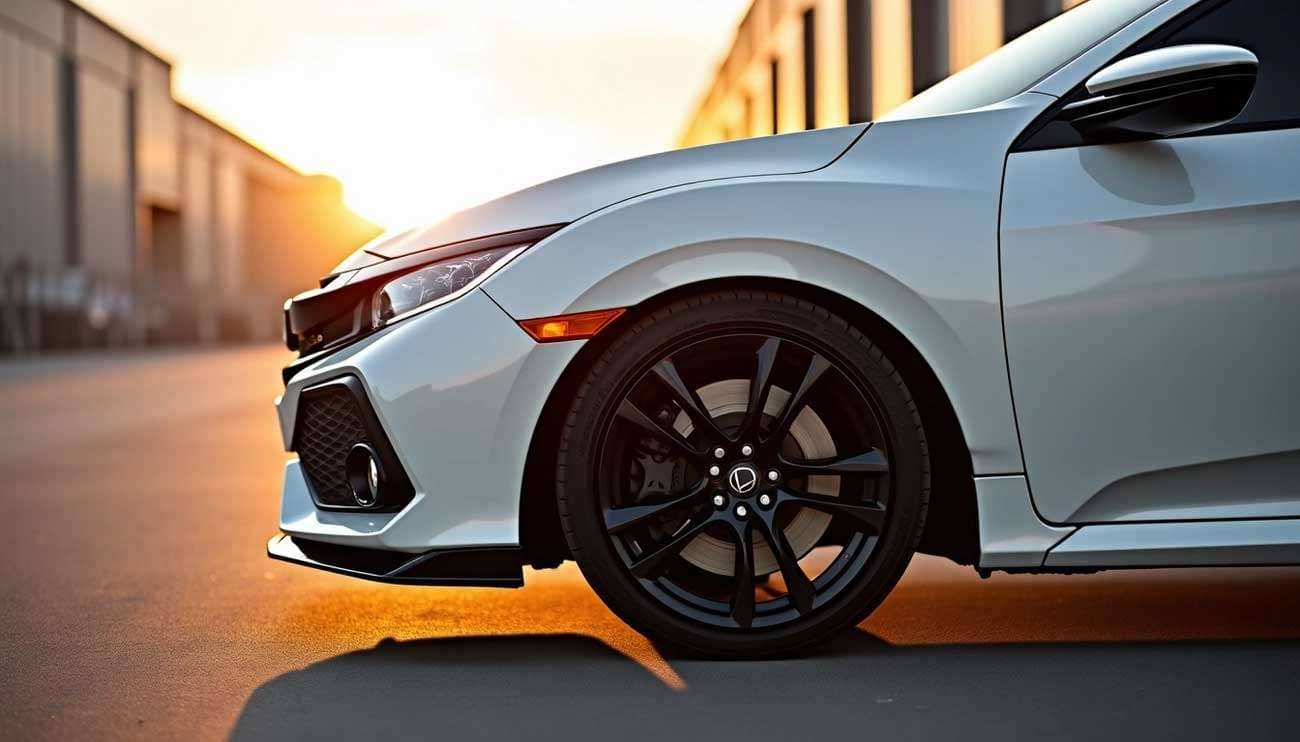
Honda Civic aftermarket wheels represent one of the most effective ways to upgrade your vehicle's appearance and performance. Stock Honda Civics typically roll on 16-inch steel wheels with a modest 7-inch width and +22 offset, but the aftermarket world opens up endless possibilities for both style and function.
We've worked with countless Civic owners who discovered how the right wheel selection completely changes their vehicle's character. Take the sleek AV06 18x8.5 wheels with a +35 offset, or the aggressive AODHAN AFF7s measuring 18x9.5 +35 wrapped in 235/40/18 Continental Extreme Contact Sport tires - these honda civic aftermarket wheels deliver exactly what enthusiasts are looking for. Proper fitment knowledge makes the difference between wheels that look great and perform well versus those that create problems.
Many Civic owners ask us which rims work with their specific vehicle and what sizes deliver the best results. The right honda civic alloy wheels can sharpen handling, reduce unsprung weight, and give your car that distinctive look you've been wanting.
This guide covers everything you need to know about finding aftermarket wheels that actually fit your Honda Civic. We'll break down sizing options, visual impact, and performance benefits to help you make the right choice for your ride.
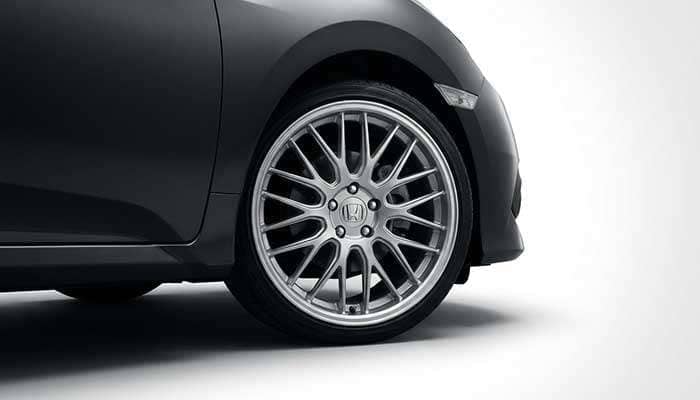
Honda Civic owners consistently choose 17-inch wheels as the ideal upgrade for daily driving. These wheels deliver the perfect balance of performance enhancement, style improvement, and practical benefits that make them the top choice for Civics that see regular street use.
17-inch wheels solve the common problem of wanting better performance without sacrificing comfort. They provide significantly sharper handling than stock options while maintaining the ride quality essential for daily driving. The improved steering response becomes immediately noticeable during spirited driving, yet comfort remains suitable for commuting.
Durability represents another major advantage. Unlike larger 18 or 19-inch options, 17-inch wheels offer superior protection against pothole damage and curb rash. The taller sidewalls provide excellent cushioning against road imperfections and reduce rim damage risk - crucial for drivers dealing with less-than-perfect road conditions.
Weight reduction delivers real performance gains. Quality 17-inch alloys typically weigh less than larger wheel options, directly improving acceleration and fuel efficiency. City driving situations highlight these advantages most clearly, where frequent stops and starts showcase the benefits of reduced unsprung weight.
Several standout options have earned popularity among Honda Civic enthusiasts:
OEM-Style Replacements: The 17×7 10-spoke wheel from 2022-2024 Honda Civic EX Sedan and EX-L Hatchback models offers proven compatibility with clean factory styling.
Five-Spoke Classics: The traditional 17×7 5-spoke design from 2016-2019 Honda Civic EX-T and EX-L models remains popular for its timeless appearance and reliable fitment.
Performance-Focused Options: Aggressive stance seekers find success with 17×8 wheels using +35 to +45mm offsets, particularly when paired with 225/45R17 or 235/40R17 tires for enhanced visual impact.
Lightweight Performance: Volk TE37s in 17-inch sizing deliver remarkable weight savings - some owners report reducing rotating mass by up to 30 pounds when upgrading.
Proper fitment ensures both optimal performance and appearance. Most Civic generations from 2006 to 2026 (excluding Type R models) require these specifications:
Bolt Pattern: 5×114.3mm
Wheel Width Range: 7 to 8 inches
Offset Range: +35mm to +48mm
Older Civics (1988-2005, except 2004-2005 Si models) use different specifications:
Bolt Pattern: 4×100mm
Wheel Width Range: 5.5 to 7.5 inches
Offset Range: +35mm to +45mm
The proven sweet spot for 9th generation Civic owners (2012-2015) on stock suspension combines 17×8 +40 wheels with 235/40R17 tires. Lowered vehicles benefit from adjusting to +35 offset with 225/45R17 tires for proper clearance.
17-inch wheels excel by balancing sidewall height with wheel diameter. Compared to smaller 15 or 16-inch options, the shorter sidewalls deliver sharper steering response and improved high-speed stability. This enhancement becomes particularly evident during enthusiastic driving on winding roads.
The moderate sidewall height maintains adequate cushioning over road imperfections, preserving daily driving comfort. Unlike larger wheel sizes that compromise ride quality, 17-inch options avoid harsh impacts that affect passenger comfort.
Reduced unsprung weight creates the most noticeable performance improvement. Civic owners frequently report enhanced acceleration and an overall feeling that their car responds more eagerly after upgrading to quality 17-inch aftermarket wheels.
Fuel economy considerations matter when choosing between sizes. Larger wheels can reduce efficiency by 1-4 MPG depending on driving conditions. 17-inch wheels often represent the optimal balance between performance gains and fuel efficiency retention.
Looking for the perfect 17-inch wheels for your specific Civic model? Performance Plus Tire's Honda Civic wheel finder offers a huge selection of guaranteed-fit options tailored to your exact year and trim.
Quality 17-inch Honda Civic wheels are available across multiple price ranges:
Budget Options: Basic aftermarket wheels start around $125-150 per wheel, making complete sets available for approximately $500-600 plus installation costs.
Mid-Range Quality: Well-engineered aftermarket wheels from reputable brands typically run $200-300 per wheel. These options offer excellent performance characteristics and proven durability.
Premium Performance: High-end lightweight wheels like Volk or Enkei Racing series can exceed $400 per wheel. The weight savings and engineering justify the investment for serious enthusiasts.
Original equipment manufacturer (OEM) wheels typically cost more than equivalent aftermarket options while weighing more. For most Civic owners, mid-range aftermarket wheels deliver the best combination of quality, performance, and value.
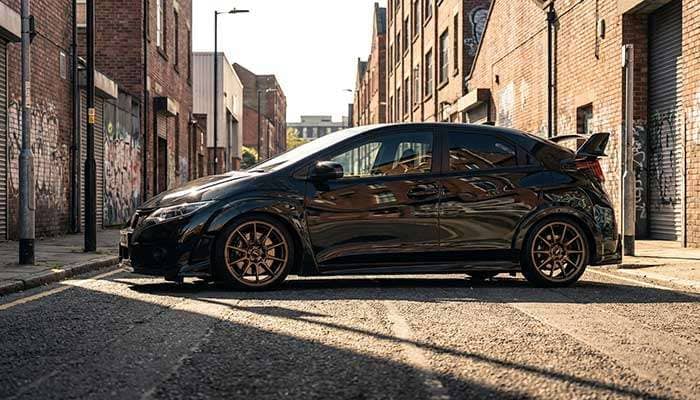
Stepping up to 18-inch wheels transforms the Honda Civic's visual presence while delivering meaningful performance improvements. These larger wheels create the aggressive stance many enthusiasts desire without pushing into impractical territory.
18-inch wheels occupy the sweet spot for Civic owners who want maximum visual impact without sacrificing daily drivability. The larger diameter fills the wheel wells more completely, eliminating the "small wheel" appearance that some find underwhelming on stock vehicles.
Beyond aesthetics, 18-inch wheels deliver tangible handling improvements. The reduced sidewall height creates more responsive steering feel and improved cornering stability. These characteristics become especially noticeable during spirited driving where precise turn-in matters.
The popularity of 18-inch options reflects their versatility. They work equally well on daily drivers seeking an upgraded appearance and weekend warriors wanting better track performance. This flexibility explains why 18-inch remains the most requested size among our Civic customers.
Several wheel designs consistently perform well on Honda Civics:
Multi-Spoke Performance Designs: Options like the Gram Lights 57DR or Enkei RPF1 combine aggressive styling with excellent weight characteristics. Their spoke patterns complement the Civic's body lines effectively.
Mesh-Style Wheels: Rotiform and similar brands offer intricate mesh patterns that add visual complexity. These designs work particularly well on show-oriented builds.
Concave Profiles: Deeper concave faces create dramatic shadow effects and visual depth. Wheels like the Volk CE28 or Work Emotion series showcase this styling approach effectively.
Simple Five or Six-Spoke Designs: Classic spoke patterns never go out of style. Brands like Konig and Enkei offer clean designs that enhance the Civic's appearance without overwhelming it.
Proper 18-inch wheel sizing ensures optimal fitment and performance. For most 10th and 11th generation Civics (2016-2026), these specifications work well:
Standard Fitment: 18×8 with +35mm to +45mm offset pairs excellently with 225/40R18 or 235/40R18 tires.
Aggressive Fitment: 18×8.5 or 18×9 wheels with +35mm to +40mm offset create a more pronounced stance. These wider options typically require 235/40R18 or 245/40R18 tires.
Type R Specific: The FK8 and FL5 Type R models accommodate 18×9.5 wheels with aggressive offsets, designed to work with their wider fenders and performance suspension.
Offset selection significantly impacts both appearance and function. Lower offsets push the wheel face outward, creating a more aggressive stance but potentially causing clearance issues with suspension components or fender lips. Higher offsets tuck the wheel further inward, ensuring safe clearance at the cost of visual impact.
18-inch Honda Civic wheels span a wide price range based on construction quality and brand reputation:
Entry Level: Basic cast aluminum wheels start around $130-175 per wheel. These options provide the visual upgrade at minimal cost but typically weigh more than premium alternatives.
Performance Oriented: Flow-formed or rotary-forged wheels run $250-400 per wheel. The improved manufacturing processes create lighter, stronger wheels suitable for spirited driving.
Premium Forged: True forged wheels from brands like Volk, BBS, or Rays can exceed $500-800 per wheel. These represent the ultimate in strength-to-weight ratio but require significant investment.
For most Civic enthusiasts, the mid-tier flow-formed category delivers the best balance of performance, weight savings, and value. These wheels typically weigh 3-5 pounds less than budget cast options while costing significantly less than full forged alternatives.
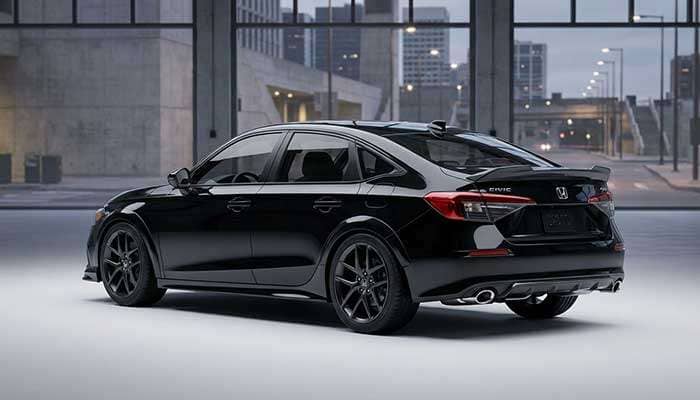
Wheel fitment dramatically affects how your Honda Civic looks and performs. Understanding the difference between flush and poke setups helps you achieve exactly the stance you want while avoiding clearance problems.
Flush fitment describes wheels positioned so their outer edge aligns precisely with the fender lip. This creates a seamless transition between the body panel and wheel face, producing a refined, purposeful appearance that many enthusiasts consider the ideal setup.
Achieving true flush fitment requires careful calculation of wheel width, offset, and tire sizing. The goal involves positioning the wheel face as close to the fender as possible without rubbing during suspension travel or steering input.
Poke fitment, by contrast, positions the wheel face beyond the fender line. While this creates an aggressive appearance, it can cause practical issues including tire spray onto body panels, potential legal concerns in some jurisdictions, and increased exposure to road debris damage.
Getting flush fitment on your Honda Civic involves selecting the right combination of wheel specifications:
For 10th Generation Civics (2016-2021):
Front: 18×8.5 +35 to +40 offset with 235/40R18 tires typically achieves flush or near-flush appearance
Rear: Similar specifications work well, though slightly lower offset (+35) may be needed on sedans
For 11th Generation Civics (2022-2026):
The wider body allows for 18×9 +38 to +45 offset wheels
245/40R18 tires complement these wider wheels while maintaining proper fitment
Suspension modifications affect fitment calculations significantly. Lowered vehicles require higher offsets or narrower wheels to maintain adequate clearance. Coilover-equipped cars benefit from adjustable suspension that can be fine-tuned for optimal wheel positioning.
Camber adjustment provides additional fitment flexibility. A degree or two of negative camber tucks the top of the wheel inward, allowing wider wheels or lower offsets without fender contact. Many aftermarket suspension components include camber adjustment for this purpose.

Achieving proper flush fitment often involves additional costs beyond the wheels themselves:
Suspension Components: Coilovers or lowering springs typically range from $300-1,500 depending on quality and adjustability. These modifications often prove necessary for optimal flush appearance.
Alignment Services: Professional alignment after suspension modifications runs $100-200. Proper alignment ensures even tire wear and predictable handling.
Fender Modifications: Some aggressive fitments require fender rolling or pulling, adding $100-300 to the project cost. This becomes more common with very wide wheels or low offsets.
Planning your complete build upfront helps avoid costly mistakes. Purchasing wheels without considering suspension height or fender clearance often results in rubbing issues that require additional modifications to resolve.
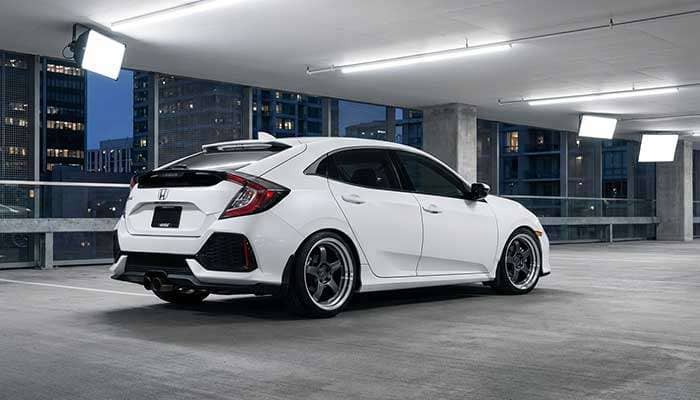
Choosing between staggered and square wheel setups affects both your Civic's appearance and handling characteristics. Understanding how each configuration performs helps you make the right choice for your goals.
Square setups use identical wheel and tire sizes at all four corners. For front-wheel-drive vehicles like the Honda Civic, this configuration offers significant advantages over staggered alternatives.
Tire rotation becomes possible with square setups, extending tire life substantially. Moving tires between positions distributes wear evenly, potentially doubling the mileage you get from a set of tires. Staggered setups lock each tire to its specific axle, accelerating wear on the driven front wheels.
Handling balance improves with equal-sized tires at both axles. The Civic's front-wheel-drive layout already puts most of the work on the front tires - adding larger rear tires doesn't improve traction where you need it most. Square setups maintain the predictable handling characteristics Honda engineers intended.
Cost efficiency favors square configurations. Buying four identical tires costs less than purchasing separate front and rear sizes. When replacement time comes, you're buying the same tire rather than hunting for specific front or rear fitments.
Despite the advantages of square setups, some situations justify staggered wheel configurations:
Pure Aesthetics: Wider rear wheels create a distinctive appearance that some enthusiasts prefer. The "planted" look of a wider rear stance appeals to those prioritizing visual impact over function.
Rear-Wheel-Drive Swaps: Civics converted to rear-wheel drive can benefit from larger rear tires that put more rubber where the power goes.
Drag Racing Applications: Front-wheel-drive drag cars sometimes use narrower front wheels to reduce rotating mass while maintaining maximum grip at the driven wheels.
For the vast majority of Civic owners, square setups deliver better value and functionality. The marginal aesthetic differences rarely justify the practical compromises of staggered configurations.
When deciding between setups, consider these practical factors:
Driving Style: Aggressive drivers benefit from the even wear and rotation capability of square setups. Weekend cruisers prioritizing appearance might accept staggered compromises.
Budget: Square configurations cost less over time through extended tire life and simplified replacement. Calculate long-term ownership costs when making your decision.
Vehicle Purpose: Daily drivers should prioritize the practicality of square setups. Show-only vehicles where tread wear matters little might lean toward staggered for maximum visual impact.
Suspension Setup: Heavily modified Civics with significant camber might wear tires unevenly regardless of configuration. Consider your complete build when choosing wheel setup.
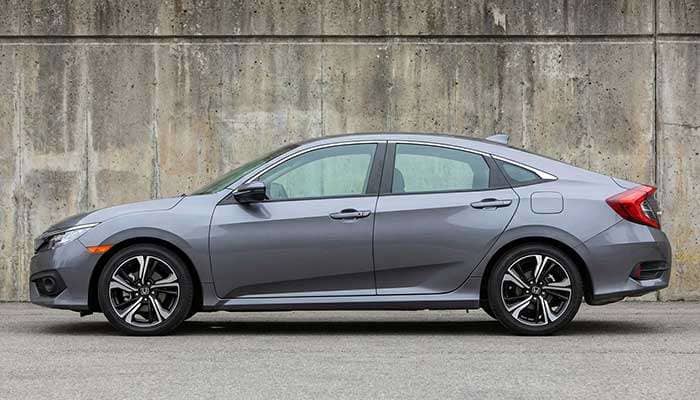
Understanding the differences between aftermarket and OEM wheels helps you make an informed decision for your Honda Civic upgrade. Both options have distinct advantages depending on your priorities and intended use.
Original equipment manufacturer wheels come directly from Honda or their authorized suppliers. These wheels undergo extensive testing to meet Honda's specific requirements for fit, durability, and performance.
OEM advantages include guaranteed compatibility with your specific Civic model. Bolt patterns, offsets, and load ratings match factory specifications exactly. This eliminates fitment concerns and ensures proper function of safety systems like ABS and stability control.
Quality consistency represents another OEM strength. Every wheel meets identical manufacturing standards, reducing the risk of defects or premature failure. Honda's warranty typically covers OEM wheels, providing additional peace of mind.
However, OEM wheels carry significant limitations:
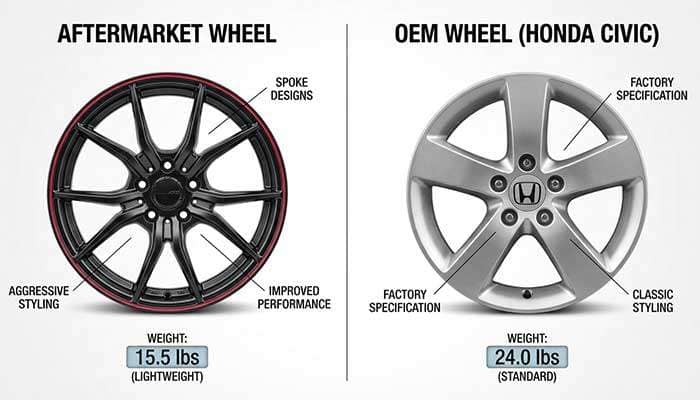
Weight Penalty: Factory wheels prioritize durability and cost over weight reduction. Most OEM Honda wheels weigh 20-25 pounds each, compared to 15-18 pounds for quality aftermarket alternatives.
Limited Design Options: Honda offers relatively few wheel designs per generation. Finding a distinctive look proves difficult when staying within OEM options.
Higher Cost: Genuine Honda wheels typically cost more than equivalent-quality aftermarket options while offering fewer performance benefits.
Quality aftermarket wheels deliver several benefits over factory options:
Weight Reduction: This represents the most significant aftermarket advantage. Reducing unsprung weight by 7-8 pounds per wheel creates immediately noticeable improvements in acceleration, braking, and handling responsiveness. The suspension can react faster to road imperfections, improving both comfort and grip.
Design Variety: Hundreds of aftermarket wheel designs exist for the Honda Civic. Whether you prefer classic five-spoke patterns, aggressive mesh designs, or modern concave profiles, aftermarket options let you create exactly the look you want.
Performance Engineering: Many aftermarket manufacturers focus specifically on performance applications. Flow-formed and forged construction techniques create wheels that exceed OEM strength while weighing significantly less.
Value Proposition: Mid-range aftermarket wheels typically cost less than OEM replacements while offering better specifications. The performance improvement per dollar spent heavily favors quality aftermarket options.
Your decision should reflect your priorities and intended use:
Choose OEM if:
You value guaranteed compatibility above all else
Warranty coverage matters for your peace of mind
You plan to sell the vehicle and want to maintain stock appearance
Performance modifications aren't a priority
Choose aftermarket if:
Weight reduction and performance improvement matter to you
You want a distinctive appearance that stands out
Value matters - getting more performance for your money
You're building a complete performance package
For most enthusiast Civic owners, quality aftermarket wheels represent the smarter choice. The combination of weight savings, design options, and value makes them ideal for anyone looking to improve their vehicle's performance and appearance.
Performance Plus Tire offers carefully curated aftermarket wheel selections specifically chosen for Honda Civic compatibility. Browse the complete range at the Honda Civic wheel finder to see options verified for your exact model.
Wheel Type |
Recommended Sizes |
Typical Offset Range |
Key Benefits |
Common Applications |
Price Range (per wheel) |
|---|---|---|---|---|---|
17-Inch |
7-8 inches width |
+35mm to +48mm |
- Better handling than stock |
Daily driving and mild performance |
$125-400 |
18-Inch |
8-8.5 inches width |
+35mm to +55mm |
- Improved cornering stability |
Sport models and performance builds |
$130-400 |
Flush Fitment |
8.5-9.5 inches width |
+35mm to +50mm |
- Clean esthetic appearance |
Show cars and street performance |
Not mentioned |
Staggered Setup |
Varies (wider in rear) |
+35mm to +40mm front |
- Distinctive appearance |
Primarily esthetic builds, drag racing |
Not mentioned |
OEM |
16-18 inches (model dependent) |
Model specific |
- Proven reliability |
Stock replacement, conservative builds |
Higher than aftermarket |
When selecting wheels for your Civic, consider your primary use case first. Daily drivers typically benefit most from 17-inch options that balance performance with comfort. Those seeking maximum visual impact often choose 18-inch wheels or flush fitment setups, while performance-focused builds benefit from lightweight aftermarket options.
The offset range is crucial for proper fitment - staying within the recommended specifications ensures optimal handling and prevents clearance issues. Price differences reflect manufacturing methods, materials, and brand positioning, with mid-range aftermarket options often delivering the best value for most Civic owners.
Choosing the right wheels for your Honda Civic comes down to matching your specific needs with proper fitment and quality construction. We've covered the essential wheel options that deliver real results for Civic owners. 17-inch wheels represent the best balance for daily driving, while 18-inch options create that aggressive stance many enthusiasts want. Flush fitment offers a clean, premium appearance, though it requires more careful planning to execute properly.
Staggered setups might look distinctive, but they don't align with the Civic's front-wheel-drive design. Square setups consistently deliver better handling and performance characteristics for these vehicles. Quality aftermarket wheels provide significant advantages over factory options, particularly through weight reduction that makes your Civic more responsive and nimble.
That 7-8 pound weight savings per wheel creates noticeable improvements you can feel immediately. Better acceleration, sharper handling, and improved braking response all result from choosing the right aftermarket wheels for your setup.
Proper fitment specifications determine success or failure regardless of which direction you choose. Wrong offset or width creates problems that affect both appearance and performance. You can find wheels specifically designed for your Honda Civic model and year at Performance Plus Tire's Civic wheel finder, eliminating compatibility guesswork.
Your specific priorities determine the best choice for your Civic. Daily drivers often prefer 17-inch practicality, while show car builders lean toward 18-inch flush setups for maximum visual impact. Quality wheels rank among the most effective modifications for transforming both how your Honda Civic looks and performs.
Ready to upgrade your ride? Our expert team is ready to help you find the perfect wheels that fit your Civic perfectly and deliver the performance you're looking for.
Understanding proper wheel fitment is crucial for Honda Civic owners looking to upgrade from stock wheels while maintaining performance and avoiding clearance issues.
• 17-inch wheels offer the best balance - They provide improved handling over stock options while maintaining ride comfort and better pothole protection than larger sizes.
• Proper fitment specs are critical - Most modern Civics (2006-2026) use 5×114.3mm bolt pattern with +35mm to +48mm offset range for optimal performance.
• Weight reduction delivers real performance gains - Quality aftermarket wheels can save 7-8 pounds per wheel, creating noticeable improvements in acceleration and handling responsiveness.
• Square setups outperform staggered for Civics - Since Civics are front-wheel-drive, same-size wheels at all corners provide better handling than staggered configurations.
• 18-inch wheels maximize visual impact - They create aggressive styling and improved cornering stability, though they may reduce fuel economy by 1-4 MPG compared to smaller options.
The right wheel choice transforms your Civic's character completely - from subtle performance improvements with 17-inch options to dramatic visual enhancement with flush-fitted 18-inch setups. Quality aftermarket wheels often outperform OEM options through superior engineering and weight reduction, making them one of the most impactful modifications for both appearance and driving dynamics.
Most modern Honda Civics can accommodate wheels ranging from 16 to 18 inches in diameter. The most popular aftermarket sizes are 17 and 18 inches, offering a good balance of performance and esthetics.
To ensure proper fitment, check your Civic's bolt pattern (typically 5x114.3mm for newer models), wheel width compatibility (usually 7-9 inches), and appropriate offset range (generally +35mm to +50mm). Use a vehicle-specific wheel fitment tool for the most accurate results.
Aftermarket wheels can offer significant weight reduction, improved handling, better esthetics, and increased performance. Quality aftermarket options often save 7-8 pounds per wheel compared to OEM, resulting in noticeable improvements in acceleration and responsiveness.
For most Honda Civic applications, a square setup (same size wheels on all four corners) is preferred. Since Civics are front-wheel drive, staggered setups don't offer significant performance benefits and can potentially negatively impact handling balance.
OEM wheels are designed specifically for your Civic model and undergo rigorous testing. Aftermarket wheels offer more variety in design, often weigh less, and can provide better performance. However, quality varies widely among aftermarket brands, so research is crucial when selecting non-OEM options.



