
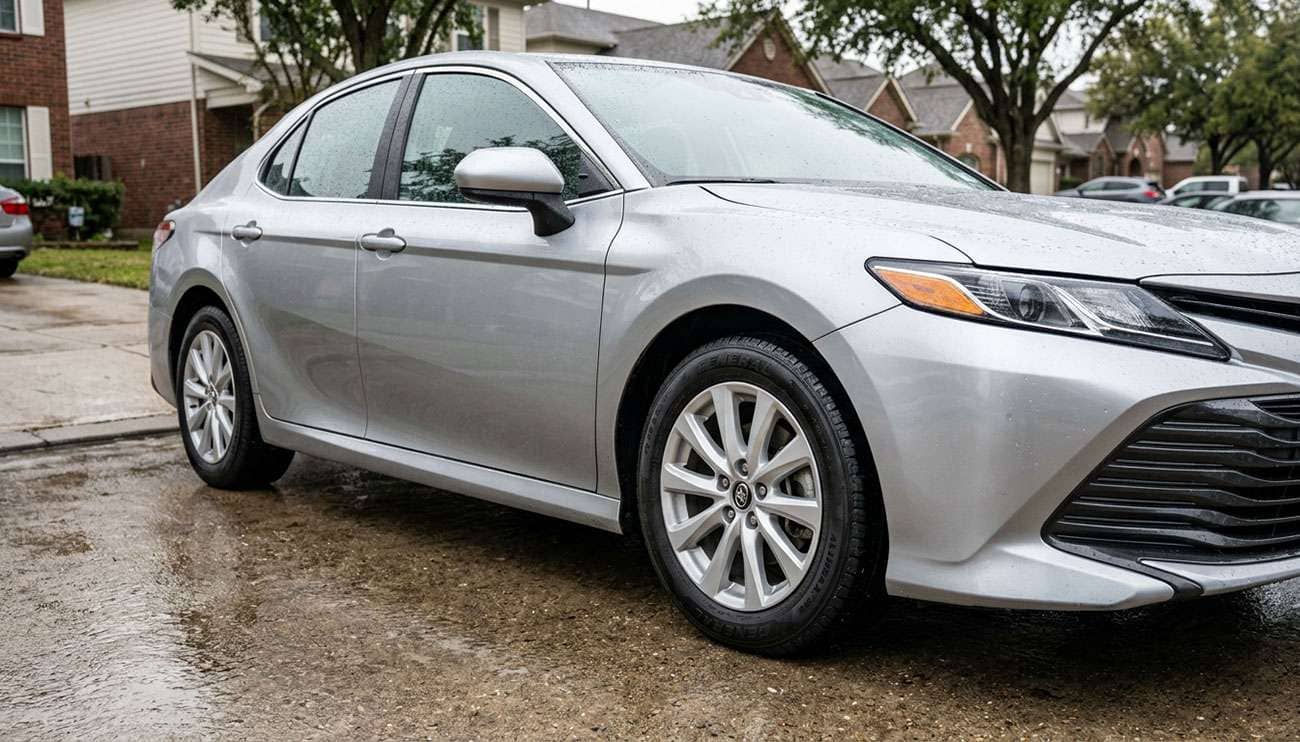
Yes, the General AltiMAX RT45 is a good tire. But that sentence is close to useless on its own, because the AltiMAX RT45 is not one tire. It is three, sold under one name, and the version you end up with is decided by a single letter stamped into the sidewall after the load index.
That letter is the speed rating. On the RT45 it comes in T, H, or V. Most shoppers treat a speed rating as a technicality that only matters if you plan to drive 130 mph. On this particular tire line it decides your treadwear warranty, and it decides which construction and compound General built for your application.
Here is the part almost nobody spells out: the warranty is not one number. Find the size you need in the table below, then read the row that matches it.
Sidewall Reads |
Treadwear Warranty |
Built For |
Share of Sizes We Stock |
|---|---|---|---|
T (up to 118 mph) |
75,000 miles |
Commuter sedans, minivans, older compacts on 14 to 16 inch wheels |
47 of 140 sizes |
H (up to 130 mph) |
75,000 miles |
Mainstream sedans, crossovers, and CUVs on 16 to 19 inch wheels |
58 of 140 sizes |
V (up to 149 mph) |
65,000 miles |
Sport sedans and low-profile fitments, usually marked ZR |
35 of 140 sizes |
Three out of four AltiMAX RT45 sizes we stock carry the 75,000 mile coverage. Yet a large share of the reviews you will find online state the RT45 warranty as a flat 65,000 miles, because they looked at one V-rated size and generalized from it. If you are shopping a 195/65R15 for a Corolla or a 225/65R17 for a CR-V, you are being quoted a warranty that is 10,000 miles short of what you actually get.
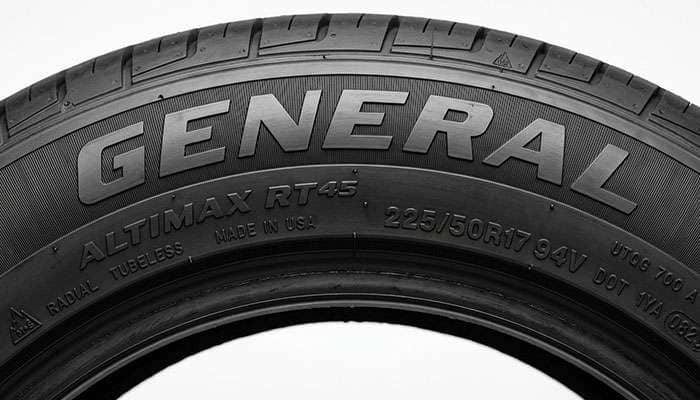
A speed rating is not a suggestion about how fast you should drive. It is a certification of the sustained speed a tire can carry its rated load without heat buildup destroying it. Getting there requires real engineering differences: belt package, sidewall stiffness, tread compound, and the mass of rubber over the belts.
Continental, which owns the General Tire brand, has been explicit that the three RT45 speed ratings are not a marketing exercise. The company's product manager described the tires in those speed ratings as designed for the particular application, so a dealer never has to talk a customer into accepting a different rating than the vehicle was built around.
What that means for you in practice:
So the V-rated RT45 is not the upgraded RT45. It is the version tuned toward handling at the cost of tread life. If your car came from the factory on H-rated tires and you buy V-rated because you assumed higher is better, you paid more, gave up warranty miles, and got a firmer ride you did not ask for.
The rule is simple and it has not changed in decades: match or exceed the speed rating on your vehicle's door placard, and do not exceed it without a reason. If you want the full breakdown of how these codes work, our guide on how to read tire treadwear ratings covers the sidewall markings alongside the UTQG numbers.
The T-rated AltiMAX RT45 is the long-haul commuter version, and it is the one that most justifies the tire's reputation. You get the full 75,000 mile treadwear warranty and the most compliant ride in the line.
These sizes concentrate in 14, 15, and 16 inch diameters with taller sidewalls. Think Civic, Corolla, Sentra, older Camry and Accord, Grand Caravan, and the long tail of vehicles where the owner cares about cost per mile and nothing else. Our 175/65R14 T-rated fitment carries a UTQG of 600 A B with 11/32 inch of tread depth on a brand new tire.
That 11/32 starting depth matters more than most buyers realize. Tread is legally worn out at 2/32, so you have 9/32 of usable rubber. A tire that starts at 10/32 gives you 8/32. That is a 12 percent difference in usable life before you account for compound at all.
Choose the T-rated version if: your vehicle's placard calls for T or S, you drive mostly highway miles, and you want the lowest achievable cost per mile. This is the configuration that makes the RT45 a genuinely strong value.
H-rated is the volume seller, and with 58 sizes it is the largest slice of the RT45 range we carry. It is the default for modern sedans and crossovers on 16 through 19 inch wheels, and it still carries the full 75,000 mile warranty.
This is the sweet spot of the line. You get the long warranty of the T-rated tire with meaningfully better steering response and high-speed composure. For the overwhelming majority of drivers reading this, an H-rated RT45 in the correct size is the right answer and the decision is done.
Popular H-rated fitments run from a 195/65R15 through a 235/55R19, which covers everything from a Prius to a midsize three-row crossover. If your factory tire was H-rated, buy H-rated. There is no upgrade path here that improves your outcome.
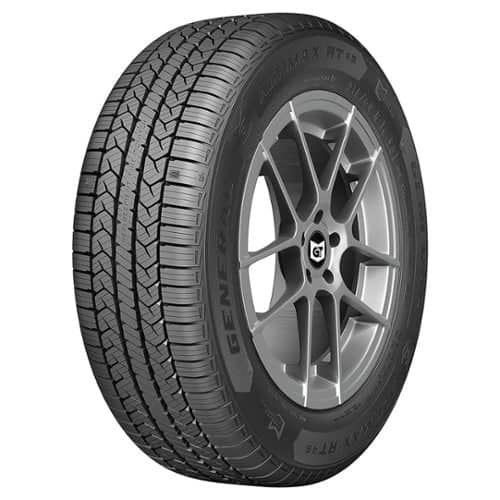
V-rated sizes are the smallest group at 35 of 140, and they are almost always marked ZR in the size designation. These are the low-profile fitments: 225/45ZR18, 245/45ZR19, 255/45ZR19 and similar. They land on sport sedans, loaded trim levels, and anything that left the factory on wheels 18 inches and larger.
You get 65,000 miles of treadwear coverage instead of 75,000. You also get the firmest ride and the sharpest turn-in of the three. Whether that is a fair trade depends entirely on whether your car actually needs the rating.
If your door placard specifies V, buy V. Downgrading to H on a vehicle engineered for V-rated tires changes the handling balance the chassis engineers signed off on, and it can affect your insurance position after an incident. That is not a risk worth 10,000 warranty miles.
If your placard specifies H and you are looking at a V-rated size only because it was in stock or on sale, stop. You are paying more for less warranty and a harsher ride.
One practical note on the warranty itself: a treadwear warranty pays out pro-rated, and it requires documented rotation records. Most claims die on paperwork, not on tread depth. Our breakdown of how to read your tire warranty coverage walks through what the fine print actually obligates the manufacturer to do.
When someone asks whether the AltiMAX RT45 is a good tire according to Consumer Reports, there is a detail in that answer that changes how much weight the score deserves.
Consumer Reports states plainly that the RT45 comes in many sizes across T, H, and V speed ratings, and that the version they tested was the V speed rated tire with the 65,000 mile treadwear warranty.
That is a legitimate test of a legitimate tire. It is simply not a test of the tire that 75 percent of buyers are going to install. The V-rated RT45 has a different compound, a stiffer carcass, a shorter warranty, and a different ride quality than the H-rated tire on the shelf next to it.
The same pattern shows up in the enthusiast press. Independent testing has described the RT45 as a well-rounded performer without crowning it the standout of its price category, and the sizes chosen for those tests skew toward the sportier fitments. None of that is wrong. It just answers a narrower question than the one most shoppers are asking.
Read published scores as information about a specific configuration, not a verdict on the model name. That habit is worth carrying into every tire purchase you make.
The RT43 developed a genuinely loyal following over roughly a decade, to the point where a fair number of drivers were suspicious of the replacement. We still stock the RT43 in 112 sizes, so this is a live comparison rather than a history lesson.
Continental has said the RT45 delivers a 10 percent improvement in wear over the RT43, attributed to a flatter contour that makes the tire more suitable for front-wheel-drive applications and helps mitigate edge wear.
That flatter contour is the real story, and it is worth understanding the mechanism. Front-wheel-drive cars ask the front tires to steer, brace against cornering loads, and put down all the engine torque at the same time. The outside shoulder of the front tires takes a beating, and shoulder wear is what ends the life of most front tires on a FWD vehicle long before the center of the tread is finished.
Flattening the contour spreads contact pressure more evenly from shoulder to shoulder. Less pressure concentrated at the edges means slower shoulder wear, which means the tire wears out closer to evenly and you get more of the tread you paid for.
Consideration |
AltiMAX RT45 |
AltiMAX RT43 |
|---|---|---|
Sizes we stock |
140 |
112 |
Price range |
USD 103.99 to 234.99 |
USD 76.20 to 228.98 |
Wear performance |
Roughly 10 percent improved per Continental |
Baseline |
Front-wheel-drive edge wear |
Flatter contour reduces shoulder wear |
More prone to shoulder wear |
Best use case |
Current fitments, front-wheel drive, long ownership |
Budget priority on smaller diameters |
If your budget is genuinely tight and your size is available in both, the RT43 remains a defensible buy on small-diameter fitments where the price gap is widest. For a front-wheel-drive vehicle you intend to keep, the RT45 contour change earns the difference.
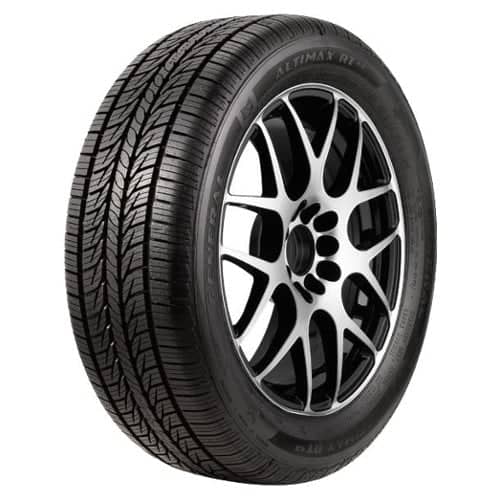
This question generates more conflicting answers than any other, and the conflict is the useful part. Owners report both experiences, and the split is not random.
New, the RT45 is quiet. That is consistent across owner reports and it matches the design intent, since low road noise is one of the traits Continental engineered for. Drivers replacing worn factory tires routinely describe the RT45 as quieter than what came off the car.
The complaints follow a pattern. One long-term owner reported the tires were comfortable and quiet initially, with road noise becoming a little more noticeable at 35,000 miles, though still tolerable. Another reported a loud highway hum at roughly 20,000 miles and three years of age. A third at 11,000 miles reported no increase in noise at all.
Notice what those reports have in common. Nobody says the tire was loud out of the box. They describe noise that developed. That distinction points directly at the mechanism.
Tread noise that appears over time is almost always irregular wear, not tread design. When a tire wears unevenly, the tread blocks stop meeting the road at a uniform height. Each block slaps down slightly out of sequence with its neighbors, and that produces the cyclic drone drivers describe as a hum. The pitch rises with speed, which is why it shows up on the highway first.
Irregular wear on a touring tire comes from a short list of causes: alignment out of specification, a rotation interval that got skipped, chronic underinflation, or worn suspension components letting the wheel move under load. None of those are the tire's fault, and all of them are correctable before they ruin a set.
The RT45 is unusual in that it was designed to warn you about exactly this. More on that below. If you are chasing a noise that is already present, our guide to tire noise causes explained walks through isolating tread noise from bearing and driveline noise.
A warranty number is a manufacturer's confidence statement, not a promise about your driving. The useful question is what owners actually observe.
The starting hardware is favorable. The RT45 begins with 11/32 inch of tread depth and a UTQG treadwear grade of 600 on the sizes we sampled, with A traction and B temperature. A 600 treadwear grade sits comfortably in long-life touring territory.
Owner-reported outcomes cluster sensibly around that. One high-mileage driver covering 30,000 to 35,000 miles a year on hilly terrain reported at 11,000 miles that tread life was running better than the original equipment tires and projected clearing 40,000 miles, on a vehicle whose factory tires had managed roughly 20,000.
Set your expectations using these variables rather than the warranty headline:
A realistic expectation for a rotated, correctly aligned, properly inflated set of H-rated RT45s on a commuter vehicle is 55,000 to 70,000 miles. Neglect any one of those variables and 35,000 is achievable in the wrong direction. For broader context on how these variables interact, see our breakdown of tread depth to replace tires.
This is where the RT45 earns real credit, and it is the feature set that gets the least attention in reviews.
The Replacement Tire Monitor. General molds letters into the tread that progressively wear away. When the tire reaches 2/32 inch of remaining depth, the letters have worn down to read REPLACE TIRE. You do not need a gauge, a penny, or a shop visit to know you are at the legal wear limit. The tire tells you in English.
Visual Alignment Indicators. This is the more valuable of the two. Indicators are placed on both sides of the tread. If your alignment is correct, they wear away evenly. If your alignment is out, they wear away unevenly, and the mismatch between the two sides is visible at a glance.
Connect that back to the noise discussion. The most common cause of an RT45 that got loud is irregular wear from an alignment problem, and this tire has a built-in gauge that flags an alignment problem months before it produces audible noise. The warning system is molded into the product. It only works if someone looks at it.
Check both indicators every time you rotate. It costs thirty seconds. If the alignment indicators are wearing unevenly, get the alignment checked before you rotate, because rotating a set that is already wearing irregularly just relocates the problem. Our comparison of tire alignment vs rotation vs balancing clarifies which service actually addresses which symptom.
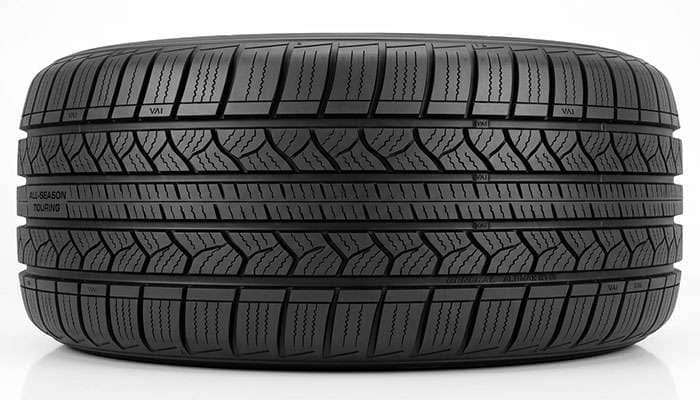
Uneven wear is not a cosmetic issue. It escalates, and each stage costs more than the one before it.
Stage one, roughly 5,000 miles of misalignment. Shoulder wear begins. Nothing is audible and nothing feels wrong. The alignment indicators have already started wearing unevenly. A 100 dollar alignment resolves it completely and you lose nothing.
Stage two, 10,000 to 15,000 miles. The wear pattern is measurable with a depth gauge across the tread face. Rolling resistance climbs and fuel economy slips a fraction. An alignment now still saves the tires, but you have permanently given up some tread life.
Stage three, 20,000 to 30,000 miles. The hum arrives. This is the point at which most owners first notice something and start searching for answers. The wear pattern is now cast into the rubber and an alignment will stop it getting worse but cannot reverse it. The noise stays until the tires are replaced.
Stage four. Wet performance degrades. Worn shoulders and a distorted tread profile reduce the tire's ability to evacuate water, which lengthens wet braking distances and lowers the speed at which hydroplaning begins. This is the stage where a maintenance issue becomes a safety issue.
Stage five. The set is finished well short of its warranty mileage, and the pro-rated warranty claim is likely to be denied because irregular wear from misalignment is a maintenance exclusion in nearly every treadwear warranty written. You paid for 75,000 miles, got 40,000, and the warranty does not cover the gap.
The entire ladder is preventable at stage one, and the RT45 is trying to tell you when you are at stage one.
We stock the AltiMAX RT45 in 140 fitments spanning 111 distinct sizes, from 14 through 20 inch diameters, in both black sidewall and outlined white letter. Pricing runs from USD 103.99 to USD 234.99 per tire depending on size and speed rating.
Size |
Speed Rating |
Warranty |
Price Each |
Typical Vehicles |
|---|---|---|---|---|
195/65R15 |
H |
75,000 miles |
USD 114.99 |
Prius, Jetta, Corolla |
205/55R16 |
H |
75,000 miles |
USD 128.99 |
Civic, Elantra, Golf |
215/55R17 |
H |
75,000 miles |
USD 160.99 |
Camry, Malibu, Fusion |
225/65R17 |
H |
75,000 miles |
USD 165.99 |
CR-V, RAV4, Rogue |
235/65R17 |
H |
75,000 miles |
USD 174.99 |
Highlander, Pilot, Edge |
225/50ZR17 |
V |
65,000 miles |
USD 171.99 |
Sport sedans, loaded trims |
235/55R19 |
H |
75,000 miles |
USD 213.99 |
Midsize three-row crossovers |
245/45ZR19 |
V |
65,000 miles |
USD 234.99 |
Performance sedans |
Notice the 225/50ZR17 in that list. It costs more than the 215/55R17 and carries 10,000 fewer warranty miles. That is the speed rating trade in a single line item.
If you want genuine three-season snow capability rather than the light-snow competence of an all-season, the AltiMAX 365AW is General's all-weather alternative and we stock it in 52 sizes. It carries the mountain snowflake certification the RT45 does not.
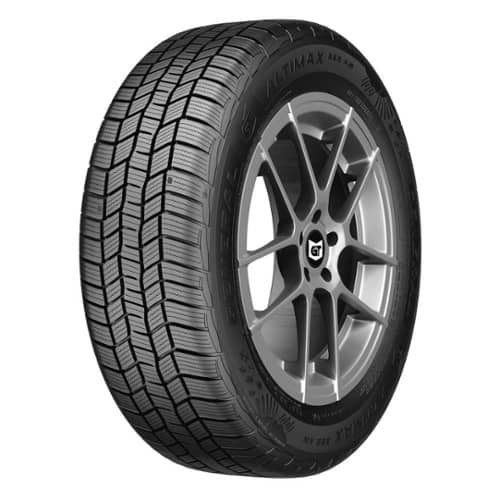
Five steps, in order. Do not skip the second one.
1. Read your door placard, not your current tires. Open the driver's door and find the sticker on the jamb. It lists the factory size and the minimum speed rating. Your current tires may already be wrong if a previous owner or shop substituted something.
2. Confirm the speed rating and accept what it tells you. Match it or exceed it, and do not exceed it without a reason. If the placard says H, buy H, take the 75,000 mile warranty, and keep the money.
3. Choose sidewall style. The RT45 comes in black sidewall and outlined white letter depending on size. This is purely cosmetic and does not affect performance or warranty.
4. Buy all four. Mixing tread depths across an axle affects handling balance, and on all-wheel-drive vehicles a depth mismatch can damage the center differential. The 45 day satisfaction trial General offers applies to eligible sets of four.
5. Align at installation, then rotate on schedule. A fresh alignment when the new set goes on protects the warranty and the tread. Set a rotation interval of 5,000 to 8,000 miles and keep the receipts, because that documentation is what a warranty claim lives or dies on.
Ready to check your size and pricing? Shop the full General AltiMAX RT45 lineup at Performance Plus Tire, where all 140 fitments ship free.
The General AltiMAX RT45 is a good tire, and in T or H rated form it is a very good one. You get 75,000 miles of treadwear coverage, 11/32 inch of starting tread depth, a 600 UTQG treadwear grade, wear indicators molded into the tread that most premium tires do not offer, and a price that undercuts the premium touring segment by a wide margin.
The V rated version is a different proposition. It is still a competent tire, but you trade 10,000 warranty miles and ride comfort for handling response you may not have asked for. Buy it when your vehicle requires it, not when it happens to be in stock.
The mistake to avoid is not choosing the wrong model. It is buying the right model in the wrong speed rating because a review quoted a single warranty figure that applied to a quarter of the range. Read the placard, match the rating, and the rest of this decision takes care of itself.
For a wider look at where this brand sits in the market, see our assessments of how good are General tires and who makes General tires.
Yes, particularly in T or H rated sizes, which carry a 75,000 mile treadwear warranty, start with 11/32 inch of tread depth, and carry a 600 UTQG treadwear grade. The V rated sizes are also competent but carry 65,000 miles of coverage and a firmer ride. The right answer depends on which speed rating your vehicle's door placard specifies.
Consumer Reports includes the AltiMAX RT45 in its tire test program and states that the version it tested was the V speed rated tire with the 65,000 mile treadwear warranty. That is worth knowing, because the V rated tire represents roughly a quarter of the size range and uses a different compound and construction than the T and H rated sizes most buyers install.
T and H rated sizes are warranted to 75,000 miles and V rated sizes to 65,000 miles. A realistic real-world expectation on a rotated, correctly aligned, properly inflated set is 55,000 to 70,000 miles. Skipped rotations or an alignment out of specification can cut that to 35,000 miles and will typically void a pro-rated warranty claim.
Not when new. Owners consistently describe the RT45 as quiet initially, and low road noise is one of the traits it was engineered for. Reports of a highway hum describe noise that developed later in the tire's life, which points to irregular wear from misalignment, skipped rotations, or underinflation rather than the tread design. The tire's Visual Alignment Indicators are designed to flag that problem before it becomes audible.
General sits in the upper value tier rather than the premium tier, and it is owned by Continental, which places it inside one of the largest tire engineering operations in the world. In practice that means premium-adjacent engineering at a meaningfully lower price, which is why the RT45 offers longer treadwear coverage than several premium touring competitors.
Both compete in the same value-to-midrange segment and the answer depends on the specific models being compared. In the grand touring category, the AltiMAX RT45 carries up to 75,000 miles of treadwear coverage in T and H rated sizes, while Cooper's comparable touring offering is warranted up to 65,000 miles. Compare the individual tires in your size rather than the brand names.
The RT45 is an all-season touring tire rated for light snow, and it does not carry the three-peak mountain snowflake certification. It is adequate for occasional light accumulation on cleared roads. If you regularly face real winter conditions, the General AltiMAX 365AW is the all-weather alternative with mountain snowflake certification, or a dedicated winter tire remains the strongest option.



