
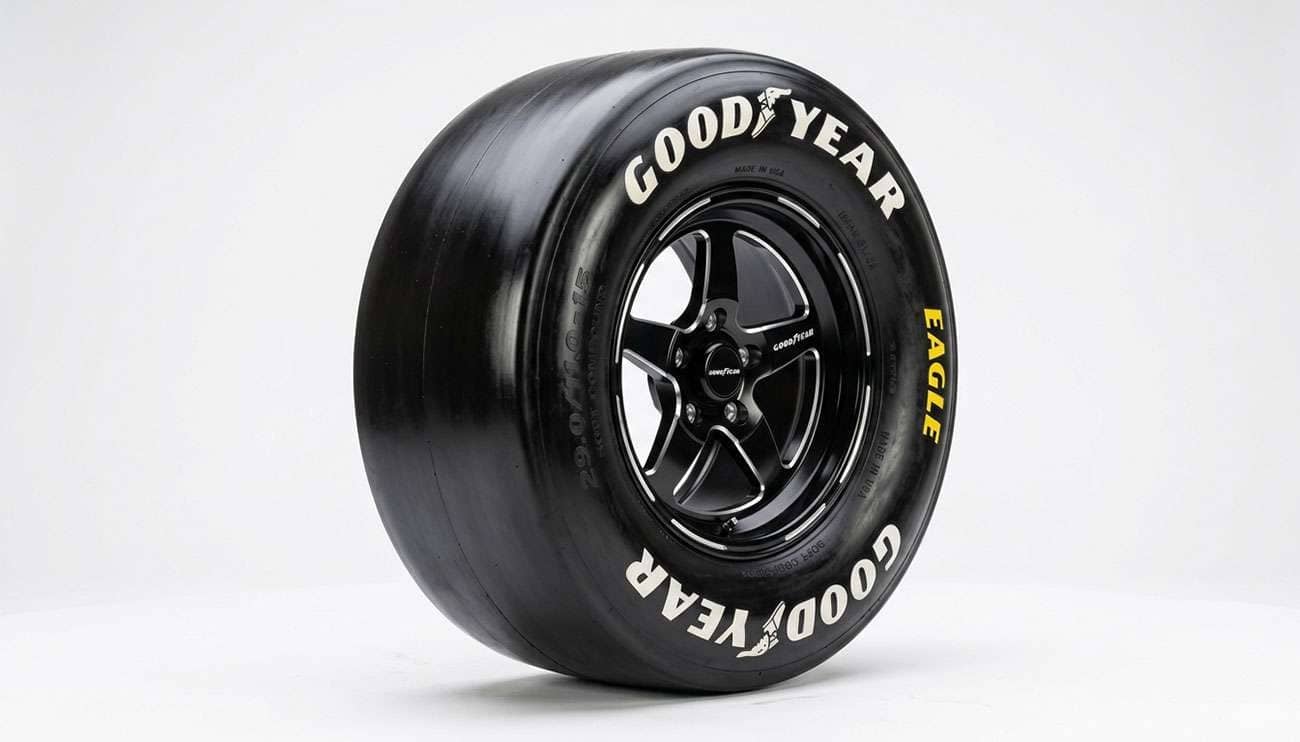
A young fella came into the shop a while back, proud as could be, with a set of fresh drag slicks he'd just bought for his Mustang. He wanted to know if he could run them as his everyday tires so he'd be ready whenever a race popped up. I had to be the one to tell him: son, those tires will get you killed on the way to the grocery store. He thought I was pulling his leg. I wasn't.
It's a question I've heard a thousand times in fifty years at the strip, and I understand why folks ask it — slicks hook so hard you'd love to have that grip all the time. But the honest answer is no, you can't drive drag slicks on the street, and once you understand how these tires are built, you'll see exactly why. Let me lay it out for you.
Full drag slicks are built for one job — maximum straight-line traction on a prepped track — and that single-minded design makes them genuinely dangerous and, in most places, illegal on public roads. They have no tread to channel water, a compound too soft to last, and a sidewall too thin and flexible to handle real-world driving. There's no clever trick or tire pressure that makes a true slick safe for the street. If you want grip at the strip AND the ability to drive your car on the road, that's what drag radials are for, and we'll get to those.
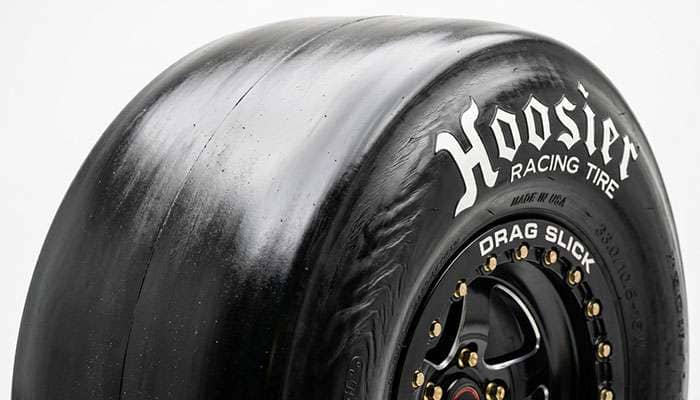
To understand why a slick is a road hazard, you've got to understand what it is. A drag slick is a big, smooth contact patch of very soft rubber with no tread pattern whatsoever. That softness and that full patch of rubber are exactly what gives it monster grip on a clean, dry, prepped surface. It rides on a thin, flexible sidewall — often just two plies — that's designed to wrinkle on the launch, soaking up the shock when you dump the clutch and then springing back to plant the tire. If you want the deep dive on that construction, we wrote up how drag racing tires are made.
Every one of those features is a virtue at the track and a liability on the road. The soft compound that bites so well wears away in a hurry on pavement. The smooth surface that maximizes dry grip has nothing to push water out of the way. And that thin, soft sidewall that wrinkles so nicely off the line gives you vague, squirmy handling the second you try to steer or stop. A slick is a specialist, and you don't send a sprinter to run a marathon.
Boil it all down and there are three things that make a slick a no-go for the street, and any one of them is enough.
First, water. A slick has no tread grooves, which means it has no way to evacuate water. Hit a puddle or get caught in a surprise shower and you'll hydroplane instantly — the tire just skates across the top of the water with zero grip. I've seen it happen and it is not pretty. Second, durability. That race compound is soft on purpose, so it wears down fast on rough public roads, and the thin construction punctures easily on the kind of debris you'd never notice in a regular tire. Third, the law. Most full slicks carry no DOT stamp, which in most states means they are not legal for street use. Get pulled over or get in a fender-bender on non-DOT tires and you're looking at a ticket and a world of insurance trouble.
Now somebody always pipes up about cheater slicks. A cheater slick has just a couple of token grooves cut into it — barely enough tread to technically qualify, originally to skirt old class rules. Some of these carry a DOT stamp, which is where the "DOT-legal slick" idea comes from. And yes, in the strictest legal sense, a DOT-stamped cheater might be road legal where you live.
But legal and smart are two different things. Those few shallow grooves do almost nothing for real water evacuation, the compound is still soft and short-lived, and the sidewall is still built for the strip, not for emergency braking on the interstate. I tell my customers the same thing every time: just because the law might let you doesn't mean your family should be riding on them. A cheater slick is a track tire that earned a loophole, not a street tire.
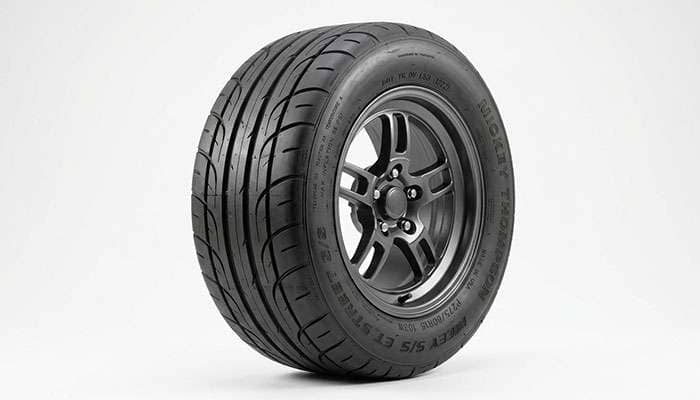
Here's the good news, and it's the answer the kid with the Mustang actually needed: you can have your cake and eat it too with a DOT drag radial. A drag radial looks like a regular street tire — it's got a real tread pattern and a proper DOT stamp — but underneath it's built on a soft, sticky compound that gives you traction much closer to a slick. You can legally and safely drive the car to the track, make your passes, and drive home, all on the same set of tires.
They're not magic — drag radials wear faster than a normal touring tire and you shouldn't daily-drive them for years, but they're a real tire with real tread that handles rain and road duty in a way a slick never could. We put together a full drag radials street and strip buyer's guide that walks through the whole category, and if you're wondering how long they hold up to that double duty, we measured exactly that in how many miles Mickey Thompson ET Street drag radials last. For the bigger picture on radial versus old-school bias construction, our piece on radial vs. bias-ply tires is worth a look too.
If you're ever unsure whether a tire is legit for the road, three things tell the story. Look for the DOT stamp on the sidewall — no DOT, no street, plain and simple. Look for a real tread pattern with grooves deep enough to move water, not just a couple of decorative lines. And check the treadwear rating; a true street tire carries a treadwear number, while pure race rubber is so soft it's often rated for next to nothing. Our guide on how to read tire treadwear ratings explains what those numbers actually mean and why race compounds sit at the bottom of the scale.
For the guy with one car, one garage, and no trailer, the play is simple: run DOT drag radials on a proper drag wheel and you've got a car you can drive all week and race on the weekend. If you want to get serious about reducing weight up front, you can add a skinny front runner setup, but that's a track-day extra. The right wheel matters as much as the rubber here, which is the whole point of drag racing wheels — keeping that sticky tire planted and consistent. And if you're still shopping compounds, our roundup of the best racing tire brands will point you to names you can trust.
Here's the lineup I'd actually put in front of you, sorted by what you can and can't drive home on.
Drive-it-home DOT drag radials: the Mickey Thompson ET Street R 275/50R15 is the street-strip benchmark, the Mickey Thompson ET Street Radial Pro 275/60R15 steps up the grip for higher-power cars, the Mickey Thompson ET Street S/S 235/60R15 is a great all-around street-strip choice, and the Atturo AZ850 DR Drag Radial 285/30R20 covers the modern big-wheel builds.
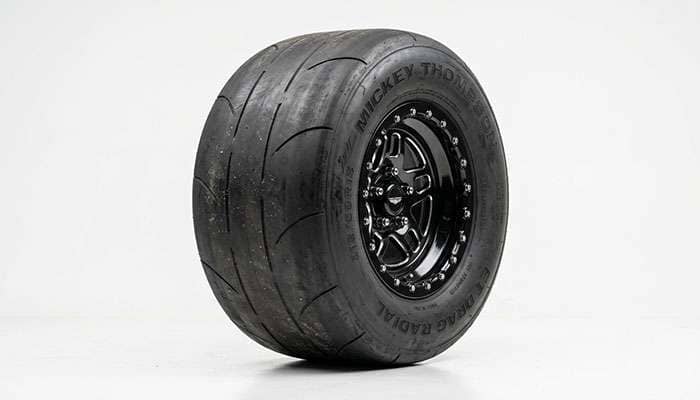
Track-only — trailer required: tires like the M&H Cheater Slick 26/10.50R15 and the Mickey Thompson ET Drag 28x9.00-15 hook like crazy at the strip, but these belong on a trailer, not on your morning commute. Our Fitment Team can set you up with the right street-legal tire for your car and tell you straight what's safe for the road.
Can you drive drag slicks on the street? No — they have no tread for water, a compound too soft to last, a sidewall too thin to handle real driving, and usually no DOT stamp to make it legal. The smart move, and the one I've steered countless racers toward, is a DOT drag radial: near-slick traction at the strip with a real, street-legal tire you can drive there and back. Keep the slicks for the track where they belong, and come see us at Performance Plus Tire when you're ready to set your car up the right way.
No. Full drag slicks have no tread pattern and typically carry no DOT stamp, which makes them illegal for street use in most states. Even where a DOT-stamped cheater slick might technically qualify, its lack of real water evacuation and its soft, fragile construction make it unsafe for public roads.
Because a slick has no grooves to channel water away, it hydroplanes almost immediately in the rain or through standing water. The tire skates across the surface with essentially no grip, leaving you unable to steer or brake. It's one of the most dangerous things you can do on the road.
A full slick has no tread and a thin, flexible sidewall built purely for track traction, and it's not street legal. A DOT drag radial has a real tread pattern, a DOT stamp, and a soft sticky compound, so it delivers traction close to a slick while remaining legal and safe enough to drive to and from the track.
You can drive them on the street, which is the whole point, but they aren't ideal as a long-term daily tire. Their soft compound wears faster than a normal touring tire and they don't handle heavy rain as well, so most racers use them for street-strip duty rather than as year-round everyday tires.
Check the sidewall for a DOT stamp, look for a genuine tread pattern with grooves deep enough to move water, and confirm it carries a treadwear rating. A tire missing the DOT mark or with no real tread is a track-only tire and should not be driven on public roads.
Reviewed by Hank Feldman, Founder, Performance Plus Tire



