
A cheap but good tire sits in the bottom third of the price range for your size while still carrying four specific things: a UTQG traction grade of A or AA, a treadwear rating of 400 or higher for a touring application, a load index that meets or exceeds the number on your driver door jamb, and a written mileage warranty from the manufacturer. In common passenger sizes that lands between roughly 45 and 110 dollars per tire. Below that band, the specifications start disappearing rather than getting worse.
That last sentence is the part nobody says out loud, so let me be direct about it. The difference between a good cheap tire and a bad one is almost never a difference in how the tire looks or how the tread pattern is drawn. It is a difference in what the manufacturer is willing to publish. A tire with an A traction grade, a 500 treadwear number, and a 60,000-mile warranty is a tire whose maker has committed to numbers in writing. A tire at the same price with a B traction grade, no published warranty, and a treadwear number in the 300s has told you something too. Most shoppers just are not reading it.
I have been specifying fitments for a long time, and the pattern holds across every price tier. Read the sidewall and the spec sheet before you read the brand name. The rest of this article is how to do that in about ninety seconds, and what the honest price floor looks like in your specific size.
Every size class has a floor. Above it, you are choosing between real tires with real published test data. Below it, you are usually buying something with no traction grade you would want, no mileage warranty, and no independent test results anywhere. The floor moves with size because bigger tires use more material, carry more load, and cost more to certify.
Here is where the line actually falls, using current in-stock pricing rather than theory.
Tire Size Class |
Realistic Floor Per Tire |
What Sits Below the Floor |
In-Stock Example |
|---|---|---|---|
13 to 15 inch passenger |
About 45 dollars |
Unbranded imports with no published wet testing and no mileage warranty |
Kumho Solus TA11 from 44.65 |
16 to 17 inch touring |
About 55 dollars |
Treadwear grades in the 300s at touring prices, or missing service descriptions |
Nexen CP672 from 55.47 |
16 to 18 inch crossover and SUV |
About 68 dollars |
Passenger-rated casings sold for vehicles that need a higher load index |
Starfire Solarus AS from 67.89 |
17 to 20 inch performance |
About 75 dollars |
W and Y speed ratings with no supporting high-speed test data published anywhere |
Nexen N'Fera SU1 from 75.63 |
LT truck, load range E |
About 105 dollars |
P-metric tires substituted for LT applications, losing load capacity |
Milestar Patagonia H/T from 104.95 |
Notice what those floor numbers are not. They are not the cheapest price you can find on the internet. They are the price at which a tire in that size still comes with a specification sheet you can check. You can absolutely find a 15-inch tire for 32 dollars. What you cannot find is a 32-dollar 15-inch tire with an A traction grade and a published treadwear warranty, because the economics do not work.
This is the scenario that actually costs people money. You have two tires in your size, both listed at 85 dollars, both with aggressive-looking tread, both with four-star average reviews. One is a legitimate value. One is a tire you will regret the first time it rains hard on the freeway.
Five checks separate them. None of them require you to trust a brand reputation.
Check |
What You Want to See |
Fail Signal |
|---|---|---|
UTQG traction grade |
A or AA |
B grade at a touring price point |
Treadwear number |
400 or higher for touring, 300 or higher for performance |
A number in the 200s on an all-season tire |
Load index versus door jamb |
Equal to or greater than the placard number |
Any shortfall at all, even one point |
DOT date code |
Manufactured within the last two years |
A code three or more years old on a new tire |
Written mileage warranty |
A stated figure, 40,000 miles or more |
No warranty published anywhere on the maker's site |
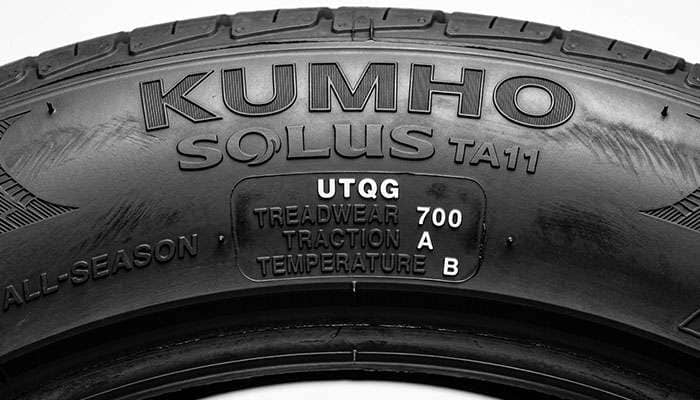
Take the traction grade first, because it is the one that matters most and gets ignored most. The Uniform Tire Quality Grading system is a federal requirement administered by NHTSA under 49 CFR 575.104. The traction grade is not a marketing opinion. It comes from a measured wet coefficient of friction during straight-line braking on both asphalt and concrete surfaces. AA, A, B, and C are the four grades, and while B is perfectly legal to sell, it represents a measurably lower wet braking capability than A. Independent testing has consistently shown that lower-tier tires need meaningfully longer distances to stop on wet pavement, and that difference does not announce itself until the moment you need it. Our guide to UTQG tire ratings decoded walks through what each grade is actually measuring.
The treadwear number is relative, not absolute. It compares the tire to a government control tire on a specified test course, so a 600 tire should last roughly twice as long as a 300 tire under identical conditions. It is not a mileage promise. What it is good for is comparison within a price bracket, and that is exactly the job here. If two 85-dollar tires carry 300 and 550, you now know which one the manufacturer expects to survive. Our breakdown of how to read tire treadwear ratings covers the limits of the number.
Load index is the one where cheap becomes genuinely unsafe rather than merely disappointing. The number on your door jamb placard is the minimum, set by the vehicle manufacturer to carry the vehicle at its gross axle weight rating. Dropping below it to save money is not a compromise, it is an overload condition that gets worse with heat and speed. Read the difference between load range and load index before you shop, because they are not the same thing and the distinction matters most on trucks and SUVs.
The DOT date code tells you how long that tire sat before it reached you. Rubber cures and hardens with age whether or not the tire ever rolled. A steeply discounted tire is sometimes discounted because it has been in a warehouse since 2022. The last four digits of the DOT code give you the week and year of manufacture, and our walkthrough on how to read DOT tire date codes shows exactly where to find them.
The warranty check is the fastest of the five. Go to the manufacturer's own website and look for a stated mileage figure. If the tire has one, the maker has done durability validation and is willing to pay if the tire misses. If no figure exists anywhere, that absence is your answer. Our guide on how to read your tire warranty coverage explains what those figures actually obligate a manufacturer to do.
This is the largest group of shoppers and the easiest case to get right. A sedan or compact in a 14 to 17 inch size, driven 10,000 to 15,000 miles a year, mostly on pavement, in a climate that does not demand a dedicated winter tire. The requirement is straightforward: an all-season touring tire with an A traction grade, a treadwear number in the 500s or better, and a load index matching the placard.
Model |
Starting Price |
Why It Qualifies |
|---|---|---|
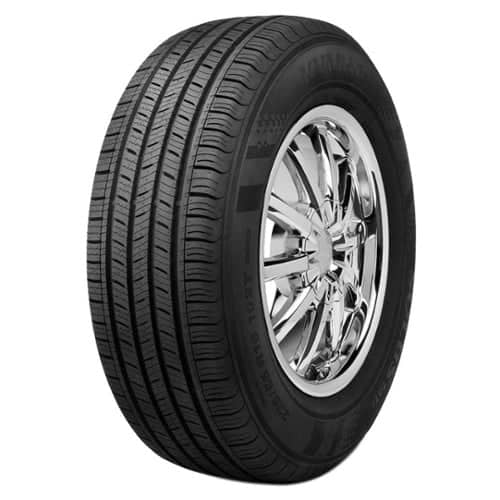
Kumho Solus TA11 |
44.65 |
Sits at the floor for small passenger sizes while keeping a published warranty and full service description |
Nexen CP672 |
55.47 |
Touring all-season aimed at sedans and hatchbacks with a long stated tread life |
Ironman iMove Gen2 AS |
49.87 |
Performance all-season at a genuine budget price with warranty coverage behind it |
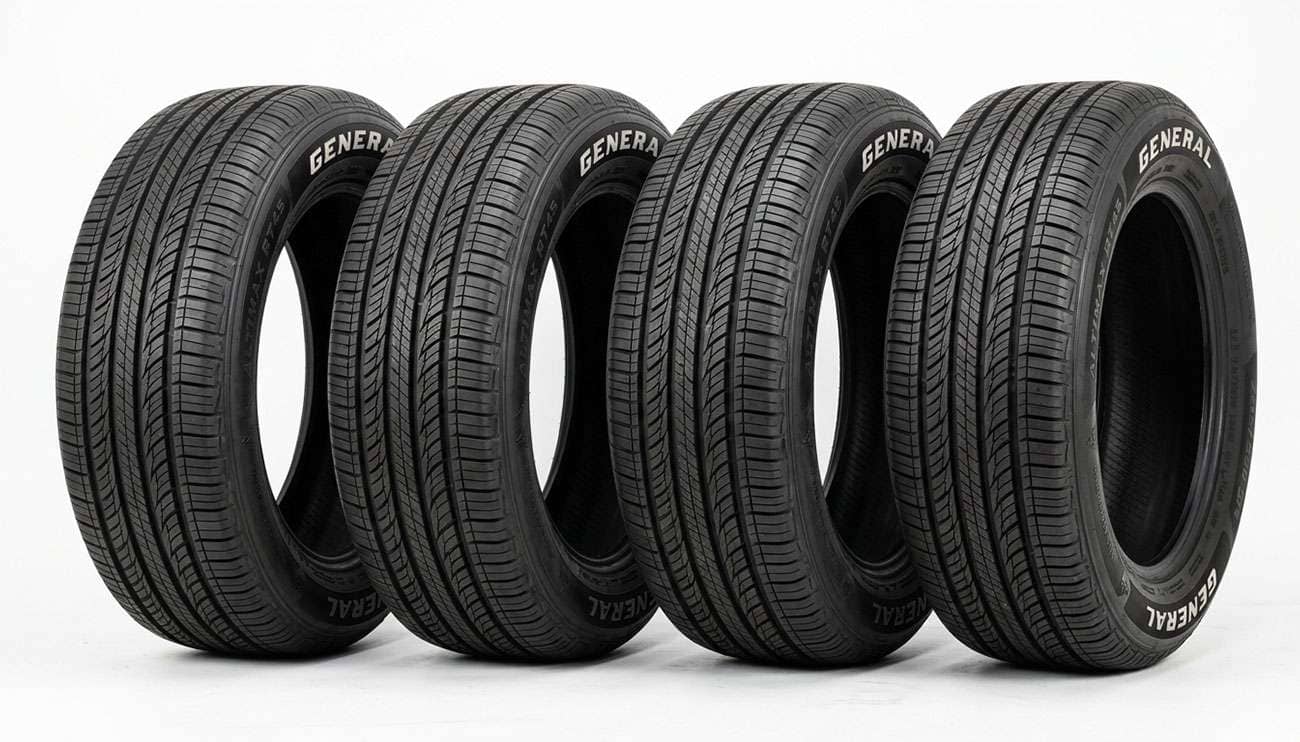
General AltiMax RT45 |
103.99 |
Current-generation touring tire with one of the longest mileage warranties in the class |
The spread in that table is the whole lesson. The AltiMax RT45 costs more than double the Solus TA11 at the entry size, and it is a better tire in measurable ways. But the TA11 is not a bad tire, and for a ten-year-old commuter that sees 8,000 miles a year and gets sold in three years, the extra 235 dollars across a set buys durability the owner will never collect on. That is the real definition of cheap but good: the least tire that still meets every specification your situation actually requires.
Crossovers change the math because of weight. A three-row crossover loaded with people and cargo puts far more load on each tire than a compact sedan ever will, and the load index requirement climbs accordingly. This is where budget shopping most often goes wrong, because it is easy to find a cheaper tire in the same nominal size that simply is not rated for the vehicle.
Model |
Starting Price |
Why It Qualifies |
|---|---|---|
Starfire Solarus AS |
67.89 |
Cooper's value brand, built on established tooling, at the crossover floor |
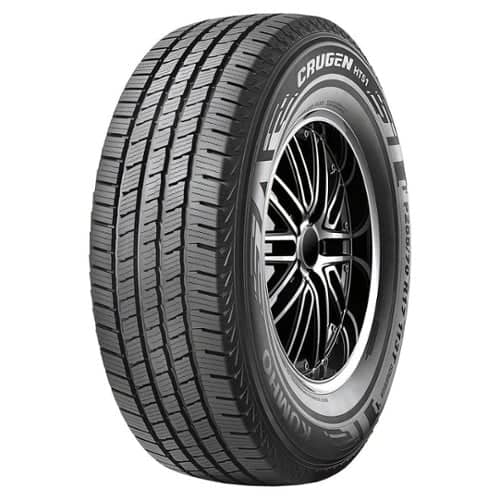
Kumho Crugen HT51 |
114.89 |
Highway touring with a long mileage warranty and grooves designed for water evacuation |
Nexen Roadian GTX |
128.00 |
Built specifically for heavier crossovers and light trucks that need higher load ratings |
The check that matters here is not price, it is the load index printed on the sidewall against the number on your placard. A 235/65R17 exists in load indexes from 104 to 108 depending on the model. Those are different tires wearing the same size. Buying the cheaper one because the size string matches is the single most common budget tire mistake I see.
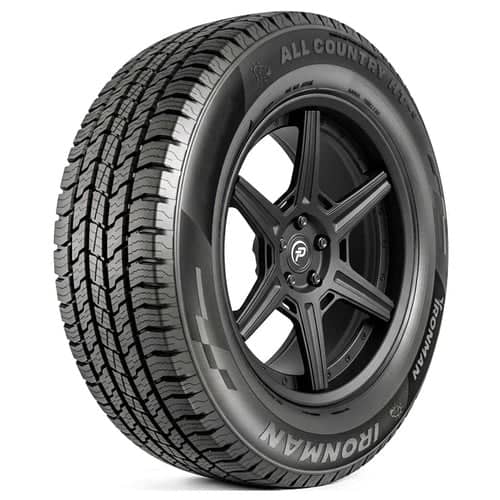
Trucks are the case where the UTQG shortcut stops working. Light truck tires marked LT are exempt from UTQG grading, so there is no traction letter or treadwear number to read. The specification that replaces it is load range, expressed as a letter with a corresponding ply rating: C for 6-ply equivalent, D for 8-ply, E for 10-ply.
Model |
Starting Price |
Why It Qualifies |
|---|---|---|
Ironman All Country HT 4S |
97.38 |
Highway all-season with real warranty backing at the low end of the truck range |
Milestar Patagonia H/T |
104.95 |
Available in genuine LT sizes with load range E construction |
General Grabber HTS60 |
112.46 |
Built for towing and heavier loads, with a long-standing reputation in fleet use |
If your truck tows, hauls, or carries a camper, the P-metric substitution is the trap to avoid. A P-metric tire in a truck size derates by roughly 10 percent when fitted to a light truck application, which means a tire that looks adequate on paper is not once you put the trailer on. When in doubt, match the load range on the tire that came off the vehicle.
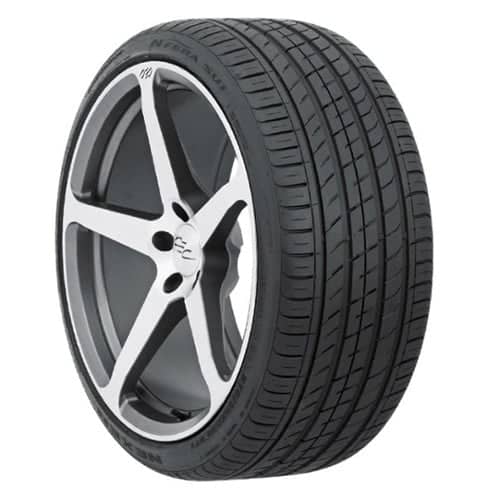
Performance sizes flip the treadwear expectation. A summer or ultra-high-performance all-season tire with a 700 treadwear number is not a good performance tire, it is a hard compound that will understeer and squeal. Here you want treadwear in the 300 to 500 range, an A traction grade, and a speed rating that meets or exceeds the original equipment fitment.
Model |
Starting Price |
Why It Qualifies |
|---|---|---|
Milestar MS932 Sport |
58.87 |
Performance all-season at a price that undercuts the segment without dropping the speed rating |
Nexen N'Fera SU1 |
75.63 |
Ultra-high-performance construction with W and Y speed ratings available |
Kumho Ecsta PA51 |
84.63 |
Touring all-season for performance sedans with directional tread and warranty coverage |
Speed rating is not optional in this category. Dropping from a Y-rated original fitment to an H-rated budget tire changes the construction of the tire, not just a letter on the sidewall, and it can affect handling response and heat tolerance at highway speeds. If the factory fitment was a V, W, or Y, match it.
Search this question and you will get a short list of three or four tire names presented as the answer. Two problems with that.
The first is availability. Some of the most commonly recommended budget tires are house brands sold exclusively through a single retailer. They are not available through independent distribution, which means the recommendation is useless the moment you shop anywhere else, and you cannot compare them against anything because no independent test data exists.
The second is generational lag. Tire models get superseded, and the summaries frequently keep recommending the outgoing version for years after the replacement arrives. The General AltiMax RT43 is a good illustration. It earned its reputation honestly and it is still a solid tire, but General has moved the line forward to the RT45, and size availability on the RT43 narrows every year. Buying the older model is not a mistake, but buying it because a summary said it was the current best pick means you did not know there was a newer one.
The deeper issue is that a list of names cannot answer this question. A tire that is cheap and good for a Corolla in Phoenix is not cheap and good for a loaded Silverado in Denver. The specification you need depends on your vehicle, your load, your climate, and how long you plan to keep the car. That is why this article is organized by case rather than by brand. If you want the brand-by-brand view as a supplement, our 9 best affordable tires under 100 covers the sub-100 field in detail.
Sticker price is the wrong comparison. Cost per mile is the right one, and it is simple arithmetic: the price of a set divided by the miles you reasonably expect to get from it.
Scenario |
Set Price |
Expected Life |
Cost Per Mile |
|---|---|---|---|
Budget touring, 500 treadwear |
280 dollars |
55,000 miles |
About 0.51 cents |
Mid-tier touring, 600 treadwear |
420 dollars |
70,000 miles |
About 0.60 cents |
Premium touring, 700 treadwear |
640 dollars |
80,000 miles |
About 0.80 cents |
Below-floor tire, 300 treadwear |
170 dollars |
28,000 miles |
About 0.61 cents |
Read the bottom row twice. The cheapest set in the table has a worse cost per mile than the mid-tier set, because it wears out roughly twice as fast. That is the mechanism by which very cheap tires stop being cheap. You pay less at the counter and more per mile, and you pay it again in mounting and balancing labor every time you replace them early.
The budget set in the top row wins on pure economics, and that is not an accident. A well-specified value tire genuinely is the best cost per mile for a lot of drivers. What the table cannot show is the wet braking difference, which is where the premium tiers earn their money. If you commute in heavy rain, tow, or drive a heavy vehicle, that gap is worth paying for even though the spreadsheet says otherwise. Our look at the pros and cons of buying cheap tires goes deeper on where that trade-off tips.
Five minutes, in this order.
Open your driver door and read the placard. Write down the size and the load index. That is your minimum specification and everything else is negotiable around it.
Look at your current tires and find the DOT code on the sidewall. The last four digits give you week and year. If they are over six years old, your replacement decision is already made regardless of tread depth.
Set your budget floor using the table above for your size class. Anything under that number needs a specific justification, not just a lower price.
Pull up two or three candidates and check the five points: traction grade, treadwear number, load index, date code, warranty. Any tire that fails on load index is out immediately. Any tire with no published warranty goes to the bottom of the list.
Then buy the least expensive tire that passes all five. That is your cheap but good tire, and it will be a different tire for your neighbor than it is for you. You can browse the full range of cheap tires by size and check the specifications on each one before you commit.
Cheap and good are not opposites in tires, and they have not been for about fifteen years. Manufacturing has improved enough that a value-tier tire from an established maker will handle normal daily driving competently. What has not changed is that the specifications tell you which tires those are, and the price alone never will.
The floor exists in every size. Above it you are choosing among real tires. Below it you are gambling on a product whose maker declined to publish the numbers that would let you evaluate it. Find the floor for your size, apply the five checks, and buy the cheapest thing that clears all of them. That is the entire method, and it works whether you are spending 45 dollars a corner or 145.
A cheap but good tire costs in the bottom third of the range for your size while still carrying a UTQG traction grade of A or AA, a treadwear rating of 400 or higher for touring use, a load index that meets or exceeds your door jamb placard, and a published mileage warranty. In common passenger sizes that generally means 45 to 110 dollars per tire.
The floor depends on size. Below roughly 45 dollars in a 13 to 15 inch passenger size, 55 dollars in a 16 to 17 inch touring size, or 105 dollars for a load range E truck tire, you generally stop finding published traction grades, mileage warranties, and independent test data. That absence of information is the real warning, not the price itself.
Budget tires from established manufacturers that meet FMVSS 139 and carry an A traction grade are safe for normal driving. The safety concern is not the budget tier itself, it is buying below the specification your vehicle requires, most commonly a load index that falls short of the door jamb placard or a speed rating below the original fitment.
Kumho, Nexen, General, Ironman, Starfire, and Milestar all publish full specifications and mileage warranties across their value lines, which is what separates a real value brand from an unbranded import. The more useful question is which model in your size clears the five checks, since every one of those brands sells both strong and mediocre models.
Often, and the treadwear grade tells you in advance. A tire graded 300 should last roughly half as long as one graded 600 under identical conditions. This is why cost per mile matters more than sticker price. A very cheap set that needs replacing at 28,000 miles can cost more per mile than a mid-tier set that reaches 70,000.
It depends on your conditions. For high-mileage highway commuting, heavy or towing vehicles, and regular wet or snowy driving, the better wet grip and longer life usually justify the cost. For low-mileage driving in a mild dry climate on a lighter vehicle, a well-specified value tire is typically the smarter spend and the better cost per mile.



