
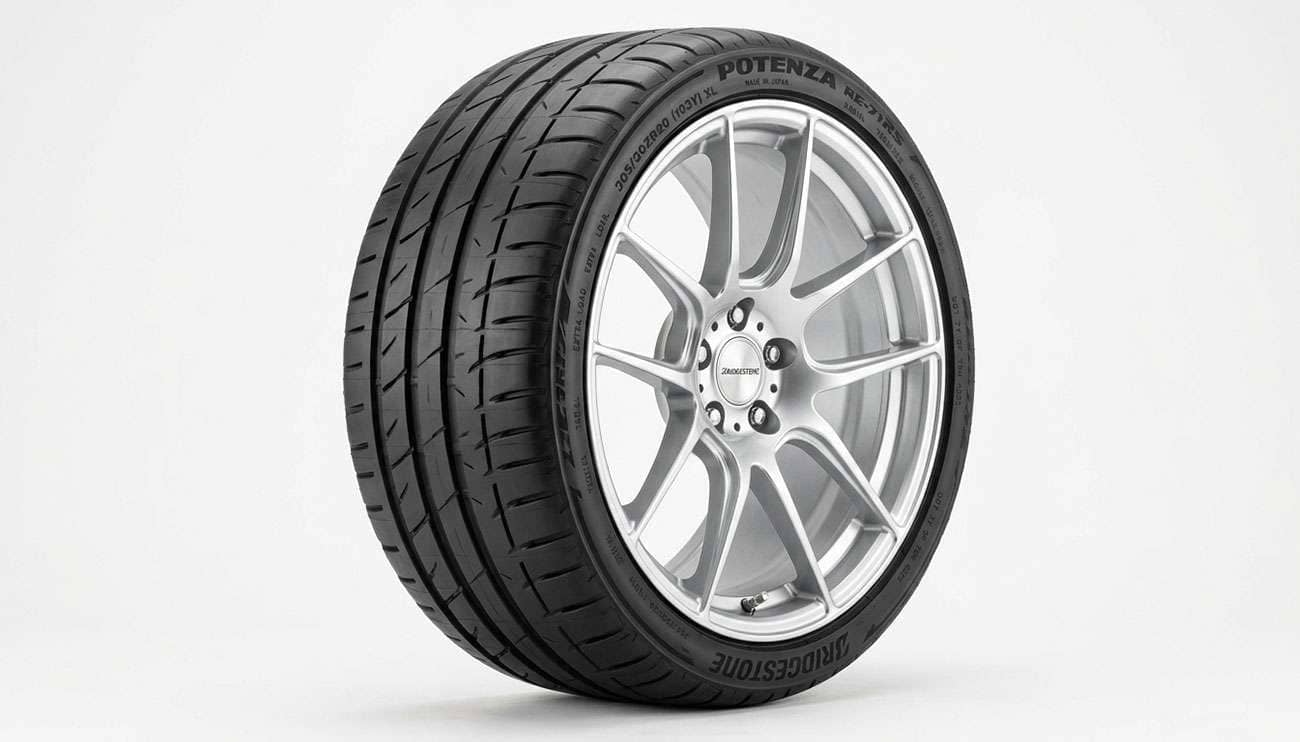
255/45R20 is sold in two different load ratings, and they are not interchangeable. A standard-load 101 tire carries 1,819 lbs. An extra-load 105 tire carries 2,039 lbs. That is 220 lbs per corner, 880 lbs across a set of four. Most roundups for this size sort by price or by brand and never tell you which column your vehicle belongs in. Read your driver's door placard first: if it lists 105, a 101 tire is not a legal or safe substitute no matter how good the tread pattern is.
That single number is the reason this size is confusing. 255/45R20 is one of the few dimensions that gets fitted to both a mid-size sedan and a 6,000-lb electric luxury sedan. The tread compound conversation is downstream of the capacity conversation, and the capacity conversation is the one nobody puts in front of you.
Your Door Placard Says |
Capacity Per Tire |
Capacity Per Set of Four |
Can You Fit a 101 SL? |
Can You Fit a 105 XL? |
|---|---|---|---|---|
101 (Standard Load) |
1,819 lbs |
7,276 lbs |
Yes, this is your spec |
Yes, capacity above spec is fine |
105 (Extra Load) |
2,039 lbs |
8,156 lbs |
No, 880 lbs short across the axle set |
Yes, this is your spec |
103 or 104 |
1,929 to 1,984 lbs |
7,716 to 7,936 lbs |
No, below spec |
Yes, meets or exceeds spec |
The rule works one direction only. You may always move up in load index. You may never move down. NHTSA's replacement guidance and the load tables maintained by the Tire and Rim Association both treat the placard load index as a floor, not a suggestion. If you want the full mechanics of how the letters and numbers interact, our breakdown of SL vs XL tires walks through why an extra-load casing is built differently rather than just inflated harder.
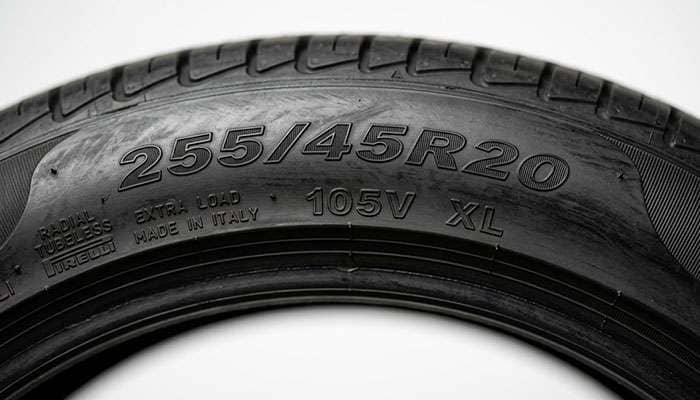
One more note before the picks. Extra load dominates this size in the aftermarket. Roughly three out of four 255/45R20 models on the market today are built as 105 XL, which tells you where the vehicle population sits. If you own a lighter car that specs 101, you have a smaller shelf to shop from, but you also have the option of stepping up to any 105 in the lineup.
255/45R20 is a premium-crossover and luxury-sedan size. It appears as original equipment on a broad list of platforms, and the vehicles on that list vary enormously in curb weight, which is exactly why the two load ratings exist.
On the lighter end you find sedans and older performance cars: the Chrysler 300 and 300C SRT-8 from the mid-2000s onward, and a number of coupes and sport sedans that were plus-sized to 20-inch wheels from the factory. These typically ride on 101 SL fitments.
On the heavier end sit the crossovers and electrified platforms: Audi Q5, SQ5 and Q4 e-tron, BMW X3, X4 M, 7 Series and i7, Acura MDX and RDX, Alfa Romeo Stelvio, Range Rover Velar, Volvo XC90 and Chrysler's Voyager and Grand Caravan minivans. Nearly all of these call for 105 XL, and the electric variants sit at the top of the weight band because of battery mass.
Vehicle Category |
Typical Examples |
Usual Load Rating |
What to Prioritize |
|---|---|---|---|
Luxury and performance sedans |
Chrysler 300, 300C SRT-8, sport sedans plus-sized to 20 inch |
101 SL |
Steering response and wet grip |
Premium crossovers |
Audi Q5 and SQ5, BMW X3, Acura RDX and MDX, Alfa Romeo Stelvio |
105 XL |
Load capacity, tread life, ride comfort |
Full-size luxury SUVs |
Volvo XC90, Range Rover Velar |
105 XL |
Capacity headroom and sidewall stiffness |
Electric and hybrid platforms |
BMW i7, Audi Q4 e-tron, EV crossovers |
105 XL |
Capacity, low rolling resistance, noise foam |
Minivans |
Chrysler Voyager and Grand Caravan |
105 XL |
Wet braking and even wear under passenger load |
The practical takeaway: if your 255/45R20 came on a crossover, SUV, minivan or anything electrified, assume 105 XL until the placard tells you otherwise. If it came on a sedan or coupe, check the placard carefully, because some trims of the same model went one way and some the other.
Once you know your load rating, the second question is what you actually want the tire to do. Here are our picks, all confirmed available in 255/45R20 and grouped by the job you need done.
Your Priority |
Our Pick |
Load and Speed |
UTQG Treadwear |
Mileage Warranty |
Price Each |
|---|---|---|---|---|---|
Best all-around for a crossover |
Michelin CrossClimate2 CUV |
105V XL |
640 |
60,000 miles |
$341.99 |
Best grip in all conditions |
Continental ExtremeContact DWS06 Plus |
105Y XL |
560 |
50,000 miles |
$265.99 |
Best ultra-high-performance all-season |
Michelin Pilot Sport A/S 4 |
105Y XL |
540 |
45,000 miles |
$301.99 |
Best severe-weather all-season |
Goodyear Assurance WeatherReady 2 |
105W XL |
700 |
60,000 miles |
$325.99 |
Longest tread life |
Nokian One |
105V XL |
720 |
80,000 miles |
$272.76 |
Best quiet touring |
Continental CrossContact LX25 |
105V XL |
740 |
Model dependent |
$271.99 |
Best summer performance |
Michelin Pilot Sport 4 S |
105Y XL |
300 |
30,000 miles |
$351.05 |
Best winter |
Michelin X-Ice Snow SUV |
105T XL |
Not rated, winter |
40,000 miles |
$395.17 |
Best value under $225 |
Falken Ziex CT60 A/S |
105V XL |
680 |
65,000 miles |
$219.00 |
Best standard-load option |
Bridgestone Alenza AS Ultra |
101W SL |
800 |
80,000 miles |
$328.65 |
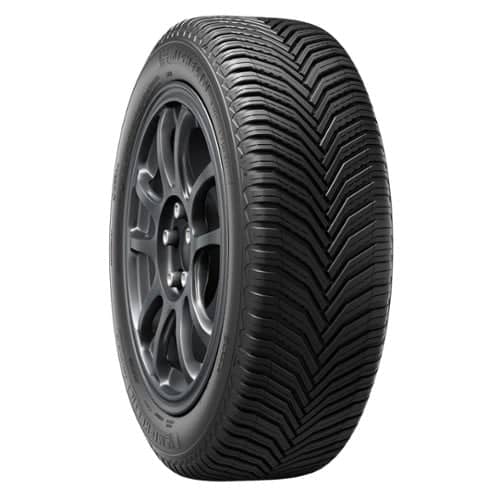
The Michelin CrossClimate2 CUV carries the three-peak mountain snowflake symbol, which means it passed a standardized snow traction test rather than simply being labeled all-season. At 105V XL with a 640 treadwear grade and a 60,000-mile warranty, it covers the widest set of conditions of anything in this size without asking you to swap tires twice a year. The V-shaped tread gives up a little dry steering precision compared with a dedicated performance tire, and it is priced accordingly at $341.99. For a Q5, XC90, RDX or Stelvio that sees real winters, this is the default recommendation.
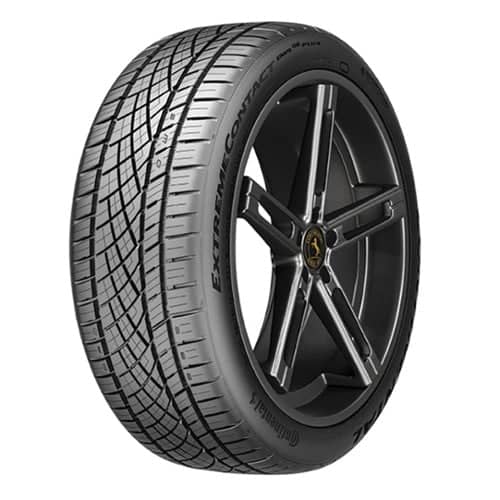
The Continental ExtremeContact DWS06 Plus is the balanced pick, and at $265.99 in 105Y XL it is the value leader among premium ultra-high-performance all-seasons in this size. The 560 treadwear grade and 50,000-mile warranty are strong for a Y-rated tire, and the tread wear indicators that spell out DWS and DS give you a visual read on when wet and snow capability have degraded. If you want one tire that handles a spirited canyon run and a rainy commute, start here.
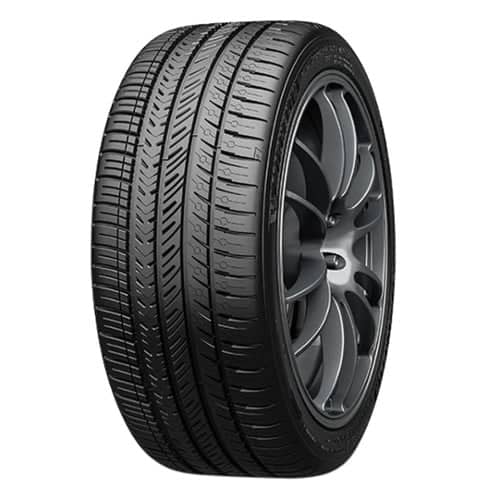
The Michelin Pilot Sport A/S 4 trades a little wet-weather margin for sharper turn-in and better dry limit behavior than the Continental. At 105Y XL, 540 treadwear, 45,000-mile warranty and $301.99 it is the choice for an SQ5, X3 M or a Stelvio Quadrifoglio owner who wants year-round usability without accepting touring-tire steering feel.
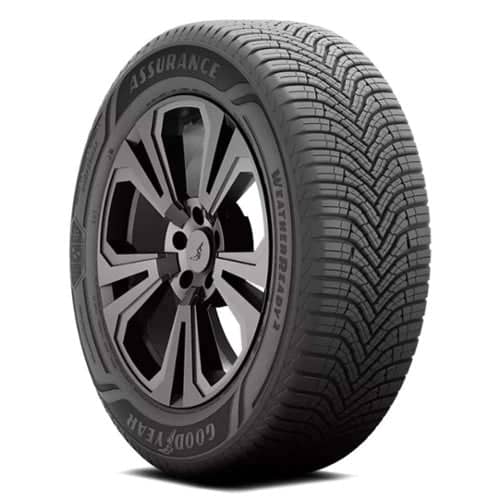
The Goodyear Assurance WeatherReady 2 is the comfort-first severe-weather option. A 700 treadwear grade with a 60,000-mile warranty at 105W XL and $325.99 puts it in the same conversation as the CrossClimate2 CUV, and it generally rides softer at the cost of some steering crispness. If your priority list reads quiet, then snow capable, then handling, this order suits you better than the Michelin.
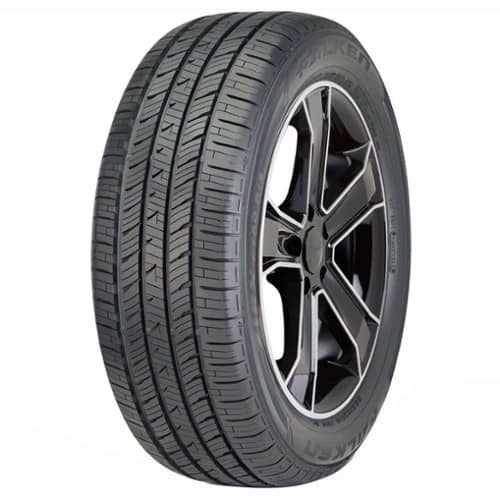
The Falken Ziex CT60 A/S is the smart-money entry at $219.00. You get the correct 105V XL capacity, a 680 treadwear grade and a 65,000-mile warranty, which is a lot of tire per dollar for a commuter crossover. It will not match the Michelin or Continental at the limit, but it does not pretend to. If you are replacing tires on a leased vehicle or a second family car, this is the practical answer.
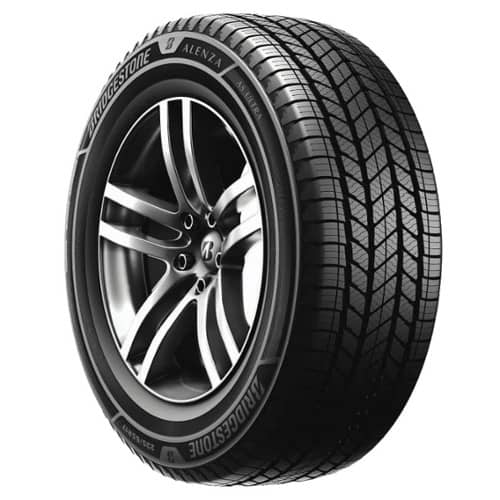
If your placard reads 101, the Bridgestone Alenza AS Ultra is the strongest standard-load choice in the size. An 800 treadwear grade backed by an 80,000-mile warranty is the highest wear rating available in 255/45R20 in either load class, and the 101W rating covers sedan speed requirements comfortably. At $328.65 it is not cheap, but the cost per mile is among the best available here.
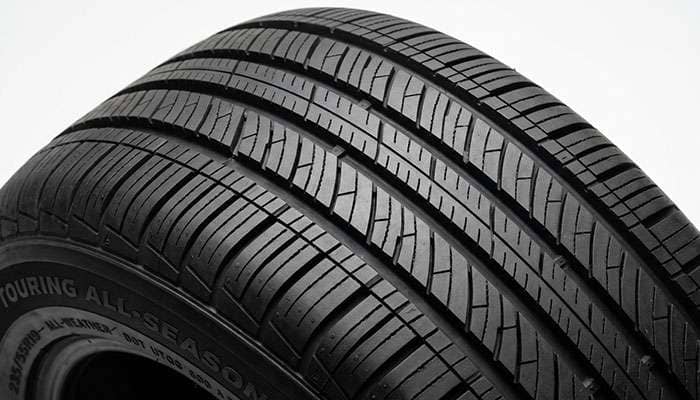
Noise in a 255/45R20 comes from three sources: tread block pitch sequencing, void volume, and whether the tire has an internal noise-absorbing foam layer. A 45-series sidewall is short enough that it transmits impact harshness readily, so the tread design has to do the acoustic work.
Quietest options in this size, ranked by how the design attacks noise:
Two things worth knowing. First, high treadwear grades and quiet operation correlate for a reason: harder, longer-wearing compounds pair naturally with the closed tread patterns that suppress air pumping noise. Second, a factory tire on an electric or hybrid vehicle may have contained an acoustic foam liner, and replacing it with a non-foam tire will make the cabin noticeably louder even if the replacement is a good tire. Check the sidewall of what came off before you shop. Our road-tested rankings of the quietest and smoothest tires covers how those measurements are actually taken.
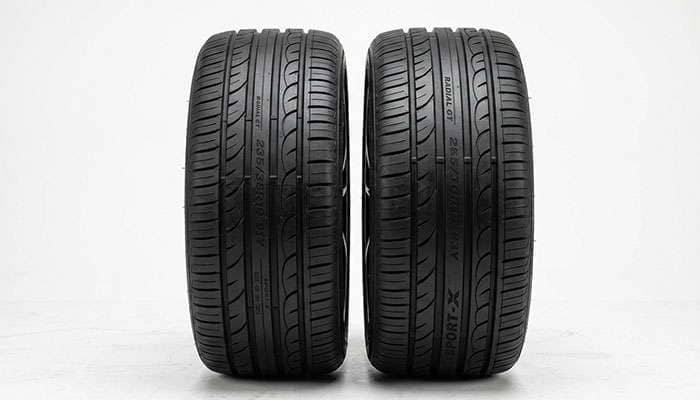
The two sizes are close enough that people swap them casually, and close enough that the swap usually works. The differences are small but they are not zero, and one of them matters more than the rest.
Specification |
245/45R20 |
255/45R20 |
Difference |
|---|---|---|---|
Section width |
245 mm / 9.65 in |
255 mm / 10.04 in |
10 mm wider |
Sidewall height |
110.25 mm / 4.34 in |
114.75 mm / 4.52 in |
4.5 mm taller |
Overall diameter |
728.5 mm / 28.68 in |
737.5 mm / 29.04 in |
0.36 in, about 1.2 percent |
Revolutions per mile |
Approximately 704 |
Approximately 695 |
9 revs per mile |
Approved rim width range |
8.0 to 9.0 in |
8.0 to 9.5 in |
255 fits a 9.5 in wheel, 245 does not |
Standard load index |
99, 1,709 lbs |
101, 1,819 lbs |
110 lbs per tire |
Extra load index |
103, 1,929 lbs |
105, 2,039 lbs |
110 lbs per tire |
The diameter difference of 1.2 percent is inside the tolerance most engineers use, so your speedometer error will be minor. At an indicated 70 mph on 245s in place of 255s, you are actually traveling about 69.1 mph. Antilock brake and stability control calibration will not notice that.
The load index is the difference that matters. Moving from a 255/45R20 105 XL down to a 245/45R20 103 XL costs you 110 lbs per corner and 440 lbs across the set. On a heavy crossover already close to its gross axle weight rating with passengers and cargo aboard, that erases the safety margin the manufacturer built in. Going the other way, from 245 to 255, adds capacity and is generally the safer direction if your wheel width allows it. If you are weighing a wider step, our comparison of 255 versus 265 tires and what actually changes in handling covers the next size up.
The market for 255/45R20 runs from roughly $145 to over $550 per tire. That is a nearly four-to-one spread within one size, and the spread is driven by four things: brand tier, compound technology, whether the tire is run-flat, and whether it carries a manufacturer OE homologation code.
Price Band Per Tire |
What You Get |
Representative Models |
Best For |
|---|---|---|---|
$145 to $200 |
Correct load rating, basic all-season compound, shorter warranty |
Falken Ziex ZE950 A/S, Kumho Crugen Premium KL33, Kumho Ecsta PA51 |
Lease returns, second vehicles, short-hold ownership |
$200 to $275 |
Strong warranties, real wet performance, mainstream brands |
Toyo Proxes 4 Plus, Falken Ziex CT60 A/S, Continental ExtremeContact DWS06 Plus, Cooper ProControl, Nokian One |
Most owners, best cost per mile in the size |
$275 to $360 |
Premium compounds, three-peak snow ratings, refined noise control |
Michelin Pilot Sport A/S 4, Michelin CrossClimate2 CUV, Goodyear Assurance WeatherReady 2, Michelin Pilot Sport 4 S |
Long-hold ownership, four-season climates, performance vehicles |
$360 and up |
Run-flat construction, OE homologation codes, flagship summer compounds |
Run-flat variants, OE-coded Pirelli and Bridgestone fitments, winter performance tires |
Vehicles delivered without a spare or requiring an OE code |
Two pricing traps in this size. Run-flat versions of the same model routinely cost 40 to 70 percent more than the standard version, and if your vehicle came with a spare tire and a jack you do not need run-flats. Check your trunk before you pay the premium. Second, OE homologation codes such as MO for Mercedes, AO for Audi, star for BMW and MOE for run-flat Mercedes fitments carry a price premium because the compound was tuned for one platform. Those codes are worth paying for if you want factory ride character restored exactly, and are optional if you do not.
The best cost-per-mile math in 255/45R20 sits in the $200 to $275 band. A 65,000-mile warranty at $219 works out to roughly $0.0135 per mile per tire. A 30,000-mile summer tire at $351 works out to roughly $0.0117 per mile of tread but only if you actually use the performance. Understanding how UTQG ratings translate to real tread life makes those comparisons far less abstract.
There is no single most reliable brand, and any list that gives you one is answering a different question than the one you asked. Reliability in a tire breaks into three measurable things: how evenly it wears, whether it holds its wet performance as it wears, and whether the manufacturer honors the warranty without argument.
By those measures, in 255/45R20 specifically:
The reliability variable that trumps brand is fitment discipline. A Kumho at the correct 105 XL rating, properly inflated and rotated on schedule, will outlast and outperform a Michelin at the wrong 101 SL rating running underinflated. Brand is a tiebreaker after the spec is right, not a substitute for getting the spec right. The same logic applies to speed rating, and our guide to what tire speed ratings actually mean explains why dropping from W to H changes more than top speed.
Fitting a 101 SL tire to a vehicle that specs 105 XL does not fail immediately. It degrades in a sequence, and the sequence is predictable.
First, the sidewall works harder. An extra-load casing uses a stiffer construction to carry more weight at the same inflation pressure. A standard-load tire under the same load deflects more on every rotation. That deflection is converted to heat.
Then the shoulders wear early. Excess deflection loads the outer tread blocks disproportionately. You will see shoulder wear appearing at 15,000 to 20,000 miles on a tire warrantied for 60,000. The warranty claim typically fails because the wear pattern indicates a load or pressure condition rather than a defect.
Then handling degrades. A softer casing under load means slower steering response, more body roll transmitted through the tire rather than the suspension, and longer emergency lane-change recovery. On a tall crossover this is the point where the tire starts working against the stability control system rather than with it.
Then heat accumulates. Sustained highway running at load with excess deflection raises internal temperature. Heat is the primary driver of belt separation, and belt separation is how tires fail catastrophically rather than gradually. NHTSA's tire safety guidance identifies overloading and underinflation as the two leading contributors to heat-related tire failure, and running below the placard load index is functionally an overload condition even at correct pressure.
Finally, you replace them twice. The math is the worst part. A set of four 101 SL tires at $200 each saves you $260 against a set of 105 XL at $265 each. Wearing them out at 25,000 miles instead of 55,000 means you buy the second set before the correct tires would have been halfway through their life. The savings evaporate before the first rotation interval is done.
The fix costs nothing at purchase time: read the placard, match or exceed the load index, and buy once. Our explanation of load range versus load index and how they differ is worth five minutes if the two terms have ever run together in your head.
Here is the sequence. Do it in this order and you will not make an expensive mistake.
Step 1: Open the driver's door and read the placard. Find the tire size line. Note the two or three digits immediately after 255/45R20, which is your load index, and the letter after that, which is your speed rating. Write both down.
Step 2: Set your load index as a hard floor. If the placard says 105, filter out every 101 tire. If it says 101, you may shop both 101 and 105. This step removes roughly a quarter of the market for XL vehicles and eliminates the most common buying error in this size.
Step 3: Match or exceed the speed rating. H is 130 mph, V is 149, W is 168, Y is 186. You may go up, not down, and the rating reflects heat-handling capacity, not just velocity.
Step 4: Pick your season strategy. Dedicated summer plus dedicated winter delivers the best performance in both extremes and costs the most. A three-peak-rated all-weather tire is the best single-set answer for genuine four-season climates. A conventional all-season is right if you rarely see snow. Our breakdown of all-season versus all-weather versus winter tires covers where each stops working.
Step 5: Set your budget from cost per mile, not price per tire. Divide price by warranted mileage. A $219 tire with a 65,000-mile warranty beats a $175 tire with a 40,000-mile warranty on every metric that matters.
Step 6: Check for a run-flat requirement and OE codes. If your vehicle has no spare tire, you need run-flats or a comparable plan. If you want factory ride restored exactly, look for the OE code on your original sidewall and match it.
Step 7: Buy all four. On all-wheel-drive crossovers, which describes most 255/45R20 applications, mismatched tread depth across axles loads the center differential or transfer case. Manufacturers commonly specify a maximum tread depth variance of 2/32 inch across the vehicle. Replacing two on an AWD platform is a repair bill waiting to happen.
Ready to shop by size? You can browse the full 255/45R20 tire selection filtered by load rating, season and price.
The best tire for a 255/45R20 depends on a number printed on your driver's door, not on a ranking. Once you know whether your vehicle needs 101 standard load or 105 extra load, the field narrows fast and the remaining decision is about season strategy and budget. For most crossover owners in four-season climates, the Michelin CrossClimate2 CUV at 105V XL is the strongest all-around answer. For owners who want the best balance of performance and price, the Continental ExtremeContact DWS06 Plus at 105Y XL is the better value. For standard-load sedans, the Bridgestone Alenza AS Ultra at 101W offers the longest tread life available in the size.
What every good outcome has in common is that the load index came first. Get that right and almost any reputable tire in this size will serve you well. Get it wrong and the best compound in the world will not save you from early shoulder wear, degraded handling and a second purchase you did not budget for.
It depends on your load rating first. For 105 extra-load vehicles, the Michelin CrossClimate2 CUV is the best all-around choice and the Continental ExtremeContact DWS06 Plus is the best value. For 101 standard-load vehicles, the Bridgestone Alenza AS Ultra offers the longest tread life in the size at an 800 treadwear grade and an 80,000-mile warranty. Check your driver's door placard before comparing tread patterns.
Premium crossovers and luxury sedans, including the Audi Q5 and SQ5, BMW X3, X4 M and 7 Series, Acura MDX and RDX, Alfa Romeo Stelvio, Range Rover Velar, Volvo XC90, Chrysler 300 and 300C SRT-8, and Chrysler Voyager and Grand Caravan. Crossovers and electrified platforms almost always require 105 extra load. Sedans are more often 101 standard load.
The size ranges from about $145 to over $550 per tire. The best cost-per-mile value sits in the $200 to $275 band, where models like the Falken Ziex CT60 A/S at $219 with a 65,000-mile warranty and the Continental ExtremeContact DWS06 Plus at $265.99 deliver strong performance without flagship pricing. Avoid paying the run-flat premium if your vehicle came with a spare tire.
The 255 is 10 mm wider, 4.5 mm taller in the sidewall and 0.36 inches larger in overall diameter, a 1.2 percent difference that produces minimal speedometer error. The meaningful difference is capacity: the 255 carries 110 lbs more per tire at equivalent load classes, 1,819 versus 1,709 lbs in standard load and 2,039 versus 1,929 lbs in extra load. The 255 also fits a 9.5-inch wheel while the 245 does not.
The Continental CrossContact LX25, Cooper ProControl, Hankook Kinergy XP H446, Nokian One and Pirelli Scorpion WeatherActive are the quietest options in this size. All use touring construction with high treadwear grades between 700 and 740, which pairs harder compounds with closed tread patterns that suppress air pumping noise. If your factory tires had acoustic foam inside, expect a non-foam replacement to be noticeably louder.
No single brand wins outright. In 255/45R20, Michelin leads on retaining wet grip as the tire wears, Continental leads on overall balance for the money, Bridgestone leads on tread life with an 800 treadwear grade, and Nokian leads on warranty length at 80,000 miles. Fitment discipline matters more than brand: a correctly rated value tire outperforms a premium tire in the wrong load rating.
No. The placard load index is a minimum set by the vehicle manufacturer based on gross axle weight rating. Dropping from 105 to 101 removes 220 lbs of capacity per tire and 880 lbs across the set. The result is excess sidewall deflection, early shoulder wear, degraded handling and heat accumulation that can lead to belt separation. You may always move up in load index, never down.



