
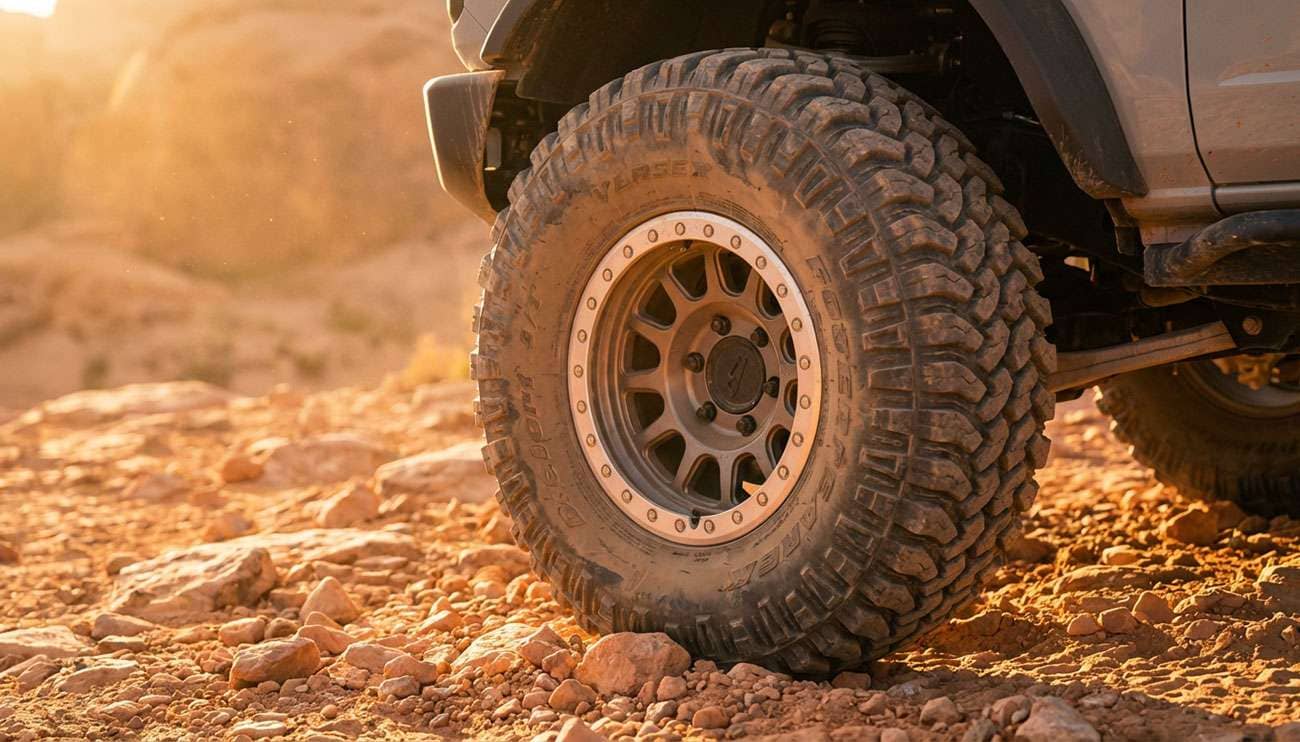
Off-road tires are experiencing significant material advances that improve all-terrain performance beyond what traditional rubber can deliver. Manufacturers now use recycled and renewable resources to produce tires, creating products that handle demanding conditions better than conventional compounds. Self-healing tires represent a major development, using advanced materials that repair minor punctures automatically.
We carry the best selection of off-road tires that incorporate these sustainable innovations without sacrificing durability. Michelin off-road tires and Goodyear off-road tires lead this movement, utilizing eco-friendly components that meet modern performance standards. For off-road tires for trucks specifically, these material improvements deliver superior performance in extreme conditions. Several manufacturers, including Toyo off-road tires, are testing natural rubber sourced from dandelions, providing a viable alternative to conventional rubber compounds.
This guide covers these breakthrough materials in detail, from silica extracted from rice husks to self-healing polymers. We'll examine how these innovations enable structural improvements like airless tire architecture and 3D-printed tread patterns. The future of off-roading focuses on creating tires that perform better while addressing environmental concerns.
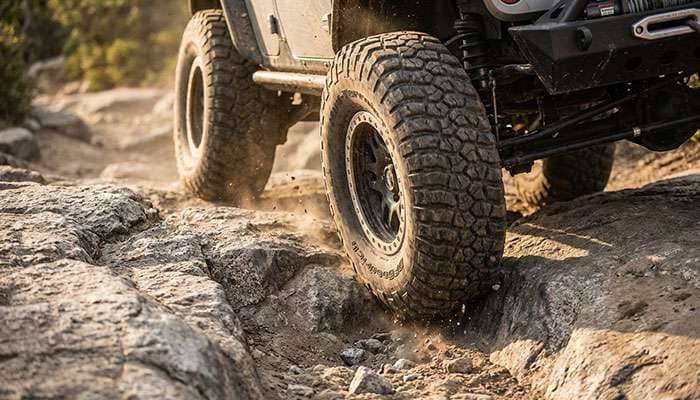
Traditional rubber compounds face serious challenges when pushed to extremes in off-road environments. While natural rubber offers durability and resilience under normal conditions, several critical performance issues emerge in demanding terrain.
Natural rubber generates less heat during normal rolling and friction, which seems advantageous. This benefit disappears quickly in off-road conditions. When driving at highway speeds on deflated tires (common for off-road traction), low pressure combined with rubber flexing creates gradual heat buildup in the sidewalls. Heat weakens the rubber structure, especially when rocky terrain demands constant flexing.
Rubber compounds must handle contradictory performance requirements - abrasion resistance with wet grip, laceration resistance with snow grip - while managing extreme temperature variations. This becomes particularly difficult since natural rubber is sensitive to temperature extremes and degrades when exposed to heat.
Natural rubber provides impressive strength against repeated stress and abrasion, but remains vulnerable to punctures in demanding off-road environments. While natural rubber can flex to absorb impact from sharp objects, traditional compounds lack sufficient protection against the varied hazards encountered during serious off-roading.
Recent developments in self-healing natural rubber show potential, with some compounds demonstrating 100% recovery from punctures caused by nails under 2.5mm diameter. Larger punctures remain problematic, with healing efficiency dropping to 87-97% for larger punctures.
Off-road tires use softer rubber compounds to provide superior traction across varied surfaces like rocks, mud, and sand. These softer compounds wear out more rapidly than harder alternatives. Off-road driving behaviors - sharp turns and hard braking - place tremendous stress on tires, leading to premature wear.
The aggressive tread patterns necessary for off-road performance also accelerate wear rates. Goodyear focuses on tailoring compounds specifically to enhance cut protection and reduce heat generation, while Pirelli must engineer tires to handle everything from extreme winter to very high temperatures.
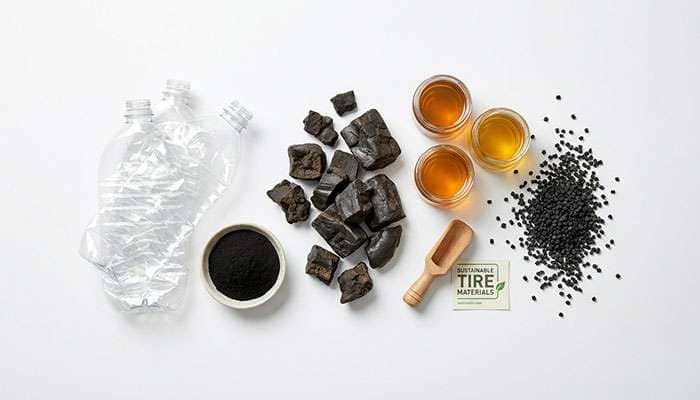
New materials are changing off-road tire technology by solving traditional rubber's key weaknesses. These innovations deliver better performance while supporting environmental goals.
Michelin uses silica extracted from rice husk ash in their off-road tires. This agricultural waste product contains natural silica that improves tire efficiency and traction. Michelin creates tires containing up to 58% sustainable materials, including silica from rice husks. This approach reduces landfill waste while delivering performance equal to traditional silica derived from sand. The company plans to produce 100% sustainable tires by 2050, with rice husk silica serving as a key component.
Goodyear incorporates DuPont™ Kevlar®, a material five times stronger than steel pound-for-pound, into off-road tire sidewalls. This innovation increases sidewall puncture resistance by 35% compared to previous models. Certain light truck sizes feature two Kevlar layers plus 30% more steel for enhanced toughness. These tires also include wraparound tread designs and asymmetric tread patterns for superior traction across varied conditions.
The Russian dandelion (Taraxacum kok-saghyz or TK) offers a practical alternative to traditional rubber trees. Continental has produced and tested tires with treads made 100% from dandelion natural rubber. Dandelions can be harvested every six months compared to rubber trees that require seven years before harvesting. They grow well in temperate climates, including regions like Ohio, reducing transportation distances and carbon emissions. Looking for the best off-road tires with innovative materials like these? Check out specialized retailers offering these breakthrough technologies.
Self-healing rubber compounds represent a significant advancement in tire technology. These materials use reversible metal-thiolate ionic networks to recover from damage without external intervention. Research shows that self-healing rubber tape with recycled tire components achieves 100% recovery from punctures under 2.5mm in diameter. For larger punctures (3.4-4.0mm), healing efficiency remains strong at 87-97%. This technology extends tire life by sealing punctures and cracks automatically, reducing waste and improving reliability in demanding off-road conditions.
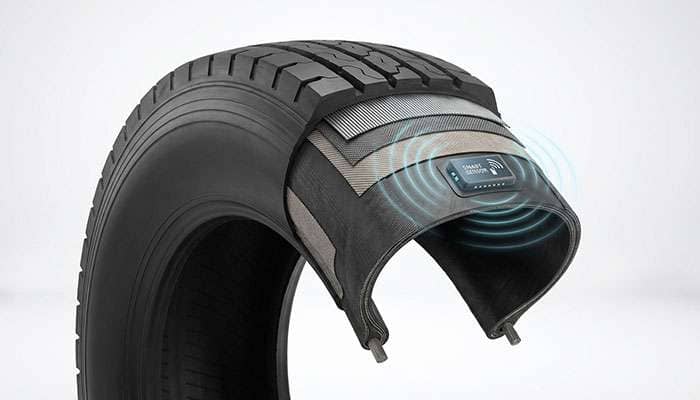
Modern off-road tires now function as intelligent components that communicate directly with vehicles and drivers. These smart systems change how tires perform in challenging environments.
Smart pressure monitoring has advanced significantly with systems like Nokian Tires Intuitu™ 2.0, which uses built-in sensors to calculate actual operating weight and provide pressure recommendations through mobile applications. This technology reduces soil compaction and extends tire life. Continental has developed sensors embedded in conductive rubber that measure inflation pressure, tread depth, and both tire and road temperature.
Toyo has engineered temperature-responsive compounds that adapt to changing conditions automatically. Their tires feature sensors that process inputs including pressure, temperature, and road surface conditions to determine whether tire force stays within the necessary performance range. Some manufacturers have patented color-changing rubber compounds containing temperature-sensitive microcapsules that visually indicate overheating, improving safety.
Artificial intelligence enables real-time tread wear monitoring through advanced systems. These systems integrate multi-sensor data acquisition modules that analyze acceleration and strain signals to predict tire condition. Toyo's AI-based system models tire condition using TPMS data combined with GPS information on speed, acceleration, and travel distance. This technology eliminates manual checks while improving safety and performance in demanding off-road environments.
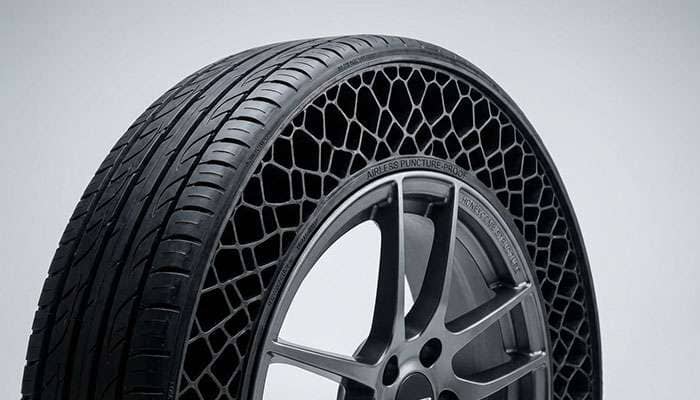
Advanced materials enable structural designs that were impossible with traditional rubber compounds. These architectural innovations solve long-standing off-road tire problems while creating entirely new performance capabilities.
Michelin's X TWEEL represents a complete shift in tire construction. This single-piece assembly uses flexible poly-resin spokes that carry weight in tension and absorb impacts, delivering smoother rides while eliminating puncture risks. Bridgestone's airless concept tires feature a unique spoke structure that supports vehicle weight without air, offering consistent load distribution. These designs maintain the same rolling resistance as fuel-efficient pneumatic tires while being fully recyclable.
For off-road applications, Hankook's i-Flex 2 employs a dual arch structure that primarily absorbs irregular shocks through its outer arch, while the inner arch dampens vibrations transmitted to the vehicle. This design eliminates the risk of sidewall damage from sharp rocks and debris that commonly puncture conventional tires.
3D printing technology creates tread designs that conventional manufacturing cannot achieve. Manufacturers can now produce terrain-specific patterns with precise flexibility and structural support. The best off-road tires incorporate 3D-printed treads inspired by mountain bike designs, featuring hollow structures for dual-stage cushioning. These patterns adapt to specific terrain types, providing optimal grip whether you're climbing rocky trails or navigating muddy terrain. Check out Performance Plus Tire's off-road collection for terrain-specific performance options.
Tread blocks—the raised rubber sections that contact the road—have evolved into customizable components. These blocks increase surface area on the tire's contact patch, delivering more grip. Each edge provides an opportunity to catch road imperfections, improving traction across different applications. The strategic voids between blocks allow them to flex and conform to terrain contours, enhancing grip on challenging surfaces.
Understanding these innovations helps you select tires that match your specific off-road needs. Whether you prioritize puncture resistance, terrain adaptability, or maximum traction, these structural advances offer solutions that traditional tire designs simply cannot match.
Off-road tire technology has reached an important milestone. Traditional rubber compounds served well for decades, but new materials now solve performance challenges that have long frustrated off-road enthusiasts. Rice husk silica, Kevlar reinforcement, and dandelion-based alternatives address the core problems we've discussed—heat buildup, puncture vulnerability, and excessive wear rates.
These new materials deliver superior performance while meeting environmental goals. Recycled components and renewable resources prove that responsible manufacturing enhances rather than compromises capability. These eco-friendly materials improve durability, traction, and reliability when you need them most.
Smart technology integration makes modern off-road tires intelligent components that provide real-time data. Temperature-responsive compounds adjust to changing terrain conditions, while embedded sensors track pressure and tread wear. This information helps drivers make better decisions for both safety and performance during challenging trips.
Airless tire designs and 3D-printed tread patterns show how these materials enable completely new approaches to tire construction. These advances benefit off-road enthusiasts who regularly face unpredictable terrain where conventional tires often fail.
Ready to experience these breakthrough technologies? You can explore the latest generation of innovative off-road tires at Performance Plus Tire's specialized collection, where cutting-edge materials meet practical performance benefits.
We're seeing the beginning of a materials revolution in off-road tires. Manufacturers continue refining these technologies, creating more specialized, durable, and capable products. The days of accepting compromises in off-road tire performance are ending, thanks to material science breakthroughs that combine environmental responsibility with superior capability.
Revolutionary materials are transforming off-road tire performance, offering superior durability and sustainability compared to traditional rubber compounds.
• Sustainable materials outperform traditional rubber: Rice husk silica, dandelion rubber, and Kevlar reinforcement deliver better heat resistance, puncture protection, and wear rates than conventional compounds.
• Self-healing technology eliminates minor punctures: Advanced polymers automatically repair punctures under 2.5mm with 100% recovery, significantly extending tire life in demanding terrain.
• Smart integration provides real-time performance data: Embedded sensors monitor pressure, temperature, and tread wear, enabling predictive maintenance and optimal performance adjustments.
• Structural innovations enable airless designs: New materials support revolutionary architectures like Michelin's X TWEEL, eliminating puncture risks while maintaining fuel efficiency and ride quality.
• 3D-printed treads customize terrain performance: Advanced manufacturing creates terrain-specific patterns and modular tread blocks that adapt to different off-road conditions for maximum grip.
These breakthrough technologies prove that environmental responsibility enhances rather than compromises performance, setting new standards for off-road capability while reducing environmental impact.
New materials include silica from rice husks, Kevlar-reinforced sidewalls, dandelion-based natural rubber alternatives, and self-healing polymers. These materials offer improved performance and sustainability compared to traditional rubber compounds.
Smart tires incorporate sensors that monitor real-time pressure, temperature, and tread wear. They can adapt to changing conditions and provide drivers with crucial data, allowing for optimal performance adjustments and predictive maintenance.
Airless tires, like Michelin's X TWEEL, eliminate the risk of punctures, provide consistent load distribution, and offer smoother rides. They maintain fuel efficiency comparable to pneumatic tires while being fully recyclable.
3D printing enables the creation of complex, terrain-specific tread patterns with precise flexibility and structural support. This technology allows for dual-stage cushioning and improved grip across various off-road conditions.
Yes, many of these innovations focus on sustainability. They use recycled materials, renewable resources like dandelion rubber, and eco-friendly manufacturing processes. These advancements prove that environmental responsibility can enhance rather than compromise performance.



