
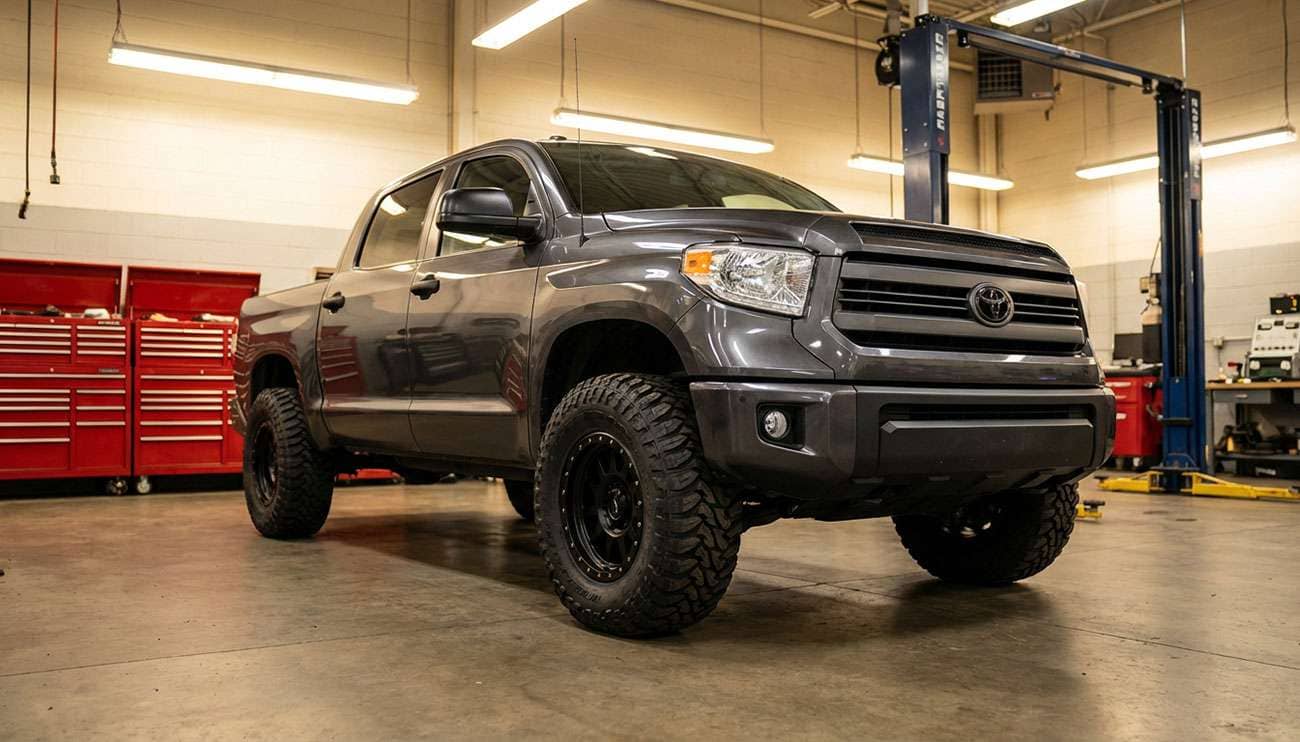
Toyota Tundra aftermarket tires offer tremendous opportunities for customization when you understand the fitment basics. These trucks handle impressive tire sizes, with 35-inch options being standard upgrades and 3rd generation models accommodating 37-inch tires with proper setup. Factory configurations vary significantly - lower trims and TRD Pro models come with 18-inch wheels, higher trims and TRD Off-Road feature 20-inch wheels, while the premium Capstone runs 22-inch wheels.
The key challenge lies in understanding TRD Pro factory tire specifications and executing upgrades that eliminate rubbing while maintaining sensor functionality.
At Performance Plus Tire, we've developed this comprehensive fitment guide to help you select the ideal tire and wheel combination for your Tundra. Our expertise ensures you get the performance and appearance you want without costly mistakes.
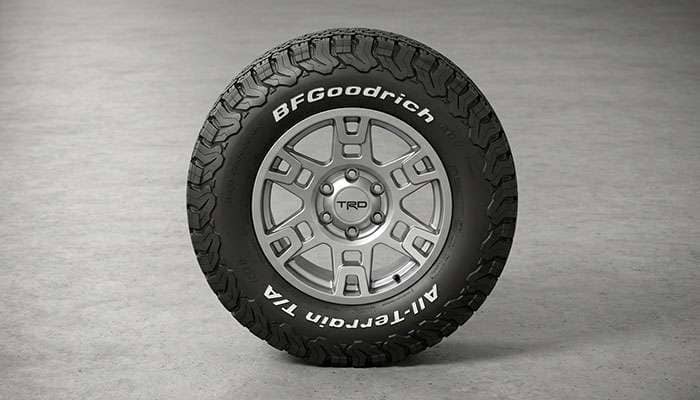
Toyota produced three distinct Tundra generations, each with unique specifications that directly impact tire fitment. Generation 1 covers 2000-2006 models, Generation 2 spans 2007-2021, and Generation 3 started in 2022 and continues today. These generational differences determine your bolt pattern, hub bore, and available tire upgrade paths.
Trim identification proves crucial because factory tire sizes vary dramatically between packages. Current Generation 3 models offer SR, SR5, Limited, Platinum, 1794 Edition, TRD Pro, and the premium Capstone trim. Earlier Generation 2 trucks featured similar lineups with TRD Off-Road and TRD Sport variants. Your trim level establishes the baseline for all fitment calculations.
First-generation trucks equipped smaller tire profiles across all trims. SR5 models came with 245/70R16, 265/70R16, or 265/65R17 options, while Limited trims received 265/65R17 or 275/55R18 sizes. TRD packages standardized on 265/65R17 tires.
Second-generation models expanded size options significantly. Base SR trims used 255/70R18 tires, SR5 versions received 275/65R18, and Limited/Platinum/TRD Sport packages equipped 275/55R20 sizes. TRD variants mounted either 275/65R18 or 285/70R18 tires depending on specific package selection.
Current Generation 3 trucks organize around three primary wheel diameters. SR trims mount 245/75R18 tires, SR5 models offer either 265/70R18 or 265/60R20 choices, and Limited/Platinum/1794 Edition versions use 265/60R20 sizes. The flagship Capstone trim features 265/50R22 tires.
TRD Pro models come equipped with 285/65R18 tires from the factory. This tire size delivers approximately 32.59 inches of overall diameter. TRD Pro and TRD Off-Road trims include a factory lift measuring +1.1 inches in the front compared to standard SR/SR5 models. TRD Sport packages actually sit 0.5 inches lower in the front.
Generation 3 Tundras use a 6x139.7mm bolt pattern with a 95.2mm center bore. This specification differs completely from Generation 2 trucks, which featured a 5x150mm bolt pattern with a 110mm center bore. Wheels cannot be swapped between these generations.
Factory offset measurements range from +60mm on base 18-inch wheels down to +40mm on TRD package wheels. Premium 20-inch wheels typically specify +50mm offset. All Generation 3 models use M14x1.5 thread size with a torque specification of 96 ft/lbs.
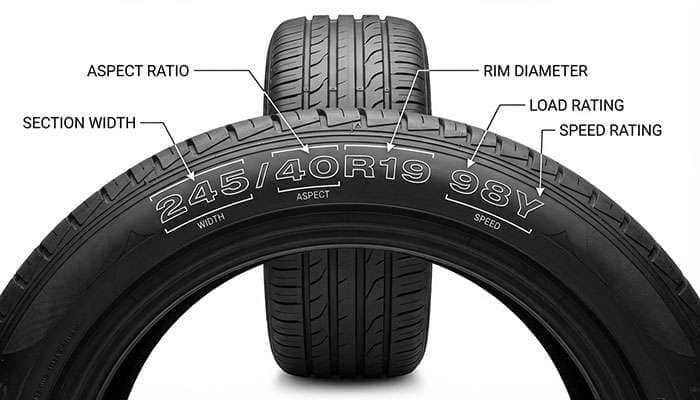
Tire sidewalls contain an alphanumeric code that reveals exact dimensions. Consider 265/60R20 as your reference point. The first number shows width in millimeters measured from sidewall to sidewall. The number following the slash represents the aspect ratio, indicating sidewall height as a percentage of the tire's width. Here, the sidewall height equals 60% of the 265mm width. The letter R indicates radial construction. The final number specifies the rim diameter in inches.
Replacement tires must stay within 3% of your original tire's diameter. This guideline prevents speedometer errors, drivetrain complications, and handling issues. Most applications translate this 3% threshold to roughly a 3/4-inch diameter difference. Conservative professionals suggest a stricter 2% limit for original equipment specifications. Exceeding these parameters disrupts anti-lock brake and stability control systems because sensors register altered wheel rotation speeds.
The tire diameter formula is: (Section Width x Aspect Ratio / 2,540 x 2) + Wheel Diameter. Using a 275/60R15 tire: 275 x 60 / 2,540 x 2 = 12.99, plus 15 equals 27.99 inches total diameter. Tire calculators verify you remain within the 3% threshold by comparing diameter, circumference, and revolutions per mile measurements.
Stock suspension works with tires meeting the 3% guideline. Leveling kits remove factory rake while adding vertical clearance, letting you exceed the standard 3% rule slightly. Lifted trucks follow a straightforward principle: each inch of lift accommodates one inch of additional tire height. A 3-inch suspension lift typically handles tires 3 inches taller than factory specifications. Width creates separate challenges and usually demands specific wheel backspacing to prevent suspension contact.
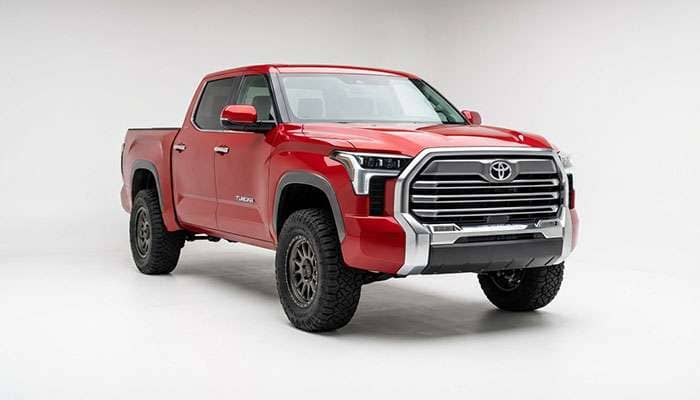
Stock suspension handles 33-inch tires with zero modifications required. The popular 33x12.5x20 size fits all 2022+ Tundra models without suspension upgrades or body modifications. Second-generation truck owners find success with 285/70R18 tires on stock suspension, though removing mud flaps improves clearance.
Leveling kits unlock the popular 35-inch tire category. A 1.75-inch Rough Country leveling kit accommodates 295/65R20 tires with no rubbing issues. This size delivers a true 35-inch diameter. Step up to a 2.2-inch lift with properly offset +25 wheels, and you'll achieve full suspension cycling without any tire-to-body contact.
Serious lift setups enable 37-inch tire fitment. Clearance kits allow 37-inch tires at any ride height. A 3.5-inch lift provides ample room for 35-inch or 37-inch tires, especially when paired with 18x9 or 20x10 wheels. More aggressive wheel offsets may require additional trimming.
Tire width creates unique challenges compared to diameter increases. Wider tires often demand specific wheel backspacing to prevent suspension interference. Browse toyota tundra aftermarket tires to compare width and diameter combinations.
Several sizes have proven successful across different setups. The 285/70R18 works excellent for leveled applications. For true 35-inch performance, 295/65R20 tires deliver the diameter you want. Conservative upgraders prefer 275/70R18 for minimal changes. TRD Pro models accommodate 285/75R18 tires when paired with leveling kits.
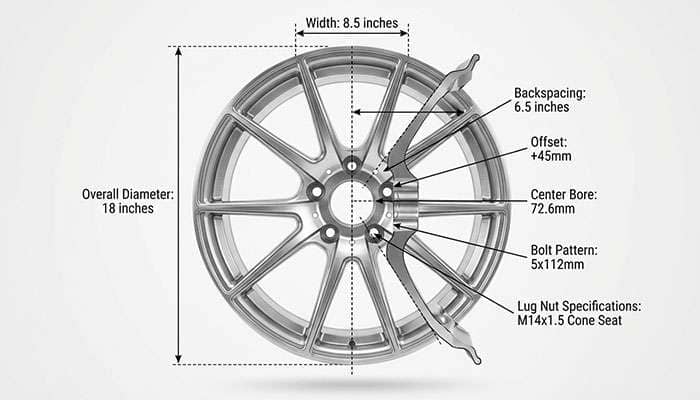
Wheel offset measures the distance between the mounting surface and centerline, expressed in millimeters. Positive offset pulls the wheel inward, tucking it under the fender for a stock appearance. Negative offset pushes the wheel outward, creating an aggressive stance. Zero offset positions the mounting surface exactly at the centerline.
Factory Tundra wheels run +60mm offset. Backspacing measures differently - it's the distance in inches from the mounting surface to the wheel's inner edge. Remember this relationship: more negative offset equals more wheel protrusion.
Stock suspension works best with +15mm offset for mild aggression. Leveling kits handle 0mm to -12mm offsets without issues. Moderate lifts of 2-4 inches pair well with -12mm to -24mm offsets when running 33-35-inch tires. Serious 6-inch lifts accommodate -24mm to -44mm offsets with 35-37-inch tire combinations. Browse toyota tundra aftermarket tires to match wheels with your suspension setup.
Most Tundra applications work well with 7.5 to 9-inch wheel widths. A 285mm tire requires at least 8-inch wheel width for proper mounting. Avoid 315mm widths as they stress wheel bearings beyond factory specifications.
Smart offset selection eliminates most trimming needs. Offsets more positive than +15mm on stock suspension create rubbing problems. Three-inch lifted setups require wheel spacers or aftermarket wheels with proper backspacing.
The right Toyota Tundra aftermarket tires come down to matching specifications with your setup. Generation and trim determine your starting point, the 3% diameter rule keeps you safe, suspension height dictates tire size limits, and proper wheel offset eliminates rubbing issues.
Stock trucks fit 33-inch tires perfectly, leveling kits open up 35-inch possibilities, and lifted builds handle 37-inch options with the right clearance. The math is simple - follow these guidelines and you'll get the aggressive stance you want without expensive mistakes.
Ready to upgrade your Tundra? Browse toyota tundra aftermarket tires that match your exact specifications and build the setup you've been planning. We carry the best selection of sizes and brands at competitive prices, so you can get the performance and appearance you want without the guesswork.
Master these essential fitment principles to choose the perfect aftermarket tires for your Toyota Tundra without costly mistakes or rubbing issues.
• Follow the 3% diameter rule: Keep replacement tires within 3% of factory diameter to prevent speedometer errors and drivetrain stress
• Match tire size to suspension height: Stock trucks fit 33-inch tires, leveled setups handle 35-inch options, lifted builds accommodate 37-inch tires
• Choose proper wheel offset by generation: Gen 3 uses 6x139.7mm bolt pattern with +15mm to -44mm offsets depending on suspension height
• Know your factory specs first: Identify your generation (2000-2006, 2007-2021, 2022+) and trim level to determine baseline tire sizes and clearances
• Balance width with backspacing: Wider tires require specific wheel backspacing to prevent suspension interference and maintain proper fitment
The right combination of tire diameter, wheel offset, and suspension height ensures optimal performance while avoiding expensive modifications or safety issues.
Stock suspension on most Tundra models can accommodate 33-inch tires without requiring any modifications. Specifically, a 33x12.5x20 tire fits all 2022+ Tundra models, and 285/70R18 tires work on second-generation trucks, though some owners choose to remove mud flaps for optimal clearance.
Use the 3% rule as your guideline: replacement tires should stay within 3% of your original tire's diameter to prevent speedometer inaccuracy and drivetrain stress. The formula for tire diameter is (Section Width x Aspect Ratio / 2,540 x 2) + Wheel Diameter. Staying within this threshold ensures your anti-lock brakes and stability controls function properly.
For Tundras with leveling kits, wheel offsets between 0mm to -12mm work best. If you have a 1.75-inch level kit, a +25 offset with 295/65R20 tires provides excellent fitment without rubbing. Stock height trucks typically use +60mm factory offset, but can accommodate +15mm offset for a more aggressive stance.
No, wheels are not compatible between these generations. Second-generation Tundras (2007-2021) use a 5x150mm bolt pattern with a 110mm center bore, while third-generation models (2022+) feature a 6x139.7mm bolt pattern with a 95.2mm center bore. You must use wheels specifically designed for your generation.
The TRD Pro models come equipped with 285/65R18 tires from the factory, which measure approximately 32.59 inches in diameter. TRD Pro and TRD Off-Road trims also feature a factory lift of +1.1 inches in the front compared to baseline SR/SR5 models, providing additional clearance for these larger tires.



