
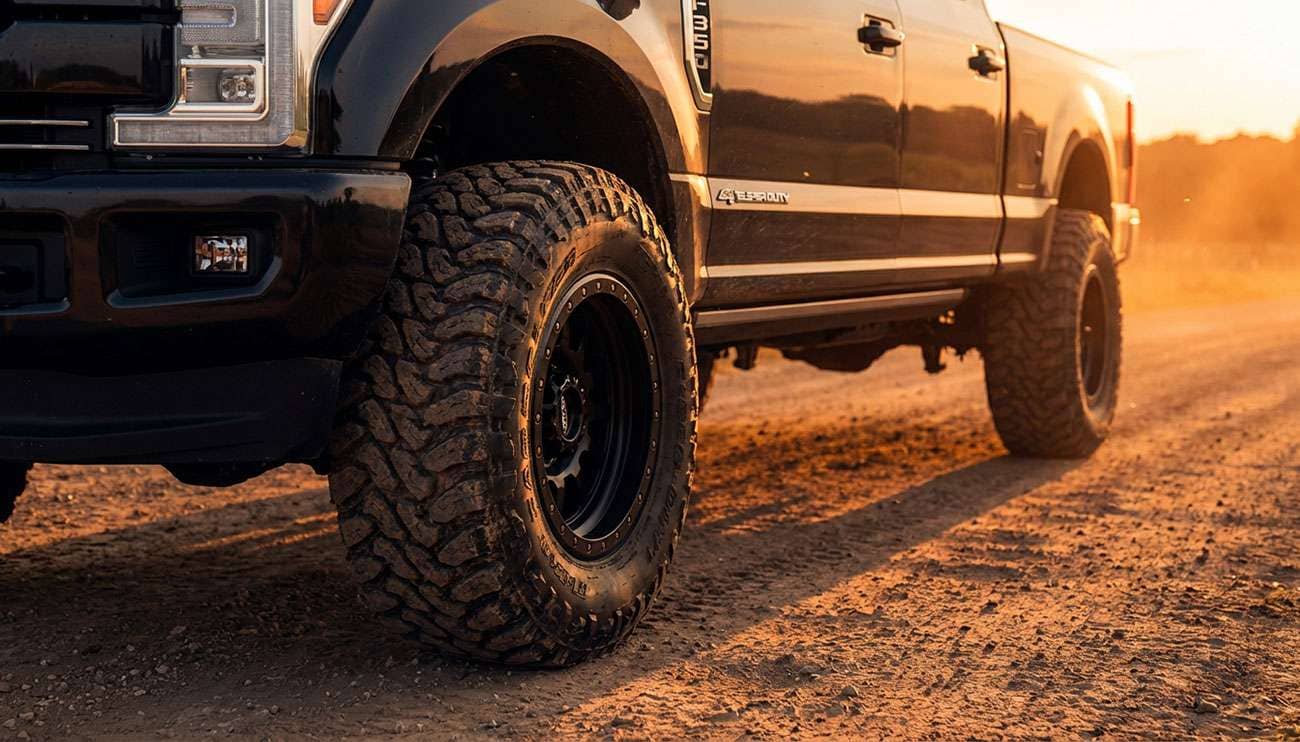
Aftermarket tires are one of the most popular upgrades for Ford F-250/F-350 Super Duty owners looking to enhance both capability and appearance. The legendary Super Duty stands as the ultimate workhorse in the heavy-duty truck segment, engineered to handle extreme payloads and towing demands. We understand that choosing the right tire combination goes far beyond looks—it's about maximizing your truck's performance potential.
Your Ford F-250 Super Duty tire upgrade starts with understanding the fundamentals. The current-generation Super Duty features an 8x170mm bolt pattern, with factory wheel arrangements ranging from 17x7.5" on base models to 20x8.5" on premium trims. From job sites requiring massive equipment transport to adventure-ready off-road excursions, the right wheel and tire combination delivers the performance you need.
The 2023+ Super Duty trucks offer impressive flexibility, accommodating 35" tires at leveled height without modifications. However, achieving that perfect stance requires careful attention to offset, backspacing, and width specifications. At Performance Plus Tire, we have the experience and knowledge to help you select the ideal combination that transforms your truck's appearance and capability while maintaining reliability.
Our expert team will guide you through the essential measurements, clearance considerations, and top combinations that create the Super Duty setup you've always wanted. From understanding stock limitations to selecting the perfect lift and wheel specifications, we'll help you build the ultimate Ford Super Duty package.
Essential considerations for selecting aftermarket tires that fit your Ford F-250/F-350 Super Duty perfectly without costly mistakes.
• Factory wheels create upgrade limitations: Stock +45mm offset causes clearance problems with larger tires; aftermarket wheels with +12 to +18mm offset are necessary for 35"+ tire installations.
• 2023+ models provide better tire clearance: Recent Super Duty trucks accommodate 35" tires on factory wheels and 37" tires with minor modifications due to improved suspension design.
• Leveling kits expand tire size options: A 2-2.5" leveling kit allows 35"x12.5" tires with minimal trimming, while 37" tires need careful offset selection for proper fitment.
• Tire width determines modification requirements: 12.5" wide tires provide superior daily driving and simpler installation, while 13.5" options deliver enhanced off-road performance but require additional modifications.
• Correct offset eliminates suspension interference: +12 to +18mm offset wheels prevent radius arm and sway bar contact during full steering lock and suspension compression.
Success depends on matching your lift height, wheel specifications, and tire dimensions to your specific model year and driving needs. This approach ensures optimal performance and long-term reliability for your Super Duty setup.
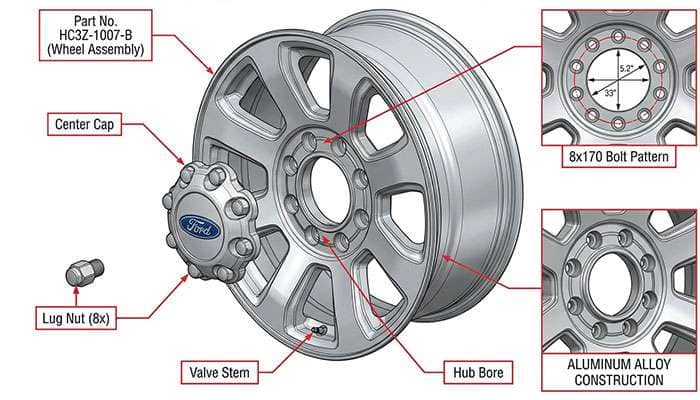
Understanding stock wheel and tire specifications is crucial before selecting aftermarket upgrades for your Ford F-250 or F-350 Super Duty. Stock fitment establishes the baseline for all modifications and determines which upgrades will work without requiring additional changes.
Ford Super Duty trucks come equipped with specific wheel and tire combinations engineered to balance load capacity, ride quality, and durability. The 2017-2022 models typically accommodate 285-295 metric sizing tires on original wheels with minimal or no trimming required. These metric sizes translate to approximately 33" diameter tires in standard measurements.
Ford made significant suspension geometry improvements for 2023 and newer Super Duty models. The company modified the radius arms and sway bar specifically to increase tire clearance. These improvements allow newer trucks to fit larger tires even on stock wheels:
2017-2022 models: Limited to 285-295 metric tires (approximately 33")
2023+ models: Can accommodate 35" tires on stock wheels without modifications
2023+ models: Can potentially fit 37" tires when using 11.5-12.5" wide all-terrain tires rather than mud terrains
Trim packages significantly affect your starting point for tire upgrades. Base XL models typically feature smaller diameter wheels, while premium trims like Lariat, King Ranch, and Platinum include larger wheels with different finishes and designs.
The 2020-2022 Lariat trims feature 20" x 8" alloy wheels with specific offsets as standard equipment. Higher trim levels often include different suspension tuning that can affect overall clearance when considering larger tires.
Even premium trims like the Tremor require some fender liner trimming to accommodate full steering articulation with compressed suspension at stock height. This becomes particularly important for off-road scenarios where suspension travel is maximized.
The most significant limitation for tire upgrades comes from wheel specifications rather than suspension lift. Factory wheels on Super Duty trucks feature approximately +45mm offset, positioning the wheel mounting surface significantly toward the outside of the wheel. This creates a "tucked" wheel position where the tire sits further inward within the wheel well.
This tucked position creates clearance problems with the radius arms and sway bar during full steering lock. Even modestly larger tires with aggressive tread patterns like the Toyo MT can contact these components during turns.
Aftermarket wheels with different offset values become practically mandatory for serious tire upgrades. Wheels with +18mm offset (8"-9" wide) provide sufficient clearance for 35" x 12.50" tires without trimming requirements. More aggressive stances using 0 or -12 offset wheels may require minor plastic fender liner modifications.
These stock limitations form the foundation for making informed decisions about your Ford F-250 or F-350 Super Duty tire upgrades, ensuring you select compatible components that work together without unexpected fitment issues.
Leveling kits dramatically expand tire options for your Ford Super Duty by correcting the factory rake and creating additional clearance. These affordable modifications focus primarily on raising the front end to achieve a level stance with the rear, unlocking significantly larger tire possibilities without the cost and complexity of full suspension lifts.
A leveling kit raises the front end of your truck to match the rear height, eliminating the factory rake that limits tire clearance. Most Ford F-250 and F-350 Super Duty leveling kits add between 2-2.5 inches of lift to the front suspension through coil spring spacers or replacement springs. Quality leveling kits include components like track bar relocation brackets to maintain proper steering geometry.
Model years affect results – 2017-2019 models typically gain 1" of lift from a 2" kit and require an additional 1" spacer to achieve a truly level stance. The 2020-2025 trucks gain the full 2" advertised lift with the same kit.
A modest 2-2.5" leveling kit allows you to safely fit one to two sizes larger than stock tires on your Super Duty. For daily drivers staying mostly on pavement:
0.5"-1.5" lift: Up to 33" tires without modifications
2"-2.5" lift: 35" x 12.5" tires with minimal or no trimming
3"-3.5" lift: 37" x 12.5" tires with minor trimming required
Off-road use introduces additional considerations. The same combination that performs flawlessly on streets may experience rubbing off-road when the sway bars are disconnected and suspension fully articulates.
Wheel specifications significantly impact tire clearance with a leveling kit. For 2017-2022 F-250/F-350 models with a 2-2.5" leveling kit:
+12mm to +18mm offset (8"-9" wide wheels): Fits 37"x12.5" tires with minimal fender liner trimming
+1mm to +12mm offset (8.5"-9.5" wide): Provides slight "poke" with clearance for 37"x12.5" or 37"x13.5" tires
0mm offset (8"-9" wide with 4.75"-5" backspacing): Accommodates various 37" tire widths
-12mm offset (8"-9" wide with 4.5" backspacing): Requires moderate trimming but allows 37"x12.5" tires
Narrower wheels with moderate positive offset provide the best balance of clearance and appearance with a leveling kit.
To minimize modifications while running larger tires on your leveled Super Duty:
For 35" tires: 17"-20" wheels with 9" width and 4.5" backspacing typically fit without trimming
For 37" tires: 2023+ models can run 37"x11.5" or 37"x12.5" all-terrains on stock wheels with minimal plastic fender liner trimming
Tire profile matters tremendously – all-terrain tires with rounded shoulders clear suspension components better than mud terrains with aggressive side lugs, especially when turning to full steering lock.
Leveling kits offer an excellent middle ground between stock height and full lift kits, unlocking significantly more tire options without sacrificing daily drivability or requiring extensive modifications.
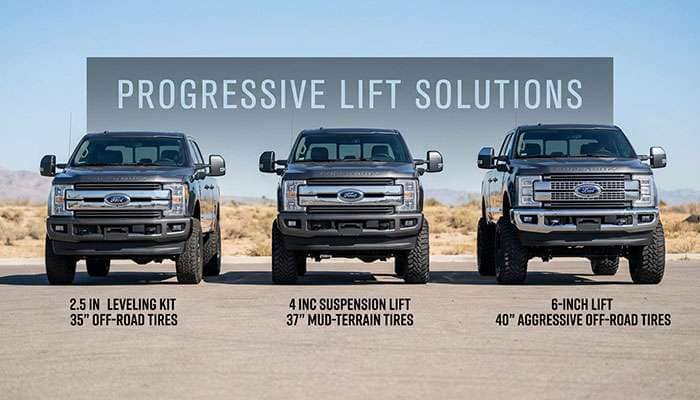
Full 4-6" suspension lifts open up possibilities that leveling kits simply can't match. These substantial modifications create the clearance needed for truly impressive tire sizes while maintaining the proper suspension geometry your Super Duty needs for daily driving performance.
A quality 4-6" lift kit transforms your Super Duty's capabilities by providing significant ground clearance and enhanced suspension travel. The 2023+ Super Duty models handle 35" tires effortlessly at this lift height using stock wheels without clearance concerns. More importantly, these trucks can accommodate up to 37" tires on factory wheels, though you may experience some radius arm contact during full steering lock. Premium lift kits like Rough Country's 6-inch Radius Arm Drop Suspension Lift allow fitment of 37" tires while preserving the smooth, factory ride quality.
Proper wheel specifications become critical when mounting larger tires. Here's what works best for different setups:
+12mm to +18mm offset (8-9" wide wheels): Perfect for 37"x12.5" tires on 2017-2022 trucks with minor trimming; 2023+ trucks can run 37"x13.5" with stock components
+1mm to +12mm offset (8.5-9.5" wide): Creates a slight "poke" stance and accommodates both 37" and 38"x13.5" tires with reasonable trimming
0mm offset (8-9" wide, 4.75-5" backspacing): The sweet spot for 4-6" lifts, fitting 37"-40" tires in various widths
-12mm offset (8-9" wide, 4.5" backspacing): Requires moderate trimming but delivers an excellent stance with 38"x13.5" tires
Even substantial lift doesn't eliminate all clearance challenges with larger tires. For 38" and 40" tires, trimming becomes mandatory both front and rear to maintain full articulation. Front modifications typically include plastic fender liner and pinch weld adjustments. Extreme setups may require fender liner "pull-back" techniques, which involve drilling through the pinch weld and securing the liner away from the tire.
The 2023 Super Duty lineup benefits from revised suspension tuning that improves ride comfort, even with larger tires. Quality lift kits include tubular radius arms that maintain proper caster angles—essential for preserving factory handling characteristics. Ford's Trail Turn Assist (standard on Tremor models) reduces turning radius by up to 40% through inside rear wheel dragging during off-road maneuvers.
Tire profile significantly affects both clearance and ride quality. Taller sidewalls absorb road imperfections better, creating a more comfortable daily driving experience. Most 4-6" lift kits require 6-10 hours for installation and may need recalibration of your truck's Advanced Driver Assistance Systems (ADAS) to maintain safety feature functionality.
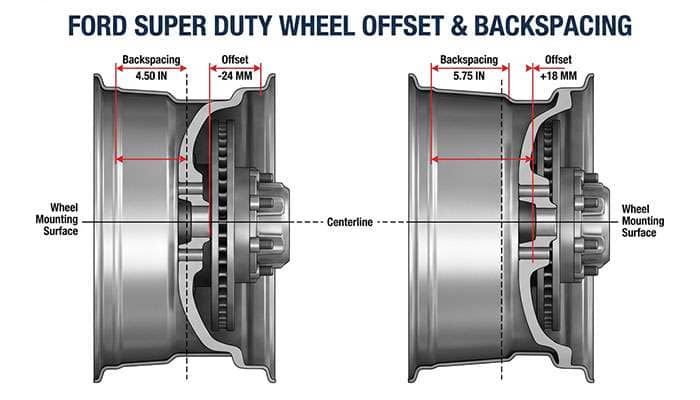
Understanding wheel measurements doesn't have to be complicated, but getting them right is crucial for your Ford F-250/F-350 Super Duty tire upgrade. The technical aspects of offset and backspacing directly affect both how your truck performs and how it looks.
Wheel offset measures the distance between the wheel's mounting surface and its centerline. Factory Super Duty wheels typically feature a high positive offset between +40mm to +50mm, placing the mounting surface toward the outside edge and tucking the wheel inward. Aftermarket setups typically use -12mm to +18mm offsets for better clearance and wider stance.
Think of it this way: positive offset wheels sit deeper into the wheel well, while negative offset wheels push outward, creating more "poke" beyond the fender. This measurement becomes critical when you're running larger tires because it determines how your tires interact with suspension components during full steering lock and compression.
Backspacing measures the distance from the mounting surface to the wheel's inside edge. For F-250 and F-350 owners, this measurement directly determines clearance between your tires and critical suspension components.
Here's what works in real-world applications: on a 2.5" lift, 5"-5.5" backspacing works well for 37x12.5" tires, while 4.5" lifts require 4.5"-5.0" backspacing to accommodate larger tires. Less backspacing positions the wheel farther from suspension components, creating the space you need for oversized tires during articulation.
Proper tire-to-wheel width matching affects both performance and appearance. The relationship isn't strictly one-to-one—a 9" wide wheel can accommodate various tire widths from 12.5" to 13.5". Wider wheels don't always require wider tires, but they do influence where the tire sits relative to your truck's body.
Remember this important principle: the larger the tire and smaller the wheel diameter, the better your truck will ride. This combination provides improved off-road performance and comfort, especially when you're dealing with rough terrain or heavy loads.
Your wheel specifications ultimately determine your truck's stance. Flush fitment uses moderate offsets (+18mm) that align the wheel face with the fender line. This approach prioritizes function, using conservative wheel specifications that ensure clearance for suspension travel.
Poke stance (0mm to -12mm offset) creates an aggressive look with wheels extending beyond the fenders. While this appearance-focused approach looks great, it affects more than just aesthetics—it impacts tire protection from debris and your truck's practical off-road capabilities.
When choosing your setup, consider how you'll use your truck most often. Daily drivers benefit from conservative fitments, while show trucks can push the limits for maximum visual impact.
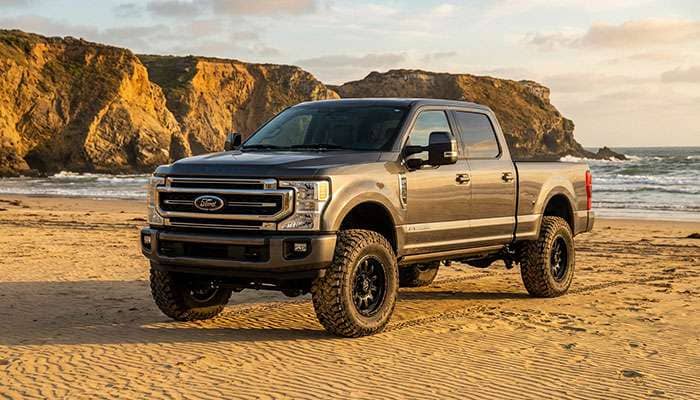
Selecting the perfect wheel and tire combination makes all the difference in how your Ford Super Duty performs and looks. The right setup eliminates frustrating fitment issues and costly modifications while delivering the capability you need.
Daily drivers benefit from combinations that require zero modifications while still providing impressive appearance upgrades. An 8.5-9" wide wheel with +12 to +18 offset paired with 35/12.5 Toyo AT, Nitto Ridge Grappler, or Falken AT tires creates an ideal setup. These combinations deliver excellent road manners without compromising your truck's factory ride quality.
The 2023+ models offer even more flexibility - 37/12.5 configurations can fit without any trimming, providing commanding presence without sacrificing practicality. This makes upgrading easier than ever for newer Super Duty owners.
Off-road enthusiasts require different specifications to maximize traction and capability. Zero offset wheels (8-9" wide with 4.75-5" backspacing) accommodate 37x13.5 tires with only mild fender liner modifications. For maximum off-road performance, the Toyo Open Country M/T delivers exceptional durability with a 9.3/10 score and impressive traction rating of 9.8/10.
These setups provide the ground clearance and traction needed for serious off-road adventures while maintaining acceptable on-road behavior for daily use.
Several manufacturers have proven themselves in Super Duty applications. The Goodyear Wrangler All Terrain Adventure features Kevlar reinforcement with a 9.2/10 handling score, making it excellent for mixed-use applications. Toyo Open Country series offers AT, RT and MT variants with 8.7/10 longevity ratings, providing options for every driving style. Falken Wildpeak consistently reaches 80,000+ miles even in mixed-use scenarios, delivering outstanding value for daily drivers.
Tire width significantly impacts both performance and fitment requirements. The 12.5" tires offer superior daily drivability and fit more conservatively, requiring fewer modifications. They provide excellent balance between capability and practicality for most Super Duty owners.
The 13.5" options deliver maximum off-road traction but require more clearance modifications. These wider tires excel in sand, mud, and rocky terrain but may compromise some on-road comfort and fuel economy.
When choosing tire width, consider your primary use case and modification tolerance to select the best option for your specific needs.
Selecting the perfect aftermarket tires for your Ford F-250 or F-350 Super Duty requires careful consideration of multiple factors. Throughout this guide, we've explored the critical measurements and specifications that determine successful tire upgrades without unexpected fitment issues.
Stock configurations certainly limit what you can achieve without modifications. However, even modest changes like a 2-2.5" leveling kit dramatically expand your options, allowing fitment of 35" tires with minimal or no trimming. Additionally, the newer 2023+ models offer improved clearance straight from the factory, particularly when paired with all-terrain tires rather than more aggressive mud terrains.
Wheel specifications undoubtedly make or break your tire upgrade. The right offset and backspacing measurements prove essential for avoiding contact with suspension components during articulation. Most Super Duty owners find +12mm to +18mm offset wheels provide the best balance between clearance and appearance while accommodating larger tires.
For those seeking maximum capability, a 4-6" lift unlocks truly impressive tire options. This configuration allows comfortable fitment of 37" tires, with some setups accommodating even 40" tires after appropriate modifications. Though these more extreme setups require careful attention to trimming requirements, the payoff in ground clearance and off-road capability makes the extra effort worthwhile.
Remember that tire profile affects both clearance and ride quality. Taller sidewalls absorb road imperfections better, creating a more comfortable daily driving experience. Meanwhile, the choice between 12.5" and 13.5" wide tires depends on your specific needs—narrower options offer better daily drivability while wider variants provide superior off-road traction.
We hope this comprehensive guide helps you build the perfect aftermarket tire setup for your Ford Super Duty. With the right combination of lift, wheels, and tires, your truck will stand out while delivering the performance and capability you need for work, play, or anything in between.
For 2017-2022 models, you can typically fit 285-295 metric tires (about 33" diameter) on stock wheels. The 2023+ models can accommodate 35" tires without modifications, and potentially 37" tires with all-terrain tread patterns.
Not necessarily. A 2-2.5" leveling kit can allow you to fit 35" tires with minimal or no trimming. For 37" tires and above, a 4-6" lift kit is recommended for proper clearance and suspension geometry.
Wheel offset significantly impacts tire clearance and stance. Aftermarket setups typically use -12mm to +18mm offsets for better clearance and a wider stance, compared to the high positive offset of factory wheels.
Top-rated brands include Goodyear Wrangler All Terrain Adventure, Toyo Open Country series, and Falken Wildpeak. These offer excellent durability, handling, and longevity for Super Duty applications.
12.5" wide tires offer better daily drivability and fit more conservatively, requiring less modification. 13.5" tires provide superior off-road traction but may require more clearance modifications. Choose based on your primary usage and willingness to modify your truck.



