
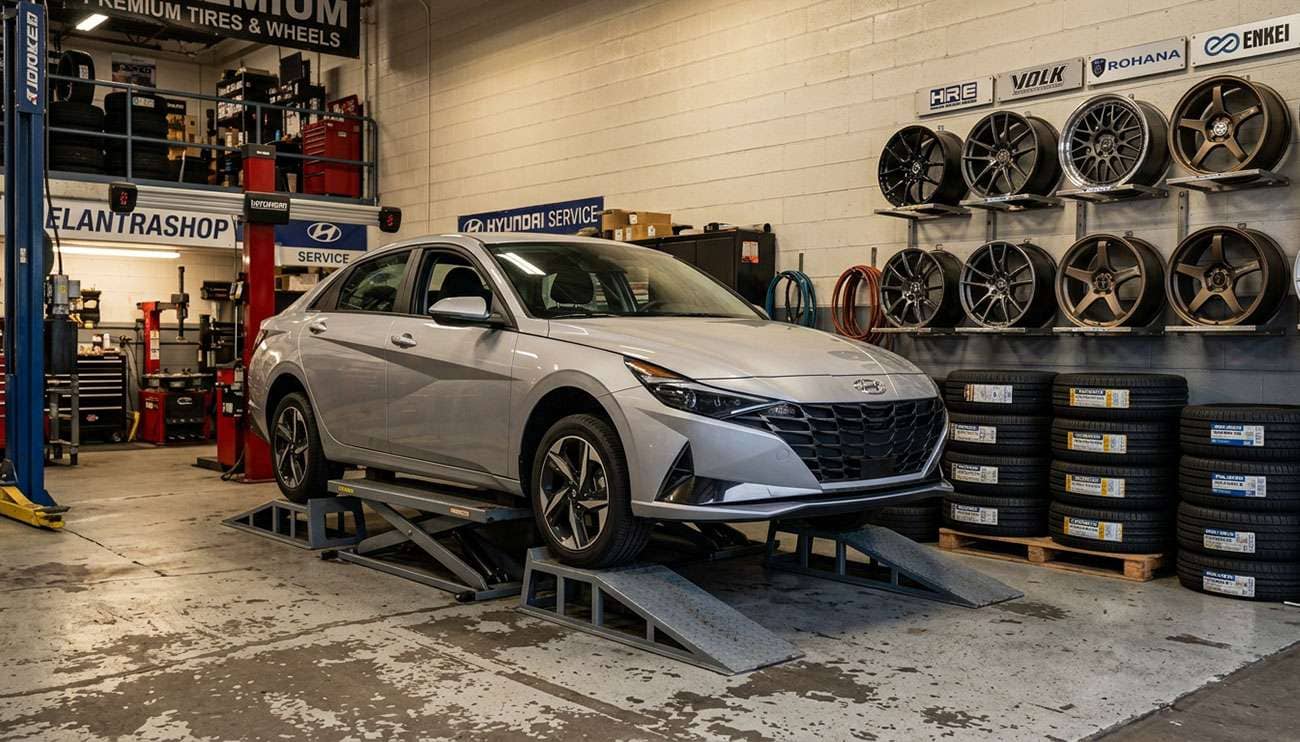
Hyundai Elantra aftermarket tires offer excellent opportunities to upgrade your vehicle's performance and appearance. At Performance Plus Tire, we carry the best selection of Elantra-compatible tires at the lowest prices, with comprehensive fitment expertise to ensure perfect compatibility.
Elantra owners face unique challenges when selecting replacement tires. The current generation alone features five distinct tire options spanning 15- to 19-inch wheels, each requiring specific attention to size codes and bolt patterns. Understanding Hyundai Elantra tire size specifications, proper bolt pattern requirements, and model year variations is essential for achieving optimal fitment and performance.
We've helped thousands of Elantra owners find the perfect tire solution for their specific model year and driving needs. This guide covers everything you need to know about Hyundai Elantra tires, from decoding size specifications to selecting the right tire type for your driving conditions. Whether you're driving a 2018 Hyundai Elantra or any other model year, our expert knowledge ensures you get exactly what you need for safe, reliable performance.
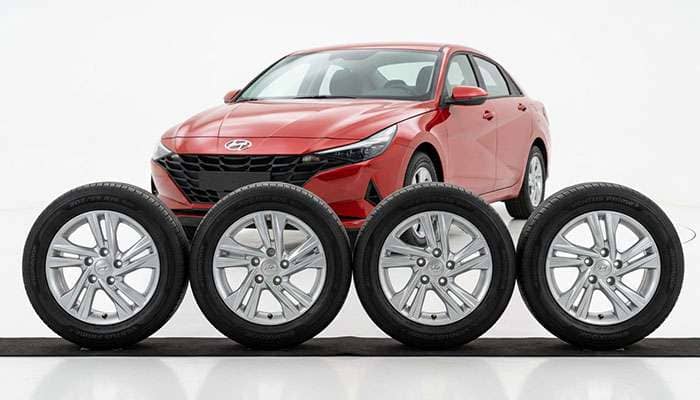
Understanding tire specifications is crucial before selecting Hyundai Elantra aftermarket tires. Each tire displays specific codes that determine compatibility with your vehicle's requirements.
Tire size markings follow a standard format that reveals critical fitment information. Consider the common Elantra size 205/55 R16. The first number (205) indicates tire width in millimeters from sidewall to sidewall. The number following the slash (55) represents the aspect ratio, which expresses sidewall height as a percentage of tire width. A 55 aspect ratio means the sidewall height equals 55% of the 205mm width. The letter R designates radial construction, while the final number (16) specifies wheel diameter in inches.
Load index and speed rating appear after the size designation. The marking 95H indicates the tire supports 1,521 pounds maximum load, while H designates a top sustained speed of 130 mph. These ratings must meet or exceed your vehicle's original specifications.
Bolt pattern compatibility changed significantly across Elantra generations. The pattern shifted from 4x114.3 to 5x114.3 beginning with the 2007 model year. Models from 2007 forward use five lug holes positioned on a 114.3mm diameter circle, while 1991-2006 models used four lugs on the same circle diameter. The high-performance Elantra N maintains the 5x114.3 pattern with a 67.1mm center bore.
Elantra wheel specifications vary considerably across trim levels. Wheel diameter spans from 15 to 19 inches depending on the specific configuration. A 2019-2020 Elantra typically uses 16-inch wheels with 6-inch width. The performance-oriented Elantra N requires 19x8.0 wheels. Wheel width directly affects tire contact patch and handling characteristics, as wider wheels create more surface area for road contact.
Offset measures the distance in millimeters between the wheel's centerline and its hub mounting surface. Standard 2019-2020 Elantra models use ET50 offset, positioning the mounting surface 50mm toward the street side of the wheel's centerline. Maintaining offset within ±5mm tolerance prevents clearance issues and preserves proper suspension geometry. Positive offset (typical for front-wheel drive vehicles) positions wheels inward, while negative offset extends them outward.
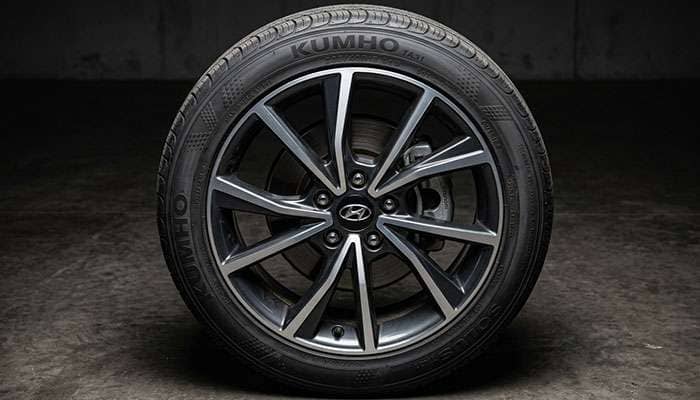
Tire specifications changed dramatically across seven Elantra generations, with each evolution bringing expanded size options to meet different performance needs.
The original Elantra generation used 175/65R14 on base trims and 185/60R14 on GLS variants. Second generation models from 1996-2000 standardized on 195/60R14 across most configurations. Both generations used the 4x114.3 bolt pattern with 67.1mm center bore.
Third generation XD models offered 185/65R15 and 195/60R15 sizes. The fourth generation HD introduced significant expansion with 195/65R15, 205/55R16, and 215/45R17 options depending on trim level. The 2009 SE specifically used 205/55R16, while Touring SE models mounted 215/45R17. This generation marked the transition to the 5x114.3 bolt pattern.
Fifth generation models offered three primary sizes: 195/65R15 for base trims, 205/55R16 for mid-level configurations, and 215/45R17 for premium variants. Sport models adopted 225/40R18 by 2017. The sixth generation continued this progression, with Limited trims running 225/45R17.
The seventh generation CN7 expanded to five distinct tire sizes. SE trims mount 195/65R15, SEL models use 205/55R16, while Limited variants require 225/45R17. Higher trim levels accommodate 235/40R18. Browse Hyundai Elantra aftermarket tires to find options matching your specific model year and trim requirements.
N Line variants require 235/40R18 exclusively. The Elantra N performance model uses 245/35R19 tires, representing the largest size in the complete lineup. Hybrid models use 205/55R16 for Blue trims and 225/45R17 for Limited hybrids.
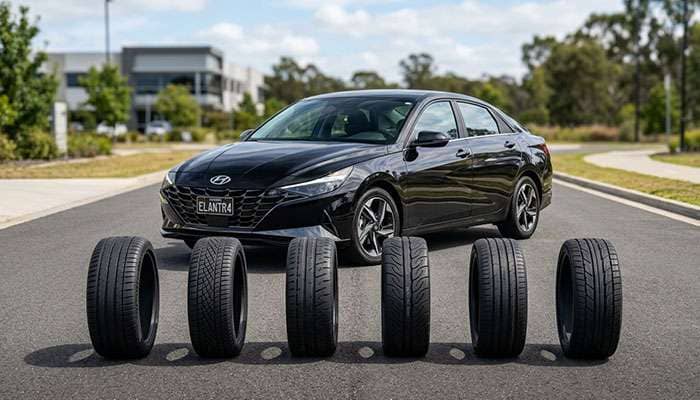
Choosing the right Hyundai Elantra aftermarket tires involves more than matching diameter numbers. Several key specifications must align for proper fitment and optimal performance.
Your owner's manual or driver's side door sticker provides the exact tire sizes recommended for your specific vehicle. When exploring replacement options, always maintain the same or higher speed rating to ensure safe performance. Online tire size calculators verify compatibility by entering your make and model information.
Tire sizes within 3% variance of OEM specifications are generally acceptable. Exceeding this tolerance can lead to brake system issues or vehicle damage. Stick to approved sizes to maintain proper speedometer accuracy and vehicle dynamics.
All-season tires provide balanced wet and dry performance for year-round driving in moderate climates. They offer convenience and decent capability across various conditions. Summer tires excel in warm weather with superior grip and handling, but performance drops significantly as temperatures approach freezing.
Winter tires become essential when ambient temperatures consistently drop below 45°F. Look for the Mountain Snow Flake marking on all winter tires. This symbol indicates the tire meets specific snow traction performance standards.
Summer performance tires use specialized rubber compounds that deliver exceptional dry-weather handling. They provide crisp steering response and superior cornering grip, though cold-weather capability remains limited. Track-focused tires offer maximum grip but wear quickly and struggle in wet conditions.
Consider your driving style and priorities when choosing performance options. Daily drivers benefit from tires that balance performance with longevity and weather capability.
Mid-range tires typically offer the best overall value for most drivers. Budget tires may use lower-quality compounds that extend braking distances, while premium options rarely justify their higher cost for average use. Focus on temperature ratings, treadwear grades, and traction ratings rather than price alone.
Browse Hyundai Elantra tire options to compare specifications and find the right balance of performance, durability, and value for your specific needs.
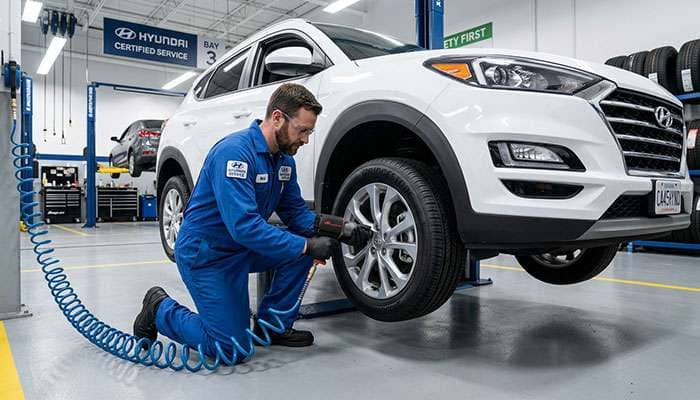
Professional installation and regular maintenance are essential for getting maximum performance and safety from your Hyundai Elantra aftermarket tires.
Tire shops specialize in replacement and offer multiple brand options. Installation takes 45 to 60 minutes for all four tires. Look for shops with advanced balancing equipment and alignment capabilities. Our experienced technicians understand Elantra-specific requirements and use state-of-the-art equipment to ensure your tires are mounted and balanced correctly. Proper mounting, balancing, and alignment maximize tire life and maintain vehicle safety.
Most Elantra models require 32-35 PSI, with 33 PSI being the most common specification. Check your driver's side door jamb for exact requirements specific to your model year and trim. Monitor pressure monthly and before long trips. Tire pressure drops about 1 PSI for every 10-degree temperature decrease, making winter checks particularly important for maintaining optimal performance.
Understanding fitment prevents costly mistakes and safety hazards. Rubbing occurs when tires contact wheel wells, suspension components, or body panels during turns or suspension compression. Incorrect wheel offset causes most problems. More positive offset pulls wheels inward, potentially hitting control arms. Stay within ±5mm of factory offset specifications to prevent contact issues and maintain proper suspension geometry.
Regular rotation extends tire life and maintains even wear patterns. Rotate tires every 5,000 to 7,500 miles. Front-wheel drive vehicles need more frequent front tire attention owing to steering and braking wear. Replace tires when tread depth falls below safe minimums using the penny test. We recommend checking tread depth regularly to ensure your Elantra maintains optimal traction and braking performance.
You now have the knowledge needed to select Hyundai Elantra aftermarket tires that match your specific requirements perfectly. Understanding tire size codes, bolt pattern specifications, and model year differences puts you in control of the selection process. Focus on tires that align with your driving conditions, performance expectations, and budget constraints.
Explore Hyundai Elantra tire options that fit your exact model year and trim level. Proper tire selection, combined with regular pressure monitoring and rotation schedules, ensures your Elantra delivers reliable performance and safety for thousands of miles ahead. Make the informed choice, and enjoy the confidence that comes with the right tires for your vehicle.
Master the essentials of selecting aftermarket tires for your Hyundai Elantra with these critical insights that will save you time, money, and potential fitment headaches.
• Decode tire size correctly: Read the three key numbers (width/aspect ratio/diameter) and verify your Elantra's bolt pattern changed from 4x114.3 to 5x114.3 in 2007.
• Match your model year specifications: Tire sizes range from 15-19 inches across generations, with current models offering five distinct options from 195/65R15 to 245/35R19.
• Choose tire type based on driving needs: All-season tires work for moderate climates, summer tires excel in warm weather, winter tires are essential below 45°F.
• Stay within 3% size variance: Exceeding this tolerance from OEM specifications can cause brake failure or vehicle damage during installation.
• Maintain proper pressure and rotation: Check 32-35 PSI monthly and rotate every 5,000-7,500 miles to maximize tire life and safety.
Remember that proper fitment depends on more than just diameter - offset, bolt pattern, and load ratings must all align with your specific Elantra model year and trim level for optimal performance and safety.
The current generation Elantra offers five different tire size options ranging from 15 to 19 inches: 195/65R15 for SE trims, 205/55R16 for SEL models, 225/45R17 for Limited variants, 235/40R18 for higher trims, and 245/35R19 for the performance-oriented Elantra N model.
The Elantra bolt pattern changed from 4x114.3 to 5x114.3 starting with the 2007 model year. This means 2007 and newer models use five lug holes arranged on a 114.3mm circle, while 1991-2006 models used four lugs on the same diameter circle.
All-season tires work well for year-round driving in moderate climates with balanced wet and dry performance. However, if you experience temperatures below 45°F regularly or drive in snow and ice conditions, dedicated winter tires provide significantly better traction and control. Many drivers who switch to winter tires find the performance difference too substantial to go back to all-seasons during cold months.
Most Elantra models require 32-35 PSI, with 33 PSI being the most common specification. You can find the exact requirement on the driver's side door jamb sticker. Check your tire pressure monthly and before long trips, as pressure drops about 1 PSI for every 10-degree temperature decrease.
Rotate your tires every 5,000 to 7,500 miles to maximize tire life and maintain even wear. Front-wheel drive vehicles like the Elantra require more frequent attention to front tires due to the additional wear from steering and braking forces.



