
Looking for last year's analysis? See our 2025 Hankook vs Michelin comparison.
Cost per mile is the metric that actually matters for tire purchase decisions, and the numbers consistently favor Hankook over Michelin at comparable product tiers. The Hankook Kinergy 4S2 delivers approximately $8.76 per 1,000 kilometers of service versus the Michelin CrossClimate2 at approximately $12.20 per 1,000 kilometers — a 28% advantage to Hankook in real cost-per-mile terms even after accounting for Michelin's slightly longer tread life. The pattern repeats across categories: Hankook delivers 75-85% of Michelin's peak performance at 60-75% of Michelin's price point, which produces better total cost of ownership in most use cases.
That said, Michelin's premium pricing buys real performance advantages in specific categories that matter to specific drivers. Wet braking from 60 mph favors Michelin by 6.34% in direct comparisons — meaningful safety margin for drivers in wet climates. Snow traction favors Michelin by 3.92% in independent testing — meaningful for drivers in real winter conditions. Tread life favors Michelin by approximately 15-20% on average. For drivers who prioritize peak performance regardless of price, Michelin delivers it. For drivers who prioritize value alongside acceptable performance, Hankook delivers stronger economics.
This 2026 head-to-head compares six direct category pairs — touring, UHP summer, EV-specific, all-weather, light truck all-terrain, and studless winter — with the actual numbers and the buyer scorecard at the end. Both brands are in current stock at Performance Plus Tire with multiple size variants for the popular vehicle applications. The decision isn't really about which brand is "better" — both produce excellent tires. It's about whether the Michelin premium delivers value for your specific driving profile, or whether Hankook's pricing advantage is the more rational choice.
Category |
Winner |
Margin |
|---|---|---|
Purchase price |
Hankook |
15-25% lower at comparable tiers |
Cost per mile |
Hankook |
~28% advantage on touring tiers |
Tread life |
Michelin |
~15-20% longer typical service |
Wet braking |
Michelin |
~6.34% shorter from 60 mph |
Wet cornering |
Hankook |
~1.95% higher average speed |
Dry braking |
Hankook (model-dependent) |
~0.9 meters at the limit |
Snow traction |
Michelin |
~3.92% better pulling force |
Cabin noise |
Michelin |
~0.6% quieter at typical use |
Overall verdict: Hankook delivers stronger total cost of ownership for most buyers; Michelin delivers premium-tier performance for specific use cases where the margins matter. Pick Hankook for value-focused commuter and family-car applications, daily-driven sports cars where peak performance isn't the priority, and any application where 75-85% of Michelin's peak performance at 60-75% of Michelin's pricing is the rational choice. Pick Michelin for drivers in heavy-rain climates where the 6.34% wet braking advantage matters, drivers in severe winter regions where snow traction is the priority, performance vehicles where peak handling matters, and OE replacement applications where the chassis was tuned for Michelin specification.
Understanding the history helps explain why each brand approaches tire design the way it does.
Michelin traces back to 1889 in Clermont-Ferrand, France. Edouard Michelin acquired a small rubber factory making farm equipment and turned it into one of the most innovative tire manufacturers in history. The company invented the detachable bicycle tire in 1891, the radial tire in 1948 (which revolutionized the automotive tire industry), and continues to lead in compound chemistry, tread geometry, and engineering investment. Michelin holds the #2 global tire ranking with approximately $27.5 billion in 2023 sales, just behind Bridgestone. The brand's reputation rests on decades of consistent peak-performance engineering.
Hankook started later, founded as Chosun Tire Company in 1941 in South Korea (renamed Hankook Tire Manufacturing in 1968). The company has grown into the #7 global tire manufacturer with approximately 102 million tires produced annually across eight manufacturing plants serving 160 countries. Hankook's positioning has consistently been value-engineered alternatives to premium brands — applying significant engineering investment to deliver 75-85% of premium-tier performance at meaningfully lower price points. The brand's strategy has worked: Hankook is the OE tire supplier for several major automakers (Ford, Hyundai/Kia, Volkswagen, BMW, Tesla) and continues to gain market share globally.
The brand positioning matters because it shapes product priorities. Michelin invests in peak performance at premium pricing; Hankook invests in acceptable performance at value pricing. Neither approach is wrong — they serve different buyer priorities. The question for any specific purchase is whether the Michelin premium delivers value for your specific situation, or whether Hankook's pricing advantage is the more rational choice.
Hankook consistently undercuts Michelin pricing by 15-25% at comparable product tiers. The pricing gap is measurable, consistent, and the foundation of the cost-per-mile advantage that drives Hankook's value proposition.
Product Tier |
Hankook Typical Price |
Michelin Typical Price |
Hankook Savings |
|---|---|---|---|
Touring all-season (15-16") |
$95-130 |
$130-175 |
~25-30% |
UHP all-season (17-19") |
$140-200 |
$180-260 |
~20-25% |
UHP summer (18-20") |
$190-280 |
$260-340 |
~20-25% |
Light truck all-terrain |
$160-220 |
$220-300 |
~20-25% |
Winter studless |
$110-160 |
$140-200 |
~20-22% |
Full set of 4 (touring) |
$380-520 |
$520-700 |
~$140-180 |
Across a four-tire set, the pricing gap typically lands $140-200 in Hankook's favor for touring applications and similar absolute dollar advantages across other tiers. For buyers replacing tires every 3-5 years on multiple vehicles, the cumulative savings add up to thousands of dollars over the ownership cycle. The question is whether the performance trade-offs justify the savings — and the answer depends on which performance category matters most for your specific use case.
Standard all-season touring tires for the majority of passenger car applications — sedans, family vehicles, and daily commuter cars.
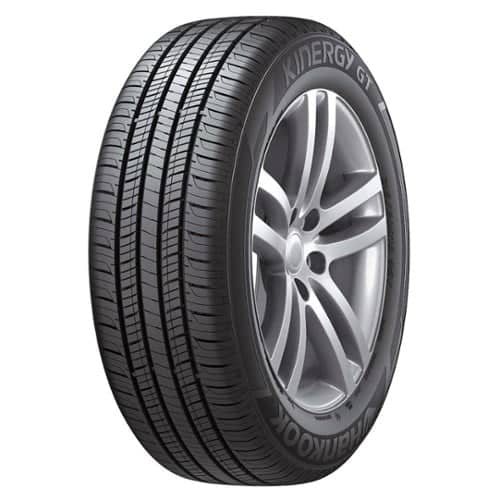
Hankook Kinergy GT H436 • UTQG: 600 A B • Tread life: 55,000-65,000 mi typical • Typical price: $95-130
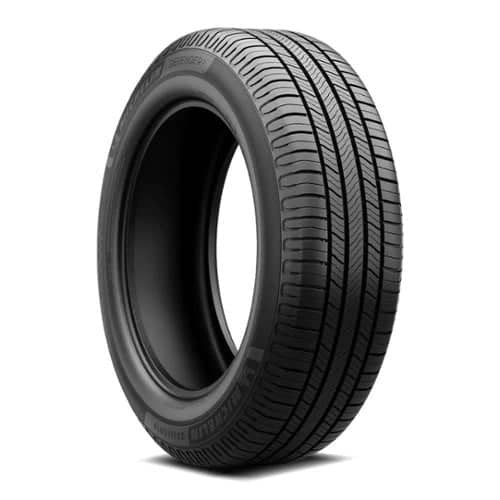
Michelin Defender 2 • UTQG: 800 A B • Tread life: 75,000-85,000 mi typical • Typical price: $130-175
This is the pair where Michelin's tread life advantage shows up most clearly. The Defender 2's 800 UTQG rating delivers approximately 30-40% longer service life than the Kinergy GT's 600 rating — meaningful difference for high-mileage drivers. Michelin's MaxTouch construction with the Defender 2's silica compound chemistry maintains performance consistency across the tire's full service life better than the Hankook alternative.
The Hankook Kinergy GT wins on initial cost — typically $35-45 less per tire at comparable sizes. For a four-tire set, that's $140-180 in initial savings. The Defender 2's tread life advantage closes some of that gap over the tire's life, but cost-per-mile still favors the Hankook by approximately 15-20% in most calculations. For drivers who replace vehicles every 3-5 years anyway and won't see the full Defender 2 service life before vehicle replacement, the Hankook's cost advantage is the stronger value. For drivers who keep vehicles long-term and intend to run tires to legal minimum tread, the Defender 2's longevity becomes more meaningful economics.
Browse Hankook Kinergy GT H436 sizes or Michelin Defender 2 sizes.
Top-tier UHP summer tires for performance vehicles operating in warm-climate conditions where peak grip is the priority.
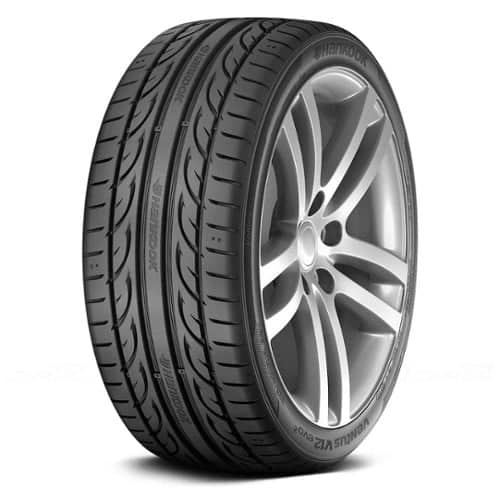
Hankook Ventus V12 evo2 K120 • UTQG: 280 AA A • Tread life: 20,000-28,000 mi typical • Typical price: $145-200
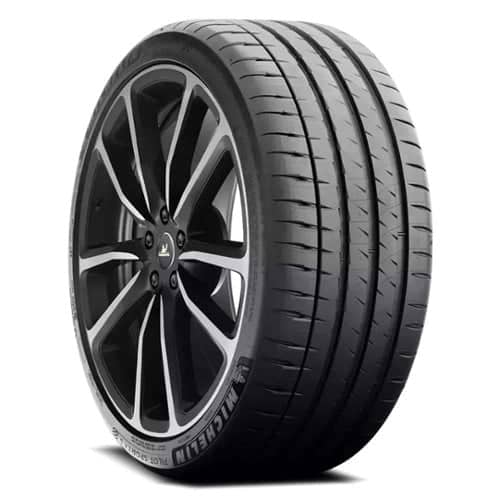
Michelin Pilot Sport 4S • UTQG: 300 AA A • Tread life: 25,000-30,000 mi typical • Typical price: $295-340
This is the pair where Michelin's premium pricing reflects the largest absolute dollar difference — typically $130-150 per tire at comparable sizes, or $520-600 across a four-tire set. Michelin's Pilot Sport 4S delivers measurably better wet braking (110-115 feet from 60 mph versus the Hankook's 115-120 feet), slightly better dry braking, and more refined steering feel. For drivers operating performance vehicles at the limits of grip, those advantages matter.
The Hankook Ventus V12 evo2 wins on absolute pricing — meaningful savings for performance car owners who want UHP summer capability without paying Michelin's premium pricing. Wet braking performance is acceptable rather than class-leading; dry handling is competitive with the PS4S in most independent testing. For daily-driven sports sedans and weekend-driven sports cars where the absolute peak performance isn't the priority, the Hankook delivers 90% of the Michelin's capability at approximately 60% of the cost. For dedicated track-day vehicles and high-end performance cars where every fraction of a second matters, the Michelin's peak performance advantage justifies the premium pricing.
For broader UHP summer category coverage, see our PS4S vs Pirelli P Zero PZ4 head-to-head. Browse Hankook Ventus V12 evo2 sizes or Michelin Pilot Sport 4S sizes.
EV-specific tires designed for the higher weight, instant torque delivery, and reduced rolling resistance requirements of electric vehicles.
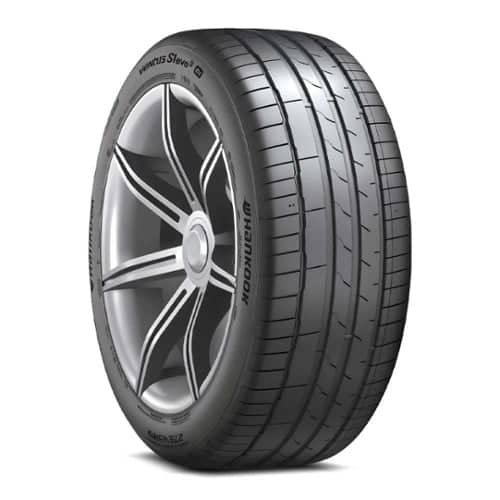
Hankook Ventus S1 EVO3 EV K127E • Category: UHP Summer EV • Tread life: 25,000-32,000 mi typical • Typical price: $170-240
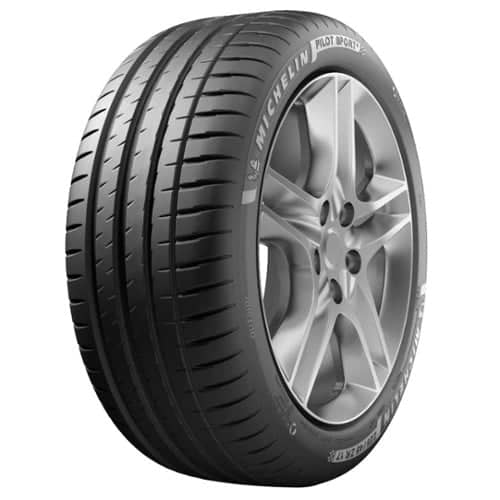
Michelin Pilot Sport 4 Runflat • Category: UHP Summer with Run-Flat • Tread life: 22,000-28,000 mi typical • Typical price: $230-310
EV tire selection requires specific engineering — the higher curb weight of electric vehicles (typically 800-1,500 pounds heavier than equivalent ICE vehicles), the instant torque delivery from electric motors, and the importance of low rolling resistance for range optimization all affect what works on an EV. Hankook engineered the Ventus S1 EVO3 EV specifically for these requirements, with reinforced sidewall construction for higher load capacity and a compound tuned for both grip and reduced rolling resistance.
Michelin's Pilot Sport 4 Runflat covers a different but adjacent use case — performance vehicles equipped with run-flat technology. The runflat construction provides puncture-resistant operation (driving 50 miles at 50 mph after pressure loss) but adds weight and stiffness compared to standard construction. For EV applications specifically, Tesla Model 3, Model Y, BMW i4, Audi e-tron GT, and similar performance EVs benefit from the Hankook K127E's purpose-built EV engineering. For ICE performance vehicles with runflat OE specification (BMW, Mercedes-AMG, some Audi applications), the Michelin PS4 Runflat is the appropriate replacement.
Pricing favors the Hankook by approximately $60-80 per tire at comparable sizes for direct EV applications. For Tesla owners specifically, the Hankook K127E delivers EV-engineered performance at 70-75% of the cost of equivalent Michelin EV offerings. Browse Hankook Ventus S1 EVO3 EV sizes or Michelin Pilot Sport 4 Runflat sizes.
True all-weather 3PMSF-rated tires for year-round operation in mixed climates with meaningful winter weather alongside heavy rain.
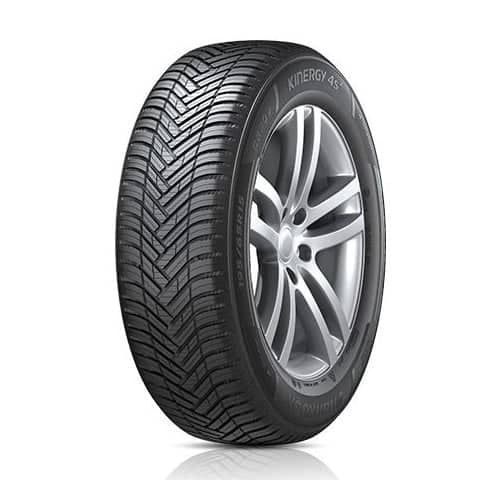
Hankook Kinergy 4S2 H750 • UTQG: 540 A A • 3PMSF: Yes • Tread life: 50,000-60,000 mi typical • Typical price: $130-170
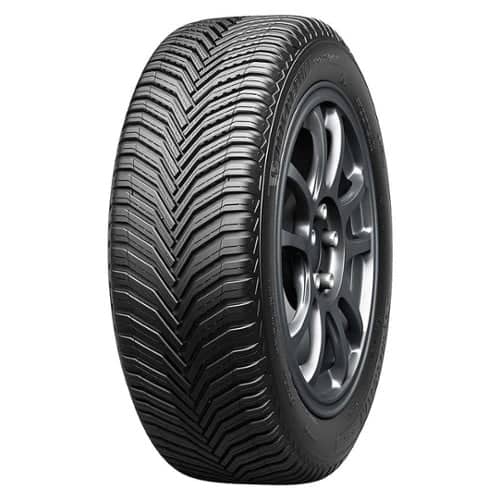
Michelin CrossClimate2 • UTQG: 640 A B • 3PMSF: Yes • Tread life: 50,000-60,000 mi typical • Typical price: $170-230
This is the head-to-head where the direct performance comparison numbers are most extensively documented. Independent testing shows the Michelin CrossClimate2 stops at 38.53 meters from 60 mph in wet conditions versus the Hankook Kinergy 4S2's 41.14 meters — a 6.34% shorter wet braking distance for Michelin. Snow traction also favors Michelin: 2,874.33 Newtons of pulling force versus the Hankook's 2,761.71 Newtons (3.92% advantage to Michelin). For drivers in heavy-rain or severe-winter regions, those advantages are meaningful safety margin.
The Hankook Kinergy 4S2 wins on cost-per-mile economics and on wet cornering specifically. Wet handling speeds favor the Hankook by approximately 1.95% in independent testing (75.31 km/h versus 73.84 km/h average), and the lower purchase price combined with comparable tread life produces approximately $8.76 per 1,000 km of service versus the CrossClimate2's $12.20 per 1,000 km — a 28% advantage to Hankook in real cost-per-mile terms.
For most buyers operating in moderate climates with seasonal but not severe winter conditions, the Hankook delivers acceptable safety performance at meaningfully better economics. For drivers in genuine heavy-rain regions (Pacific Northwest, Gulf Coast) or severe-winter regions (Northeast, Upper Midwest, Mountain West), the Michelin's peak safety advantages justify the premium pricing. Browse Hankook Kinergy 4S2 sizes or Michelin CrossClimate2 sizes.
Light truck and SUV all-terrain tires for trucks, crossovers, and SUVs with mixed on-road and light off-road use.
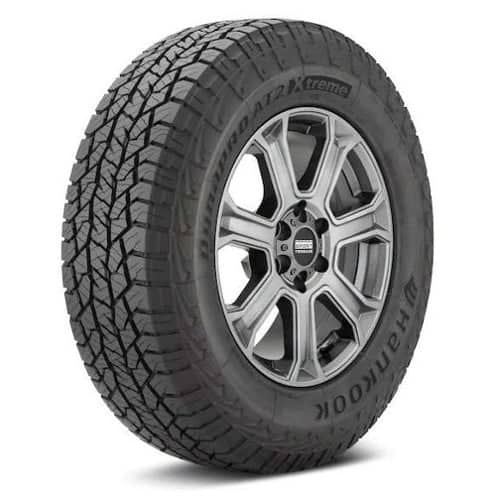
Hankook Dynapro AT2 Extreme RF12 • Category: A/T Hybrid • 3PMSF: Yes • Tread life: 50,000-60,000 mi typical • Typical price: $170-230
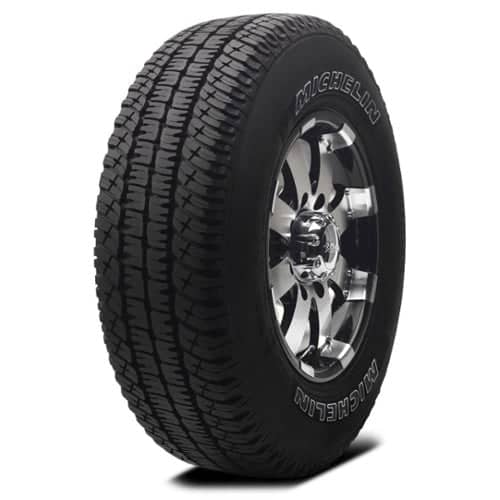
Michelin LTX A/T2 • Category: A/T • 3PMSF: Select sizes • Tread life: 55,000-65,000 mi typical • Typical price: $225-310
The Hankook Dynapro AT2 Extreme is meaningfully more aggressive than the Michelin LTX A/T2 — Hankook positioned the AT2 Extreme closer to the rugged-terrain category with broader voids and more aggressive shoulder lugs. The Michelin LTX A/T2 sits more squarely in the traditional A/T category with quieter on-road behavior and more highway-oriented tread design. For buyers who want true mid-aggressive A/T capability, the Hankook is the closer match. For buyers who want quiet highway operation with light off-road competence, the Michelin matches the use case better.
Pricing favors the Hankook by $50-80 per tire at comparable sizes — substantial for a four-tire set on full-size pickups where individual tires already cost $200+. Tread life favors the Michelin marginally (5-10% longer typical service life). For buyers who use their trucks for actual off-road or recreational duty alongside highway commuting, the Hankook delivers more aggressive capability at meaningfully lower cost. For buyers whose trucks see primarily highway duty with occasional gravel roads, the Michelin's quieter operation and longer life justify the price premium.
Browse Hankook Dynapro AT2 Extreme sizes or Michelin LTX A/T2 sizes.
Dedicated studless winter tires for severe winter conditions where ice and packed snow grip is the priority.
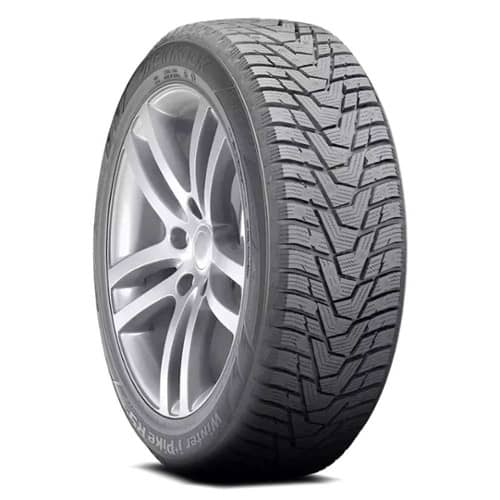
Hankook Winter i*Pike RS2 W429 • Category: Studless Winter • 3PMSF: Yes • Typical price: $115-160
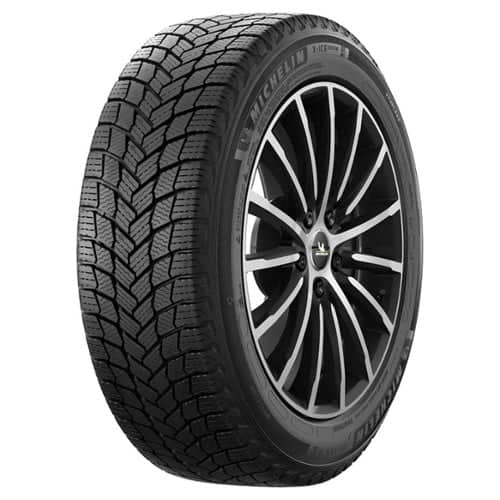
Michelin X-Ice Snow • Category: Studless Winter • 3PMSF: Yes • Typical price: $145-200
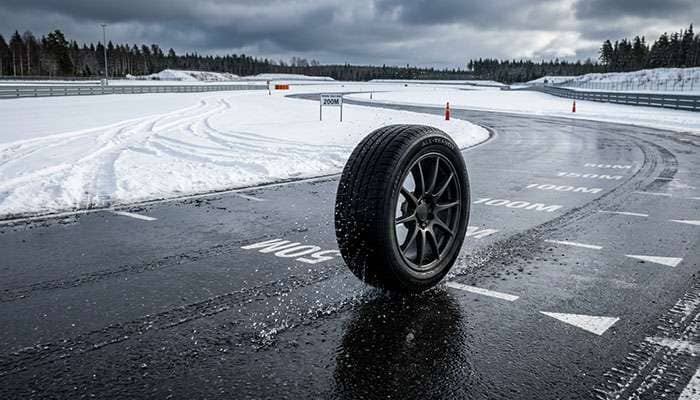
Winter testing produces some of the largest performance margins between the two brands in Michelin's favor. The Michelin X-Ice Snow accelerates from 0 to 40 km/h in approximately 6.2 seconds on snow versus the Hankook Winter i*Pike RS2's 6.5 seconds — a 1.61% advantage that compounds across the winter driving experience. Michelin's FlexIce 2.0 compound technology and proprietary V-shaped tread pattern produce ice grip and acceleration that consistently outperforms the Hankook in independent testing.
The Hankook Winter i*Pike RS2 W429 wins on absolute pricing — typically $30-40 less per tire at comparable sizes. For drivers in regions that see mild winter conditions (Mid-Atlantic, parts of the Northwest) where peak winter performance isn't required, the Hankook delivers acceptable winter capability at meaningfully better cost. For drivers in regions with severe winter conditions (Upper Midwest, New England, mountain regions, Canadian provinces) where ice and packed snow are routine driving conditions, the Michelin's peak performance advantages justify the premium pricing.
The exception in this pairing is noise — the Hankook Winter i*Pike RS2 actually measures slightly quieter than the Michelin X-Ice Snow (approximately 0.53% lower) in independent testing. For winter tires specifically, noise is rarely the determining factor in selection, but the difference exists for buyers who prioritize cabin quietness. Browse Hankook Winter i*Pike RS2 sizes or Michelin X-Ice Snow sizes.
The cumulative pattern of independent testing reveals where each brand consistently wins and where the margins are too close to matter.
Performance Metric |
Winner |
Margin |
Real-World Impact |
|---|---|---|---|
Wet braking 60-0 mph |
Michelin |
~6.34% |
~2.6 meters shorter — meaningful safety margin |
Wet cornering speed |
Hankook |
~1.95% |
Marginal but consistent advantage |
Dry braking (model-dependent) |
Hankook |
~0.9-2.5% |
Negligible in real driving |
Snow acceleration |
Michelin |
~1.61% |
Meaningful in severe winter conditions |
Snow pulling force |
Michelin |
~3.92% |
Better traction on deep snow |
Cabin noise (most models) |
Michelin |
~0.6% |
Marginal at typical use |
Tread life |
Michelin |
~15-20% |
Meaningful over multi-year ownership |
Tire-to-tire consistency |
Tie |
Both excellent |
Both deliver predictable performance |
The pattern: Michelin consistently wins on absolute peak performance metrics — wet braking, snow grip, tread life, cabin noise. The margins are real and measurable, but typically in the 1-6% range rather than dramatic differences. Hankook wins on wet cornering, dry braking on specific models, and (most importantly) cost-per-mile economics. The decision depends on which performance characteristics matter most for your specific use case.
Cost per mile is the metric that determines whether premium pricing actually delivers premium value. The math goes: tire purchase price plus mounting/balancing/disposal costs, divided by tread life in miles, equals cost per mile of service. Premium tires deliver longer tread life that partially offsets their higher purchase price, but rarely fully closes the gap.
Tire Comparison |
Set Cost |
Typical Life |
Cost/Mile |
|---|---|---|---|
Hankook Kinergy GT (set of 4) |
~$440 |
60,000 miles |
$0.0073/mi |
Michelin Defender 2 (set of 4) |
~$600 |
80,000 miles |
$0.0075/mi |
Hankook Kinergy 4S2 (set of 4) |
~$580 |
55,000 miles |
$0.0105/mi |
Michelin CrossClimate2 (set of 4) |
~$780 |
55,000 miles |
$0.0142/mi |
Hankook Ventus V12 evo2 (set of 4) |
~$700 |
24,000 miles |
$0.0292/mi |
Michelin Pilot Sport 4S (set of 4) |
~$1,260 |
27,500 miles |
$0.0458/mi |
The economic pattern is clear. For touring tires (Defender 2 versus Kinergy GT), the cost-per-mile is nearly equivalent — Michelin's tread life advantage almost completely closes the price gap. For all-weather (CrossClimate2 versus Kinergy 4S2), Hankook wins by 35% in cost-per-mile terms because the tread life is comparable but the Michelin pricing premium isn't justified by additional service life. For UHP summer (PS4S versus Ventus V12 evo2), Hankook wins by 57% in cost-per-mile terms because the tread life is similar but the pricing difference is dramatic.
The cost-per-mile analysis suggests where Michelin's premium is justified versus where it isn't. Justified Michelin premiums: Defender 2 (price gap closed by tread life advantage), winter applications (peak performance matters more than economics in severe conditions), OE replacement on premium vehicles. Less-justified Michelin premiums: all-weather replacement, UHP summer where peak performance isn't the priority, daily-driven applications where comparable Hankook performance delivers meaningful savings.
Buyer Profile |
Right Brand |
Why |
|---|---|---|
Value-focused commuter buyer |
Hankook |
~25% lower pricing, comparable safety |
High-mileage driver (25k+ miles/year) |
Michelin Defender 2 |
Tread life economics close the price gap |
Heavy-rain climate operator |
Michelin |
~6.34% wet braking advantage matters |
Severe-winter climate (deep snow, ice) |
Michelin X-Ice Snow |
Snow traction and acceleration advantages |
Moderate-winter climate (occasional snow) |
Hankook |
Acceptable performance at meaningful savings |
EV owner (Tesla, Polestar, BMW i-series) |
Hankook Ventus S1 EVO3 EV |
EV-engineered at meaningful savings |
Performance car (track-day focused) |
Michelin Pilot Sport 4S |
Peak performance at the limit |
Performance car (daily-driven, occasional spirited) |
Hankook Ventus V12 evo2 |
90% of peak at 60% of cost |
Light truck/SUV (mostly highway) |
Michelin LTX A/T2 |
Quieter highway operation, longer life |
Light truck/SUV (mixed off-road) |
Hankook Dynapro AT2 Extreme |
More aggressive capability at lower cost |
OE replacement on Michelin-equipped vehicle |
Michelin |
Maintains factory chassis tuning |
OE replacement on Hankook-equipped vehicle |
Hankook |
Maintains factory chassis tuning |
The pattern that emerges: Hankook for buyers who prioritize value, daily-driver applications, and acceptable rather than peak performance. Michelin for buyers who prioritize peak safety margins, severe-climate operation, and applications where the chassis was engineered around Michelin specification. Both produce excellent tires — picking the wrong brand isn't dangerous, but picking the right brand produces better long-term ownership economics and satisfaction.
Specification |
Hankook |
Michelin |
|---|---|---|
Founded |
1941 (South Korea) |
1889 (France) |
Global ranking |
#7 |
#2 |
Annual production |
~102 million tires |
~190 million tires |
Typical pricing |
15-25% lower than Michelin |
Premium tier pricing |
Tread life leader |
50,000-70,000 mi range |
55,000-85,000 mi range |
Wet braking |
Acceptable (A traction typical) |
~6.34% shorter from 60 mph |
Snow performance |
Strong on 3PMSF models |
~3.92% better snow traction |
Wet cornering |
~1.95% advantage |
Slightly behind |
Cost per 1,000 km (all-weather) |
~$8.76 |
~$12.20 |
Best for |
Value-focused buyers, mixed-use applications |
Peak performance, severe climates, high-mileage drivers |
Hankook delivers 75-85% of Michelin's peak performance at 60-75% of Michelin's pricing across most comparable product tiers. The two brands are not equivalent — Michelin consistently wins on absolute peak performance metrics including wet braking (6.34% shorter from 60 mph), snow traction (3.92% better pulling force), tread life (15-20% longer typical), and cabin noise (marginal advantage). Hankook wins on cost-per-mile economics, wet cornering speeds (1.95% advantage), and value-tier total cost of ownership. For drivers prioritizing peak safety margins or operating in severe climates, Michelin's advantages justify the premium pricing. For value-focused buyers in moderate climates, Hankook delivers acceptable performance at meaningfully better economics.
Hankook tires typically cost 15-25% less than comparable Michelin tires at the same product tier. For touring all-season tires, the Hankook Kinergy GT runs $95-130 versus the Michelin Defender 2 at $130-175 — approximately $35-45 less per tire ($140-180 across a four-tire set). For UHP summer tires, the Hankook Ventus V12 evo2 runs $145-200 versus the Michelin Pilot Sport 4S at $295-340 — approximately $150 less per tire ($600 across a set). For all-weather tires, the Hankook Kinergy 4S2 runs $130-170 versus the Michelin CrossClimate2 at $170-230. The pricing gap is consistent across categories and represents the foundation of Hankook's cost-per-mile advantage.
Michelin typically delivers 15-20% longer tread life than comparable Hankook models. Premium Michelin touring tires like the Defender 2 deliver up to 80,000 miles of service compared to the Hankook Kinergy GT's typical 60,000-65,000 mile service life. The Michelin Pilot Sport 4S delivers 27,000-30,000 miles versus the Hankook Ventus V12 evo2's 22,000-28,000 miles. The longevity advantage partially offsets Michelin's higher purchase price — for the Defender 2 versus Kinergy GT specifically, the cost-per-mile ends up nearly equivalent ($0.0073 versus $0.0075). For UHP summer and all-weather categories, Hankook still wins on cost-per-mile despite Michelin's tread life advantage because the price gap is larger than the longevity advantage.
Michelin's premium pricing is justified for specific buyer profiles but not universal. The premium delivers value for: drivers in heavy-rain climates where 6.34% shorter wet braking matters; drivers in severe-winter regions where snow traction and acceleration matter; high-mileage drivers (25,000+ miles per year) where tread life economics close the price gap; performance vehicle owners where peak handling matters; OE replacement applications where chassis tuning was designed around Michelin specification. The premium does not deliver value for: typical commuter applications in moderate climates; value-focused buyers comfortable with 85% of peak performance; drivers who replace vehicles every 3-5 years and won't see full tread life economics; daily-driven applications where comparable Hankook performance delivers meaningful savings.
For EV-specific applications, the Hankook Ventus S1 EVO3 EV K127E delivers strong value through purpose-built EV engineering. The tire is designed for the higher curb weight, instant torque delivery, and low rolling resistance requirements of electric vehicles like Tesla Model 3, Model Y, BMW i4, Polestar 2, and similar performance EVs. Pricing typically lands 25-30% below comparable Michelin EV offerings. Michelin also produces EV-specific tires (e-Primacy and similar) that deliver Michelin-tier peak performance at premium pricing. For Tesla owners specifically and most modern EV applications, the Hankook K127E delivers EV-engineered performance at meaningful savings. For luxury EV applications where the OE specification was Michelin, staying with Michelin maintains the factory chassis tuning.
Hankook tires are made by Hankook Tire & Technology Co., Ltd., a South Korean tire manufacturer headquartered in Seoul. The company was founded as Chosun Tire Company in 1941 and renamed Hankook Tire Manufacturing in 1968. Hankook operates eight manufacturing plants globally with seven regional headquarters and five R&D centers serving customers in approximately 160 countries. Annual production runs approximately 102 million tires across passenger car, light truck, commercial vehicle, and racing applications. The company employs approximately 22,000 people worldwide and holds the #7 global tire manufacturer ranking. Hankook is the OE tire supplier for several major automakers including Ford, Hyundai/Kia, Volkswagen, BMW, and Tesla.
No. Hankook is a South Korean tire manufacturer, not Chinese. The company was founded in 1941 in Korea and remains headquartered in Seoul, South Korea. Hankook operates manufacturing plants in South Korea, Hungary, the United States (Tennessee), Indonesia, and China — but the brand itself is Korean-owned and Korean-engineered. The U.S. manufacturing facility in Clarksville, Tennessee produces tires for the North American market specifically. For buyers seeking American-manufactured tires, the Hankook Tennessee facility produces select sizes locally. For buyers researching tire brand origins, Hankook is correctly identified as a South Korean brand with global manufacturing operations.
Michelin typically delivers marginally quieter cabin noise than comparable Hankook tires across most categories. Independent testing measures the Michelin CrossClimate2 at 71.28 dB versus the Hankook Kinergy 4S2's 71.71 dB at standardized test conditions — a 0.6% reduction (approximately 0.43 dB) that produces a noticeable but small advantage. The Michelin Primacy 5 typically scores 10/10 for noise in subjective testing while the Hankook Ventus Prime 4 scores 8/10. Highway speed measurements show the Michelin Pilot Sport 4 at 68-72 dB versus the Hankook Ventus S1 Evo 3 at 70-73 dB. The exception is winter tires — the Hankook Winter i*Pike RS2 actually measures slightly quieter than the Michelin X-Ice Snow (approximately 0.53% lower). For drivers who prioritize cabin quietness, Michelin has a small but consistent advantage on most non-winter categories.



