
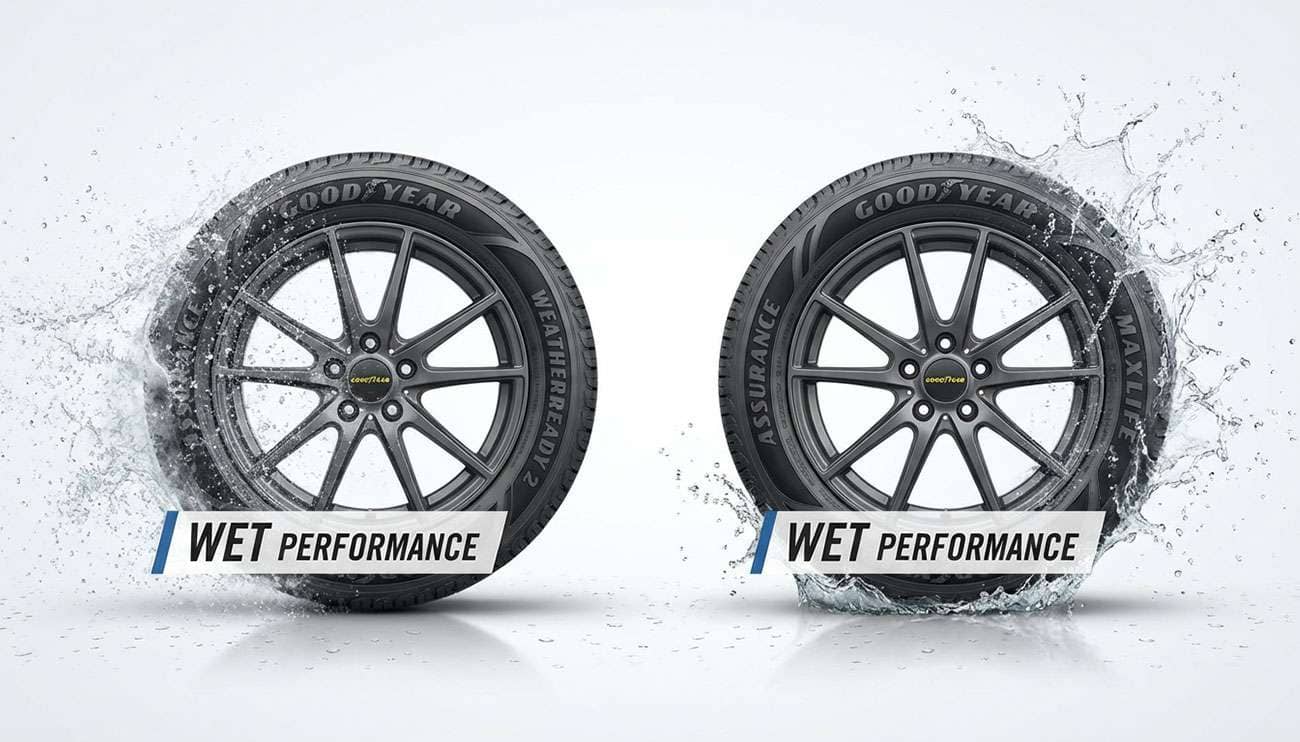
Tire buyers choosing between the Goodyear Assurance MaxLife and Goodyear Assurance WeatherReady face a fundamental decision: maximum longevity or superior all-weather performance. The MaxLife delivers an impressive 85,000-mile warranty, setting the standard for long-term value in its category. The WeatherReady 2 focuses on reliable traction across unpredictable weather conditions.
Performance testing reveals clear advantages for each tire. The Goodyear Assurance WeatherReady 2 demonstrates superior wet braking performance, while the MaxLife prioritizes extended tread life above all else. Both models earn the Three Peak Mountain Snowflake (3PMSF) rating, meeting stringent requirements for severe winter conditions. The WeatherReady targets drivers who regularly encounter changing weather patterns, making it the obvious choice for regions with unpredictable conditions.
Key differences extend well beyond warranty coverage. The MaxLife features built-in tread wear gages for easy monitoring throughout its extended lifespan. Meanwhile, the WeatherReady 2 stops 5.1 feet shorter than comparable tires in wet braking tests. Whether you prioritize long-term value or all-weather confidence, we'll guide you through the selection process to find the right Goodyear Assurance tire for your specific driving needs.
These two Goodyear options represent distinct engineering approaches designed for different driving priorities. Understanding their specialized design philosophies helps you select the tire that matches your specific needs.
Goodyear designed the Assurance MaxLife as their longest-lasting tire, supporting this claim with an 85,000-mile tread life limited warranty. The impressive durability stems from Goodyear's TredLife Technology, combining an enhanced compound with an innovative tread pattern specifically engineered for maximum wear performance.
The MaxLife delivers up to 30% more miles of all-season traction compared to standard all-season tires. Four deep channels efficiently evacuate water from the contact patch, providing enhanced wet traction in rain and light snow conditions. This design strikes a balance between longevity and adequate all-season performance.
Practical features set the MaxLife apart from typical long-wearing tires. The built-in Wear Gage allows easy tread depth monitoring throughout the tire's extended lifespan. You can assess remaining tire life at a glance without specialized tools or guesswork.
The Assurance WeatherReady 2 takes a different approach, prioritizing adaptability across changing weather conditions. This all-weather performer earns the coveted Three-Peak Mountain Snowflake (3PMSF) certification, meeting stringent snow traction criteria established by Federal Motor Vehicle Safety Standards.
All-Weather Technology distinguishes the WeatherReady 2 from conventional all-season tires. The versatile tread compound stays adaptable across all seasons. AquaTred Technology features an enhanced tread pattern with sweeping grooves that efficiently move water and slush away from the tire, ensuring consistent performance in wet conditions.
Testing results demonstrate the WeatherReady 2's performance advantages. Head-to-head comparisons against competitor products including Michelin CrossClimate2, Bridgestone WeatherPeak, and Pirelli Scorpion WeatherActive show the WeatherReady 2 finishing first in wet handling, wet braking, and dry handling tests. The tire carries a 60,000-mile tread life limited warranty—shorter than the MaxLife but substantial for an all-weather tire.
High-mileage drivers seeking long-term value represent the Assurance MaxLife's primary market. Daily commuters, rideshare drivers, and those prioritizing durability across thousands of miles benefit most from this tire's design. Popular vehicle compatibility includes the Toyota Camry, Honda Accord, Ford Explorer, and Toyota RAV4.
The WeatherReady 2 serves drivers facing unpredictable climate conditions throughout the year. Available in 58 sizes from 16 to 22 inches rim diameter, it fits vehicles like the Kia Telluride, Jeep Grand Cherokee, Honda CR-V, and Mercedes GLE. This tire excels for drivers in areas with rapidly changing weather patterns, particularly regions experiencing regular rainfall and occasional snow.
Both options include Goodyear's 60-Day Satisfaction Guarantee, providing two months to evaluate performance before final commitment.
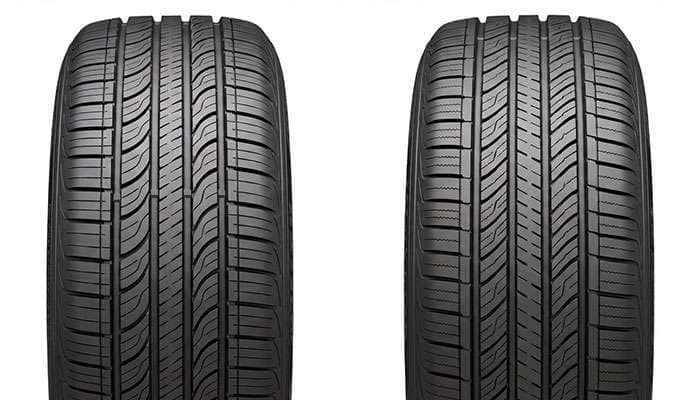
Durability considerations drive the fundamental design differences between these Goodyear models. Understanding how each tire achieves its longevity goals helps you match the right option to your driving patterns and budget expectations.
The Goodyear Assurance MaxLife provides an 85,000-mile/140,000-kilometer tread life limited warranty, representing Goodyear's highest-mileage coverage in their 120-year history. The Assurance WeatherReady 2 offers a 60,000-mile/95,000-kilometer tread life limited warranty, still substantial for an all-weather tire but 25,000 miles shorter than the MaxLife.
This mileage gap translates to real savings for high-mileage drivers. Daily commuters logging 15,000+ miles annually could see the MaxLife last nearly six years versus four years for the WeatherReady 2. Goodyear emphasizes the MaxLife's superior economic value through this extended tread life warranty, making it the clear choice for cost-conscious drivers prioritizing longevity.
Both tires incorporate Goodyear's practical Wear Gage technology, despite common misconceptions suggesting it's exclusive to one model. The WeatherReady 2 includes a built-in Wear Gage for monitoring tread depth throughout its 60,000-mile warranty period. This feature provides real-time assessment of remaining tread life without requiring specialized tools.
The MaxLife similarly features an integrated treadwear device showing remaining tread before replacement becomes necessary. This monitoring capability helps drivers maximize the full 85,000-mile potential by tracking wear patterns and ensuring even treadwear across all four tires.
Compound formulations reveal how each tire achieves its specific durability goals. The MaxLife utilizes proprietary TredLife Technology, combining an enhanced tread compound with an innovative pattern designed specifically for extended wear. This approach creates a somewhat stiffer compound that resists wear while maintaining adequate grip across most conditions. The stiffer design contributes to lower rolling resistance and improved fuel economy.
The WeatherReady 2 takes a different approach with its soybean-oil-infused rubber compound. This specialized formulation maintains flexibility even in subfreezing temperatures, prioritizing grip over absolute longevity. The all-weather technology features this specialized tread compound to help the tread remain adaptable across all seasons, sacrificing some durability for superior weather performance.
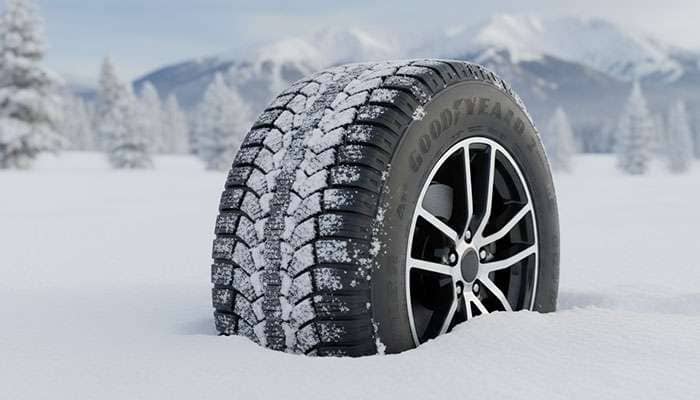
Weather performance capabilities create the most dramatic differences between these two Goodyear models. Both tires carry the Assurance name, but their winter and wet-weather abilities reveal completely different engineering priorities.
The Goodyear Assurance WeatherReady 2 carries the Three-Peak Mountain Snowflake (3PMSF) designation for severe snow conditions. This certification requires acceleration testing in medium-packed snow and achieving at least 110% of the traction of standard all-season reference tires.
This certification represents the WeatherReady 2's most significant performance advantage over the MaxLife. The designation classifies it as a true "all-weather" tire rather than a conventional all-season option. For drivers facing unpredictable winter conditions, this distinction proves essential.
Winter capabilities separate these tires dramatically:
The MaxLife handles light snow adequately through its four deep channels and tread design
The WeatherReady 2 excels in snow, slush, and light ice conditions
Weather Reactive Technology enables the WeatherReady 2 to adapt to changing conditions
Zigzag sipes provide the WeatherReady 2 with excellent traction across wet, slushy, and snowy environments
Even with its 3PMSF rating, the WeatherReady 2 cannot match dedicated winter tires in extreme conditions. Drivers facing severe winter weather should consider specialized winter tire options.
Both tires resist hydroplaning, but with different approaches and effectiveness levels. The WeatherReady 2 features two specialized technologies:
AquaTred® Technology with an enhanced tread pattern using sweeping grooves to move water and slush away from the contact patch
Evolving Traction™ Grooves that maintain water displacement throughout the tire's life, preserving grip as tread wears
Both tires provide adequate hydroplaning resistance, though the WeatherReady 2 delivers superior grip in heavy rain conditions. The MaxLife uses four deep channels for water evacuation and wet traction, a design that works effectively but lacks the WeatherReady 2's specialized wet-focused features.
The WeatherReady 2's dedicated all-weather engineering gives it clear advantages in challenging precipitation, making it the better choice for drivers who regularly encounter adverse weather conditions.
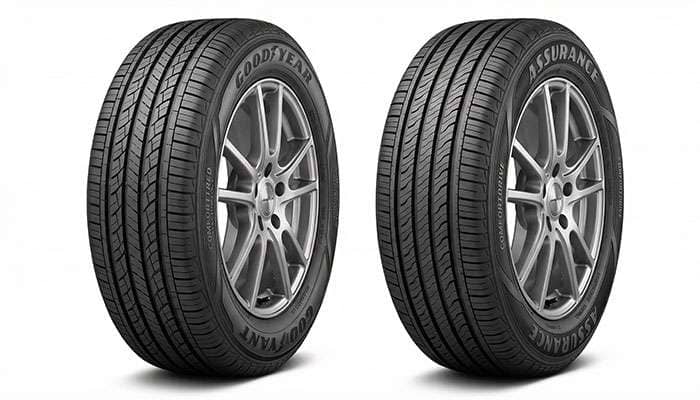
The daily driving experience reveals distinct characteristics between these two Goodyear models. Comfort and noise levels differ significantly due to their specialized construction methods and rubber formulations.
The MaxLife's firmer rubber composition creates a more rigid driving experience, especially noticeable on rough city streets. This stiffer construction directly contributes to its exceptional 85,000-mile durability but reduces impact absorption over potholes and road imperfections. High-mileage drivers often accept this trade-off for the tire's long-term value proposition.
The WeatherReady 2 offers superior ride comfort through its thermally adaptive rubber compound. This softer formulation absorbs road irregularities more effectively, creating a refined driving experience across varied surfaces. The flexible compound that enhances weather performance also improves daily comfort for drivers who prioritize smooth rides.
Despite its aggressive all-weather tread pattern, the WeatherReady 2 operates remarkably quietly. Road tests consistently rate it as "extremely quiet" with "zero added noise" compared to standard all-season options. Even in hybrid vehicles where engine noise doesn't mask tire sound, the WeatherReady 2 maintains impressive silence.
The MaxLife controls noise through compact shoulder lugs that limit air entry—the primary source of tire noise. The WeatherReady 2 uses a different approach, employing varying pitch tread patterns that create sound waves which cancel each other out. This technology allows the more aggressive tread design to operate quietly.
Highway stability favors the MaxLife, which provides confident straight-line tracking perfect for long-distance commuting. This characteristic matches the needs of high-mileage drivers who spend significant time on interstates.
Cornering response gives the WeatherReady 2 a clear advantage. Its flexible compound enhances grip through turns, building driver confidence on winding roads. This handling agility, combined with superior wet traction capabilities, makes it the better choice for drivers who regularly encounter varied road conditions and challenging weather.
The financial considerations between these Goodyear models reveal significant differences that directly impact your tire investment decision.
Price differences between these models are substantial. The Assurance MaxLife starts at $147.00 per tire, with prices reaching up to $284.00 depending on size. The WeatherReady 2 commands a premium price, beginning at approximately $304.99 for front tires and $395.99 for rear tires. This price gap becomes more significant when you factor in the MaxLife's extended warranty coverage.
Fuel economy strongly favors the MaxLife. Its construction creates lower rolling resistance, delivering better gas mileage for most drivers. WeatherReady 2 users frequently report decreased fuel efficiency—a common concern among buyers of this model. High-mileage drivers will find the MaxLife's fuel savings add up considerably over time.
Both models include Goodyear's 60-Day Satisfaction Guarantee, allowing tire exchanges within 60 days if you're not completely satisfied. The key difference lies in treadwear coverage—MaxLife provides an 85,000-mile warranty compared to WeatherReady 2's 60,000-mile protection. Goodyear uses a prorated warranty system based on remaining tread depth. If your tire wears out before reaching the warranted mileage, you receive credit toward replacement tires proportional to the unused tread life.
The key specifications and features of both Goodyear models side by side:
Feature |
Goodyear Assurance WeatherReady 2 |
Goodyear Assurance MaxLife |
|---|---|---|
Tread Life Warranty |
60,000 miles |
85,000 miles |
Starting Price |
$304.99 |
$147.00 |
Winter Certification |
Three-Peak Mountain Snowflake (3PMSF) |
Three-Peak Mountain Snowflake (3PMSF) |
Wet Performance |
Superior wet braking (5.1 feet shorter) |
Four deep channels for water evacuation |
Weather Technology |
AquaTred Technology with sweeping grooves |
Standard all-season technology |
Compound Design |
Soybean-oil-infused, flexible compound |
Stiffer compound for extended wear |
Ride Quality |
Superior impact absorption |
Firmer ride |
Road Noise |
Extremely quiet despite aggressive tread |
Quiet (compact shoulder lugs) |
Handling |
Better cornering response |
Superior highway stability |
Fuel Efficiency |
Lower efficiency reported |
Better fuel economy |
Target Market |
Drivers facing unpredictable weather |
High-mileage drivers, commuters |
Satisfaction Guarantee |
60-Day |
60-Day |
This comparison highlights the fundamental trade-offs between these two Goodyear options. The MaxLife delivers exceptional value with its 85,000-mile warranty and lower starting price. The WeatherReady 2 commands a premium but provides superior all-weather performance and ride comfort for drivers who encounter varied conditions.
Selecting between these two Goodyear options comes down to matching tire capabilities with your specific driving requirements and regional climate patterns.
The MaxLife emerges as the clear winner for value-conscious drivers. Its 85,000-mile warranty and $147 starting price create an unbeatable combination for high-mileage applications. Enhanced fuel efficiency adds to the long-term savings, making it perfect for daily commuters, rideshare operators, and anyone prioritizing maximum tread life. While it handles light winter conditions adequately, this tire excels in longevity rather than weather versatility.
The WeatherReady 2 commands its premium pricing through superior all-weather capabilities. The Three-Peak Mountain Snowflake certification, combined with exceptional wet braking performance, makes it the smart choice for drivers facing unpredictable conditions year-round. Despite the higher upfront cost and shorter warranty period, the enhanced safety and confidence in challenging weather justify the investment for many drivers.
Both options deliver significant advantages over standard all-season tires. Built-in wear gages, Goodyear's 60-day satisfaction guarantee, and proven reliability make either choice dependable for most vehicles. Your regional climate should be the deciding factor.
Southern drivers and those in areas with minimal snowfall will benefit most from the MaxLife's extended service life and lower cost. Drivers in the Midwest, Northeast, or regions with frequent weather changes will appreciate the WeatherReady 2's all-season adaptability.
Choose the MaxLife for maximum value and longevity. Select the WeatherReady 2 for all-weather confidence and safety. Either way, you're getting proven Goodyear engineering designed to deliver reliable performance for thousands of miles.
Choosing between these two Goodyear tires comes down to prioritizing either maximum longevity or superior all-weather performance for your specific driving needs.
• MaxLife offers exceptional value: 85,000-mile warranty and $147 starting price make it ideal for high-mileage drivers seeking long-term savings.
• WeatherReady 2 excels in challenging weather: Three-Peak Mountain Snowflake certification and superior wet braking provide confidence in unpredictable conditions.
• Performance trade-offs are significant: MaxLife delivers better fuel economy and highway stability, while WeatherReady 2 offers superior cornering and ride comfort.
• Regional climate should guide your choice: Southern drivers benefit from MaxLife's longevity; Midwest/Northeast drivers need WeatherReady 2's weather adaptability.
Both tires include 60-day satisfaction guarantees and built-in wear gages, ensuring you get quality Goodyear engineering regardless of your choice. The key is matching the tire's strengths to your driving priorities and local weather patterns.
The Goodyear Assurance MaxLife offers an impressive 85,000-mile tread life warranty, while the WeatherReady 2 comes with a 60,000-mile warranty. The MaxLife is designed for longevity, making it ideal for high-mileage drivers.
The Goodyear Assurance WeatherReady 2 has superior winter performance, featuring the Three-Peak Mountain Snowflake (3PMSF) certification. It excels in snow, slush, and light ice conditions, making it more suitable for unpredictable winter weather compared to the MaxLife.
The Goodyear Assurance WeatherReady 2 demonstrates superior wet braking performance, stopping 5.1 feet shorter than comparable tires. It features AquaTred Technology for efficient water evacuation. The MaxLife, while competent, relies on four deep channels for wet traction.
The Goodyear Assurance MaxLife is more budget-friendly, with prices starting around $147 per tire. In contrast, the WeatherReady 2 commands a premium, with costs beginning at approximately $305 for front tires and $396 for rear tires.
The Goodyear Assurance WeatherReady 2 offers superior impact absorption and a smoother ride due to its more flexible compound. Surprisingly, despite its aggressive tread pattern, it generates less road noise than expected. The MaxLife provides a firmer ride but maintains good highway stability.



