
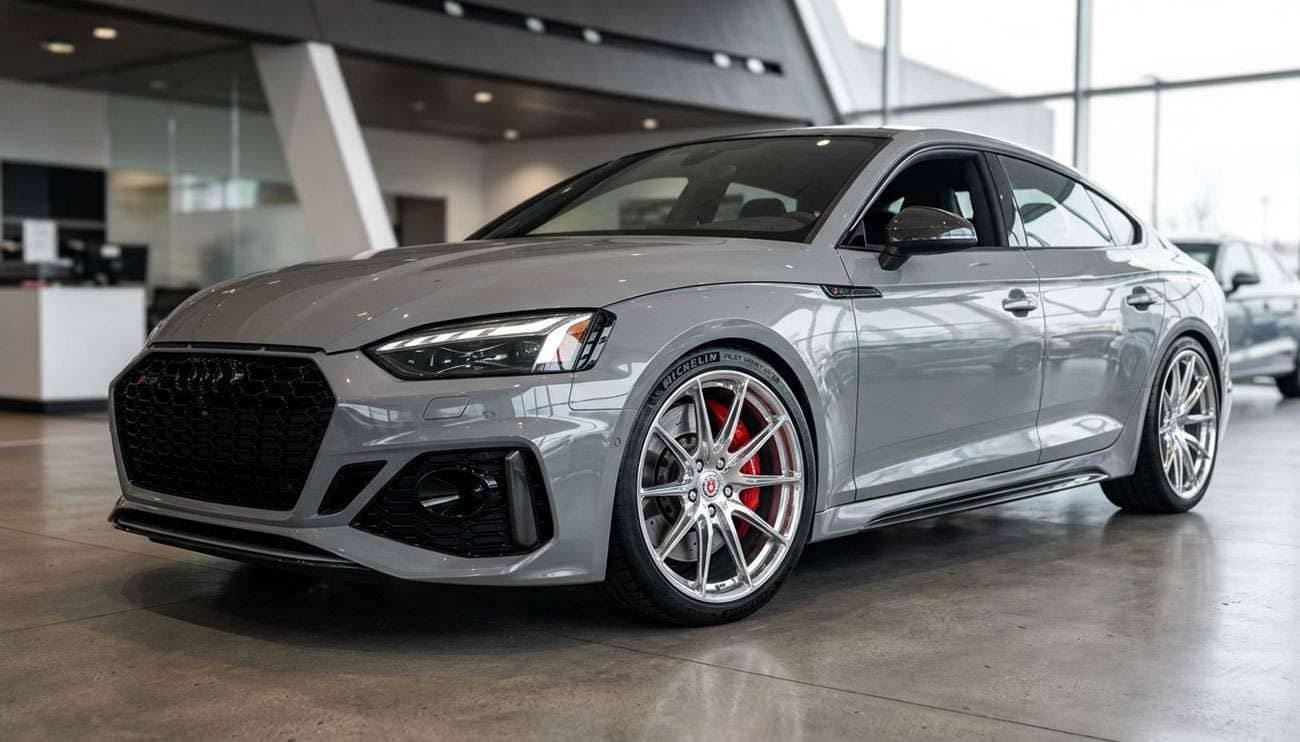
You can absolutely put bigger rims on your car—but this upgrade demands more than slapping on oversized wheels and hoping for the best. You need to understand critical fitment specs, clearance requirements, and performance trade-offs before you spend a dime. Done right, bigger wheels transform your car's stance and handling. Done wrong, you'll face rubbing issues, speedometer errors, and potential suspension damage.
Bigger rims rank among the most popular vehicle mods for good reason. They sharpen your car's appearance, enhance handling precision, and deliver that aggressive stance you see on enthusiast builds. But this upgrade isn't guesswork—it requires precise calculations to avoid rubbing, maintain speedo accuracy, and protect your suspension components. The payoff comes when you nail the fitment: improved looks and performance without compromising your daily driving experience.
This guide cuts through the confusion surrounding wheel upgrades. You'll learn the math behind plus sizing, master fitment calculations, understand performance impacts, and discover how to select the perfect wheels for your specific vehicle and driving style. Whether you're planning a subtle one-inch bump or a dramatic transformation, these fundamentals will help you make smart decisions that balance aesthetics, performance, and practicality.
"Plus sizing" is the foundation of successful wheel upgrades. This concept means you increase wheel diameter while decreasing tire sidewall height to maintain the same overall diameter. Why does this matter? Because keeping your original tire diameter preserves speedo accuracy, prevents clearance disasters, and maintains your vehicle's handling characteristics. Simply bolting on larger wheels with taller tires creates a bigger overall diameter—and that's where problems start: rubbing, inaccurate readings, and mechanical damage.
Three measurements determine whether your upgrade succeeds or fails: wheel diameter, width, and offset. Your factory wheels came engineered specifically for your vehicle's suspension geometry, brake clearance, and fender wells. When you change these specs, you're entering territory that demands calculation and verification. A "+1" upgrade means jumping from 17-inch to 18-inch wheels. A "+2" upgrade bumps you two inches in diameter. Each increment requires corresponding tire sizing changes to maintain proper fitment.
Wheel diameter is straightforward—it's the measurement from one edge to the opposite edge, expressed in inches. This number gets all the attention when people discuss "bigger rims." But diameter tells only part of the story. Wheel width, measured in inches from inner bead seat to outer bead seat, determines what tire widths you can safely mount. Too narrow and you'll suffer poor handling and premature tire wear. Too wide and you'll stress the tire's sidewalls.
Offset causes more confusion than any other spec—yet it's absolutely critical. Measured in millimeters, offset indicates how far the wheel's mounting surface sits from its centerline. Positive offset pushes the mounting surface toward the outside face, moving the wheel inward toward your vehicle. Negative offset does the opposite, pushing the wheel outward. Your vehicle's original offset was engineered to position the tire contact patch correctly and maintain proper suspension geometry. Changing offset by more than 5-10mm significantly affects handling, increases stress on wheel bearings, and can cause clearance problems with fenders or suspension components.
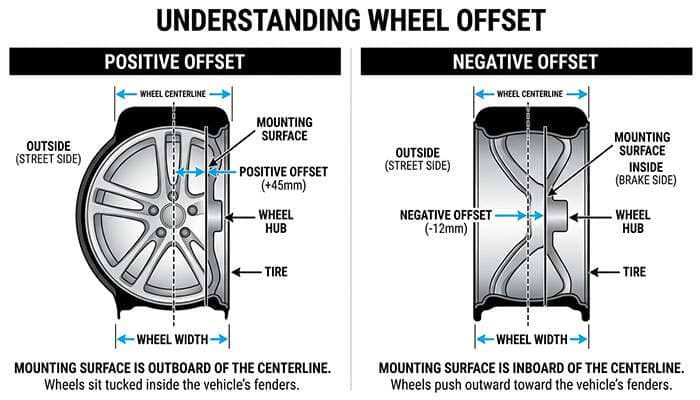
Backspacing works alongside offset to determine fitment. It's the distance from the wheel's mounting surface to the inner edge of the wheel, measured in inches. While offset tells you where the mounting surface sits relative to the wheel's centerline, backspacing tells you how much room exists between your suspension components and the inner wheel barrel. Too little backspacing means your wheel contacts brake calipers or suspension arms. Too much means the tire rubs your fender wells during turns or suspension compression.
Bolt pattern compatibility is non-negotiable—period. Your vehicle has a specific number of lug holes arranged in a specific diameter circle, expressed as something like 5x114.3 (five lugs on a 114.3mm diameter circle). Your new wheels must match this pattern exactly. Hub-centric rings can address minor hub bore differences, but there's no workaround for incorrect bolt patterns. Using bolt pattern conversion charts helps you verify compatibility before purchasing.
Most people blow their wheel upgrade by ignoring overall diameter. They spot gorgeous 20-inch wheels and mount 20-inch tires without considering their factory setup might have been 17-inch wheels with much taller sidewalls. The result? A significantly larger overall diameter that causes tires to rub fender wells, especially during turns or over bumps. This creates annoying noise and actually damages your tires, fenders, and suspension components over time.
Another frequent error is choosing wheels based purely on looks without verifying offset and width specs. A wheel might photograph beautifully, but if the offset is 15mm different from your factory spec, you could end up with wheels that stick out beyond your fenders (potentially illegal in many states) or sit so far inward they contact your brake calipers. We've seen countless customers purchase stunning custom wheels only to discover they won't physically fit without expensive modifications.
Many enthusiasts also underestimate tire selection's importance when upgrading wheel size. They focus entirely on wheels, then hunt for the cheapest tires that'll mount. This approach ignores a fundamental truth: as you increase wheel diameter, you decrease sidewall height—which directly impacts ride comfort, noise levels, and your tire's ability to absorb road imperfections. You need to consider wheel and tire as a complete system. Our tire size comparison calculator helps you visualize exactly how different combinations affect your vehicle's overall diameter and speedometer accuracy.
Failing to account for load ratings represents another critical oversight. Your factory wheels and tires were rated to safely carry your vehicle's weight plus cargo and passengers. When you change wheel size, you must ensure your new setup maintains adequate load capacity. This matters especially for trucks and SUVs, where load rating differences between passenger car tires and light truck tires can be substantial. Undersized or underrated wheels and tires can fail catastrophically under load—creating dangerous situations you absolutely want to avoid.
When you see a tire size like 245/40R18, each number provides crucial fitment and performance information. The first number (245) is the tire's width in millimeters. The second number (40) is the aspect ratio—the sidewall height as a percentage of the width. In this case, the sidewall measures 40% of 245mm, or 98mm tall. The "R" indicates radial construction, and 18 is the wheel diameter in inches. Understanding this nomenclature lets you calculate how changing wheel size affects your setup.
Let's say you want to upgrade from factory 17-inch wheels with 245/50R17 tires to 18-inch wheels. Your factory setup has a tire width of 245mm and a sidewall height of 122.5mm (50% of 245mm). To maintain similar overall diameter on 18-inch wheels, you need to reduce the aspect ratio. A 245/45R18 tire gives you a sidewall height of 110.25mm—not exactly the same, but close enough that your overall diameter difference stays within the acceptable 3% range that prevents speedometer inaccuracy and clearance issues.
Original Setup |
Plus 1 Upgrade |
Plus 2 Upgrade |
Overall Diameter Change |
|---|---|---|---|
215/60R16 (26.2") |
215/55R17 (26.3") |
215/50R18 (26.5") |
+0.3" / +1.1% |
245/50R17 (25.6") |
245/45R18 (26.7") |
245/40R19 (26.7") |
+1.1" / +4.3% |
225/65R17 (28.5") |
225/60R18 (28.6") |
225/55R19 (28.7") |
+0.2" / +0.7% |
265/70R17 (31.6") |
265/65R18 (31.6") |
265/60R19 (31.5") |
-0.1" / -0.3% |
The practical implications of these numbers extend beyond just fitment. A shorter sidewall (lower aspect ratio) means less tire flex during cornering, which generally improves handling response and steering precision. However, it also means less cushioning between your wheels and the road, resulting in a harsher ride and increased susceptibility to wheel damage from potholes. This trade-off explains why performance-oriented vehicles often come with larger wheels and low-profile tires from the factory, while comfort-focused vehicles stick with smaller wheels and taller sidewalls.
Understanding load index and speed rating becomes increasingly important with larger wheels. The load index is a numerical code on your tire's sidewall indicating maximum weight capacity per tire. As you move to lower-profile tires required for larger wheels, you need to verify the load index meets or exceeds your vehicle's requirements. Similarly, the speed rating (a letter code) indicates the maximum safe sustained speed for that tire. Many ultra high performance tires designed for larger wheels carry high speed ratings, but you need to ensure your chosen tires match your driving conditions.
Choosing the right larger wheels for your vehicle requires balancing multiple factors: aesthetics, performance goals, budget, and practical considerations. Start by determining what you're trying to achieve. Are you primarily interested in improving your car's appearance, or are you seeking actual performance benefits? Perhaps you want better brake clearance for a future brake upgrade, or you're looking to reduce unsprung weight with lighter wheels. Your primary objective guides every subsequent decision in the selection process.
Research what other owners of your specific vehicle have successfully installed. Enthusiast forums, social media groups, and dedicated vehicle communities deliver invaluable real-world fitment information. Look for owners who've documented their wheel specs, tire sizes, and any modifications required for proper fitment. This research phase saves you from expensive mistakes and helps you identify potential issues before you encounter them. Pay particular attention to whether owners needed to roll fenders, add spacers, or make suspension modifications to achieve proper clearance.
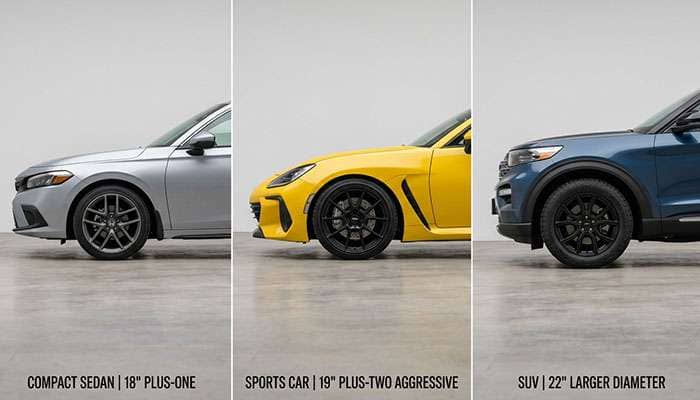
Your vehicle's type fundamentally determines your upgrade options. Compact cars typically have limited fender well clearance and smaller brake assemblies, which means you're generally looking at modest upgrades—perhaps +1 or +2 inch increases in diameter. Trying to force 20-inch wheels onto a compact car designed for 16-inch wheels often requires extensive modifications and compromises ride quality significantly. Sports cars and performance sedans usually have more flexibility because they're designed with larger wheels in mind, even if the base model comes with smaller sizes.
SUVs and trucks present unique considerations. These vehicles often have substantial fender well space, allowing for more dramatic wheel size increases. However, they also carry significantly more weight, requiring wheels and truck tires with appropriate load ratings. A wheel that works perfectly on a sedan might be structurally inadequate for a full-size truck. Additionally, truck owners often want to maintain or improve off-road capability, which means considering factors like wheel width, offset, and tire sidewall height to prevent rubbing during articulation.
Electric vehicles require special attention when upgrading wheels. EVs are typically heavier than comparable gas-powered vehicles due to battery weight, and they often come with specific low-rolling-resistance tires to maximize range. When upgrading wheels on an EV, you need to ensure your new setup maintains appropriate load ratings and doesn't significantly impact range through added weight or increased rolling resistance. Some manufacturers offer EV performance tires designed to balance performance with efficiency.
Classic and vintage vehicles present their own challenges. These cars were designed decades ago with different engineering standards and available tire sizes. While you might want a more modern wheel and tire setup for improved performance and availability, you need to carefully consider offset and backspacing to avoid interfering with steering components or suspension parts that weren't designed for today's wheel specs. Many classic car owners find success with carefully selected wheels that maintain period-correct appearance while offering modern tire mounting options.
Your daily driving conditions should heavily influence your wheel size decision. If you primarily drive on smooth highways with occasional city commuting, you can lean toward larger wheels with lower-profile tires without significant comfort penalties. However, if your daily route includes pothole-riddled streets, rough pavement, or unpaved roads, maintaining some sidewall height is crucial for wheel protection and ride comfort. We've seen expensive wheels destroyed by a single pothole impact that a taller sidewall would have absorbed.
Performance-oriented drivers who regularly participate in autocross, track days, or spirited canyon driving will benefit from the improved handling characteristics of larger wheels with performance tires. The reduced sidewall flex provides more immediate steering response and better cornering stability. However, this comes at the cost of ride comfort and potentially higher tire wear rates. If this matches your priorities, larger wheels with sport performance tires make excellent sense.
Winter driving conditions require special consideration. If you live in an area with significant snowfall, you might actually want to go smaller rather than larger for your winter wheel and tire setup. Narrower tires on smaller wheels often provide better snow traction by cutting through to the pavement, and the taller sidewalls give you more protection against winter potholes and curb strikes. Many drivers maintain two sets of wheels—larger summer wheels and smaller winter wheels—to optimize performance for each season. Quality winter tires on appropriately sized wheels make a dramatic difference in cold-weather safety.
Long-distance highway drivers should consider the impact of wheel and tire choices on fuel economy and comfort. Larger, heavier wheels increase unsprung weight, which can negatively impact both fuel efficiency and ride quality. Additionally, wider tires create more rolling resistance, further reducing fuel economy. If you regularly drive hundreds of miles at highway speeds, the cumulative effect of a few percentage points in reduced efficiency adds up significantly over time. Sometimes the best choice is a modest upgrade that balances aesthetics with practical efficiency.
Wheel and tire upgrades span an enormous price range—from budget-friendly packages under $1,000 to premium setups exceeding $10,000. Understanding where you get value for your money helps you make informed decisions that match your budget. Budget wheels are typically heavier, use simpler construction methods (like casting instead of forging), and may have fewer finish options. However, many budget wheels from reputable manufacturers offer excellent quality and durability for street driving. They might not be as light as premium options, but they'll provide years of reliable service.
Mid-range wheels represent the sweet spot for most enthusiasts. These typically feature better construction quality, lighter weight, more finish options, and designs from recognizable brands. You're paying for better engineering, quality control, and often some level of performance benefit through weight reduction or improved strength-to-weight ratios. For daily drivers who occasionally push their vehicles hard, mid-range wheels offer an excellent balance of performance, quality, and value.
Premium wheels justify their cost through advanced manufacturing processes, significant weight savings, superior materials, and extensive testing. Forged wheels, for example, can be dramatically lighter and stronger than cast equivalents, which translates to real performance benefits in acceleration, braking, and handling. If you're building a serious performance vehicle or participate in competitive motorsports, premium wheels can provide measurable advantages. However, for street-only vehicles driven within normal limits, the benefits may not justify the substantial price premium.
Budget Category |
Price Range (Set of 4) |
Best For |
Key Considerations |
|---|---|---|---|
Budget |
$400-$1,200 |
Daily drivers, basic upgrades |
Heavier weight, limited finishes, basic designs |
Mid-Range |
$1,200-$3,000 |
Enthusiast street cars, occasional performance use |
Better quality, lighter weight, more options |
Premium |
$3,000-$7,000 |
High-performance vehicles, track use |
Forged construction, significant weight savings |
Ultra-Premium |
$7,000+ |
Exotic cars, professional racing |
Maximum performance, exclusive designs, exotic materials |
Don't forget to factor in tire costs when budgeting for larger wheels. As wheel diameter increases, tire costs typically increase as well—sometimes dramatically. The price difference between a set of four 17-inch tires and 20-inch tires can easily exceed $400. Additionally, lower-profile tires required for larger wheels often wear faster and provide fewer miles of service, increasing your long-term ownership costs. If you're considering financing your purchase, financing options can help spread the cost over manageable monthly payments.
Installation and additional component costs should also factor into your budget. Larger wheels usually require new lug nuts or bolts, hub-centric rings, and potentially TPMS (tire pressure monitoring system) sensors if your vehicle is equipped with this technology. Professional mounting, balancing, and alignment add several hundred dollars to the total cost. If your new wheels require different offsets, you might need spacers or even suspension modifications to achieve proper fitment. These ancillary costs can add 20-30% to your initial wheel and tire investment.
Selecting specific wheel and tire combinations requires matching your vehicle type, driving style, and budget to appropriate products. While individual preferences vary, certain combinations consistently deliver excellent results across different categories of use. The following recommendations represent proven setups that balance performance, aesthetics, value, and practicality based on decades of industry experience and real customer feedback.
Daily drivers benefit most from moderate wheel size increases that improve appearance without compromising comfort or practicality. A +1 or +2 inch upgrade typically provides the best balance for vehicles used primarily for commuting and general transportation. This approach gives you noticeably improved aesthetics and slightly sharper handling while maintaining reasonable ride comfort and tire longevity. For most sedans and compact cars, this means moving from factory 16-17 inch wheels to 17-18 inch aftermarket options.
For daily driving, prioritize wheel weight over exotic designs. A lighter wheel—even if it's cast rather than forged—will improve your vehicle's responsiveness and fuel efficiency more than a heavier wheel with a flashier finish. Look for wheels that stay within 2-3 pounds of your factory wheel weight per corner. This minimizes the impact on your vehicle's suspension dynamics and maintains the comfortable ride quality your car was engineered to provide. Many quality mid-range manufacturers offer wheels specifically designed for this balance.
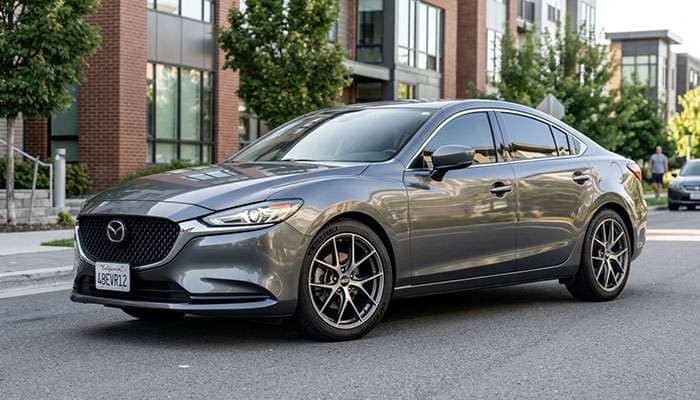
Tire selection for daily drivers should emphasize longevity, comfort, and all-season capability. All season tires from major manufacturers like Michelin, Bridgestone, or Continental offer excellent treadwear warranties (often 60,000-80,000 miles) while maintaining quiet operation and comfortable ride characteristics. Avoid the temptation to go with maximum performance tires unless your daily driving genuinely includes spirited runs on good roads. The compromises in tire life, noise, and wet weather performance rarely justify the minor performance gains for typical commuting.
For popular compact and mid-size sedans originally equipped with 215/60R16 tires, an upgrade to 17-inch wheels with 215/55R17 or 225/50R17 tires provides an ideal daily driver setup. This combination maintains nearly identical overall diameter while improving appearance and providing slightly quicker steering response. The modest width increase (if you choose 225mm) improves dry grip without significantly impacting fuel economy. This represents the type of sensible upgrade that delivers long-term satisfaction without ongoing compromises.
Performance-focused drivers who regularly push their vehicles hard—whether on track days, autocross courses, or spirited canyon runs—benefit significantly from more aggressive wheel and tire upgrades. These drivers should consider +2 or even +3 inch wheel diameter increases combined with wider wheel widths to accommodate high-performance tires with maximum grip. The handling benefits of reduced sidewall flex and increased tire contact patch directly translate to faster lap times and more confidence-inspiring cornering.
For performance applications, lightweight wheels become genuinely important rather than just a nice feature. Forged wheels or flow-formed (also called flow-forged or rotary forged) wheels offer the best strength-to-weight ratios. Reducing unsprung weight by even a few pounds per corner yields measurable improvements in acceleration, braking, and suspension response. The wheel's ability to follow road surface irregularities improves, maintaining tire contact patch even over rough pavement. For serious track use, the weight savings of premium wheels can shave tenths of a second per lap—differences that matter when you're competing.
Tire selection for performance driving should prioritize grip and heat resistance over longevity and comfort. High performance tires from brands like Pirelli, Yokohama, or Toyo in maximum performance summer compounds deliver the grip needed for aggressive driving. These tires feature stiffer sidewalls, stickier rubber compounds, and tread patterns optimized for dry and wet performance rather than longevity. Expect treadwear warranties in the 20,000-40,000 mile range rather than the 60,000+ miles of touring tires.
A typical performance upgrade for a sports car might involve moving from factory 18-inch wheels to 19-inch or 20-inch wheels, often with staggered fitment (wider wheels and tires in the rear). For example, upgrading from 18x8 front and 18x9 rear to 19x9 front and 19x10 rear with appropriately sized performance tires provides noticeably improved cornering grip and stability at high speeds. This type of setup benefits from professional alignment to ensure the wider contact patches work optimally with your suspension geometry. Some drivers maintain separate wheel and tire sets for track days and street driving, optimizing each for its specific purpose.
Budget-conscious buyers can still achieve impressive wheel upgrades without breaking the bank by focusing on smart compromises and value-oriented brands. The key is understanding where to save money and where to maintain quality. Modest size increases (+1 inch) with quality budget wheels and mid-range tires often provide better long-term satisfaction than dramatic upgrades with questionable quality components. Your goal should be maximizing the visual impact and maintaining safety while minimizing total investment.
Several wheel manufacturers offer excellent budget-friendly options without sacrificing essential quality and safety. While you won't get the lightest possible wheels or exotic finishes, you'll get structurally sound products with proper engineering and testing. Stick with brands that have established reputations and good customer service records. Avoid extremely cheap wheels from unknown manufacturers—wheel failures can have catastrophic consequences. The few hundred dollars saved aren't worth the risk to your safety and your vehicle.
For budget tire options, consider quality second-tier brands rather than no-name brands. Companies like Kumho, Hankook, Falken, and Cooper offer excellent value with proven performance and reliability. These manufacturers produce tires in the same factories and with similar technology as premium brands, but with less marketing overhead and brand premium. You'll get safe, reliable tires with reasonable performance characteristics at significantly lower costs than top-tier brands.
A smart budget approach involves buying wheels and tires as a package rather than separately. Many retailers, including Performance Plus Tire, offer wheel and tire packages that bundle compatible components at package pricing lower than buying components individually. These packages are already verified for fitment compatibility, saving you research time and reducing the risk of ordering incorrect specs. Additionally, package deals often include free mounting, balancing, and sometimes even installation, further reducing your total out-of-pocket costs.
Consider timing your purchase strategically to maximize value. End-of-season sales, holiday promotions, and manufacturer rebates can significantly reduce costs. Many tire manufacturers offer rebate programs during spring and fall that can save $70-$200 on a set of four tires. Similarly, wheel manufacturers often clear previous year's inventory at substantial discounts when new designs arrive. If you're flexible on specific designs and finishes, these opportunities can stretch your budget considerably further. Our buy now, pay later options also help manage cash flow for budget-conscious buyers.
You can absolutely upgrade to bigger rims—and transform both your car's appearance and performance in the process. Success requires understanding the technical aspects of fitment, making informed choices about wheel specs, and selecting appropriate tires to complement your new wheels. The difference between a successful upgrade and a problematic one often comes down to proper planning and attention to critical measurements like offset, backspacing, and overall diameter.
Remember that bigger isn't always better. The right wheel size for your vehicle depends on your specific needs, driving style, and budget. A modest +1 inch upgrade with quality components often delivers better long-term satisfaction than a dramatic +3 inch upgrade that compromises ride quality and practicality. Take the time to research fitment for your specific vehicle, use online calculators to verify tire sizing, and don't hesitate to consult with experienced professionals who can guide you toward combinations that work well for your situation.
Whether you're looking for a subtle enhancement to your daily driver or a dramatic transformation for your performance vehicle, the right wheels and tires are waiting for you. At Performance Plus Tire, we offer extensive selections of wheels and tires with expert guidance to help you make the best choices for your vehicle. Our wheel visualizer tool even lets you preview different wheel designs on your specific vehicle before making a purchase. With proper planning and quality components, your wheel upgrade will provide years of enjoyment and enhanced driving experience.
Here are the essential points to remember when considering bigger rims for your car:
• Plus sizing maintains overall diameter: When upgrading to larger wheels, you must decrease tire sidewall height proportionally to keep your total tire diameter within 3% of factory specs—this prevents speedometer inaccuracy and clearance issues.
• Offset is critically important: Changing wheel offset by more than 5-10mm from factory specs can cause rubbing, affect handling, and increase stress on suspension components. Verify offset compatibility before purchasing.
• Match upgrades to your driving needs: Daily commuters should prioritize comfort and practicality with modest +1 or +2 inch upgrades, while performance drivers benefit from larger diameter increases with wider wheels and high-performance tires.
• Budget wisely for total costs: Factor in not just wheel prices but also tire costs, installation, alignment, and potential accessories like TPMS sensors. Total investment often runs 20-30% higher than wheel purchase price alone.
• Research fitment thoroughly: Use online calculators, check enthusiast forums for your specific vehicle, and verify all specs including bolt pattern, hub bore, offset, and backspacing before ordering to avoid expensive fitment mistakes.
No, you can't put any size rims on your car. You're limited by several factors including fender well clearance, brake caliper clearance, suspension geometry, and load requirements. Most vehicles can accommodate modest increases (+1 to +2 inches in diameter) without modifications, but larger increases often require suspension modifications, fender rolling, or other alterations. Additionally, you must maintain appropriate overall tire diameter to prevent speedometer inaccuracy and mechanical issues. Always research specific fitment for your exact vehicle year, make, and model before purchasing.
Yes, bigger rims affect performance in multiple ways. Larger wheels with shorter sidewall tires generally improve handling response and cornering stability by reducing sidewall flex. However, they also increase unsprung weight (unless you choose lightweight wheels), which can negatively impact acceleration, braking efficiency, and ride comfort. Additionally, larger wheels often require wider tires that increase rolling resistance, potentially reducing fuel economy by 1-3 mpg. The net effect depends on the specific wheels you choose and how you use your vehicle—performance drivers typically benefit while comfort-focused drivers may prefer smaller sizes.
The cost to upgrade to bigger rims varies widely based on wheel quality and size. Budget wheel and tire packages start around $800-$1,200 for four wheels with basic tires. Mid-range setups run $1,500-$3,500. Premium packages can exceed $5,000-$10,000. Additional costs include mounting and balancing ($100-$200), alignment ($80-$150), TPMS sensors if needed ($200-$400), and potentially hub-centric rings or new lug nuts ($50-$150). Total investment including all components and installation typically ranges from $1,000 for budget upgrades to $7,000+ for premium setups. Financing options can help spread these costs over manageable monthly payments.
Whether you need modifications depends on how much larger you're going and your vehicle's original design. Modest increases (+1 inch) with proper tire sizing usually fit without modifications on most vehicles. Larger increases (+2 to +3 inches) may require fender rolling, suspension adjustments, or even fender trimming to prevent tire rubbing during turns or over bumps. If your new wheels have significantly different offset from factory, you might need spacers or suspension modifications to achieve proper fitment. Always verify fitment with owners of the same vehicle who've installed similar setups, and consider professional installation to identify and address any clearance issues before they cause damage.
Yes, bigger rims typically make your ride rougher because they require lower-profile tires with shorter sidewalls. The tire sidewall acts as additional suspension, absorbing impacts from road imperfections before they reach your wheels and suspension. Shorter sidewalls provide less cushioning, transmitting more impact directly to your suspension and vehicle cabin. The severity depends on how low you go—a modest +1 inch upgrade causes minimal roughness increase, while a +3 inch upgrade can dramatically affect ride quality. If you frequently drive on rough roads or value comfort, keep size increases modest or consider maintaining separate wheel sets for different seasons or uses.



