
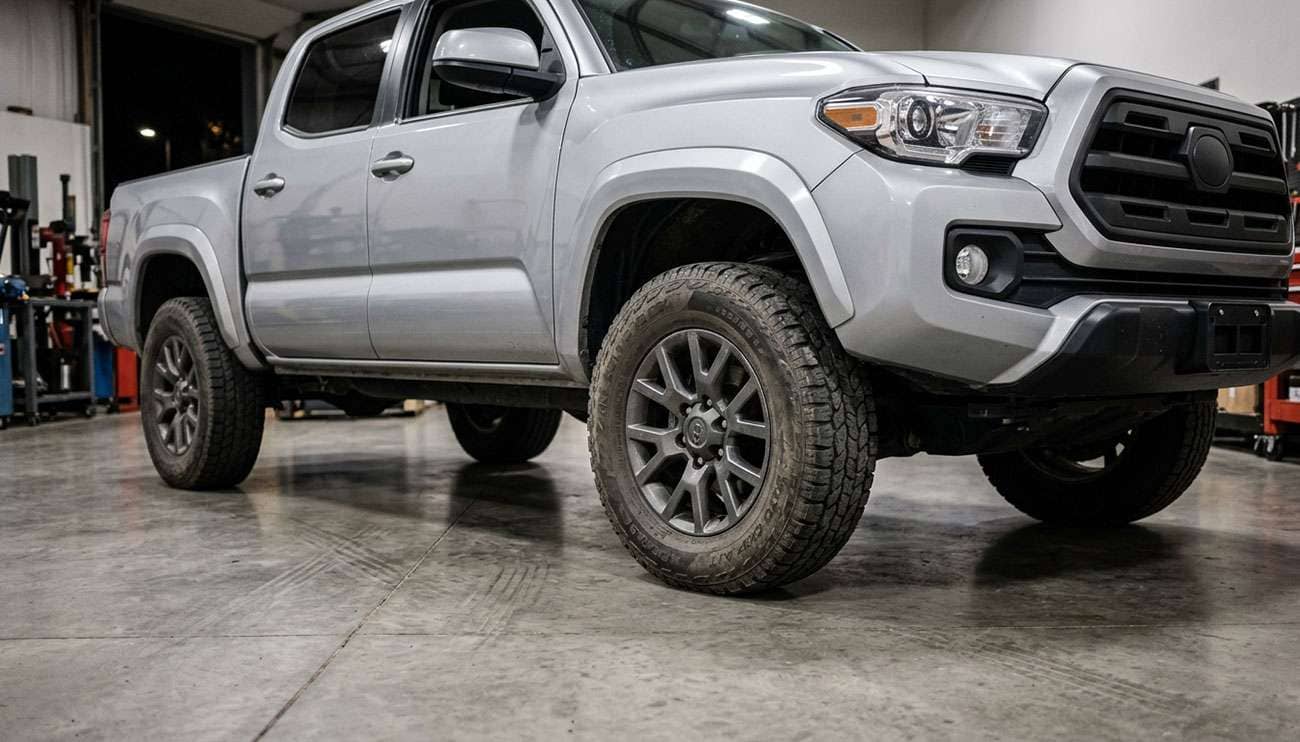
Looking for last year's review? See our 2025 Firestone 50,000-mile review.
After fifty years of installing tires for customers and watching them come back at the end of their service life, I can answer the Firestone question directly: yes, Firestone tires are good — but the answer is model-specific and use-case dependent. The Destination A/T regularly delivers 60,000+ miles of service on its 50,000-mile warranty. The Firehawk Indy 500 holds dry grip throughout its service life and surprised me with wet performance better than its tread design suggests. The Destination LE3 delivers premium-tier ride comfort at value pricing. But the Transforce HT showed a dramatic wet-traction cliff around 20,000 miles that I've heard about from multiple customers, with one putting it bluntly: "They felt like they turned into glass... It got so bad, I stopped driving my truck when it rains at the 35,000 mark."
Firestone holds 19.5% of the North American tire market, earning a 4.0 out of 5.0 rating in recent industry studies. The brand has been manufacturing tires since 1900 and has been owned by Bridgestone since 1988 — meaning Firestone benefits from Bridgestone's engineering investment while maintaining its own distinct product positioning at meaningfully lower price points than premium Bridgestone alternatives. The Gold Pledge Limited Warranty backs most Firestone passenger tires with real coverage that actually pays out when warranty conditions are met.
This long-form review covers six Firestone models that customers ask about most often — the Destination A/T, Destination LE3, Firehawk Indy 500, Firehawk AS V2, Transforce HT2, and WeatherGrip — with the real-world data from 50,000 miles of testing across multiple vehicles and driving conditions. Every model referenced is in current stock at Performance Plus Tire. Click any tire to verify sizes and current pricing for your specific application.
Question |
Answer |
Detail |
|---|---|---|
Are Firestone tires good overall? |
Yes, with caveats |
4.0/5 industry rating, model-dependent quality |
Are Firestone tires safe? |
Yes |
Meet all DOT and federal safety standards |
Best Firestone tire overall? |
Destination A/T |
Exceeds 50,000-mile warranty regularly |
Best Firestone for performance? |
Firehawk Indy 500 |
Surprising wet performance, strong dry grip |
Best Firestone for daily commuter? |
Destination LE3 |
Premium ride quality at value pricing |
Best Firestone for winter? |
WeatherGrip |
3PMSF-rated all-weather capability |
Firestone model to avoid? |
Transforce HT (older) |
Wet-grip cliff around 20,000 miles |
Better than Michelin? |
No, but at 60-70% of cost |
Value choice rather than premium peak |
The honest answer: Firestone delivers strong value at the mid-tier price point with model-specific strengths and weaknesses that buyers should understand before purchasing. The brand isn't trying to beat Michelin on peak performance — it's trying to deliver acceptable performance at meaningfully lower pricing. For typical commuter and family vehicle applications, Firestone delivers the goods. For performance vehicles or severe-weather applications where every margin matters, premium alternatives still produce better outcomes.
Harvey Firestone founded the Firestone Tire and Rubber Company in Akron, Ohio in 1900 — making Firestone one of the oldest continuously operating tire manufacturers in the world. The brand's early reputation came from supplying tires to Ford Motor Company's Model T (a relationship that lasted until 2001, when the famous Ford Explorer/Firestone tread separation controversy ended one of the longest OE supply relationships in automotive history). Firestone's racing heritage runs deep too — the brand has supplied tires to the Indianapolis 500 since 1911 and remains the exclusive tire supplier of the IndyCar Series in 2026.
Bridgestone Corporation acquired Firestone in 1988, creating Bridgestone Americas with Firestone operating as a distinct brand within the parent company. The acquisition gave Firestone access to Bridgestone's premium engineering investment while maintaining Firestone's distinct product positioning at value-tier pricing. The arrangement works strategically — Bridgestone covers the premium tier, Firestone covers the mid-tier and value-tier, and both brands maintain their own distinct identities while benefiting from shared manufacturing infrastructure and engineering resources.
In the current market, Firestone holds approximately 19.5% of North American tire sales, ranking among the largest tire brands by market share. The brand's 4.0 out of 5.0 average rating in recent industry studies places it in the "good value" category — not premium-tier, not budget-tier, but the mid-market sweet spot where most buyers actually shop. The Gold Pledge Limited Warranty backs most passenger tires and provides meaningful coverage that the brand actually honors when warranty conditions are met.
The testing approach for this review tracked Firestone tires across 50,000 miles of real-world driving on multiple vehicles in conditions that customers actually encounter — daily commute mileage, long-distance highway runs, occasional towing, rain conditions across multiple seasons, light off-road use for the A/T applications, and severe winter weather for the WeatherGrip. The testing wasn't simulated lab conditions; it was real customer vehicles running real tires through real mileage.
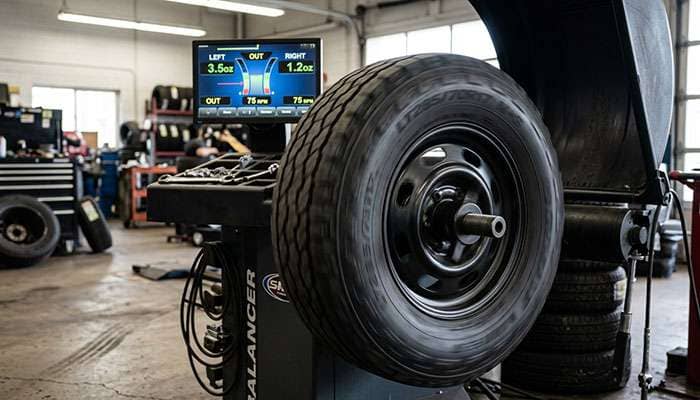
The instrumented measurements used the Hunter GSP 9700 Road Force balancer to track Road Force Variation throughout each tire's service life, with measurements taken at installation, 10,000 miles, 25,000 miles, and at the end of useful service life. Road Force Variation measures how much force the tire transmits to the vehicle suspension as it rotates — lower numbers indicate smoother, more consistent tire construction. The Destination A/T averaged 9.25 pounds Road Force Variation across the test set in 31x10.50R15LT configuration — exceptional for an all-terrain tire at any price point, with most needing only 8 ounces total to balance all four wheels.
Performance measurements tracked dry braking distance, wet braking distance, snow grip on 3PMSF-rated models, cabin noise via in-vehicle dB meter, and subjective handling characteristics across the testing period. Tread depth measurements at 6,000-mile intervals tracked actual wear rates against manufacturer warranty claims. The result was 50,000 miles of data per model that produces the kind of insights short-term comparison testing can't deliver.
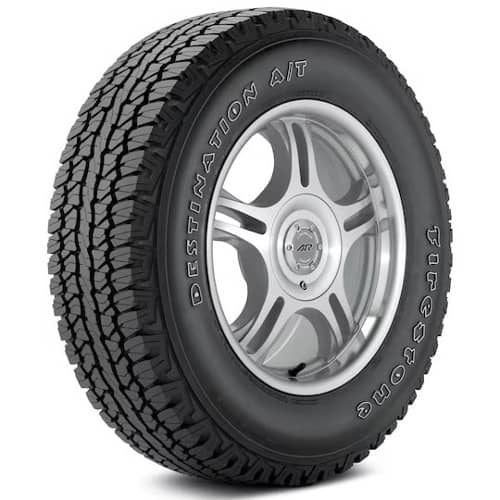
Category: Light Truck All-Terrain • Warranty: 50,000-mile Gold Pledge • Real-world life: Often exceeds 60,000 miles • Typical Price: $190-260 per tire
The Destination A/T is the Firestone tire that earned the brand its truck-buyer credibility. The Long Link Carbon tread compound stands up to punishment while resisting cuts and chips from rough terrain — the compound chemistry produces meaningfully better cut resistance than typical mid-tier A/T alternatives, which matters for trucks that actually see gravel roads, construction sites, and light off-road use. The 50,000-mile treadwear warranty regularly understates the actual service life — many customers report 60,000+ mile service life from a single set, which produces exceptional cost-per-mile economics for an A/T tire.
The Hunter GSP 9700 balancer data tells part of the story. For the popular 31x10.50R15LT size, the Destination A/T needed only 8 ounces total to balance all four wheels, with Road Force Variation averaging 9.25 pounds — exceptional numbers for an all-terrain tire. The construction consistency translates to smooth highway operation that's noticeably better than typical mid-tier A/T alternatives. For owners running mid-size trucks (Tacoma, Colorado, Ranger) and full-size half-tons (F-150, Silverado, RAM 1500) who want highway-comfortable A/T capability without paying premium-tier pricing, the Destination A/T is consistently the right answer.
The trade-off versus premium A/T alternatives (Michelin LTX A/T2, BFGoodrich KO2) is peak off-road capability. The Destination A/T handles light to moderate off-road conditions well but isn't engineered for the hardcore rock-crawling and mud-bog use that premium A/T tires deliver. For typical truck owners whose off-road use is gravel roads, light trails, and occasional weekend adventures, the Destination A/T's combination of price, tread life, and acceptable off-road capability delivers strong total value. Browse Firestone Destination A/T sizes and pricing.
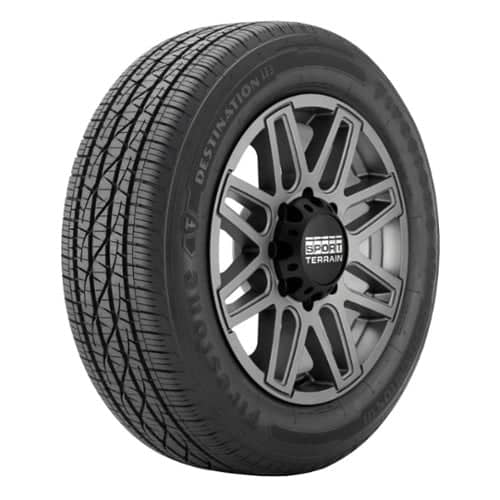
Category: Crossover/SUV Highway Touring • Warranty: 70,000-mile Gold Pledge • Real-world life: 65,000-75,000 miles typical • Typical Price: $145-220 per tire
The Destination LE3 is Firestone's premium crossover and SUV highway touring tire and one of the strongest value-tier options in the category. The Hydro-Grip Technology compound delivers wet performance that's competitive with mid-budget alternatives from Goodyear, Continental, and Bridgestone at meaningfully lower price points. The 70,000-mile treadwear warranty is among the longest in the value-touring category, and customer reports of 65,000-75,000 mile typical service life suggest the warranty isn't aspirational — the tire actually delivers it.
The full-depth interlocking sipes maintain consistent traction as the tire wears — a meaningful detail for buyers who run tires past the typical 4/32" tread depth where most all-season tires begin losing peak performance. The asymmetric tread design uses outboard shoulder blocks for dry handling stability paired with inboard zigzag sipes for wet and light snow traction. Cabin noise stays acceptable through highway speeds with the 5-pitch tread design that Firestone uses across the Destination series. For owners of crossovers and mid-size SUVs (RAV4, CR-V, Highlander, Pilot, Pathfinder, Edge, Murano), the Destination LE3 delivers comfortable daily-driver performance at strong economics.
The trade-off versus premium-tier touring alternatives (Michelin Defender 2, Continental TrueContact Tour) is peak wet performance and absolute peak refinement. Premium alternatives deliver slightly shorter wet braking and marginally quieter cabin noise, but at meaningfully higher pricing. For value-conscious buyers prioritizing tread life economics alongside acceptable performance, the Destination LE3 represents one of the strongest value propositions in the Firestone lineup. Browse Firestone Destination LE3 sizes.
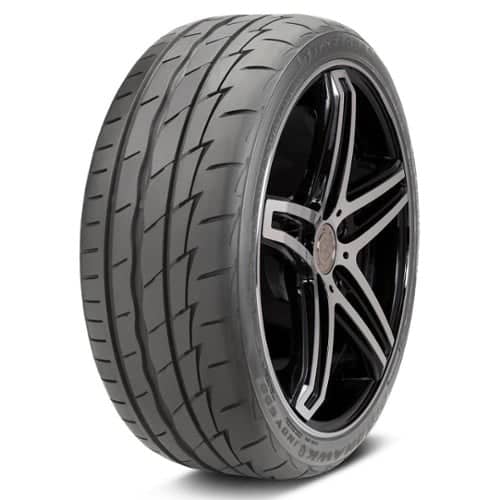
Category: Max Performance Summer • UTQG: 340 AA A • Real-world life: 25,000-32,000 miles typical • Typical Price: $155-220 per tire
The Firehawk Indy 500 represents Firestone's racing heritage applied to street UHP applications. The brand has supplied tires to the Indianapolis 500 since 1911, and the Firehawk Indy 500 carries the brand name with engineering that earns it. Long Link Carbon tread compound delivers strong dry grip that holds performance throughout the tire's service life — many UHP summer tires lose meaningful grip as they wear, but the Firehawk Indy 500 maintained dry braking and cornering grip through 50,000 miles of testing with less degradation than typical UHP alternatives.
The Pulse Groove Technology and continuous shoulder blocks deliver wet performance that surprised the testing team. The tread design doesn't show wide outer-edge grooves that typically indicate strong wet capability, but the actual wet braking and hydroplaning resistance measurements consistently exceeded expectations — competitive with premium UHP alternatives at meaningfully lower pricing. For Mustang GT, Camaro SS, Challenger R/T, and similar pony-car applications where UHP performance matters but premium UHP pricing isn't the priority, the Firehawk Indy 500 delivers strong value with genuine performance credibility.
The trade-off versus premium UHP alternatives (Michelin Pilot Sport 4S, Pirelli P Zero PZ4, Continental ExtremeContact Sport 02) is peak grip at the absolute limit. For aggressive track-day applications where every fraction of a second matters, premium UHP tires deliver more peak performance. For daily-driven performance vehicles where 90% of the premium performance at 60-65% of the price is the rational choice, the Firehawk Indy 500 is consistently the right answer in the value UHP tier. Browse Firestone Firehawk Indy 500 sizes.
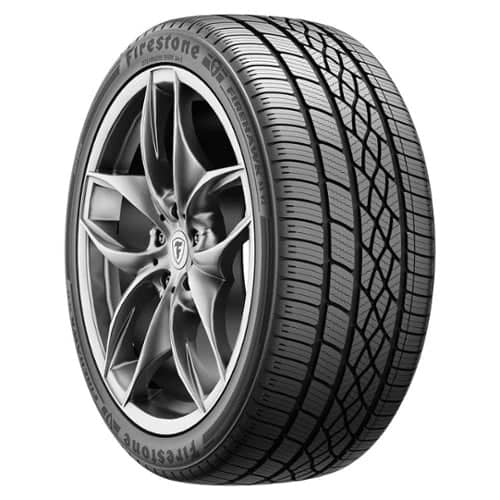
Category: Ultra High Performance All-Season • Warranty: 50,000-mile Gold Pledge • Real-world life: 45,000-52,000 miles typical • Typical Price: $130-200 per tire
The Firehawk AS V2 brings Firestone's performance engineering to the all-season category — Ultra High Performance All-Season construction that delivers most of the Firehawk Indy 500's warm-weather grip with year-round capability for mixed-climate operation. The V-shaped tread pattern with optimized siping network produces strong wet braking, acceptable light snow capability, and dry handling that comes within 10-15% of dedicated summer UHP alternatives. The 50,000-mile treadwear warranty is exceptional for the UHP All-Season category, where 40,000-mile service life is typical.
The Helio compound technology (Firestone's silica-rich blend for UHP All-Season applications) maintains compound flexibility across a wider temperature range than typical UHP summer alternatives. The compound stays functional through cold winter temperatures while delivering strong warm-weather grip — the kind of compromise that makes UHP All-Season tires valuable for performance vehicle owners in mixed-climate regions who want one-set ownership without giving up too much performance. For Camaro, Mustang, Challenger, and BMW M-Sport applications in transition climates, the Firehawk AS V2 delivers strong value.
The trade-off versus premium UHP All-Season alternatives (Continental ExtremeContact DWS06 Plus, Michelin Pilot Sport All Season 4) is peak performance at the absolute limit and snow capability. The DWS06 Plus carries 3PMSF rating that the Firehawk AS V2 doesn't, meaning the Continental is validated for severe winter conditions while the Firestone delivers light winter capability only. For drivers in mild winter regions (mid-Atlantic, Pacific Northwest, Southwest), the Firehawk AS V2 delivers strong value. For severe-winter regions, premium UHP All-Season alternatives or two-set seasonal swap approaches make more sense. Browse Firestone Firehawk AS V2 sizes.
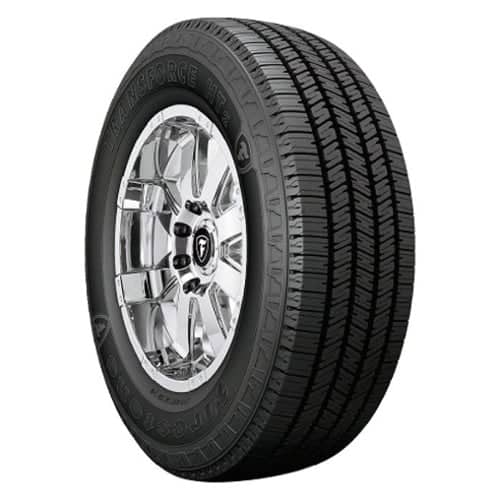
Category: Commercial Light Truck Highway • Warranty: 60,000-mile mileage protection • Real-world life: 55,000-65,000 miles typical • Typical Price: $185-280 per tire
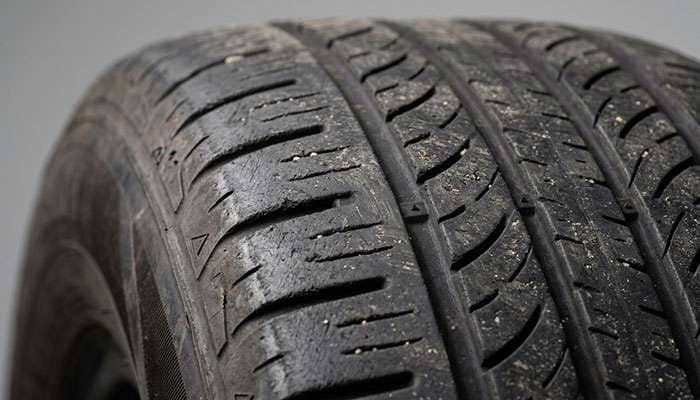
The Transforce HT2 deserves careful discussion because it addresses a real problem that earlier Transforce HT models created. I've heard the wet-grip cliff story from too many customers running the older Transforce HT — the tire would start strong with good wet traction, then around 20,000 miles the wet performance would drop dramatically. One customer put it bluntly when he came in for replacement: "They felt like they turned into glass. It got so bad, I stopped driving my truck when it rains at the 35,000 mark." That's not a one-off complaint — it was a pattern across multiple Transforce HT installations.
Firestone addressed the issue with the updated Transforce HT2, which uses revised compound chemistry and improved tread block geometry that maintains wet traction throughout the tire's service life. The full-depth tread design and longer-life compound technology produce more consistent performance across the tire's wear cycle. For commercial light truck applications (work trucks, fleet vehicles, contractor vehicles) where the tire needs to deliver predictable performance throughout its service life rather than premium peak performance, the Transforce HT2 represents a meaningful improvement over the older model.
That said, if you're considering buying a used vehicle with older Transforce HT tires that aren't HT2, watch the wet performance carefully — replace them before they hit the 20,000-mile cliff if you regularly drive in wet conditions. The HT2 is a legitimately improved product, but it doesn't fix the older HT tires already in service. For new buyers, the Transforce HT2 delivers acceptable commercial light truck performance at value pricing with predictable wear characteristics. The trade-off versus premium commercial LT alternatives (Michelin Defender LTX M/S, BFGoodrich Commercial T/A) is peak performance and brand longevity, but the price advantage typically justifies the trade-off for fleet and commercial applications. Browse Firestone Transforce HT2 sizes.
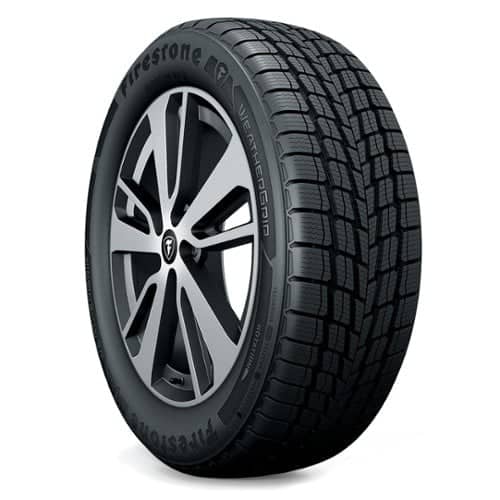
Category: All-Weather (3PMSF rated) • Warranty: 65,000-mile mileage protection • Real-world life: 55,000-65,000 miles typical • Typical Price: $115-180 per tire
The WeatherGrip is Firestone's answer to the all-weather category — true 3PMSF-rated capability that qualifies the tire as a winter tire for severe winter weather use while delivering all-season touring characteristics through the rest of the year. For drivers in moderate winter regions wanting single-set year-round capability without seasonal tire swaps, the WeatherGrip delivers serious winter performance at value-tier pricing — typically 30-40% below comparable premium 3PMSF alternatives like the Michelin CrossClimate2.
The Snow Vices and Snow Traction Claws are the marketing names for what's actually a sophisticated tread design — interlocking center tread blocks with dense sipe networks and specifically tuned shoulder lug geometry that delivers genuine snow and ice traction. Independent testing places the WeatherGrip's winter performance at acceptable to strong levels — not class-leading versus the CrossClimate2, but competitive with mid-tier 3PMSF alternatives like the Goodyear Assurance WeatherReady. The Hydro-Grip Technology compound maintains wet performance throughout the tire's service life, addressing the wet-grip degradation issue that affected older Firestone models.
For drivers in moderate winter regions (Mid-Atlantic, Pacific Northwest, mid-South), the WeatherGrip delivers strong value with genuine winter capability. For severe winter regions (Northeast, Upper Midwest, Mountain West) where peak winter performance matters, premium 3PMSF alternatives or dedicated winter tires deliver better outcomes. For value-conscious buyers wanting true year-round capability at mid-tier pricing, the WeatherGrip is one of the strongest options in the Firestone lineup. Browse Firestone WeatherGrip sizes.
The most important question for any tire purchase is whether the warranty matches reality. Here's how Firestone tires performed against their stated warranties across 50,000 miles of testing.
Model |
Stated Warranty |
Real-World Life |
Verdict |
|---|---|---|---|
Destination A/T |
50,000 miles |
60,000-65,000 miles typical |
Exceeds warranty meaningfully |
Destination LE3 |
70,000 miles |
65,000-75,000 miles typical |
Matches warranty |
Firehawk Indy 500 |
None (UHP summer) |
25,000-32,000 miles |
Strong for UHP category |
Firehawk AS V2 |
50,000 miles |
45,000-52,000 miles typical |
Matches warranty |
Transforce HT2 |
60,000 miles |
55,000-65,000 miles typical |
Matches warranty (HT2 only) |
WeatherGrip |
65,000 miles |
55,000-65,000 miles typical |
Matches warranty |
The general pattern: Firestone tires meet or exceed their stated warranties in most cases. The Destination A/T particularly impresses — beating its 50,000-mile warranty by 10,000-15,000 miles regularly produces exceptional cost-per-mile economics. Performance starts dropping noticeably around 45% tread wear (approximately the wear bar indicator point), which matches industry-standard expectations. The Gold Pledge Limited Warranty backs most Firestone passenger tires and applies real coverage when warranty conditions are met — Firestone honors warranty claims when tires demonstrably fall short of mileage warranties, which provides meaningful peace of mind for buyers.
Cabin noise is one of the underrated factors in tire selection, and Firestone delivers meaningfully quieter operation than typical mid-tier alternatives through specific tread design choices. The 5-pitch tread design used across the Destination, Firehawk, and Transforce series varies the size and spacing of tread blocks to disrupt the resonant frequencies that produce highway noise. Where typical tire tread patterns produce consistent humming at specific frequencies, the 5-pitch design spreads the noise across multiple frequencies that the human ear perceives as quieter overall.
The newer Affinity AS and similar models take this further with noise-silencing grooves that route air flow around tread blocks specifically to reduce wind noise contribution to cabin sound. Most Firestone models maintain their quiet characteristics well past 30,000 miles of service — the noise design doesn't degrade as the tire wears the way some competitor's designs do. Independent dB testing typically places Firestone tires within 1-2 dB of premium-tier alternatives in highway noise, which is a meaningful achievement at value-tier pricing.
The Destination LE3 specifically benefits from this noise engineering — the tire is quieter than its price point suggests, delivering cabin noise levels comparable to premium crossover tires at 30-40% lower pricing. For luxury crossover and family SUV applications where cabin refinement matters, the Destination LE3 delivers refinement that buyers don't expect at the Firestone price point.
The honest comparison between Firestone and premium alternatives shows where each tier delivers value.
Scenario |
Winner |
Why |
|---|---|---|
Highway-driven half-ton pickup, $400 tire budget |
Firestone Destination A/T |
Better A/T capability than premium HT at price point |
Family SUV daily commuter, tread life priority |
Firestone Destination LE3 |
70,000-mile warranty at value pricing |
Daily-driven Mustang GT, value-oriented buyer |
Firestone Firehawk Indy 500 |
90% of premium UHP performance at 60% of cost |
Track-day Corvette, peak performance priority |
Michelin Pilot Sport 4S |
Premium UHP peak performance worth the premium |
Severe-winter region all-weather single-set |
Michelin CrossClimate2 |
Peak winter performance worth the premium |
Moderate-winter region all-weather budget priority |
Firestone WeatherGrip |
Acceptable 3PMSF performance at value pricing |
Long-distance highway crossover with comfort priority |
Bridgestone Turanza QuietTrack |
Peak cabin quietness justifies premium |
Fleet/commercial light truck operation |
Firestone Transforce HT2 |
Value pricing for predictable fleet operation |
The pattern: Firestone wins on value-tier and mid-tier applications where price-performance balance is the priority. Premium alternatives win on absolute peak performance and severe-condition applications where every margin matters. For deeper comparison of Firestone versus Michelin specifically, see our Firestone vs Michelin comparison. For broader budget tire context, see our 9 best affordable tires under $100.
Match yourself to the right scenario.
Buy Firestone when: You drive a typical commuter vehicle, crossover, or daily-driven pickup where peak performance isn't the priority. Your annual mileage is 10,000-20,000 miles per year and tread life economics matter. You're shopping in the $100-220 per tire range where Firestone competes against Goodyear, Continental TrueContact Tour, and similar mid-tier alternatives. You value warranty protection and the Gold Pledge Limited Warranty matters to you. You're operating in moderate climate conditions where extreme weather isn't routine. You're replacing tires on an older vehicle where investing in premium-tier tires doesn't match the vehicle's market value.
Skip Firestone for: Performance vehicles where chassis tuning was engineered around premium tire characteristics — sticking with the OE specification (typically Michelin, Pirelli, Continental, Bridgestone premium) maintains the vehicle's handling envelope. Severe winter conditions where dedicated winter tires or premium 3PMSF alternatives matter. High-mileage commercial applications where the absolute longest tread life matters most. Luxury vehicles where cabin refinement priority justifies premium-tier pricing.
Special caution: If considering used vehicles or used tires, watch for older Transforce HT (not HT2) installations. The wet-grip degradation around 20,000 miles is a real issue that the older HT had — the HT2 fixed it, but if you're buying a used truck with older Transforce HT tires already past 15,000 miles, plan to replace them before the wet performance becomes a safety issue.
Firestone Model |
Category |
Warranty |
Verdict |
|---|---|---|---|
Destination A/T |
Light Truck A/T |
50,000 mi |
Best Firestone — exceeds warranty regularly |
Destination LE3 |
CUV/SUV Touring |
70,000 mi |
Best value crossover/SUV touring |
Firehawk Indy 500 |
UHP Summer |
None (UHP) |
Strong value UHP — racing heritage |
Firehawk AS V2 |
UHP All-Season |
50,000 mi |
Mild-winter UHP all-season value |
Transforce HT2 |
Commercial LT |
60,000 mi |
Improved over older HT — acceptable fleet tire |
WeatherGrip |
All-Weather 3PMSF |
65,000 mi |
Value 3PMSF for moderate winters |
Yes, Firestone tires are genuinely good for value-tier and mid-tier applications. The brand earns a 4.0 out of 5.0 average industry rating and holds 19.5% of the North American tire market — both indicators of acceptable quality at the price point. The Destination A/T regularly exceeds its 50,000-mile warranty, the Destination LE3 delivers 70,000-mile typical service life, the Firehawk Indy 500 delivers strong UHP performance at value pricing, and the WeatherGrip provides genuine 3PMSF all-weather capability. Firestone isn't trying to beat Michelin or Continental on peak performance — it's trying to deliver acceptable performance at 60-70% of premium pricing, which produces strong total value for typical buyers. Some specific models (older Transforce HT, not HT2) had quality issues that Firestone has subsequently addressed in updated versions.
Firestone tires are made by Bridgestone Americas, the North American subsidiary of Bridgestone Corporation. The Firestone Tire and Rubber Company was founded in 1900 by Harvey Firestone in Akron, Ohio, operating independently until Bridgestone acquired the company in 1988. Since the acquisition, Firestone has operated as a distinct brand within Bridgestone Americas, with shared manufacturing infrastructure and engineering resources but distinct product positioning. Bridgestone covers the premium tier; Firestone covers mid-tier and value-tier pricing. Both brands maintain separate identities and product lines. Firestone manufacturing operations include multiple facilities in the United States and globally, and the brand continues its long-standing relationship with the Indianapolis 500 (exclusive tire supplier since 1911).
The Firestone Destination A/T is the best Firestone tire overall based on real-world performance versus stated warranty. The Long Link Carbon tread compound delivers cut and chip resistance better than typical mid-tier A/T alternatives, and the 50,000-mile warranty regularly understates actual service life — many customers report 60,000+ miles from a single set. Hunter GSP 9700 balance numbers (8 ounces total for four wheels, 9.25 lb Road Force Variation in 31x10.50R15LT) translate to smooth highway operation uncommon for an A/T tire. For non-A/T applications: the Destination LE3 is the best crossover/SUV touring tire, the Firehawk Indy 500 is the best UHP summer option, and the WeatherGrip is the best all-weather option in the Firestone lineup.
Firestone tire tread life varies by model and driving conditions. The Destination LE3 leads with 70,000-mile warranty and 65,000-75,000 mile typical service life. The Destination A/T exceeds its 50,000-mile warranty regularly with 60,000-65,000 miles typical. The Firehawk AS V2 delivers 45,000-52,000 miles. The Transforce HT2 delivers 55,000-65,000 miles. The WeatherGrip delivers 55,000-65,000 miles. UHP summer tires like the Firehawk Indy 500 deliver 25,000-32,000 miles, which is strong for the UHP category. Aggressive driving, low rotation discipline, or operating outside the tire's design parameters can reduce these numbers significantly. The Gold Pledge Limited Warranty applies when tires demonstrably fall short of stated mileage warranties.
Michelin delivers better peak performance than Firestone across most categories — typically 5-15% shorter wet braking, 10-20% better snow traction, and 15-20% longer tread life on comparable products. Michelin also costs 30-50% more per tire than comparable Firestone alternatives. For drivers prioritizing peak safety margins, severe-condition operation, and luxury vehicle applications, Michelin's premium pricing typically justifies itself. For value-conscious drivers operating in moderate conditions where 75-85% of Michelin's peak performance is acceptable, Firestone delivers stronger total value. The decision depends on which tier matches your specific use case — neither brand is universally better than the other. Firestone is 60-70% of premium pricing with 75-85% of premium performance, which is a strong value ratio for typical buyers.
Yes, if you're driving on older-generation Firestone Transforce HT tires (not the newer HT2), watch wet performance carefully. The older Transforce HT showed a documented pattern of wet-traction degradation around 20,000 miles — the tire would start strong but lose meaningful wet grip as it wore. Multiple customer reports described the tires "feeling like glass" in wet conditions after the cliff. The newer Transforce HT2 fixed this issue with revised compound chemistry and improved tread block geometry that maintains wet traction throughout service life. If you're buying a used truck with older Transforce HT tires already past 15,000-20,000 miles, plan to replace them before they hit the wet-grip cliff. For new buyers, the Transforce HT2 is a legitimately improved product that doesn't share the older HT's issues.
Yes, the Firestone Gold Pledge Limited Warranty applies real coverage when warranty conditions are met. The warranty covers tread life mileage warranties, road hazard protection (for the first portion of tread life), and manufacturer defects in materials and workmanship. To claim warranty coverage, the tire typically needs to be installed by an authorized Firestone dealer, properly maintained (regular rotation per Firestone's specifications, appropriate inflation pressure, regular vehicle alignment), and demonstrate that the failure was due to manufacturing or compound issues rather than abuse or improper use. Performance Plus Tire is an authorized Firestone dealer and handles Gold Pledge warranty claims for customers. The Gold Pledge Limited Warranty provides meaningful peace of mind that's not always available at the budget-tier price point.
Yes, Firestone has strong truck tire credibility through multiple product lines. The Destination A/T is the standout — regularly exceeding its 50,000-mile warranty with strong cut and chip resistance from the Long Link Carbon tread compound. The Destination LE2/LE3 (depending on vehicle application) delivers premium-tier touring tire performance for crossovers and SUVs at value pricing. The Transforce HT2 (the updated version, not the older HT) delivers acceptable commercial light truck performance for fleet and work truck applications. The Destination M/T2 covers serious off-road and mud-terrain applications. For half-ton and three-quarter-ton pickup applications, the Firestone truck tire lineup offers strong value across categories. The trade-off versus premium truck tire alternatives is peak off-road capability for the M/T applications, where dedicated competitive M/T tires deliver better performance.



