

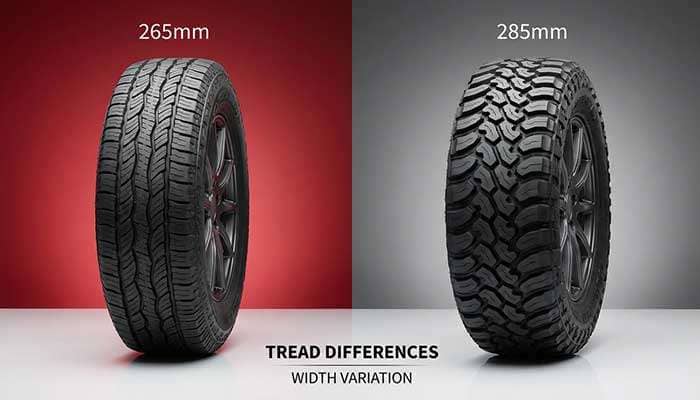
Tire size selection for your truck comes down to understanding how that 20mm difference between 265 vs 285 tires impacts your daily driving experience. A 285 tire measures exactly 0.79 inches wider than a 265 tire, and this width difference creates distinct changes in performance, fuel economy, and overall capability.
The 265 tire size excels for truck owners who prioritize fuel efficiency and nimble handling during daily commutes. These narrower tires deliver better maneuverability in urban environments while maintaining solid performance for occasional off-road adventures. The 285 tire size serves truck owners who need maximum off-road traction and prefer a more aggressive, commanding appearance.
Your driving patterns determine which tire size delivers the best value for your needs. Highway commuters who venture off-road occasionally will find different benefits than dedicated trail enthusiasts who demand maximum grip on challenging terrain. The choice between 265 and 285 tires affects handling characteristics, fuel consumption, and load-carrying capability in measurable ways.
Understanding these tire size numbers helps you make the right selection for your specific truck and driving style. We'll break down the key differences between 265 and 285 tires to help you determine which size truly matches your truck's intended use and your performance priorities.
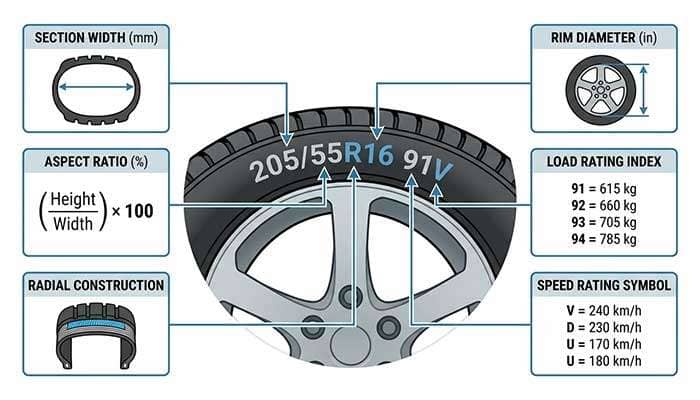
Understanding tire sizing is important before making a purchase decision. These numbers provide essential information about dimensions and compatibility that directly impacts your truck's performance and safety.
The first number in any tire size represents the section width measured in millimeters from sidewall to sidewall at the widest point. This measurement determines how much rubber contacts the road surface during driving.
A 285 tire measures exactly 20mm wider than a 265 tire, translating to approximately 0.79 inches of additional width. This creates a 7.5% increase in overall tire width. The wider footprint means more rubber touches the road, which affects traction, handling, and fuel consumption.
When comparing complete tire sizes like 265/70R17 versus 285/70R17, the width difference remains constant at 0.79 inches across all aspect ratios. This consistency makes it easier to predict how the size change will affect your truck's performance.
The second number in tire sizing indicates the aspect ratio - the sidewall height expressed as a percentage of the section width. Understanding this calculation helps explain why 285 tires often provide different ride characteristics than 265 tires.
A 265/70R17 tire has a sidewall height of 185.5mm (265mm × 0.70). A comparable 285/70R17 tire features a sidewall height of 199.5mm (285mm × 0.70). The difference amounts to approximately 14mm or 0.55 inches of additional sidewall height.
These taller sidewalls on 285 tires contribute to a greater overall diameter. Typically, 285/70R17 tires measure 1.1 inches taller than 265/70R17 options. This height increase provides additional ground clearance, which benefits off-road driving but can affect speedometer accuracy.
The "R" designation indicates radial construction, while the final number specifies wheel diameter in inches. Both 265 and 285 tires can often mount on the same wheels, but proper fitment requires careful attention to rim width specifications.
We recommend rim widths between 7.5-9.5 inches for 265 tires, while 285 tires generally require rim widths between 8.0-11.0 inches. The overlap in these ranges means trucks with 8.0-9.5 inch rims can accommodate either tire size.
Mounting 285 tires on rims narrower than 8.0 inches creates a pinched profile that compromises handling and safety. Similarly, installing 265 tires on excessively wide rims causes sidewall stretching that can lead to premature wear. Proper fitment ensures optimal performance and tire longevity.
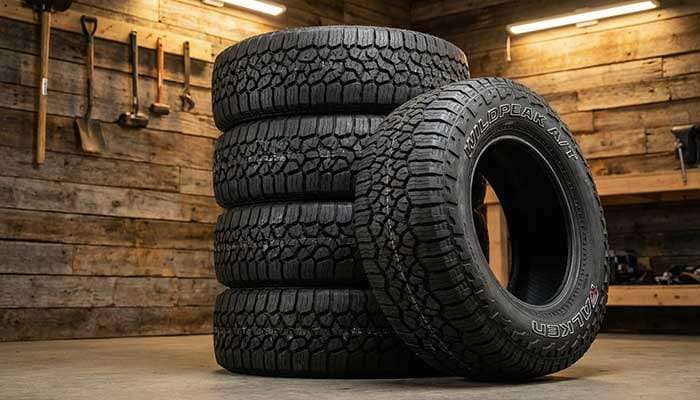
Performance differences between 265 and 285 tires become evident the moment you hit the road. That 20mm width difference translates into measurable changes in how your truck handles, consumes fuel, and tackles challenging terrain.
The 265 tire size delivers responsive handling that truck owners appreciate during daily driving. These narrower tires provide quicker steering response and easier maneuverability, making them ideal for navigating tight parking spaces and urban traffic. The lighter construction also contributes to more agile handling characteristics.
The 285 tire size offers enhanced stability at highway speeds through its larger contact patch. This wider footprint gives drivers more confident control during cornering maneuvers and provides a more planted feel on the road. The increased stability becomes particularly valuable when carrying heavy loads or towing trailers.
Switching from 265 to 285 tires typically results in a 1-2 MPG decrease due to increased rolling resistance. One truck owner reported achieving around 17 MPG (±1 MPG) with 285 Duratracs during mountain highway driving. The narrower 265 tires create less wind resistance and require less energy to rotate, which directly impacts fuel consumption.
Some drivers find that highway cruising with 285s might offset fuel economy losses through lower engine RPMs, though this varies depending on driving conditions and vehicle setup.
The 285 tire size excels when the pavement ends. These wider tires provide superior grip through their expanded contact area, delivering better traction on loose surfaces like gravel, sand, and dirt. The larger footprint enhances stability in wet or slippery conditions where maintaining control is crucial.
The wider 285 tires also disperse moisture more effectively than their narrower counterparts, offering improved performance in light snow conditions. This advantage makes them popular among truck owners who regularly encounter varied weather conditions.
Load ratings typically run about 300 pounds higher on 285 tires compared to 265 equivalents. This increased capacity makes them particularly suitable for heavy towing applications where every pound matters. Experienced towers report that the wider 285s provide a more stable feel when pulling trailers in the 10,000-12,000 pound range.
The enhanced stability comes from putting more rubber on the road, creating confidence even at highway speeds. This additional contact patch helps distribute the load more evenly and provides better control during acceleration, braking, and cornering while towing.
Selecting the right tire size requires understanding the specific advantages and trade-offs each option brings to your driving experience. Both 265 and 285 tires excel in different situations, and your choice should match your primary vehicle use.
Daily commuters benefit significantly from 265 tires' efficiency-focused design. These narrower tires deliver better fuel economy since they create less wind resistance and require less energy to rotate. Acceleration improves thanks to their lighter weight and reduced rolling resistance. Winter conditions favor 265 tires as they cut through snow and slush more effectively, providing better traction when roads turn challenging. Cost-conscious truck owners appreciate that 265 tires typically cost less than their wider counterparts.
Off-road adventures expose the limitations of 265 tires quickly. Their narrower footprint means less grip on loose surfaces, creating challenges on sand, gravel, and muddy terrain. The smaller contact patch provides less stability when navigating obstacles. Ground clearance becomes an issue, with 265 tires offering approximately half an inch less clearance compared to 285s.
Serious off-road enthusiasts choose 285 tires for their superior capability on challenging terrain. The wider footprint delivers confident grip on varied surfaces, while enhanced stability on wet roads makes them excel at moisture dispersal. Ground clearance increases by about 1 inch with 285 tires, crucial for clearing rocks and obstacles. These tires transform your truck's capability on trails and rough terrain.
City driving reveals the downsides of 285 tires. Fuel economy drops by 1-2 MPG, and NHTSA findings show larger tires can decrease fuel economy by up to 10%. Installation often requires modifications like suspension lifts or cab mount chops to prevent rubbing. Their heavier construction impacts acceleration and handling, creating noticeable differences during urban driving and parking maneuvers.
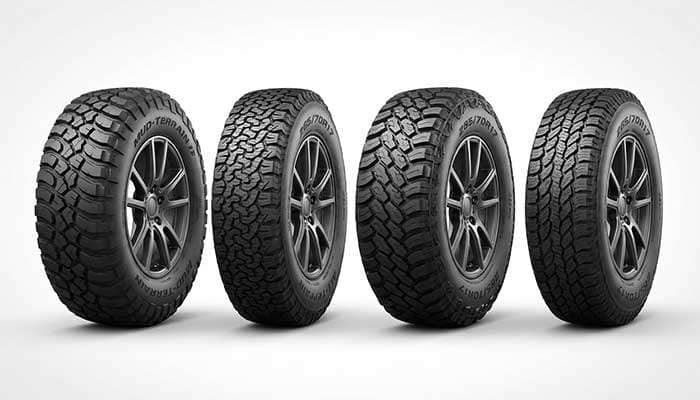
Quality tire manufacturers produce exceptional options in both 265 and 285 sizes, each designed for specific driving conditions and performance needs. Looking for expert advice on selecting between these sizes? Visit Performance Plus Tire for personalized recommendations based on your truck's specifications.
The BFGoodrich All-Terrain T/A KO2 stands as the benchmark for trucks that split time between pavement and trails. This 265-size tire features CoreGard Technology with robust all-terrain tread design that delivers impressive longevity. Starting at $295.99 per tire, it offers premium performance at accessible pricing. Truck owners consistently report excellent tread life, with many achieving over 55,000 miles while maintaining solid off-road capability.
Highway-focused SUV and light truck owners choose the Michelin Defender LTX M/S for its exceptional durability and quiet operation. Priced from $247.30 per tire, this model earns outstanding ratings with 4.5/5 stars from 970 reviews for superior wet-weather traction. The Michelin EverTread Compound provides 10% better longevity in severe conditions compared to previous generations, backed by warranties reaching 70,000 miles.
The Nitto Ridge Grappler features a hybrid tread pattern that balances aggressive off-road performance with reasonable on-road comfort. Its alternating shoulder grooves clear mud effectively, while zig-zag grooves and tapered edges enhance traction. Starting at $324.69, this 285 tire includes stone ejectors that prevent drilling for improved durability on rocky terrain.
Serious off-road enthusiasts rely on the Toyo Open Country M/T for its massive 285mm footprint and superior flotation. The aggressive tread pattern with open, scalloped shoulder blocks excels in mud, sand, and snow conditions. Though premium-priced at $452.14 per tire, its remarkable durability holds up even under rock racing conditions, making it a favorite among hardcore off-roaders.
The key differences between 265 and 285 tires become clear when examining their specifications side by side. This comparison helps you evaluate which tire size matches your truck's requirements and driving priorities.
Characteristic |
265 Tires |
285 Tires |
|---|---|---|
Physical Dimensions |
||
Width Difference |
Base width |
20mm (0.79 inches) wider |
Recommended Rim Width |
7.5-9.5 inches |
8.0-11.0 inches |
Sidewall Height (70 ratio) |
185.5mm |
199.5mm |
Performance |
||
Handling |
More agile, quicker steering response |
Enhanced stability at higher speeds |
Fuel Economy |
Better efficiency |
1-2 MPG decrease |
Off-Road Performance |
Less grip on loose surfaces |
Superior grip, better traction |
Load Capacity |
~300 lbs less than 285 |
~300 lbs more than 265 |
Practical Considerations |
||
Best Use Case |
Daily urban commuting |
Off-road and heavy towing |
Winter Performance |
Better snow/slush penetration |
Better moisture dispersal |
Cost |
Generally lower cost |
Generally higher cost |
Vehicle Modifications |
Minimal required |
May require suspension lifts/modifications |
Ground Clearance |
Base clearance |
~1 inch more than 265 |
These specifications demonstrate how the 20mm width difference creates measurable impacts across multiple performance areas. The choice between 265 and 285 tires depends on weighing these trade-offs against your specific driving needs and vehicle usage patterns.
The choice between 265 and 285 tires comes down to matching tire characteristics with your actual truck usage patterns. That 20mm width difference creates measurable impacts on fuel economy, handling, and capability that directly affect your driving experience.
Daily commuters benefit most from 265 tires, which deliver better fuel efficiency and responsive handling for urban environments. These tires cut through snow effectively and provide solid all-around performance at a lower cost. Heavy towers and off-road enthusiasts gain significant advantages from 285 tires, which offer enhanced stability, superior traction on challenging terrain, and increased load capacity.
Consider how you actually use your truck before making the final decision. Weekend trail riders who primarily drive on pavement have different needs than truck owners who regularly haul heavy loads or tackle difficult off-road conditions. For expert guidance tailored to your specific vehicle and driving requirements, Performance Plus Tire provides professional recommendations to help you select the optimal tire size and model.
Neither tire size represents a universal solution. The right choice depends on finding the best balance between daily drivability and specialized capability that matches your priorities. Whether you value maximum fuel economy or need the confidence of enhanced traction and stability, selecting the appropriate tire size ensures your truck delivers exactly the performance you expect.
Understanding the 20mm width difference between 265 and 285 tires helps truck owners make informed decisions based on their specific driving needs and priorities.
• 265 tires excel for daily driving with better fuel economy (1-2 MPG advantage), quicker steering response, and superior snow penetration for urban commuters.
• 285 tires dominate off-road performance offering enhanced traction, 300 lbs higher load capacity, and approximately 1 inch more ground clearance for rugged terrain.
• Fuel efficiency drops significantly with 285 tires, reducing economy by 1-2 MPG due to increased rolling resistance and wind drag from the wider footprint.
• Rim compatibility matters critically - 265 tires fit 7.5-9.5 inch rims while 285 tires require 8.0-11.0 inch rims for proper mounting and safety.
• Cost considerations extend beyond purchase price as 285 tires often require suspension modifications to prevent rubbing, while 265 tires typically install without changes.
The choice between these tire sizes isn't about finding the "better" option—it's about matching tire characteristics to your actual driving patterns. Daily commuters benefit from 265's efficiency and handling, while off-road enthusiasts and heavy towers gain significant advantages from 285's enhanced capability and stability.
The primary difference is width. 285 tires are 20mm (about 0.79 inches) wider than 265 tires, resulting in a larger contact patch with the road surface.
265 tires generally offer better fuel efficiency due to less rolling resistance. Switching from 265 to 285 tires typically results in a 1-2 MPG decrease in fuel economy.
285 tires are generally superior for off-road use. Their wider footprint provides better traction on loose surfaces and about 1 inch more ground clearance compared to 265 tires.
Yes, 265 tires offer more agile handling and quicker steering response, making them ideal for urban driving. 285 tires provide enhanced stability at higher speeds and during cornering.
Often, yes. Installing 285 tires may require suspension lifts or other modifications to prevent rubbing, while 265 tires typically fit without changes on most trucks.



