
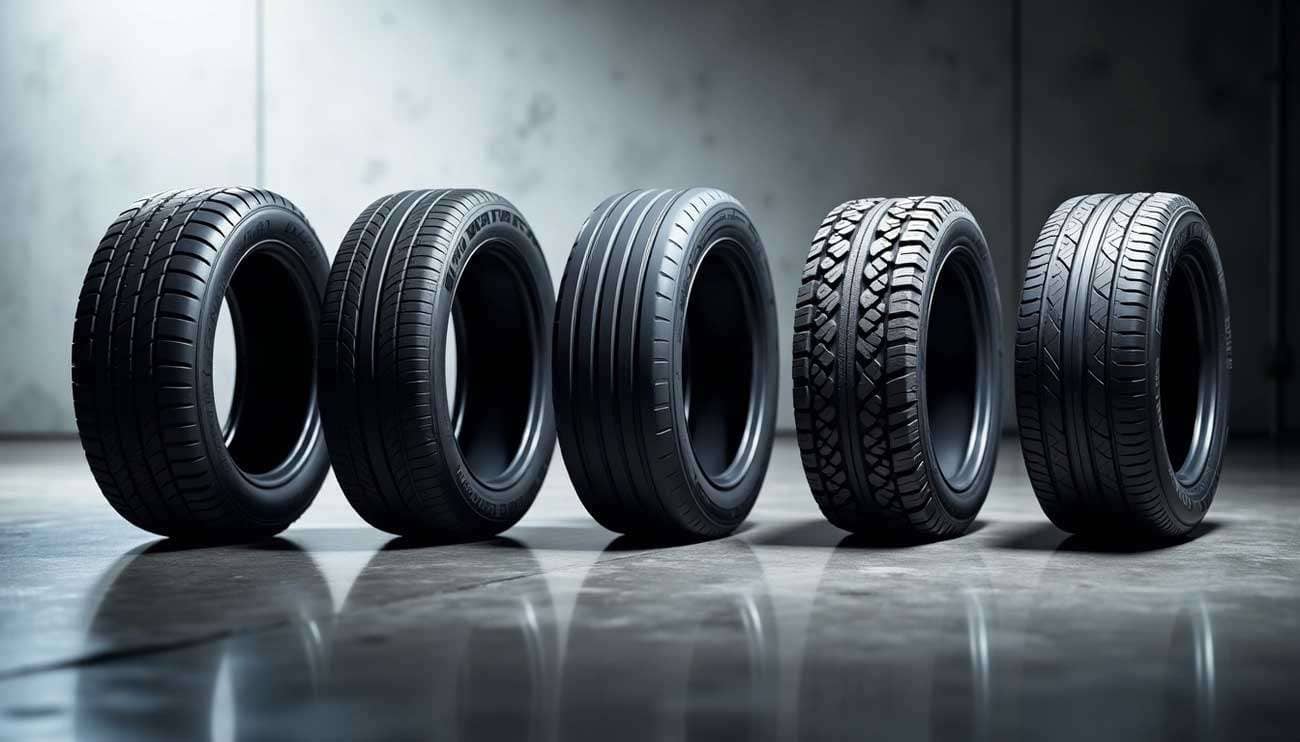
Worn tires at highway speeds can increase your stopping distance by a staggering 43% in wet conditions—that's an additional 87 feet compared to new tires. Choosing the right types of car tires goes far beyond extending tread life; it's about keeping you and your family safe on every drive.
Most drivers don't give their tires a second thought until there's trouble, but they're arguably your vehicle's most critical safety component. All-season tires deliver reliable traction on both dry and wet roads through their symmetrical tread pattern, while summer tires provide exceptional grip and handling when temperatures rise. Winter tires prove indispensable for harsh cold-weather driving, offering outstanding grip on snow and ice-covered surfaces—which explains why 76% of Canadian drivers rely on them.
Your tires have a finite tread life that depends heavily on your vehicle type, driving habits, and the road conditions you encounter regularly. We understand that selecting from 15 distinct tire categories, each engineered for specific driving conditions, can feel overwhelming. Understanding the key differences between tire types will help you make the best choice for your vehicle and driving needs, ensuring both performance and safety mile after mile.
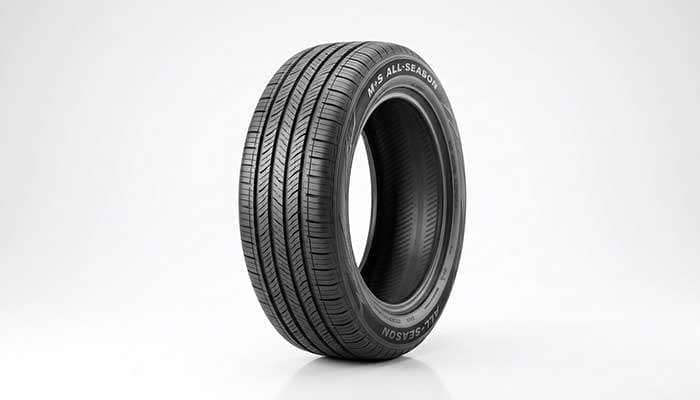
All-season tires represent the most popular choice among drivers who want reliable year-round performance without seasonal tire changes. These versatile options strike a practical balance between summer and winter tire characteristics, making them ideal for regions with moderate weather variations.
All-season tires incorporate specialized engineering that delivers consistent performance across multiple driving conditions. Their tread pattern combines large tread blocks for dry road traction with smaller grooves designed for wet grip. The rubber compounds are formulated to stay flexible across a wide temperature range, although they begin to stiffen when temperatures drop below 45°F (7°C).
These tires feature siping—small slits cut into the tread blocks—that create additional biting edges for enhanced traction on wet and mildly snowy surfaces. Most all-season options carry the "M+S" (Mud and Snow) marking, confirming their capability in muddy and light snow conditions.
Drivers in regions with mild winters and moderate summer conditions find all-season tires provide an excellent year-round solution. They perform optimally in areas with minimal snowfall, temperatures generally above freezing, and mostly clear roads.
Urban environments with well-maintained roads create perfect conditions for all-season tires. Cities like Vancouver or Toronto, where winter conditions are less severe and streets receive regular maintenance, allow these tires to demonstrate their versatility.
Pros:
Versatility: Deliver effective performance across various conditions including dry, wet, and light snow
Convenience: Eliminate seasonal tire changes, saving both time and labor costs
Cost-effectiveness: More economical than purchasing separate winter and summer sets
Longevity: Generally offer longer tread life compared to winter tires
Cons:
Performance compromise: Jack of all trades but master of none—they don't excel in extreme conditions
Limited snow capability: Less effective in deep snow, ice, or temperatures below -10°C
Reduced cold-weather traction: Rubber compounds stiffen in very cold temperatures, decreasing grip
Accelerated hot-weather wear: May deteriorate faster than summer tires during extended hot periods
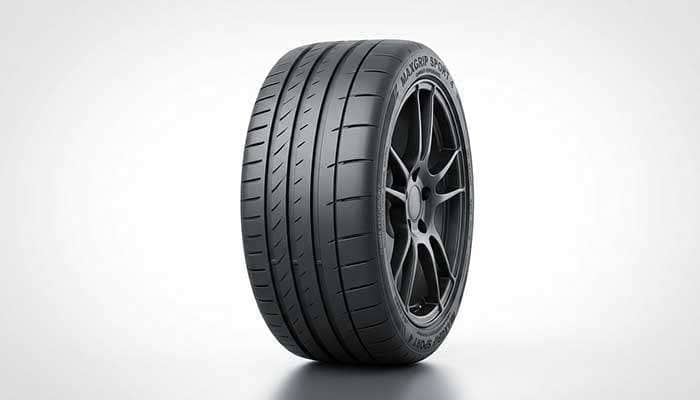
Summer tires represent the performance specialists among tire types, engineered specifically for drivers who demand responsive handling and precise control. Often called performance tires, these specialized options deliver exceptional grip and handling capabilities in both dry and wet conditions when temperatures exceed 45°F (7°C).
Summer tires showcase distinctive tread patterns with shallower grooves and larger tread blocks that maximize road contact. This design puts more rubber in contact with the pavement, significantly enhancing grip and stability. The rubber compounds stay flexible in warm temperatures, delivering superior traction on both dry and wet surfaces.
These tires incorporate specialized silica-enriched compounds that resist heat buildup, even during aggressive driving. Their stiffer sidewalls and stronger internal construction maintain ideal tire shape under high-speed pressure, providing precise handling during cornering and acceleration.
Despite their performance focus, summer tires excel at wet-weather handling through specifically designed circumferential grooves that efficiently evacuate water from beneath the footprint, actively preventing hydroplaning.
Sports cars and performance-oriented sedans gain improved cornering, braking, and acceleration from these specialized options. Drivers who enjoy spirited driving on winding roads or occasional track days benefit from the responsive performance these tires provide.
Summer tires perform optimally in regions with consistently warm weather where temperatures rarely drop below 45°F. Urban environments with quality road surfaces, highway commuters who value responsive handling, and driving enthusiasts who prioritize grip all benefit from these specialized options.
Pros:
Superior grip: Maximum road contact provides enhanced handling and braking in dry conditions
Responsive handling: Stiffer sidewalls deliver precise cornering and steering feedback
Effective wet performance: Specialized tread designs excel at evacuating water to prevent hydroplaning
Heat resistance: Compounds designed to withstand high temperatures during aggressive driving
Cons:
Cold-weather danger: Rubber hardens below 45°F, dramatically reducing grip
Seasonal limitation: Require seasonal tire changes in regions with cold winters
Faster wear: Softer compounds typically wear faster than all-season alternatives
Higher cost: Premium performance options command higher prices
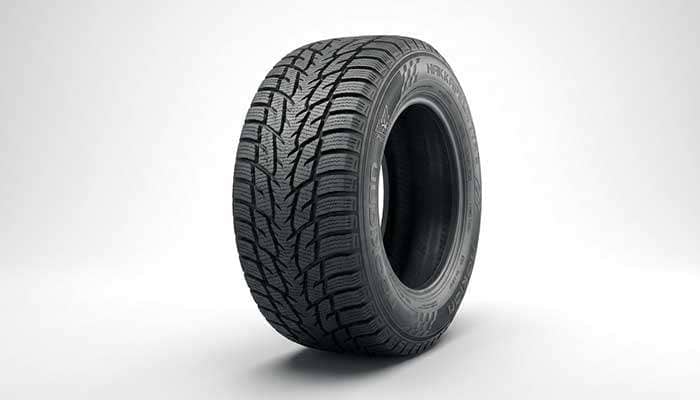
Winter tires stand apart as cold-weather specialists, engineered to maintain grip when temperatures plunge below 45°F (7°C). These essential options can reduce stopping distance by up to 30% on snow and ice compared to all-season alternatives, making them indispensable for safe winter driving.
Winter tires utilize specially formulated rubber compounds containing higher natural rubber content and silica that stay pliable in freezing temperatures. This flexibility allows the tire to conform to road irregularities, maximizing grip on cold, snow-covered, or icy surfaces.
Their aggressive tread patterns feature deeper grooves and numerous siping (thin slits across the tread surface) that create thousands of additional biting edges for traction on slippery surfaces. Many winter tires include studdable options—metal pins that can be inserted into the tread for extreme ice conditions.
Winter tires meeting specific snow traction performance requirements display the Three-Peak Mountain Snowflake (3PMSF) symbol, indicating they've passed standardized testing for severe snow conditions.
Drivers facing regular snowfall, icy roads, or temperatures consistently below 45°F benefit significantly from winter tires. They prove essential in regions with severe winter weather, including areas that experience heavy snowfall or frequent ice storms.
Mountain driving, commuting in areas with unpredictable winter weather, and maintaining safety during snowstorms all demand winter tire performance. Even in urban areas with moderate snowfall, winter tires provide a critical safety advantage when temperatures drop.
Pros:
Cold-weather grip: Rubber compounds stay flexible below 45°F for superior traction
Snow and ice performance: Specialized tread patterns excel in winter conditions
Shorter stopping distances: Up to 30% reduction in braking distance on snow and ice
Enhanced safety: Significantly reduce accident risk in winter conditions
Cons:
Seasonal limitation: Must be removed in warmer weather or risk rapid wear
Storage requirements: Need dedicated storage space for off-season tires
Additional expense: Requires purchasing a second set of tires
Reduced warm-weather performance: Softer compounds wear quickly in warm temperatures
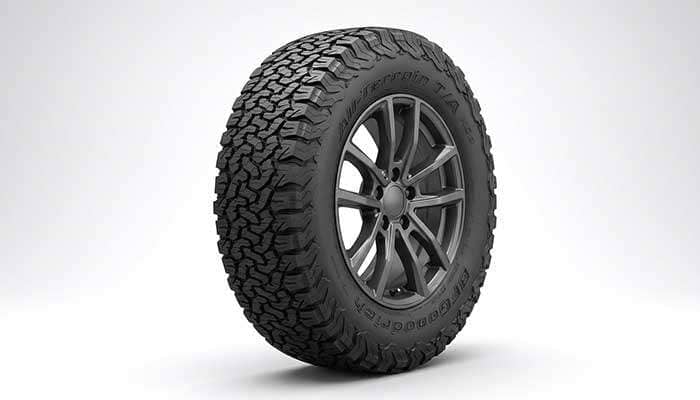
All-terrain tires bridge the gap between highway comfort and off-road capability, delivering versatility for drivers who split their time between pavement and unpaved surfaces. These hybrid options offer a practical compromise for SUVs and trucks that need to handle diverse driving conditions.
All-terrain tires feature moderately aggressive tread patterns with larger tread blocks and wider spacing between them. This design provides grip on loose surfaces like gravel, dirt, and light mud while maintaining acceptable road manners on paved highways.
The sidewalls typically incorporate reinforced construction to resist punctures and cuts from rocks and debris encountered off-road. Many all-terrain options include three-peak mountain snowflake certification, indicating acceptable performance in snow conditions.
Tread compounds balance durability with flexibility, providing reasonable traction across temperature ranges while resisting the cuts and chips common during off-road driving.
Weekend adventurers who mix highway driving with occasional trail exploration find all-terrain tires ideal. Truck and SUV owners who need to navigate unpaved roads to reach campsites, hunting areas, or remote work sites appreciate their versatility.
Rural drivers dealing with unpaved roads, gravel driveways, or seasonal farm access roads benefit from the enhanced traction these tires provide. Light off-road enthusiasts who don't require extreme mud performance find all-terrain options meet their needs without sacrificing everyday drivability.
Pros:
Versatility: Capable performance on both pavement and unpaved surfaces
Durability: Reinforced construction resists damage from rough terrain
Year-round capability: Many models carry snow certification for winter use
Practical compromise: Balanced performance for mixed-use driving
Cons:
Road noise: More aggressive tread patterns create increased highway noise
Reduced fuel economy: Higher rolling resistance impacts MPG
Highway handling compromise: Less precise than dedicated street tires
Limited extreme off-road capability: Not designed for serious mud or rock crawling
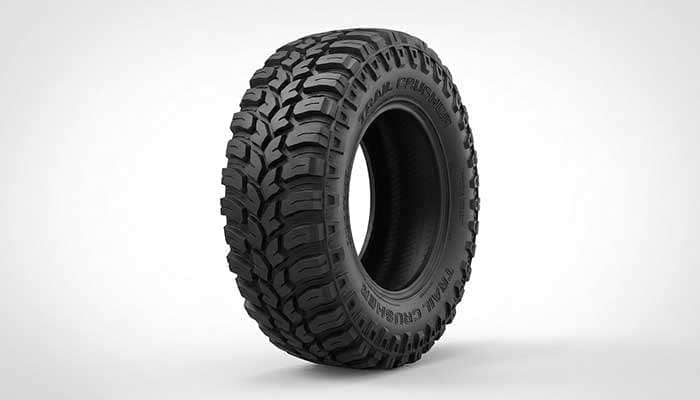
Mud-terrain tires represent the extreme end of off-road capability, designed for drivers who regularly tackle challenging conditions where standard tires would fail. These aggressive options sacrifice on-road refinement for maximum off-road performance.
Mud-terrain tires feature extremely aggressive tread patterns with deep, widely spaced lugs that dig into soft surfaces for maximum traction. The large void areas between tread blocks allow mud, rocks, and debris to clear quickly, maintaining grip in the most challenging conditions.
Sidewall design includes additional tread elements that provide traction when aired down for rock crawling or when the tire sinks into soft surfaces. Heavy-duty construction with multiple ply layers resists punctures, cuts, and impact damage from rocks and obstacles.
Tread compounds prioritize durability and cut resistance over road comfort, using harder rubber formulations that withstand the abuse of serious off-road use.
Dedicated off-road enthusiasts who regularly tackle mud, deep sand, rock crawling, or extreme trail conditions need the capability these tires provide. Drivers whose vehicles spend more time off-road than on pavement appreciate the enhanced traction.
Off-road competition, including mud bogging and rock crawling events, requires mud-terrain capability. Work vehicles operating in extremely muddy construction sites or logging operations benefit from the superior traction these aggressive tires offer.
Pros:
Superior off-road traction: Exceptional grip in mud, sand, and rocky terrain
Self-cleaning capability: Large voids clear debris to maintain traction
Durability: Heavy-duty construction withstands extreme abuse
Sidewall traction: Additional tread elements provide grip at extreme angles
Cons:
Road noise: Aggressive tread creates significant highway noise
Poor wet pavement performance: Large voids reduce wet traction on roads
Reduced fuel economy: High rolling resistance significantly impacts MPG
Faster tread wear: Softer compounds wear quickly on pavement
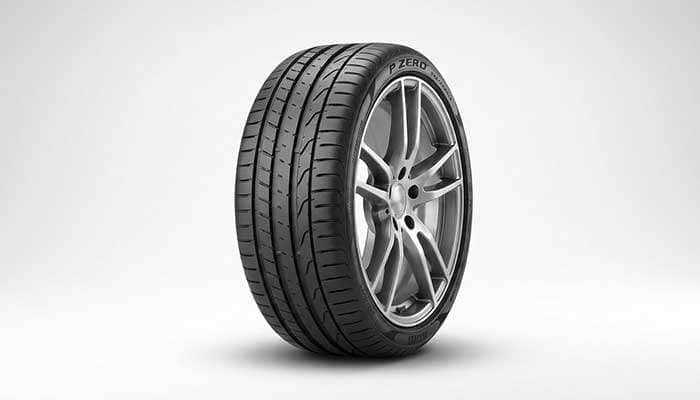
Performance tires cater to driving enthusiasts who prioritize handling, grip, and responsiveness over longevity. These specialized options transform the driving experience by maximizing the connection between vehicle and road surface.
Performance tires utilize advanced rubber compounds with high silica content that provide exceptional grip in both dry and wet conditions. The wider tread faces and lower profile sidewalls create a larger contact patch and reduce sidewall flex during aggressive cornering.
Asymmetric or directional tread patterns optimize grip for specific driving conditions—outer blocks provide cornering stability while inner sections enhance straight-line traction. The internal construction often includes additional reinforcement to maintain tire shape under high-speed stress.
Speed ratings typically range from H (130 mph) through Z (149+ mph), indicating these tires are engineered for high-performance driving situations.
Sports cars, performance sedans, and drivers who value responsive handling benefit most from performance tires. Track day enthusiasts who want a tire that's also street-legal appreciate the enhanced grip these options provide.
Drivers who prioritize driving engagement—those who enjoy spirited driving on twisting roads—find performance tires transform their vehicle's capabilities. Luxury vehicle owners often select performance options to complement their car's dynamic capabilities.
Pros:
Superior grip: Maximum traction during cornering, braking, and acceleration
Responsive handling: Precise steering feedback and control
High-speed stability: Engineered for sustained high-speed driving
Enhanced driving experience: Transforms vehicle dynamics
Cons:
Shorter tread life: Softer compounds wear faster than touring alternatives
Higher cost: Premium pricing reflects advanced engineering
Ride quality compromise: Stiffer sidewalls transmit more road imperfections
Temperature sensitivity: Performance decreases in cold weather
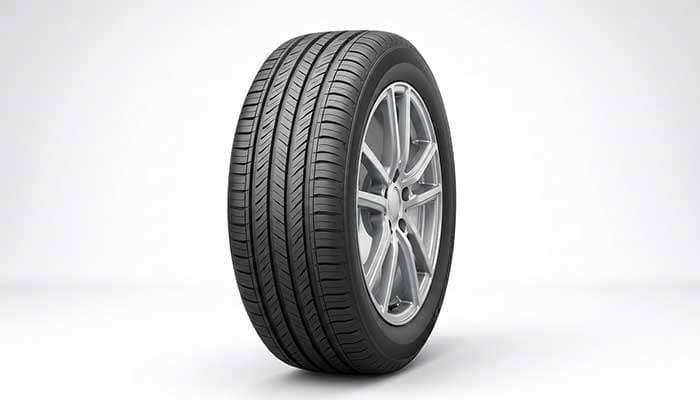
Touring tires prioritize comfort, quiet operation, and long tread life for drivers who value a refined daily driving experience. These options deliver balanced performance that emphasizes ride quality over aggressive handling characteristics.
Touring tires feature optimized tread patterns designed to minimize road noise through variable pitch sequences and continuous ribs that reduce harmonics. The rubber compounds balance traction with durability, providing extended tread life without sacrificing wet weather capability.
Sidewall construction emphasizes comfort, with additional layers that absorb road imperfections and provide a smoother ride. Internal noise-dampening technology in premium options further reduces cabin noise for a quieter driving experience.
Speed ratings typically range from S (112 mph) through H (130 mph), suitable for everyday driving while maintaining stability during highway travel.
Daily commuters who prioritize a quiet, comfortable ride appreciate touring tires' refined characteristics. Long-distance drivers benefit from the reduced fatigue that comes with lower noise levels and smoother ride quality.
Sedan and crossover owners seeking balanced performance without the trade-offs of more aggressive options find touring tires ideal. Budget-conscious drivers value the extended tread life that reduces long-term ownership costs.
Pros:
Quiet operation: Designed to minimize road noise for a refined experience
Comfortable ride: Sidewall construction absorbs road imperfections
Long tread life: Durable compounds provide extended service life
Balanced performance: Capable handling without extreme trade-offs
Cons:
Limited performance capability: Not designed for aggressive driving
Less responsive handling: Comfort focus reduces steering precision
Moderate wet performance: Adequate but not exceptional in rain
Snow limitations: Not designed for winter conditions
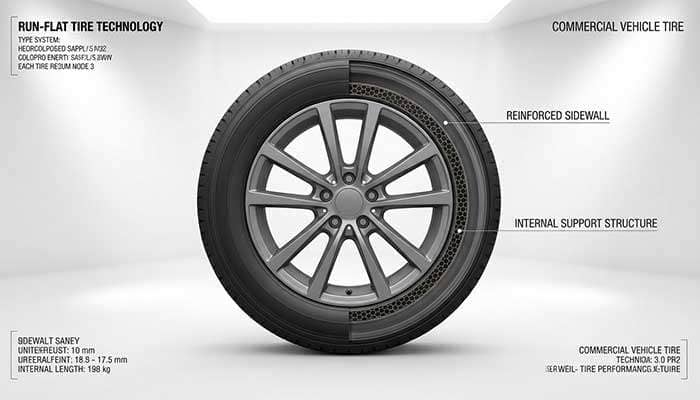
Run-flat tires provide emergency mobility after a puncture, allowing drivers to continue driving to a safe location or repair facility without changing tires roadside. This technology eliminates the vulnerability of being stranded with a flat tire.
Run-flat tires incorporate reinforced sidewalls capable of supporting vehicle weight even when air pressure is lost. This construction allows continued driving for approximately 50 miles at reduced speeds (typically 50 mph maximum) after a complete pressure loss.
The technology requires tire pressure monitoring systems (TPMS) to alert drivers of pressure loss, as run-flats may not exhibit obvious handling changes when flat. Most run-flat designs use self-supporting technology, though some systems employ support rings mounted to the wheel.
Premium run-flat options include additional comfort features to offset the inherently stiffer ride quality that reinforced sidewalls create.
Drivers who prioritize safety and convenience in the event of a flat tire value run-flat technology. Those who frequently drive in areas with limited roadside assistance or unsafe locations to change tires benefit significantly.
Luxury vehicles often come equipped with run-flats, eliminating the need to carry a spare tire and associated equipment. Solo drivers, particularly those uncomfortable changing tires, appreciate the security run-flats provide.
Pros:
Emergency mobility: Continue driving after puncture to reach safety
No spare needed: Eliminates weight and storage requirements
Enhanced safety: Avoid dangerous roadside tire changes
Maintained control: Vehicle handling remains stable after pressure loss
Cons:
Stiffer ride: Reinforced sidewalls transmit more road imperfections
Higher cost: Premium pricing over standard tire options
Limited repairability: Some run-flats cannot be repaired after running flat
TPMS required: Must have functioning tire pressure monitoring system
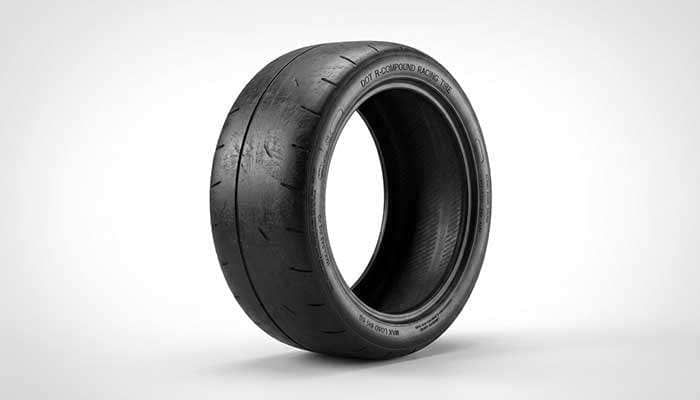
Track tires represent the pinnacle of grip-focused tire technology, designed specifically for circuit driving where maximum traction takes absolute priority over tread life and everyday usability.
Track tires utilize extremely soft rubber compounds that provide exceptional grip but wear rapidly under use. The tread patterns feature minimal void areas, maximizing rubber contact with the track surface for ultimate traction.
Construction prioritizes heat resistance during sustained high-speed use, with compounds engineered to perform optimally at elevated temperatures. Some track tires feature DOT-legal tread patterns that technically allow street use, while others are pure competition slicks with no tread pattern.
Internal construction handles extreme forces generated during racing, with sidewalls designed to maintain shape under high lateral loads during cornering.
Dedicated track day enthusiasts who want maximum performance during circuit driving benefit from track-focused tires. Time attack competitors and amateur racers need the grip advantage these specialized options provide.
Driving school participants often mount track tires to maximize learning potential during instruction sessions. High-performance driving event (HPDE) regulars appreciate the confidence that superior grip provides during spirited driving.
Pros:
Maximum grip: Unparalleled traction during dry track conditions
High-speed stability: Engineered for sustained maximum performance
Precise handling: Responsive characteristics enhance driver control
Heat tolerance: Maintain performance during extended hard driving
Cons:
Extremely short lifespan: May last only one to three track sessions
Limited street usability: Inappropriate for daily driving
Poor wet performance: Minimal tread provides little water evacuation
Temperature dependency: Require proper warm-up to reach optimal grip
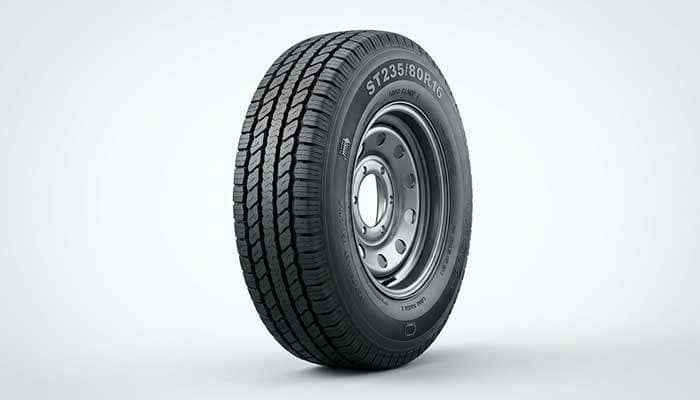
Trailer tires serve a unique purpose, designed specifically to support heavy loads while being towed rather than providing drive traction. These specialized options address the distinct demands of trailer applications.
Trailer tires (designated with "ST" for Special Trailer) feature stiffer sidewalls than passenger tires to resist the swaying and lateral forces trailers experience during towing. Higher load ratings accommodate the weight demands of loaded trailers without excessive flexing.
Tread patterns prioritize stability over traction, as trailer tires don't need to provide driving grip. The compounds resist heat buildup during long highway towing, addressing the elevated temperatures that towed tires experience.
Construction typically includes additional ply layers that provide the structural integrity required for sustained heavy-load service.
All towed applications—including utility trailers, boat trailers, RVs, and cargo trailers—require purpose-built trailer tires. Attempting to use standard passenger tires on trailers risks failure due to inadequate load capacity and construction.
Heavy towing applications where load capacity is critical demand properly rated trailer tires. Long-distance hauling, where sustained highway speeds stress trailer tires, requires the heat-resistant construction these specialized options provide.
Pros:
Load capacity: Designed to handle heavy trailer weights
Stability: Stiff sidewalls resist trailer sway
Heat resistance: Withstand elevated temperatures during towing
Purpose-built: Specifically engineered for towed applications
Cons:
Limited lifespan: Often age out before wearing out due to UV exposure
No drive capability: Cannot be used on driven axles
Speed restrictions: Lower speed ratings than passenger tires
Ride quality irrelevant: Comfort considerations don't apply
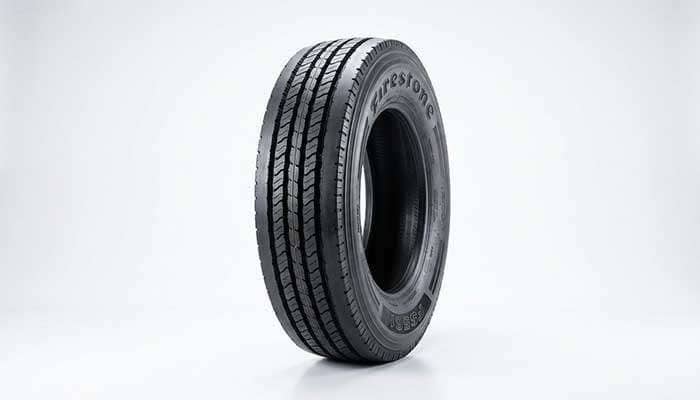
Highway truck tires optimize for the demands of long-distance trucking, prioritizing fuel efficiency, tread life, and consistent performance over hundreds of thousands of miles.
Highway truck tires feature rib-style tread patterns that minimize rolling resistance while providing adequate wet traction. The continuous ribs reduce fuel consumption by decreasing the energy required to maintain speed.
Tread compounds emphasize durability, using harder rubber formulations that resist wear during extended highway service. Advanced retreading compatibility allows worn casings to receive new tread, extending tire life and reducing long-term costs.
Internal construction handles the sustained loads and heat of commercial trucking, with reinforced components designed for reliability across extended service intervals.
Long-haul trucking operations prioritize fuel efficiency and tread life, making highway-specific tires essential for profitability. Regional delivery fleets covering significant daily mileage benefit from the optimized rolling resistance these tires offer.
Commercial vehicles operating primarily on paved roads—including buses, delivery trucks, and interstate haulers—gain maximum value from highway-focused tire designs.
Pros:
Fuel efficiency: Low rolling resistance reduces operating costs
Extended tread life: Durable compounds provide long service intervals
Retreadable: Casings can receive new tread for additional mileage
Consistent performance: Reliable operation during sustained highway use
Cons:
Limited off-road capability: Not designed for unpaved surface use
Snow limitations: Require chains or alternatives in severe winter conditions
Traction compromise: Fuel efficiency focus limits grip capability
Specialized application: Not suitable for mixed-use operations
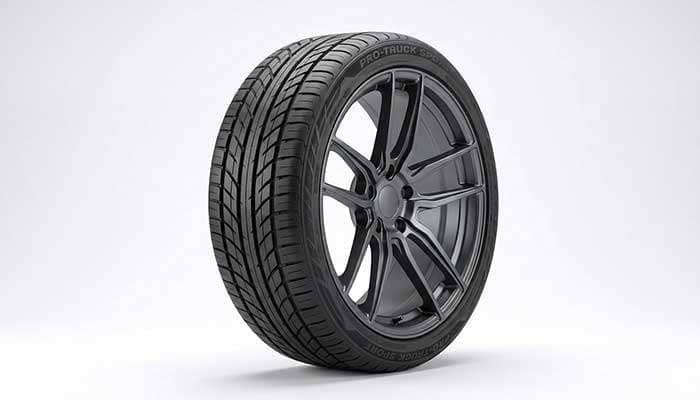
Sport truck tires cater to pickup and SUV owners who want enhanced on-road performance without sacrificing the rugged appearance associated with truck ownership. These options bridge the gap between passenger car handling and truck capability.
Sport truck tires feature lower profile sidewalls than standard truck tires, reducing flex during cornering for more responsive handling. The tread patterns optimize for street performance, with designs that provide grip while maintaining an aggressive appearance.
Rubber compounds balance performance with durability, offering improved handling over standard all-terrain options while maintaining reasonable tread life. Wider tread widths increase contact patch size for enhanced grip during spirited driving.
Speed ratings exceed typical truck tire offerings, enabling confident highway cruising and responsive handling during dynamic driving situations.
Modified trucks with lowered suspensions and performance upgrades require sport truck tires to complement their enhanced handling capabilities. Truck owners who prioritize street performance over off-road capability find these options ideal.
Show trucks and custom builds often feature sport truck tires for their aggressive appearance and performance benefits. Daily drivers who want improved handling from their truck without sacrificing utility appreciate the balanced approach these tires offer.
Pros:
Enhanced handling: Responsive performance exceeds standard truck tires
Aggressive appearance: Low-profile design complements modified trucks
Higher speed ratings: Confident highway performance
Improved braking: Larger contact patch enhances stopping capability
Cons:
Reduced comfort: Lower profile sidewalls transmit more road imperfections
Limited off-road use: Not designed for unpaved surfaces
Increased vulnerability: Lower sidewalls more susceptible to damage
Higher cost: Performance-oriented construction commands premium pricing
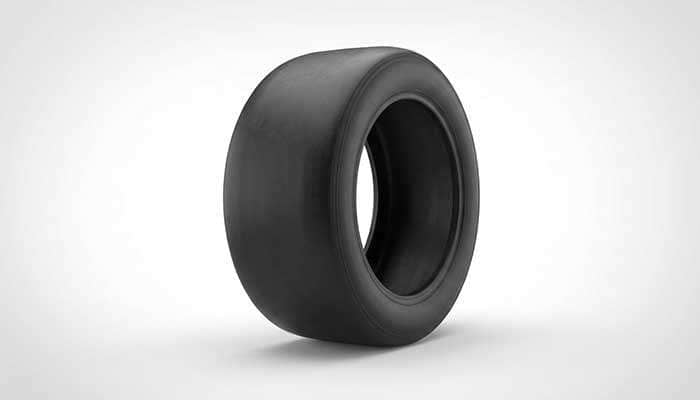
Competition tires represent purpose-built racing equipment, engineered exclusively for motorsport applications where regulations permit and maximum performance is mandatory.
Competition tires utilize the softest rubber compounds available, providing maximum grip at the expense of rapid wear. Many competition categories specify particular tire specifications, ensuring equal equipment across competitors.
Construction prioritizes performance at operating temperature, with compounds engineered to work within specific temperature windows. Slick designs with no tread pattern maximize contact area in dry conditions, while specialized rain compounds feature channeled patterns for wet racing.
Internal construction handles the extreme forces of racing, including high lateral loads, aggressive braking, and sustained high-speed operation.
Sanctioned racing series across amateur and professional levels require competition-specific tire equipment. Formula racing, sports car championships, and oval track competitions all utilize purpose-built competition rubber.
Karting, autocross championships, and time attack competitions often specify particular competition tire specifications. Serious amateur racers seeking maximum performance within their sanctioning body's rules require appropriate competition tires.
Pros:
Ultimate grip: Maximum available traction for dry conditions
Racing optimization: Engineered specifically for motorsport demands
Series compliance: Meet sanctioning body specifications
Consistent performance: Predictable behavior within operating window
Cons:
Extremely limited lifespan: May last only single race events
Temperature dependency: Require specific operating temperatures
No street use: Not suitable or legal for road driving
High cost: Premium pricing for specialized equipment
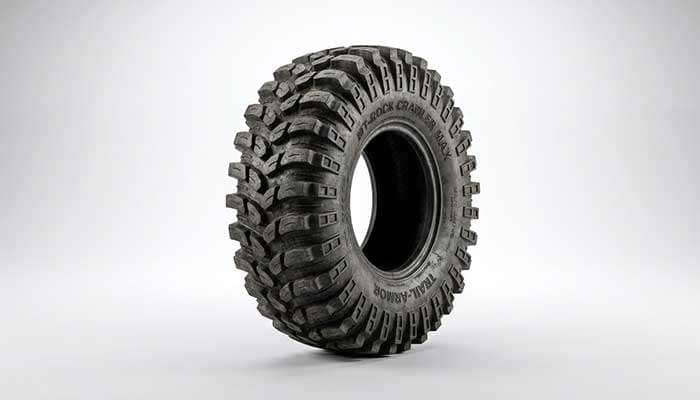
Off-road tires represent the ultimate expression of trail-focused capability, designed for vehicles that spend the majority of their time navigating challenging terrain rather than paved roads.
Off-road tires feature the most aggressive tread patterns available, with deep lugs and massive void areas that provide traction in the most challenging conditions. Sidewall treads extend grip capability to situations where the tire is aired down significantly or resting at extreme angles.
Construction prioritizes puncture resistance and sidewall durability, with multiple ply layers protecting against rocks, roots, and debris. Bead lock compatibility on many off-road designs allows secure mounting at very low air pressures required for rock crawling.
Compounds balance grip with durability, using formulations that resist cuts and chips while maintaining flexibility across temperature ranges encountered during off-road adventures.
Dedicated trail rigs built specifically for off-road use require purpose-built off-road tires. Rock crawling, where vehicles navigate extremely technical terrain at very low speeds, demands the specialized construction these tires provide.
Competition off-road vehicles—including Ultra4 racers and rock bouncing builds—need extreme off-road capability. Trail enthusiasts who prioritize maximum capability over any road manners appreciate the uncompromised design of true off-road tires.
Pros:
Maximum off-road traction: Unmatched grip in extreme conditions
Extreme durability: Built to withstand punishing terrain
Sidewall protection: Reinforced construction resists damage
Low-pressure capability: Designed for aired-down operation
Cons:
Terrible road manners: Extremely loud and uncomfortable on pavement
Poor wet traction: Large voids provide minimal wet road grip
Rapid highway wear: Aggressive tread wears quickly on pavement
Reduced fuel economy: High rolling resistance significantly impacts MPG
This comprehensive comparison table summarizes the key characteristics of all 15 tire types to help you quickly identify options that match your specific needs.
Tire Type |
Best For |
Key Features |
Advantages |
Limitations |
Weather Performance |
|---|---|---|---|---|---|
All-Season |
Year-round moderate climates |
Balanced tread, M+S rated |
Versatility, long tread life |
Compromised extreme performance |
Good dry/wet, limited snow |
Summer |
Warm weather, performance driving |
Soft compound, wide footprint |
Superior grip, precise handling |
Unsafe below 45°F |
Excellent dry/wet, poor cold |
Winter |
Cold climates, snow/ice conditions |
3PMSF certified, deep siping |
Cold weather grip, snow traction |
Wears quickly in warmth |
Excellent snow/ice, poor warm |
All-Terrain |
Mixed on/off-road driving |
Aggressive tread, reinforced sidewalls |
Versatility, durability |
Road noise, reduced MPG |
Good all conditions, some snow rated |
Mud-Terrain |
Serious off-road use |
Deep lugs, self-cleaning tread |
Extreme off-road traction |
Very loud, poor road manners |
Poor wet roads, excellent mud/dirt |
Performance |
Sports cars, high-speed driving |
Wide contact patch, specialized compounds |
Enhanced grip, precise control |
Higher cost, shorter tread life |
Excellent dry/wet, poor cold |
Touring |
Comfort-focused daily driving |
Soft compounds, noise-reducing design |
Quiet ride, long tread life |
Limited performance capability |
Good dry/wet, limited snow |
Run-Flat |
Emergency mobility, luxury vehicles |
Reinforced sidewalls, TPMS required |
Drive while flat, no spare needed |
Stiffer ride, higher replacement cost |
Similar to standard tires |
Track |
Racing, track events |
Minimal tread, soft compounds |
Maximum dry grip, high-speed stability |
Extremely short lifespan |
Excellent dry, poor wet |
Trailer |
Towing applications |
Stiff sidewalls, high load capacity |
Load stability, reduced sway |
Limited lifespan, speed restrictions |
N/A - towing specific |
Highway Truck |
Long-distance trucking |
Rib-style tread, wear-resistant |
Fuel efficiency, extended tread life |
Limited off-road use |
Good dry/wet conditions |
Sport Truck |
Modified trucks, street performance |
Low profile, performance-oriented |
Enhanced handling, aggressive appearance |
Stiff ride, limited versatility |
Good dry/wet, poor off-road |
Competition |
Racing, motorsports |
Specialized compounds, minimal tread |
Maximum performance, DOT approved |
Very short lifespan, temperature sensitive |
Varies by specific compound |
Off-Road |
Extreme terrain use |
Deep aggressive tread, reinforced construction |
Superior off-road capability, puncture resistance |
Poor road performance, noisy operation |
Excellent off-road, poor wet roads |
This comparison table provides a quick reference for matching tire types to your specific needs. Remember that choosing the right tires directly impacts your safety, vehicle performance, and overall driving experience. When in doubt, consider your most frequent driving conditions and prioritize safety over other factors.
Selecting the right tires represents one of your vehicle's most important safety and performance decisions. We've covered 15 distinct tire types, each engineered for specific driving conditions and vehicle requirements. All-season tires offer practical versatility for moderate climates, while specialized options like performance tires deliver enhanced handling for driving enthusiasts.
Your specific driving patterns and local conditions should guide your tire selection. Daily commuters benefit from touring tires' quiet comfort and extended tread life, while weekend adventurers need all-terrain options that handle both pavement and trails. Those who prioritize maximum grip appreciate performance or track tires, understanding these come with trade-offs in longevity and temperature restrictions.
The right tires transform your vehicle's capabilities across every aspect of driving. Quality tires improve handling precision, reduce noise levels, and provide the confidence you need for challenging conditions. Whether you're navigating city streets, highway commutes, or off-road trails, proper tire selection ensures optimal performance and safety.
Ready to find the perfect tires for your vehicle? Visit Performance Plus Tire to explore our complete selection of tire types for every driving need. Our expert team understands tire fitment and can help you choose the ideal option for your specific requirements and budget.
We believe in providing top-notch tires at prices that won't break the bank. Quality tires represent an investment in your safety and driving experience, delivering better value through enhanced durability, improved fuel efficiency, and reliable performance when you need it most. Consider your typical driving conditions, seasonal requirements, and vehicle specifications when making your decision. The right set of tires doesn't just improve your vehicle's performance—it provides peace of mind with every mile you drive.
Understanding the 15 types of car tires helps you make informed decisions that directly impact your safety, performance, and wallet.
Match tires to your climate: All-season tires work for moderate weather, but winter tires reduce stopping distance by 30% on snow and ice.
Driving style determines tire choice: Performance tires excel for sports cars and spirited driving, while touring tires prioritize comfort for daily commuting.
Specialized tires serve specific purposes: All-terrain handles mixed on/off-road use, mud-terrain conquers extreme terrain, and run-flat tires eliminate roadside emergencies.
Temperature matters more than season: Summer tires become unsafe below 45°F, while winter tires wear rapidly in warm weather—choose based on actual temperatures.
Consider total cost of ownership: Premium tires often deliver better value through enhanced durability, improved fuel efficiency, and superior safety performance.
The right tire selection isn't just about performance—it's about ensuring your safety and maximizing your vehicle's capabilities for the conditions you actually drive in.
The main types include all-season tires for moderate climates, winter tires for cold weather and snow, summer tires for warm weather performance, all-terrain tires for mixed on/off-road use, and mud-terrain tires for serious off-roading. Choose based on your typical driving conditions and vehicle needs.
It's best to switch to winter tires when average temperatures consistently fall below 45°F (7°C). Winter tires provide superior traction in cold conditions, snow, and ice. They're essential for safety in areas with harsh winters.
All-season tires are a compromise and generally perform adequately in light snow. However, they don't match the performance of dedicated winter tires in heavy snow, ice, or very cold temperatures. For areas with significant snowfall or prolonged cold, winter tires are recommended.
Performance tires offer enhanced grip, precise handling, and improved cornering abilities, especially in dry and wet conditions. They're ideal for sports cars and enthusiasts who prioritize driving dynamics. However, they typically have shorter tread life and may not perform well in cold weather.
Run-flat tires have reinforced sidewalls that allow you to continue driving for a limited distance (usually about 50 miles) after a puncture. They eliminate the need for an immediate roadside tire change but may provide a stiffer ride and are typically more expensive than standard tires.



